St. Louis: World-Class Art, Ancient Cities and Neighborhood Soul
Visit the free St. Louis Art Museum, cross the river to explore Cahokia ancient metropolis, eat toasted ravioli on the Hill, hear the second oldest US symphony, tour the Anheuser-Busch historic brewery, and discover the antiques and Latino culture of Cherokee Street.
- 1
St. Louis Art Museum
The St. Louis Art Museum in Forest Park, occupying the 1904 World Fair Palace of Fine Arts building redesigned by Cass Gilbert in 1906, holds a permanent collection of over 34,000 works spanning 5,000 years and is free to the public every day. The collection is particularly strong in pre-Columbian art, German Expressionism, and American painting. A major East Building expansion by David Chipperfield Architects opened in 2013 at a cost of 127 million dollars, adding 200,000 square feet of gallery and educational space. The museum holds one of the largest collections of works by Max Beckmann outside Germany and significant holdings of ancient Egyptian, Greek, and Roman objects. The sculpture terrace overlooks Forest Park Grand Basin, used for ice skating in winter.
- 2
Cahokia Mounds and Pre-Columbian Metropolis
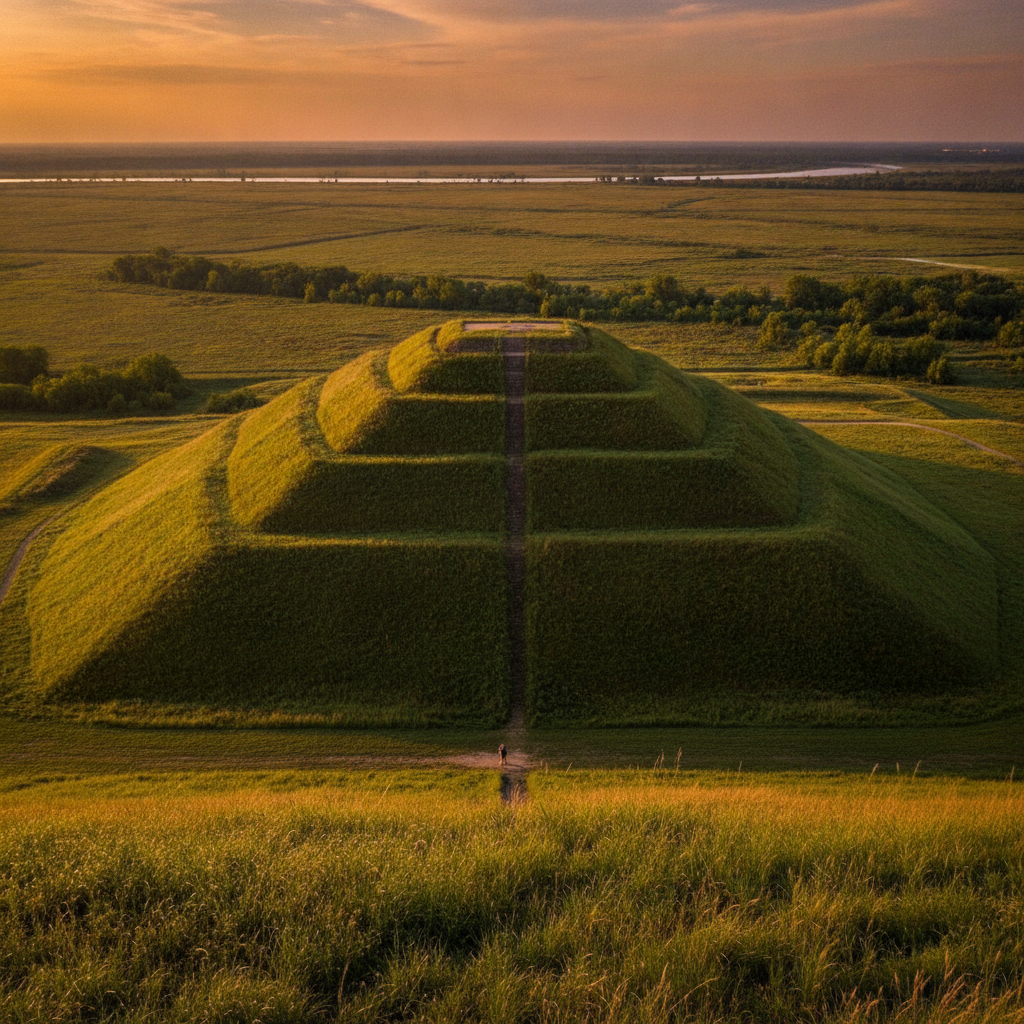
Cahokia Mounds State Historic Site, 8 miles east of St. Louis in Collinsville, Illinois, preserves the remains of the largest pre-Columbian city north of Mexico. At its peak between 1050 and 1100 AD, Cahokia had a population estimated at 10,000 to 20,000 people, making it larger than contemporary London. The site contains 80 surviving mounds of the original 120. Monks Mound, the largest earthwork in the Americas north of Mexico, covers 14 acres at its base and rises 100 feet, larger at its base than the Great Pyramid of Giza. The city was mysteriously abandoned by 1350 AD, possibly due to resource depletion, climate change, or political collapse. Cahokia is a UNESCO World Heritage Site designated in 1982.
- 3
The Hill Neighborhood and Italian Heritage
The Hill neighborhood in southwest St. Louis is the center of the city Italian American community and home to two exceptional players from baseball history: Yogi Berra, born Lawrence Peter Berra in 1925, and Joe Garagiola, both raised within blocks of each other on the Hill. The neighborhood retains dozens of Italian restaurants, delis, bakeries, and social clubs established by immigrants who arrived primarily from the Lombardy and Sicily regions between 1880 and 1920. Anthonino Taverna has operated continuously since 1902. The Hill Fire Department fire hydrants are painted in the red, white, and green of the Italian flag, a tradition maintained since the 1970s. The neighborhood is also known for its toasted ravioli, a St. Louis invention credited to either Oldani or Mama Campisi restaurants in the 1940s.
- 4
St. Louis Symphony Orchestra
The St. Louis Symphony Orchestra, founded in 1880, is the second oldest symphony orchestra in the United States. Powell Symphony Hall, where the orchestra has performed since 1968, is a restored 1925 Fabulous Fox-era movie palace that was converted at a cost of 2.8 million dollars. The hall seats 2,689 and is considered one of the finest acoustic venues in North America. Music director Fabio Luisi has led the orchestra since 2021. The SLSO operates extensive education programs reaching over 300,000 students annually in the St. Louis region and broadcasts nationally on public radio. Conductor Leonard Slatkin led the orchestra from 1979 to 1996, the period of its greatest international recognition, recording 60 albums and touring Europe and Japan.
- 5
Anheuser-Busch Brewery and Beer History
The Anheuser-Busch brewery complex on Lynch Street in Soulard, covering 100 acres, is a National Historic Landmark and was the largest brewing facility in the world by output for much of the 20th century. Eberhard Anheuser acquired a struggling brewery in 1860 and his son-in-law Adolphus Busch transformed it into a national brand using pasteurization, refrigerated railcars, and national distribution, essentially inventing modern beer distribution logistics. Budweiser, introduced in 1876, became the best-selling beer in the United States by 1901. Belgian company InBev acquired Anheuser-Busch in 2008 for 52 billion dollars in what was at the time the largest cash acquisition in history. The brewery offers public tours and the Clydesdale horses are stabled on the grounds year-round.
- 6
Cherokee Street Antiques and Immigrant Communities
Cherokee Street in south St. Louis, running through the Benton Park neighborhood, contains one of the largest concentrations of antique dealers in the Midwest alongside a thriving Latino cultural corridor that developed as Mexican and Central American immigrants settled the area from the 1980s onward. The street hosts the Day of the Dead celebration each October, one of the largest in the Midwest, organized by local Mexican American community organizations. The Lemp Mansion at 3322 De Menil Place nearby was home to the Lemp Brewing family, whose story of success, personal tragedy, and multiple suicides is one of the more dramatic in St. Louis history. The William J. Lemp Brewing Company, once one of the ten largest breweries in the United States, never recovered from Prohibition and closed in 1919.
Walk this route with audio
Stories play automatically as you reach each stop — no tapping needed.
More in St. Louis
St. Louis R3: Scott Joplin (King of Ragtime born 1868 Texarkana, Maple Leaf Rag 1899 first sheet music 1M copies, Entertainer 1902 revived The Sting 1973 7 Oscars, Pulitzer 1976 posthumous, 2658 Delmar House State Historic Site), Josephine Baker (born 1906 St. Louis, Paris 1925 banana dance Folies Bergere most photographed woman 1920s, French Resistance Croix de Guerre Legion d'Honneur, March on Washington August 28 1963 only woman official speaker, French state funeral Notre-Dame April 15 1975 Rainbow Tribe 12 adopted children), Tennessee Williams (Glass Menagerie 1944 set St. Louis family 4633 Westminster Place 1918), Vincent Price (born 1911 St. Louis horror films), Eads Bridge (1874 first steel bridge in world, chromatic steel, pneumatic caissons 33m bedrock first US use, Grant ceremonial July 4 1874, Boeing 14,000 engineers Hazelwood), German food heritage (Forty-Eighters 1848 Missouri Rhineland vineyards, Hill neighborhood Italian toasted ravioli Charlie Gitto's, provel cheese St. Louis pizza Imos Pi Pizzeria Obama 2008, gooey butter cake 1930s mistake), St. Louis decline (856,000 1950 to 300,000 65% largest US city decline, city-county separation 1876, Cortex USD 2B Washington Avenue lofts 3000 units), day trips (Meramec Caverns Jesse James, Elephant Rocks 1.5B year granite, Missouri Wine Country Hermann Norton grape, Grant Hardscrabble farm 1850s).
St. Louis: Garden City, World Fair Parks and American Music Roots
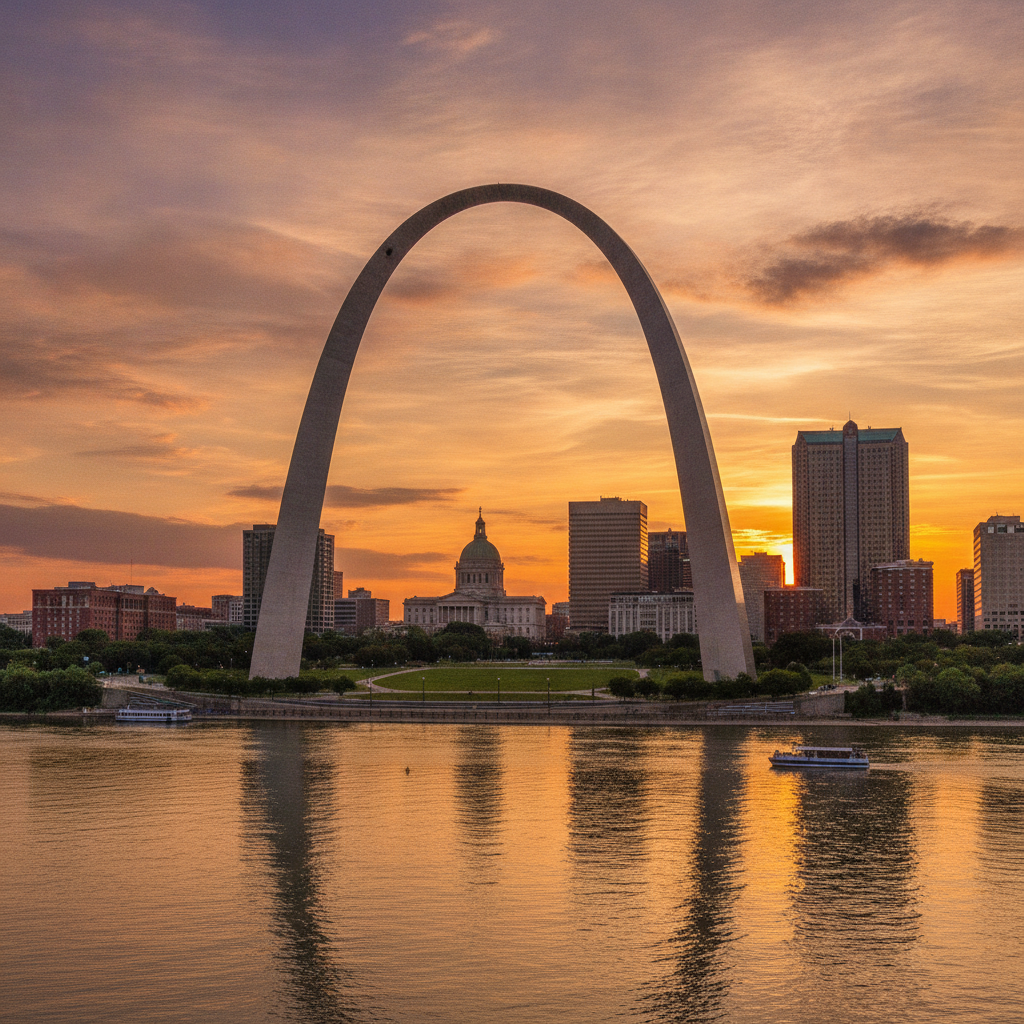
St. Louis: Gateway Arch, founding history, Forest Park, music, sports, and food
St. Louis: Victorian Parks, Rock and Roll Sidewalks and the Gateway West
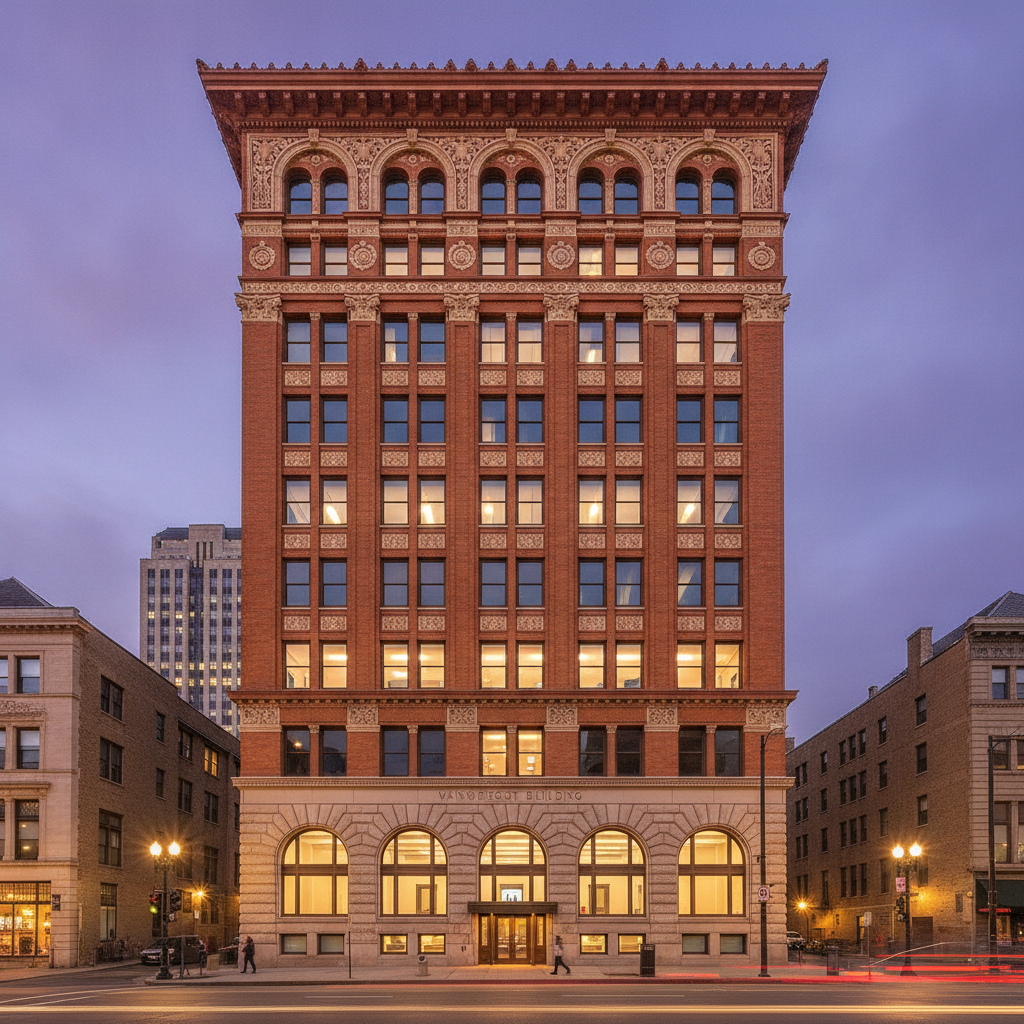
St. Louis R2-R4: Dred Scott (March 6 1857 worst Supreme Court decision, Taney ruling no Black citizenship no Congressional slavery limits precipitated Civil War, Scott freed May 1857, Old Courthouse trial 1846, Ferguson August 9 2014 Michael Brown BLM catalysis), Architecture (Wainwright Building 1891 Sullivan first coherent skyscraper, Old Courthouse cast-iron dome 1862, Union Station 1894 Theodore Link 100,000 daily peak 1940 now hotel aquarium Ferris wheel, Pruitt-Igoe 1956 Yamasaki demolished 1972-1976 symbol failed public housing), Universities (WashU top 20 US #14 25 Nobel laureates T.S. Eliot born St. Louis 1888 Nobel 1948, Saint Louis University 1818 oldest west Mississippi, Cortex USD 2B 450 companies Square Asana biotech), Anheuser-Busch (Budweiser 1876 pasteurization refrigerated rail cars, InBev 2008 USD 52B largest cash acquisition history, craft Perennial Urban Chestnut 4 Hands), 1993 Flood (75,000 sq km 50 dead USD 15B 79 days above flood stage, Cahokia Mounds UNESCO 1982 largest pre-Columbian city north Mexico 10,000-20,000 people, Monks Mound larger base than Giza pyramid abandoned 1300 CE), Neighborhoods (Delmar Divide racial segregation, Loop Walk of Fame Berry Baker Williams Eliot Grant Joplin, Soulard 1779 farmers market oldest west Mississippi Mardi Gras 200,000 second US largest).