Vasa Museum, ABBA Museum & Djurgården — Stockholm's Museum Island
Djurgården (the Royal Djurgård — the large island park east of central Stockholm, formerly a royal hunting preserve, now the museum and recreation island of Stockholm) concentrates the finest museums in Scandinavia: the Vasa Museum (the best-preserved 17th-century warship in the world), the ABBA Museum (the interactive museum of Sweden's most successful cultural export), Skansen (the world's first open-air museum, founded 1891), and the Nordiska museet (the national museum of Swedish cultural history).
- 1
Vasa Museum — The 17th-Century Warship That Sank on Her Maiden Voyage
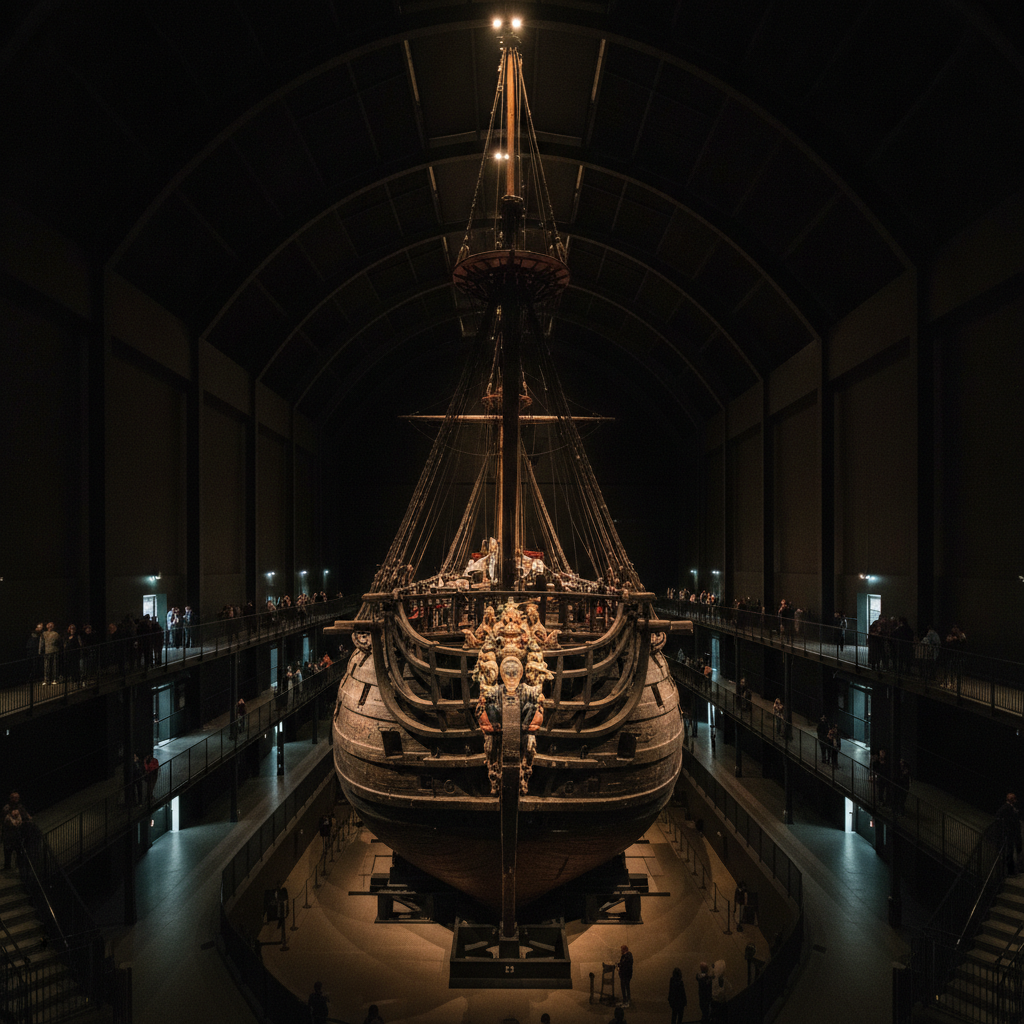
Vasamuseet (Galärvarvsvägen 14, Djurgården — the purpose-built museum housing the Vasa, the Swedish warship that sank on August 10, 1628 (her maiden voyage, within 1,300 metres of the quay where she was launched, after sailing approximately 1,300 metres) and was salvaged from Stockholm harbour in 1961 after 333 years on the seabed — the most visited museum in Scandinavia, with approximately 1.5 million visitors per year): the Vasa (named after the Swedish royal dynasty that commissioned her) was built 1626-1628 as the most powerful warship in the Swedish navy, intended to project the power of King Gustav II Adolf in the Baltic; she sank due to a combination of top-heaviness (the ship was redesigned to add an extra gun deck during construction, making her dangerously unstable) and inadequate ballast; the ship's extraordinary state of preservation (approximately 95% of the original wood and 95% of the original fittings are original, surviving because the cold, brackish water of Stockholm harbour contains no wood-boring organisms) means the Vasa is the most complete example of a 17th-century warship in existence; the stern castle decoration (over 500 carved wooden figures, originally painted in vivid colours (the paint reconstruction is shown in models and holograms)) is the finest surviving example of 17th-century naval art.
- 2
ABBA The Museum — Sweden's Greatest Cultural Export
ABBA The Museum (Djurgårdsvägen 68, Djurgården — the interactive museum dedicated to the history and music of ABBA, opened 2013, the most visited music museum in Scandinavia): ABBA (Agnetha Fältskog, Björn Ulvaeus, Benny Andersson, and Anni-Frid (Frida) Lyngstad) — the Swedish pop group formed in Stockholm in 1972 — is Sweden's most successful cultural export in history, with estimated total record sales of 385 million, making them one of the best-selling music artists of all time; ABBA's importance to Swedish cultural identity is comparable to the Beatles' importance to British cultural identity: their music is inseparable from the Swedish pop (Schlager) tradition, their success created the Swedish music export industry (which has produced more chart hits per capita than any country except the USA and UK), and their brand (including the ongoing Mamma Mia! theatrical and film franchise) continues to generate enormous revenues; the museum features the original ABBA costumes, recording equipment, personal memorabilia, and interactive exhibits including a stage where visitors can perform with virtual ABBA holograms.
- 3
Skansen — The World's First Open-Air Museum
Skansen (Djurgårdslätten 49-51, Djurgården — the open-air museum and zoo founded in 1891 by the ethnographer Artur Hazelius (who also founded the Nordiska museet) — the world's first open-air museum, the template for all subsequent open-air museums and folk museums globally): Skansen occupies 30 hectares on the Djurgården hilltop and contains approximately 160 historical buildings relocated from across Sweden (farmsteads, windmills, manor houses, craftsmen's workshops, a 19th-century town quarter), staffed by interpreters in period costume demonstrating historical crafts (glassblowing, weaving, baking, candlemaking) in their original settings; Skansen also contains a Nordic zoo (with moose (älg), reindeer (ren), wolverine (järv), brown bear (björn), wolf (varg), lynx (lo), and eagle owl (berguv)) and the Skansen Aquarium; Skansen is the centre of Swedish Midsommar (Midsummer) celebrations (the biggest public holiday in Sweden, the Friday nearest the summer solstice — the Midsommarstången (the Midsummer pole) raising ceremony at Skansen is the most televised annual event in Sweden) and Swedish Christmas traditions.
- 4
Nordiska museet — Swedish Cultural History
Nordiska museet (Djurgårdsvägen 6-16, Djurgården — the national museum of Swedish cultural history and folk art, in the extraordinary Renaissance Revival building (completed 1907, designed by Isak Gustaf Clason in the style of the Nordic Renaissance) with its 79-metre tower: the museum houses the largest collection of objects documenting Swedish cultural history (approximately 1.5 million objects), including Sweden's finest collection of folk textiles, furniture, decorative arts, and historical clothing; the centrepiece of the main hall is the enormous carved oak statue of Gustav Vasa (the founder of Sweden as an independent kingdom, 1523) by Carl Milles (1924); the museum's collection of Sámi culture and art (the indigenous Sámi people of northern Scandinavia, whose traditional homeland (Sápmi) extends across northern Sweden, Norway, Finland, and the Kola Peninsula of Russia) is the most comprehensive in Sweden.
- 5
Djurgårdsbrunnsviken & the Djurgården Walk
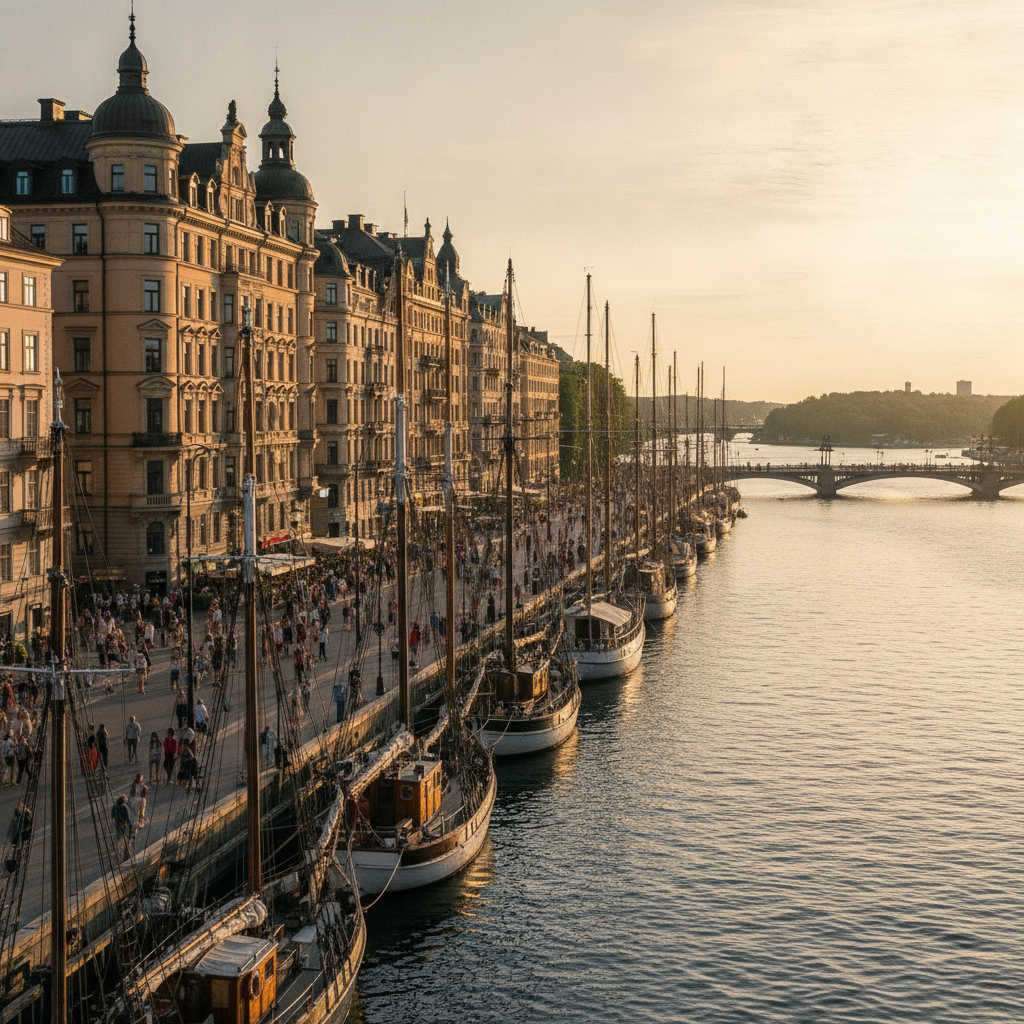
Djurgårdsbrunnsviken (the inlet on the northern side of Djurgården, between the museum island and the Ladugårdsgärdet plain) and the Djurgårdskanalen (the canal on the western side of Djurgården — a favourite Stockholm Sunday walk along the canal bank under the elm trees, ending at the bridge to Strandvägen): the Djurgården island park provides Stockholm's finest urban green escape, with 270 hectares of parkland, mature tree avenues, lakes, and the Rosendal Palace (the early 19th-century palace of King Karl XIV Johan (Bernadotte), in the Empire style, surrounded by the Rosendal Garden (Rosendalsträdgården) — the famous organic kitchen garden and café that has been one of the defining Stockholm food-culture destinations since the 1980s); the Djurgårdsbroen (the bridge connecting Djurgården to Strandvägen) and the Strandvägen boulevard (the most elegant street in Stockholm, lined with late 19th-century apartment palaces and the sailing vessels and yachts of the private pleasure boat harbour) complete the experience.
- 6
Biologiska museet & Thielska Galleriet — Hidden Gems of Djurgården
Biologiska museet (the 1893 natural history museum in a Norwegian stave church-inspired building, with a unique circular panoramic diorama of Nordic wildlife (the only surviving example of a late 19th-century panoramic wildlife diorama in Sweden)) and Thielska galleriet (Sjötullsbacken 8 — the private art gallery in the villa of the banker and art collector Ernest Thiel (1859-1947), containing the finest private collection of Swedish and Nordic art from the late 19th and early 20th centuries (works by Edvard Munch, Carl Larsson, Bruno Liljefors, Ernst Josephson, and Anders Zorn) in a villa setting on the eastern tip of Djurgården): Thielska galleriet is the finest small art museum in Stockholm and one of the finest in Scandinavia, combining the art collection with the original villa interiors and gardens designed by Ferdinand Boberg (1897); the collection includes Munch's 'The Kiss' and multiple portraits, making it the most important Munch collection in Sweden.
Walk this route with audio
Stories play automatically as you reach each stop — no tapping needed.
More in stockholm
Södermalm — Stockholm's Creative Quarter, Fotografiska & City Hall
Midnight Sun, Midsommar & Stockholm's Seasons
Swedish Food in Stockholm — Meatballs, Husmanskost & New Nordic
Gamla Stan — Stockholm's Medieval Old Town & Royal Palace
Strandvägen, Östermalm & the Stockholm Waterfront