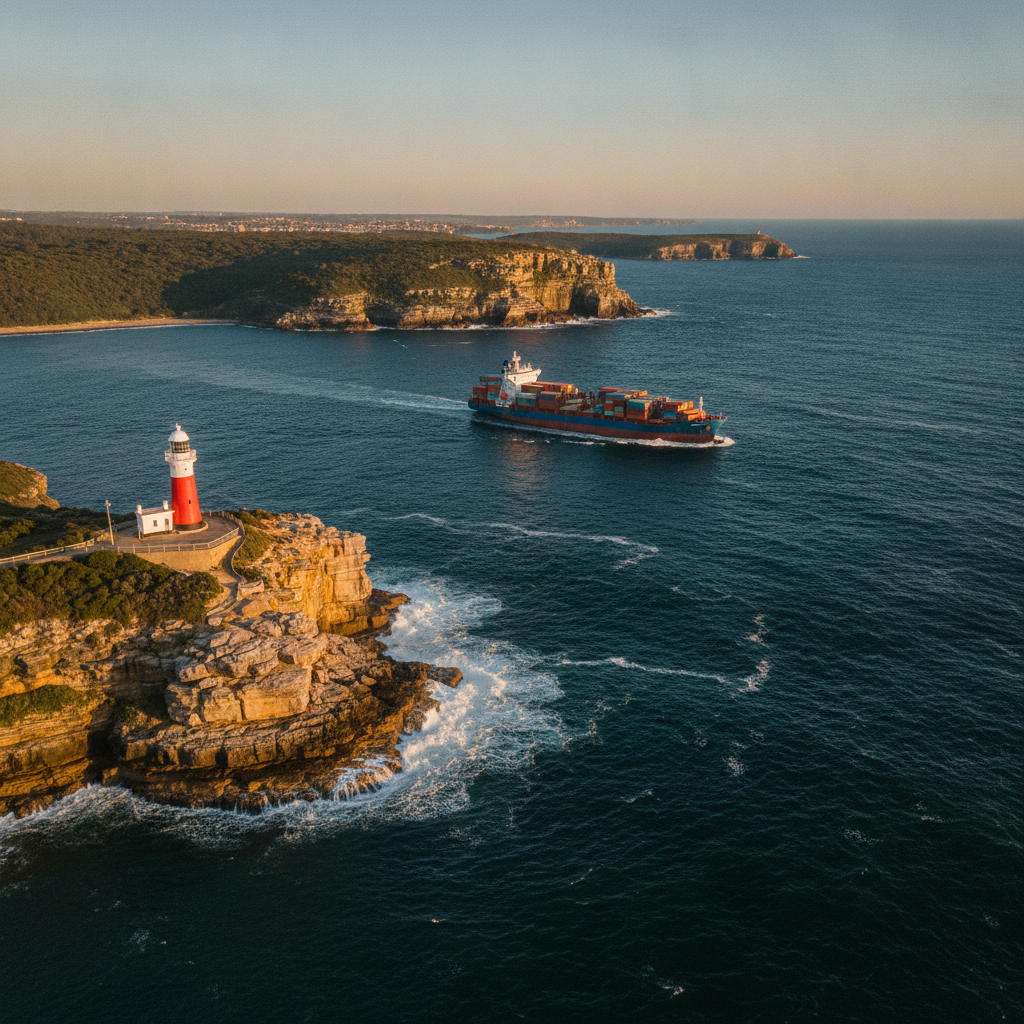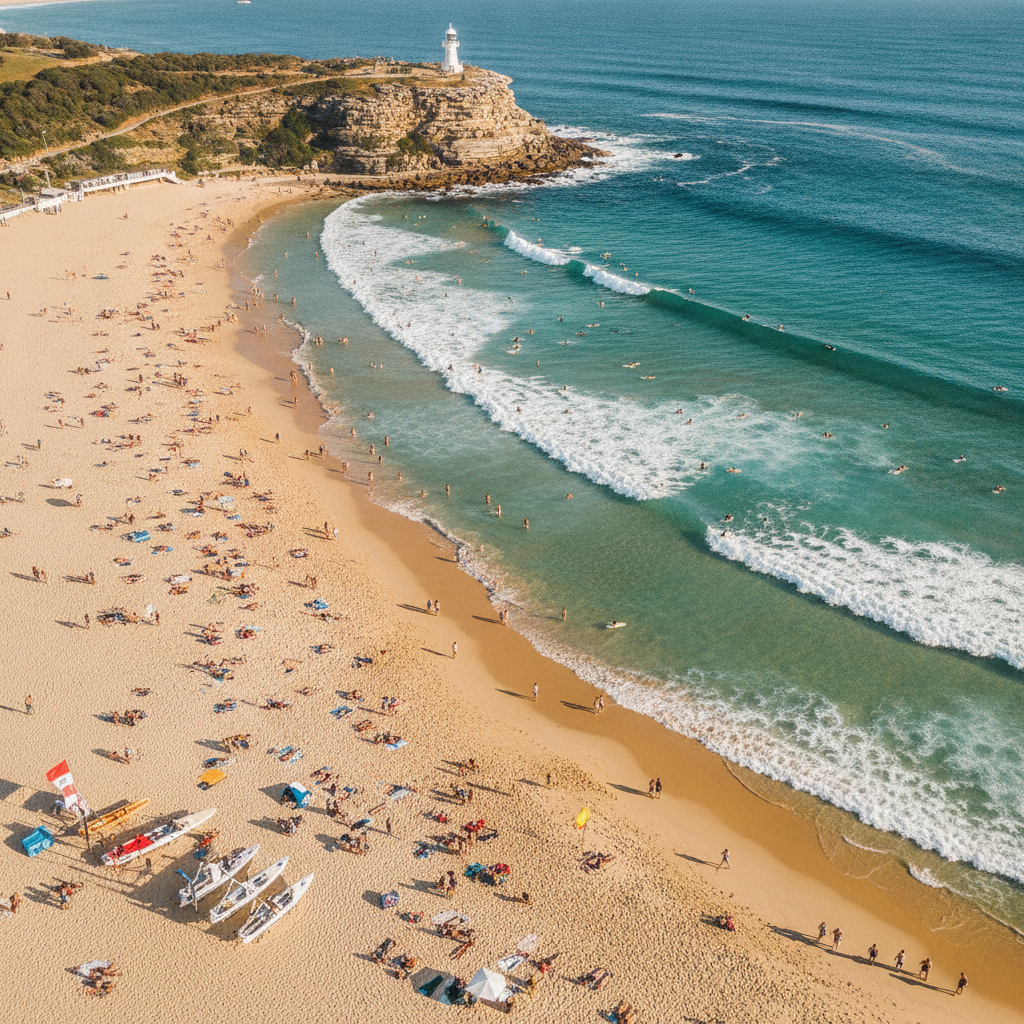
Bondi to Coogee: Australia's Most Famous Coastal Walk
The Bondi to Coogee Coastal Walk — a 6-kilometer clifftop path along the Sydney Eastern Suburbs coastline, passing through four beaches (Bondi, Tamarama, Bronte, Coogee) and offering continuous views of the Pacific Ocean over sandstone headlands — is the most walked trail in Sydney and one of the most celebrated coastal walks in the world. Bondi Beach itself is the cultural heartland of Sydney's beach culture and one of the most recognized beaches on earth.
1. Bondi Beach (Boondi) — Australia's Iconic Beach
- 1
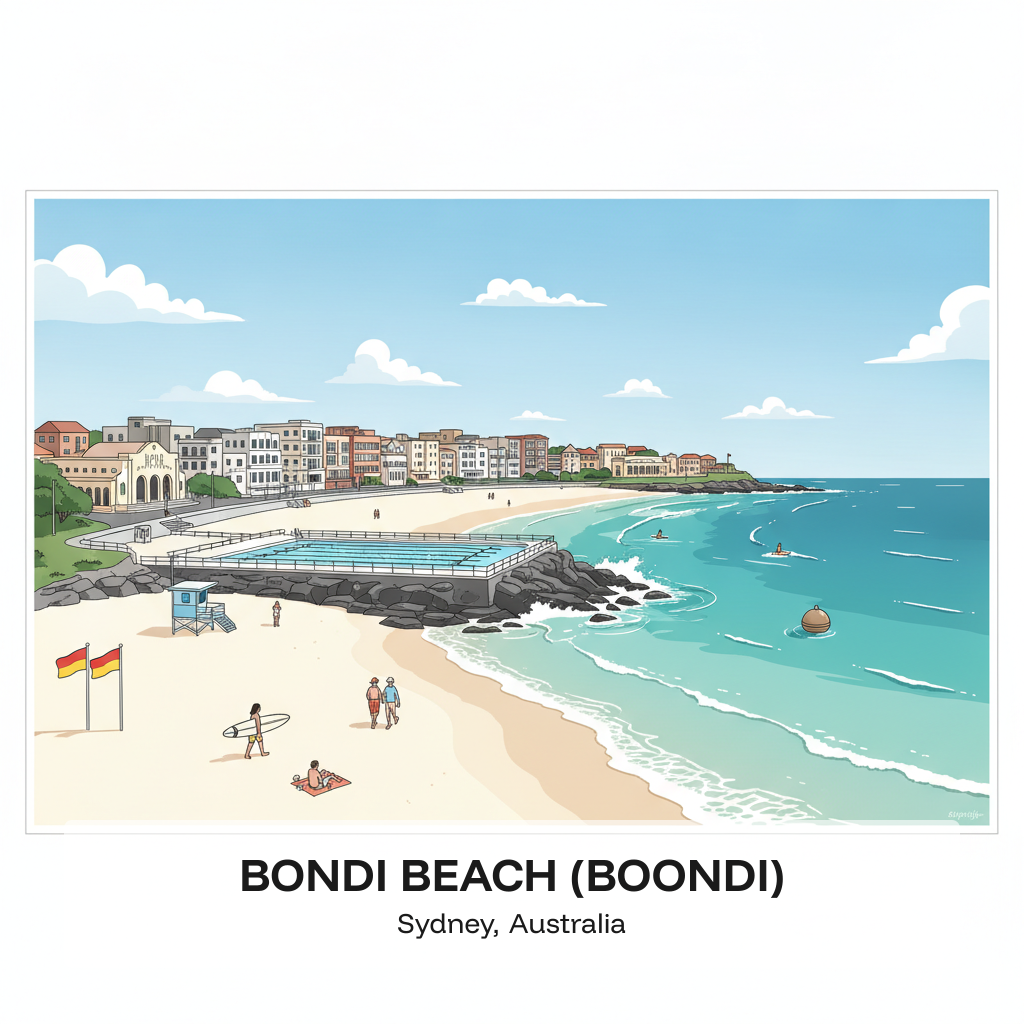
Bondi Beach (Boondi) — Australia's Iconic Beach
Bondi Beach — a 1-kilometer arc of white sand in the Eastern Suburbs of Sydney, owned by Waverley Council, gazetted as a public reserve in 1882 (one of the first public beaches in the world), the site of the world's first Surf Life Saving Club (1907) — is the most famous beach in Australia and one of the ten most recognized beaches on earth. The word 'Bondi' comes from the Dharawal language word 'Boondi,' meaning 'water breaking over rocks' or possibly 'sound of breaking waves.' The beach receives approximately 2.5 million visitors per year and is often counted among the most visited tourist sites in Australia. Bondi's cultural identity is defined by its surf culture (consistent 2-3 foot beach break suitable for learners; the dominant swells come from the south-southeast in winter, generating larger, more powerful waves), its cosmopolitan mix (a significant proportion of the residents are British, Irish, South African, and Israeli immigrants, giving it the nickname 'Bondi Beach — almost Australia'), and the Bondi Icebergs Swimming Club (founded 1929, in the rock pool at the southern end of the beach, famous for its ocean saltwater pool that is washed over by waves in heavy seas, the most famous ocean pool in Australia).
- 2
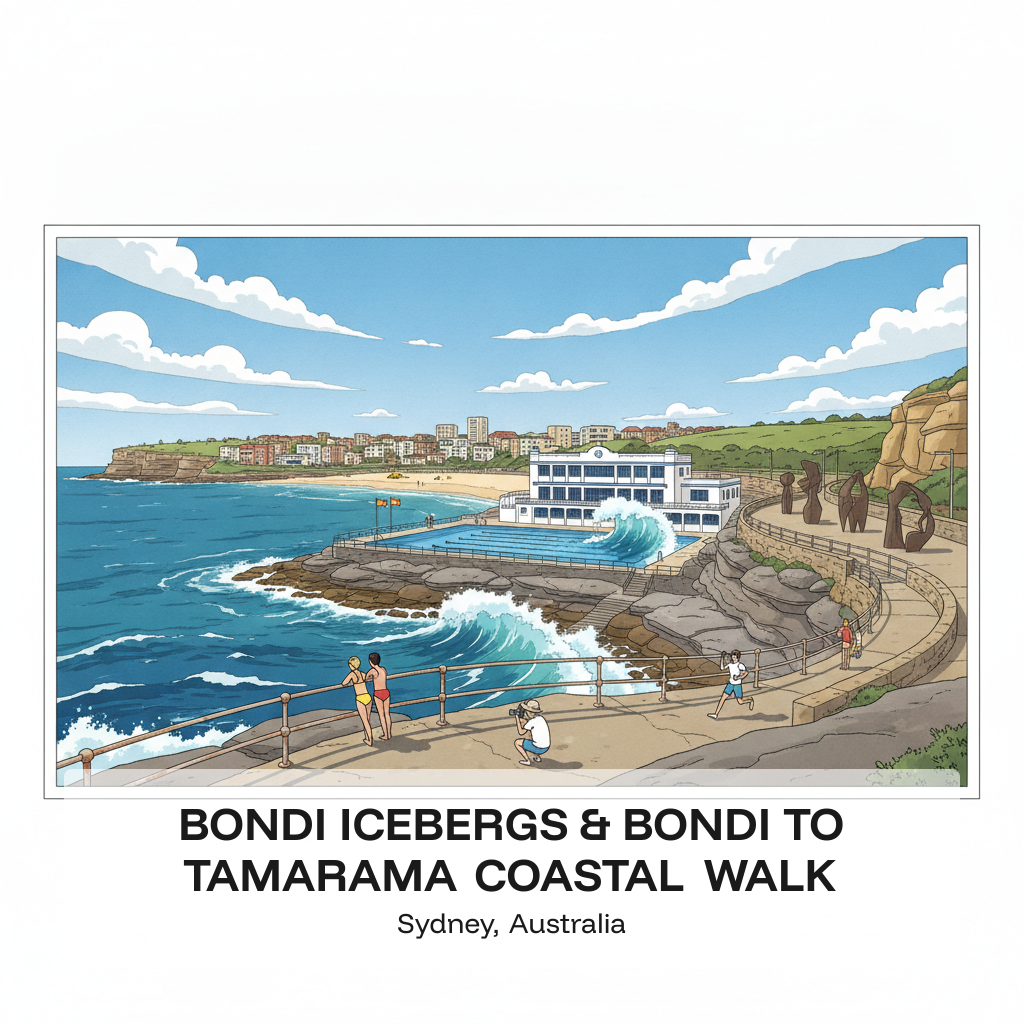
Bondi Icebergs & Bondi to Tamarama Coastal Walk
The Bondi Icebergs Swimming Club (1 Notts Avenue, Bondi, founded 1929 by a group of men who swam through winter to keep fit enough to lifesave — membership requires swimming at the Icebergs pool three out of four Sundays for five consecutive winter seasons) — perched on the rocks at the southern end of Bondi Beach, with the ocean pool itself extending over the rock shelf and frequently inundated by waves — is the most photographed building associated with Bondi Beach, its blue and white saltwater pool providing the classic Bondi postcard image. The adjacent Bondi to Coogee Coastal Walk begins here, heading south past the Marks Park headland (Tamarama Headland, home to the annual Sculpture by the Sea exhibition since 1997, the world's largest free outdoor sculpture exhibition with 100+ works over 2 kilometers of clifftop) to Tamarama Beach ('Glamarama' in local slang, 110 meters of beach enclosed between two high sandstone headlands, the most powerful and dangerous surf beach in Sydney, with 25+ rock fishermen drowning from the headlands over the past century).
- 3
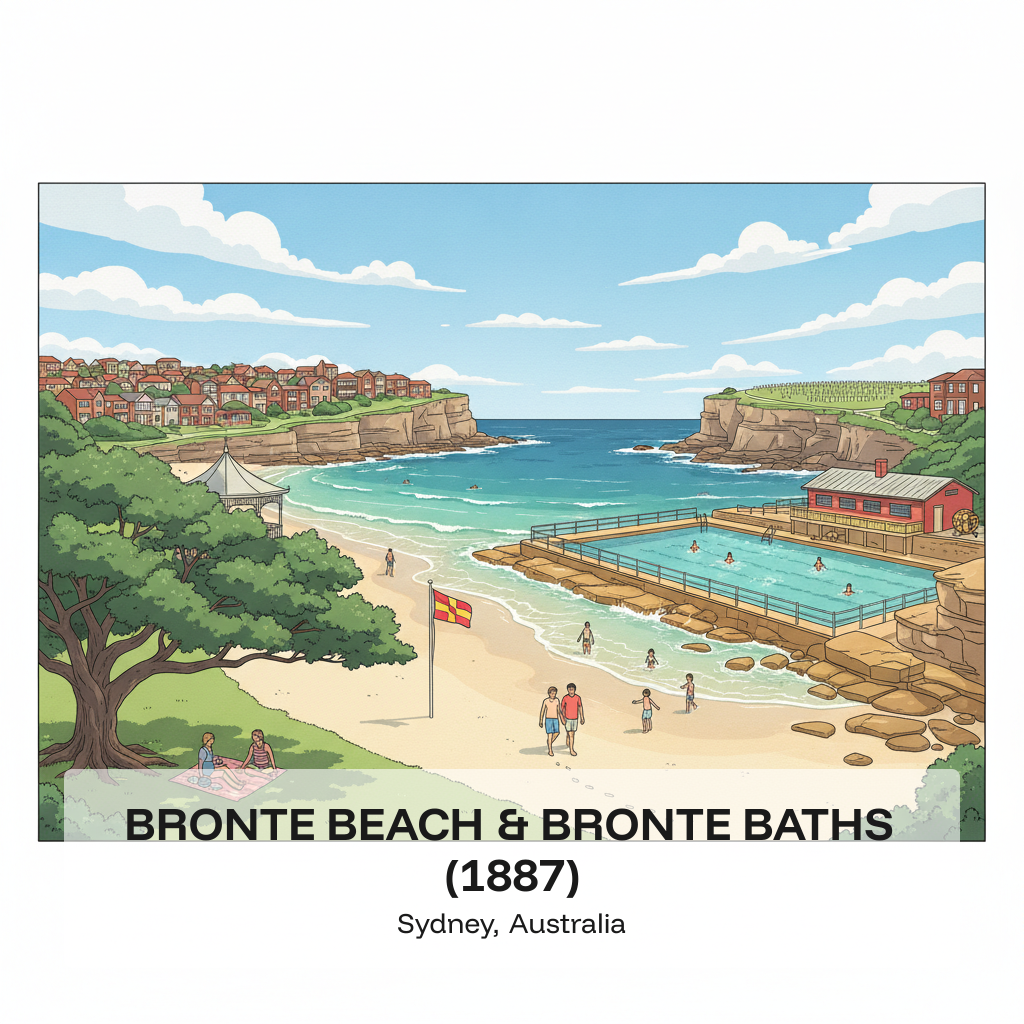
Bronte Beach & Bronte Baths (1887)
Bronte Beach — a 180-meter beach in a sheltered gully between two sandstone headlands, backed by Bronte Park (a reserve of lawn and Morton Bay figs used for family picnics since the 1870s, with the oldest surviving rotunda in Sydney), the local family beach of the Eastern Suburbs — contains the Bronte Baths (1887, a rock pool carved into the sandstone at the southern end of the beach, the oldest outdoor ocean pool in Australia, fed by the sea through gaps in the rock and maintained by the Bronte Surf Life Saving Club since 1903). The Bronte Surf Life Saving Club (1903, Australia's second-oldest surf club, founded one year before Bondi's but with contested priority claims) patrols the beach; the club's members are responsible for the Bronte to Tamarama swimming race (the 'Cole Classic' ocean swim, founded 1983, 2 km ocean swim, 3,000+ participants, the largest ocean swim event in Australia). The Waverley Cemetery (1877, the clifftop cemetery between Bronte and Coogee, 54,000 graves on the clifftop overlooking the Pacific, the most spectacularly situated cemetery in Australia) contains the graves of Henry Lawson (Australian poet), Dorothea Mackellar ('My Country' author), and Victor Trumper (legendary cricket batsman).
- 4
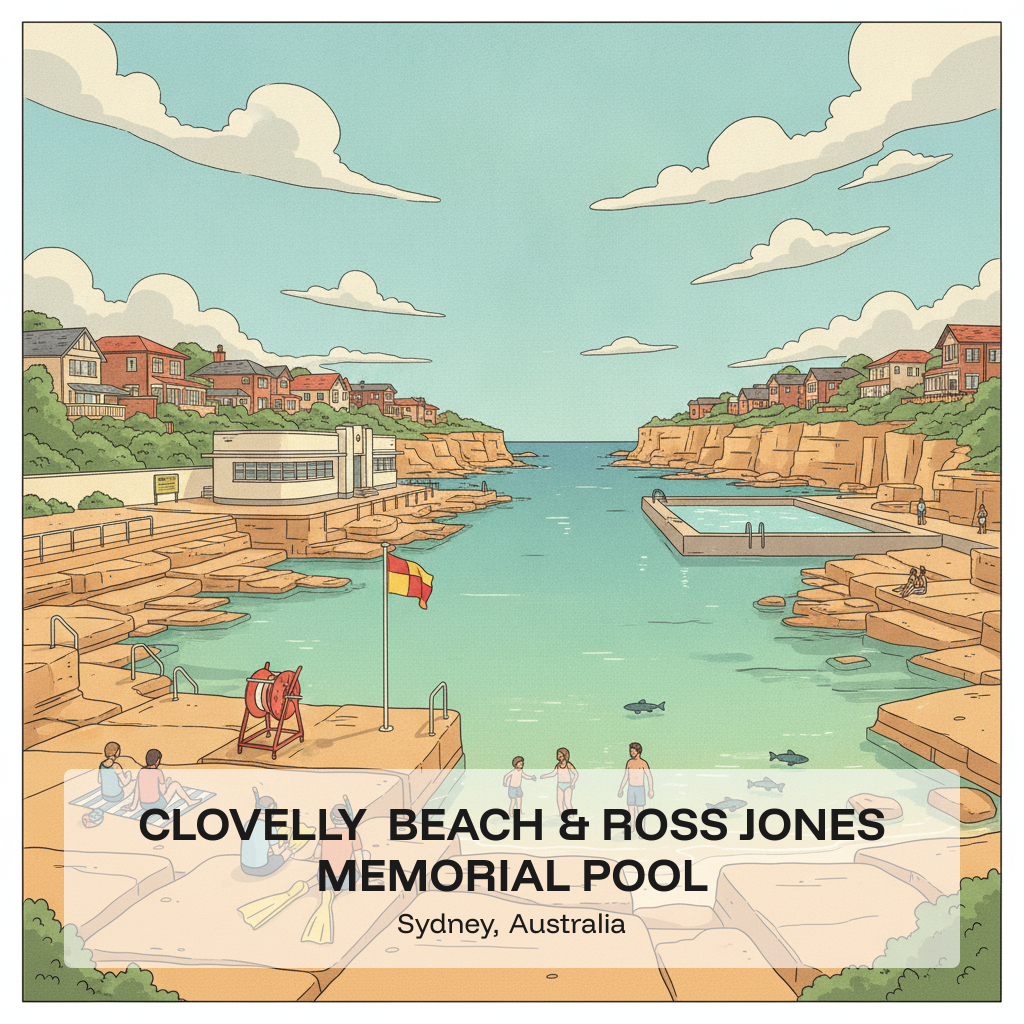
Clovelly Beach & Ross Jones Memorial Pool
Clovelly Beach — a narrow, protected inlet (70 meters × 25 meters) carved by wave action into the sandstone headland between Bronte and Coogee, with no sand (entirely rocky bottom), sheltered from ocean swell by the headland — is one of the most unusual beaches in Australia: a calm, protected snorkeling environment in the middle of an exposed ocean coastline. The inlet is beloved by families with small children (no surf, calm water) and snorkelers (clear water, abundant fish). The 1938 Art Deco change-room building at the head of the inlet is a local heritage landmark. Clovelly is also the site of Gordon's Bay, a protected underwater nature reserve immediately south of the headland (the only underwater nature reserve in Sydney Harbour National Park, established 1969), where an underwater snorkeling trail leads divers through kelp forests, rocky reefs, and schools of luderick. Clovelly was the childhood home of Australian Prime Minister Bob Hawke (1929-2019, Prime Minister 1983-1991).
- 5
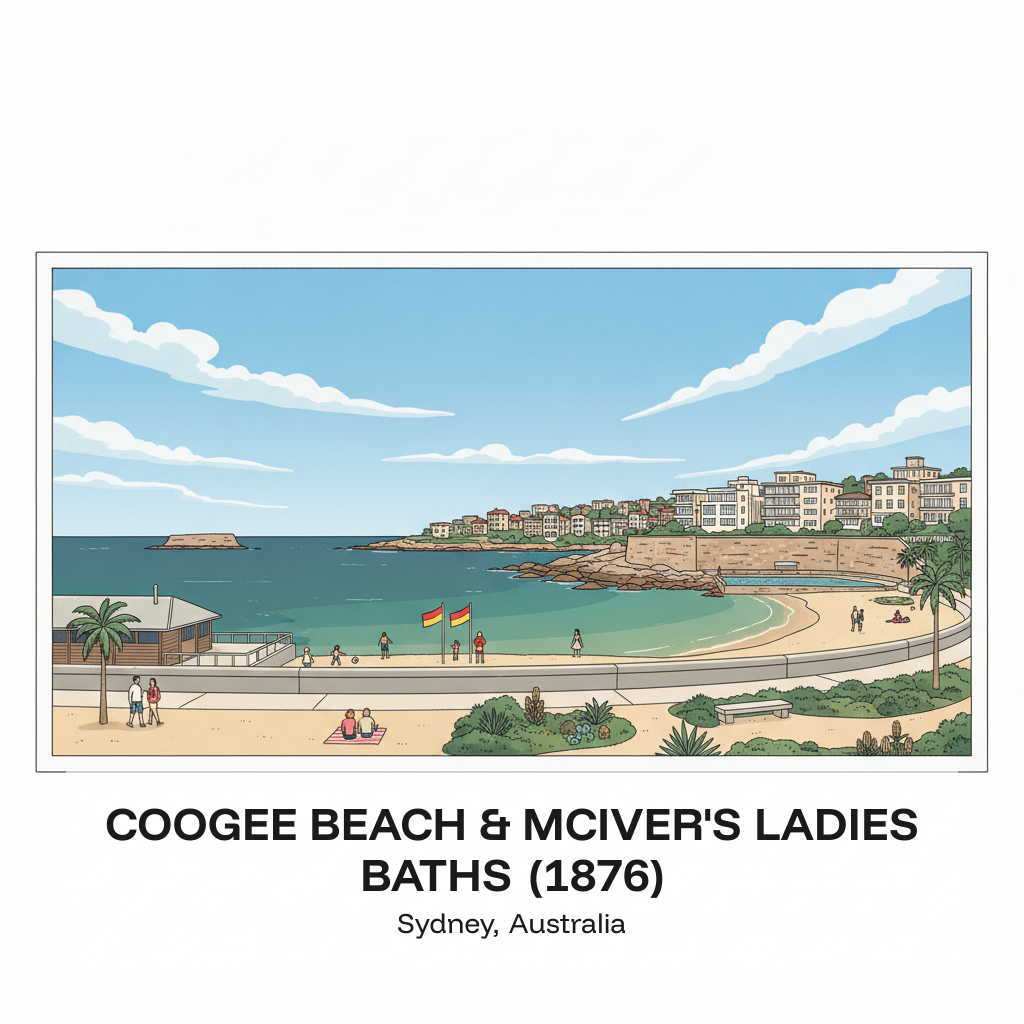
Coogee Beach & McIver's Ladies Baths (1876)
Coogee Beach — a 400-meter beach in the middle of a deep crescent-shaped bay between Wedding Cake Island to the south and Dolphin Point to the north, the end point of the Bondi to Coogee Coastal Walk — is the most sheltered of the Eastern Suburbs beaches and the most heavily used by local residents (the Eastern Suburbs is the most densely populated area of Sydney). The adjacent McIver's Ladies Baths (1876, a rock pool at the northern end of Coogee Beach enclosed by a high wall, accessible only to women, girls, and children — the last gender-restricted public bath in Australia) has been maintained continuously since 1876 by the Eastern Suburbs Women's Swimming Association; it is listed on the New South Wales State Heritage Register. Coogee was devastated by the Bali bombings of October 12, 2002: 6 of the 88 Australians killed in the bombings were from Coogee, and the Coogee Dolphins rugby league football club lost 6 members in the Bali attacks; the Coogee Beach Memorial Garden (2003) is one of the most visited memorial sites in Sydney.
- 6
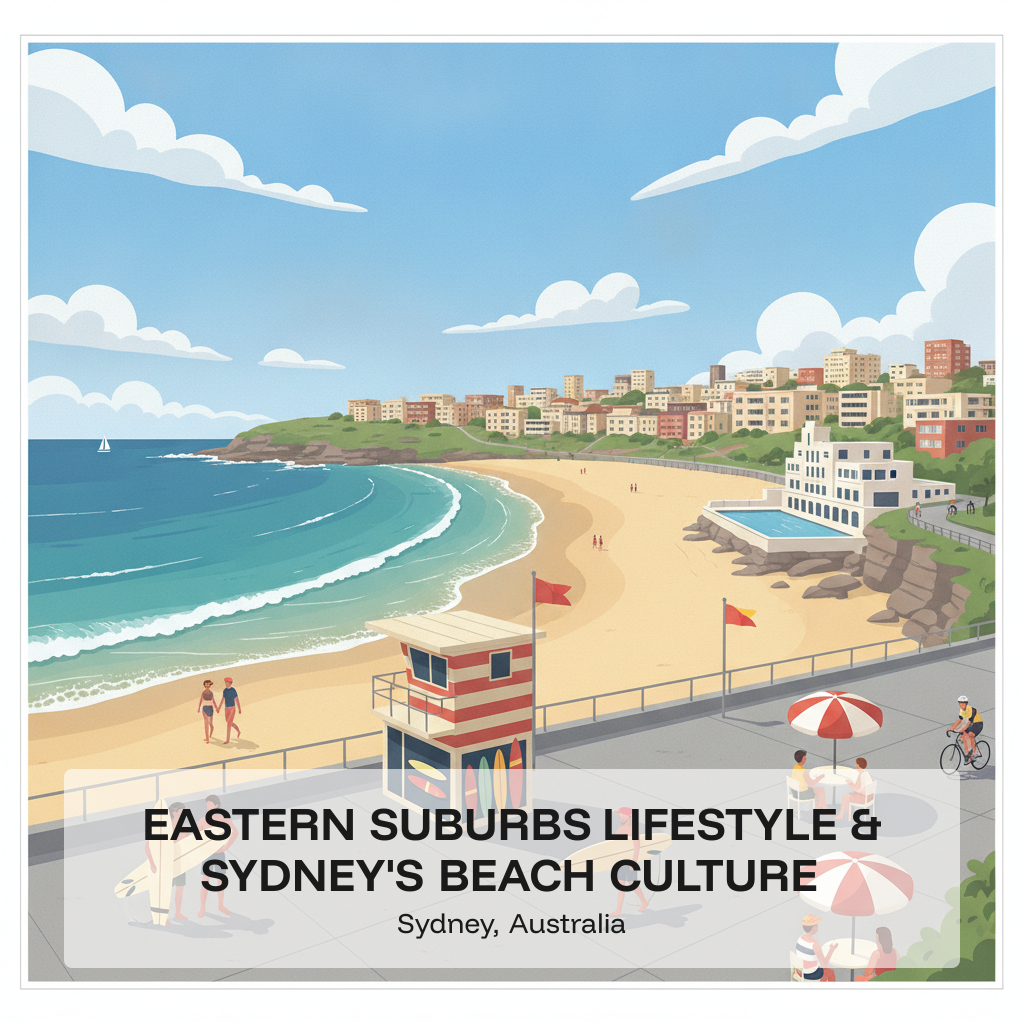
Eastern Suburbs Lifestyle & Sydney's Beach Culture
The Eastern Suburbs (the coastal strip from Bondi to Cronulla, approximately 30 square kilometers) — bounded by the harbor to the north and west, the ocean to the east, and extending south through Coogee, Maroubra, and Cronulla — is the defining lifestyle zone of Sydney: high density, high property values (median house price $3+ million), year-round outdoor dining and swimming culture, and a surf culture that shapes the identity of Australian popular culture internationally (surf clothing brands Billabong, Rip Curl, and Quiksilver were all founded by Eastern Suburbs residents). The cultural contribution of the Eastern Suburbs to Australian identity is disproportionate: the beach scene, the 'Ocker' and 'Bogan' cultural stereotypes, the Australian informality ('she'll be right'), and the premium placed on outdoor physical activity (swimming, surfing, running, cycling) that defines the international image of Australia all have their strongest expression in the Eastern Suburbs of Sydney. The Sydney to Hobart Yacht Race (since 1945) departs from Sydney Harbour on December 26 (Boxing Day) each year, passing the Eastern Suburbs coastline, with the start line visible from Bondi Beach.
Walk this route with audio
Stories play automatically as you reach each stop — no tapping needed.
More in sydney
Manly Ferry, North Head & Scenic Headland: The World's Most Beautiful Ferry Crossing
Darling Harbour, Chinatown & Barangaroo: Sydney's Western Waterfront
Blue Mountains, Katoomba & Jenolan Caves: A World Heritage Day Trip from Sydney
Sydney Opera House, Circular Quay & The Rocks: The Iconic Harbour Foreshore
Newtown, Surry Hills & Paddington: Sydney's Inner City Cultural Corridor