Manly Ferry, North Head & Scenic Headland: The World's Most Beautiful Ferry Crossing
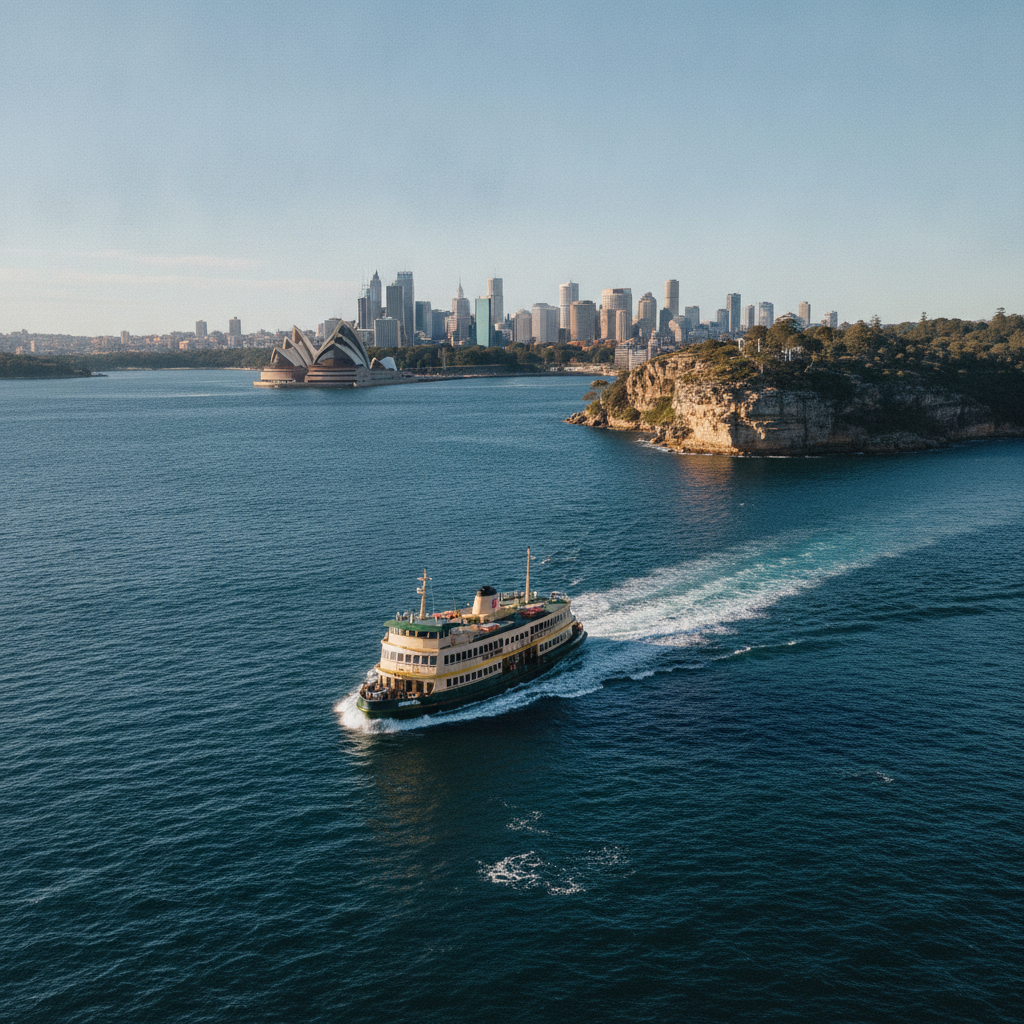
The 30-minute Manly Ferry journey from Circular Quay to Manly is widely described as one of the finest harbour crossings in the world — traversing the full length of Sydney Harbour, passing under the Bridge, along the northern foreshore, and arriving at the ocean beach settlement of Manly, where the Sydney Harbour National Park's North Head headland preserves the wild sandstone landscape as it appeared to the First Fleet in January 1788.
- 1
Circular Quay Ferry Terminal — Departure Point
Circular Quay (the historic ferry terminal, established as the landing point for the First Fleet in 1788, the first point of European settlement in Australia) — the departure point for the Manly Ferry (operated by Transdev and NSW Ferries since 1855; the Freshwater-class ferries used on the Manly route, built in Newcastle in 1981-1986, were specifically designed for the 11.5-kilometre harbour crossing and are capable of carrying 1,100 passengers each, the most passenger-dense public ferry service in the Southern Hemisphere) — is also the departure point for all harbour ferry services: to Taronga Zoo, Watsons Bay, Balmain, Parramatta, and the eastern suburbs. The ferry to Manly departs every 30 minutes during peak hours; the journey takes exactly 30 minutes. From the upper deck, the crossing provides views of: the Opera House (departing to port), Fort Denison (Pinchgut Island, the 1840 Martello tower in the middle of the harbour, a fortification built to defend against a feared Russian naval attack that never came, now a café and heritage site), the Harbour Bridge (passing to port on departure), and the full sweep of the northern harbour foreshores.
- 2
Manly Beach & Manly Corso (1853)
Manly (the ocean-front suburb at the tip of the Manly Peninsula, named by Governor Arthur Phillip in January 1788 after he observed the 'manly' bearing of the Gayamaygal Aboriginal people he met there) — a settlement simultaneously facing Sydney Harbour to the west and the Pacific Ocean to the east, connected to both by a 500-metre pedestrianized promenade called The Corso (inspired by the Boulevard des Italiens in Paris; the name 'Corso' was given by Henry Gilbert Smith, the entrepreneur who developed Manly as a beach resort in 1853, modelling it on fashionable European seaside resorts, and who brought the first ferry service to Manly in that same year) — is dominated by Manly Beach (1.5 kilometres of ocean beach facing northeast, the beach where the first surf lifesaving club in Australia outside Sydney was established in 1903, and where the first surf carnival in Australia was held in 1906; Manly is also the location of the first surf club in Australia to allow women to compete as lifesavers, the Manly LSC, which admitted women in 1980). The Manly Ferry Wharf (the arrival point, with the Victorian-era wharf building, the kiosk, and the first view of The Corso leading to the beach) is one of the most photographed arrival points in Australia.
- 3
Shelly Beach & St Patrick's Seminary Heritage (1889)
Shelly Beach (the only protected ocean beach in Manly, reached by walking south along the beachfront from Manly Beach for 800 metres around the headland of Fairy Bower; an east-facing marine reserve bay protected by the headland from the prevailing southerly swell, with calm clear water, abundant marine life — including resident blue gropers, octopus, Port Jackson sharks, and sea dragons — and the Boathouse at Shelly Beach restaurant, 1920s-era heritage-listed kiosk building now operating as a café and restaurant) — is the finest snorkeling site in Sydney Harbour National Park and one of the finest shallow-water dive sites in Australia. The St Patrick's Seminary (171 Darley Road, Manly, 1889-2008, a Gothic Revival sandstone seminary complex designed by William Wardell — the same architect who designed St Mary's Cathedral and St Patrick's Cathedral Melbourne — occupying 17 hectares on the Manly headland, operated as a Catholic seminary for 119 years before being sold to a developer in 2008 and now converted into residential apartments, the 'SEMINARY MANLY' heritage-listed complex retains its chapel, cloisters, and grounds).
- 4
North Head Sanctuary & Quarantine Station (1828)
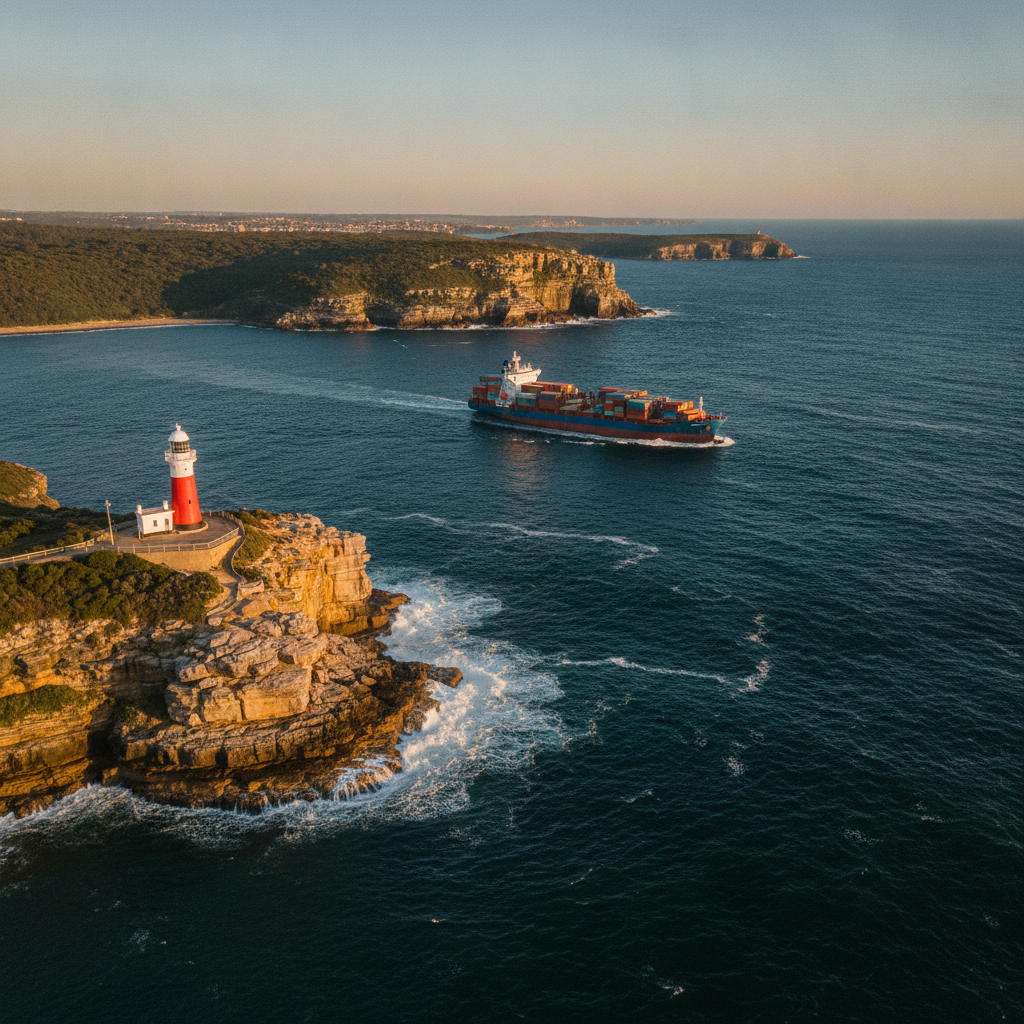
North Head (the southern headland of the Manly Peninsula, part of Sydney Harbour National Park, accessible by bus from Manly via North Head Scenic Drive) — the most significant historical and ecological site on Sydney Harbour — preserves: the North Head Quarantine Station (1828-1984, the longest-operating quarantine station in Australian history; over 500 people died and were buried in the station's cemetery during its 156-year operation; 13,000 people were quarantined here during the bubonic plague outbreak of 1900; rock-carved inscriptions left by quarantined passengers from the 19th and early 20th centuries are still visible on the sandstone boulders throughout the station grounds; the station is now operated as a heritage hotel, conference centre, and ghost tour venue — the Quarantine Station ghost tours are consistently rated among the most authentic and historically grounded ghost tour experiences in Australia), the North Head Sanctuary (an 87-hectare bushland reserve within the National Park, one of the last urban habitats in the world for the critically endangered little penguin colony — the only mainland little penguin colony on the east coast of Australia north of the Victorian border), and the Fairfax Lookout (the most dramatic harbour lookout in Sydney, with the full panorama of the harbour entrance, the Tasman Sea, the Pacific Ocean shipping lanes, and on clear days the Blue Mountains 65 kilometres to the west).
- 5
Sydney Harbour National Park — Manly to Spit Bridge Walk
The Manly to Spit Bridge Walk (the 10-kilometre harbour foreshore walk along the southern side of the Manly Peninsula and through the Sydney Harbour National Park, passing Aboriginal carvings, WWII fortifications, historical ruins, and 12 harbour beaches) — one of the finest coastal walks in Australia, comparable in quality to New Zealand's Great Walks — passes through: Dobroyd Head (the Aboriginal rock engravings on the headland, the largest surviving collection of Guringai rock art within the National Park boundaries, depicting fish, whales, wallabies, human figures, and canoes, up to 5,000 years old), the Grotto Point lighthouse (1910, the smallest heritage-listed lighthouse in New South Wales), Middle Harbour (the crossing point at Spit Bridge, the bridge that raised every 30 minutes until 1982 to allow yacht mast clearance, replaced by a fixed span that controversially ended the tradition), and Clontarf Beach and Reserve (the beach where Prince Alfred, Duke of Edinburgh, the first member of the British Royal Family to visit Australia, was shot and wounded on 12 March 1868 by Irish nationalist Henry James O'Farrell in an assassination attempt — the failed assassination did not deter later royal visits but triggered the Public Offences Prevention Act 1868, Australia's first anti-Irish legislation).
- 6
Manly Scenic Walkway — Forty Baskets to Reef Beach
The northern arm of the Manly Peninsula (accessible from Manly Wharf by walking north along the harbour foreshore) — the less-visited but equally beautiful counterpart to the Manly to Spit Bridge Walk — passes Forty Baskets Beach (named for the Aboriginal practice of leaving gifts in baskets on the shore as tribute/barter for the Manly ferries that stopped there in the 19th century; a small protected harbour beach with some of the best rock platform snorkelling in metropolitan Sydney), Reef Beach (a naturist beach since 1976, one of three licensed naturist beaches in metropolitan Sydney, accessible only by a 20-minute walk from Manly Wharf or by private boat; the beach faces directly onto Sydney Harbour and is sheltered from ocean swell by the headland), and the Manly Scenic Walkway northern arm finale at Dobroyd Head, where the walk joins the main Manly to Spit Bridge track.
Walk this route with audio
Stories play automatically as you reach each stop — no tapping needed.
More in sydney
Darling Harbour, Chinatown & Barangaroo: Sydney's Western Waterfront
Blue Mountains, Katoomba & Jenolan Caves: A World Heritage Day Trip from Sydney
Sydney Opera House, Circular Quay & The Rocks: The Iconic Harbour Foreshore
Newtown, Surry Hills & Paddington: Sydney's Inner City Cultural Corridor
Bondi to Coogee: Australia's Most Famous Coastal Walk