Sylhet Jaflong Crystal River and Meghalaya Border
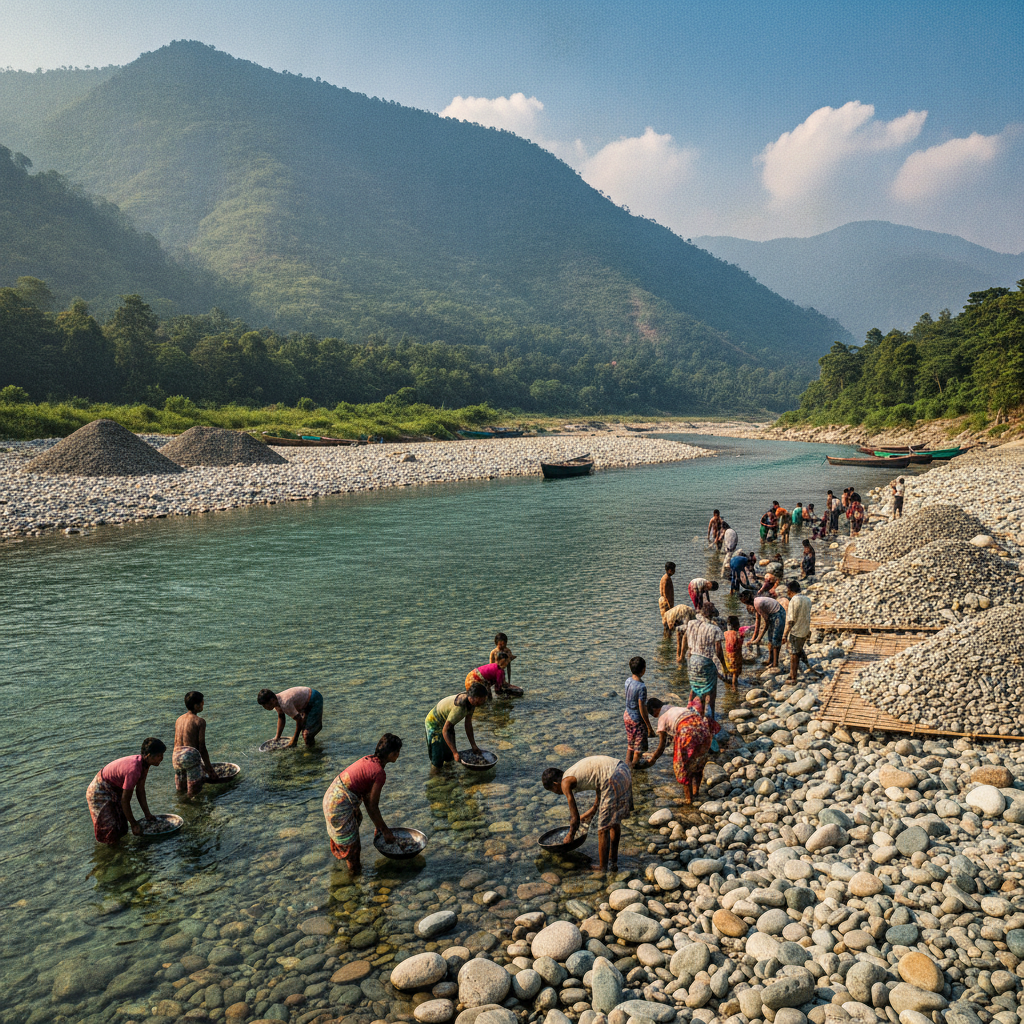
Travel to Jaflong on the Indian border where the Piyain river flows crystal clear from the Meghalaya hills, children collect colorful rounded stones from the riverbed, and the dramatic green hills of the Indian state of Meghalaya rise immediately beyond the river's far bank — one of the most scenic natural landscapes in Bangladesh.
- 1
Jaflong Stone Collection Beach
The famous stone-collecting beach where local laborers, many of them children, wade in the shallow river to gather the smooth, colorful river stones carried down from the Meghalaya hills — the stones sold for construction aggregate in a labor-intensive extraction economy.
- 2
Piyain River Crystal Waters
Stand in the Piyain river where the water is remarkably clear — the river flowing over a bed of multicolored rounded stones in shades of white, grey, orange, and black, the water cold and fast-moving, the current bringing fresh water from the Indian hills.
- 3
Meghalaya Hills Border View
The dramatic view of the Meghalaya hills rising steeply on the Indian side of the border — the green forested slopes of one of the wettest places on earth visible at close range, the international boundary running through the river between the stone collectors and the Indian territory.
- 4
Khasi Village
A village of the Khasi indigenous people, a matrilineal community that spans the Bangladesh-India border — the Khasi of Jaflong maintaining their traditional culture, language, and animist-Christian religious practices distinct from the surrounding Bengali Muslim majority.
- 5
Boat Ride Upstream
Take a wooden boat upstream through the crystal river — the boatman navigating between sandbars and stone deposits, the water so clear the bottom is visible at two meters depth, the hills closing in as the river narrows toward the Indian border.
- 6
Zero Point Border Marker
The border marker where Bangladesh ends and India's Meghalaya state begins — a point visible from the road at Jaflong where the river forms the international boundary, the Indian customs post visible on the far bank and the dramatic waterfall at Dawki visible from the Bangladesh side.
Walk this route with audio
Stories play automatically as you reach each stop — no tapping needed.
More in sylhet
Sylhet Bisnakandi Stone River Canyon Adventure
Sylhet City Life, Diaspora Culture and Modern Bangladesh
Sylhet Srimangal Tea, Rainforest and Lawachara
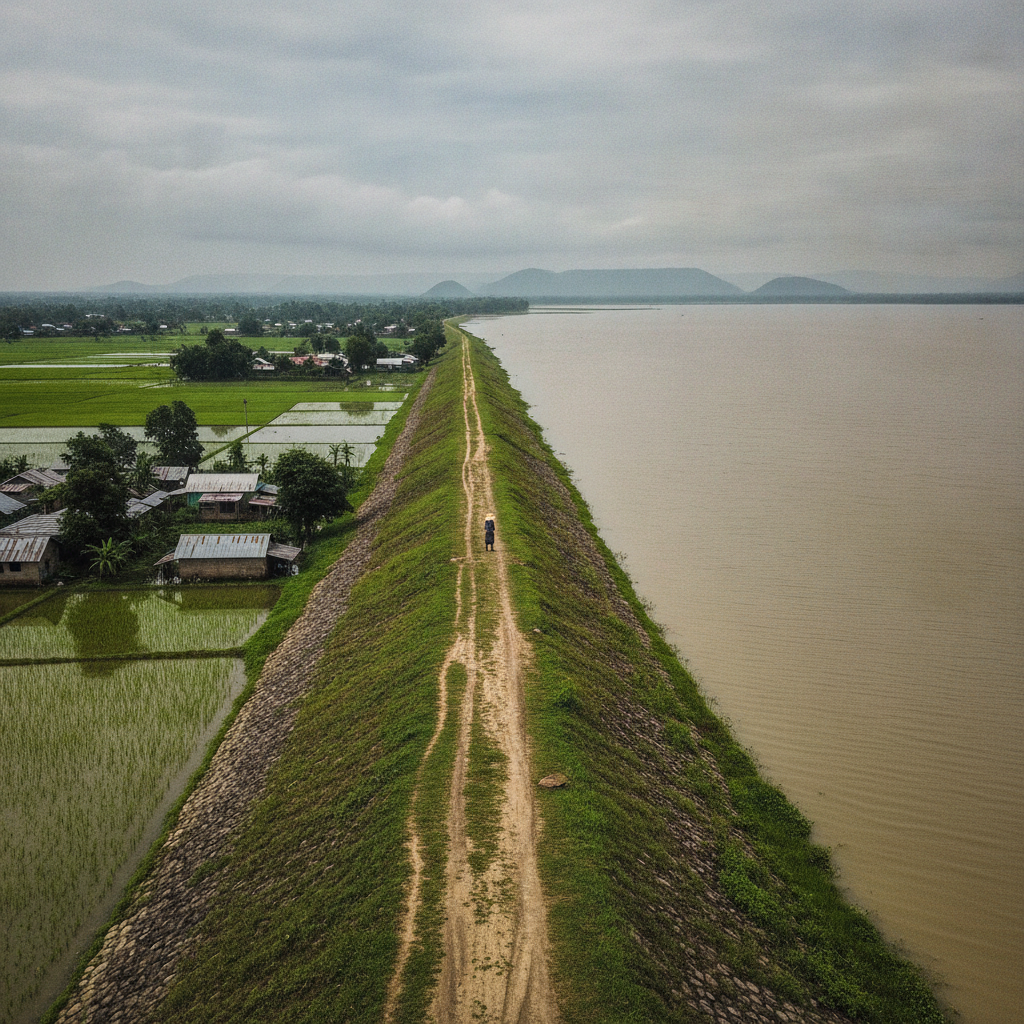
Sylhet Hakaluki Haor Wetland Ecosystem
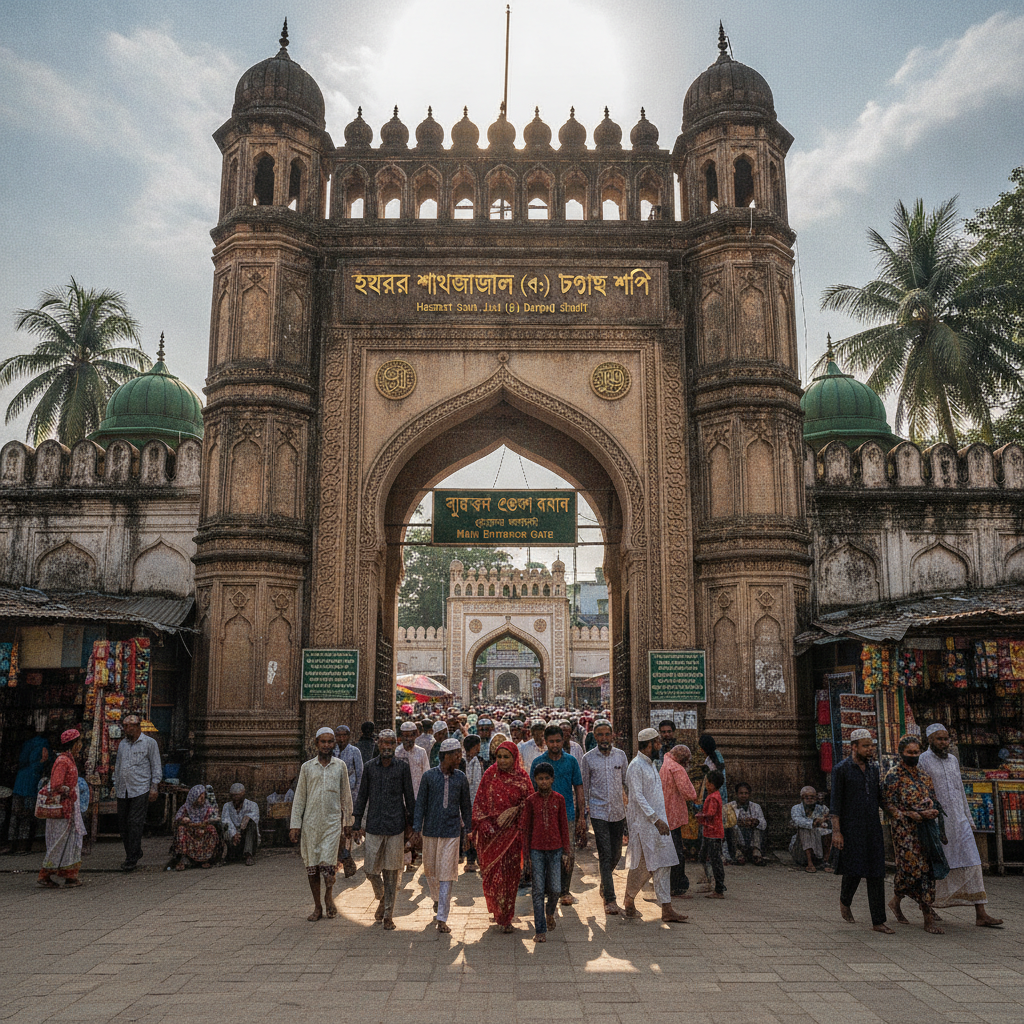
Sylhet Hazrat Shah Jalal Shrine and Sufi Heritage