Tallinn Beyond the Old Town — Kadriorg Palace, KUMU Museum & the World's Most Digital Society
Tallinn's identity extends far beyond the medieval Old Town — the Kadriorg district (Peter the Great's Estonian garden palace), the KUMU contemporary art museum, and Estonia's globally recognized digital society leadership are all essential dimensions of the modern Estonian capital.
- 1
Kadriorg Park and Peter the Great's Palace
Kadriorg (the district 2km east of the Old Town, accessible by tram 1 or 3 from the city centre in 10 minutes, the park and the Baroque palace designed for Peter the Great by the Italian architect Nicola Michetti in 1718-1736, the palace the only Baroque palace in the Baltic states, Peter dying before the completion of the project that was intended as his Estonian summer residence, the palace subsequently used by successive Russian governors): the Kadriorg Palace (the pink and white Baroque palace with the formal Dutch garden, now housing the Foreign Art Museum — the collection of Dutch and Flemish paintings from the 17th-18th centuries, the Russian 18th-19th century paintings, and the Western European decorative arts, €8 adults, Tuesday-Sunday 10am-6pm, the Baroque state rooms the primary architectural attraction), and the Kadriorg Park (the 70-hectare park surrounding the palace, the formal garden in front of the palace the most elaborate Baroque garden in the Baltic region, the park extending to the Russalka Memorial on the Baltic Sea coast, the park the most atmospheric green space in Tallinn, the swans on the ornamental pond in front of the palace the most popular photograph in Kadriorg). The President's Palace (the residence of the Estonian President in the park, the white neoclassical building adjacent to the Kadriorg Palace, the guard changing at noon daily).
- 2
KUMU — the Baltic States' Leading Art Museum
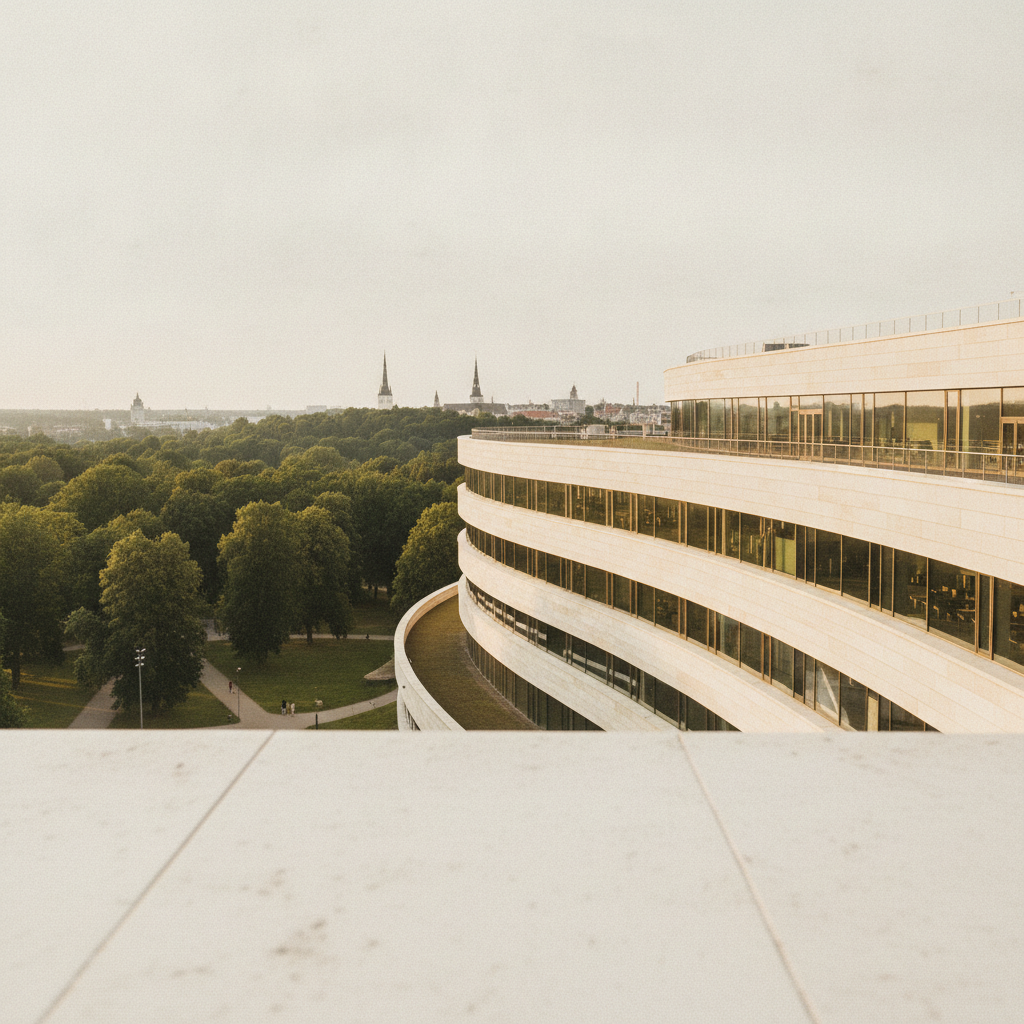
KUMU (Kumu Kunstimuuseum, Weizenbergi 34, the purpose-built art museum opened 2006 in the Kadriorg district, designed by the Finnish architect Pekka Vapaavuori in limestone and glass, the museum winner of the Museum of the Year award 2008, €14 adults, Tuesday-Sunday 10am-6pm, the largest art museum in the Baltic states): the permanent collection (Estonian art from the 18th century to the present, organized chronologically in 8 floors: the Enlightenment period Estonian portraiture, the 19th-century landscape tradition, the Pallas Art Group — the 1919-1940 Estonian modernists trained in Paris who created the golden age of Estonian painting, the works of Konrad Mägi and Eduard Wiiralt the most internationally recognized Estonian artists — the Soviet period collection of officially approved realism and the unofficial underground art, and the post-1991 contemporary Estonian art). The KUMU contemporary exhibitions (the temporary exhibition programme the most internationally connected in the Baltic states, the exhibitions changed 3-4 times per year, the museum the venue for the visiting shows from the major European art institutions). The KUMU view (the panorama terrace on the top floor, the view over Kadriorg Park to the Old Town towers visible 3km west, the best view of the Toompea silhouette from the east).
- 3
e-Estonia — the World's Most Digital Society
Estonia's digital society (the most comprehensive national digital infrastructure in the world, the product of the government's decision in 1997 to make internet access a legal right, the subsequent 25 years of investment in digital public services making Estonia the only country where citizens can vote online, file taxes online, register a company online in 18 minutes, access all medical records online, and use a digital identity card for all government interactions — the e-Residency programme allowing non-Estonians to obtain a digital identity and establish Estonian companies online from anywhere in the world, 100,000+ e-residents from 170 countries registered by 2024): the e-Estonia Showroom (Magasini 12, the demonstration centre for Estonia's digital governance, free, open Monday-Friday 9am-5pm, tours by appointment at the enterprise.ee website, the interactive demonstrations of the X-Road data exchange layer — the distributed architecture behind all Estonian digital services — the digital identity, the e-health, the e-justice, and the e-voting systems, the most complete explanation of how a fully digital government functions). Tallinn as a tech hub (the city has the highest per-capita concentration of tech unicorns in Europe — Skype, TransferWise/Wise, Pipedrive, Bolt all originate from Estonia — the Ülemiste City tech campus adjacent to the airport the physical manifestation of the startup culture).
- 4
Pirita Beach and the Baltic Coast
Pirita (the beach and marina district 5km northeast of the Old Town along the Baltic coast, accessible by bus 1A from the city centre in 20 minutes, the Pirita River mouth creating the small boat harbour, the Olympic regatta harbour constructed for the 1980 Moscow Olympics sailing events — the sailing events relocated to Tallinn when the main Olympics were in Moscow, the harbour infrastructure the most complete Olympic legacy in Estonia): the Pirita beach (the 2km sandy beach on the Baltic Sea north of the harbour, the sea temperature reaching 19-21 degrees in July-August, the beach the most popular in Tallinn in summer, the water calm and shallow in the sheltered bay), the Pirita Convent ruins (the ruins of the 15th-century Bridgettine convent, the most important convent in medieval Estonia, destroyed by the Livonian War in 1577, the Gothic limestone walls of the church standing to their full height despite the roof having collapsed in the 16th century, the ruin the most dramatic medieval ruin in Estonia, free, open daily, the Estonian Song Festival concerts performed within the ruin walls in summer), and the Song Festival Grounds (the 1960 Lauluväljak amphitheatre on the Pirita coast, the open-air stage where the Estonian Song Festival has been held since 1869, the Singing Revolution — the peaceful Estonian independence movement of 1987-1991 expressed through mass singing at the festival grounds — the most important non-violent political event in Estonian history occurring here in 1988 when 300,000 people — one quarter of the entire Estonian population — sang patriotic songs in a single gathering).
- 5
Telliskivi Creative City — the Post-Industrial Quarter
Telliskivi Creative City (Telliskivi 60a, the former locomotive repair workshop complex 1km west of the Old Town, converted from 2009 onwards into the most active creative and cultural district in the Baltic states, the red-brick factory buildings housing: the Fotografiska museum — the Estonian branch of the Stockholm contemporary photography museum, the largest gallery space in Tallinn, €14 adults, open daily 10am-10pm — the weekend market, the independent restaurants and cafes, the music venues, the concept stores and design shops, the architecture practices and creative studios): the Fotografiska Tallinn (the best photography museum in the Baltic states, the temporary exhibitions showing international and Estonian photographers in the brick factory space, the most programmatically active cultural venue in contemporary Tallinn), the PROTO Invention Factory (the interactive science and technology museum in Telliskivi, €12 adults, the Estonian innovation story from the 19th-century mechanisms to the digital present), and the weekend flea market (Saturdays and Sundays 10am-4pm, the design and vintage market with Estonian craft, second-hand clothing, and artisan food — the most relaxed weekend morning activity in Tallinn outside the Old Town). The Balti Jaam Market (the traditional food market adjacent to Telliskivi in the old Baltic Station, the food stalls selling the Estonian produce — the black bread, the smoked fish, the forest mushrooms and berries — the market the correct food shopping destination for visitors self-catering in Tallinn).
- 6
Tallinn Practical — Access, Seasons and the Christmas Market
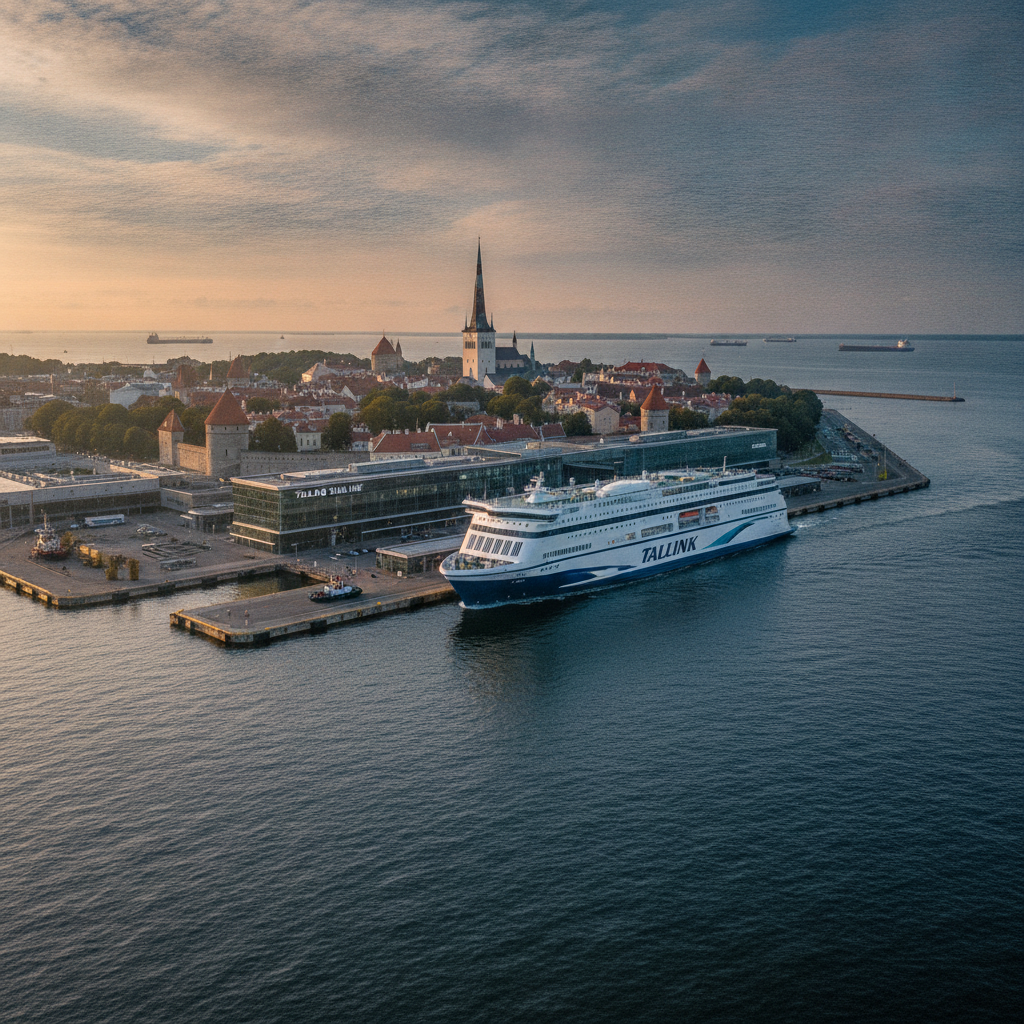
Tallinn practical information: access (the Tallinn Airport 4km south of the Old Town, bus 2 to the city centre in 15 minutes at €2, or taxi at €8-12, direct flights from Helsinki, Stockholm, Amsterdam, London Gatwick on easyJet, Riga, Vilnius, and 30+ European cities; the Tallink and Viking Line ferries from Helsinki in 2 hours — the most used transport connection, 8+ sailings daily, the ferry terminal 1km from the Old Town on the walking route past the Fat Margaret Tower), seasons (summer June-August, the longest days in Europe north of 59° latitude, the midsummer sun setting after 10pm and rising before 4am, the white nights the most atmospheric feature of the Baltic summer, the temperature 18-24 degrees, the outdoor terraces of the Old Town in full activity; winter December-February, the Christmas Market on Raekoja Plats November 26 to January 7, the best Christmas market in the Baltic states, the temperatures -5 to 0 degrees but the Old Town completely walkable in good clothing, the atmosphere of the gas-lit medieval streets in the winter dark the most romantic in Northern Europe), accommodation (the Old Town hotels in restored medieval houses €80-180/night in season, the Telliskivi district hotels €60-120, the apartment rentals the most cost-effective option for 3+ nights at €40-80/night for the full apartment). The Song Festival in 2024 (the Estonian national Song Festival held every 5 years, the next edition in 2025, the tickets at piletilevi.ee).
Walk this route with audio
Stories play automatically as you reach each stop — no tapping needed.
More in tallinn
Tallinn Practical Guide — the Helsinki Ferry, Seasons, Access & the Estonian Experience
Tallinn Medieval Crafts & Culture — St. Catherine's Passage, the Dominican Monastery & Estonian Design
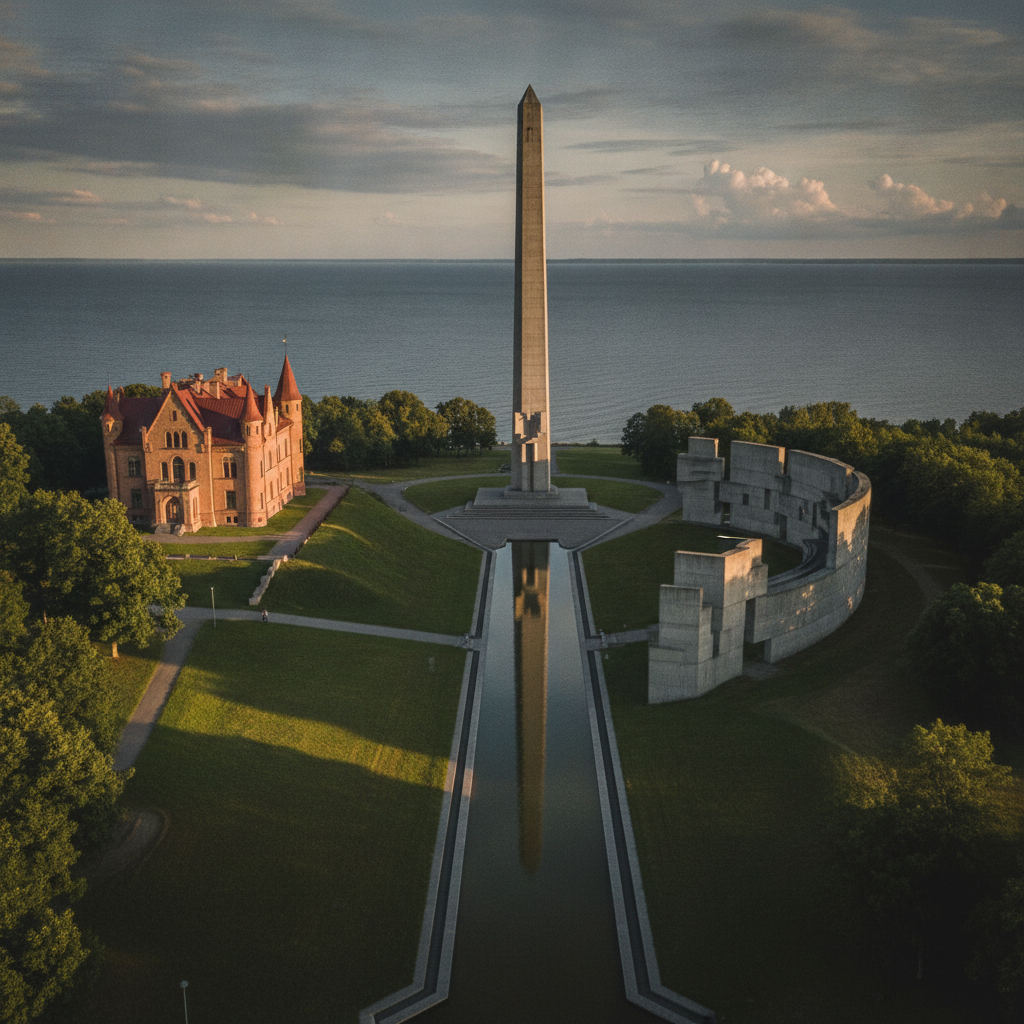
Tallinn Soviet History & the Singing Revolution — Occupation, Resistance & Independence
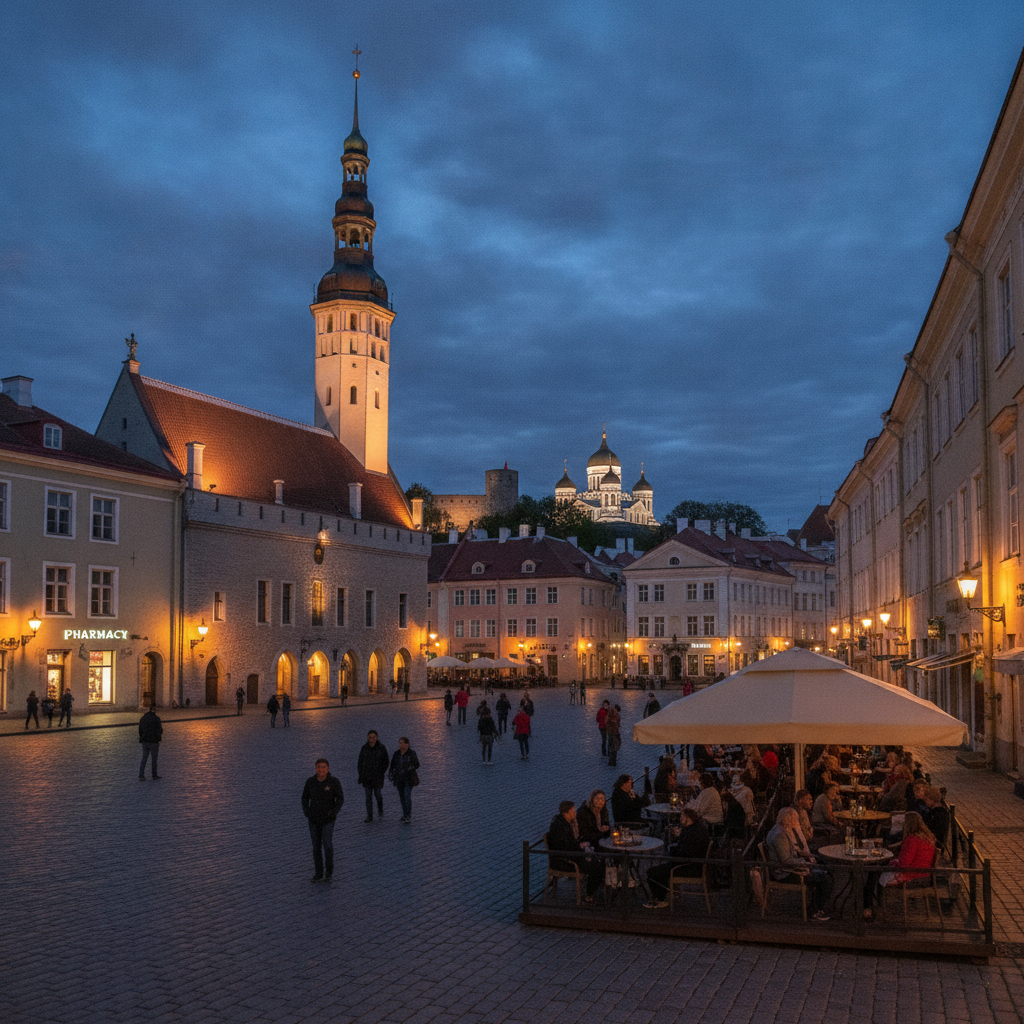
Tallinn Old Town — Town Hall Square, Toompea Castle & the Best-Preserved Medieval City in Northern Europe