Tallinn Old Town — Town Hall Square, Toompea Castle & the Best-Preserved Medieval City in Northern Europe
Tallinn (the capital of Estonia, population 450,000, the best-preserved medieval city in Northern Europe, the Old Town inscribed on the UNESCO World Heritage List in 1997, the city founded as a Danish fort in 1219 — the name Tallinn deriving from Taani linn, 'Danish town' — subsequently a Hanseatic League member, a Swedish administrative capital, a Russian Imperial city, and since 1991 the capital of the independent Republic of Estonia) is the most compact and most completely intact medieval city in the Baltic region.
- 1
Raekoja Plats — the Town Hall Square
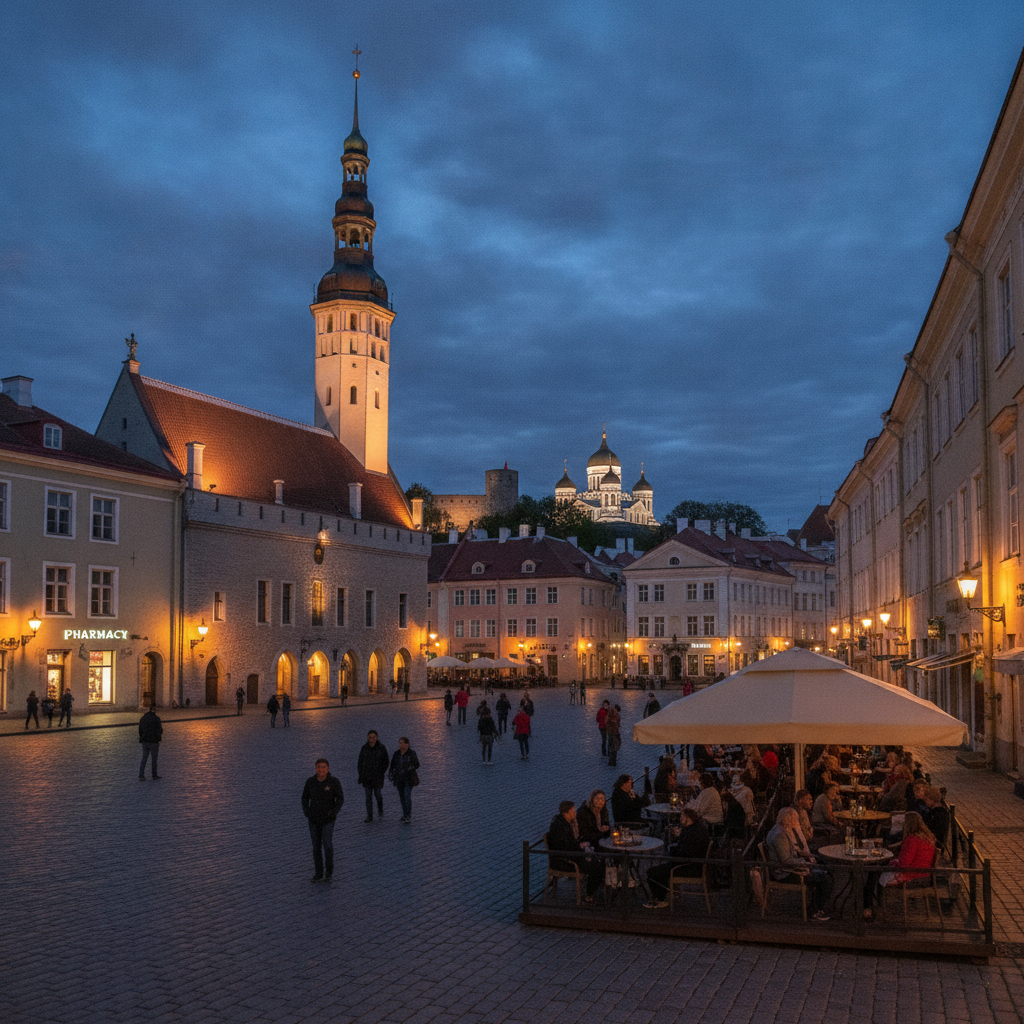
Raekoja Plats (the Town Hall Square, the medieval market square at the heart of Tallinn's lower town, 60m × 50m, the square surrounded by medieval merchant and guild houses, the cafes and restaurants of the ground floors extending onto the cobblestones from May to September, the square the site of the annual Christmas market from late November — consistently rated among the top 3 Christmas markets in Europe, the decorated Christmas tree in the centre of the square and the market stalls selling Estonian crafts, gingerbread, and mulled wine): the Gothic Town Hall (the limestone building of 1402-1404, the only surviving Gothic town hall in Northern Europe, the exterior featuring the arcade of pointed arches at ground level, the Dutch-influenced crow-stepped gables, and the distinctive octagonal tower topped by the wind vane 'Vana Toomas' — Old Thomas — the gilded warrior figure the symbol of Tallinn since 1530, the Town Hall museum inside €5 adults, June-August Monday-Friday 10am-4pm, Saturday 10am-3pm, the tower accessible separately €3) and the Town Hall Pharmacy (at the northwest corner of the square, the pharmacy established 1422 and operating continuously on the same site for 600 years — the oldest continuously operating pharmacy in Europe, the original medicinal recipe books and the 15th-century pharmacy equipment displayed in the window).
- 2
The Three Sisters and the Fat Margaret Tower
The Three Sisters (Kolm Õde, Pikk 71-73, the three adjacent medieval merchant houses on the main commercial street of the lower town, the houses built in the 15th century by wealthy Tallinn merchants, the identical crow-stepped gables and the arched ground-floor portals designed for loading cargo directly from the street — the winch holes in the gable apex still visible, the houses converted to the Three Sisters Boutique Hotel, the finest boutique hotel in the Old Town, the restored interiors accessible at the hotel restaurant), and the Fat Margaret Tower (Paks Margareeta, at the end of Pikk Street at the sea gate, the 155 BCE cannon tower with walls 4m thick, built 1510-1529 to defend the harbour entrance — the tower's nickname deriving from its squat proportions, the tower now housing the Estonian Maritime Museum, €7 adults, Tuesday-Sunday 10am-6pm, the collection of ship models, navigation instruments, and diving equipment from the Estonian maritime tradition, the rooftop view of the Old Town and the Baltic Sea the main attraction above the museum content).
- 3
Toompea — the Upper Town and the Seat of Power
Toompea (the limestone cliff rising 20m above the lower town, the upper town that has been the seat of political power in Tallinn for 800 years — first the Danish, then the Livonian Order, then the Swedish, then the Russian, and now the Estonian state occupying the buildings on the hill, the hill accessible from the lower town by the Short Leg Lane and the Long Leg Lane — both cobbled medieval passages): the Toompea Castle (the pink neoclassical building wrapping three sides of the 13th-century fort, the current facade built by the Russian Imperial administration in 1767-1773, the Estonian Parliament — Riigikogu — meeting in the castle since 1920, the interior not open to tourists but the exterior and the courtyard visible from the castle square), the Alexander Nevsky Cathedral (the Russian Imperial Orthodox cathedral built 1894-1900 in the Russian Revival style, the largest Orthodox church in Estonia, the interior with the gold mosaics and the icon screen, free, open daily 8am-7pm, the building placed deliberately on the location of the former Estonian national monument to make a political statement about Russian dominance) and the two viewing platforms (Kohtuotsa and Patkuli, the terrace views of the lower town red-tiled roofscape and the Baltic Sea beyond, the most reproduced image of Tallinn).
- 4
The City Walls — 26 Surviving Towers
Tallinn's medieval city walls (the most complete medieval city wall system in Northern Europe, built in the 13th-15th centuries by the Tallinn town council to defend the lower town, the original circuit of 4km now surviving for 2km with 26 of the original 46 towers intact, the walls walkable in sections from the inside, the most accessible section the Kiek in de Kök tower and the bastion tunnels): Kiek in de Kök (the 15th-century cannon tower, Komandandi tee 2, the name Low German for 'Peep into the Kitchen' — the tower so tall that its defenders could see into the kitchens of the surrounding houses, €8 adults for the tower and the bastion tunnels, Tuesday-Sunday 10am-6pm, the collection of medieval cannonballs, the original gunpowder chambers, and the 16th-century bastion tunnel system extending 600m under the Old Town) and the Towers Square section (the stretch of wall between the Viru Gate and the Danish King's Garden, the two-storey wall walk with the towers at intervals, the view from the wall walk over the lower town rooftops one of the best in the city, €3 adults for the wall walk section, accessible May-September daily 10am-6pm).
- 5
Viru Gate and the Old Town Entry
Viru Gate (Viru väravad, the 14th-century gate in the eastern wall of the Old Town, the two surviving gate towers the most photographed entry point to the Tallinn old town, the gate towers flanking the pedestrian entry from Viru Street — the main approach from the modern city centre to the medieval town, the gateway the most practical orientation point for arrivals to the Old Town): the flower market (the open-air flower stall operated since the 19th century at the outer face of the Viru Gate, the Estonian flower tradition particularly strong in the short summer season, the flowers including the wild Baltic cornflowers and the cultivated dahlias of the Estonian countryside, the flower sellers present from 6am daily, the freshest flower display in Tallinn at 7am before the tourist crowds arrive), the Estonian History Museum (Pikk 17, the Great Guild Hall built 1407-1430, the most important Gothic civic hall in Tallinn, now housing the Estonian permanent history collection, €8 adults, Thursday-Tuesday 10am-6pm, the exhibitions covering the prehistoric, medieval, and modern Estonian periods in the correct sequence for the first-time visitor to Estonia) and the Black Heads Brotherhood (the merchants' fraternity hall at Pikk 26, the elaborately decorated Renaissance portal of 1597 — the most ornate facade in the Tallinn lower town, the Brotherhood of the Black Heads being the association of unmarried foreign merchants who gave significantly to the civic culture of medieval Tallinn).
- 6
Tallinn Food — Black Bread, Elk and the Restaurant Scene
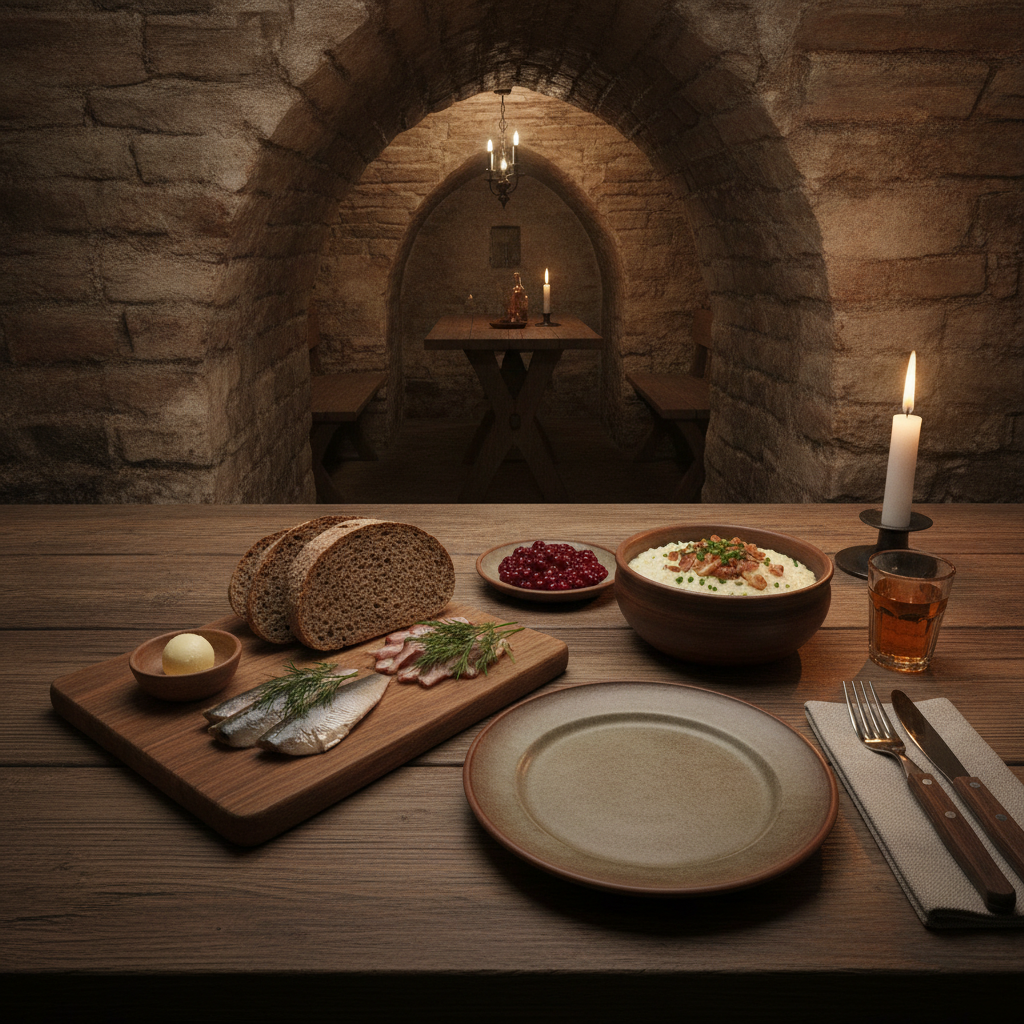
Tallinn's food scene (the most developed in the Baltic states, the combination of the traditional Estonian cuisine — the dark rye bread, the blood sausage, the smoked fish, the game meats of the Estonian forest — with the contemporary Nordic-Estonian kitchen of the city's growing fine-dining scene): the Estonian black bread (Eesti leib, the dark sourdough rye bread baked from the fermented rye flour, the defining Estonian food product, the bread denser and more sour than Scandinavian rye, the best purchased at the bread stalls of the Balti Jaam Market — the market behind the Baltic Station, the largest traditional food market in Tallinn, open daily from 6am), the Tallinn Old Town restaurants (the medieval cellar restaurants and the courtyard dining of the Old Town — the Olde Hansa at Vana Turg 1, the medieval-costumed service and the elk stew and the wild boar in lingonberry sauce at €20-30, the most theatrical dining experience in the Baltic states — alongside the contemporary Estonian cooking at the Von Krahl restaurant and the Leib Resto, the correct mid-range Estonian restaurants for the visitor wanting the cuisine without the theme-park format).
Walk this route with audio
Stories play automatically as you reach each stop — no tapping needed.
More in tallinn
Tallinn Practical Guide — the Helsinki Ferry, Seasons, Access & the Estonian Experience
Tallinn Medieval Crafts & Culture — St. Catherine's Passage, the Dominican Monastery & Estonian Design
Tallinn Soviet History & the Singing Revolution — Occupation, Resistance & Independence
Tallinn Beyond the Old Town — Kadriorg Palace, KUMU Museum & the World's Most Digital Society