The Unauthorized Military Conquest Ratified Because the Tsar Couldn't Undo It, the Cotton Boycott by 250 International Brands & the IT Park Targeting USD 5 Billion in Exports From a USD 300 Million Base
General Chernyayev's unauthorized 1865 capture of Tashkent ratified by the Tsar as a fait accompli; the Cotton Campaign's 250-brand boycott forcing Uzbek labor reform by 2022; the IT Park's 600+ companies targeting USD 5 billion exports from a USD 300 million base; the Rishtan ceramics white clay producing the signature cobalt-blue lagans; Tashkent having the highest urban green space per capita of any Central Asian capital; and the Navoi Theatre opera tickets at USD 5-20 as the most affordable grand opera in Central Asia.
- 1
Tashkent's Architecture of Blue Tiles
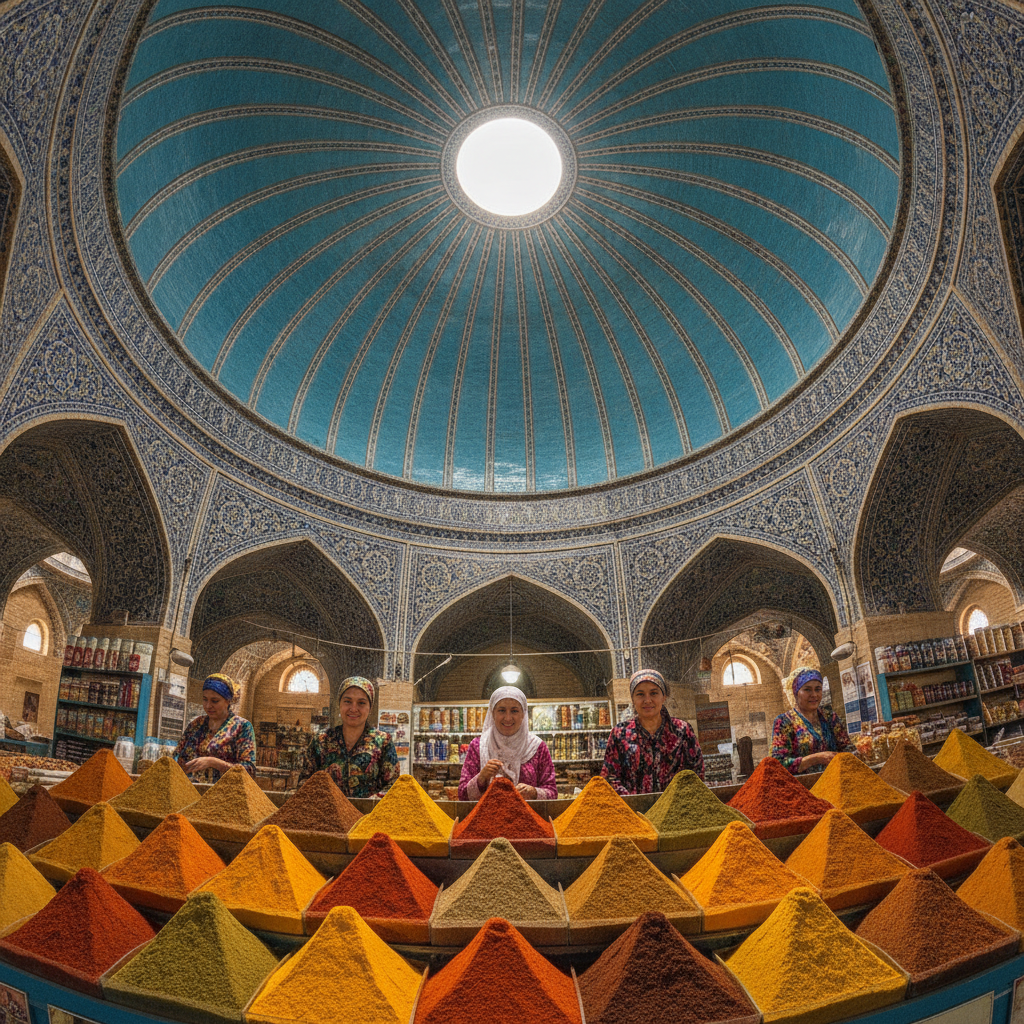
The blue tile tradition of Uzbek architecture (the glazed ceramic tilework (kashikori) that is the most distinctive visual element of the Timurid and post-Timurid architectural tradition): the architectural tilework guide in Tashkent. The tile tradition (the blue and turquoise glazed tile tradition of Central Asia derives from the Iranian tile-making tradition imported via Persia during the Timurid conquests (14th–15th centuries): the characteristic colors (the Uzbek architectural tilework palette: the deep lapis lazuli blue (the most common—a mineral pigment from the Badakhshan lapis mines in Afghanistan); the turquoise (copper-based); the white (tin-glazed); and the occasional gold (gold leaf on ceramic): the combination of blue and white in geometric and arabesque patterns that is the defining visual language of the Timurid Silk Road city). The Tashkent examples (the Khast Imam complex tilework: the Barak Khan Madrasah portal muqarnas in turquoise and blue; the Kukeldash Madrasah (16th-century—the largest madrasah in Tashkent, now visible on the hill above the Chorsu Bazaar): the dome of the Hazrati Imam Mosque). The tile-making workshop (the Rishtan ceramics tradition—120 km from Tashkent in Rishtan (Фарғона вилояти)—the most important ceramic production center in Uzbekistan: the blue-and-white ceramic ware (lagans—the large serving dishes) made from the local white clay (ok gilim) with the signature Rishtan cobalt-blue patterns—the most distinctive Uzbek ceramic product available in the Tashkent bazaars).
- 2
The Tashkent Tech Scene – Central Asia's Silicon Valley
Contemporary Tashkent as the emerging technology hub of Central Asia (the post-2016 economic liberalization has attracted significant tech investment to Uzbekistan's capital): the tech ecosystem guide. The IT Park Uzbekistan (IT Parkи Ўзбекистон—the technology park established in Tashkent in 2019 providing tax exemptions and infrastructure support to IT companies): the scale (as of 2024, the IT Park hosts 600+ registered companies with 10,000+ employees—the primary mechanism for Uzbekistan's IT export ambitions): the IT export goal (the Uzbek government's target of USD 5 billion in IT exports by 2030—from a 2023 base of approximately USD 300 million): the startup ecosystem (the Tashkent startup community is concentrated around: the Inha University in Tashkent (the Korean university campus (a satellite campus of Inha University, Incheon, South Korea) focused on engineering and software); the Westminster International University in Tashkent; and the Tech Hub coworking spaces in the Yunusabad District). The tech context (the Uzbekistan tech sector benefits from: a young population (34% of Uzbekistan's 36 million people are under 15); strong mathematics and engineering education (a Soviet-era legacy); low labor costs (Tashkent software developers earn approximately USD 800–1,200/month compared to USD 5,000–8,000 in Western Europe); and the government's active promotion of the sector through the IT Park tax benefits).
- 3
Cotton & Silk – The Fabric of Uzbek History
The textile economy of Uzbekistan (the 2 primary textile products that have defined the region's economic and cultural identity for 2,000 years): the textile history guide. The cotton (the Soviet cotton monoculture (1960–1991): the Uzbek cotton industry was the backbone of the Soviet textile sector—Uzbekistan produced 10% of global cotton output at its Soviet peak (1980)—the cotton was produced through a state-organized system in which the entire Uzbek population, including schoolchildren, was mobilized for the autumn cotton harvest (1–2 months of compulsory labor): the child labor issue (the international campaign against Uzbek cotton (the Cotton Campaign launched 2009) documented the continued use of forced child and adult labor in the cotton harvest under the Karimov government—the campaign resulted in a boycott by 250 international brands until the Uzbek government reformed the labor practices (2022)). The silk (the Uzbek silk production tradition: the Fergana Valley mulberry silk (the Bombyx mori silkworm fed on white mulberry leaves grown in the Fergana Valley—the valley's climate (cold winters for mulberry dormancy, hot dry summers for silk spinning) produces the most productive mulberry growing conditions in Central Asia): the silk production statistics (Uzbekistan produces approximately 1,000 tonnes of raw silk per year—the world's 5th largest silk producer).
- 4
Tashkent's Parks & Green City
Tashkent's urban green spaces (the Soviet city planning legacy that gave Tashkent the highest proportion of urban green space per capita of any Central Asian capital—the parks and boulevards that make Tashkent one of the most livable cities in the region): the parks guide. The Alisher Navoi Park (Алишер Навоий боги—the central urban park adjacent to the opera house—the Soviet-era tree-lined boulevard park that extends from the Navoi Theatre to the Beshyog'och Canal area): the Tashkent Botanical Garden (Тошкент Ботаника Боги—the Soviet-era botanical garden with the largest collection of Central Asian flora in any botanical institution (4,500 plant species on 65 hectares)—the botanical garden is the most complete living reference collection of the Tian Shan and Kyzylkum flora). The Friendship of Nations Park (Xalqlar do'stligi boyi—the park surrounding the Palace of Friendship (Дустлик саройи)—the Soviet-era celebration of multi-ethnic cooperation): the Charvak Reservoir (Чорвоқ сув омбори—70 km northeast of Tashkent in the Chirchiq River valley in the Tian Shan foothills): the most popular outdoor recreation destination from Tashkent (swimming, jet skiing, and paragliding over the turquoise reservoir).
- 5
The History of Tashkent Under Russian Rule
Tashkent under the Russian Empire (the city's transformation from a Silk Road oasis city to the administrative capital of Russian Turkestan (1865–1917)): the colonial history guide. The conquest (the Russian General Mikhail Chernyayev (Михаил Черняев) captured Tashkent on June 17, 1865, after a 2-day battle—the attack was unauthorized (Chernyayev acted without orders from St. Petersburg)—the Tsarist government was presented with a fait accompli and ratified the conquest rather than withdraw): the new city (the Russian colonial administration built a completely separate Russian city (the Noviy Gorod—'New City') adjacent to the existing Uzbek city (the Old City/Stary Gorod): the 2 cities were divided by the Anhor Canal—the Russian city had wide boulevards, Russian Orthodox churches, and colonial administrative buildings in the European urban tradition; the Uzbek Old City retained its traditional mahalla structure). The railway (the Trans-Caspian Railway reached Tashkent in 1899, connecting the city to the Russian Empire's railway network for the first time): the 1917–1924 transition (the Russian Revolution of 1917 and the subsequent Central Asian basmachi resistance (the Uzbek/Tajik/Kazakh guerrilla resistance to Soviet rule (1918–1934)) preceded the formal establishment of the Uzbek Soviet Socialist Republic in 1924, with Tashkent as capital (the original capital was Samarkand (1924–1930) before moving to Tashkent in 1930)).
- 6
Tashkent at Night – Fountains, Lights & Evening Culture
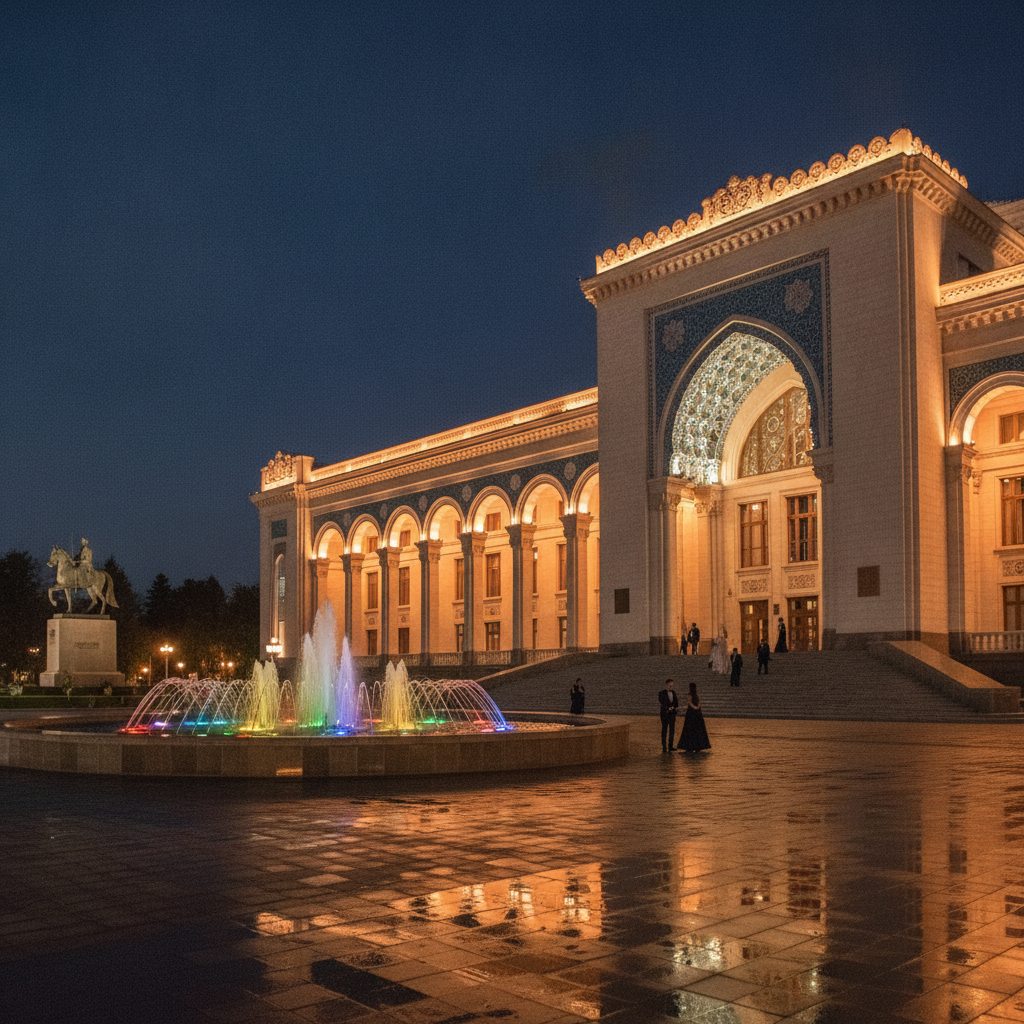
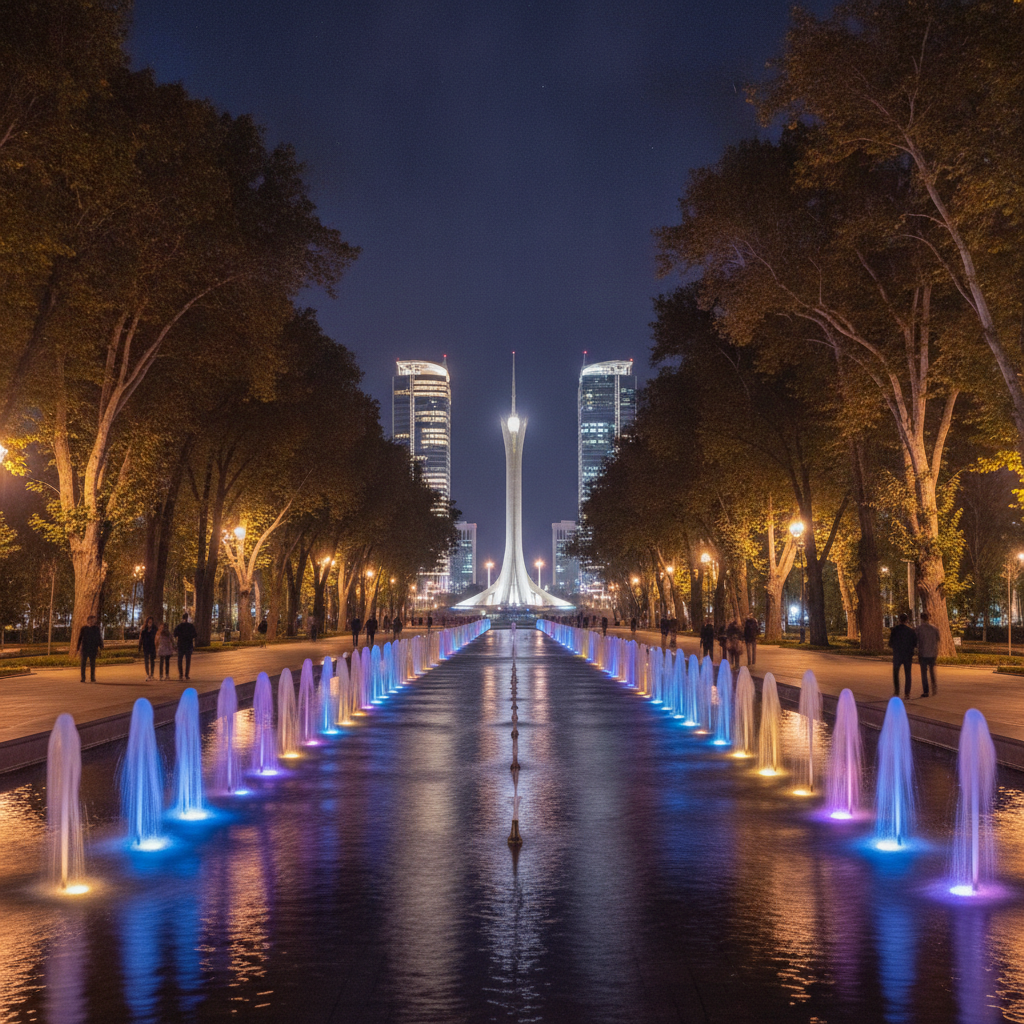
Tashkent's evening culture (the nocturnal dimension of the city that is transformed by the fountain and lighting systems installed as part of the post-2016 urban beautification program): the night guide. The fountain spectacle (the Tashkent fountain system: the largest concentrated public fountain installation in Central Asia—the fountains in Independence Square, Amir Timur Square, and the Mustakillik (Independence) Boulevard are illuminated with synchronized colored lights and music from sunset to 23:00 in summer): the most spectacular fountain show (the New Uzbekistan Park (Янги Ўзбекистон боги—the 156-hectare park opened in 2021 with the longest fountain canal in Central Asia (2 km), the Yangi Uzbekiston monument (the 33m steel monument replacing the Soviet friendship monument site), and the night market): the evening restaurant culture (the summer evening in Tashkent: the Uzbek tradition of the evening choyxona (the teahouse gathering from 20:00–23:00 when the daytime heat has passed): the outdoor seating on tapchan benches under the plane trees, the green tea, and the evening shashlik—the most pleasant social experience in Tashkent in summer). The Navoi Theatre evening performance (the Alisher Navoi Opera Theatre evening programme—the Opera and Ballet season runs October–May with performances 3× per week—the most affordable grand opera in Central Asia (tickets USD 5–20)).
Walk this route with audio
Stories play automatically as you reach each stop — no tapping needed.
More in Tashkent
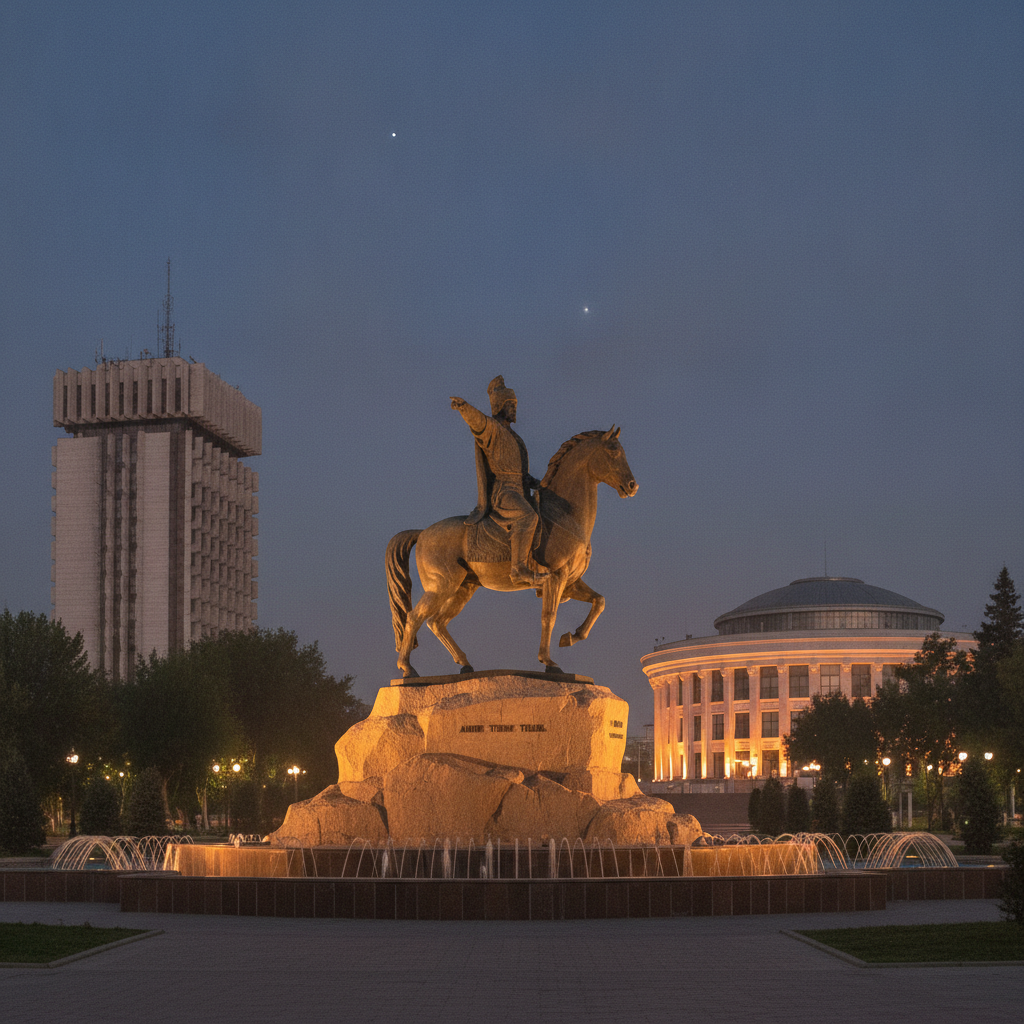
The Battle of Ankara Where Timur Captured the Ottoman Sultan, the Solar Furnace That Reaches 3,000°C Using Only Mirrors & the Hashar Community Labor Tradition Where Neighbors Build Your House Together
The Quran Stained With the Caliph's Blood Returned by Lenin, the Earthquake That Killed 10 People While Destroying 100,000 Homes & the Metro Banned From Photography for 40 Years Due to Nuclear Shelter Function
The 2,500-Year Jewish Community Now Mostly in Queens New York, the Fedchenko Glacier Retreating 1.3 km Since 1990 & the Authentication Trick of Turning the Suzani Over to Check the Back
The Cotton Monoculture That Emptied the World's 4th Largest Lake, the Rusting Ship Fleet Stranded 100 km From the Sea & the Suzani Embroidered Collectively by Every Woman in the Bride's Family