The 2,500-Year Jewish Community Now Mostly in Queens New York, the Fedchenko Glacier Retreating 1.3 km Since 1990 & the Authentication Trick of Turning the Suzani Over to Check the Back
The Bukharan Jewish community's 2,500-year presence in Central Asia now concentrated in Rego Park Queens with 50,000-80,000 members; the Fedchenko Glacier retreating 1.3km since 1990 threatening the Chirchiq River supply for Central Asia's largest city; suzani authentication by inspecting the reverse for hand tied-off thread sections vs. machine lock-stitches; the Samarkand lepeshka at 50-60cm as the largest and most celebrated Uzbek bread variety; Marco Polo sheep in the Ugam-Chatkal National Park 80km from Tashkent; and the Bukhara converted caravanserai guesthouses at USD 40-80 as the most distinctive accommodation in Central Asia.
- 1
The Bread of Uzbekistan – Lepeshka & Tandoor Culture
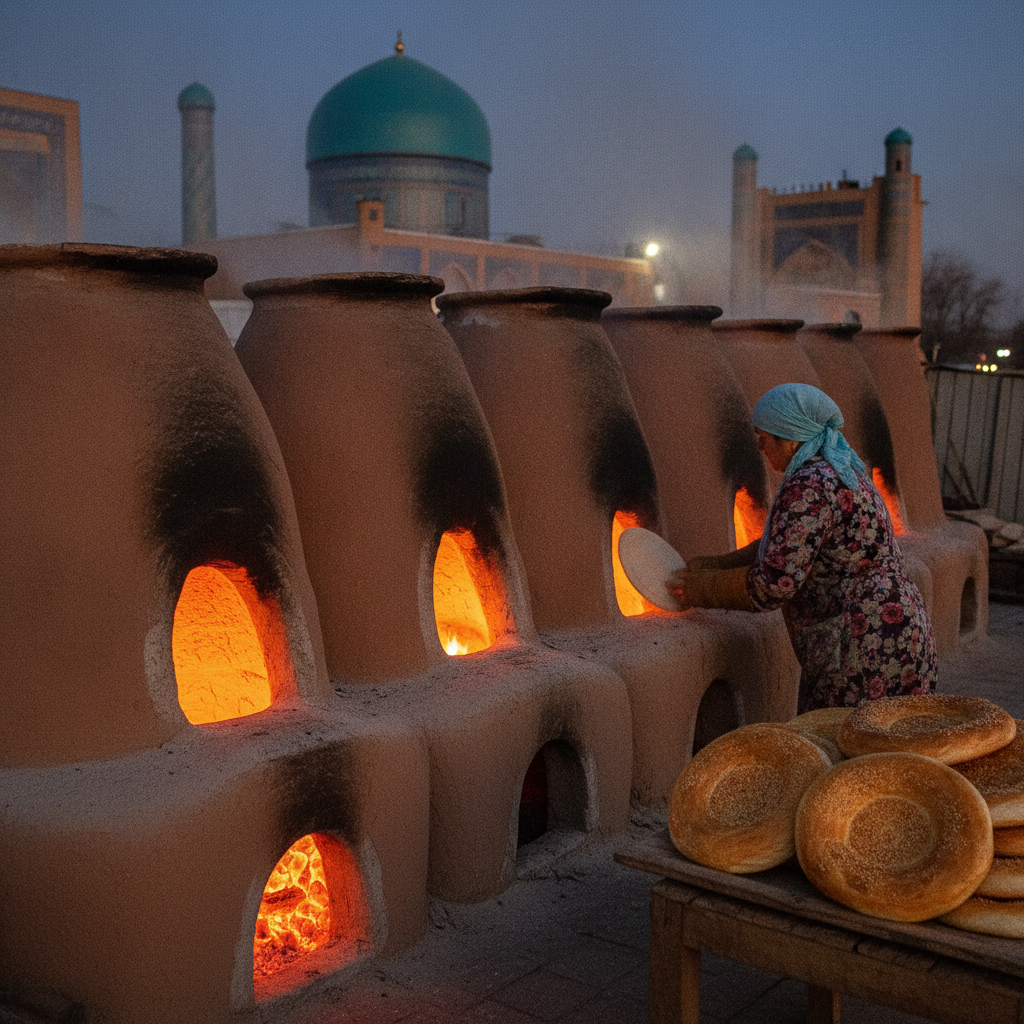
The Uzbek bread tradition (the most culturally central food in Uzbekistan—more central than plov in the sense that bread accompanies every meal and is the primary offering in every hospitality exchange): the bread guide. The lepeshka (non—нон—the Uzbek round flatbread): the bread characteristics (the lepeshka is approximately 30–40cm in diameter, 2–3cm thick at the rim and 1cm at the center—the center is pressed thin by the chukmak (the decorative stamp used to create the sunburst pattern in the center that also prevents the center from rising in the tandoor): the varieties (each Uzbek city has a distinctive bread style: the Samarkand non (Самарканд нони)—the largest and most celebrated (50–60cm diameter, with a distinctive ring of sesame seeds around the edge and a depression in the center that holds the impression of the stamp longer than any other variety): the Bukhara non (the denser, smaller bread with more poppy seeds than sesame): the Tashkent non (the most widely available—intermediate in size with sesame seeds and the characteristic stamp pattern)). The tandoor (the clay oven in which the lepeshka is baked—the baker slaps the raw dough against the inner wall of the 200°C+ clay interior using a padded mitt: the bread bakes in 3–5 minutes, sticking to the wall by adhesion until the baker removes it with a hook). The bread respect (the Uzbek bread is never placed face-down; never thrown; never wasted—the most common expression of respect for food in Central Asian culture).
- 2
The Tian Shan Mountains – Tashkent's Natural Backdrop
The Tian Shan mountain system (Тянь-Шань—'Celestial Mountains'—the major mountain range forming the eastern backdrop of Tashkent): the mountain access guide from the Uzbek capital. The Chimgan Mountains (Чимган—the ski resort and hiking area in the Tian Shan foothills 80 km northeast of Tashkent): the Chimgan peak (Chimgan peak (3,309m)—the most popular single-day hike from Tashkent: the cable car from the Chimgan village base to 2,800m (20 minutes), then 1.5-hour hike to the summit—the panoramic view of the Fergana Range and the Tashkent basin on clear days): the winter skiing (the Chimgan ski area: 12 runs, the longest 3.2 km, operated November–March—the most accessible skiing from any Central Asian capital): the Charvak Reservoir (the turquoise lake 70 km northeast of Tashkent in the Chirchiq River canyon—the primary water recreation area for Tashkent residents in summer). The Ugam-Chatkal National Park (the protected mountain area encompassing the Chimgan area and the Ugam River basin—the most diverse mountain ecosystem accessible from Tashkent: the park contains snow leopard (population approximately 40 individuals in the Uzbek Tian Shan), ibex (Capra ibex), and Marco Polo sheep (Ovis ammon polii—the high-altitude wild sheep with the largest horn span of any sheep in Central Asia)).
- 3
Tashkent's Jewish Heritage – Bukharan Jews
The Bukharan Jewish community of Tashkent and Uzbekistan (the ancient Jewish diaspora community that has inhabited Central Asia for 2,500 years and whose presence is one of the most unexpected dimensions of the Uzbek cultural heritage): the Jewish heritage guide. The history (the Bukharan Jews (also called Mizrahi Jews or Persian Jews) are the descendants of Persian Jewish communities who settled in the Sogdian oasis cities of Central Asia following the Babylonian exile (6th century BCE)—the earliest physical evidence of Jewish presence in the region dates to the 7th century CE): the Tashkent community (the Tashkent Bukharan Jewish community was the largest in Soviet Central Asia during the Soviet period (approximately 100,000 Jews in Uzbekistan in 1970)): the emigration (the majority of Uzbekistan's Jewish community emigrated to Israel and New York City following the Soviet collapse (1991)—the current Jewish population of Uzbekistan is approximately 8,000–10,000 (2024)): the New York diaspora (the Bukharan Jewish community of Queens, New York (the Rego Park/Forest Hills neighborhood) is the largest Bukharan Jewish community outside Central Asia—approximately 50,000–80,000 Bukharan Jews in New York): the cultural legacy in Tashkent (the Tashkent synagogue (the Tashkent Chabad House on Saylgoh Street) and the Jewish Museum of Uzbekistan (Еврейский музей—the small museum on Pushkin Street documenting the 2,500-year Bukharan Jewish presence).
- 4
Tashkent's Suzani Market – The Collector's Handbook
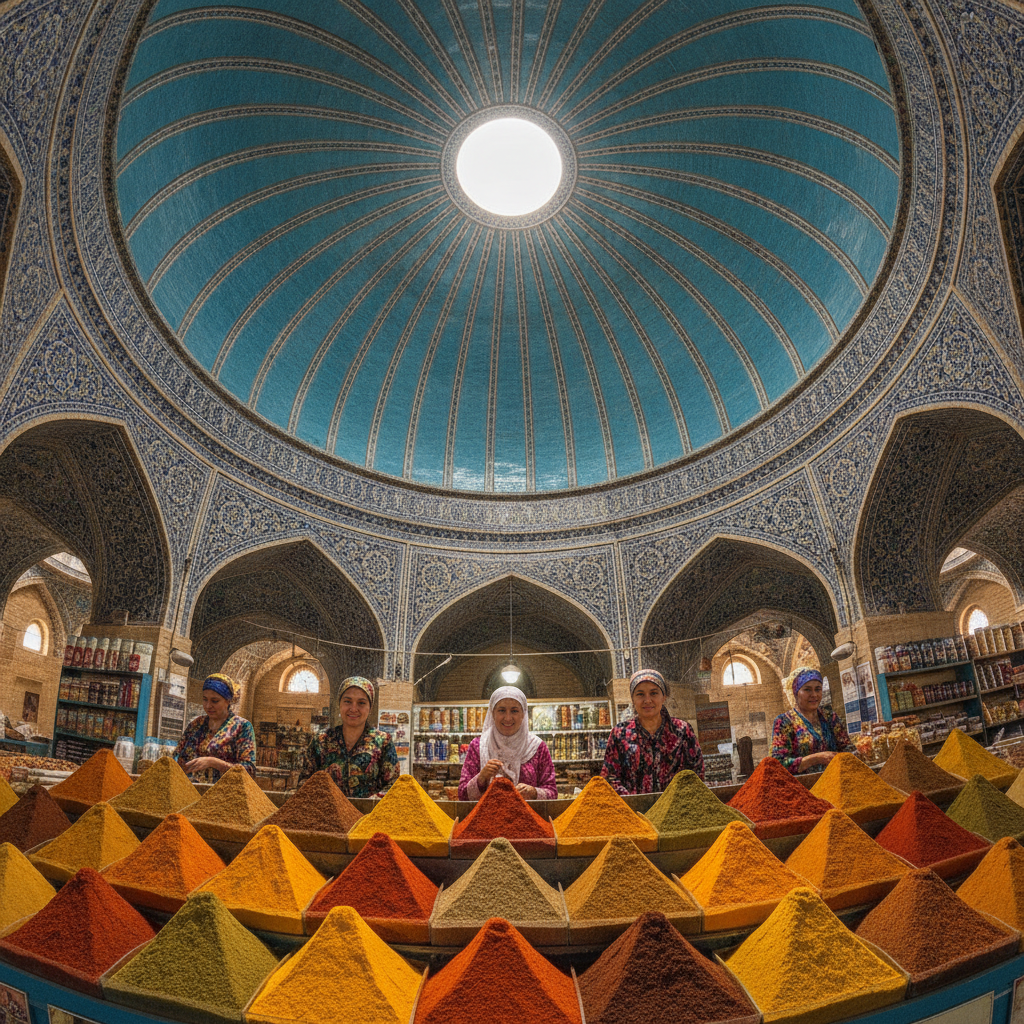
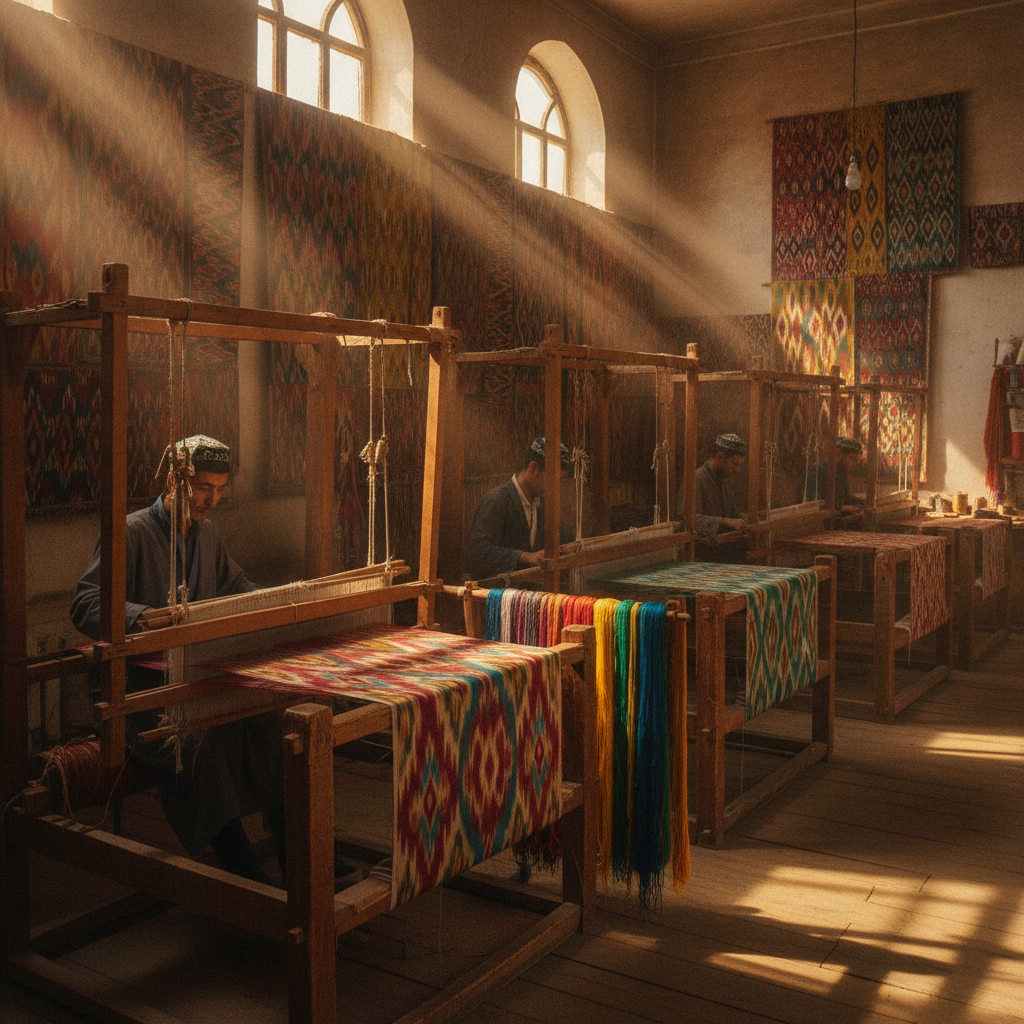
The suzani market guide for Tashkent (the practical handbook for finding and purchasing authentic suzani embroidery in the Uzbek capital): the collector's market guide. The market locations (the primary suzani shopping locations in Tashkent: the Chorsu Bazaar (the Old Craft section—ground floor of the covered section east of the main spice domes—where local embroiderers sell directly); the Silk Road Bazaar (the tourist-oriented bazaar adjacent to the State History Museum—the most convenient single-stop shopping for suzani, ikat, and miniature paintings); the Yanka Bazaar (Янка бозори—the Wednesday and Saturday flea market in the Khamza district—the most likely source for genuine vintage suzani at below-market prices due to the mix of local sellers rather than professional antique dealers)). The authentication guide (genuine antique suzani (pre-1950): the silk or cotton base fabric (the base is unbleached cotton or raw silk—the factory-woven polyester base of reproductions is distinguishable by its uniform weave and bright white color); the embroidery thread (genuine old suzani uses natural-dyed silk thread—the colors are complex and slightly uneven; reproductions use synthetic-dyed thread with saturated, uniform colors): the inspection technique (the most reliable dating method: turn the suzani over and inspect the back—an authentic hand-embroidered suzani shows the tying-off of individual thread sections; a machine-embroidered reproduction shows continuous thread runs with machine lock-stitches on the reverse).
- 5
Uzbekistan's Water Crisis – Tashkent & the Future
The water security crisis of Uzbekistan (the most critical long-term challenge facing the country and the city of Tashkent): the environmental context guide. The Amu Darya basin (the Amu Darya (Амударё—the ancient Oxus) and the Syr Darya (Сирдарё—the ancient Jaxartes) are the two rivers that provide 90% of Uzbekistan's water supply—both rivers originate in the Pamir and Tian Shan glaciers): the glacier retreat (the Tian Shan and Pamir glaciers that feed the Uzbek river system are losing 0.5–1.0% of their volume annually due to climate change—the Fedchenko Glacier (the largest glacier outside the polar regions) has retreated 1.3 km since 1990): the agricultural water use (Uzbekistan uses 95% of its total water consumption for irrigation—the cotton and wheat fields of the Fergana Valley and the Amu Darya delta consume 56 km³ of water per year (the 2nd highest per-hectare irrigation water use in the world)): the Tashkent water security (the Tashkent metropolitan area draws its water from the Chirchiq River (fed by the Charvak Reservoir)—the Chirchiq flow is projected to decrease by 30% by 2050 as the Tian Shan glaciers retreat, potentially creating a water security crisis for Central Asia's largest city). The response (the Uzbek government's Central Asian Water-Energy Nexus Program and the World Bank-funded irrigation efficiency improvements are the primary mitigation mechanisms).
- 6
From Tashkent to the Silk Road Cities – The Complete Circuit
The Uzbekistan Silk Road circuit (the complete route through the primary Silk Road heritage cities of Uzbekistan using Tashkent as the hub): the planning guide for the complete Uzbekistan experience. The circuit (the 4 primary destinations of the Uzbekistan Silk Road circuit: Tashkent (hub), Samarkand (Регистон, Гур-э-Амир, Shah-i-Zinda), Bukhara (Kalyan Minaret, Ark Fortress, Lyabi-Hauz), and Khiva (Ichan-Kala walled inner city)): the logistics (Tashkent to Samarkand: 2h10m by Afrosiyob high-speed train (4× daily): Samarkand to Bukhara: 1h30m by Afrosiyob (3× daily): Bukhara to Khiva: 5h by shared taxi (no direct train—the road across the Kyzylkum Desert is the only connection); Khiva to Tashkent: 1h30m by domestic flight from Urgench Airport (adjacent to Khiva)): the optimal duration (the complete circuit requires 7–10 days: Tashkent 2 days, Samarkand 2 days, Bukhara 2 days, Khiva 1–2 days, return to Tashkent for departure 1 day): the accommodation (the mid-range boutique hotels within the historic medinas (old cities) of Samarkand, Bukhara, and Khiva are the most atmospheric—the guesthouses in the converted caravanserais of Bukhara (USD 40–80/night) are the most distinctive accommodation in Central Asia).
Walk this route with audio
Stories play automatically as you reach each stop — no tapping needed.
More in Tashkent
The Unauthorized Military Conquest Ratified Because the Tsar Couldn't Undo It, the Cotton Boycott by 250 International Brands & the IT Park Targeting USD 5 Billion in Exports From a USD 300 Million Base
The Battle of Ankara Where Timur Captured the Ottoman Sultan, the Solar Furnace That Reaches 3,000°C Using Only Mirrors & the Hashar Community Labor Tradition Where Neighbors Build Your House Together
The Quran Stained With the Caliph's Blood Returned by Lenin, the Earthquake That Killed 10 People While Destroying 100,000 Homes & the Metro Banned From Photography for 40 Years Due to Nuclear Shelter Function
The Cotton Monoculture That Emptied the World's 4th Largest Lake, the Rusting Ship Fleet Stranded 100 km From the Sea & the Suzani Embroidered Collectively by Every Woman in the Bride's Family