The Georgian Mkhedruli Script First Inscribed in the 5th Century CE and Named UNESCO Intangible Cultural Heritage for Its Three-Script System in 2016, the Georgian Polyphonic 2-Semitone Dissonant Interval Unique in European Music & the Tbilisi Bassiani Club Under the Dynamo Football Stadium Swimming Pool
The Mkhedruli script's three-form system (Asomtavruli, Nuskhuri, Mkhedruli) inscribed on UNESCO ICH in 2016, the oldest surviving inscriptions from the 5th century CE; Georgian polyphony's deliberate use of the major second interval (2 semitones) as a harmonic consonance — a practice unique in world musical traditions; the Bassiani techno club in the underground swimming pool complex beneath the Dynamo stadium; the April 14, 1978 mass demonstration of 100,000 Tbilisians that forced retention of Georgian as the official state language; the 1874 cookbook found in a Tbilisi market that became the basis for the Barbarestan restaurant menu; and the Fabrika hostel at USD 10-15/dorm bed in the converted Soviet sewing factory.
- 1
Georgia's Traumatic 20th Century – Stalin to Rose Revolution
The 20th-century political history of Georgia (the extraordinary series of historical traumas and transformations that shaped the country that visitors see today): the history guide. The Stalin connection (Joseph Vissarionovich Jughashvili (1878–1953)—Stalin—was born in Gori, 80 km west of Tbilisi: the Georgian-born ruler who became the leader of the Soviet Union is the most consequential Georgian of the 20th century: the Stalin Museum in Gori (the Soviet-era hagiographic museum built around his birth house—the museum presents an uncritical Stalin cult that remains controversial but is maintained as a tourist attraction and a point of civic pride for the town of Gori): the 1921 Soviet conquest (the Russian Red Army invaded the Democratic Republic of Georgia (1918–1921—the first Georgian democratic republic) in February 1921 and established the Georgian Soviet Socialist Republic): the 1978 language protests (the mass demonstrations in Tbilisi on April 14, 1978 in defense of the constitutional status of the Georgian language—the Soviet Georgian government planned to remove the clause designating Georgian as the official state language; the demonstrations of 100,000 people forced the Georgian government to retain the clause—the event is commemorated as Georgian Language Day (April 14)): the April 9, 1989 massacre (the Soviet army's violent dispersal of pro-independence protesters in Tbilisi on April 9, 1989—21 people were killed by sharpened spades and toxic gas—the event accelerated the independence movement): the independence (Georgia declared independence on April 9, 1991): the Rose Revolution (the peaceful overthrow of President Eduard Shevardnadze in November 2003).
- 2
The Georgian Alphabet – A Unique Script in the World
The Georgian alphabet (the mkhedruli script—one of only three unique script systems in the Caucasus and one of the world's most distinctive alphabets): the script heritage guide. The alphabet history (the Georgian writing system consists of three historically distinct scripts: Asomtavruli (the oldest, 5th century CE—a rounded uncial script used for inscriptions on churches); Nuskhuri (the ecclesiastical script used in Georgian Orthodox manuscripts from the 9th century); Mkhedruli (the secular script developed in the 11th century and now the standard Georgian writing system): the invention tradition (Georgian tradition attributes the creation of the first Georgian script to King Pharnavaz I of Kartli (3rd century BCE), though the oldest surviving inscriptions date to the 5th century CE—the script may have been developed to facilitate Christian textual transmission following the 327 CE conversion): the script characteristics (the Mkhedruli script: 33 letters (the original 38 reduced by 5 obsolete letters); each letter represents a single consonant or vowel (an alphabet, not a syllabary); the script runs left-to-right; there is no concept of upper/lower case—the distinction between majuscule (Asomtavruli) and minuscule (Mkhedruli) is the distinction between sacred and secular use rather than case): the UNESCO status (the Georgian manuscript heritage was inscribed on UNESCO's Memory of the World Register in 2013; the Georgian living tradition of Asomtavruli, Nuskhuri, and Mkhedruli scripts was inscribed on the UNESCO Intangible Cultural Heritage List in 2016): the script in Tbilisi (the Georgian script is visible on every street sign, shop front, and vehicle license plate in Tbilisi—the recognition of the distinctive script is the primary visual marker of arrival in Georgia).
- 3
Tbilisi's Music Scene – Polyphony to Techno
The music heritage and contemporary scene of Tbilisi (the city that produced one of the most distinctive musical traditions in the world and then became an internationally celebrated contemporary music destination): the music guide. The Georgian polyphony (the traditional Georgian choral singing tradition—the most distinctive musical heritage of Georgia and one of the most complex vocal traditions in the world: the Georgian polyphony uses three independent vocal lines (the Mkurnali (the top voice), the Mravalmzakhvari (the middle voice), and the Bani (the bass)): the characteristics (the Georgian polyphony is distinctive for: the dissonant intervals (the second (a 2-semitone interval) is used as a deliberate harmonic interval rather than as a passing dissonance—a usage unique in European musical traditions); the equal temperament tuning (Georgian polyphony pre-dates the Western equal temperament tuning and uses a natural/Pythagorean tuning system that produces different interval qualities from the Western-tempered piano); the UNESCO status (Georgian polyphonic singing was inscribed on the UNESCO Representative List of Intangible Cultural Heritage in 2001—the first Georgian cultural element to receive UNESCO ICH status): the contemporary scene (the Tbilisi electronic music scene: the Bassiani club (the underground club in the swimming pool complex beneath the Dynamo football stadium—the largest and most internationally recognized electronic music venue in the Caucasus): the Café Gallery (the rooftop and multi-room club in the Old Town, combining fine dining, bar, and electronic music in a single venue): the Khidi (Under the Bridge) club).
- 4
Photography in Tbilisi – Balconies, Domes & Mountain Light
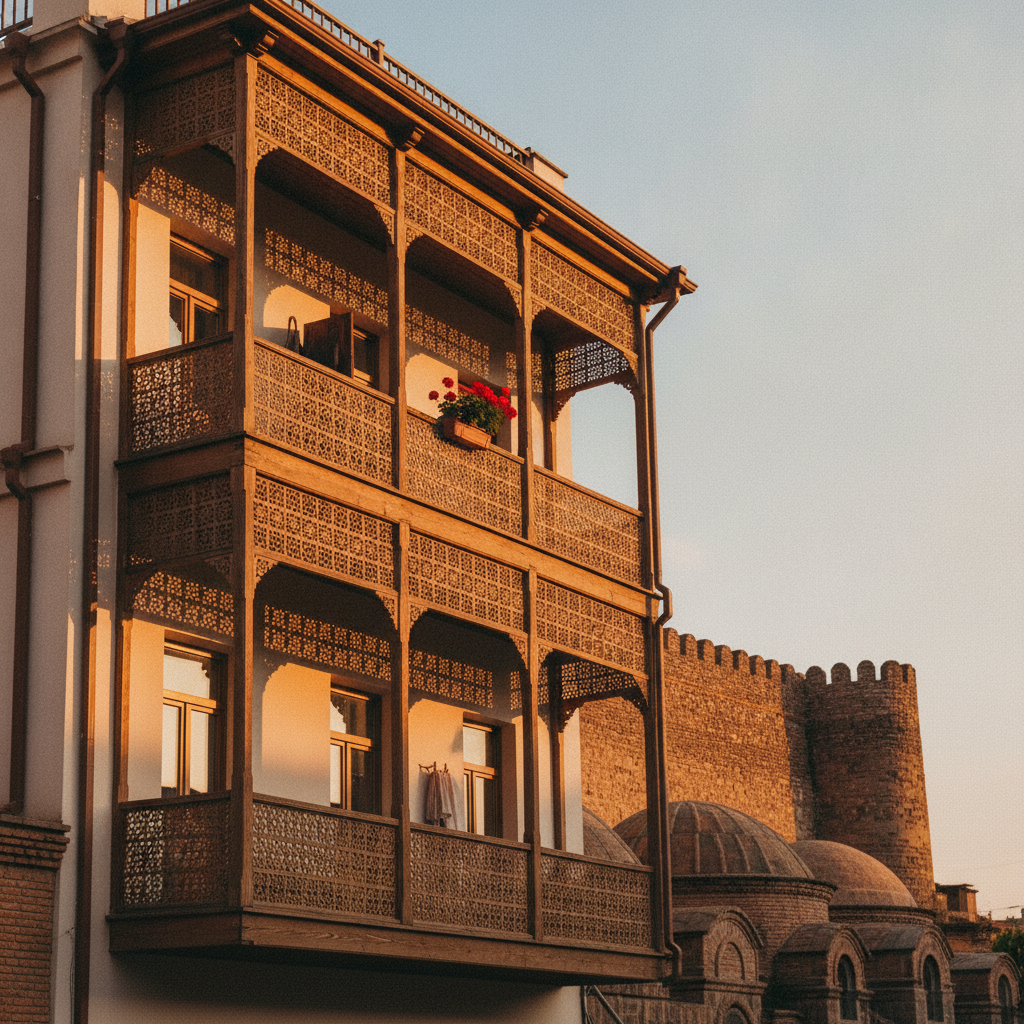
The Tbilisi photography guide (the practical handbook for photographing one of the most visually distinctive capital cities in Europe and the Caucasus): the photographer's guide. The carved balconies (the primary architectural photography subject in Tbilisi: the wooden ejari balconies of the Old Town: the best streets for balcony photography: Shardeni Street (the most densely carved balcony concentration, in the restored tourist quarter—accessible from the Sulfur Baths); Khertvisi Street (the less-restored, more authentic balcony rows above the Abanotubani); the Narikala cliff face visible from the Metekhi bridge (the balcony layers stacked above the bath district domes below the fortress wall): the light on the balconies (the Old Town balconies face south and east—the optimal morning light (07:00–09:00 in summer) illuminates the carved woodwork from a low angle that emphasizes the depth of the carving; the afternoon light (16:00–18:00) creates warm golden light on the south-facing balconies): the Metekhi bridge view (the Metekhi bridge downstream view: the Old Town, the Abanotubani domes, the Narikala fortress, and the Kartlis Deda statue all appear in the same frame—the most complete architectural panorama of Tbilisi in a single photograph): the Kazbeg route (the Gergeti Trinity Church with Mount Kazbek: the morning light (before 10:00) places the sun behind the camera for the west-facing church portrait; the afternoon light (15:00–18:00) catches the ice facets on the north face of Mount Kazbek).
- 5
Tbilisi's Food Market & Restaurant Scene
The Tbilisi food market and restaurant guide (the city's exceptional value food culture—Georgian cuisine at home in its home): the food scene guide. The Deserter's Bazaar (the Dezertirebi Bazaar (the Deserter's Market)—the largest and most authentic food market in Tbilisi, in the Didube district 3 km from the old town: named for the Georgian deserters who sold their weapons and equipment here after the 1918 demobilization—now a sprawling daily market covering 3 hectares: the food sections: the churchkhela (the Georgian grape-and-nut sausage: walnuts or hazelnuts threaded on a string, repeatedly dipped in concentrated grape juice (tatara) thickened with flour and allowed to dry until the grape candy hardens around the nut center—the most distinctive Georgian food product); the dried fruits (the Georgian tkemali dried sour plum sheet (tklapi)—the dried fruit leather made from tkemali sour plums, used as a souring agent in cooking and as a snack); the vegetables (the Georgian pickled vegetables (lepyoshtki—the mixed pickled vegetable plate that appears on every Georgian table) and the ajika (the spicy paste of hot peppers, garlic, and walnut)): the restaurant circuit (the three most acclaimed traditional Georgian restaurants in Tbilisi for visitors: the Barbarestan (the most celebrated Georgian restaurant in Tbilisi, on Davit Aghmashenebeli Avenue—the menu is derived from an 1874 cookbook found in a Tbilisi market, the oldest surviving Georgian cookbook); the Keto and Kote (the Old Town restaurant specializing in Megrelian cuisine—the most spice-intensive regional Georgian cuisine); the Shavi Lomi (the gastropub on Aghmashenebeli Avenue with the best selection of natural Georgian wine).
- 6
Budget Tbilisi – The Best Value Capital in Europe
The Tbilisi budget travel guide (the practical case for Tbilisi as the best value capital city for travelers in the European-Caucasus region): the budget handbook. The cost context (Georgia is consistently ranked among the 10 cheapest countries to visit in the world: the average daily budget for a Tbilisi visitor: USD 30–40 (hostel + food + transport + 1 attraction): the currency advantage (the Georgian Lari (GEL) has maintained relative stability (1 USD = 2.6–2.8 GEL in 2023–2024)): the budget accommodation (the best budget accommodation in Tbilisi: the Fabrika Hostel (the primary hostel in the creative hub, USD 10–15/dorm bed, the most socially active hostel in Tbilisi); the Pushkin 10 Hostel (USD 10–12/dorm, excellent location near Rustaveli Avenue); the Airbnb apartments in Old Tbilisi (USD 25–40/night for a private apartment with balcony—the most atmospheric accommodation in the city)): the budget food (the cheapest full traditional Georgian meal: the Mtsvadi grill restaurants in the Dezertirebi market and in the Saburtalo district serve a complete lunch (salad + khinkali + bread + mineral water) for GEL 15–20 (USD 5.5–7.5)): the free attractions (Narikala Fortress: free access on foot via the stairs from Botanikuri Street; the Tbilisi Botanical Garden (free on the path below Narikala); the Mtskheta (free to enter, 1h minibus ride from Didube for GEL 1.50): the transport (the Tbilisi Metro is GEL 1 (USD 0.37) per trip; the cable car to Narikala is GEL 2.50 (USD 0.90)).
Walk this route with audio
Stories play automatically as you reach each stop — no tapping needed.
More in Tbilisi
Tbilisi Soviet Heritage: The Soviet Architecture, the Stalin Era, the Rose Revolution, and the Most Complex Single Post-Soviet Caucasus Capital Transformation
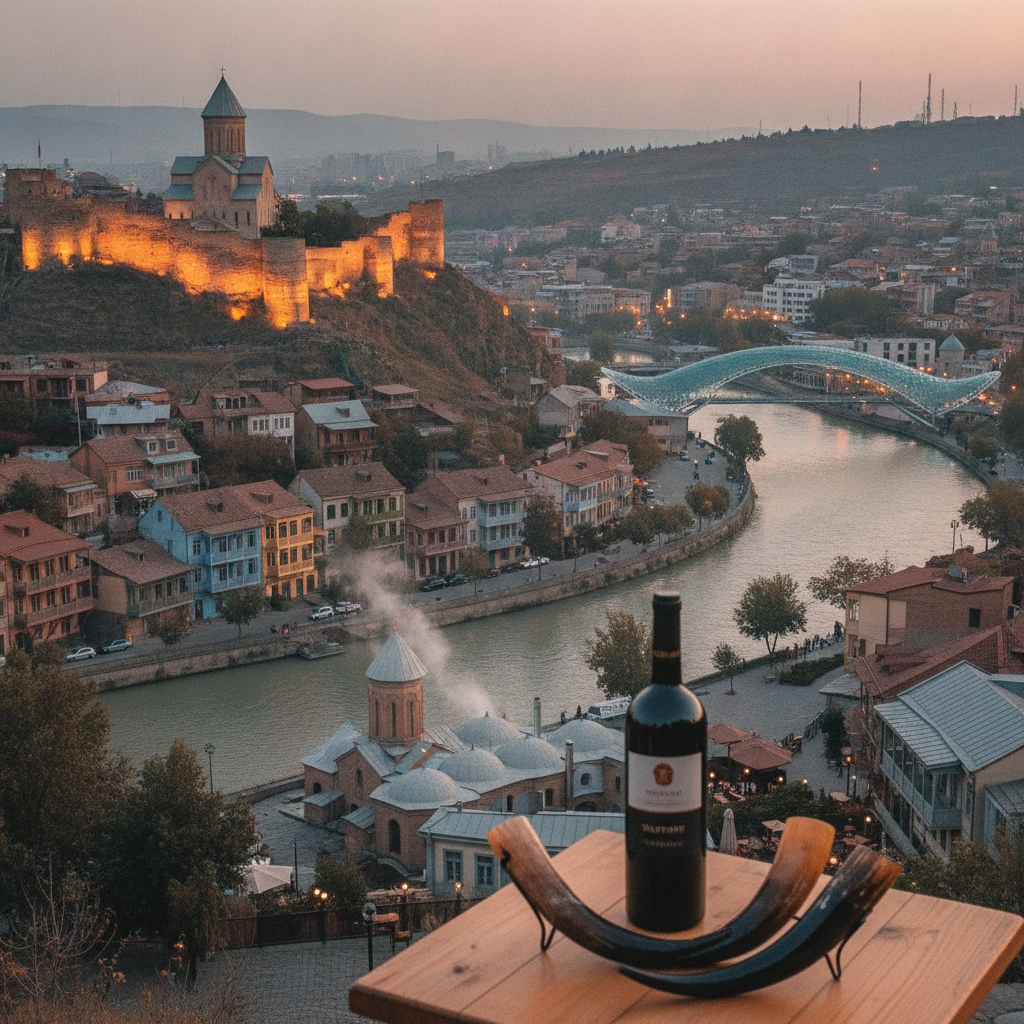
Tbilisi Essential: The Old Town, Narikala Fortress, the Sulfur Baths, Metekhi Church, the Georgian Wine, and the Most Romantically Atmospheric Single Caucasus Capital
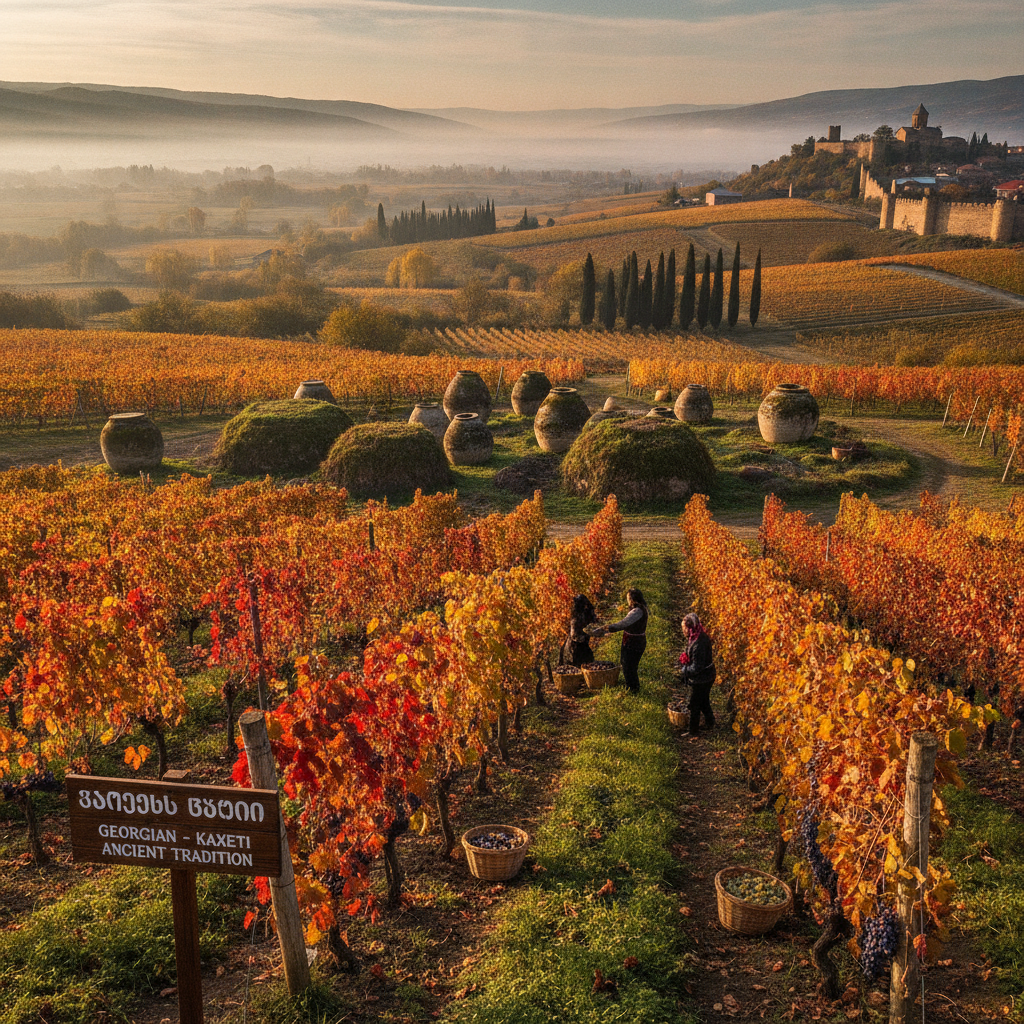
Georgia Wine Country: The Kakheti Region, Signagi, Telavi, the Wine Tasting, and the Most Ancient Single Wine Culture Day Trip from Tbilisi
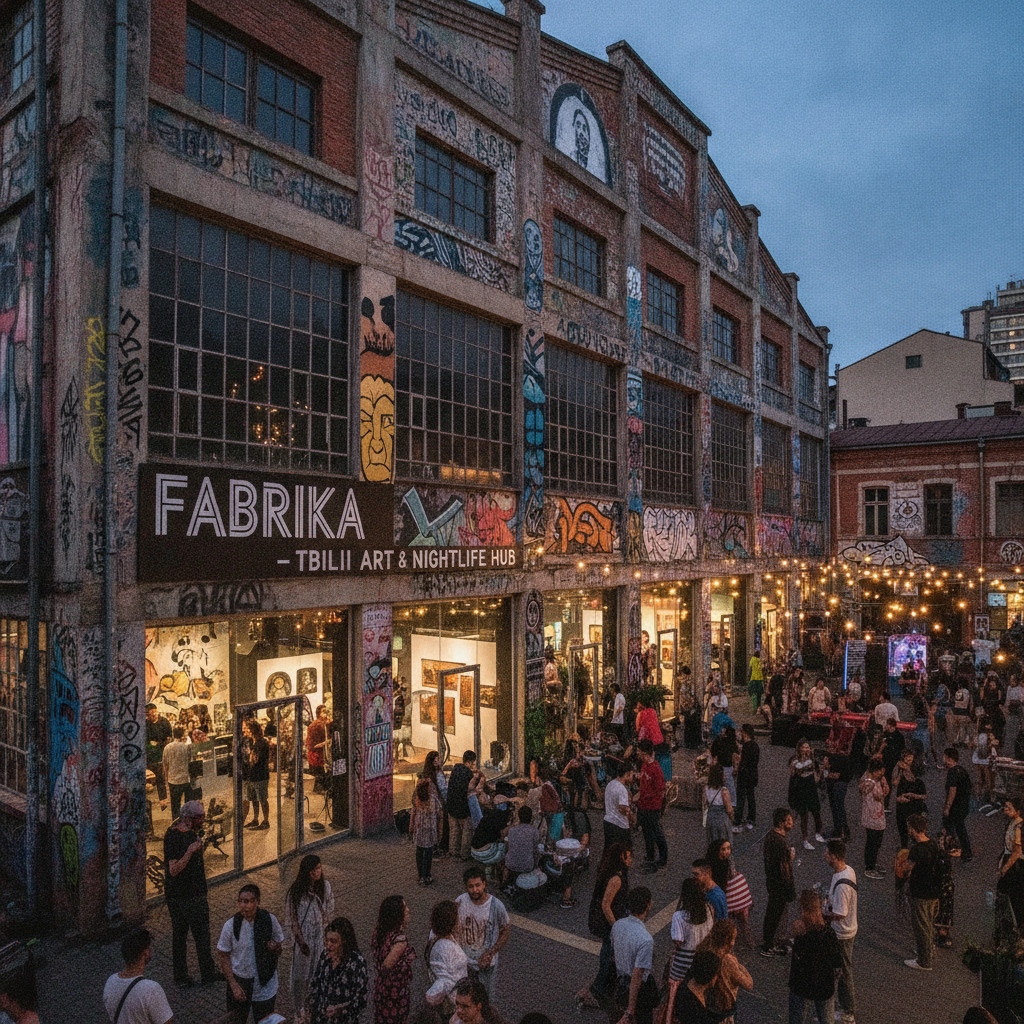
Tbilisi Arts: Fabrika, the Contemporary Gallery Scene, the Nightlife, the Creative Hub, and the Most Artistically Vibrant Single Caucasus Capital
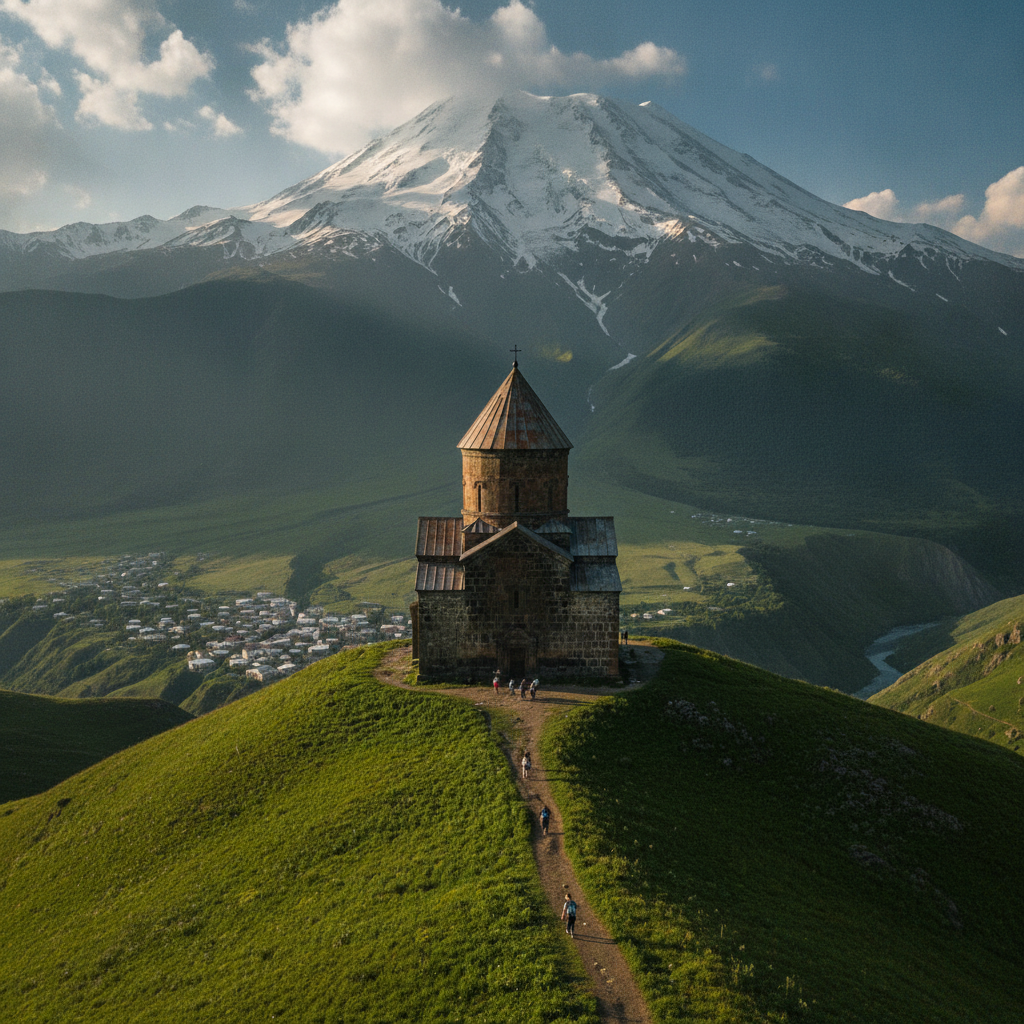
The 6,000 BCE Gadachrili Gora Wine Residue Making Georgia the World's Oldest Winemaking Civilization, the Khinkali Dumpling Broth Drunk Through a Bite Before Eating & the Gergeti Trinity Church at 2,170m With Kazbek at 5,047m Directly Behind