The Battle of Didgori Where 56,000 Georgian Crusader and Armenian Forces Destroyed 250,000 Seljuks in 1121, the Supra Feast Toastmaster Sequence Fixed by Georgian Tradition & the Global Natural Wine Movement Citing 8,000-Year Georgian Qvevri as Its Historical Precedent
The Battle of Didgori (1121) where David the Builder's 56,000-strong coalition force destroyed the 250,000-strong Seljuk army at the pass 40km from Tbilisi; the tamada supra toastmaster leading the fixed toast sequence (God, Georgia, the dead, the living, parents, women, peace) at every Georgian feast; the global natural wine movement citing the 8,000-year Georgian qvevri skin-contact tradition as its primary historical inspiration; the Vardzia cave city with 3,000 rooms and 25 churches carved into the cliff by Queen Tamar; the Daryal Gorge walls rising 1,000m on both sides of the Terek River making the pass almost impossible to force; and the G.Vino bar opened 2012 as the bar that introduced natural wine to international tourism in Tbilisi.
- 1
David the Builder – Georgia's Greatest King
David IV Aghmashenebeli (David the Builder—1089–1125 CE)—the king who transformed Georgia from a fragmented principality under Seljuk occupation into the most powerful state in the Caucasus and the Near East): the history guide. The historical context (the Seljuk Turk invasion of the Caucasus (1064–1080) had devastated eastern Georgia and expelled most of the Christian population from the lowlands—Tbilisi was under Muslim governance; the Kura River valley was used as a Seljuk pastoral zone rather than an agricultural settlement): the military campaigns (David inherited the throne at age 16 in 1089 and spent his entire 36-year reign in continuous military campaigns: the Battle of Didgori (August 12, 1121)—the decisive battle in which the combined Georgian, Crusader, and Armenian army (approximately 56,000 troops) defeated the Seljuk coalition force of approximately 250,000 at the Didgori Pass 40 km west of Tbilisi—the Georgian victory rate (85% casualties inflicted on the enemy with minimal Georgian losses) made Didgori one of the most decisive battles in medieval military history): the capture of Tbilisi (David captured Tbilisi from Muslim governance in 1122—the city had been under Muslim rule for 400 years (718–1122)—the 400-year period is remembered in Georgian historiography as the Arab and then Turkish occupation of the Georgian capital): the cultural legacy (David the Builder founded the Gelati Monastery near Kutaisi in 1106—the most important Georgian monastery complex, containing an academy (the Gelati Academy) where the translation of Greek philosophy into Georgian was centered).
- 2
The Kartlis Deda Statue & Georgian Identity
The Kartlis Deda statue and the question of Georgian national identity (the most symbolic monument in Tbilisi and the lens through which to understand the Georgian self-conception): the national identity guide. The statue (the Kartlis Deda (ქართლის დედა—'Mother of Kartli' or 'Mother of Georgia')—the 20m aluminum female figure on the Narikala ridge installed in 1958 for the 1,500th anniversary of the founding of Tbilisi: the figure is dressed in a traditional Georgian national dress (the kartuli—the flowing dress with belted bodice) and holds a bowl of wine in the left hand (for guests and friends) and a sword in the right hand (for enemies)—the most economically compact statement of Georgian hospitality combined with military resilience in the world): the Georgian national identity (the concept of Georgianness (kartveloba): the three defining pillars of Georgian national identity as articulated in the modern period: the Georgian Orthodox Christian faith (the church as the primary continuous institution through 1,700 years of foreign occupation); the Georgian language and script (the mkhedruli alphabet as a marker of irreducible Georgian uniqueness—the script is used by only one language in the world); the Georgian wine and table culture (the supra—the Georgian feast—as the ritual enactment of Georgian values: generosity, friendship, ancestral memory, and the continuity of the nation)): the supra (the Georgian feast: the supra is organized around the tamada (the toastmaster)—a designated speaker who leads a sequence of formal toasts (pativsismi—'respects') covering God, Georgia, the dead, the living, parents, women, and peace, in a fixed order, with the guests drinking after each toast).
- 3
Tbilisi's Thermal Economy – From Hot Springs to SPA City
The thermal tourism economy of Tbilisi (the growing position of Tbilisi's natural hot springs as a health tourism destination—and the history of the thermal culture that defined the city from its foundation): the thermal heritage and economy guide. The spring geology (the Tbilisi sulfurous hot springs: the springs emerge from the Tabori fault zone at 37–43°C from a depth of approximately 1,500m—the sulfur content (hydrogen sulfide—H₂S) gives the characteristic smell; the mineral content (calcium, magnesium, sodium bicarbonate) claims credited include: skin condition treatment (psoriasis, eczema); joint pain relief; respiratory conditions): the historical bath culture (the Persian (Safavid) governors of Tbilisi (1555–1747) developed the sulfur bath complex as a commercial enterprise—the bath culture was the primary social space for men in the Persian and Ottoman-influenced city: the bathhouse (hammam) served as the meeting place for business transactions, political discussions, and social networking in the absence of coffee houses or pubs): the contemporary bath industry (the current Abanotubani bath infrastructure: 5 operating bathhouses, 20 private rooms (from USD 15/hour), 10 communal pool sessions available; the Chreli-Ubani bath is the most recently renovated and the most hygienic for concerned visitors; the Orbeliani is the most architecturally historic): the new spa hotel development (the thermal spa hotel development: the Biltmore Tbilisi and the Radisson Blu both offer thermal pool facilities (piped spring water); the new Sulfur Thermal Spa project (the USD 50 million development in the Abanotubani adjacent to the existing baths) is under construction with 2026 completion planned).
- 4
Georgia's Monasteries – A Mountain Spiritual Network
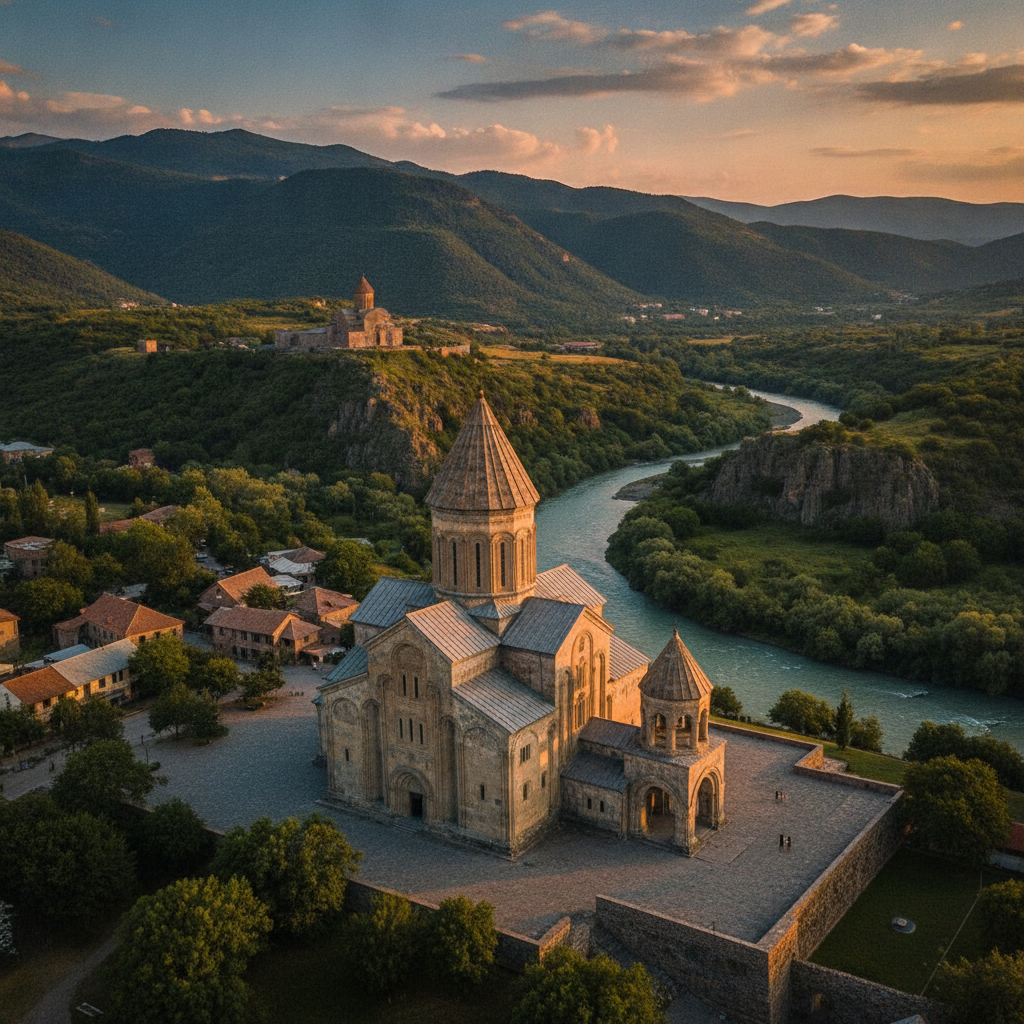
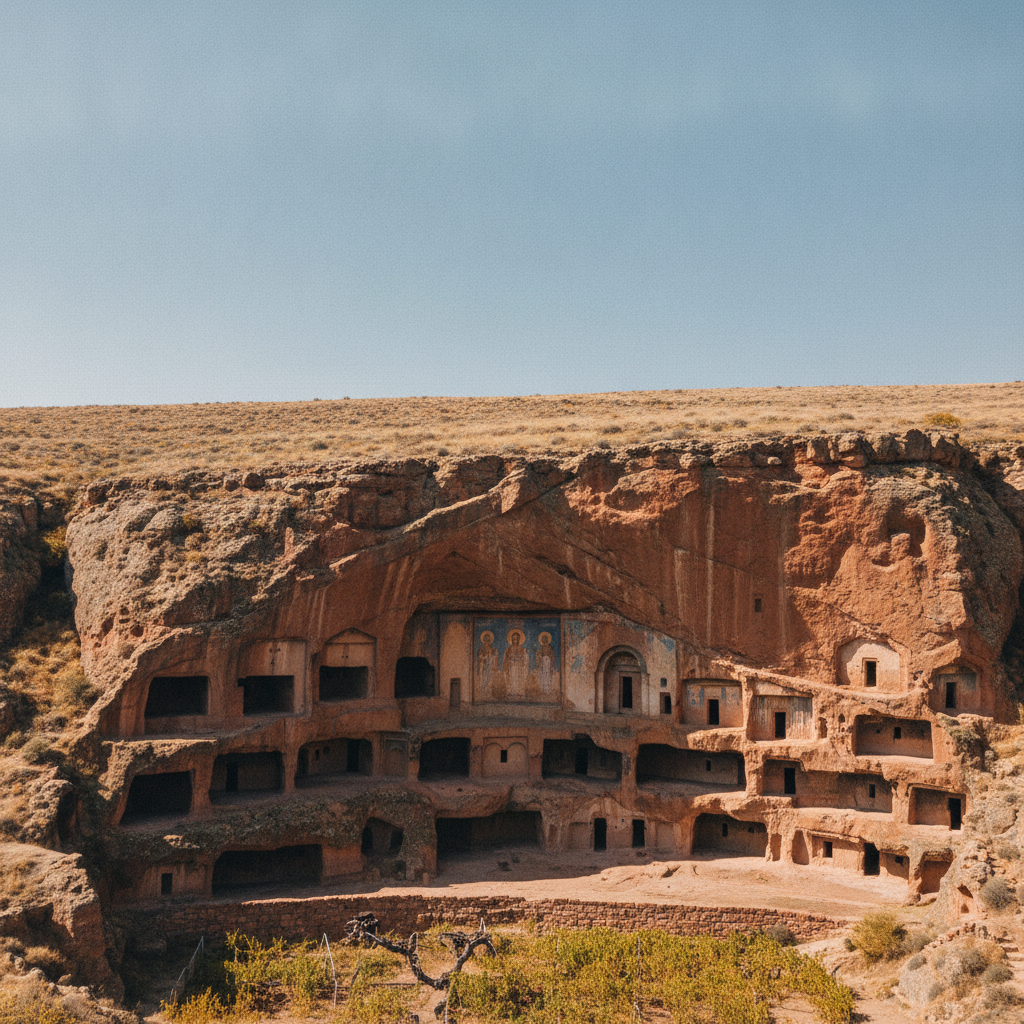
The Georgian monastery network (the extraordinary density of medieval Orthodox monasteries in the Georgian mountain landscape—the churches that survived the Mongol, Persian, Ottoman, and Soviet periods to remain active religious and architectural masterpieces): the monastery guide. The mountain monasteries (the defining characteristic of Georgian ecclesiastical architecture: the placement of monasteries on mountain tops, cliff edges, and river confluences—the four most important Georgian monasteries accessible from Tbilisi: Jvari (the 6th-century monastery above Mtskheta—20 km from Tbilisi; the earliest surviving cross-plan domed church in Georgia (585–604 CE); David Gareja (the cave monastery complex in the semi-arid Gareja Desert 60 km southeast of Tbilisi on the Azerbaijan border—the troglodyte monastery carved into red sandstone cliffs in the 6th century by the Syrian monk David Gareja (one of the Thirteen Syrian Fathers who brought monastic Christianity to Georgia): the Gareja monastery frescoes (the 8th–17th century frescoes in the caves of the Udabno Monastery (the monastery on the Azerbaijani side of the border)—the frescoes were partially damaged by Soviet military training exercises on the plateau above in the 1980s): Ananuri (the 17th-century fortress-monastery 72 km north of Tbilisi on the Georgian Military Highway—the most complete surviving Georgian fortress-church complex, with two churches, a watchtower, and a fortified perimeter wall all intact): Vardzia (the 12th-century cave city 240 km southwest of Tbilisi—the cave-monastery complex carved into the Erusheti mountain by Queen Tamar, with 3,000 cave rooms and 25 churches in the cliff face).
- 5
The Georgian Military Highway – Tbilisi to Vladikavkaz
The Georgian Military Highway (the mountain road from Tbilisi north through the Greater Caucasus range to Vladikavkaz in Russia—the most spectacular mountain road in the Caucasus): the highway heritage guide. The road history (the Georgian Military Highway (Sakartvelos samkhedro gza) was built by the Russian Imperial Army between 1799 and 1817 to provide military access through the Caucasus mountains—the construction was the primary logistical challenge of the Caucasian conquest: the road follows the Terek River valley from Vladikavkaz through the Daryal Gorge (the most dramatic section) to the 2,379m Jvari Pass (the highest point on the road) and descends the Aragvi River valley to Mtskheta and Tbilisi: the total length 208 km from Vladikavkaz to Tbilisi): the Daryal Gorge (the 15 km section through the Daryal Gorge (Dariali in Georgian—named for the medieval Georgian fortress of Darialan): the gorge walls rise 1,000m from the Terek River on both sides—the most dramatic section of the highway and the natural fortress that made the Caucasus passage almost impossible to force militarily): the Cross Pass (the Jvari Pass (2,379m—cross pass)—the highest point of the road, open May–October (closed by snow November–April): the Pass memorial (the stone cross erected by the Russian poet Mikhail Lermontov (according to Georgian tradition) marking the point where the Caucasus mountains inspired his Caucasian poems): the Kazbegi town (Stepantsminda—the primary tourist town on the highway 150 km from Tbilisi, population 1,500, elevation 1,740m).
- 6
Tbilisi's Wine Bars & Natural Wine Movement
The Tbilisi natural wine scene (Tbilisi as the capital of the global natural wine movement—the city where the 8,000-year qvevri tradition has become the inspiration for a worldwide shift away from industrial winemaking): the natural wine guide. The natural wine concept (natural wine: wine made with minimal intervention—no added sulfites, no fining or filtering agents, no commercial yeasts—the philosophy that wine should express only the grape variety, the soil, and the season): the Georgian connection (the Georgian qvevri tradition is the natural wine movement's primary historical reference point—the 8,000-year tradition of fermenting wine with skin contact in buried ceramic vessels without any addition other than grape juice is the most extreme version of natural winemaking: the international natural wine movement of the 1990s–2000s (led by the French vigneron Pierre Overnoy and the Italian Josko Gravner) specifically cited the Georgian tradition as the model for their own winemaking): the Tbilisi wine bars (the natural wine bar circuit in Tbilisi: G.Vino (the first natural wine bar in Tbilisi, opened 2012, on Erekle II Street in the Old Town—the bar that introduced the natural wine concept to the international tourist in Tbilisi): the Winery (the wine bar with the most comprehensive qvevri wine list—20+ amber wines from the primary natural wine producers); the Shavi Lomi (the combination gastropub-wine bar that is the most acclaimed wine list in Tbilisi's restaurant scene)): the winery visits (the primary natural wine producers with visitor facilities near Tbilisi: the Iago's Wine (Chardakhi village, 25 km from Tbilisi)—the producer of the most internationally celebrated Georgian natural wine (the Rkatsiteli qvevri wine)): the Tbilisi wine festival (the Tbilisi International Wine Festival (October)—the New Wine Festival at Rike Park (May)—the two primary wine events).
Walk this route with audio
Stories play automatically as you reach each stop — no tapping needed.
More in Tbilisi
Tbilisi Soviet Heritage: The Soviet Architecture, the Stalin Era, the Rose Revolution, and the Most Complex Single Post-Soviet Caucasus Capital Transformation
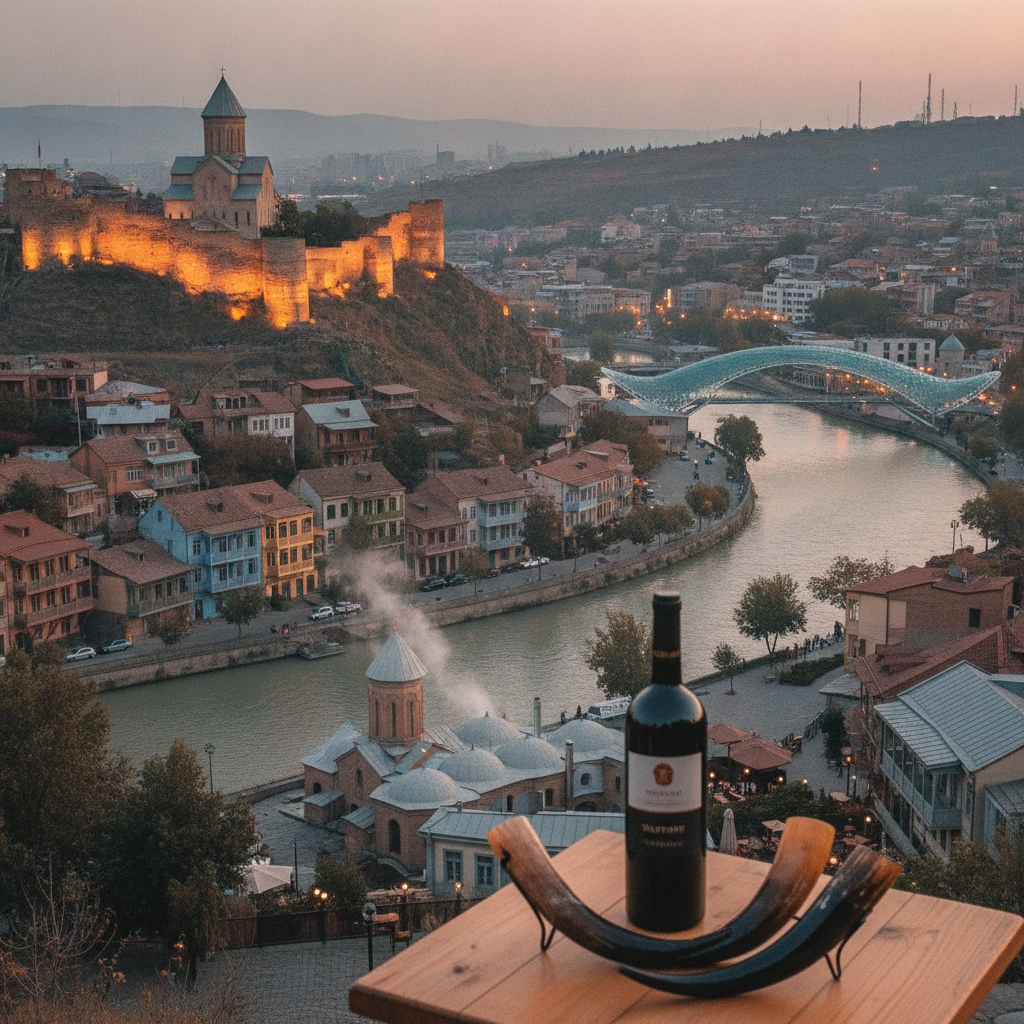
Tbilisi Essential: The Old Town, Narikala Fortress, the Sulfur Baths, Metekhi Church, the Georgian Wine, and the Most Romantically Atmospheric Single Caucasus Capital
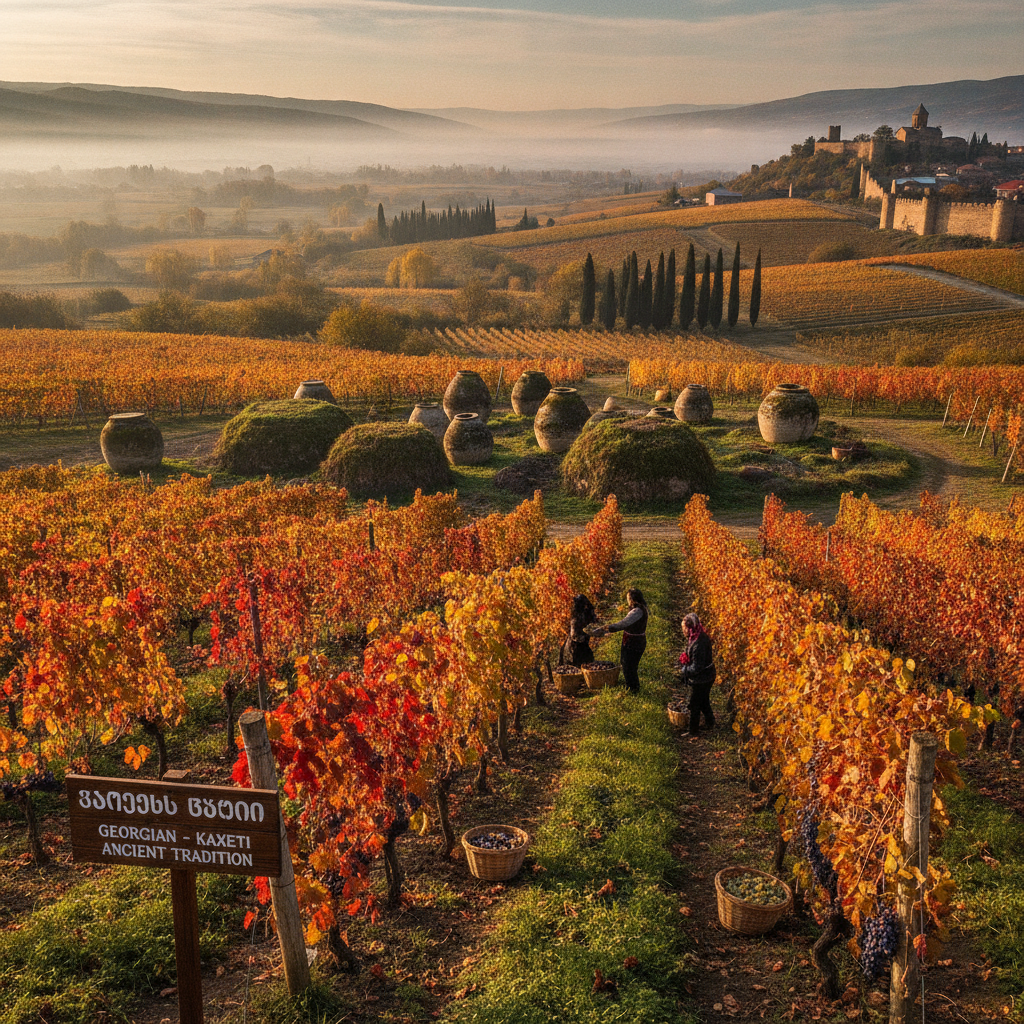
Georgia Wine Country: The Kakheti Region, Signagi, Telavi, the Wine Tasting, and the Most Ancient Single Wine Culture Day Trip from Tbilisi
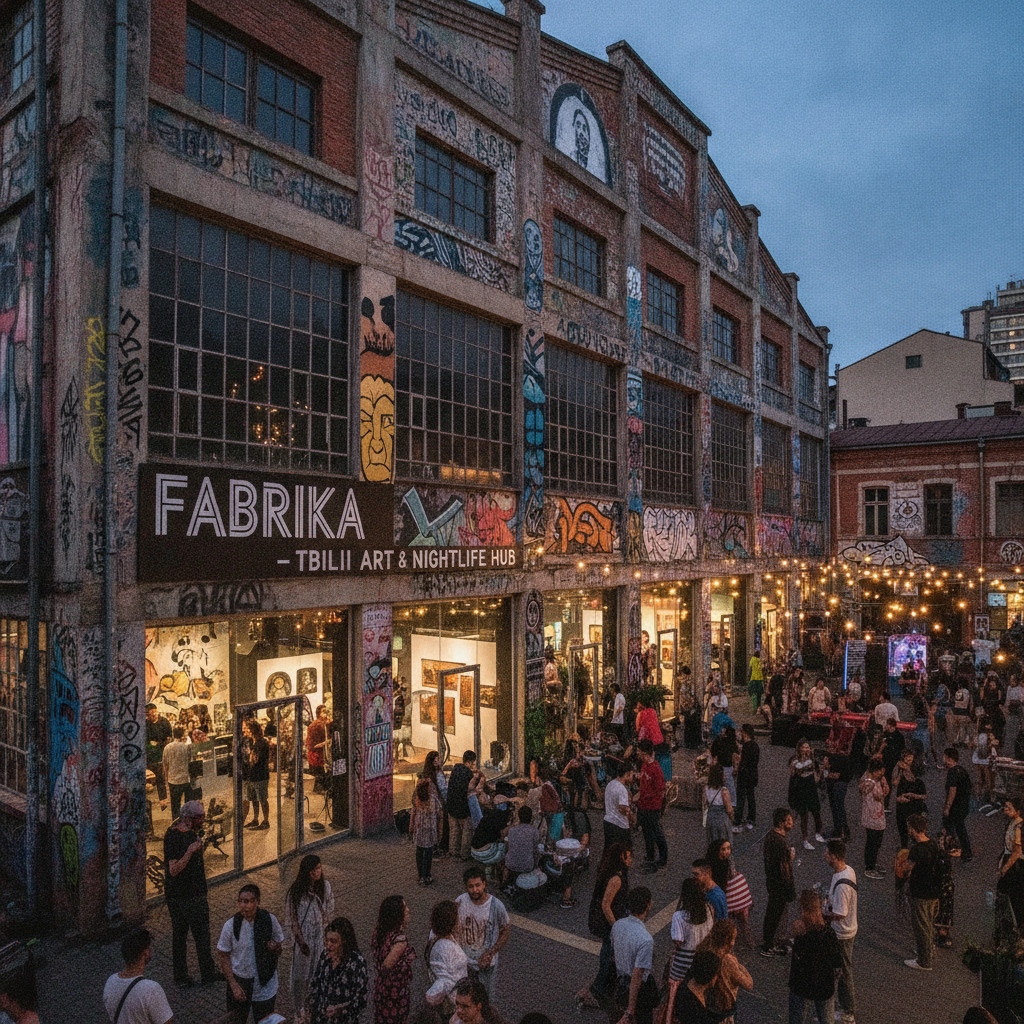
Tbilisi Arts: Fabrika, the Contemporary Gallery Scene, the Nightlife, the Creative Hub, and the Most Artistically Vibrant Single Caucasus Capital
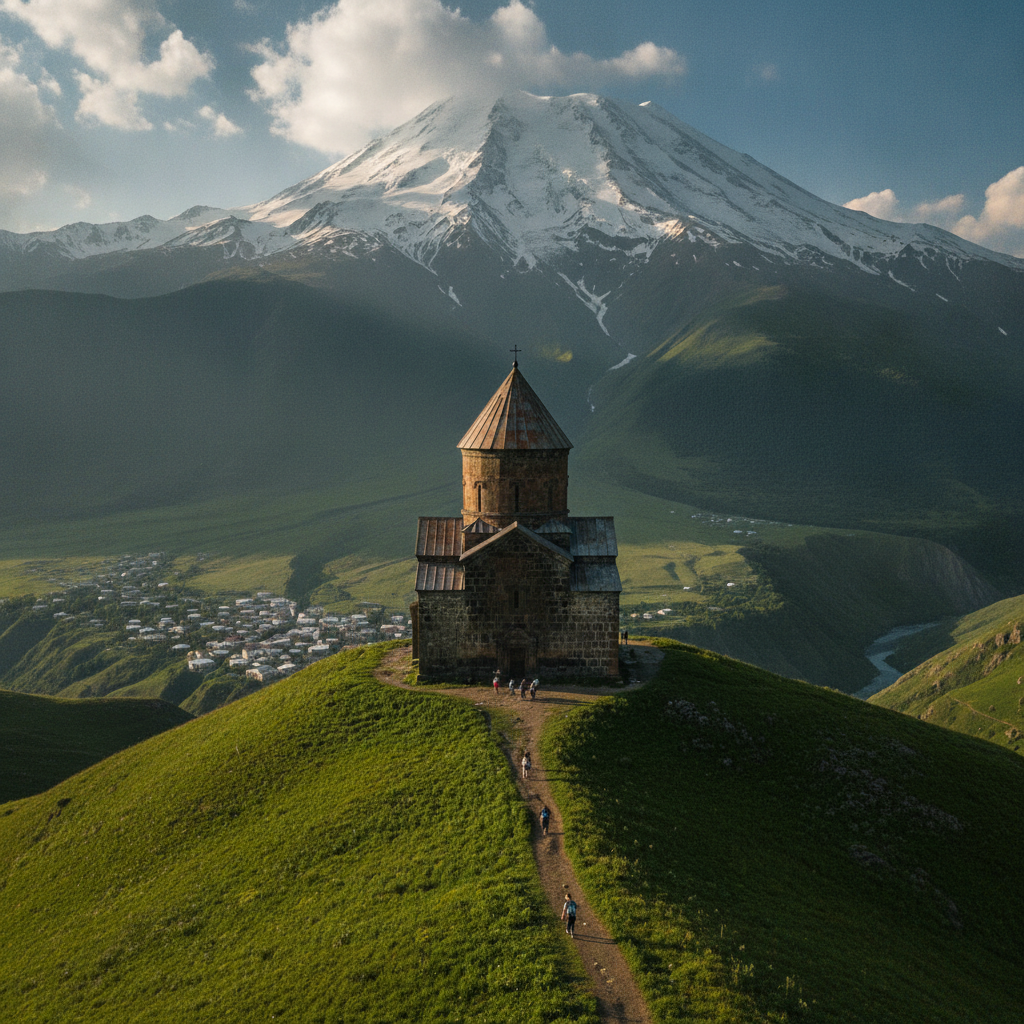
The 6,000 BCE Gadachrili Gora Wine Residue Making Georgia the World's Oldest Winemaking Civilization, the Khinkali Dumpling Broth Drunk Through a Bite Before Eating & the Gergeti Trinity Church at 2,170m With Kazbek at 5,047m Directly Behind