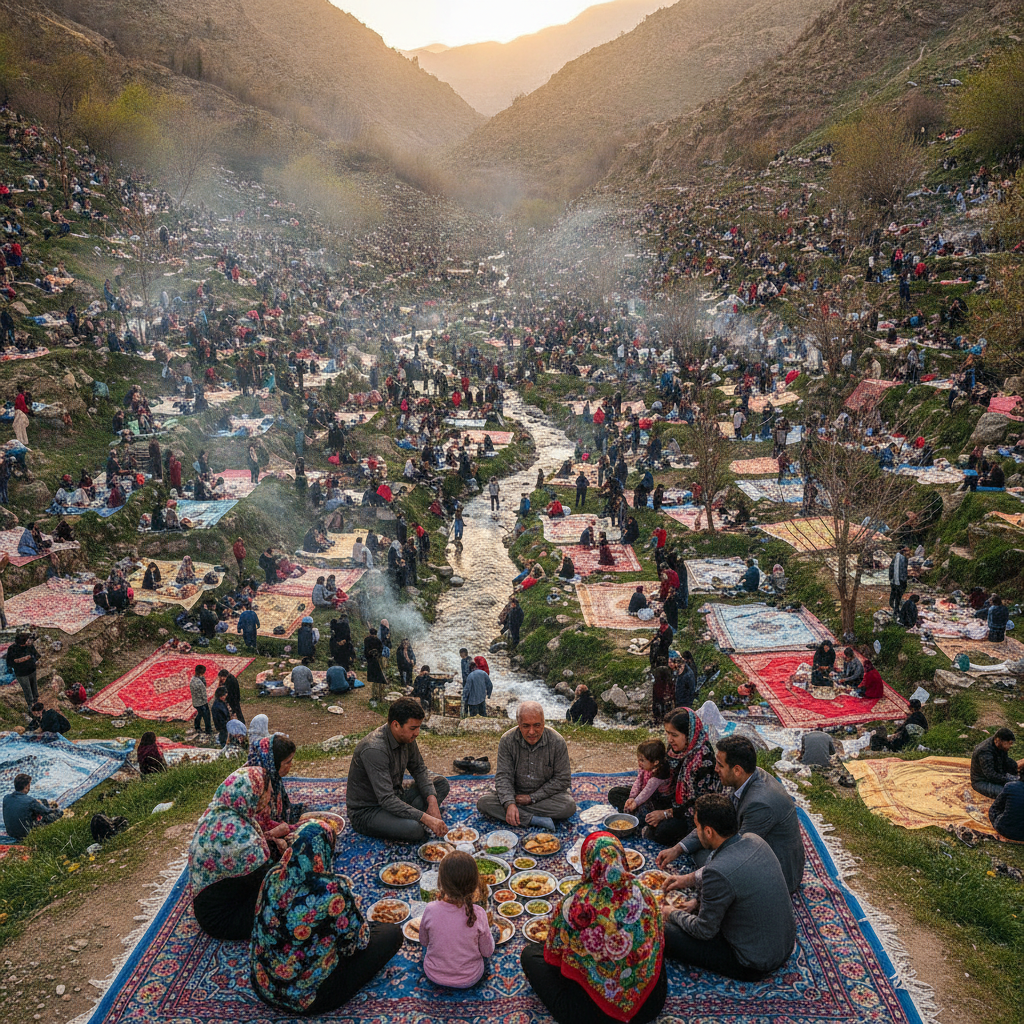
The Bazaaris Funding the Tobacco Protest, Constitutional Revolution, Mosaddegh's Oil Nationalization AND the 1979 Revolution, Damavand's Zahhak Prophecy Paralleling Norse Ragnarok & 70% of Iranian Internet Users on VPN Daily
The bazaaris financing the Tobacco Protest (1891), Constitutional Revolution (1905), Oil Nationalization (1951), and 1979 Revolution — the only merchant class in history to back four consecutive regime changes; Damavand's Zahhak prophecy (the chained serpent king will escape the volcano at the end of time) paralleling Norse Ragnarok; 70% of Iranian internet users using VPN daily — the highest per-capita VPN usage rate in the world; the Iranian Jewish community the oldest continuous diaspora in the world (2,700+ years since Cyrus 539 BCE); Tabriz Bazaar the world's largest covered brick bazaar (9.5 km²) with UNESCO inscription; and Tehran air pollution causing 4,500–5,000 premature deaths annually.
- 1
The Bazaaris – How Merchants Rule Iran
The bazaari merchant class heritage (the bazaaris — the traditional Iranian merchant class — the most consistent political force in Iranian history across 200+ years of regime changes): the merchant class guide. The bazaari identity (the bazaari (بازاری — bazaar person) — the traditional merchant class of the Iranian bazaar: the bazaaris constitute a distinct social class in Iranian society with their own code of conduct (the bastani — traditional merchant ethics), their own marriage networks (bazaari families intermarry within the class), and their own educational and religious institutions (the hosseiniyeh — the Shia community center — is the primary social institution of the bazaari class): the political history (the bazaaris have been the decisive financial backers of every major political movement in modern Iranian history: (1) the Tobacco Protest (1891) — the bazaari boycott of tobacco that forced Naser al-Din Shah to cancel the tobacco concession to a British company: (2) the Constitutional Revolution (1905–1911) — the bazaari merchants financed the demand for a constitution and parliament: (3) the Oil Nationalization (1951) — the bazaaris supported Mosaddegh's nationalization of the Anglo-Iranian Oil Company: (4) the 1979 Revolution — the October 1978 bazaar general strike that brought the Iranian economy to a halt and ended the Shah's political viability: the relationship with the clerics (the traditional alliance between the bazaari merchants and the Shia clergy is the most stable political partnership in Iranian history — the clergy provide religious legitimacy for the merchants, the merchants provide financial support for the mosques and the clerical network): the bazaaris today (the bazaaris have benefited from the post-1979 economy through their domination of import trade under sanctions).
- 2
Mount Damavand – Sacred Volcano of Persian Mythology
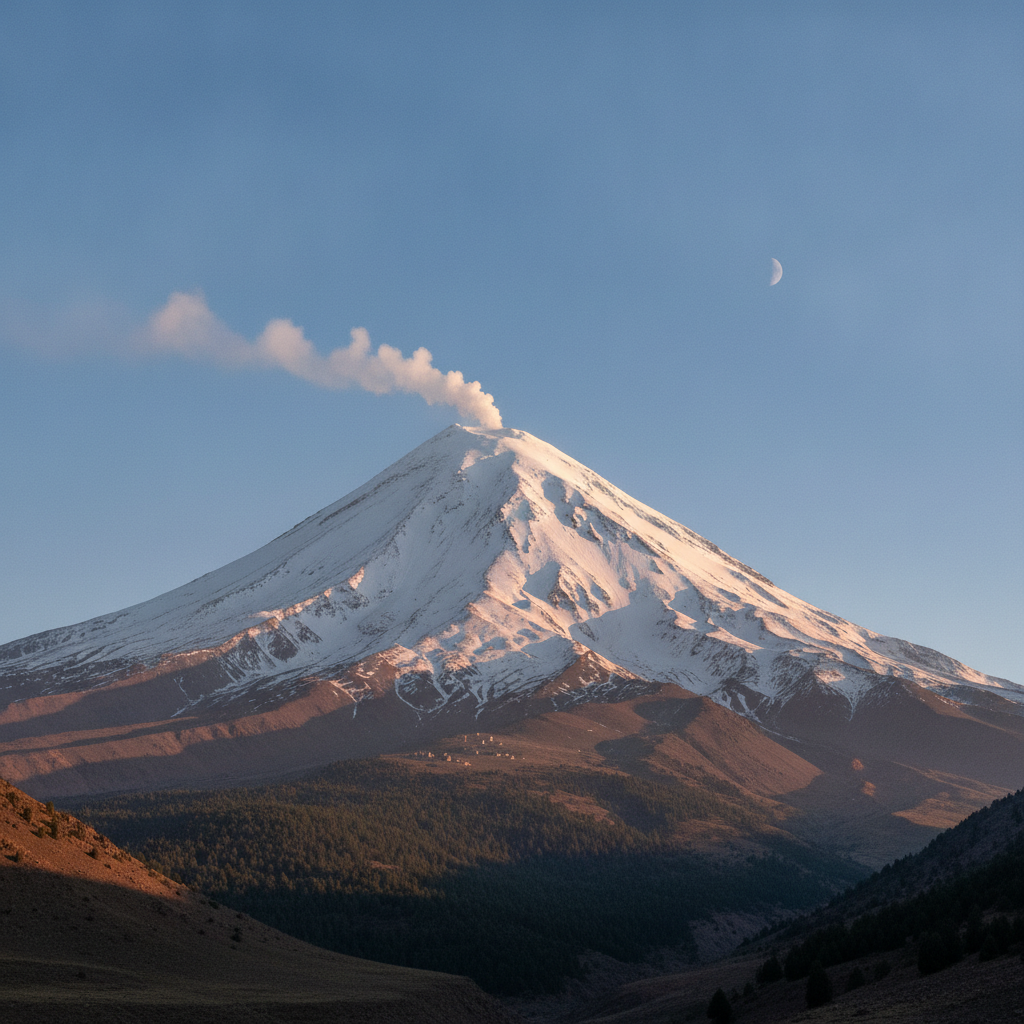
The Mount Damavand heritage (the sacred volcano of Persian mythology — the most important mountain in Iranian cultural tradition and the highest point in the Middle East): the mountain heritage guide. The geology (Mount Damavand (Kuh-e Damavand — کوه دماوند) — the highest volcano in Asia at 5,610m: the mountain is a dormant stratovolcano that last erupted approximately 7,300 years ago — minor fumarolic activity (sulfurous steam) continues from the summit crater: the prominence (Damavand has the fourth-highest topographic prominence of any volcano in the world (after Kilimanjaro, Denali, and Elbrus): the mythology (Damavand is the most important mountain in Persian mythology — the primary figure associated with Damavand is Zahhak (Zohak) — the evil serpent king of Persian mythology: the legend (according to the Shahnameh of Ferdowsi, the evil king Zahhak was chained inside the Damavand volcano by the hero Fereydoun after a great battle — Zahhak is prophesied to escape the volcano at the end of time and destroy the world (the Persian equivalent of the Norse Ragnarok myth): the mountaineering (the standard ascent of Damavand via the South Face: Base camp at Polur (2,700m): Camp 3 Bargah-e Sevom (4,200m): summit bid from Camp 3 (5–8 hours to the summit): the altitude sickness (the climb to 5,610m involves significant altitude effects — acclimatization at 4,200m for 1 night minimum is essential: the climb requires no technical equipment except crampons and ice axe (for the summit ice cap from August onwards): the permit (a free permit from the Environment Protection Organisation is required for summit climbers).
- 3
Tabriz – Northwestern Iran & the Azerbaijani Connection
The Tabriz heritage (the primary city of northwestern Iran and the historical capital of the Iranian Azerbaijan region — one of the largest Persian-speaking cities in Iran and the primary center of Iranian Azerbaijani Turkic culture): the Tabriz heritage guide. The Tabriz (Tabriz (تبریز) — the capital of East Azerbaijan Province in northwestern Iran: population approximately 1.9 million (the 4th largest city in Iran): the history (Tabriz was the capital of several Iranian empires: the Ilkhanate (Mongol) capital (1265–1306 CE): the Safavid capital (1501–1555 CE — before the Ottoman threat forced the Safavids to move their capital to Qazvin and then Isfahan): the Qajar summer capital: the Tabriz Bazaar (the Tabriz Bazaar (Bazar-e Tabriz) — UNESCO World Heritage Site (2010) — the largest covered brick bazaar in the world at 9.5 km² of covered arcades: the bazaar has operated continuously since at least the 13th century: the Azerbaijani identity (the Iranian Azerbaijanis (the Azerbaijani-speaking population of northwestern Iran) number approximately 15–25 million — the largest ethnic minority in Iran (significantly larger than the Azerbaijani population of the Republic of Azerbaijan which has approximately 10 million people): the political sensitivity (the Iranian Azerbaijani question is the most sensitive ethnic minority issue in Iran — the Iranian government considers the Azerbaijani Iranians integral to the Iranian nation while some Azerbaijani nationalists advocate for a Greater Azerbaijan uniting Iran's Azerbaijanis with the Republic of Azerbaijan).
- 4
Iranian Tech Scene – Tehran's Silicon Valley
The Tehran technology and startup heritage (the Iranian technology sector — the most sophisticated digital economy in the Middle East and one of the most dynamic in the Muslim world): the tech scene guide. The internet culture (Iran has 80+ million internet users — one of the highest internet penetration rates in the Middle East at 85%: the filtering (the Iranian government operates the National Information Network (NIN) or Shebeke-ye Melli (the National Internet) — a domestic internet infrastructure that allows the government to filter or block external websites: the blocked sites (Instagram, Twitter/X, Facebook, WhatsApp, YouTube, Google, and most Western news sites are officially blocked in Iran — Iranians access these services via VPN (Virtual Private Network) software: the VPN market (the VPN market in Iran is the most active in the world by per-capita usage — approximately 70% of Iranian internet users use VPN software regularly): the domestic tech (the Iranian domestic tech ecosystem: Digikala (the Iranian Amazon — the largest e-commerce platform in Iran): Snapp (the Iranian Uber): Tap30 (the Iranian Careem): Cafe Bazaar (the Iranian Google Play Store): Aparat (the Iranian YouTube — the largest Persian video platform): Divar (the Iranian Craigslist): the funding (the Iranian startup ecosystem receives funding primarily from domestic investors (international investors are blocked by sanctions): the primary venture capital firms in Tehran are Sarava (the largest Iranian VC) and Mobin Net).
- 5
Iranian Jewish Community – 2,700 Years in Persia
The Iranian Jewish heritage (the Jewish community of Iran — the oldest diaspora Jewish community in the world in continuous existence outside Israel): the Jewish heritage guide. The history (the Jews of Persia (Yahudian-e Iran — یهودیان ایران) — one of the oldest Jewish communities in the world: the Cyrus Cylinder (539 BCE — Cyrus the Great of Persia captured Babylon and issued the decree (the Cyrus Cylinder) permitting the Jewish exiles to return to Jerusalem and rebuild the Temple — the event is described in the Hebrew Bible (Ezra 1:1–4): the Purim connection (the Book of Esther — the story of Queen Esther (Hadassah) and her uncle Mordecai who prevented the genocide of the Jews of Persia ordered by Haman (the Prime Minister of King Ahasuerus / Xerxes I (r. 486–465 BCE): the historical community (the Iranian Jewish community numbered approximately 80,000–100,000 in 1979: the emigration (approximately 70,000–80,000 Iranian Jews emigrated following the 1979 Revolution — primarily to Israel and the United States (Los Angeles has the largest Iranian Jewish diaspora community): the contemporary community (approximately 8,000–10,000 Jews remain in Iran in 2024 — the largest Jewish community in the Middle East outside Israel: Tehran has 6 active synagogues: the Yousef Abad Synagogue (Kehilat Yusef Abad) is the primary community synagogue: the political status (the Jews of Iran have one guaranteed seat in the Iranian Parliament (Majles) — the only religious minority guaranteed parliamentary representation under the Islamic Republic's Constitution).
- 6
Tehran's Air Pollution Crisis – The Environmental Emergency
The Tehran air pollution crisis (the most severe chronic environmental problem in Iran — the Tehran air pollution that closes schools, grounds flights, and causes respiratory disease in the 16-million-person megacity): the environmental crisis guide. The scale (Tehran has one of the worst urban air quality records of any capital city in the world — the city regularly records an Air Quality Index (AQI) above 150 (unhealthy) during winter temperature inversions: the worst days (on the worst pollution days (AQI 300+) schools are closed, outdoor public events are cancelled, and the elderly are advised to stay indoors: the causes (the primary sources of Tehran's air pollution: (1) the vehicle fleet (Tehran has approximately 4.5 million registered vehicles — approximately 70% of which are fueled by compressed natural gas (CNG) or gasoline: the fuel (Iran's domestically produced gasoline has a higher sulfur content than European standard fuel — the Euro 5 standard has never been implemented for Iranian domestic fuel production: (2) the geography (Tehran is located in a mountain-framed basin (altitude 1,050–1,800m): the Alborz mountains to the north block the northerly winds that would normally clear the basin — temperature inversions trap polluted air for days or weeks during calm weather: the health impact (the Tehran air pollution causes approximately 4,500–5,000 premature deaths per year in the metropolitan area (the Iranian health ministry figure): the solutions (the Tehran Metro expansion (the primary anti-pollution investment — the metro reduces private car use): the vehicle scrappage program (the government subsidizes replacement of pre-2000 vehicles with newer models): the electric vehicle program (limited EV subsidies introduced 2023).
Walk this route with audio
Stories play automatically as you reach each stop — no tapping needed.
More in Tehran
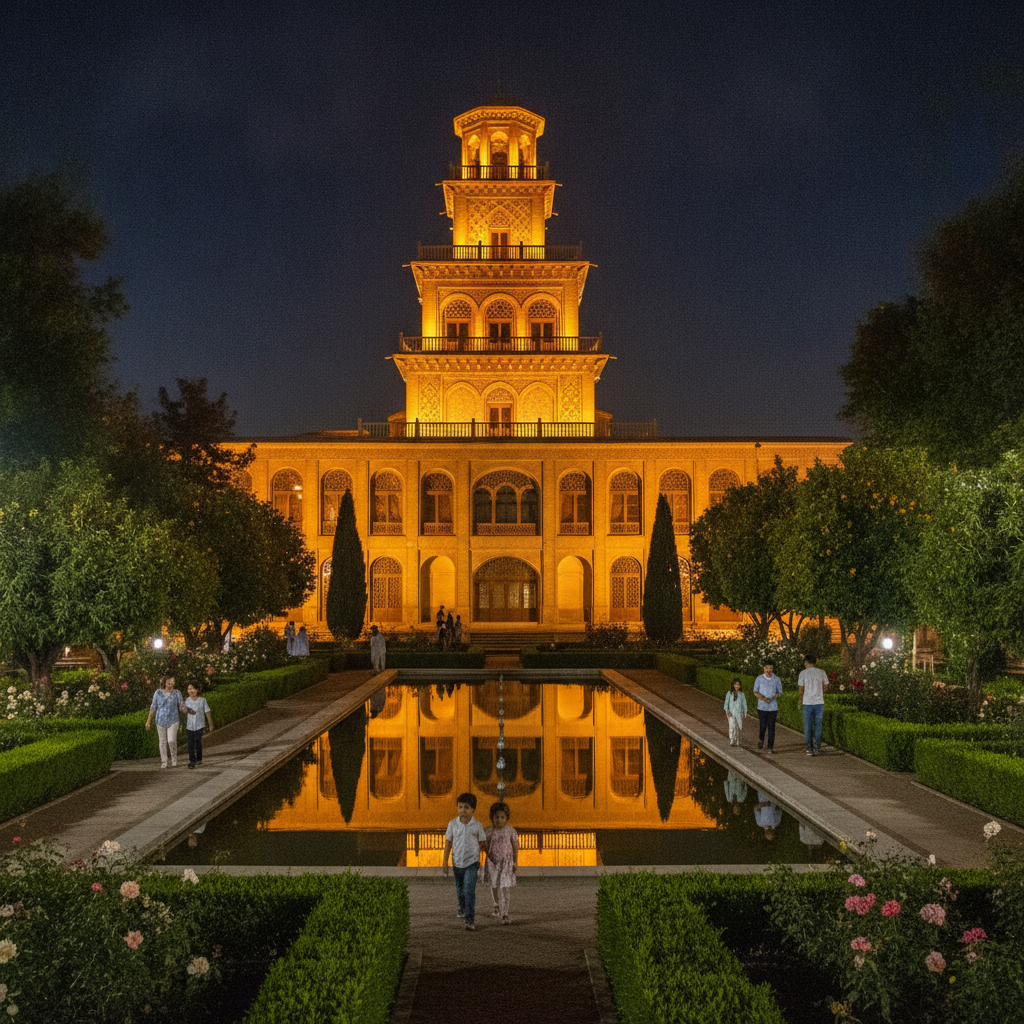
The Tehran Grand Bazaar Bazaaris Financing Both the 1905 Constitutional Revolution and the 1979 Islamic Revolution, Mount Damavand the Highest Volcano in Asia at 5,610m & the Tochal Gondola the Highest Gondola-Served Skiing Area in the World
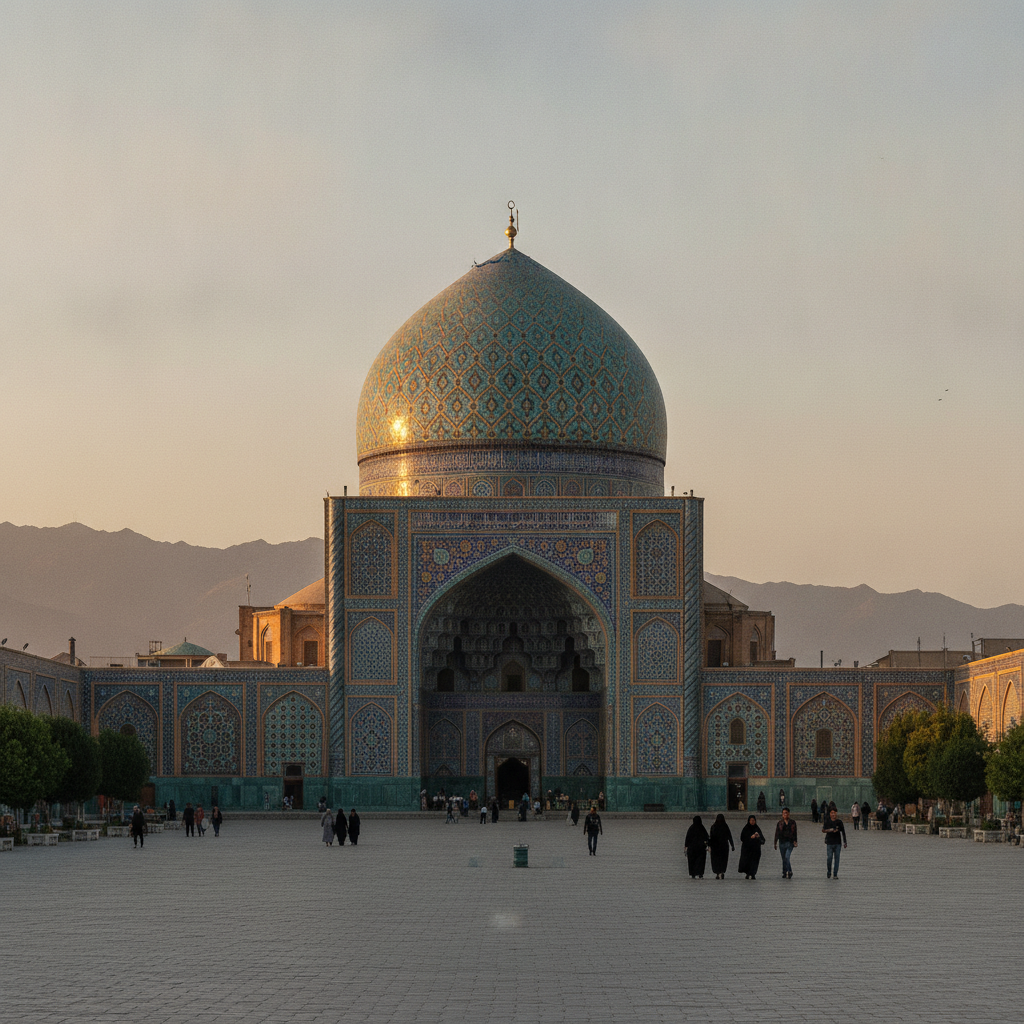
The Atash Bahram Sacred Fire in Yazd Burning Continuously Since 470 CE (1,500+ Years), Zoroastrianism Influencing the Jewish Heaven Hell Angels Devil and Messiah Concepts & the 1639 Treaty of Zuhab Still Defining the Iran-Iraq Border Today

Tehran Modern: The Northern Districts, the Jordan Street Cafe Scene, the Elahiyeh Lifestyle, Shopping, and the Most Cosmopolitan Single Iranian Urban Culture

Tehran History: The Pahlavi Era, the 1979 Revolution, the Islamic Republic, and the Most Politically Complex Single Modern Iranian Capital
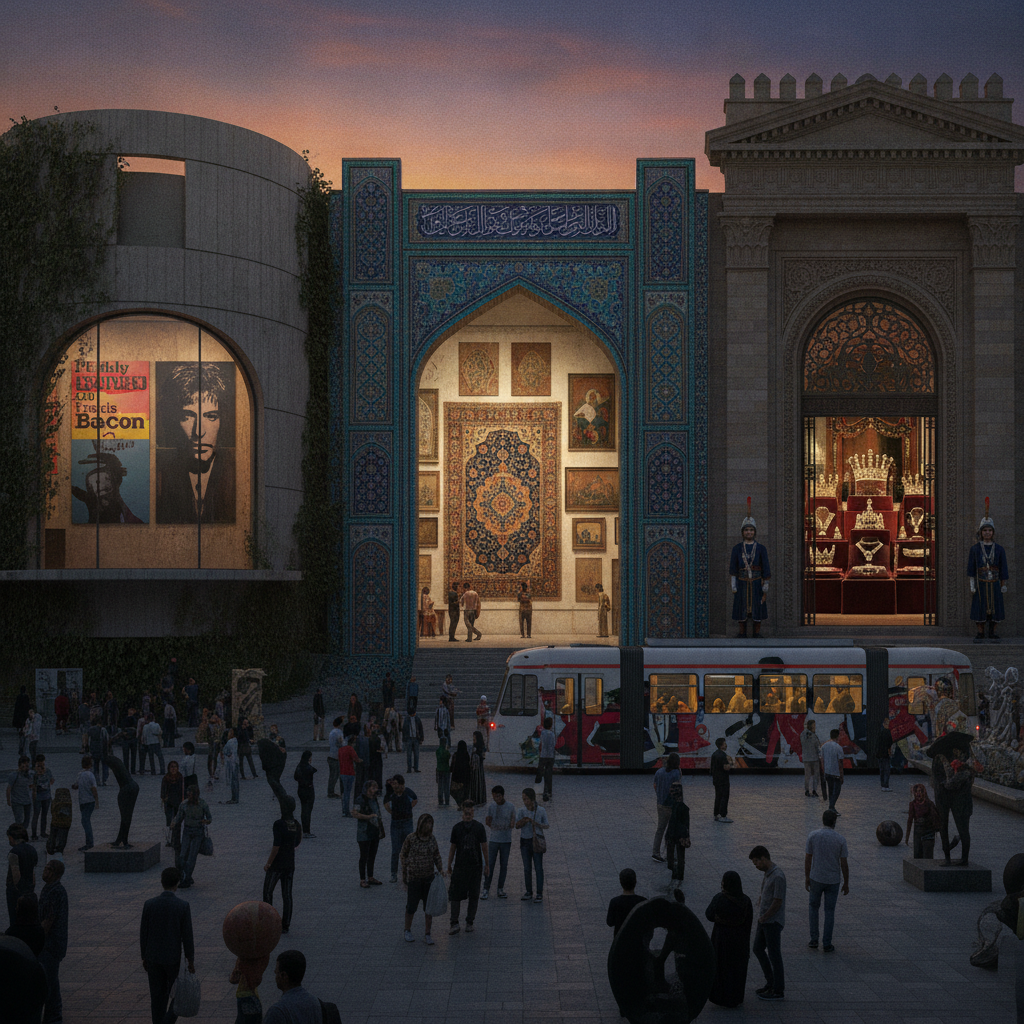
Tehran Museums: The National Jewelry Treasury, the Carpet Museum, the Tehran Museum of Contemporary Art, and the Most Museum-Rich Single Iranian Capital