Thessaloniki Ottoman & Jewish Heritage — Hamams, the Bezesteni & the Multicultural City
Thessaloniki's 500 years as an Ottoman city (1430-1912) and 400 years as the home of the largest Sephardic Jewish community in the world (1492-1943) have left a layered heritage that coexists with the Byzantine monuments and the modern Greek city in a way unique in the eastern Mediterranean.
- 1
The Bey Hamam — the Ottoman Baths of 1444
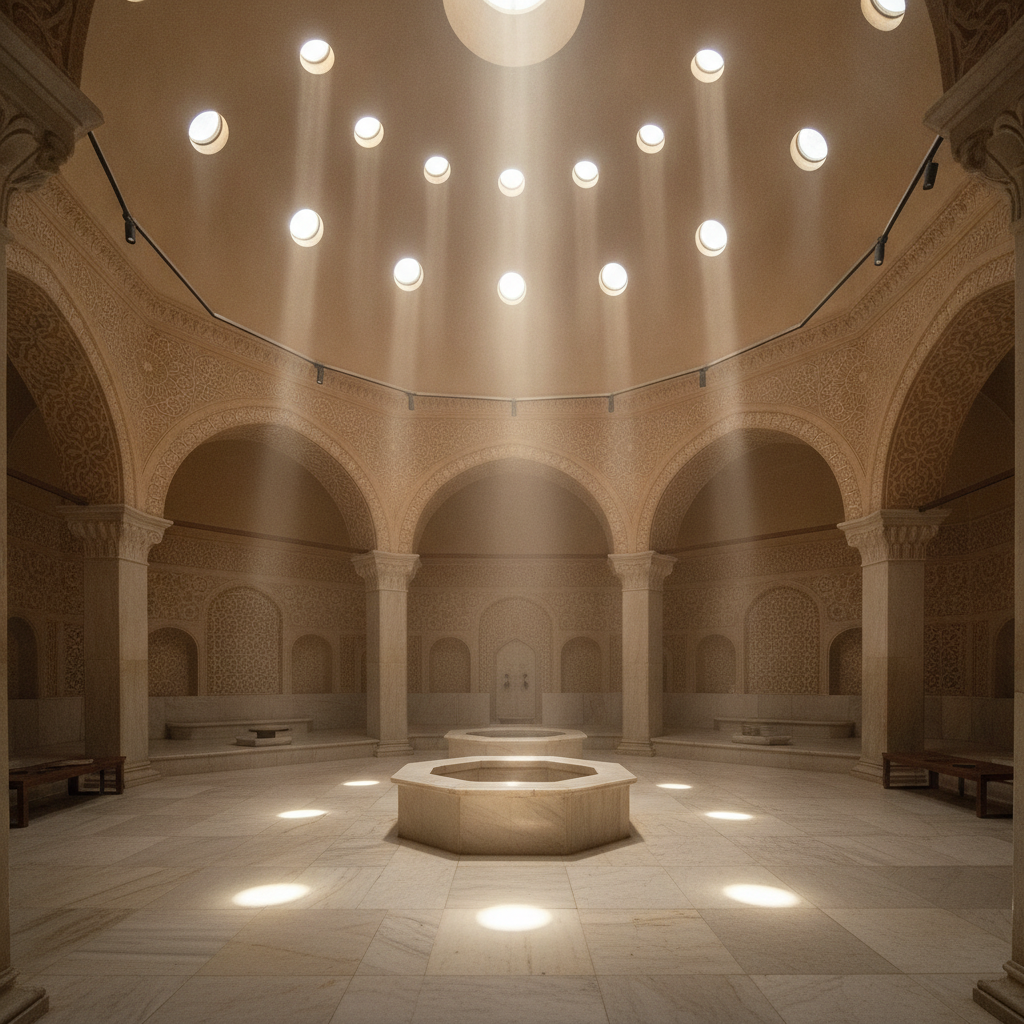
The Bey Hamam (Paradise Baths, Egnatia 60, the oldest surviving Ottoman building in Thessaloniki, built in 1444 by Sultan Murad II immediately after the Ottoman conquest of 1430, the double hamam — the seraglio, the design serving male and female bathers in separate wings simultaneously — the largest Ottoman bath in Greece, the domed bathing halls with their starlight-effect oculi in the domes, the marble bathing platforms, the underfloor hypocaust heating system derived from the Roman bath tradition the Ottomans inherited, the building used as a cultural event space and gallery since the 1990s, free entry when exhibitions are open, Tuesday-Sunday 10am-8pm) is the best-preserved Ottoman civic building in northern Greece. The architectural continuity (the Roman hypocaust heating system beneath an Ottoman bathhouse in a Byzantine city now administered as part of a modern Greek state) makes the Bey Hamam the physical embodiment of Thessaloniki's layered history. The Yahudi Hamam (the Jewish hamam that once stood adjacent to the Modiano market, destroyed in the 1917 fire, the name surviving as a reference to the concentration of Jewish institutions in this part of the city) is remembered only in the street name.
- 2
The Bezesteni — the Ottoman Covered Market
The Bezesteni (the Ottoman covered market, Egnatia Street at the corner of Venizelou, built in the late 15th century by Sultan Bayezid II, the six-domed central market hall the defining type of Ottoman commercial architecture, the building used as a jewellery market for most of its post-Ottoman history and still housing jewellery shops today, the exterior the most intact Ottoman commercial building in Thessaloniki) and the surrounding bazaar quarter (the area of the Modiano and Kapani markets, which physically occupy the site of the former Ottoman bazaar — the han, the bedesten, the covered shops — demolished or destroyed by the 1917 fire, the street pattern of the bazaar quarter surviving in the current Kapani market layout) preserve the spatial memory of the Ottoman commercial city. The comparison between the Bezesteni (the surviving physical structure) and the Modiano market (the 1922 replacement for the destroyed Jewish market section, built on the same site with a similar covered-market typology by a Jewish architect for a Jewish community) encapsulates the Thessaloniki urban history in a single city block.
- 3
The Sephardic Jewish Community — 1492 to 1943
The Sephardic Jewish community of Thessaloniki (the community established by the mass expulsion of Jews from Spain and Portugal in 1492, the Ottoman Sultan Bayezid II actively welcoming the expelled Jews to his empire — the famously sardonic comment attributed to him: 'You call Ferdinand a wise king, he who has impoverished his country and enriched mine' — the community growing over 400 years to constitute 50 percent of Thessaloniki's population, the Jews speaking Ladino — Judeo-Spanish, the 15th-century Castilian frozen in the diaspora, the language surviving among the scattered Salonika Jewish diaspora in Israel, the US, and Latin America to this day — running the city's commerce, medicine, and intellectual life through the Ottoman period, the community destroyed in the Nazi deportations of 1943 when 46,000 of the 50,000 Thessaloniki Jews were transported to Auschwitz and murdered) is memorialized at: the Jewish Museum of Thessaloniki (the essential visit), the Holocaust Memorial (the statue on Eleftherias Square, the monument to the Thessaloniki Jews unveiled in 1997 after decades of political delay), and the surviving Jewish cemetery site (the ancient Sephardic cemetery, the largest Jewish cemetery in Europe with 350,000 graves, demolished by the Nazi-aligned Greek government in 1942 to make way for the Aristotle University campus — the university built literally on the destroyed graves, the marble gravestones reused as building material throughout the city, the history acknowledged only in recent decades).
- 4
The Jewish Museum of Thessaloniki
The Jewish Museum of Thessaloniki (13 Agiou Mina Street, €5 adults, Tuesday-Friday 11am-2pm and 5pm-8pm, Sunday 11am-2pm, closed Monday and Saturday, the building a restored 19th-century Jewish merchant's house in the former Jewish quarter) is the most important Jewish museum in Greece and one of the most important in the eastern Mediterranean. The permanent collection (organized chronologically from the 1492 arrival through the Ottoman period, the 19th-century modernization, the Greek incorporation of 1912-13, and the Nazi occupation and Holocaust) contains the most significant collection of Ladino (Judeo-Spanish) documents in the world outside Israel, the personal photographs of the pre-war community (the market traders, the tobacco merchants, the fishermen, the rabbis, the school classes — faces photographed in 1935 and 1938 whose subsequent fate the museum visitor knows), and the survivor testimonies (the video interviews with the fewer than 2,000 Thessaloniki Jews who survived Auschwitz, the testimonies in Ladino, Greek, and Hebrew). The museum's neighbourhood context (the surrounding streets once densely populated by the Jewish community, the street names in some cases the only remaining trace of the former Jewish presence) makes the visit a walking orientation as well as a museum experience.
- 5
The Rotunda Neighbourhood — Romans, Byzantines, Ottomans
The Rotunda neighbourhood (the area immediately surrounding the Rotunda of Galerius, the Arch of Galerius, and the Galerian Palace remains, the most densely layered historical district in Thessaloniki) presents the Ottoman heritage in immediate proximity to the Roman and Byzantine: the minaret of the Rotunda (the single surviving minaret on the former mosque, the only minaret in Thessaloniki, visible above the neighbourhood rooflines and constituting the most prominent Ottoman architectural element in the city centre), the Ottoman fountain (the çeşme on the corner of Gounari and Egnatia, the small marble Ottoman drinking fountain, the inscription in Arabic script reading the Bismillah and the construction date, one of approximately 20 surviving Ottoman fountains in Thessaloniki, the water source function replaced by the drinking water taps but the physical structure intact), and the Alatza Imaret Mosque (350m north of the Rotunda, the 15th-century Islamic charitable institution — an imaret being a soup kitchen and hostel for the poor — the only surviving Ottoman imaret in Greece, currently used as a concert and exhibition venue, the courtyard with the now-dry fountain the most evocative Ottoman space in Thessaloniki).
- 6
Atatürk's Birthplace — the Ottoman-Greek Diplomatic Monument
The house where Mustafa Kemal Atatürk was born (Apostolou Pavlou 17, the Consular Quarter of Thessaloniki, the three-storey Ottoman townhouse of 1870 where the founder of the Turkish Republic was born in 1881, the house maintained by the Turkish government as a museum-consulate, open Tuesday-Sunday 10am-5pm, free, the interior preserved as it was in 1881 — the bedroom where Atatürk was born, the parlour with its Ottoman furniture, the personal photographs of Atatürk as a young man in Thessaloniki before his military career) is an unusual monument in a Greek city — the founder of modern Turkey, whose 1923 population exchange expelled the Greek community of Anatolia (1.2 million people) and removed the Turkish Muslim community from Greece (400,000 people), commemorated with full diplomatic courtesy in the city that was also the centre of the Sephardic Jewish Holocaust. The diplomatic history (the house donated by Greece to Turkey in 1935 as a goodwill gesture by Eleftherios Venizelos, administered by the Turkish consulate as Turkish territory within Thessaloniki, the annual commemoration on 10 November — Atatürk's death anniversary — attended by the Turkish consul and a small crowd of Turkish visitors) is the most succinct summary of the Greek-Turkish relationship available anywhere in northern Greece.
Walk this route with audio
Stories play automatically as you reach each stop — no tapping needed.
More in thessaloniki
Thessaloniki Food — Markets, Bougatsa, Mezedes & the Greek Food Capital
Thessaloniki Waterfront & Roman Legacy — the White Tower, Galerius Complex & Byzantine Walls
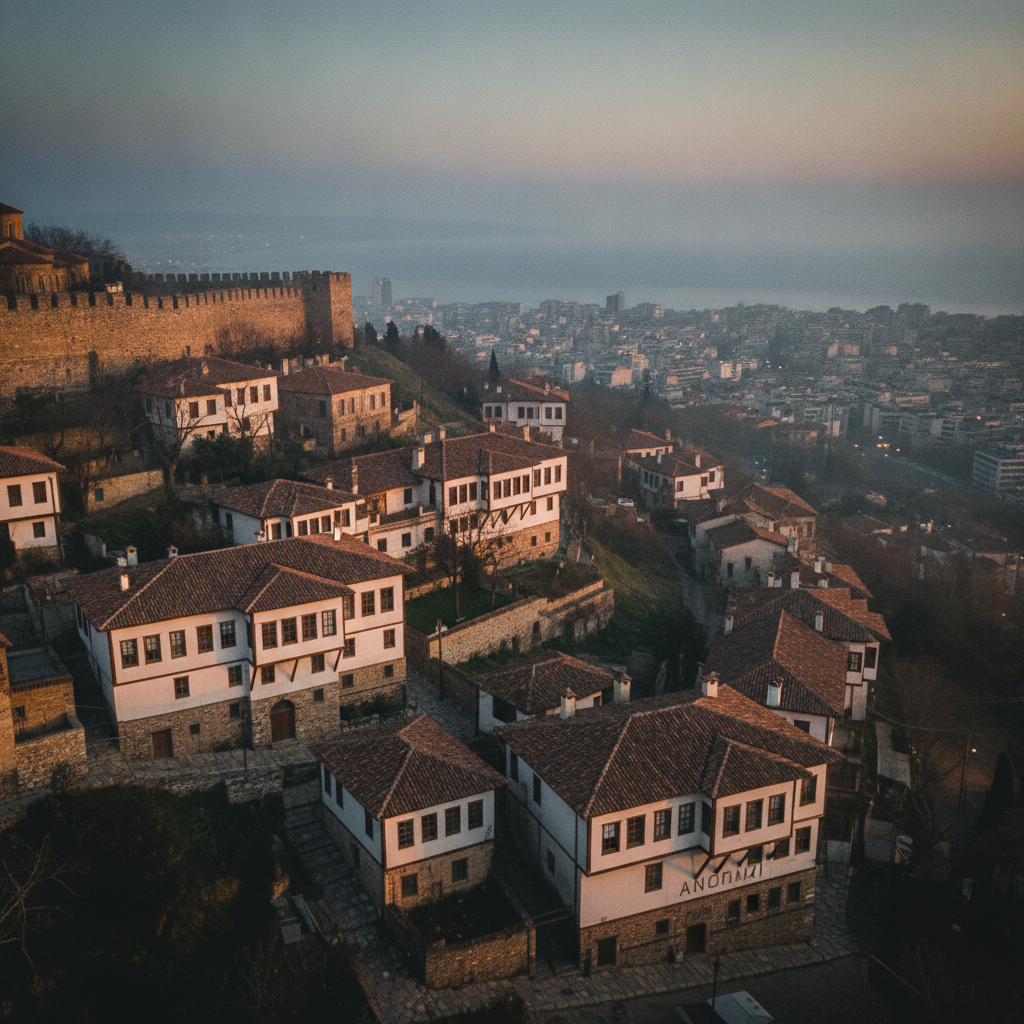
Thessaloniki Ano Poli — the Ottoman Upper Town, Byzantine Walls & the View Over the Gulf
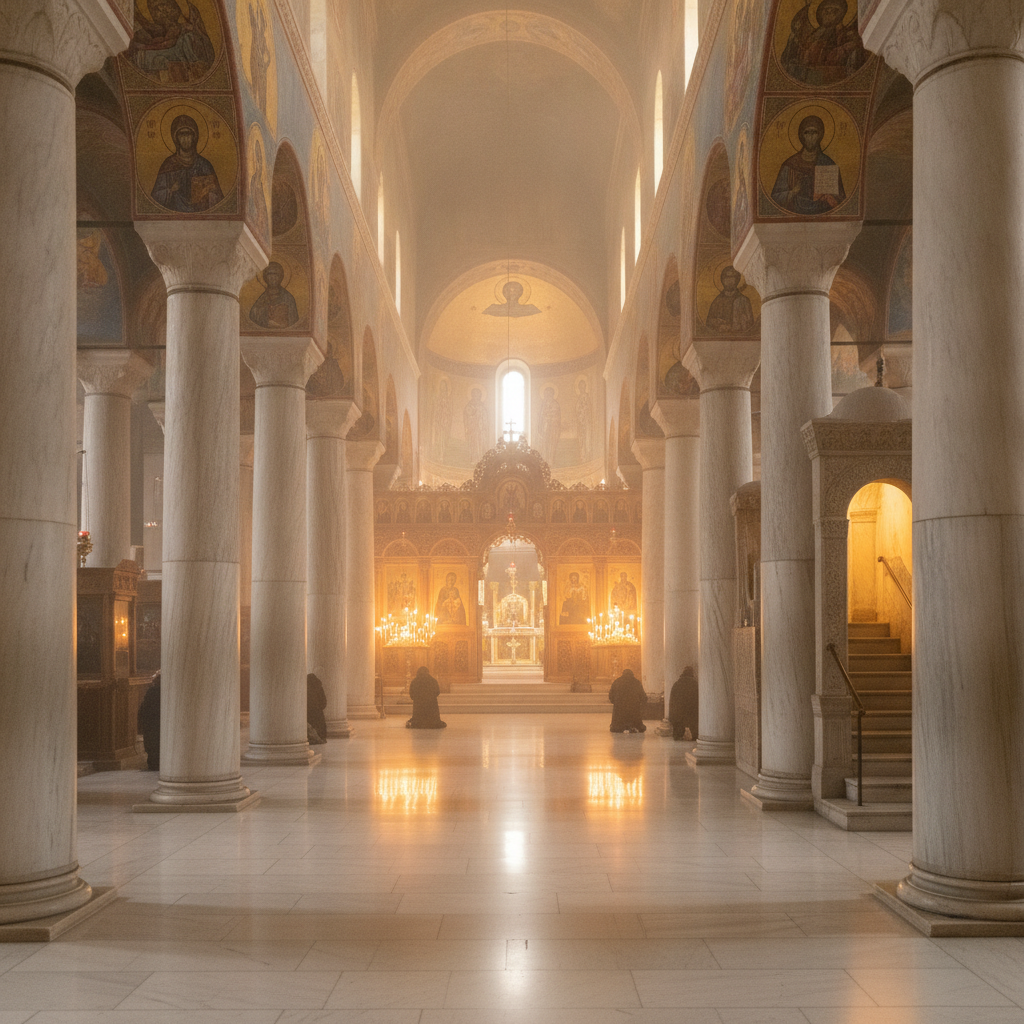
Thessaloniki Byzantine Monuments — UNESCO Sites, Mosaics & the Archaeological Museum