Thessaloniki Practical Guide — When to Visit, Getting Around, Nightlife & University Culture
Thessaloniki (year-round population 325,000, the second city of Greece, 520km from Athens by road, the hub of northern Greece with access to Macedonia, Thrace, and the Chalkidiki peninsula) functions as both a major Greek destination in itself and the gateway to the northern Greek archaeological sites.
- 1
When to Visit Thessaloniki
Thessaloniki is a genuinely year-round destination unlike the Aegean islands. The seasons: spring (March-May, the wildflowers in the surrounding Macedonian countryside, the Easter celebration — the most deeply Orthodox city in Greece, the Holy Week processions and liturgies the most elaborate in the country, the Easter Sunday lamb roasting on every street in the Ano Poli, the air full of smoke and music from noon on Easter Sunday), summer (June-August, temperatures 28-35 degrees, the city less crowded than in spring and autumn as the students leave for the summer, the outdoor cinema circuit operating, the Thessaloniki Film Festival preparation beginning in August), autumn (September-November, the most recommended visiting period — the Thessaloniki International Film Festival in November, the largest film festival in Greece, the Filmmakers' Fair, the city at its most culturally animated, temperatures 20-26 degrees through October), winter (December-February, the Byzantine Festival of Sacred Music in December, the Christmas market on Aristotle Square, temperatures 5-12 degrees, the cheapest hotel rates of the year at 30-40 percent below September-October).
- 2
Access — Athens to Thessaloniki
Athens to Thessaloniki: train (the Intercity Express, 4 hours 15 minutes on the Athens-Thessaloniki main line, €28-45 one-way in 2nd class, €50-70 in 1st class, departing Athens Larissa station, the route passing through Larissa and the Vale of Tempe, the mountain scenery through the Thessaly plain the reason to consider the train over the plane), plane (the flight from Athens Airport to Thessaloniki Macedonia Airport, 55 minutes, €30-90 one-way on Olympic or Aegean, 8-10 flights daily), bus (the KTEL long-distance bus from Athens Terminal A to Thessaloniki Makedonia station, 6-7 hours, €25-35). Within Thessaloniki: the city bus network (the most used by residents, the routes connecting the main districts, €0.90 per journey, the No.8 bus connecting the train station to the White Tower and the museum quarter), taxis (the starting meter at €3.50 and €0.80/km during the day, the night tariff 20 percent higher, the taxis the practical option for the Ano Poli and the outer neighbourhood visits), and walking (the city centre between the White Tower and the Kamara arch is 15 minutes on foot along the waterfront, the correct way to understand the urban plan).
- 3
The Thessaloniki Food and Coffee Culture
Thessaloniki's coffee culture (the city claims the title of the coffee capital of Greece — a claim Athens disputes — based on the concentration of independent coffee roasters and the cafe culture, the average Thessalonikian spending more time in cafes per day than any other Greek city demographic): the kafeneion tradition (the traditional Greek coffee house, open from 6am, the frappe culture — the iced blended Nescafe invented in Thessaloniki in 1957 by a Nescafé representative at the International Thessaloniki Trade Fair who mixed instant coffee with cold water and ice in a shaker when he couldn't find hot water for his morning coffee — the frappe subsequently becoming the defining Greek summer drink nationally), the specialty coffee shops (the third-wave coffee scene centred on Valaoritou Street and the area around the Rotunda, the Filter and Mikel chains starting from Thessaloniki before expanding nationally), and the cafe-bar hybrid (the most distinctively Thessaloniki institution — the cafe open from 9am for coffee, serving food from noon, transforming to a cocktail bar by 9pm and a music venue by midnight, the full 16-hour venue a Thessaloniki speciality not found in Athens at the same density).
- 4
Nightlife and the Aristotle University Student Culture
Thessaloniki's university student population (60,000 students enrolled at Aristotle University of Thessaloniki — the largest university in Greece and the Balkans — and 30,000 more at TEI and other institutions, the total student population of 90,000 representing 25 percent of the city's population and defining its evening culture) creates the most active and affordable nightlife in Greece outside Athens. The nightlife districts: Valaoritou Street (the neo-industrial bar district 300m from the White Tower, the former warehouses converted to bars and clubs, the most concentrated nightlife zone in northern Greece, operating Tuesday-Saturday from 10pm, the music ranging from Greek pop to electronic to the rebetiko revival bars), the Ladadika district (the restaurant-bar district adjacent to the port, the evening shift from dinner 9pm to bars 11pm), and the Ano Poli bars (the neighbourhood cafe-bars on the lanes above the Byzantine walls, the most atmospheric setting in the city, open daily from 7pm). The Thessaloniki International Film Festival (the 10-day festival in November, the largest film festival in Greece, the screenings at the Olympion Cinema and across the city, the accreditation open to the public at €80 for the full festival pass, individual screenings at €6-8).
- 5
Day Trips from Thessaloniki
Day trips from Thessaloniki within 150km: Vergina (70km west, the Macedonian royal tombs of Philip II, 1.5 hours by bus, €7 each way, the essential day trip from the city, see the Vergina route for details), Pella (40km west, the Macedonian royal capital and birthplace of Alexander the Great, 50 minutes by bus, €3.50, the pebble mosaics in the excavated house floors the reason to visit), Kavala (150km east, the most beautiful city in northern Greece after Thessaloniki, the Byzantine aqueduct, the Ottoman imaret, the Mehmet Ali house, the tobacco warehouses converted to restaurants, 2 hours by bus, €12), Veria and the Site of Philip's Victory (75km west, the traditional market town of Macedonia with the Byzantine museum and the outdoor archaeological site of the Battle of Pydna 168 BCE where Rome ended the Macedonian kingdom, 1 hour by bus, €5), and the Halkidiki coast (see the Halkidiki section in the Ano Poli route, Kassandra beach accessible by bus in 1.5 hours for the closest Aegean swimming to Thessaloniki at 70km from the city).
- 6
Aristotle Square and the Hébrard City Plan
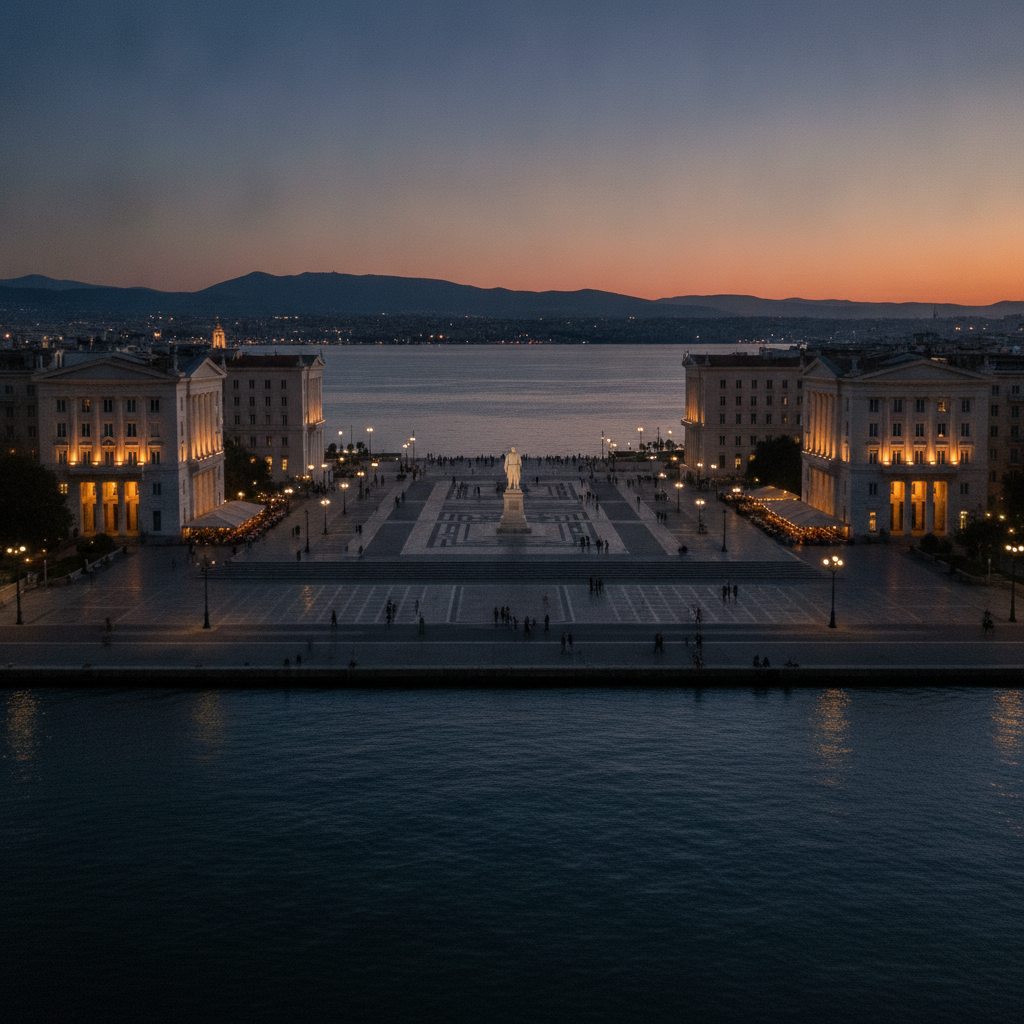
Aristotle Square (Plateia Aristotelous, the vast rectangular public square at the centre of post-1917 Thessaloniki, designed by the French urban planner Ernest Hébrard in his 1921 reconstruction plan, the square flanked by uniform neoclassical colonnaded buildings and opening at the southern end onto the Thermaic Gulf waterfront — the most successful urban set-piece in Greece after the Athenian Agora and Syntagma, the scale of the square only comprehensible from above at the Ano Poli) is the city's living room — the cafe tables extend under the colonnades, the morning coffee crowd at 8am replaced by the lunch crowd at 2pm, replaced by the aperitivo crowd at 7pm, replaced by the dinner crowd at 9pm, the square never empty between 7am and midnight in the warmer months. The Hébrard plan (the grid of wide boulevards running north-south from the Byzantine walls to the waterfront, the major squares at the intersections — Aristotle Square, Eleftherias Square at the port, and Navarinou Square at the east end of the commercial district — the plan the physical expression of the Greek state's ambition to transform the Ottoman-era city into a modern European capital after 1912) is visible from above at the Eptapyrgio or from the White Tower as the rational geometry underlying the city's ground plan.
Walk this route with audio
Stories play automatically as you reach each stop — no tapping needed.
More in thessaloniki
Thessaloniki Ottoman & Jewish Heritage — Hamams, the Bezesteni & the Multicultural City
Thessaloniki Food — Markets, Bougatsa, Mezedes & the Greek Food Capital
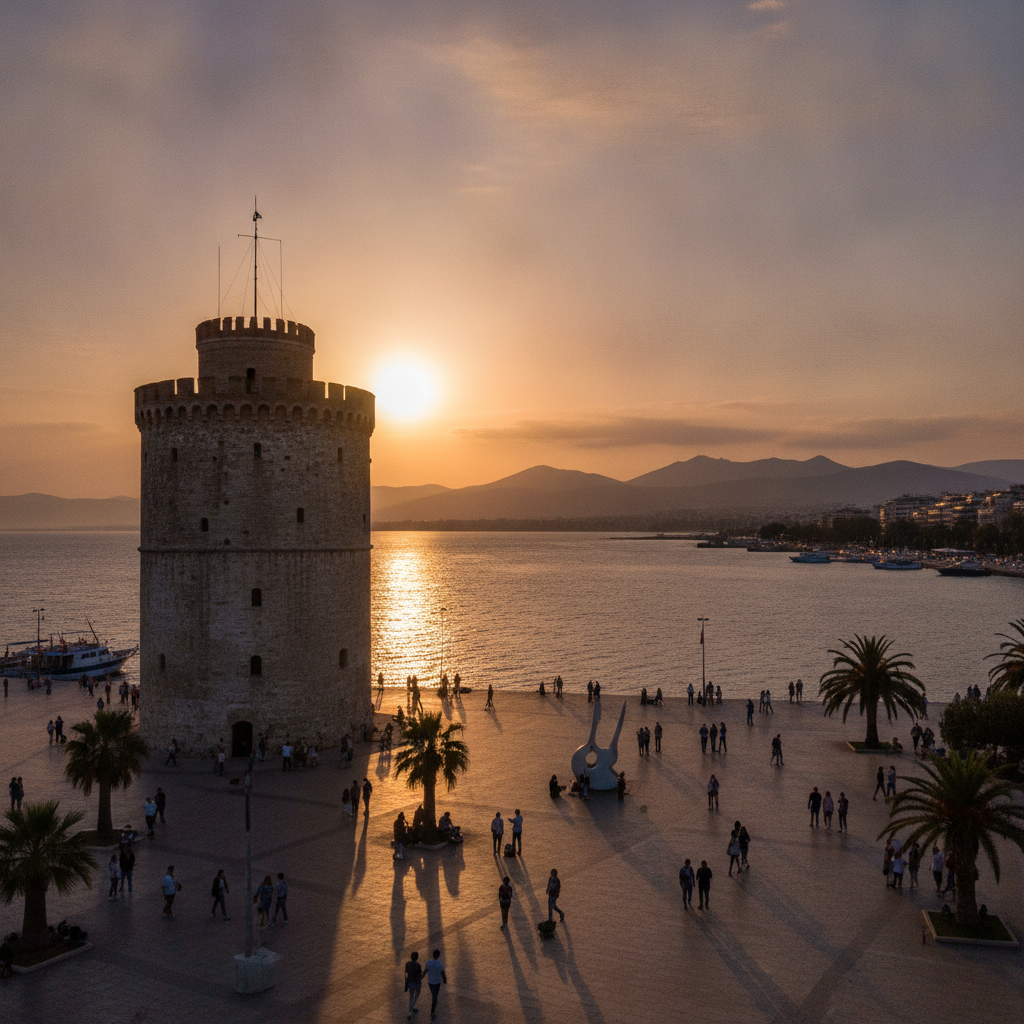
Thessaloniki Waterfront & Roman Legacy — the White Tower, Galerius Complex & Byzantine Walls
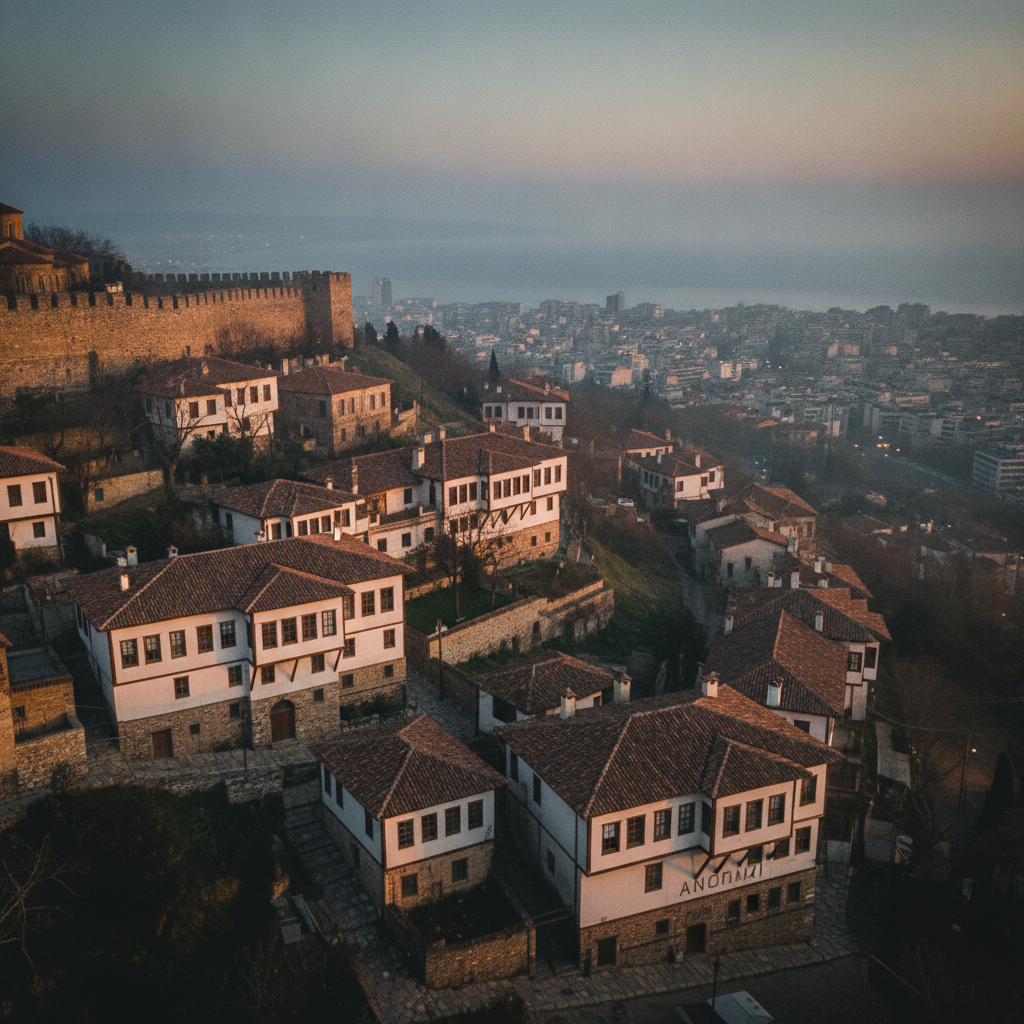
Thessaloniki Ano Poli — the Ottoman Upper Town, Byzantine Walls & the View Over the Gulf