Asakusa & Tokyo Skytree: Ancient Temple, Nakamise Street & the World's Tallest Tower
Asakusa is the oldest surviving district of Edo-era Tokyo (the city was called Edo before it became Tokyo in 1868): Senso-ji, the Buddhist temple at its heart, was founded in 628 AD and is the most visited temple in the world, drawing over 30 million visitors annually. The streets around it—Nakamise shopping street, Denpoin Street with its art installations, the Hoppy Street izakaya alley—preserve a scale and texture that is unlike any other neighborhood in central Tokyo: low buildings, wooden shopfronts, rickshaws. Five minutes to the east, the Tokyo Skytree (634 meters, the world's tallest tower and second tallest structure) provides the modern counterpoint.
1. Kaminarimon — The Thunder Gate
- 1
Kaminarimon — The Thunder Gate
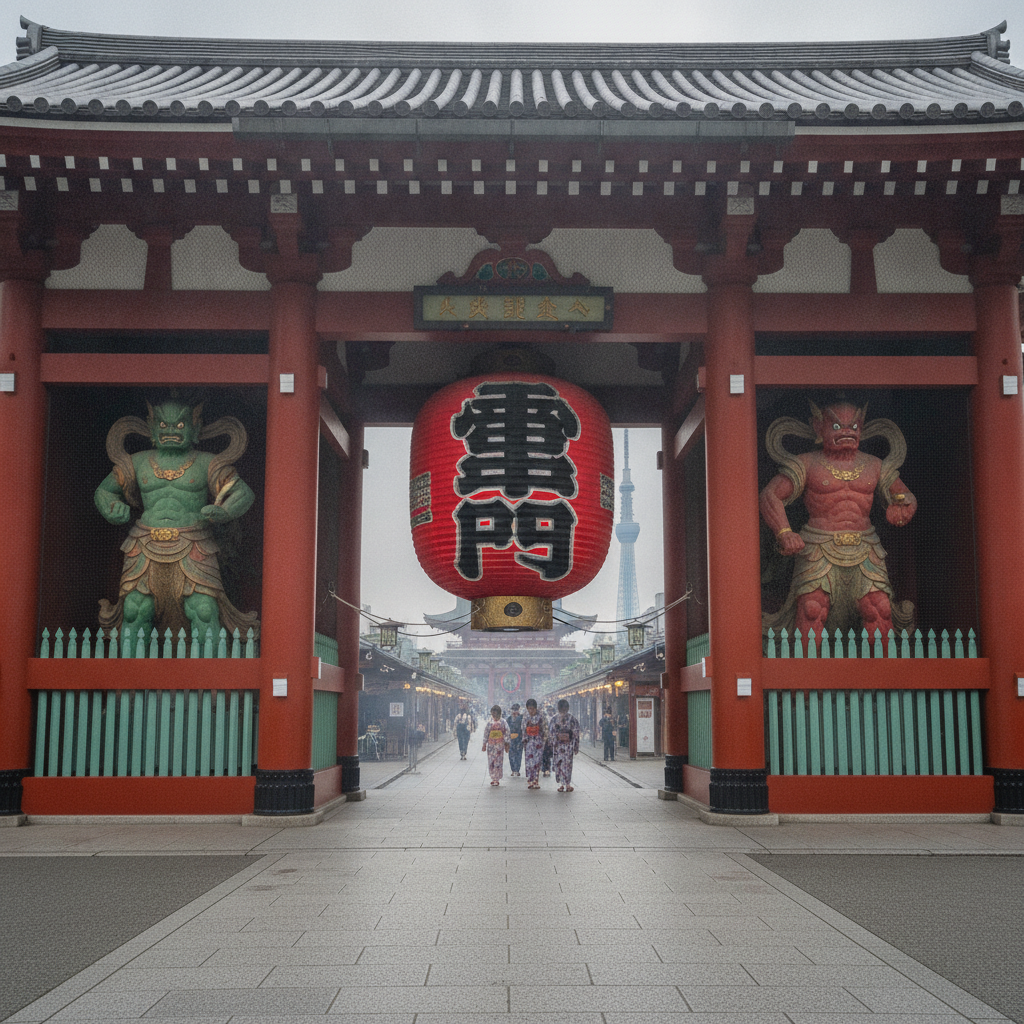
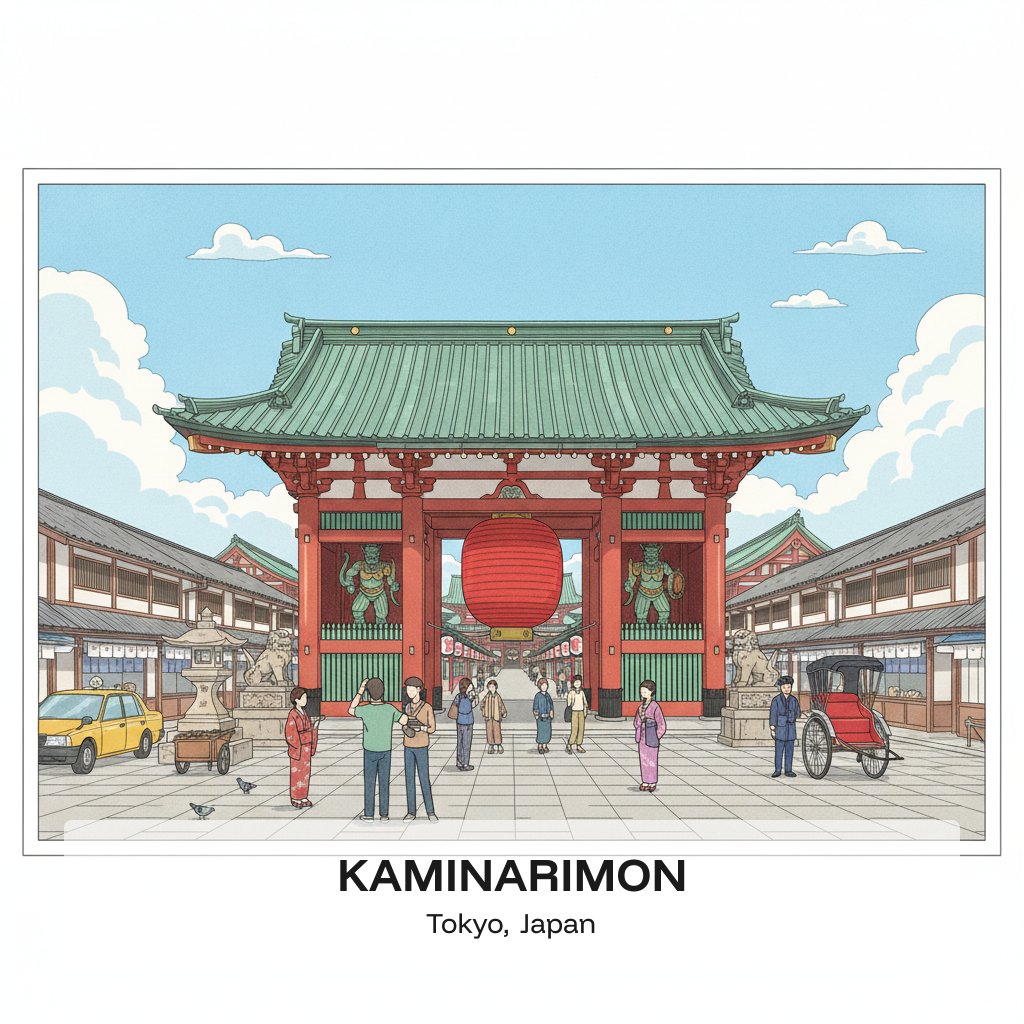
Kaminarimon ('Thunder Gate') is the outer gate of Senso-ji Temple and the most recognizable single image in Tokyo: a 11.7-meter wooden gate topped with a green copper roof, centered by a giant red paper lantern (3.9 meters tall, weighing 700 kg, renewed every 10 years) bearing the characters 雷門 (Kaminari-mon), flanked by statues of Fujin (God of Wind, left) and Raijin (God of Thunder, right) in red niches. The gate was originally built in 942 AD, destroyed multiple times, and rebuilt in its current form in 1960 using a donation from Matsushita Kōnosuke (founder of Panasonic; his name is on the bottom of the lantern). Beyond the gate, the 250-meter Nakamise shopping street leads to the inner Hōzōmon gate and the main hall. The approach is best at dawn (arrive by 6 AM) when the lanterns are lit but the crowds have not yet arrived; it is extremely crowded on weekends by 9 AM.
- 2
Senso-ji Temple — Tokyo's Ancient Heart
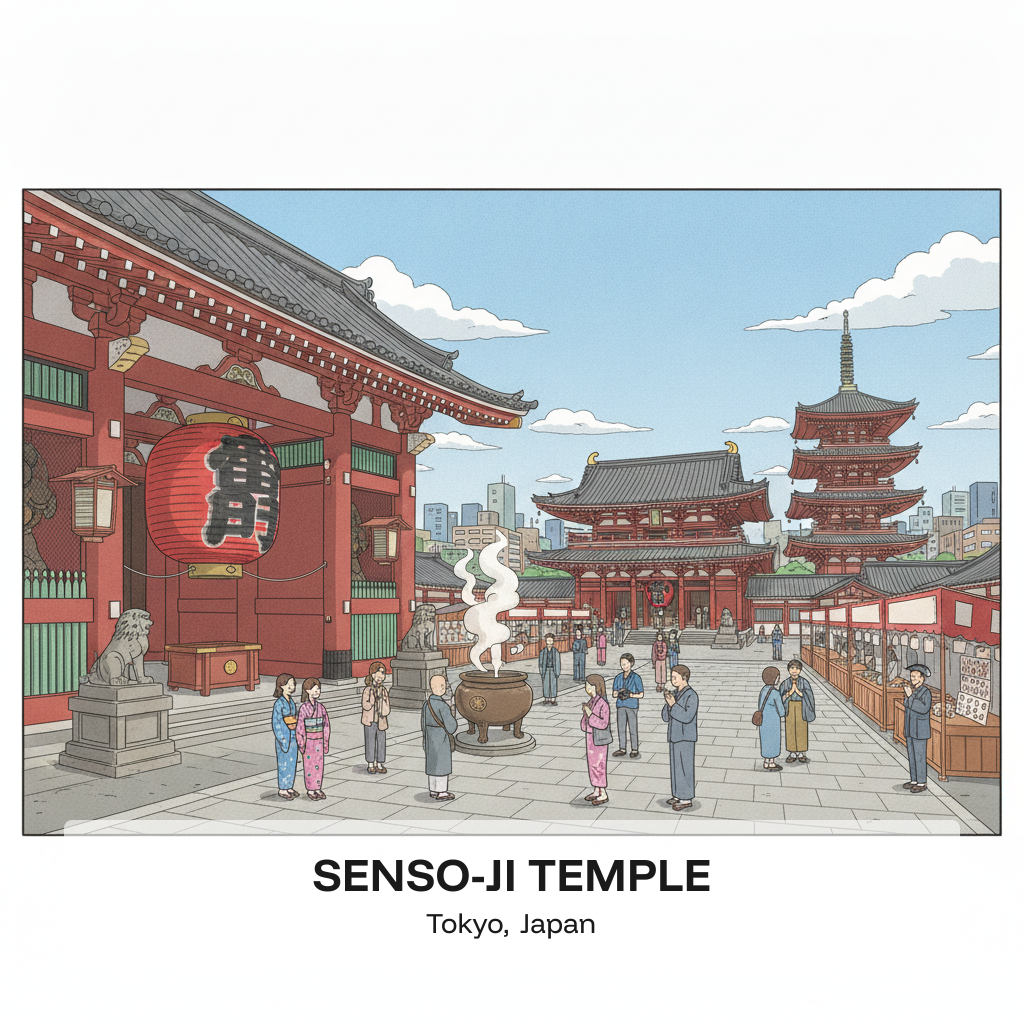
Senso-ji (浅草寺), the Buddhist temple founded in 628 AD by two fishermen who, according to legend, caught a golden statue of Kannon (the Buddhist goddess of mercy) in the Sumida River—is the most visited religious site in the world, with over 30 million visitors annually. The main hall (Hondo), rebuilt after bombing in 1945, houses the Kannon statue (which is kept permanently hidden from view—it has not been publicly displayed in at least 400 years). The five-story pagoda adjacent to the main hall is a 1973 reconstruction of a 10th-century original. The incense burner (jokoro) in front of the main hall produces a constant cloud of smoke; visitors wave the smoke over themselves as it is believed to have healing properties. The surrounding Denpoin Garden (usually closed to the public but occasionally open in spring) is one of the finest garden in eastern Tokyo. The complex is free to enter; the inner hall has coin donation boxes—it is customary to throw a coin and clap twice before praying.
- 3
Nakamise Shopping Street — 250 Meters of Traditional Souvenirs
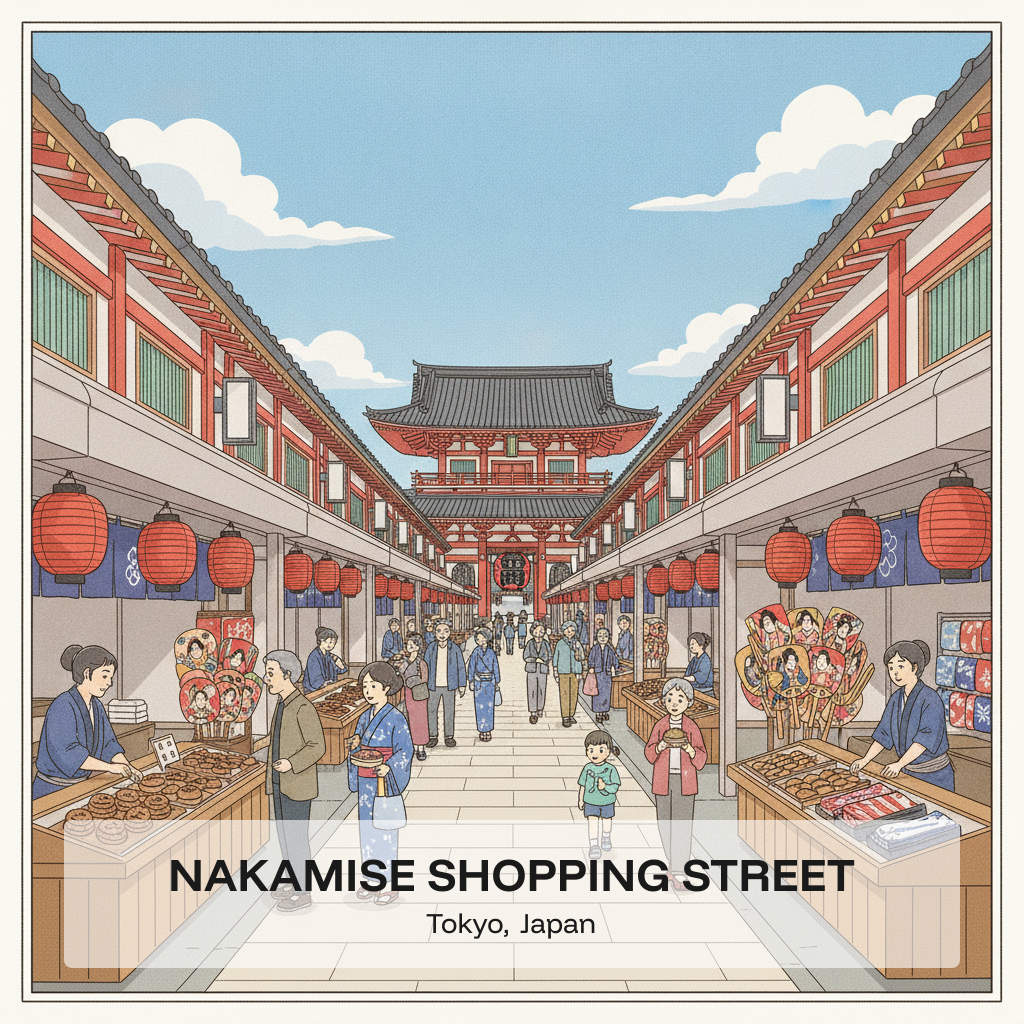
Nakamise (仲見世通り) is the 250-meter covered shopping street connecting Kaminarimon to the inner Hōzōmon gate of Senso-ji, lined on both sides by 89 souvenir shops (most of which have been in continuous family operation since the Edo period, though the current buildings date from 1945 post-bombing reconstruction). The goods on offer are a mixture of genuine traditional crafts and tourist-oriented snacks and trinkets: ningyo-yaki (small cakes in the shape of shrine symbols, filled with red bean paste), kaminari okoshi (puffed rice candy, the traditional souvenir of Asakusa since the Edo period), hagoita (decorative wooden paddles), and tenugui (thin cotton hand towels with traditional patterns). The shops are open from around 10 AM and close in the late afternoon—arrive before 5 PM. The side streets off Nakamise (particularly Denpoin Street, running parallel to the west) have a better selection of high-quality traditional crafts and less tourist density.
- 4
Sumida River & Azuma Bridge — The View That Defined Edo
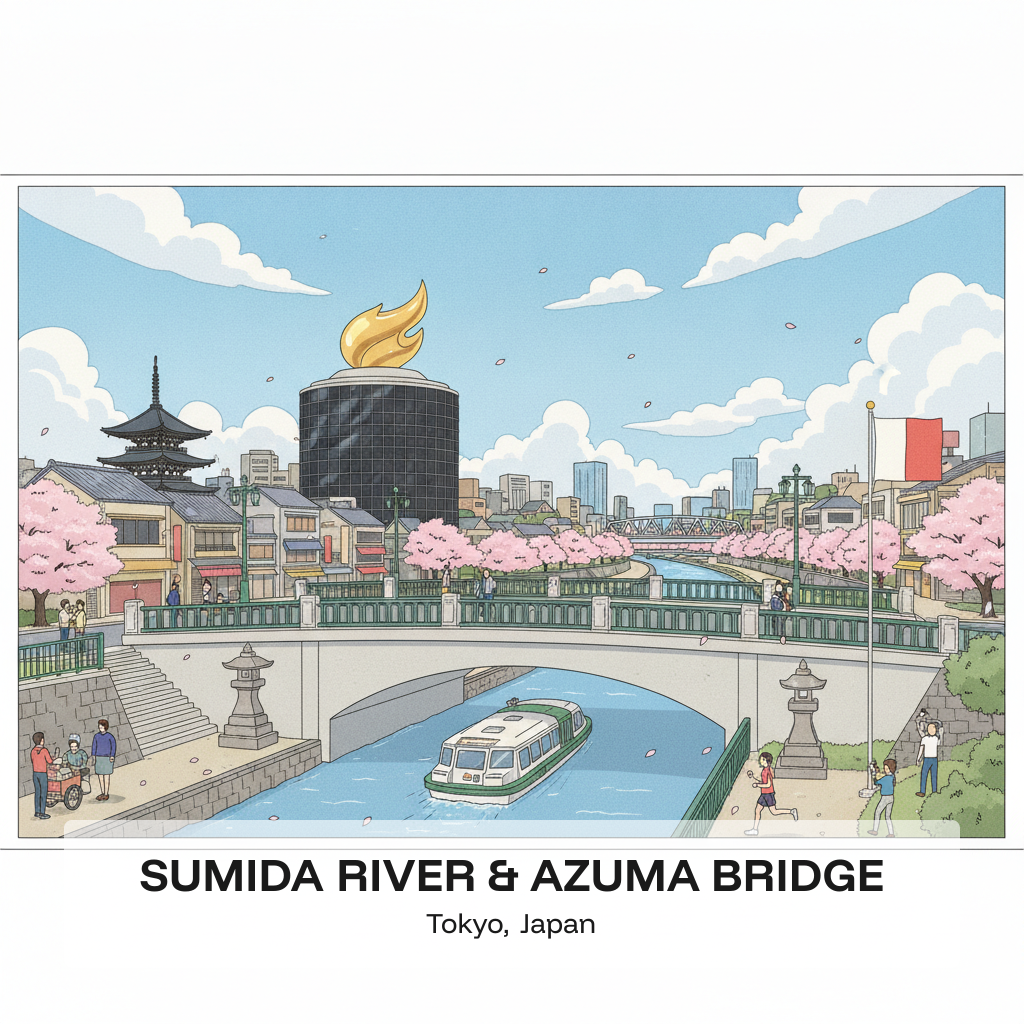
The Sumida River at Asakusa—specifically the view from Azuma Bridge (吾妻橋, 1931) looking upstream toward the curve in the river, with Senso-ji's pagoda in the middle distance and the Asahi Beer Hall (Philippe Starck, 1989, the gold 'flame' sculpture on the roof is locally called 'the golden turd') in the foreground—is one of the most painted and photographed views in Tokyo, and in Edo-period woodblock prints (Hiroshige's 'One Hundred Famous Views of Edo' included several Sumida River scenes) was the defining image of the city. The river embankment is a public park for its entire length through Asakusa; cherry blossoms in spring; fireworks festival in July (Sumida River Fireworks, the largest fireworks event in Tokyo, first held in 1733). Water buses (suijo-bus) depart from Azuma Bridge southward toward Hamarikyu and Odaiba.
- 5
Tokyo Skytree — The World's Tallest Tower
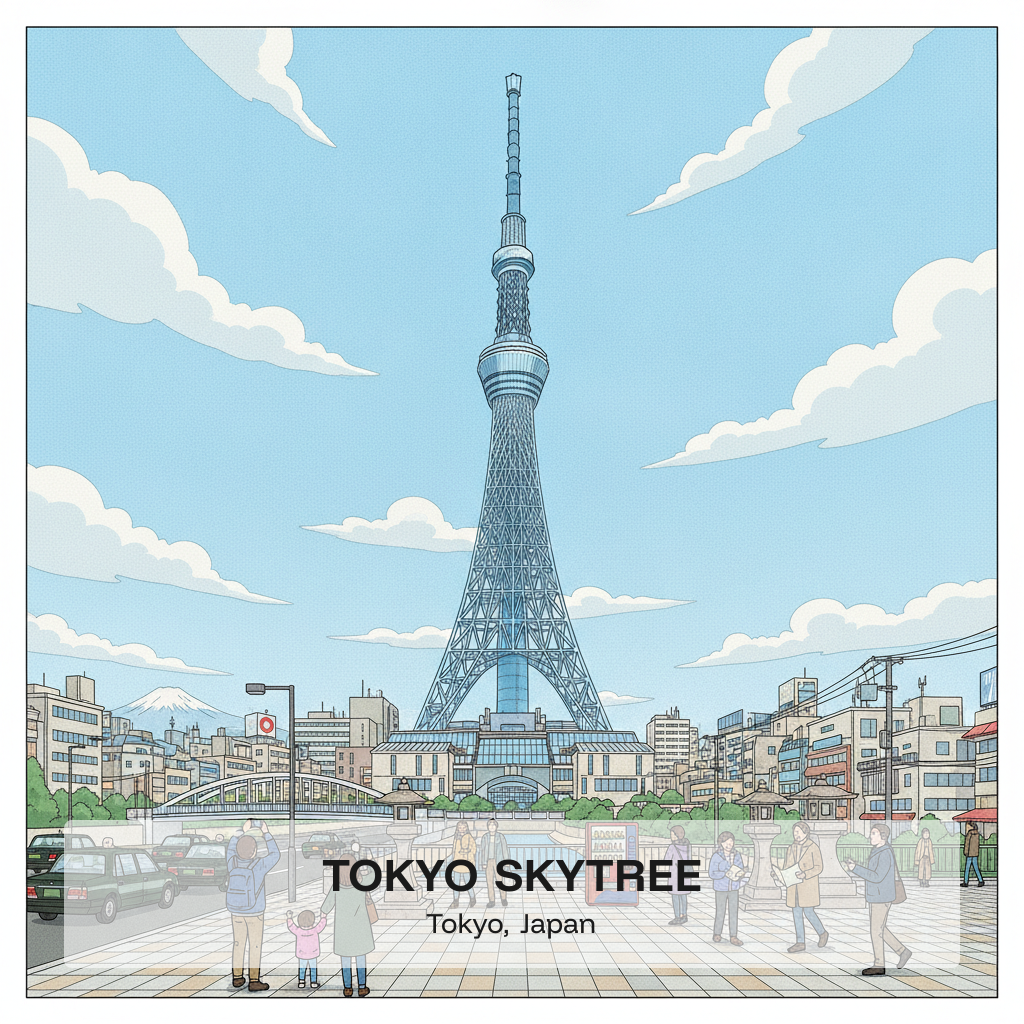
Tokyo Skytree (東京スカイツリー), completed in 2012, is a 634-meter broadcasting and observation tower in Oshiage, five minutes by subway from Asakusa: the world's tallest tower and the second tallest structure ever built (after Burj Khalifa). The height of 634 meters is a deliberate reference to the old name of the Musashino plateau (mu-sa-shi = 6-3-4 in old Japanese number pronunciation). Two observation decks: the Tembo Deck at 350 meters (floor and glass-floor sections, restaurants) and the Tembo Galleria at 450 meters (a spiral ramped walkway with the highest point of any observation deck in Japan). On the clearest winter days, Mount Fuji is clearly visible 100 km to the west. The tower changes illumination colour nightly: blue (Iki, 'chic') and purple (Miyabi, 'elegance') alternate on designated nights. The complex (Skytree Town) at the base contains 300 shops and restaurants, the Tokyo Solamachi shopping mall, an aquarium, and a planetarium. Book observation deck tickets online in advance to avoid the substantial queues.
- 6
Hoppy Street — Asakusa's Izakaya Alley
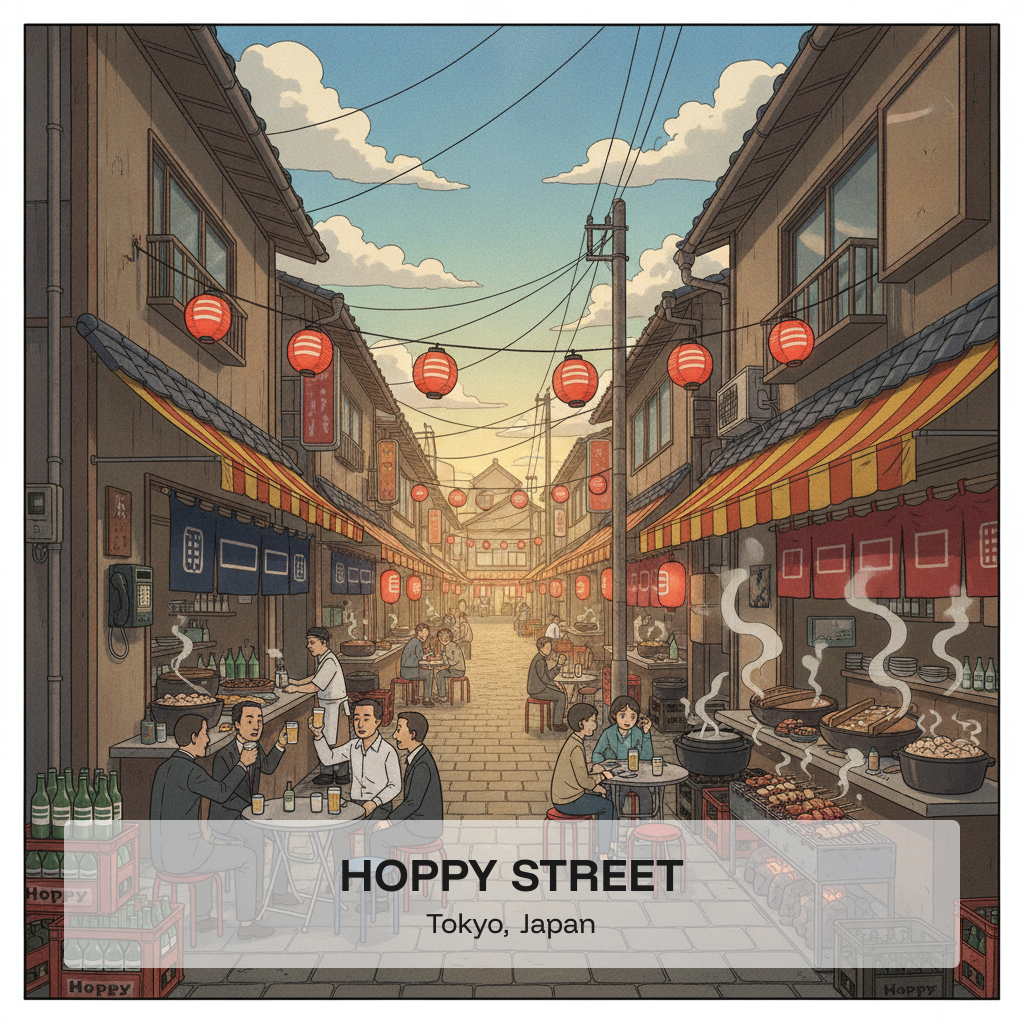
Hoppy Street (ホッピー通り) is a short, two-block alley of outdoor izakayas (Japanese pub-restaurants) in Asakusa, named after Hoppy—a low-alcohol beer substitute created in 1948 as an affordable alternative to expensive imported beer, still served here in its original glass bottles with shochu (a distilled spirit made from barley, rice or sweet potato) and ice. The street has been in continuous operation since the immediate postwar period and the stalls and signage retain a distinct Showa-era (1926–1989) atmosphere. Menu staples include motsu-ni (simmered offal, particularly beef intestine stewed in miso and sake), yakitori skewers, oden (simmered vegetable and tofu dishes in dashi broth), and various fried snacks. The tables spill onto the street in all but the coldest months. It is at its busiest and most atmospheric on weekend evenings from around 5 PM.
Walk this route with audio
Stories play automatically as you reach each stop — no tapping needed.
More in tokyo
Akihabara & Ueno: Electric Town, Japan's Greatest Museum Mile & Ameyoko Market
Shinjuku: Golden Gai, Kabukicho & the Garden at the Heart of the Neon City
Shibuya & Harajuku: Youth Culture, Sacred Forests & the World's Busiest Crossing
Roppongi Arts District & Tokyo Tower: World-Class Museums, Contemporary Architecture & the City's Most Iconic Silhouette
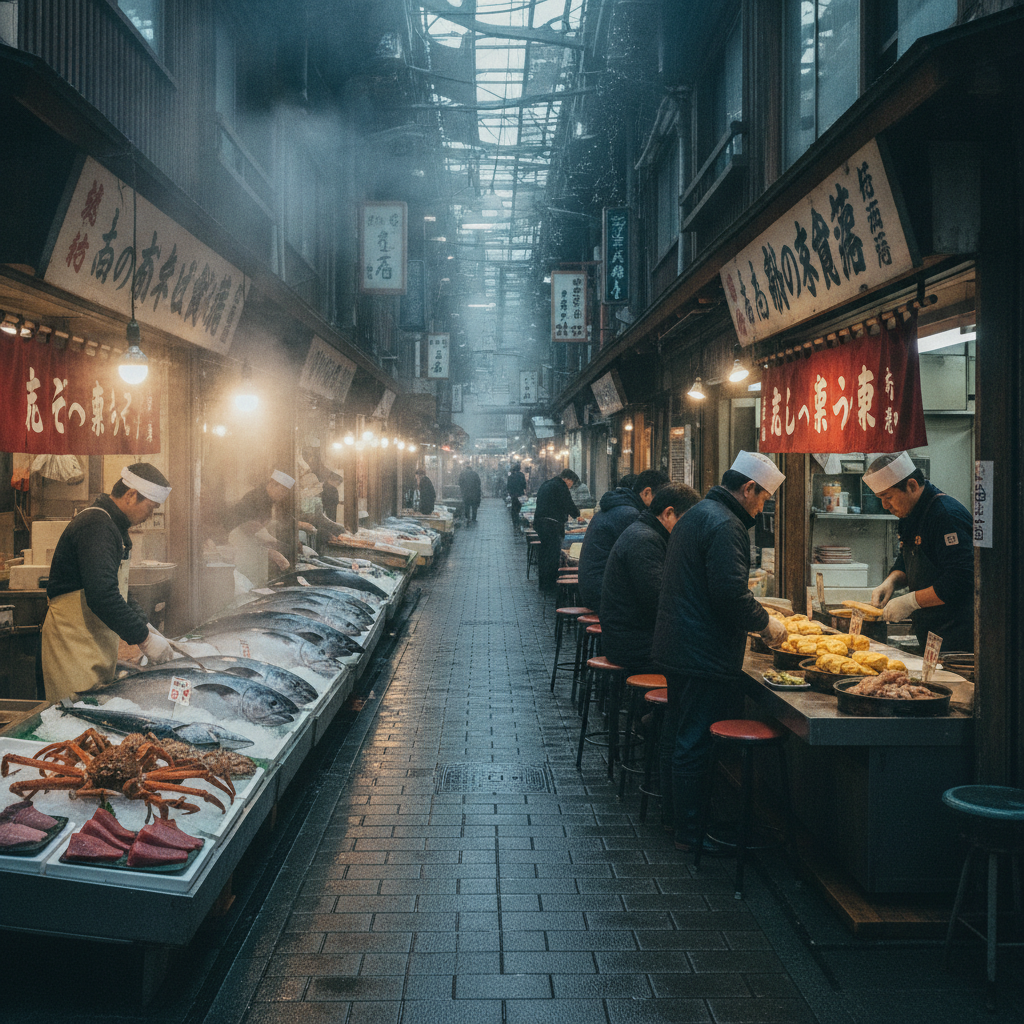
Tsukiji, Hamarikyu & Ginza: Dawn Seafood, the World's Most Expensive Shopping Street & a Garden by the Bay