Tsukiji, Hamarikyu & Ginza: Dawn Seafood, the World's Most Expensive Shopping Street & a Garden by the Bay
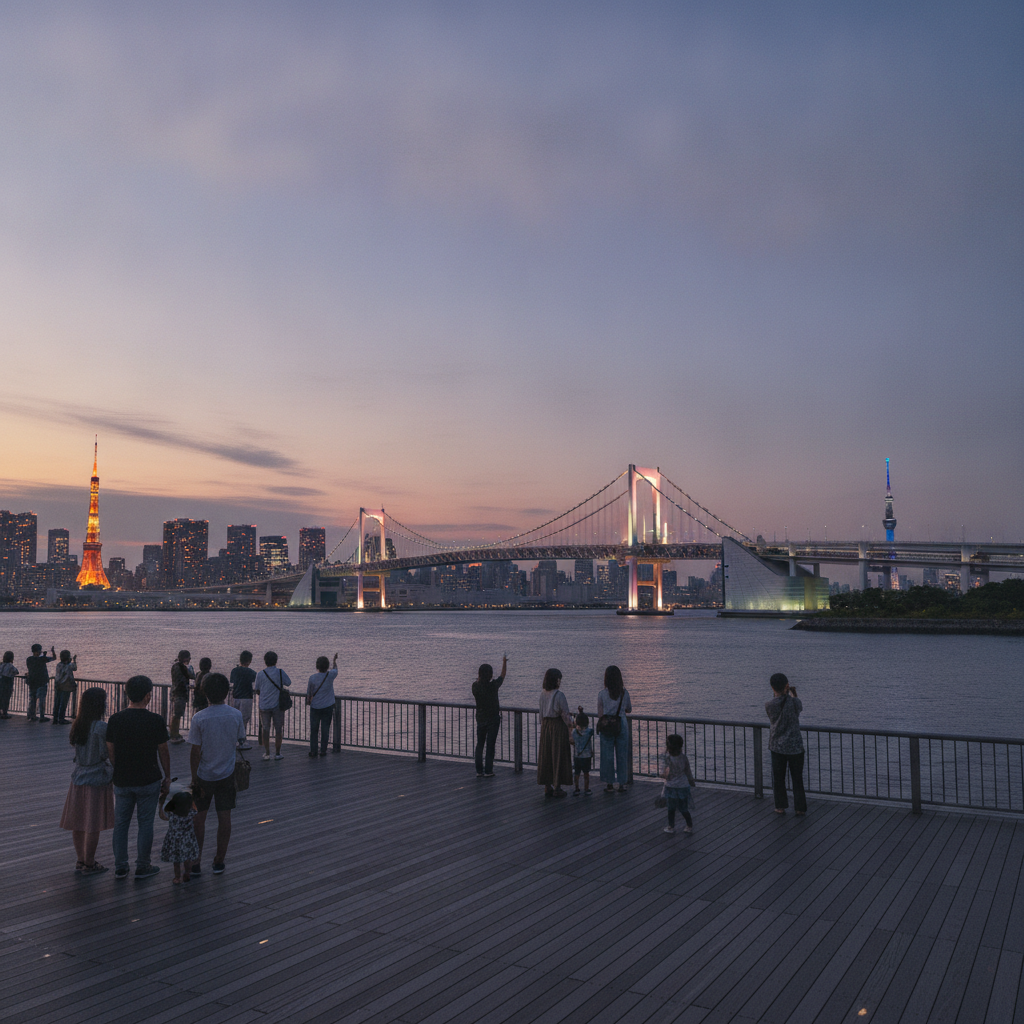
The waterfront arc from Tsukiji to Ginza to Hamarikyu covers three of Tokyo's most distinct experiences: the Tsukiji Outer Market (the surviving public market of the world's most famous fish market, still operational every morning from 4 AM), Hamarikyu Gardens (a 17th-century shogunal garden that contains Tokyo's only tidal pond—still fed directly from Tokyo Bay—surrounded on three sides by skyscrapers), and Ginza (Japan's most prestigious shopping and dining district, where rents exceed US$300 per square meter per month and where the world's leading architects have built their most extravagant Tokyo flagship stores).
- 1
Tsukiji Outer Market — Tokyo's Greatest Food Street
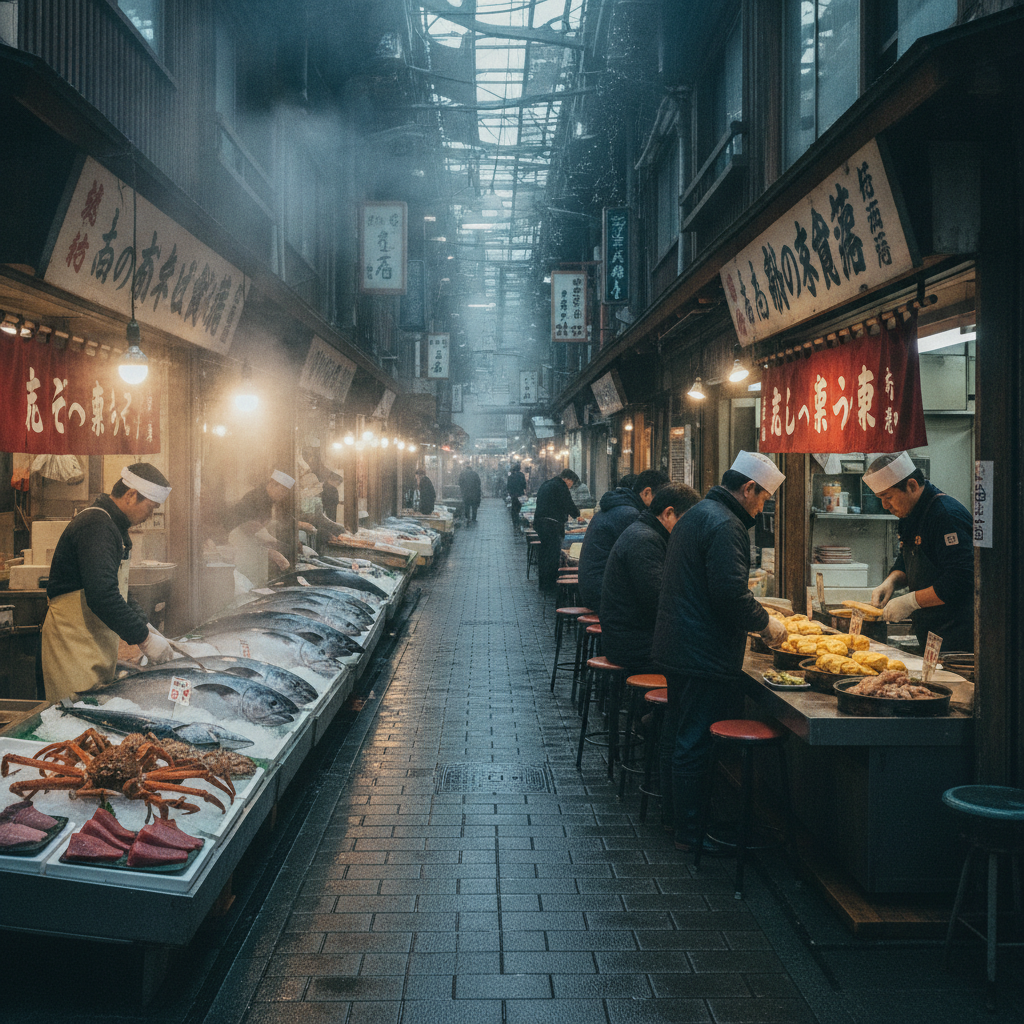
Tsukiji Outer Market (築地場外市場) is the publicly accessible market surrounding the former Tsukiji Inner Market (the famous wholesale tuna auction market, which relocated to Toyosu in 2018). The Outer Market—approximately 400 shops and restaurants on the streets immediately surrounding the former inner market site—remains in operation every morning from approximately 4:30 AM to noon, and is the finest concentrated food shopping and eating experience in Tokyo: stalls selling fresh seafood (uni sea urchin, ikura salmon roe, whole scallops, live octopus), tamagoyaki specialists (thick rolled omelette, the signature Tsukiji snack, sold in dedicated shops where you can watch them rolled to order on a rectangular pan), sushi restaurants (many open from 6 AM, serving the freshest tuna in Tokyo), knife specialists (the best selection of Japanese kitchen knives in any retail setting, including many that are not available elsewhere), dried bonito shaving demonstrations, and tea and dashi shops. The Inner Market site is now a large covered market (Tsukiji Market Square) and less interesting than the Outer Market; the outer market restaurants are best for breakfast/brunch (arrive before 9 AM for the shortest queues).
- 2
Hamarikyu Gardens — The Shogunal Garden by the Bay
Hamarikyu Gardens (浜離宮恩賜庭園) is a 25-hectare traditional Japanese garden on Tokyo Bay, originally the private duck-hunting ground and seaside villa of the Tokugawa shogunate (constructed 1654–1709), nationalized after the Meiji Restoration and opened to the public in 1945. The garden's defining feature is its tidal pond (Shioiri Ike), which is fed directly from Tokyo Bay through sluice gates—the tidal ebb and flow of the bay changes the pond's water level throughout the day, and the water contains actual sea fish including mullet and sea bass. The central teahouse (Nakajima no Ochaya) sits on an island in the tidal pond, accessible by wooden bridge, and serves matcha and sweets daily. The garden is surrounded on three sides by skyscrapers (the Shiodome Media Tower, Dentsu headquarters, and various luxury hotels) and on the fourth by Tokyo Bay—the visual contrast between the Edo-period garden and the surrounding 21st-century city is one of the most dramatic in Japan. A water bus terminal at the south edge of the garden connects to Asakusa and Odaiba.
- 3
Ginza — Japan's Most Prestigious Shopping District
Ginza (銀座, 'silver mint'—named after the silver coin mint established here in the early Edo period) is Japan's most prestigious shopping and dining district, occupying a 1.5 km grid of streets between Shimbashi and Kyobashi in central Tokyo. The main street (Chuo Dori) is closed to traffic on weekend and holiday afternoons (1–6 PM in summer, 1–5 PM in winter), creating a pedestrian street lined with the flagship stores of every major luxury fashion brand plus the best Japanese architects' most extravagant commissions: the Hermès building (Renzo Piano, 2001, a tower clad entirely in glass bricks that glow at night), the Prada building (Herzog & de Meuron, 2003, a faceted glass tower), the Dior building (SANAA, 2004), Cartier, Louis Vuitton, Chanel, and Apple. The area also contains Matsuya and Mitsukoshi department stores (the latter occupying the site of Japan's first Western-style department store, 1869), Itoya (9 floors of the finest stationery and art supplies in Japan), and Ginza Six (the largest luxury shopping complex in Japan, 2017). The basement food halls (depachika) of Matsuya and Mitsukoshi are among the finest in Tokyo.
- 4
Kabuki-za Theatre — Living Tradition of Japanese Performing Arts
Kabuki-za (歌舞伎座) is the main Kabuki theatre in Tokyo and the spiritual home of Kabuki—the Japanese theatrical tradition of stylized dance-drama that has been performed continuously for over 400 years (it originated in Kyoto in the early 17th century, was originally performed by women, then was restricted to male performers—where it has remained—after the Tokugawa shogunate banned women from the stage in 1629). The current building (by Kengo Kuma, completed 2013) incorporates elements of the previous theater buildings on the site (the fourth Kabuki-za, 1951–2010) while adding a 29-story office tower above. Kabuki performances run approximately 4–5 hours and are divided into two or three acts; single-act tickets (hitomakumi) are available on the day at significantly reduced price and allow attendance of one act only (approximately 60–90 minutes). English earphone guides are available. Performance schedules are available at kabuki-za.co.jp; performances typically run daily except for the first week of the month.
- 5
Nihonbashi — The Zero Kilometre Point of Japan
Nihonbashi (日本橋, 'Japan Bridge'), the historic bridge over the Nihonbashi River in the Nihonbashi district of Chuo Ward, is the point from which all road distances in Japan are officially measured: the bronze kilometre marker in the center of the bridge has been the nation's official 'kilometre zero' since 1604, when the Tokugawa shogunate established the Five Highways system (Gokaido) from this point. The current bridge (1911, in a French-influenced Renaissance style with cast-iron lamp standards and two pairs of bronze kirin—mythical Chinese creatures—on the corner pillars) is now partly shaded by the Shuto Expressway overhead (built 1963, controversially), though the overhead highway is currently being moved underground. The Nihonbashi district is historically Tokyo's financial and commercial center: Mitsukoshi's main store, the Tokyo Stock Exchange, the Bank of Japan (by Tatsuno Kingo, 1896, modeled after the Banque Nationale de Belgique), and the Japan Bridge Mitsui Tower are all here.
- 6
Shimbashi Izakaya District — Salarymen's Tokyo
Shimbashi (新橋), the commercial district immediately south of Ginza between Ginza and Hamamatsucho, is the most authentically 'salaryman' (white-collar office worker) neighborhood in Tokyo: the izakayas, yakitori stalls and ramen shops under and around the SL Plaza (named after the steam locomotive permanently parked here as a landmark) serve the tens of thousands of office workers from the surrounding commercial towers from approximately 5:30 PM onward. The drinking culture of Shimbashi is more serious and less tourist-oriented than Shibuya or Shinjuku: the bars are cramped, the sake pours are generous, and the food is straightforward. The Shimbashi Enbujo Theatre (traditional Japanese performing arts) is immediately adjacent. The Tokyo Monorail to Haneda Airport departs from nearby Hamamatsucho; ferries to the islands of Tokyo (Oshima, Hachijojima) depart from the Takeshiba ferry terminal a short walk north.
Walk this route with audio
Stories play automatically as you reach each stop — no tapping needed.
More in tokyo
Asakusa & Tokyo Skytree: Ancient Temple, Nakamise Street & the World's Tallest Tower
Akihabara & Ueno: Electric Town, Japan's Greatest Museum Mile & Ameyoko Market
Shinjuku: Golden Gai, Kabukicho & the Garden at the Heart of the Neon City
Shibuya & Harajuku: Youth Culture, Sacred Forests & the World's Busiest Crossing
Roppongi Arts District & Tokyo Tower: World-Class Museums, Contemporary Architecture & the City's Most Iconic Silhouette