Yanaka, Nezu & Sendagi: Old Tokyo's Surviving Village, Traditional Shrines & the Cemetery at Cherry Blossom Time
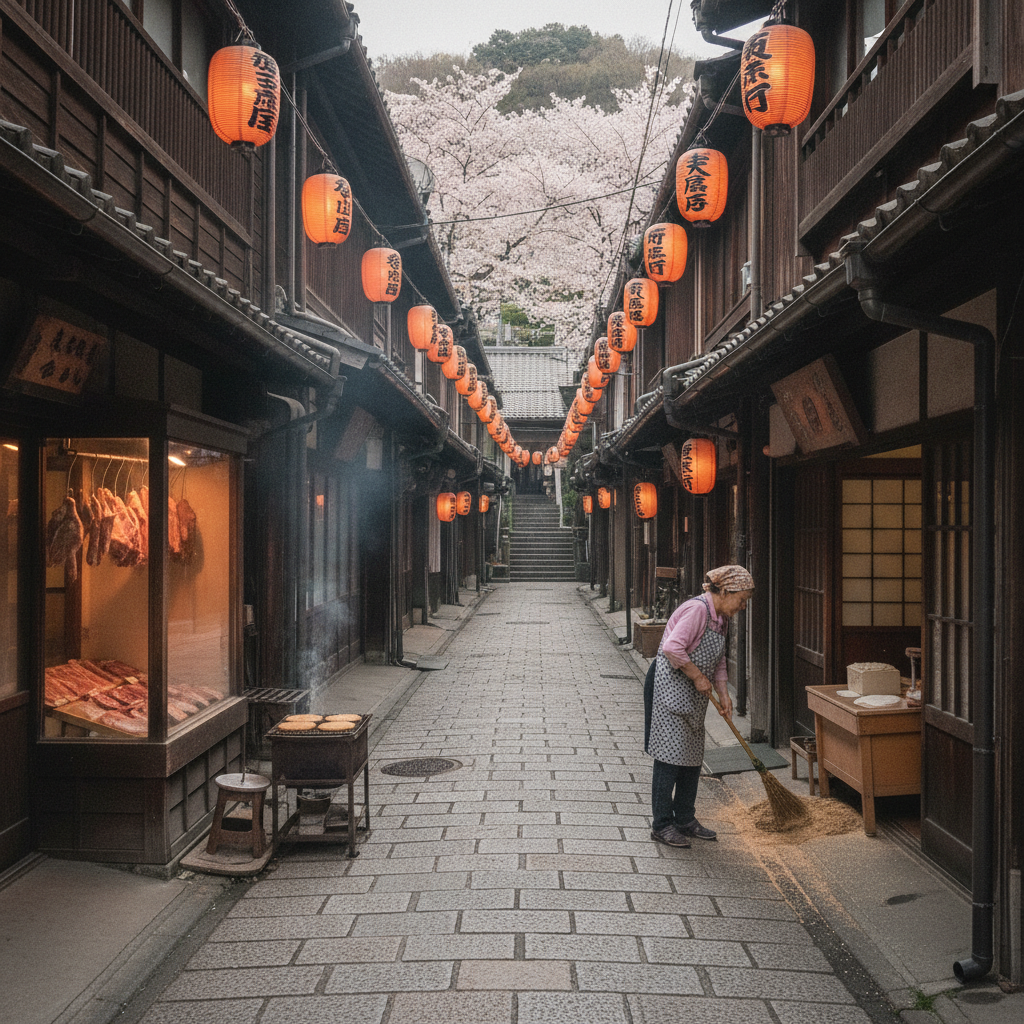
The Yanaka-Nezu-Sendagi triangle (locally called 'Yanesen') is the most intact surviving section of pre-modern Tokyo: one of the few areas of the city that survived both the 1923 Great Kanto Earthquake (which destroyed or damaged most of central Tokyo) and the firebombing raids of 1945 (which destroyed most of what the earthquake had spared) largely intact, and consequently preserves the street patterns, building scale, and neighborhood texture of the Meiji and Taisho eras. Walking here—through narrow lanes of wooden townhouses, family-run tofu makers and sembei rice cracker shops, past Buddhist temples and old cemetery walls—provides the clearest sense anywhere in Tokyo of what the city looked like before modernization.
- 1
Yanaka Cemetery — Cherry Blossoms Over the Graves of Edo
Yanaka Cemetery (谷中霊園) is a 26-hectare municipal cemetery established in 1874, containing approximately 7,000 graves ranging from early Meiji-era politicians and Meiji and Taisho cultural figures (the novelist Natsume Soseki, the painter Yokoyama Taikan, and the last Tokugawa shogun Yoshinobu are buried here) to ordinary family plots maintained continuously since the late 19th century. The cemetery is one of the most atmospheric places in Tokyo at any season: in spring, the main central avenue—a double row of cherry trees—becomes a spectacular tunnel of blossoms in late March; in summer, the stone monuments are shaded by mature zelkova trees; in autumn, the ground is covered with golden leaves. Unlike many Japanese cemeteries it has no particular visiting hours and is effectively a public park: locals use it as a shortcut and a place for their morning walk. The low skyline around the cemetery—Yanaka's wooden townhouses are visible in every direction—makes it feel genuinely removed from central Tokyo.
- 2
Yanaka Ginza — Shopping Street of the Showa Era
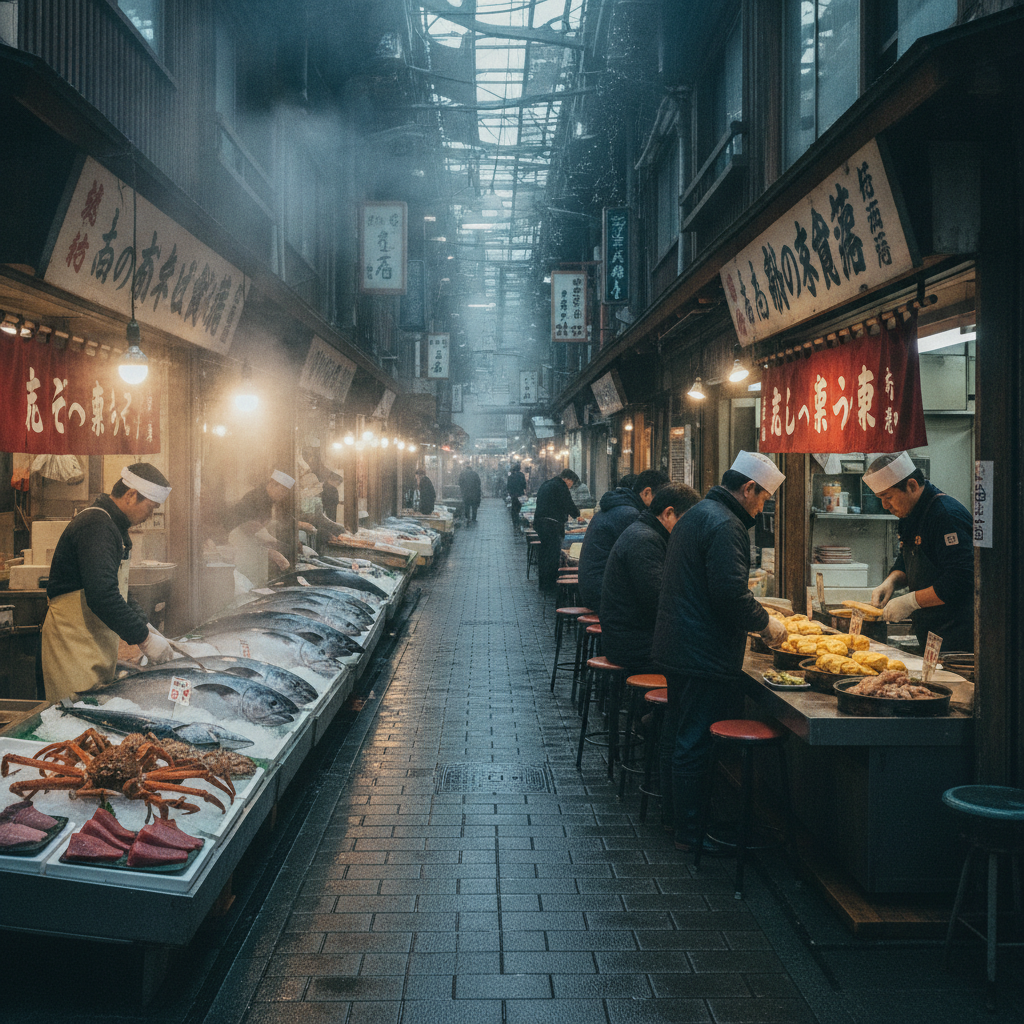
Yanaka Ginza (谷中銀座) is a 170-meter pedestrian shopping street in Yanaka running down a gentle hill (nicknamed 'Yuhi no Dan'—'Sunset Steps'—at the top of the slope, where the view at sunset has become a local institution). The name 'Ginza' was adopted by hundreds of local shopping streets across Japan in the postwar period in imitation of the prestigious Ginza in central Tokyo; 'Yanaka Ginza' has become the most famous of these neighborhood Ginzas. The street contains approximately 70 shops: butchers, fishmongers, sembei (rice cracker) bakeries (the Yanaka area has an unusually high density of sembei shops, attributable to the large number of Buddhist temple visitors who have historically bought sembei as an edible souvenir), a sake shop, green tea specialist, dried goods shops, a dyer, and several small restaurants. The street is at its most lively on weekend afternoons; the best time to visit is early evening in spring or autumn when the slanting light catches the wooden shopfronts. The 'Meow-Za' cats of Yanaka Ginza—local semi-feral cats treated as neighborhood mascots—are a standing attraction.
- 3
Nezu Shrine — Thousand Torii in the Middle of a Residential Neighborhood
Nezu Shrine (根津神社) is a Shinto shrine in the Nezu neighborhood of Bunkyo Ward, established (according to tradition) 1,900 years ago by the legendary hero Yamato Takeru no Mikoto, and reconstructed in its current form in 1706 by the fifth Tokugawa shogun Tsunayoshi as his designated heir's tutelary shrine. The main shrine buildings (seven structures in total) are designated Important Cultural Properties and are remarkably well-preserved examples of Edo-period shrine architecture: the ornate karahafu (Chinese-style curved gable) decorations and the peony carvings on the pillars are particularly fine. The shrine is most famous for its 'Senbon Torii' (thousand torii gates)—a tunnel of approximately 200 red torii gates (the count is not actually one thousand, but 'senbon' in the name implies 'many') leading from the main precinct up a hill through an azalea garden (3,000 azalea bushes of over 100 varieties; peak bloom in late April–early May, when the azalea matsuri festival is held). Free entry; the shrine grounds are open throughout the day.
- 4
Daimyo Clock Museum — The Most Eccentric Museum in Tokyo
The Daimyo Clock Museum (大名時計博物館), a small private museum in Yanaka, displays a collection of Japanese clocks (wa-dokei) from the Edo period—the most unusual timekeeping devices ever made. European mechanical clocks were introduced to Japan by the Jesuit missionary Francis Xavier in 1551; the Japanese modified them to display the traditional Japanese time system, which divided the day into 12 unequal intervals of varying length depending on the season (daytime hours were longer in summer, shorter in winter; the reverse for nighttime). The clocks required constant adjustment as the seasons changed. The resulting devices—large, ornate, technically complex timepieces made for the daimyo (feudal lords) who could afford them—are extraordinary mechanical objects, and the museum's collection of approximately 100 examples (including highly decorated portable clocks, bracket clocks with folding hands for seasonal adjustment, and pillar clocks) is one of the finest in the world. Open July–January; closed February–June; open 10 AM–4 PM, closed Monday and Tuesday.
- 5
Yanaka's Temple District — Seventeen Buddhist Temples in Seven Streets
Yanaka has a remarkable density of Buddhist temples: 70 temples occupy an area of approximately 1 square kilometer, the highest concentration of Buddhist temples anywhere in Tokyo. This is a legacy of the Edo period, when the Tokugawa shogunate required every Japanese citizen to be registered at a Buddhist temple (tera-uke system), and the area around Ueno (the adjacent neighborhood to the south) became one of the main temple districts of Edo. Most temples are not open to the public in the conventional sense (there are no exhibition spaces or visitor facilities) but their gates, gardens, and cemeteries can be viewed from the street, and the visual accumulation of stone walls, pine trees, lanterns, and tiled rooftops along the lanes between the temples is one of the defining experiences of old Tokyo. Notable temples include Kanei-ji (the Tokugawa family temple, adjacent to Ueno Park), Tenno-ji (which contains the large Buddha of Yanaka, a bronze figure of 1690), and Zenshoan (famous for its ghost paintings, displayed publicly once a year).
- 6
Sendagi & the Nezu Museum Area — Literary Tokyo
The Sendagi and Nezu area, immediately adjacent to Yanaka Cemetery and Nezu Shrine, is the most literary neighborhood in Tokyo: the novelist Mori Ogai (1862–1922, one of the principal founders of modern Japanese literature, often paired with Natsume Soseki) lived here from 1892 until his death in 1922, and his house (the 'Kanchoro', now reconstructed as a small museum) is in Sendagi. The philosopher Kitaro Nishida, the poet Masaoka Shiki, and numerous Meiji and Taisho cultural figures had their homes in the same area. The Mori Ogai Memorial Museum and the Bunkyo Literary Museum (with extensive exhibitions on writers associated with the Bunkyo Ward) are both in the Sendagi-Nezu area. The Hongo area adjacent (Hongo 3-chome) is the location of the University of Tokyo's main campus (Akamon, the Red Gate, is one of the most famous gates in Japan—it was originally the gate of the Maeda clan's Tokyo residence, preserved when the university was built on the site after the Meiji Restoration).
Walk this route with audio
Stories play automatically as you reach each stop — no tapping needed.
More in tokyo
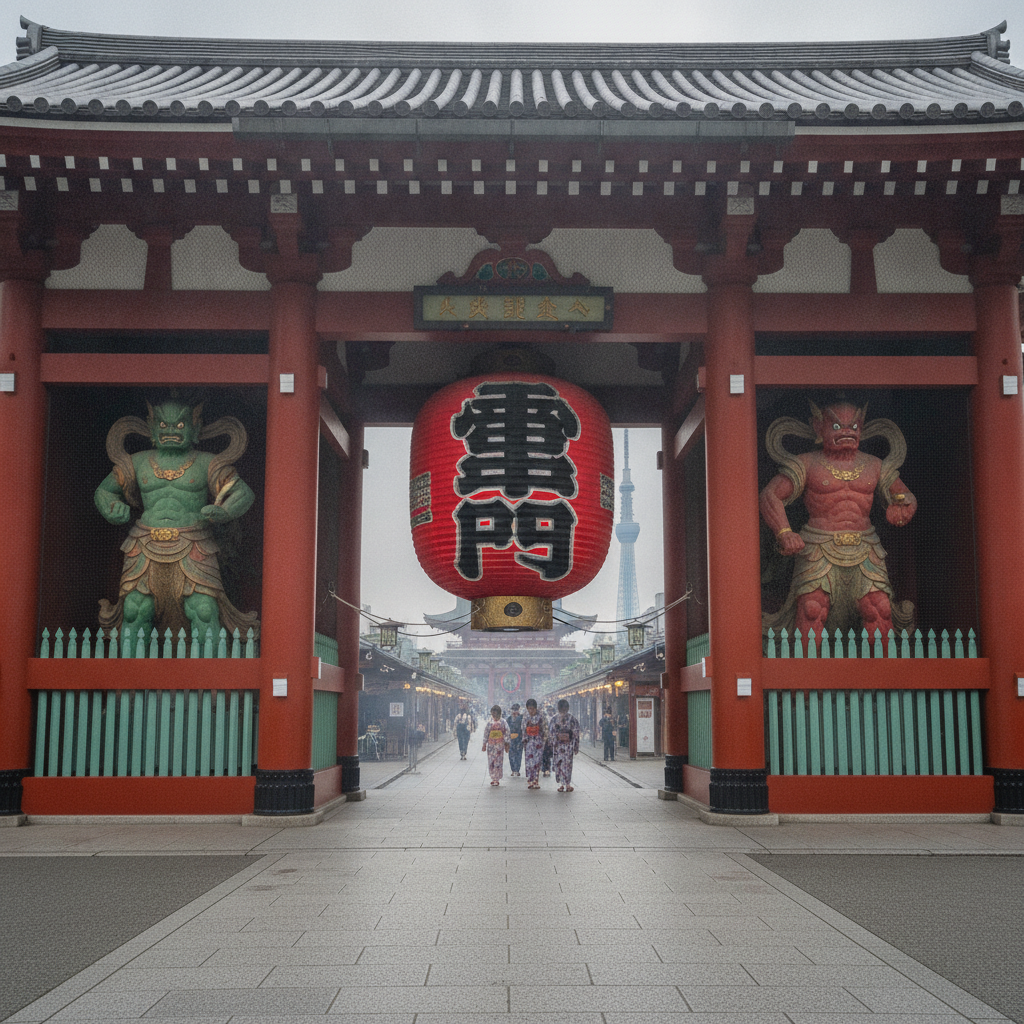
Asakusa & Tokyo Skytree: Ancient Temple, Nakamise Street & the World's Tallest Tower
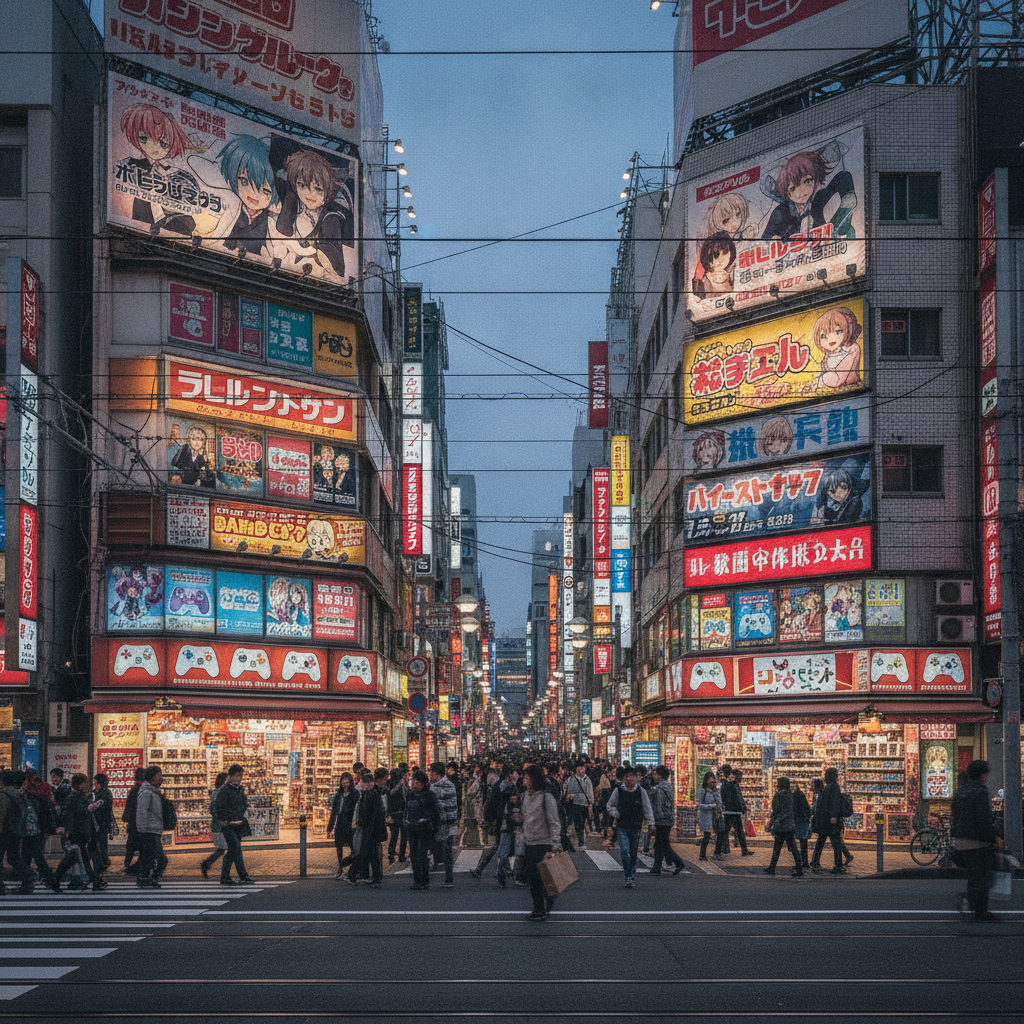
Akihabara & Ueno: Electric Town, Japan's Greatest Museum Mile & Ameyoko Market
Shinjuku: Golden Gai, Kabukicho & the Garden at the Heart of the Neon City
Shibuya & Harajuku: Youth Culture, Sacred Forests & the World's Busiest Crossing
Roppongi Arts District & Tokyo Tower: World-Class Museums, Contemporary Architecture & the City's Most Iconic Silhouette