CN Tower, Harbourfront & Toronto's Downtown Waterfront
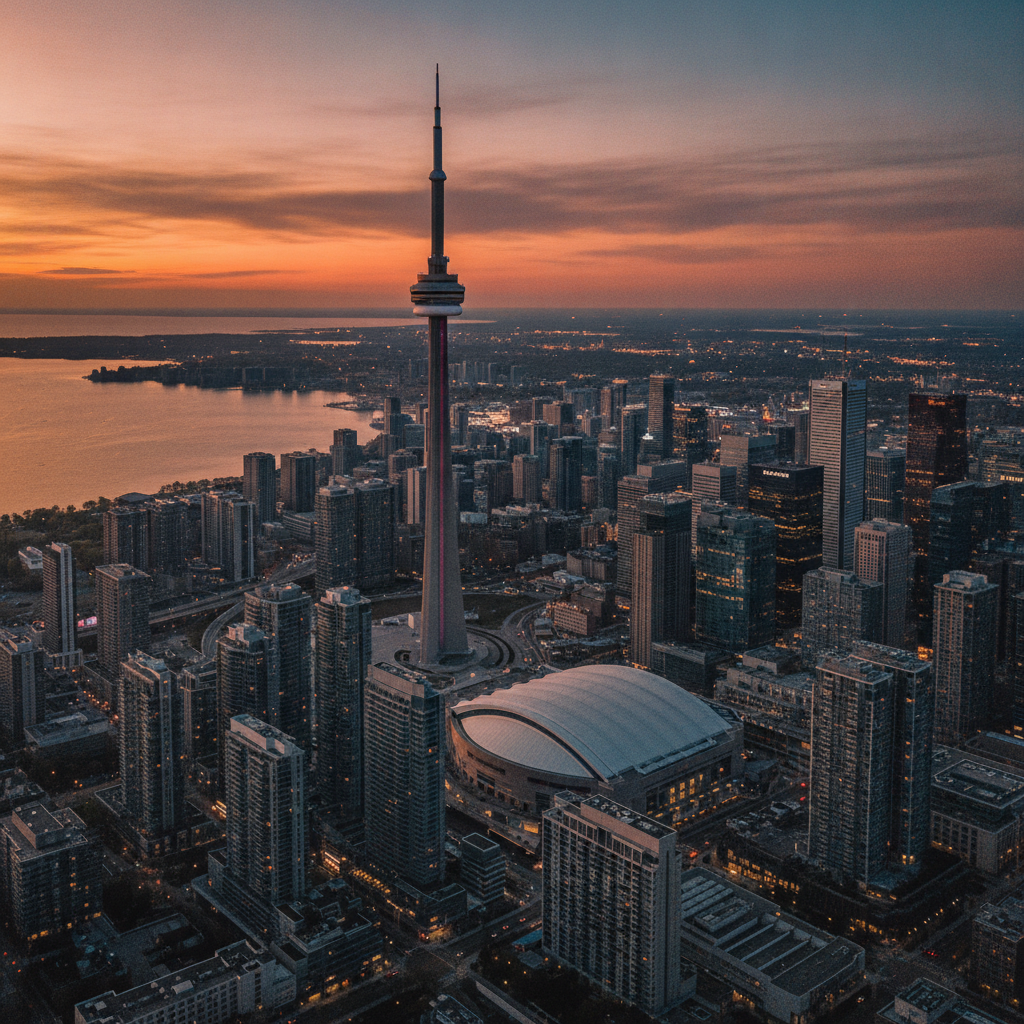
The CN Tower — the defining symbol of Toronto and for 34 years the tallest freestanding structure in the world — anchors a downtown waterfront corridor that combines the Harbourfront Centre's arts venues, the Ripley's Aquarium of Canada, and the glass towers of the Financial District into one of Canada's most visited urban destinations.
1. CN Tower — Canada's Most Recognized Structure
- 1
CN Tower — Canada's Most Recognized Structure
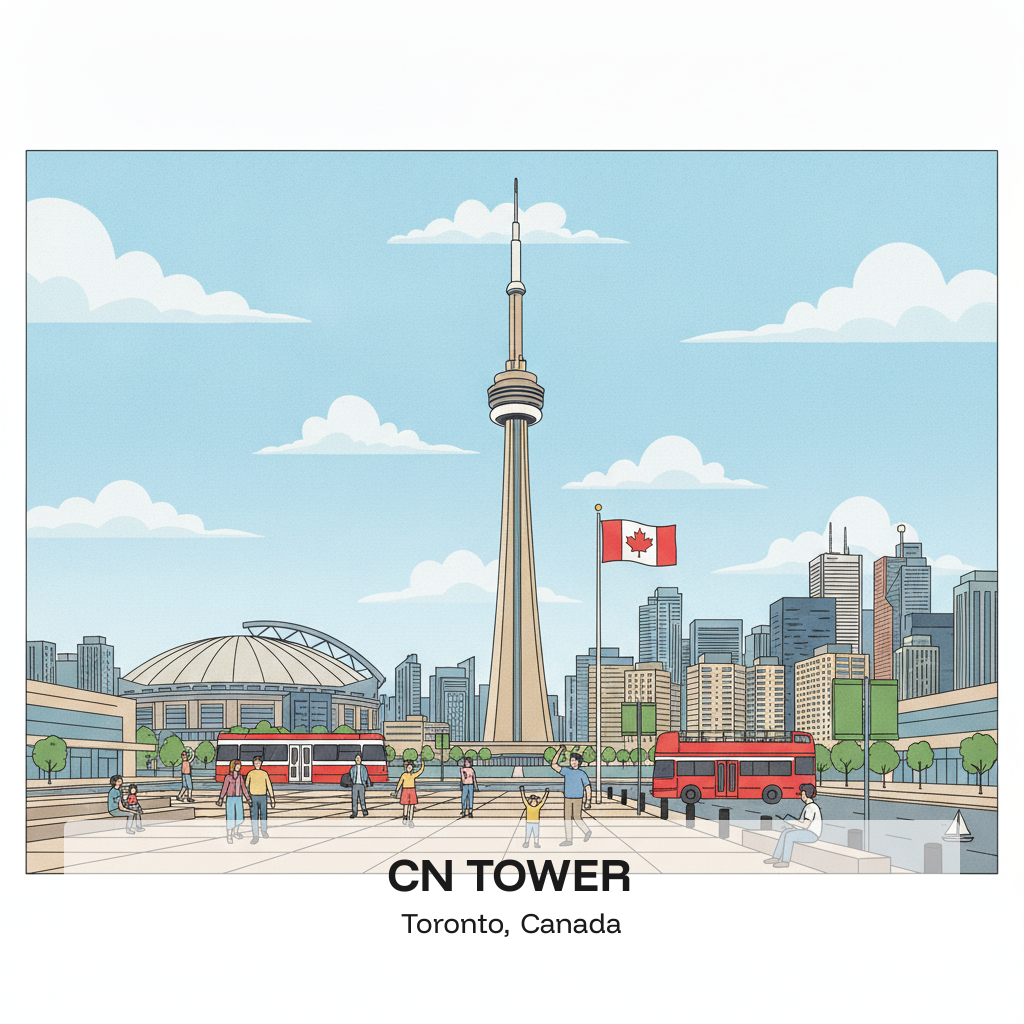
CN Tower (290 Bremner Blvd, Downtown Toronto — 553.33 metres to the tip of its antenna, completed 1976, constructed over 40 months by Canadian National Railway as a communications tower and demonstration of Canadian engineering capability; the tallest freestanding structure in the world from 1976 to 2007, when it was surpassed by the Burj Khalifa): the CN Tower contains three observation levels: the Look Out Level (346 metres, enclosed observation deck with the Glass Floor — a 2.5-cm-thick glass panel set into the floor with a direct view 342 metres straight down), the SkyPod (447 metres, the highest public observation deck in the western hemisphere for 31 years), and the 360 Restaurant (346 metres, the revolving restaurant that completes one full revolution every 72 minutes); the EdgeWalk (launched 2011) allows visitors to walk hands-free along an outside ledge of the main pod at 356 metres, attached to a safety harness — the world's highest full-circle hands-free walk on a building exterior.
- 2
Rogers Centre — The Retractable-Roof Dome at the Tower's Base
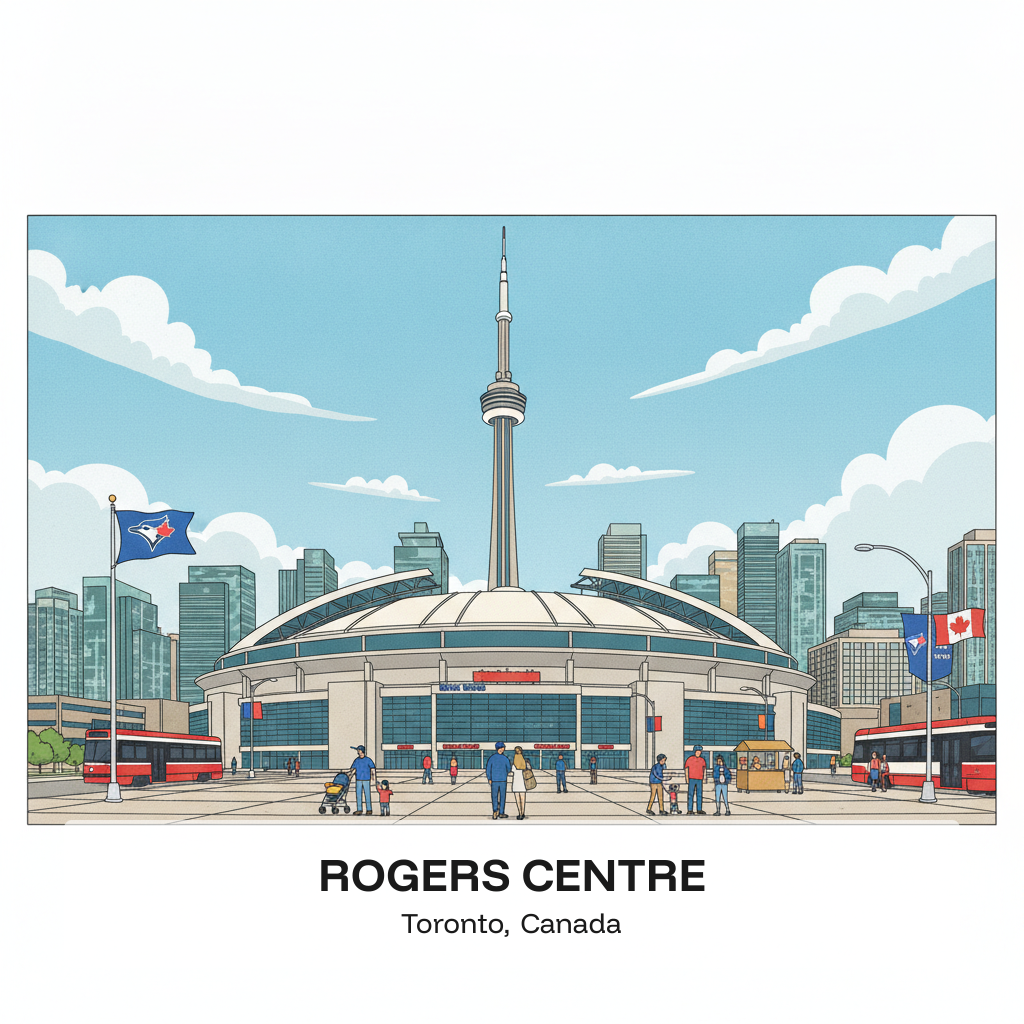
Rogers Centre (1 Blue Jays Way, immediately adjacent to the CN Tower base — the domed stadium completed 1989, known as the SkyDome until 2005, with a retractable roof (the first fully retractable roof on a major sports venue in the world) that can be opened or closed in approximately 20 minutes; capacity 49,539 for baseball, 54,000 for football): Rogers Centre is the home venue of the Toronto Blue Jays (Major League Baseball, founded 1977, World Series champions 1992 and 1993 — the only non-American team to win the World Series) and was formerly the home of the Toronto Argonauts (Canadian Football League); the roof consists of four panels on a circular rail — one fixed and three retractable — and takes 20 minutes to open; the stadium is visible from the observation deck of the CN Tower directly above it.
- 3
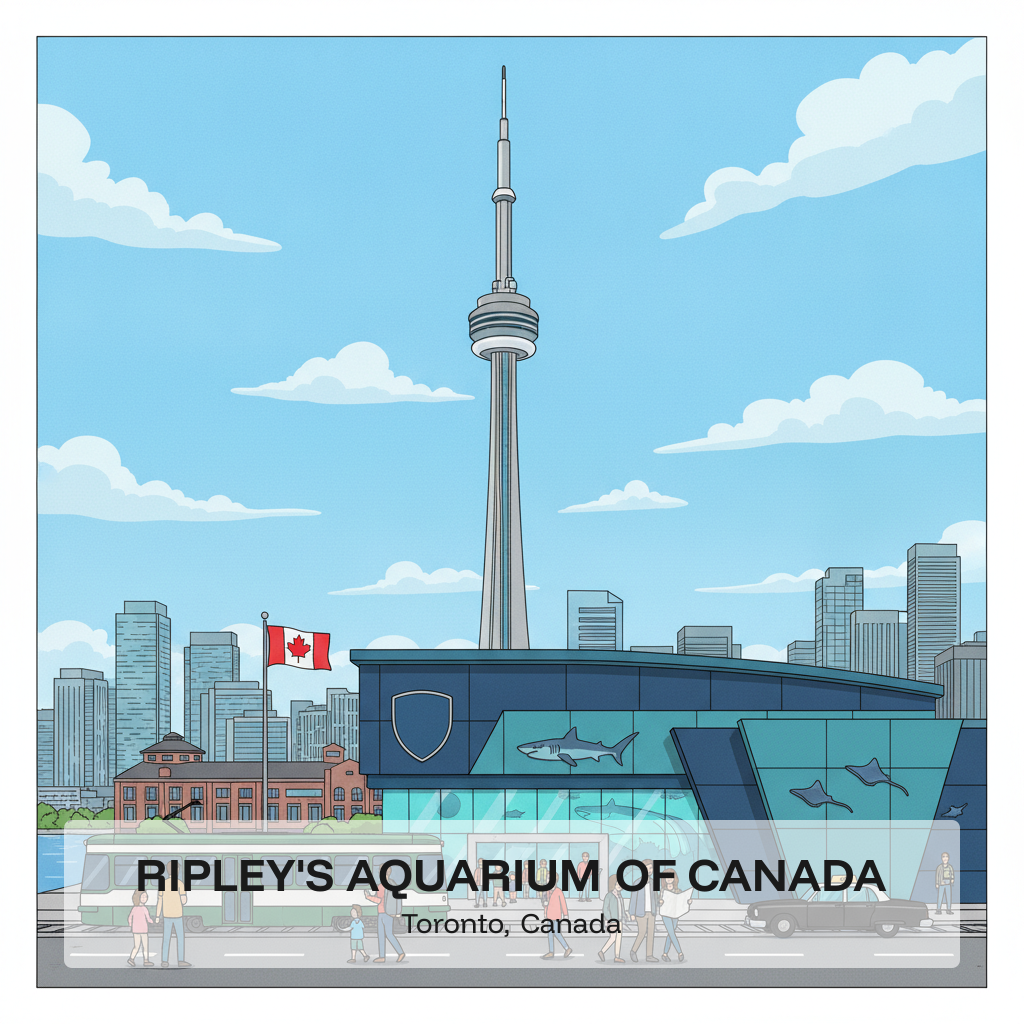
Ripley's Aquarium of Canada — Underwater Toronto
Ripley's Aquarium of Canada (288 Bremner Blvd, at the base of the CN Tower — opened 2013, 5,700 square metres of aquatic exhibition space, 5.7 million litres of fresh and salt water, 16,000 aquatic animals of 450 species): the most visited attraction in Canada, with over 1.7 million visitors annually; the centrepiece of the aquarium is the Dangerous Lagoon — the 97-metre underwater viewing tunnel (the longest underwater viewing tunnel in North America) that passes through a 2.9-million-litre shark tank containing sand tiger sharks, sandbar sharks, green sea turtles, sawfish, and over 100 other large marine species; visitors travel through the tunnel on a moving walkway beneath the sharks; other galleries include the Canadian Waters gallery (displaying freshwater species from Canadian lakes and rivers), the Ray Bay (stingrays that visitors can touch), and the Shoreline Gallery.
- 4
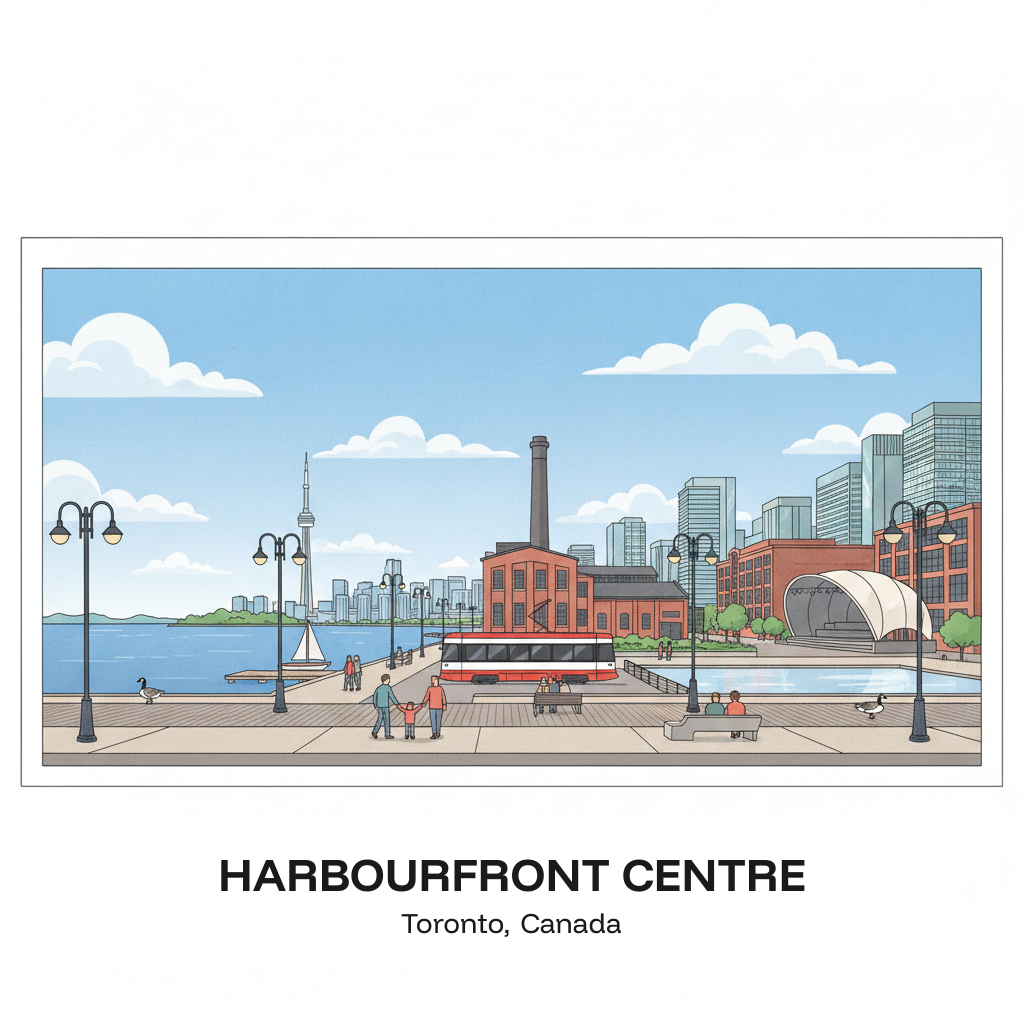
Harbourfront Centre — Arts & Culture on Lake Ontario
Harbourfront Centre (235 Queens Quay West — the 4-hectare public arts and culture complex on the Toronto waterfront, established 1974 when the federal government acquired the derelict industrial waterfront lands for public use, now one of Canada's most vibrant arts venues): Harbourfront Centre hosts over 4,000 events annually — the Toronto International Film Festival (TIFF) uses several Harbourfront venues; the centre contains the Power Plant Contemporary Art Gallery (one of Canada's leading public galleries of contemporary art, in a former power plant), the Harbourfront Centre Theatre, the York Quay Centre (craft studios, textile studio, ceramics studio, and Toronto Reference Library arts branch), the Music Garden (a 2.4-hectare public garden designed in collaboration with cellist Yo-Yo Ma interpreting Bach's Suite No. 1 for Unaccompanied Cello through landscape), and the outdoor stage and skating rink.
- 5
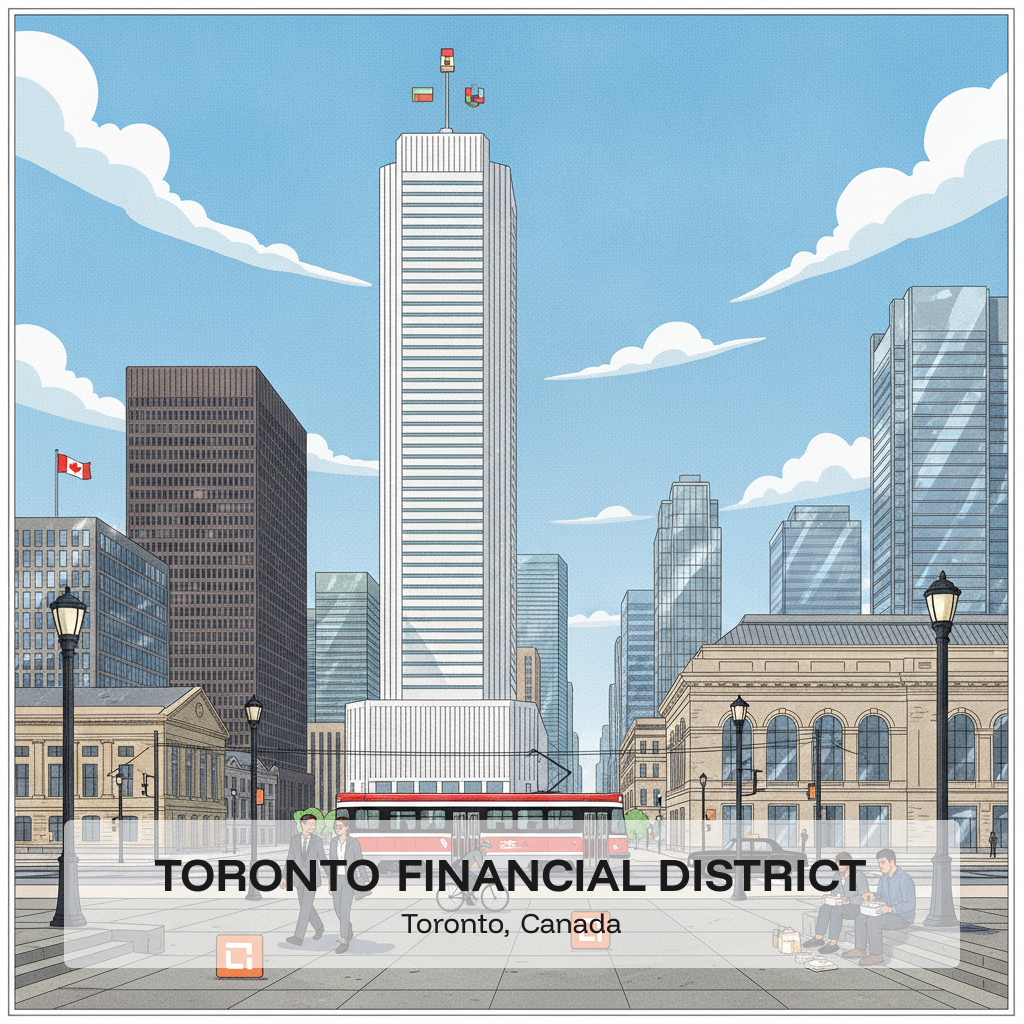
Toronto Financial District — Bay Street & the Canadian Banking Capital
Toronto's Financial District (the cluster of bank towers on and around Bay Street, from Front Street north to Queen Street — the financial capital of Canada and the third-largest financial centre in North America after New York and Chicago): Bay Street is to Canadian finance what Wall Street is to American finance — the headquarters of Canada's five major banks (Royal Bank of Canada at 200 Bay Street, TD Bank at the TD Centre complex, Bank of Nova Scotia at 40 King Street West, Bank of Montreal at First Canadian Place, and CIBC at Commerce Court) are all concentrated within a few blocks of each other; the PATH underground pedestrian network (33 kilometres of underground walkways connecting 75 buildings, 1,200 shops, 5 subway stations, and 50 parking garages — the largest underground shopping complex in the world) runs beneath the entire Financial District, allowing Torontonians to move between most downtown buildings without going outside.
- 6
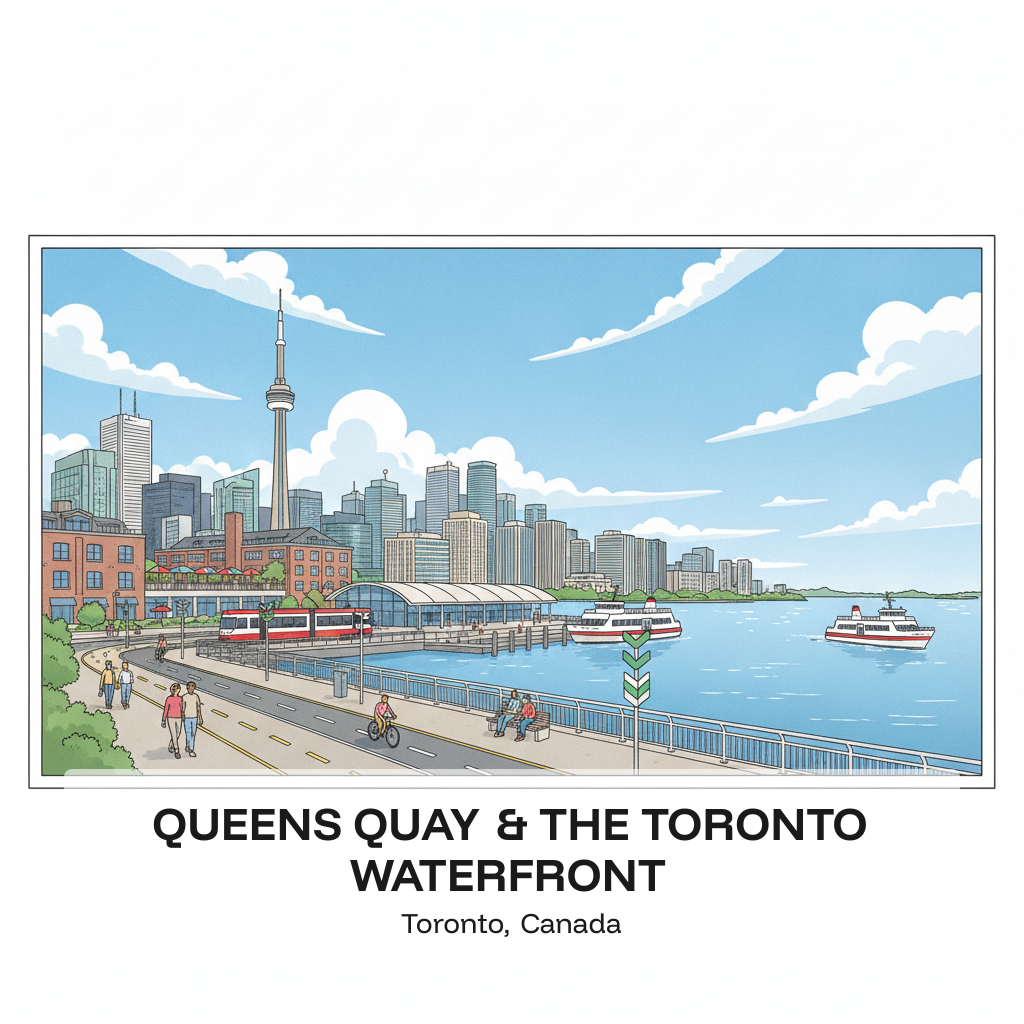
Queens Quay & the Toronto Waterfront
Queens Quay West (the main waterfront boulevard of Toronto, running along the northern shore of Lake Ontario from Bathurst Street east to Lower Jarvis Street — the primary recreational waterfront of the city, with the Jack Layton Ferry Terminal (ferries to the Toronto Islands), the Harbourfront Centre, numerous restaurants and bars with waterfront terraces, and the Waterfront Trail (a dedicated cycling and pedestrian path running along the lake shore)): Lake Ontario (the easternmost and smallest of the five Great Lakes, 311 kilometres long and up to 85 kilometres wide, maximum depth 244 metres — the source of Toronto's drinking water and the setting for the Toronto Islands (the archipelago of 15 small islands immediately south of the downtown that provide Toronto's best green space and the closest beaches to the city centre).
Walk this route with audio
Stories play automatically as you reach each stop — no tapping needed.
More in toronto
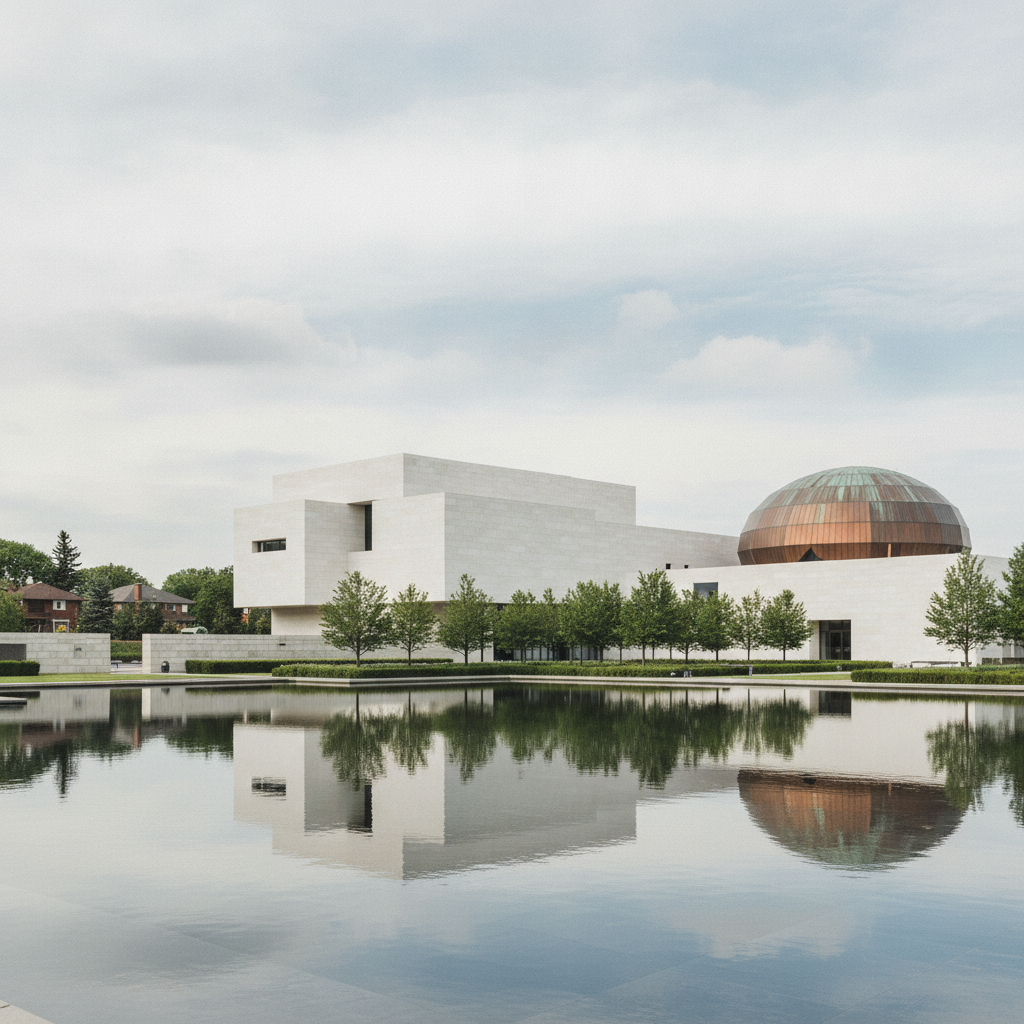
Aga Khan Museum, North York & Toronto's Suburban Diversity
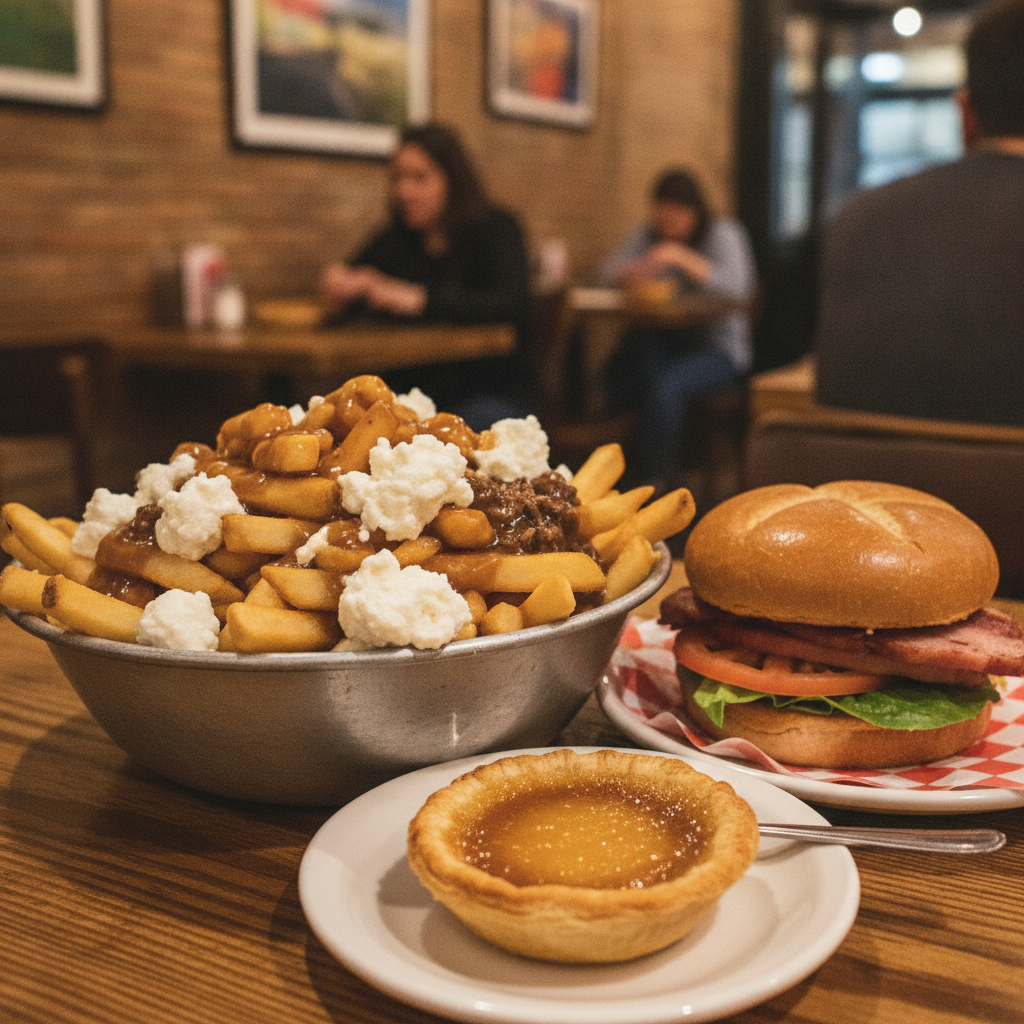
Toronto's Food Scene — Poutine, Butter Tarts, Peameal Bacon & Global Kitchens
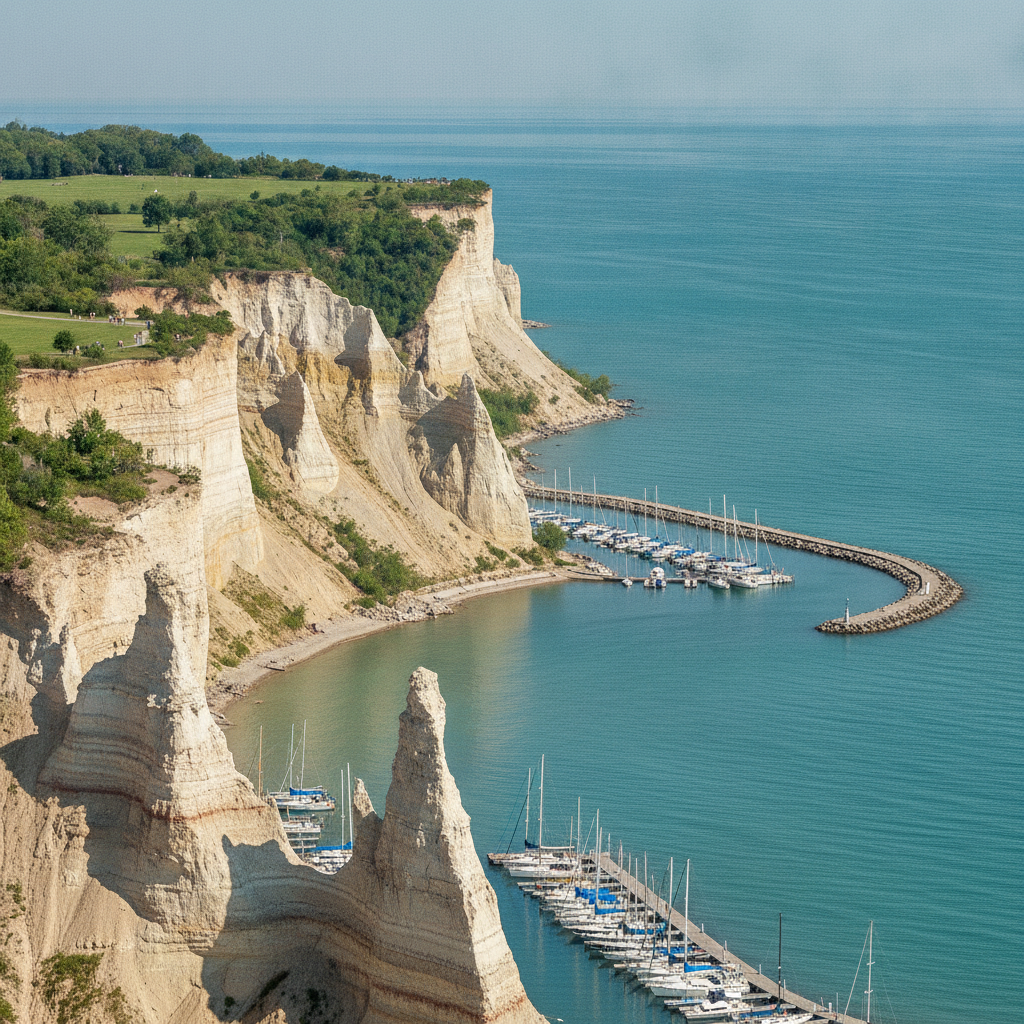
Scarborough Bluffs, The Beaches & Toronto's East End
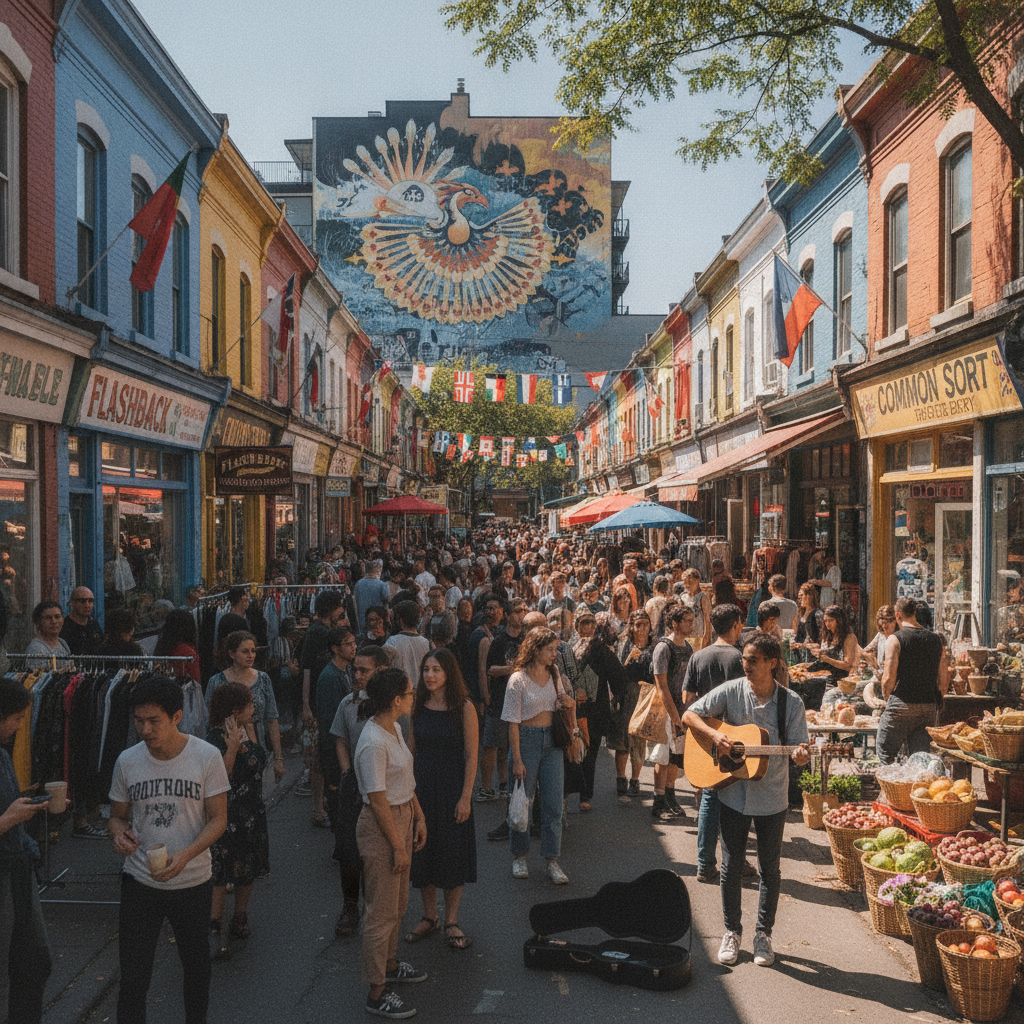
Kensington Market, Chinatown & the Distillery Historic District
Niagara Falls Day Trip — Horseshoe Falls & the Maid of the Mist