Tripoli: Cyrene, the Garamantes, Ghadames, and the Italian Colonization of Libya
The wider Libyan world around Tripoli: Cyrene as the finest ancient Greek city in Africa and birthplace of Eratosthenes; the Garamantes and their 3,500 km of underground Saharan water tunnels; Ghadames as the Pearl of the Desert and a UNESCO oasis city; the brutal Italian colonization (1911-1943) and the resistance of Omar Mukhtar; Libyan cuisine; and the practical guide to visiting the most inaccessible UNESCO heritage destination in the world.
- 1
Cyrene - The Ancient Greek City and the Pentapolis of Cyrenaica
Cyrene (UNESCO World Heritage) is the best-preserved ancient Greek city in Africa, founded approximately 631 BCE by Greek colonists from the island of Thera (Santorini) on the instruction of the Delphic Oracle. Cyrene became the capital of Cyrenaica and the center of the Greek Pentapolis (Five Cities) of eastern Libya. The city produced Eratosthenes of Cyrene (c.276-194 BCE), the geographer who calculated the circumference of the Earth within approximately 2% accuracy using shadow measurements at noon on the summer solstice. The philosopher Aristippus of Cyrene (c.435-356 BCE) founded the Cyrenaic school of philosophy (the earliest hedonist school, arguing that pleasure is the highest good). The Cyrene archaeological zone covers the Temple of Zeus (larger than the Parthenon), the Temple of Apollo, the Greek agora, the Roman forum, the extraordinary Sanctuary of Demeter (with thousands of terracotta votives), and the necropolis. Apollonia (the port of Cyrene, now called Susah) is a separate UNESCO zone with Byzantine churches, a Greek theatre, and submerged Roman harbour installations visible under the clear Mediterranean water. Both sites are essentially unvisited due to the ongoing Libyan civil conflict.
- 2
The Italian Colonization of Libya - 1911-1943 and the Deportations to Italian Islands
The Italian colonization of Libya (1911-1943) began when Italy invaded the Ottoman territories of Tripolitania and Cyrenaica in the Italo-Turkish War of 1911-1912. Libya was the last Ottoman territory to be absorbed into the European colonial system and the first to be taken by an independent Italian state seeking to establish itself as a Mediterranean imperial power. The resistance (the Libyan resistance to Italian colonization was prolonged and brutal: in Cyrenaica the Senussi movement led by Omar Mukhtar (the Lion of the Desert) fought the Italians for over 20 years (1912-1931): Omar Mukhtar was captured and publicly hanged by the Italians in September 1931 at Suluq before approximately 20,000 Libyan prisoners: he remains the primary Libyan national hero and his image appears on the Libyan 10-dinar banknote). The deportations (the Italian authorities deported approximately 100,000 Libyan civilians from Cyrenaica to concentration camps (the Italian term was campi di concentramento) in the Libyan Sahara (Agabia, Soluq, el-Maqrun, el-Abiar) in 1929-1930: approximately 40,000-50,000 Libyans died in these camps from disease, starvation, and violence). The settlement (Italy settled approximately 110,000 Italian colonists in Libya between 1938-1940: Mussolini visited Libya as the Sword of Islam in 1937 in an elaborate ceremony: the Italian colonists were expelled from Libya after Libyan independence in 1951 and Gaddafi's nationalization in 1969-1970).
- 3
The Garamantes - The Ancient Libyan Saharan Civilization and the Underground Water System
The Garamantes (the ancient Berber people of the Libyan Fezzan, the central Saharan desert of Libya) were one of the most remarkable ancient civilizations of Africa, building an extraordinary underground irrigation system (the foggaras or ghanat) that sustained a population of approximately 100,000 people in the hyperarid Sahara for approximately 1,500 years (approximately 1000 BCE to 700 CE). The foggaras (a foggara is an underground horizontal tunnel (qanat) that taps into the subsurface fossil water aquifer in the desert: the Garamantian foggara system extended for approximately 3,500 km of underground tunnels: the tunnels were dug by hand with copper and iron tools through the desert limestone: the water emerged at the surface and irrigated date palms, cereals, olives, and vegetables in the Fezzan oases). The trade (the Garamantes controlled the trans-Saharan trade routes between Sub-Saharan Africa and the Mediterranean coast: they traded in gold, slaves, exotic animals (leopards, lions, ostriches, giraffes), ivory, and salt: the Roman Empire was one of their primary trading partners: the city (Garama (now Germa) in the Fezzan was the capital of the Garamantian state: the site includes a walled city, a necropolis with pyramid tombs, and traces of the foggara system). The Garamantes are considered the founders of the trans-Saharan trade networks that persisted until the 20th century.
- 4
Ghadames - The Pearl of the Desert and the UNESCO Old City
Ghadames (the Pearl of the Desert) is a UNESCO World Heritage oasis city in the Libyan Sahara near the triple border of Libya, Algeria, and Tunisia: one of the best-preserved pre-Saharan oasis towns in the world. The old city (the Old City of Ghadames is a UNESCO World Heritage Site (1986): a traditional mudbrick walled city dating to the medieval Islamic period (the earliest structures approximately 7th-10th century CE): the extraordinary architecture: the houses are connected by covered walkways that form a continuous second-storey pedestrian city above the street level: the upper city belongs to the women (traditionally the upper level of the covered city was the domain of women while men used the ground-level streets and public spaces): the ground floor was used for storage: the middle floor for family living: the upper level connected to neighboring houses: the palm groves (the palm grove oasis surrounding the old city: approximately 4,000 date palms irrigated by the traditional falaj water distribution system): the population (the Ghadames Berber population speak Tamasheq (a Tuareg language variant) in addition to Arabic: the Ghadames Berbers are one of the few North African Berber communities that maintained both their language and their distinctive architectural tradition intact through the 20th century): the access (Ghadames is approximately 650 km southwest of Tripoli by road: accessible by air from Tripoli when domestic flights operate: the security situation in the border region is variable).
- 5
Tripoli Cuisine - Mbakbaka, Asida, Bazeen, and the North African Coastal Kitchen
Libyan cuisine: the Mediterranean-Saharan kitchen of the Tripolitanian coast. Libyan food combines Berber-Amazigh foundations with Arab-Islamic spicing, Ottoman Turkish influences (the Karamanli era left significant culinary traces), and Italian colonial additions. The primary Libyan dishes: bazeen (the Libyan national dish: a dense dough of barley flour and water formed into a dome shape and served with a meat and vegetable stew (maraq) with chickpeas, potatoes, and tomatoes: eaten communally from one large platter: the spicing includes cumin, coriander, and chili): asida (a thick porridge of white flour or barley flour eaten with honey and butter or with a savory meat sauce: eaten for breakfast and as a comfort food): mbakbaka (a Tripolitanian pasta dish (the pasta tradition from Italian colonization): a thick pasta cooked in a spiced tomato and meat sauce: one of the clearest Italian colonial culinary legacies in Libyan food): the couscous (Libyan couscous with lamb, vegetables, and a spiced broth: a celebratory dish): shawarba (a thick lamb and tomato soup with orzo pasta: the primary Ramadan soup of Tripolitania): harisa (not the North African chili paste but the Libyan sweet: a semolina pudding with honey): dates (Libya produces high-quality Medjool and Deglet Nour dates in the Fezzan oases: a staple food and hospitality gift): the coffee (strong spiced coffee with cardamom, cinnamon, and saffron: the Libyan tradition of serving coffee with dates).
- 6
Practical Guide to Libya and Tripoli - Safety, Access, and the Future of Tourism
The practical guide to Libya and Tripoli: current conditions, access, safety, and the future of tourism in one of the most historically rich but currently inaccessible countries in the world. The security situation (Libya has been in a state of civil conflict since 2011: the country is divided between the Tripoli-based GNU (Government of National Unity) and the eastern-based HoR/LNA of Field Marshal Haftar: Tripoli itself is controlled by armed militias that have different alignments: the security situation in Tripoli is volatile: kidnapping of foreigners has occurred: most Western governments have Category 4 (Do Not Travel) advisories for Libya: independent travel is not recommended). The access (no commercial flights from most European countries operate direct services to Tripoli (Mitiga International Airport) under current conditions: charter flights and some regional carriers operate: Turkish Airlines has operated routes at various times: there is no tourist visa: visitors require a business or official visa with a letter of invitation and sponsorship from a Libyan organization). The future (the Libya UNESCO World Heritage sites (Leptis Magna, Sabratha, Cyrene, Tadrart Acacus, Ghadames Old City) are among the most significant unvisited archaeological sites in the world: the resolution of the Libyan political conflict would open access to an extraordinary concentrated UNESCO heritage that has almost no tourist infrastructure at present: the potential of Libya as a Roman and prehistoric heritage destination is unmatched in the Mediterranean world).
Walk this route with audio
Stories play automatically as you reach each stop — no tapping needed.
More in Tripoli
Tripoli Complete Reference - Jamahiriya, Lockerbie, Roman Mosaics, and the Libyan Sahara
Tripoli Day Trips: Nafusa Mountains, Garian Underground Houses, Acacus Rock Art, and Practical Libya Guide
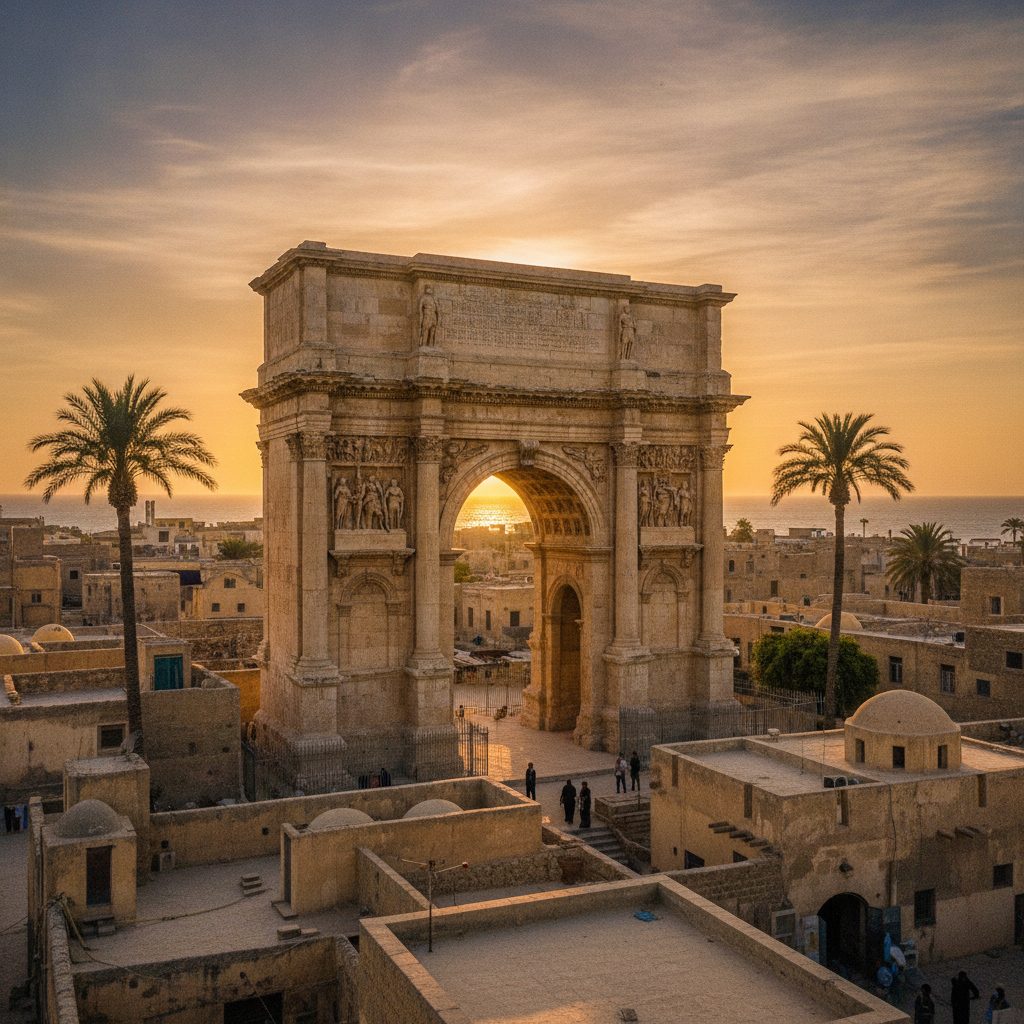
Tripoli: Omar Mukhtar, King Idris, the Oil Discovery, and Modern Libya
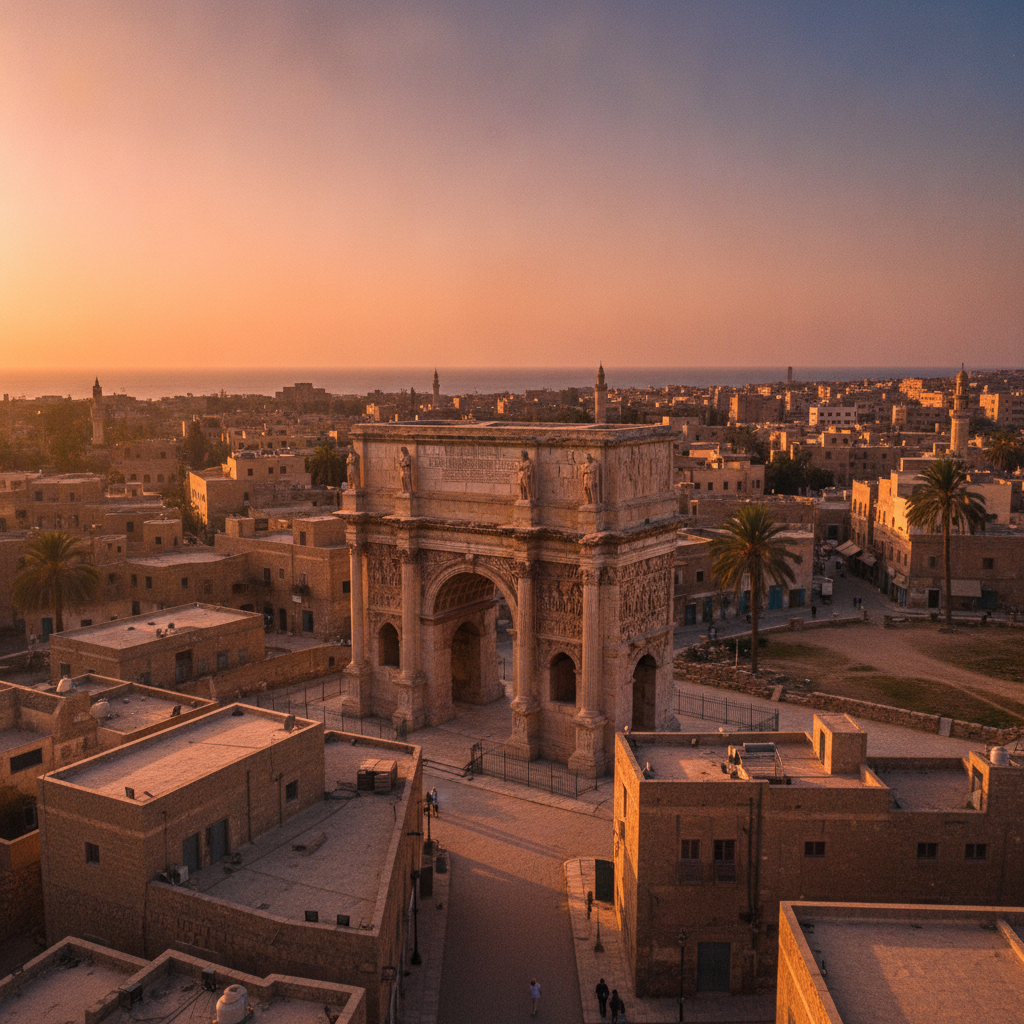
Tripoli: Cyrene, Benghazi, the Garamantes, Ghadames, and the Complete Libyan Heritage