Tripoli: Omar Mukhtar, King Idris, the Oil Discovery, and Modern Libya
Libya political history from the Italian colonization to the 2014 civil war: Omar Mukhtar and the Cyrenaican resistance; the Senussi order and the creation of the Libyan state; King Idris and the 1951 independence (the first African country to gain independence through the UN); the 1959 oil discovery that transformed Libya from the poorest to one of the richest African countries; 42 years of Gaddafi; and the ongoing civil conflict and the hope of reconstruction.
- 1
Omar Mukhtar and the Lion of the Desert - Libya Primary National Hero
Omar Mukhtar (c.1858-1931) led the Cyrenaican resistance to Italian colonization for approximately 20 years and is Libya primary national hero. A Quran teacher and Senussi order member, Mukhtar commanded guerrilla operations from the Jebel Akhdar (Green Mountain) of Cyrenaica against Italian forces from 1912 until his capture in 1931. The Italian response under General Pietro Badoglio and General Rodolfo Graziani included systematic depopulation: approximately 100,000 Cyrenaican civilians were deported to concentration camps in the Libyan Sahara in 1929-1930 (camps at Agabia, Soluq, el-Maqrun) and approximately 40,000-50,000 died from disease and starvation. Mukhtar was captured on September 11, 1931 at the Battle of Wadi al-Mharzim and publicly hanged at Suluq on September 16, 1931 before approximately 20,000 Libyan prisoners assembled from the camps to witness the execution. He was approximately 72-73 years old. His image appears on the Libyan 10-dinar banknote. The 1981 film Lion of the Desert (director Moustapha Akkad, Anthony Quinn as Mukhtar, Oliver Reed as Graziani) was banned in Italy from 1982 until 2009 because it was considered offensive to national honour.
- 2
The Senussi Order and King Idris - The Brotherhood That Built the Libyan State
The Senussi order (al-Tariqa al-Sanusiyya): the Sufi Islamic brotherhood founded by the Algerian-born scholar Muhammad ibn Ali al-Sanusi (1787-1859) in Mecca in 1837 and established in Cyrenaica in 1843. The order became the primary religious, political, and social organization in Cyrenaica and the Fezzan, organizing Bedouin tribes into a cohesive community through a network of zawiyas (lodges). It led the resistance to Italian colonization and produced King Idris I (Sayyid Muhammad Idris al-Mahdi al-Senussi, born 1889), who became Emir of Cyrenaica in 1920 and negotiated with Italy during the colonial period. Idris was in exile in Egypt from 1922 to 1943 and supported the Allied campaign in North Africa in World War II. The Allied victory expelled the Italians and Libya came under British and French military administration (1943-1951). UN General Assembly Resolution 289 (November 21, 1949) called for Libyan independence by January 1, 1952. The United Kingdom of Libya became independent on December 24, 1951 under King Idris I: the first African country to gain independence through the United Nations. Idris was overthrown by the Gaddafi coup of September 1, 1969 while abroad in Turkey for medical treatment. He died in exile in Cairo in 1983.
- 3
The Libyan Oil Discovery 1959 - From Poorest Country to OPEC Member
Libya discovered oil at Zelten in Cyrenaica in June 1959 (Standard Oil Company of New Jersey) and commercial production began in 1961. By 1965 Libya was the largest oil producer in Africa. Libya has the largest proven oil reserves in Africa (approximately 48 billion barrels of light sweet crude that trades at a premium). The geographic advantage of Libya oil (close to European markets, pipeline delivery to Mediterranean ports, high quality) made it the preferred European supply source. The social transformation was rapid: per capita income rose from approximately USD 25 in 1951 to approximately USD 2,000 by 1969. Libya joined OPEC in 1962 as a founding African member. The oil discovery transformed Tripoli from a colonial backwater into a modernizing city with the first universities, hospitals, and road infrastructure in the 1960s. One of Gaddafi first acts after the 1969 coup was to renegotiate oil company contracts significantly increasing Libyan revenues, and then to nationalize 51% of oil company assets in 1973-1974. Today Libya hydrocarbon dependency (approximately 95% of government revenue) remains the primary structural challenge of the Libyan economy.
- 4
The Italian Colonization 1911-1943 - The Deportations and the Resistance
Italy invaded the Ottoman territories of Tripolitania and Cyrenaica in the Italo-Turkish War of 1911-1912. Libya was the last Ottoman territory absorbed into the European colonial system. The resistance (Omar Mukhtar commanded guerrilla operations in Cyrenaica for approximately 20 years). The systematic repression (approximately 100,000 Cyrenaican civilians were deported to concentration camps in 1929-1930: approximately 40,000-50,000 died: one of the worst colonial atrocities in North African history). The Italian settlement (approximately 110,000 Italian colonists were settled in Libya between 1938-1940: Mussolini visited Libya as the Sword of Islam in 1937). World War II (North Africa was a primary theater: the battles of El Alamein, Tobruk, and Gazala were fought across Libyan territory between 1940-1943: the Italian and German forces were expelled in 1943 by the British 8th Army and US forces). Post-war (British and French military administration 1943-1951). Legacy (approximately 30,000 Italians remained in Libya after independence (1951): Gaddafi expelled the remaining Italian community in 1970 and nationalized all Italian property: Italy paid Libya approximately EUR 5 billion in reparations under a 2008 Treaty of Friendship signed by Berlusconi and Gaddafi).
- 5
The Libyan Civil War 2014-Present - A Nation Divided and the International Proxy War
The second Libyan Civil War (2014-present) divided Libya between the Tripoli-based internationally recognized government and the eastern HoR (House of Representatives) backed by Field Marshal Khalifa Haftar and the Libyan National Army (LNA). The context (the 2011 revolution removed Gaddafi but left Libya with no national army, no police, and competing armed militias: the transition (2011-2014) was chaotic: the 2012 elections produced the General National Congress: the 2014 elections produced the House of Representatives (HoR) in Tobruk: the GNC refused to recognize the HoR results and Libya split into two rival governments). The foreign involvement (the conflict became a proxy war: Qatar and Turkey supported the Tripoli-based government: UAE, Egypt, Russia, Jordan, and France supported the Haftar-LNA in the east: the Benghazi Defense Compound, the Sarraj government, and multiple armed groups each received different foreign backing). The Tripoli offensive (2019-2020: Haftar launched an offensive on Tripoli in April 2019: Turkish military intervention (drones, air defense systems, troops) in November 2019 stopped the LNA advance: the GNU with Turkish support pushed Haftar forces back by May 2020). The ceasefire (a UN-mediated ceasefire was signed in October 2020: the GNU of Abdul Hamid Dbeibeh was established in March 2021 but lacks a political settlement: parallel governments continued in east and west as of 2025).
- 6
Tripoli Legacy - The Crossroads City and the Hope of Reconstruction
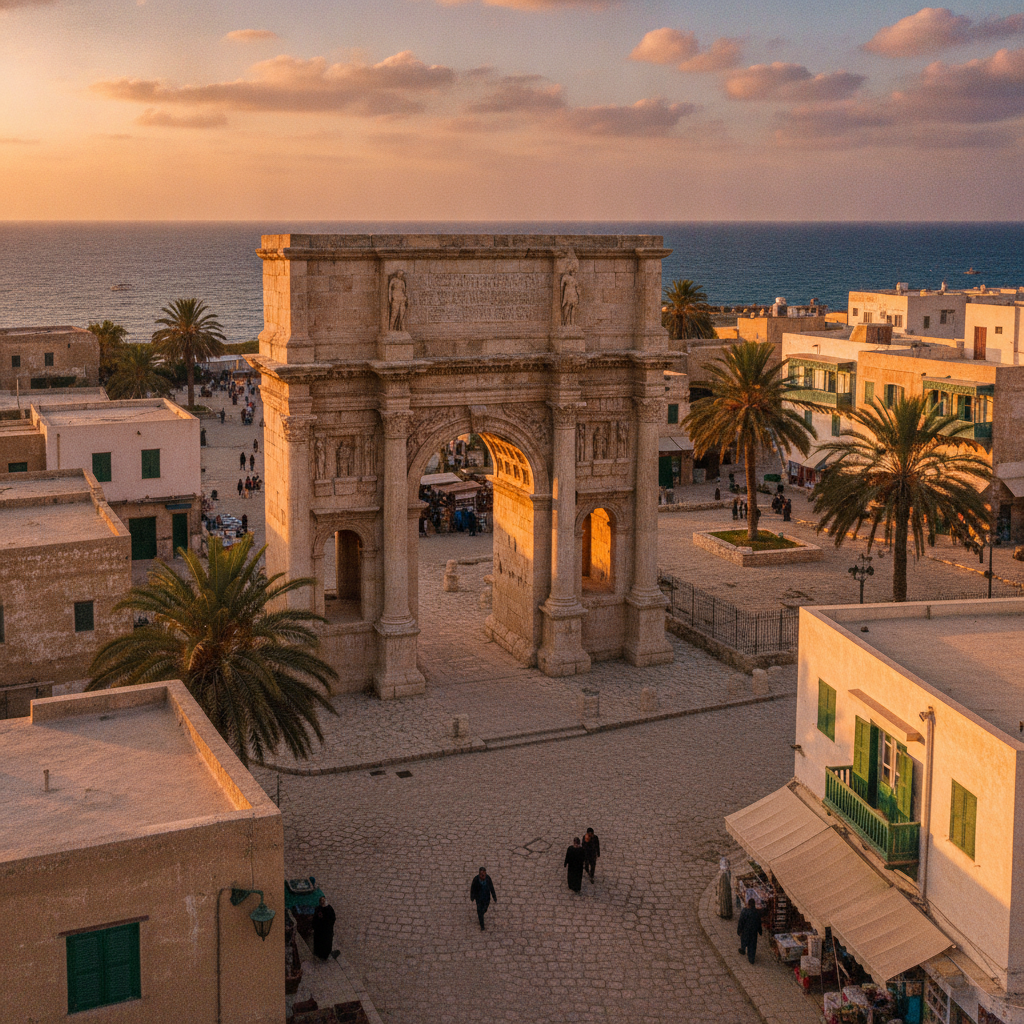
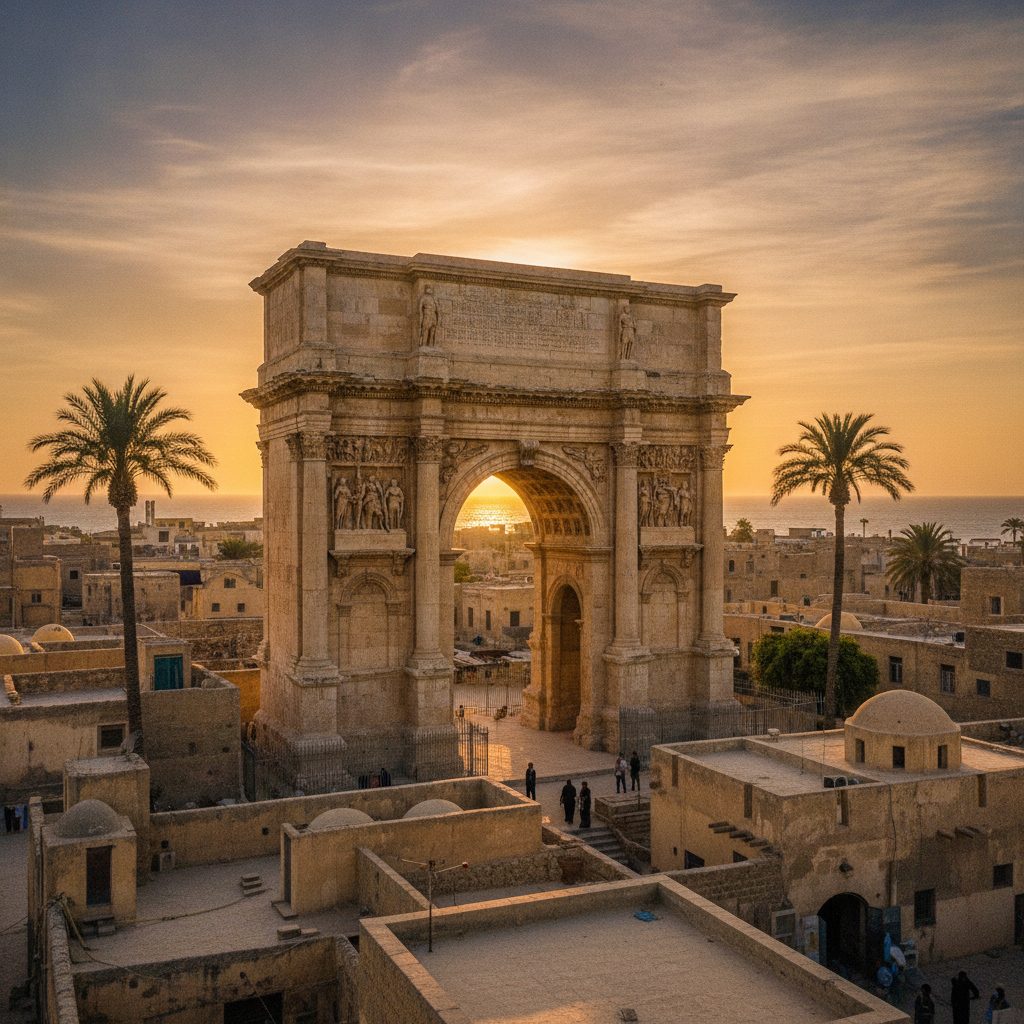
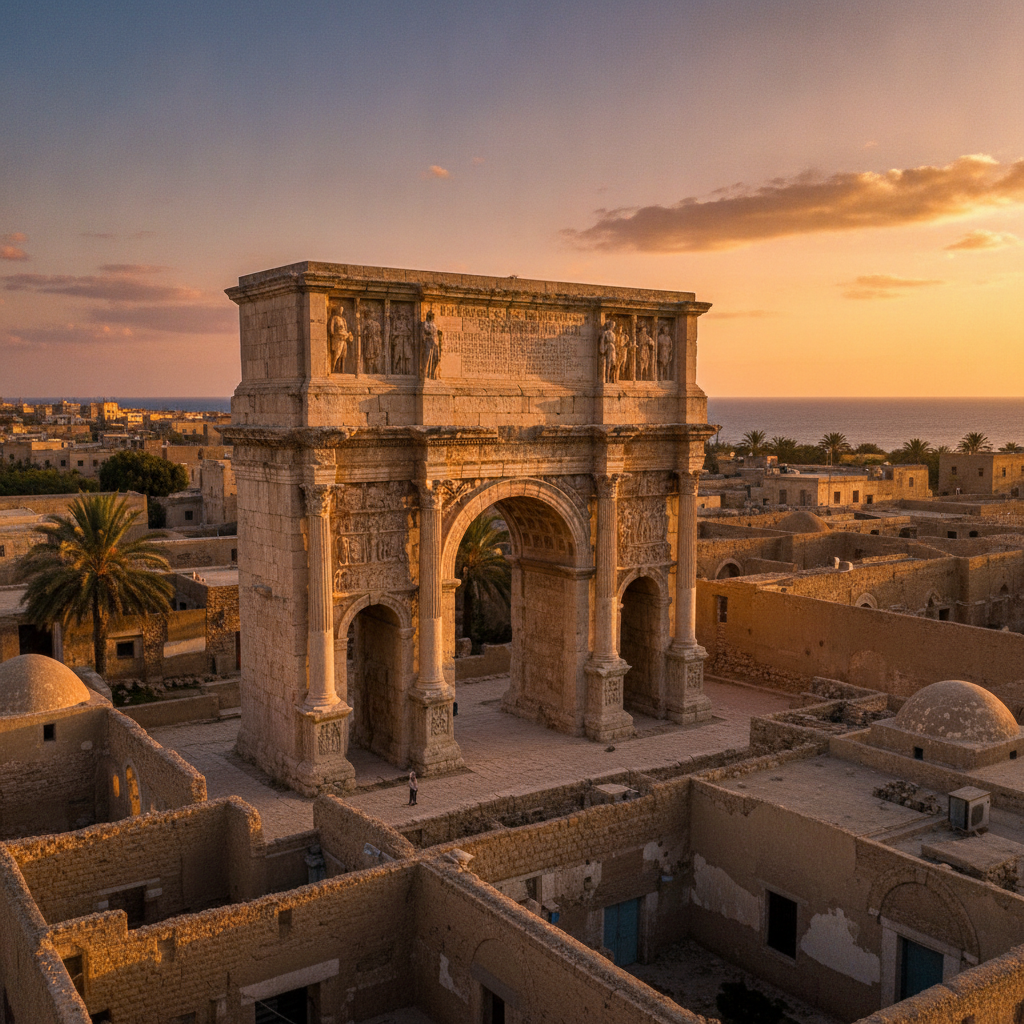
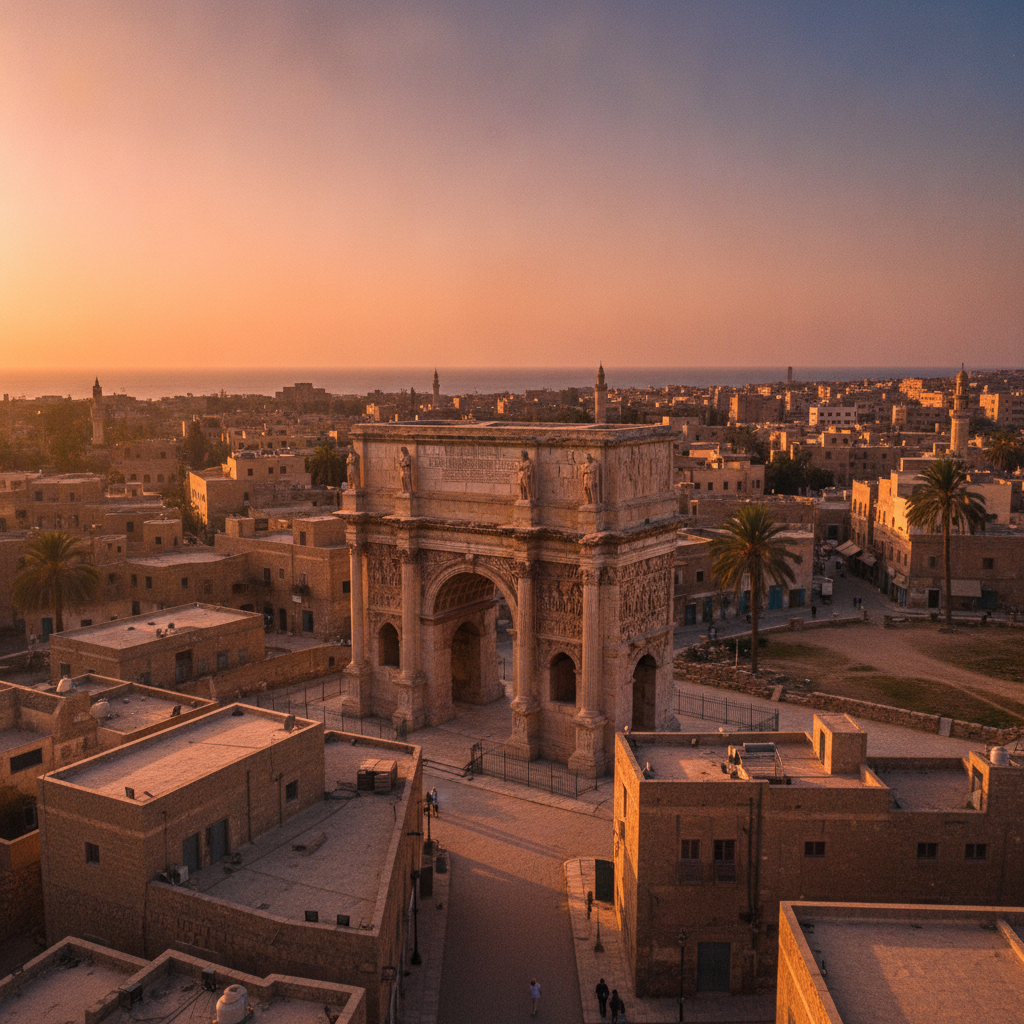
Tripoli legacy: the final assessment of Libya capital at the intersection of Mediterranean, Arab, African, and Saharan civilizations. The Roman legacy (Libya contains the finest concentration of Roman archaeological sites outside Italy: Leptis Magna and Sabratha are among the best-preserved large Roman cities in the world: the Roman mosaics, sculptures, and architectural remains are extraordinary). The Islamic legacy (the Tripoli medina, the Gurgi Mosque, the Karamanli palaces, and the Ghadames oasis city are outstanding examples of Ottoman and pre-Saharan Islamic architecture). The prehistoric legacy (the Tadrart Acacus and Wadi Mathendous rock art documents 12,000 years of human civilization in the Sahara including the Green Sahara period with hippos and crocodiles in what is now the world driest desert). The Amazigh legacy (the Nafusa Mountains Berber communities maintained their language and architectural traditions through centuries of Arab and Ottoman rule). The future (Libya has all elements for one of the world great heritage tourism destinations: 5 UNESCO World Heritage Sites, the finest Roman cities in Africa, Saharan prehistoric art, Mediterranean coastline, and extraordinary human history: the resolution of the political conflict is the single necessary condition for a cultural renaissance: the UNESCO sites at Leptis Magna and Sabratha are considered among the most endangered in the world and require urgent stabilization).
Walk this route with audio
Stories play automatically as you reach each stop — no tapping needed.
More in Tripoli
Tripoli: Cyrene, the Garamantes, Ghadames, and the Italian Colonization of Libya
Tripoli Complete Reference - Jamahiriya, Lockerbie, Roman Mosaics, and the Libyan Sahara
Tripoli Day Trips: Nafusa Mountains, Garian Underground Houses, Acacus Rock Art, and Practical Libya Guide
Tripoli: Cyrene, Benghazi, the Garamantes, Ghadames, and the Complete Libyan Heritage