Tucson: Birding in the Sky Islands, Hohokam Heritage, Chiricahua and the Apache Wars, Arts Scene, Desert Museum, and Economy
Tucson: sky island birding (50,000 birders/year USD 100M+ economic impact SE Arizona, junction four biomes Rocky Mountain Sierra Madrean Chihuahuan Sonoran creates unique overlap, Ramsey Canyon 14 hummingbird species most North America north of Mexico, San Pedro Riparian NCA 1988 300+ bird species most important migratory corridor SW, Madera Canyon Santa Ritas Elegant Trogon May-September), Hohokam (700-1450 CE 1,600km canal network most extensive pre-Columbian North America still visible from air, Cuk Son meaning base of black hill gave Tucson its name 2,200 years continuous habitation oldest inhabited US city, Arizona State Museum Hohokam ceramics shell jewelry Gulf of California 600km inland most extensive inland maritime trade, Tumamoc Hill 4,000 BCE to 1450 CE 2.4km trail summit finest Tucson basin view), Chiricahua (190km east 27sqkm rhyolite tuff 27M years 1,000+ formations 25m pinnacles 30cm pedestals, Apache Wars 1861-1886, Cochise born 1805 died 1874 Stronghold never defeated open battle, Geronimo 1829-1909 surrendered September 4 1886 Skeleton Canyon last armed resistance continental West, 429 Chiricahua prisoners to Florida Alabama Fort Sill died prisoner 1909 23 years after surrender), arts (Museum of Art 1924 Pre-Columbian Spanish Colonial collections, Tucson Symphony 1929 oldest performing arts Arizona, One Percent for Art 500+ permanent public works, Barrio Viejo murals David Tineo Mexican-American mural tradition), Arizona-Sonora Desert Museum (1952 21 acres 300 animals 1,200 plants 500,000 visitors/year, hummingbird enclosure 10+ species walk-through, raptor free-flight, mountain lion, river otters above below waterline, 50+ butterfly species April-October), economy (USD 45B GDP, UA 15,000 employees USD 760M research, Davis-Monthan AFB 8,000 military, Boneyard 309th AMARG 4,400 aircraft 1,100 hectares B-52 F-14 visible from flights, Raytheon 12,500 employees Tomahawk Sidewinder Patriot, Sun Corridor 6M people 13th largest US mega-region Maricopa 70,000/year 2015-2024).
- 1
Birding in the Sky Islands - One of the Great Birding Destinations in North America
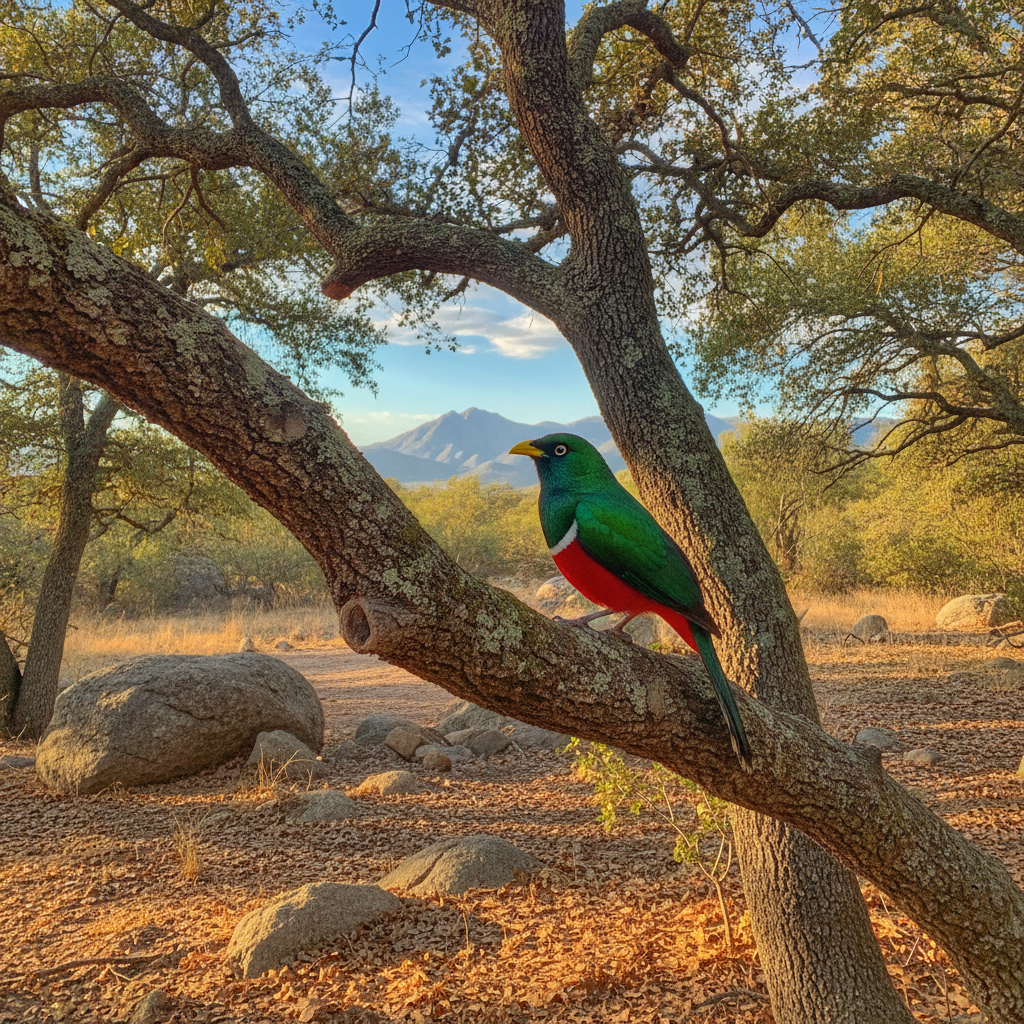
Southeastern Arizona birding: the sky islands of southeastern Arizona (the isolated mountain ranges rising from the desert basins of Cochise, Santa Cruz, and Pima Counties, including the Santa Ritas, the Huachucas, the Chiricahuas, the Whetstones, and the Rincons) form the premier birding destination in the continental United States for Mexican and tropical species, attracting approximately 50,000 bird watchers per year and generating an estimated USD 100M+ in annual economic impact for southeastern Arizona. The reason for the biodiversity: the sky islands create vertical zones of habitat (desert scrub, oak woodland, riparian canyon, pine forest, spruce-fir summit) compressed over 20-30 km of elevation gain, and their position at the junction of four major biogeographic regions (the Rocky Mountain, Sierra Madrean, Chihuahuan, and Sonoran Desert biomes) produces an overlap of species found nowhere else in the United States. The Ramsey Canyon Preserve (at 27 Ramsey Canyon Road, Hereford, AZ, in the Huachuca Mountains, 145 km southeast of Tucson, operated by The Nature Conservancy): the premier hummingbird viewing site in the United States, with 14 species of hummingbirds documented in a single canyon -- more hummingbird species than any other location in North America north of Mexico. The San Pedro Riparian National Conservation Area (at 1763 Paseo San Luis, Sierra Vista, AZ, 130 km southeast of Tucson, 93 km of the San Pedro River from the Mexico border to Benson, established 1988 as the first riparian national conservation area): the most important migratory bird corridor in the American Southwest, with 100+ species of breeding birds and 300+ species documented overall. The Madera Canyon (in the Santa Rita Mountains, 60 km south of Tucson, at 1,670 m): the most accessible birding canyon near Tucson, with the Elegant Trogon (one of the most sought-after birds by North American birders) present May-September.
- 2
The Hohokam - Ancestors of the Desert Southwest
The Hohokam culture (the agricultural civilization that inhabited the Sonoran Desert of southern Arizona from approximately 700 CE to 1450 CE, with archaeological evidence of their precursor culture, the Pioneer Period, dating to approximately 300 BCE): the pre-Columbian people who engineered the most extensive irrigation canal system in pre-Columbian North America, with over 1,600 km of canals in the Phoenix and Tucson areas -- canals that are still visible from the air and form the basis of the modern irrigation infrastructure of central Arizona. The Hohokam at Tucson: the Hohokam village of Cuk Son (the base of the black hill -- the meaning of the O'odham word that gave Tucson its name, referring to the dark basalt of Tumamoc Hill at the western edge of downtown Tucson) was established at the confluence of the Santa Cruz River and the Rillito Creek approximately 2,200 years ago and occupied continuously until approximately 1450-1500 CE -- making Tucson the oldest continuously inhabited city in the United States. The Arizona State Museum at the University of Arizona (at 1013 East University Boulevard): the most comprehensive collection of Hohokam ceramic art in the world, with the famous Salado polychrome ceramics, the Hohokam buff ware, and the carved shell jewelry (the Hohokam produced shell jewelry from Gulf of California species traded 600 km inland -- the most extensive maritime trade network of any inland pre-Columbian culture in North America). Tumamoc Hill (at 1675 West Anklam Road, Tucson, the 242-m basalt hill with an archaeological site of continuous occupation from 4,000 BCE to 1450 CE, now a research preserve of the Desert Laboratory of the University of Arizona): the most significant archaeological site in Tucson, with a 2.4-km paved trail to the summit offering the finest view of the Tucson Basin and all five surrounding mountain ranges.
- 3
Chiricahua National Monument and the Landscape of the Apache Wars
Chiricahua National Monument (at 12856 East Rhyolite Creek Road, Willcox, AZ, 190 km east of Tucson, established April 18, 1924): the monument protecting the extraordinary rock formation landscape of the Chiricahua Mountains -- 27 square km of balanced rocks, spires, and pinnacles formed by the erosion of the rhyolite tuff deposited by the Turkey Creek Volcano eruption 27 million years ago into a landscape of 1,000+ named formations, some exceeding 25 m in height and balanced on pedestals only 30 cm in diameter. The Apache Wars (1861-1886): the last and most prolonged conflict between the United States Army and a Native American nation, fought primarily in the Chiricahua Mountains and the surrounding desert ranges of southeastern Arizona and northwestern Mexico. Cochise (born approximately 1805, Chiricahua Mountains; died June 8, 1874, the Stronghold, Chiricahua Mountains): the chief of the Chiricahua Apache, one of the most capable military strategists in the history of the American West, who eluded the U.S. Army for a decade and was never defeated in open battle. Geronimo (Goyahkla, born June 16, 1829, near the Gila River, NM; died February 17, 1909, Fort Sill, Oklahoma): the last Apache war leader, whose final surrender to General Nelson Miles on September 4, 1886 at Skeleton Canyon (60 km southeast of the Chiricahua Mountains) ended the Apache Wars and the last armed resistance to United States expansion in the continental West. Geronimo and the surviving Chiricahua Apache (429 people) were loaded onto trains and transported as prisoners of war first to Florida, then to Alabama, and finally to Fort Sill, Oklahoma -- where Geronimo died in 1909, still a prisoner of war, 23 years after his surrender. The Cochise Stronghold (in the Dragoon Mountains, 80 km west of the Chiricahua Mountains): the natural fortress where Cochise and the Chiricahua Apache lived during their years of resistance.
- 4
Tucson Arts, Culture, and the Contemporary Creative Scene
Tucson as arts city: the University of Arizona, the borderlands location, and the low cost of living (Tucson is one of the most affordable cities in the American Southwest, with median home prices of approximately USD 350,000 in 2024 -- approximately half of Phoenix and less than 60% of the national median for comparable cities) have created a substantial arts community of approximately 5,000 working artists, musicians, and writers. The Tucson Museum of Art (at 140 North Main Avenue, downtown Tucson, established 1924): the largest art museum in southern Arizona, with collections of Pre-Columbian and Spanish Colonial art (the most complete collection in any Arizona institution), American Western art, and contemporary art, housed in a complex of historic downtown buildings including the Fish House (1867) and Corbett House (1906). The Tucson Symphony Orchestra (at 2175 North 6th Avenue, Tucson, established 1929): the oldest performing arts organization in Arizona, with a 39-week season at the Tucson Convention Center and touring performances throughout southern Arizona. The Tucson Pima Arts Council (the primary arts advocacy and granting organization for Pima County): the agency that distributes approximately USD 3M per year in public arts funding and manages the One Percent for Art program (the city ordinance requiring that 1% of city construction budgets be allocated to public art, resulting in over 500 permanent public artworks throughout Tucson). The murals of Barrio Viejo and South Tucson: the Mexican-American mural tradition in Tucson (particularly the work of muralist David Tineo and the Barrio Libre mural projects of the 1970s-80s) produced one of the largest concentrations of outdoor murals in the American Southwest, with major works on the walls of South 6th Avenue, the underpass at Broadway and Euclid, and throughout the Barrio Viejo neighborhood. The Tucson Fringe Festival (held annually in March): the 40+ performances by local, regional, and national artists in non-traditional venues throughout downtown Tucson.
- 5
The Arizona-Sonora Desert Museum and Wildlife of the Sonoran Desert
The Arizona-Sonora Desert Museum (at 2021 North Kinney Road, Tucson, adjacent to Saguaro National Park West, established March 17, 1952 by William Carr and Arthur Pack, the 21-acre open-air living museum): consistently rated among the top 10 zoos in the United States, the most visited attraction in the Tucson area with approximately 500,000 visitors per year, and the institution that pioneered the concept of the living museum (combining a zoo, botanical garden, aquarium, and natural history museum in a single walk-through landscape). The collection: 300 animal species and 1,200 plant species of the Sonoran Desert and its associated sky island mountain environments, presented without cages in naturalistic habitat enclosures -- visitors walk through the same desert landscape inhabited by the animals. The signature exhibits: the hummingbird enclosure (the walk-through aviary with 10+ species of Sonoran Desert hummingbirds flying freely around visitors), the raptor free-flight demonstration (trained hawks and owls flying within arm's reach of the outdoor amphitheater audience), the mountain lion exhibit (in a habitat enclosure replicating the rocky mountain terrain of the Santa Ritas), and the Riparian Corridor (the walk-through tank where river otters, beavers, and riparian fish can be observed above and below the waterline). The night creatures display: the nocturnal animal gallery presenting the bat, owl, scorpion, tarantula, and insect life of the Sonoran Desert in simulated nighttime conditions. The butterfly garden: open April through October, with 50+ species of free-flying butterflies in a garden planted specifically to provide food plants for the caterpillars and nectar for the adults of the Sonoran Desert butterfly community.
- 6
Tucson Economy, Population, and the Arizona Sun Corridor
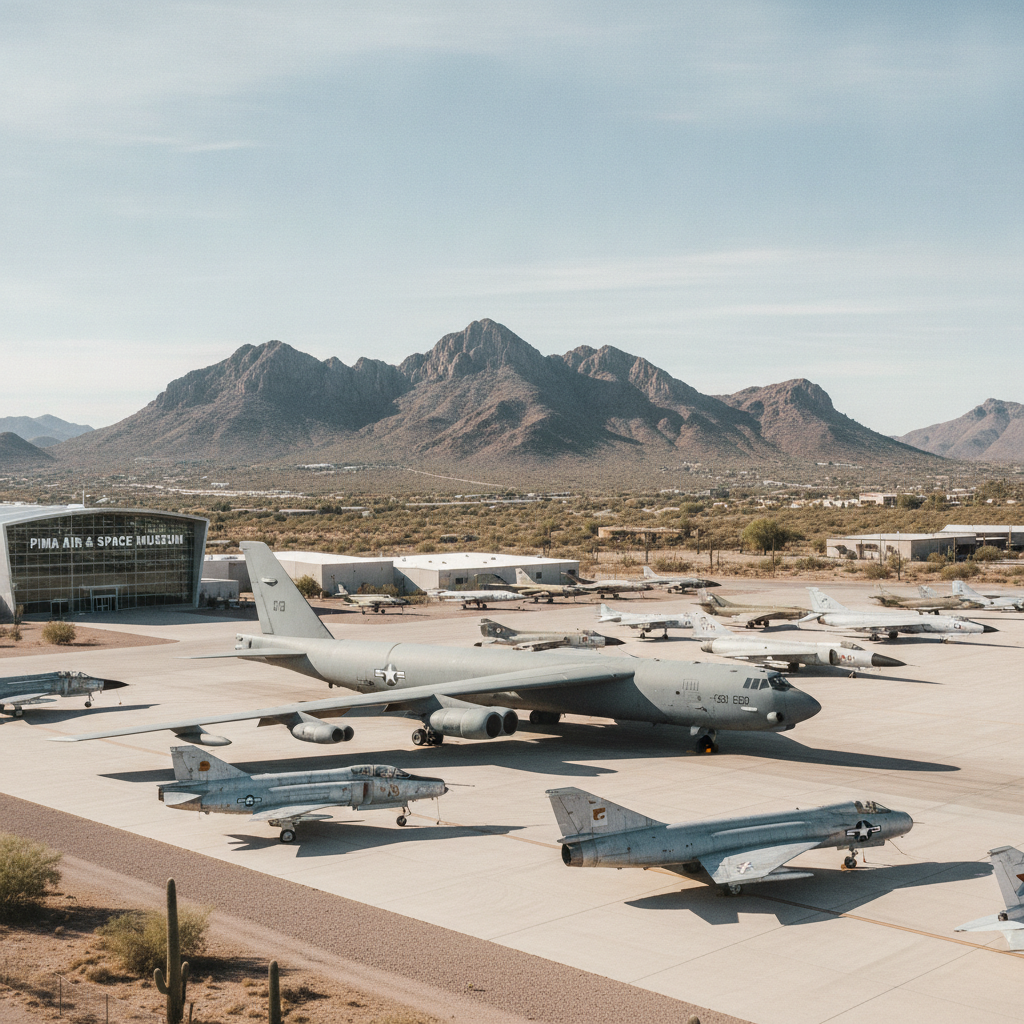
Tucson's economy: the city economy of Tucson (approximately USD 45B GDP for the Tucson metropolitan area in 2023) is anchored by the University of Arizona (the largest single employer, with 15,000 employees and USD 760M in annual research expenditures), the military (Davis-Monthan Air Force Base at 3600 East Rushy Street, Tucson, with 8,000 military and 3,500 civilian personnel, the home of the 355th Wing and the Air Force Materiel Command's aerospace maintenance and regeneration facility -- the famous Boneyard, the largest aircraft storage facility in the world with approximately 4,400 aircraft in various states of preservation or parts recovery covering 1,100 hectares of Sonoran Desert). The Boneyard (officially the 309th Aerospace Maintenance and Regeneration Group at Davis-Monthan AFB): the aircraft storage facility where the U.S. military stores retired aircraft in the dry desert air (which prevents corrosion), including B-52 Stratofortresses, F-4 Phantoms, F-14 Tomcats, A-10 Thunderbolts, C-130 Hercules transports, and hundreds of other military aircraft in 16 km of parked rows -- the aircraft graveyard visible from commercial airline flights into Tucson. The Raytheon Missiles and Defense facility (at 1151 East Hermans Road, Tucson, the largest employer in Tucson among private-sector employers): the defense contractor manufacturing the Tomahawk cruise missile, the Sidewinder air-to-air missile, and the Patriot missile system in Tucson, employing approximately 12,500 people. The Sun Corridor (the mega-region of Arizona connecting Tucson, Phoenix, and Prescott, covering approximately 53,000 square km and home to approximately 6 million people): the 13th-largest metropolitan mega-region in the United States and one of the fastest-growing, with Maricopa County (Phoenix metro) adding approximately 70,000 residents per year in the 2015-2024 period.
Walk this route with audio
Stories play automatically as you reach each stop — no tapping needed.
More in tucson
Tucson: Titan Missile Museum, Dark Skies, Hotel Congress, Neighborhoods, Kartchner Caverns, and Practical Info
Tucson: Mount Lemmon, Tombstone, Colossal Cave, the Border at Nogales, Bisbee, and the Desert Monsoon
Tucson: UNESCO Food Heritage, Cold War Missiles and Sky Island Summits
Tucson: Saguaro National Park, University of Arizona, Tohono O'odham Nation, San Xavier Mission, Biosphere 2, and Sonoran Food
Tucson: Giant Cactus Wilderness, Desert Science and Sonoran Heritage