Tucson: Giant Cactus Wilderness, Desert Science and Sonoran Heritage
Hike among 150-year-old saguaro giants in the national park, meet mountain lions at the Arizona-Sonora Desert Museum, look through telescopes on Kitt Peak, visit the White Dove of the Desert mission church, explore the Biosphere 2 sealed ecosystem experiment, and learn the Tohono O odham saguaro wine ceremony that marks the desert new year.
- 1
Saguaro National Park
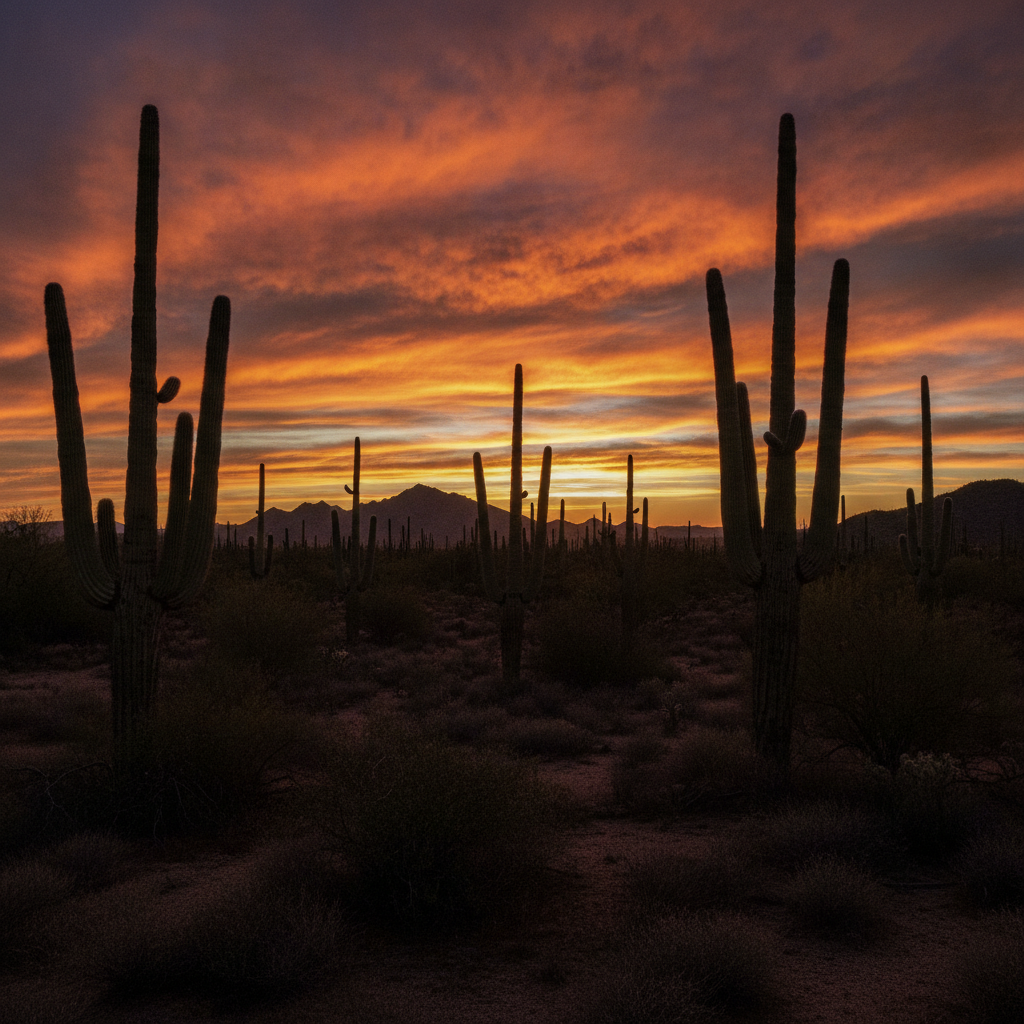
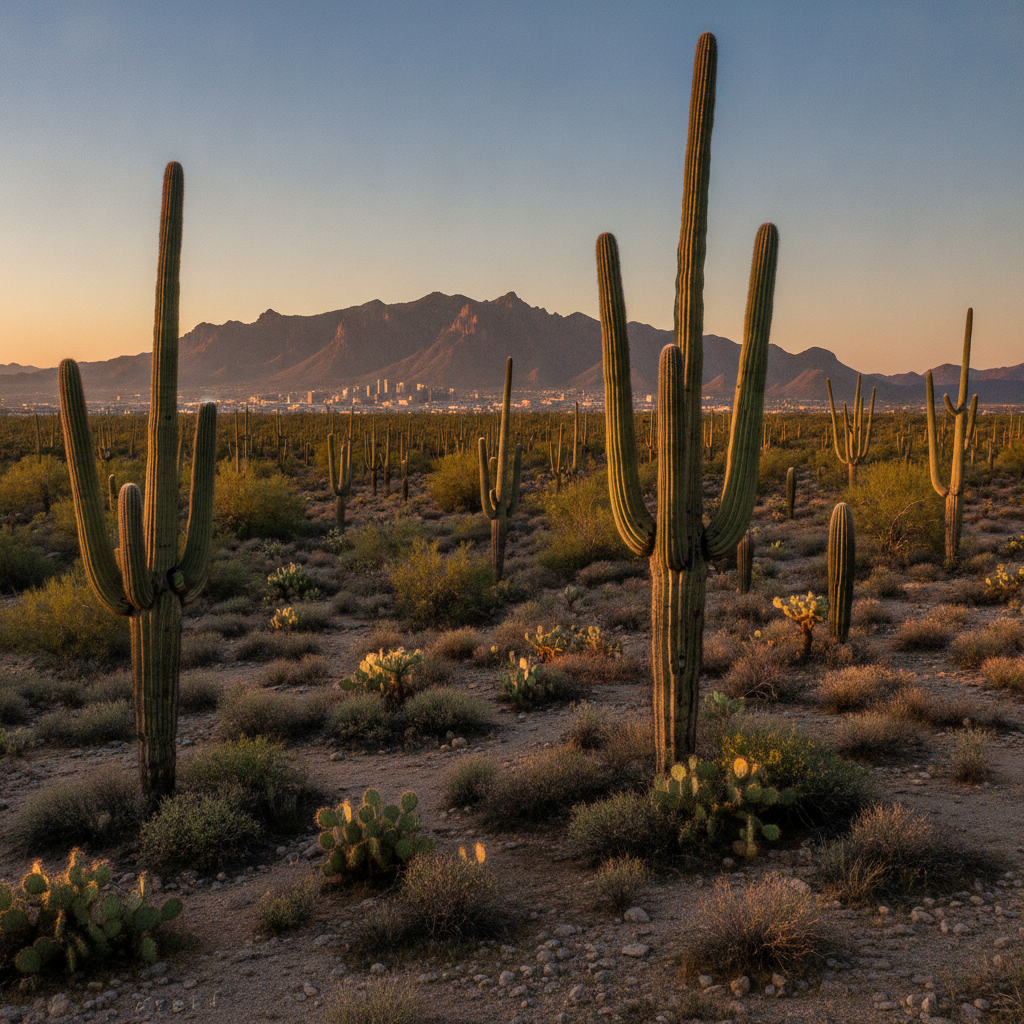
Saguaro National Park, divided into two districts flanking Tucson, protects the largest remaining stands of saguaro cactus, the iconic columnar cactus that grows only in the Sonoran Desert. The western Tucson Mountain District covers 24,000 acres and the eastern Rincon Mountain District covers 67,000 acres of Rincon Mountain Wilderness. Saguaro can live over 150 years, reach 40 feet in height, and weigh 4,800 pounds when fully hydrated. The cactus does not begin to grow its first arm until age 75. The park was established as a national monument in 1933 and redesignated a national park in 1994. The Cactus Forest Loop Drive in the eastern district passes through dense saguaro stands. Gila woodpeckers and gilded flickers excavate nest holes in saguaro trunks; elf owls, the smallest owls in the world, use abandoned holes.
- 2
Arizona-Sonora Desert Museum
The Arizona-Sonora Desert Museum, on the western edge of Tucson near the Tucson Mountain District of Saguaro National Park, is considered one of the best zoos in the United States despite calling itself a museum. The 98-acre outdoor facility integrates a zoo, botanical garden, art gallery, and natural history museum in a single environment where over 230 animal species and 1,200 plant species native to the Sonoran Desert bioregion are displayed in naturalistic habitats. Mountain lions, black bears, Mexican wolves, ocelots, and jaguarundis are among the resident mammals. The raptor free-flight demonstration, held twice daily, features Harris hawks and other desert raptors flying over the audience at close range. The museum has operated since 1952 and receives over 500,000 visitors annually.
- 3
University of Arizona and Optical Astronomy
The University of Arizona, founded in 1885 and the oldest university in Arizona, enrolls over 47,000 students and is particularly renowned for its optical and infrared astronomy programs. The Steward Observatory at Kitt Peak National Observatory, 55 miles southwest of Tucson at 6,875 feet elevation, operates telescopes at one of the premier dark-sky observing sites in North America. The UA Mirror Laboratory beneath the university football stadium fabricates the world largest telescope mirrors using a spin-casting technique developed by Roger Angel. The 25-meter Giant Magellan Telescope under construction in Chile will use seven mirrors made in Tucson. The Flandrau Science Center and Planetarium on campus offers public telescope viewing on clear evenings. UA research programs in planetary science, remote sensing, and dendrochronology have made it a leading earth and space science institution.
- 4
Mission San Xavier del Bac
Mission San Xavier del Bac, 9 miles south of downtown Tucson on the Tohono O odham San Xavier reservation, was founded by Jesuit missionary Eusebio Francisco Kino in 1692 and rebuilt in its current Spanish Baroque form by Franciscans between 1783 and 1797. The white stucco church with two towers, one completed and one historically left unfinished possibly due to a tax exemption on unfinished buildings, is one of the finest examples of Spanish Colonial architecture in the United States and has been called the White Dove of the Desert. The interior contains elaborate polychrome plasterwork, carved wooden altarpieces, and murals painted in the late 18th century by indigenous artisans under Franciscan direction. The mission remains an active parish of the Tohono O odham Nation.
- 5
Biosphere 2
Biosphere 2, located 30 miles north of Tucson near Oracle, is a 3.14-acre sealed structure built between 1987 and 1991 by Space Biospheres Ventures at a cost of 200 million dollars to study closed ecological systems. Eight crew members called biospherians lived inside from 1991 to 1993 in the first mission, growing their own food and recycling all air and water. The experiment encountered serious problems including oxygen depletion, species loss, and crew conflict. The University of Arizona has operated the facility as a research campus since 2011, using it for climate change and ecological research including studies of how different biomes respond to elevated CO2 and temperature. The structure contains a tropical rainforest, ocean with a coral reef, mangrove wetlands, savannah, desert, and agricultural zone, all under a glass enclosure.
- 6
Tohono O odham Nation and Sonoran Culture
The Tohono O odham Nation, whose traditional territory spans the Sonoran Desert on both sides of the US-Mexico border, is one of the largest Native American nations by land area with a reservation of 2.8 million acres, the second largest in the United States. The Tohono O odham people have lived in the Sonoran Desert for at least 4,000 years and maintain traditional practices including the harvesting of saguaro fruit each June, which marks the beginning of the Tohono O odham new year. The saguaro wine ceremony uses fermented cactus fruit to pray for rain in the desert monsoon season. The Tohono O odham Nation Cultural Center and Museum in Topawa, on the reservation south of Tucson, interprets the nation history and maintains collections of traditional basketry and cultural objects. The nation operates the Desert Diamond Casino near Tucson.
Walk this route with audio
Stories play automatically as you reach each stop — no tapping needed.
More in Tucson
Tucson: Titan Missile Museum, Dark Skies, Hotel Congress, Neighborhoods, Kartchner Caverns, and Practical Info
Tucson: Mount Lemmon, Tombstone, Colossal Cave, the Border at Nogales, Bisbee, and the Desert Monsoon
Tucson: UNESCO Food Heritage, Cold War Missiles and Sky Island Summits
Tucson: Saguaro National Park, University of Arizona, Tohono O'odham Nation, San Xavier Mission, Biosphere 2, and Sonoran Food
Tucson: Adobe Neighborhoods, Mission Ruins and 3,400 Stored Aircraft