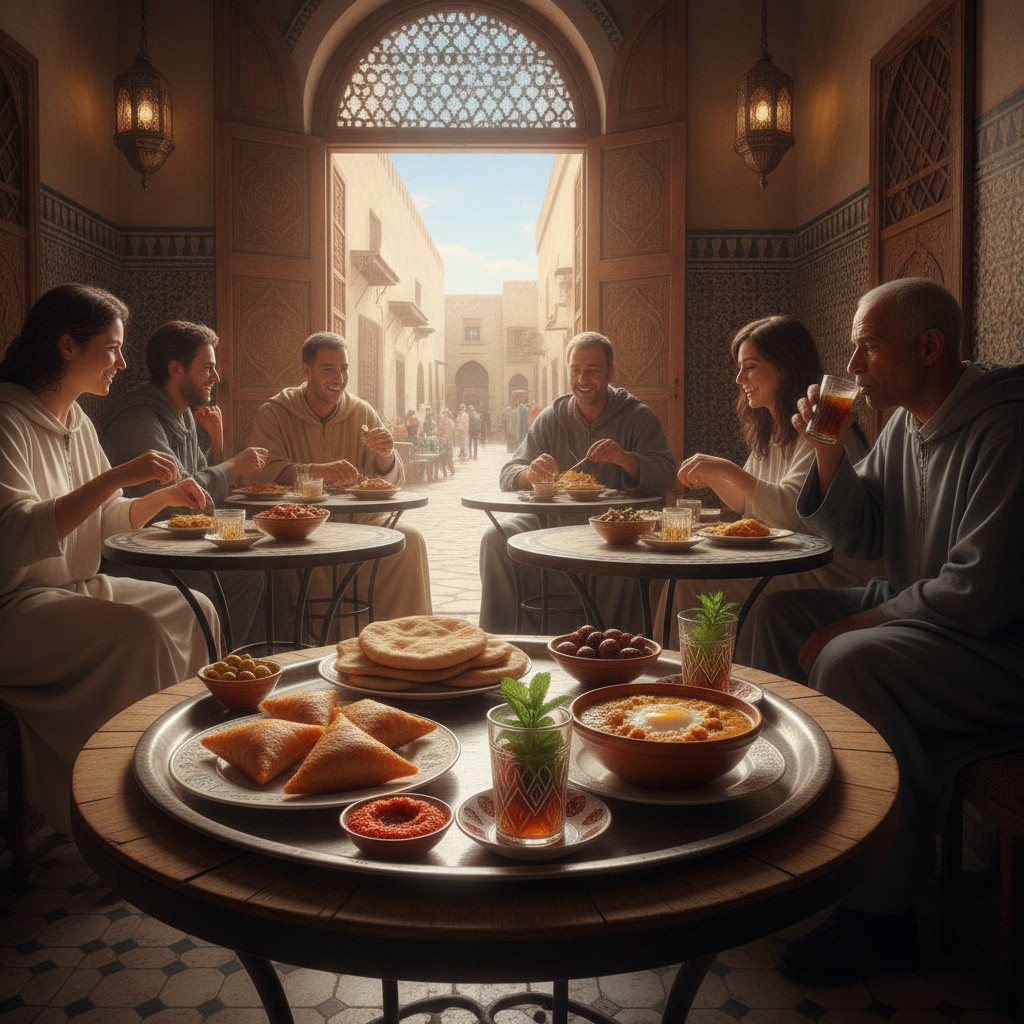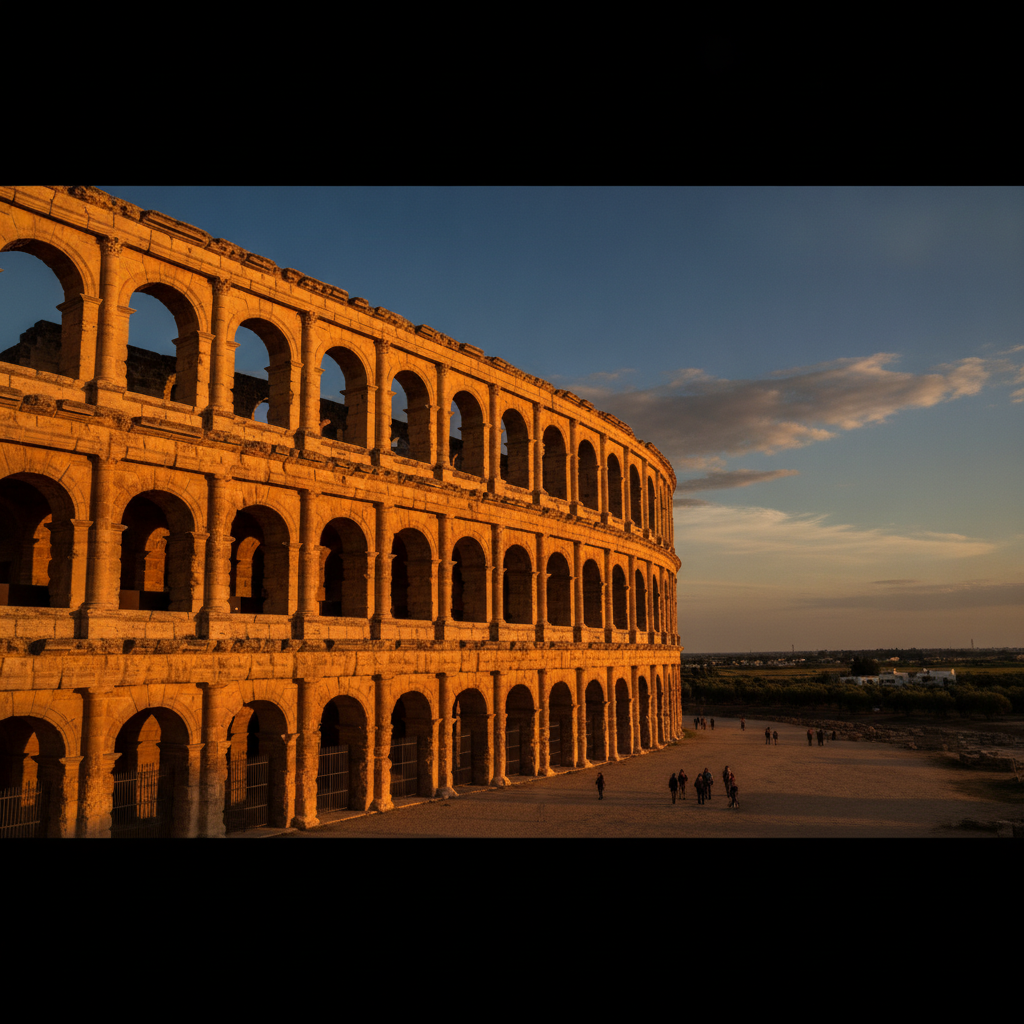
Hannibal's Battle of Cannae (216 BCE) Killed 45,000-70,000 Romans in a Single Day Using the Double-Envelopment Maneuver Still Taught at Military Academies Worldwide; the El Djem Amphitheatre (238 CE) Was Built Without Mortar With Stone Quarried 30km Away; Roman Africa Supplied 35-40% of All Olive Oil Consumed in Rome and Tunisia Remains the Third Largest Olive Oil Exporter After Spain and Italy
Hannibal's Battle of Cannae (216 BCE) killing 45,000-70,000 Romans using the double-envelopment still taught at military academies; the El Djem amphitheatre built without mortar with stone transported 30km; Roman Africa Proconsularis supplying 35-40% of Rome's olive oil; Tunisia remaining the world's third largest olive oil exporter; the Moriscos expelled from Spain in 1609 bringing Andalusian music (Maluf) to Tunisia; and the Tunisia vs Morocco comparison on politics, medinas, Sahara access, and cuisine.
- 1
The Berbers – Indigenous North Africans and the Amazigh Cultural Revival
The Berbers (Amazigh — plural: Imazighen) — the indigenous people of North Africa whose culture predates the Arab-Islamic conquest by thousands of years and whose language (Tamazight) is experiencing a contemporary revival: the cultural guide. The identity (the Imazighen (free people — Berber: probably derived from the Latin barbari (barbarians) or from the Greek barbaroi): the Imazighen are the indigenous people of North Africa from the Atlantic coast of Morocco to the western Egyptian oases: they have lived in North Africa for at least 10,000 years: the language (the Tamazight language (Berber language) is a branch of the Afroasiatic language family: a language family that includes Arabic, Hebrew, Amharic, and Hausa: Tamazight has a distinctive writing system (Tifinagh script) used continuously since at least 600 BCE: the Tifinagh script is still used today by the Tuareg nomads of the Sahara and has been officially adopted by Morocco for Berber-language education: the Tunisian Amazigh community (the Amazigh cultural identity in Tunisia: the Tunisian Berbers are primarily concentrated in the south (the Berber-speaking areas of the Matmata Mountains, the Dahar Plateau, and the island of Djerba) and the north (the Khroumirie Mountains): the 2011 revolution opened space for Amazigh cultural associations to form legally for the first time: the Amazigh cultural renewal (post-2011 Tunisia saw the formation of multiple Amazigh cultural organizations demanding official recognition of the Berber language and heritage: the Tifinagh script revival: the traditional Berber crafts (the Berber tattooing tradition (women's facial and body tattoos — now largely practiced only by older women): the traditional Berber weaving (kilim carpets with geometric patterns distinct from the Arab floral tradition): the mergoum (the Berber-style flat-woven rug with geometric diamond patterns — a UNESCO-recognized traditional craft): the Djerba connection (the island of Djerba in southern Tunisia has a significant Amazigh identity and the oldest Jewish community in North Africa (the El Ghriba synagogue — legendary founding date 586 BCE after the destruction of Solomon's Temple).
- 2
Hannibal Barca – The Greatest Military Genius of the Ancient World?
Hannibal Barca (247-183 BCE) — the Carthaginian general who almost destroyed the Roman Republic and who military historians consistently rank among the greatest commanders in history: the biography guide. The early life (Hannibal Barca (Punic: Hann Baal — Baal is Gracious) was born in Carthage approximately 247 BCE to Hamilcar Barca (the Carthaginian general who commanded the Sicilian theater in the First Punic War): the name Barca (lightning bolt in Punic) was the family military epithet: Hannibal's father took him to Spain at age 9 and made him swear eternal enmity to Rome on a sacrificial altar — the legend of Hannibal's oath has been debated by historians: the Second Punic War (the Second Punic War (218-201 BCE) began when Hannibal besieged and captured the city of Saguntum (a Roman ally in Spain): Hannibal then led his army from Spain across southern Gaul and the Alps to invade Italy directly: the Alpine crossing (the Alpine crossing (autumn 218 BCE) — one of the most celebrated military maneuvers in history: Hannibal began with approximately 50,000 infantry, 9,000 cavalry, and 37 war elephants: the Alpine crossing (approximately 15 days through snow and ice) cost him approximately 15,000 men and most of his elephants: the Italian victories (Hannibal won three devastating victories in Italy: the Battle of Trebia (December 218 BCE): the Battle of Lake Trasimene (217 BCE — the largest ambush in military history: 30,000 Romans killed in 3 hours): the Battle of Cannae (216 BCE — the most studied battle in military history: 45,000-70,000 Romans killed in a single day using a double-envelopment maneuver that is still taught at military academies worldwide: the defeat (Hannibal was recalled to Africa after 15 years in Italy: the Battle of Zama (202 BCE — the Roman general Scipio Africanus defeated Hannibal using the same double-envelopment that Hannibal had used at Cannae).
- 3
The Ottoman Husainids and Tunisian Cultural Identity
The Husainid dynasty (1705-1957) — the Ottoman-origin ruling house of Tunisia that developed a distinct Tunisian cultural identity separate from the Ottoman mainstream and whose cultural patronage shaped modern Tunis: the dynasty guide. The founding (the Husainid dynasty was founded by Husain ibn Ali al-Turki (a janissary officer of Greek-Cretan origin who had risen through the Ottoman military) in 1705: the Husainid Beys (Bey — from Turkish bey: regional governor) ruled Tunisia as semi-autonomous vassals of the Ottoman Empire: they maintained formal Ottoman suzerainty but had effective independence in domestic affairs: the cultural contribution (the Husainid court at Tunis developed a sophisticated synthesis of Ottoman, Andalusian, and Arab Maghrebi cultural elements that is the foundation of modern Tunisian high culture: the music (the Tunisian Maluf — the classical music tradition derived from the Andalusian muwashshah poetry and music brought to Tunisia by Moorish refugees expelled from Spain in 1609 (the expulsion of the Moriscos): the Maluf is the primary classical music tradition of Tunisia: the architecture (the Husainid architectural legacy in Tunis: the Dar Hussein Palace (18th century — now the Institut National du Patrimoine): the Dar Ben Abdallah Palace (18th century — now the Museum of the City of Tunis): the numerous Hussainid zawiyas (Sufi lodges) and maqams (shrines) throughout the medina: the Maluf revival (the Baron d'Erlanger of Sidi Bou Said (the French-Tunisian musicologist who enforced the blue-and-white color code in Sidi Bou Said) organized the Congress of Arab Music in Cairo in 1932 and produced the first systematic notation of the Tunisian Maluf: the Congress remains a foundational document for Arab classical music scholarship).
- 4
Tunisia and Europe – Migration, History, and the Mediterranean
Tunisia and Europe — the relationship between Tunisia and southern Europe (particularly Italy) across 2,700 years of Phoenician, Roman, Arab, Ottoman, French, and contemporary migration: the geopolitical and historical guide. The ancient connection (the strait of Sicily between Tunisia and Italy is only 148 km wide — the narrowest point of the central Mediterranean: this narrow strait has been a crossing for peoples, goods, and armies for at least 3,000 years: the Phoenician commercial networks connected Carthage (Tunisia) to Utica, Sardinia, Corsica, Sicily, Malta, and the Italian peninsula: the Arab-Sicilian period (the Aghlabids of Kairouan conquered Sicily in 827-902 CE: Arab rule of Sicily lasted until the Norman conquest (1072 CE) introduced Arabic words (many via Sicilian) into Italian (e.g. the Italian word zucchero (sugar) from Arabic sukkar): the French Protectorate (the French Protectorate over Tunisia (1881-1956) was established after France occupied Tunisia in response to Tunisian tribal raids into Algeria: at the peak of French colonization approximately 250,000 Europeans lived in Tunisia (primarily French and Italian): the Italian community in Tunisia (the Italian community in pre-independence Tunisia was the largest Italian immigrant community in Africa: approximately 100,000 Italians lived in Tunisia in the early 20th century: the contemporary migration (contemporary Tunisia is the primary departure point for sub-Saharan African migrants and Tunisian economic migrants crossing the Mediterranean to Italy: the crossing from the Tunisian coast (particularly from the area near Sfax) to the Italian island of Lampedusa (113 km away) is the most dangerous migration route in the world: more than 28,000 people died crossing this route between 2000 and 2023).
- 5
El Djem Amphitheatre and the Olive Oil Economy of Roman Africa
El Djem (Thysdrus) — 240 km south of Tunis: the site of the third largest Roman amphitheatre ever built and the primary monument of Roman Africa's extraordinary prosperity: the archaeological guide. The amphitheatre (the Roman amphitheatre of El Djem (Thysdrus) — built approximately 238 CE: the third largest Roman amphitheatre in the world (after the Colosseum in Rome and the Amphitheatre of Capua): maximum dimensions: 149m x 124m (external): capacity: approximately 35,000 spectators: the building (the amphitheatre is built entirely of stone (without mortar) in a region with no bedrock — all the stone was quarried at Henchir Mzarou 30 km away and transported: the preservation (the El Djem amphitheatre is better preserved than the Colosseum in many respects — the outer wall is almost complete on one side and the underground passages (the hypogeum — the network of passages beneath the arena floor where gladiators, animals, and equipment were held) are accessible to visitors: the UNESCO inscription (El Djem UNESCO World Heritage Site 1979): the olive oil economy (the prosperity of Thysdrus and the entire Roman province of Africa Proconsularis was built on olive oil production: the province of Africa Proconsularis supplied approximately 35-40% of all the olive oil consumed in Rome by the 2nd century CE: the olive oil was produced in an estimated 5,000-8,000 olive oil presses distributed across the province: the Numidian-Roman olive press technology (the lever press and the screw press) was more efficient than any olive oil production technology until the industrial revolution: the continuity (Tunisia remains one of the world's largest olive oil producers: approximately 1.7 million hectares of olive groves covering approximately 30% of Tunisia's agricultural land: the Tunisian olive oil industry exports approximately 250,000-300,000 tonnes per year: third largest exporter in the world after Spain and Italy).
- 6
Tunisia vs Morocco – The Two Faces of the Maghreb
Tunisia and Morocco comparison (the two most visited countries in North Africa — their similarities as former French protectorates with strong Islamic-Arabic-Berber cultural traditions and their differences in political trajectory, architecture, and tourism character): the comparative guide. The political comparison (Morocco: constitutional monarchy under King Mohammed VI: stable political system with limited political reform: the monarchy retains real executive power: Tunisia: the most turbulent North African political trajectory since 2011: the Jasmine Revolution (2011 — first Arab Spring): the democratic transition: the Nobel Peace Prize (2015): the 2021 democratic reversal under President Kais Saied: Morocco has been more politically stable but less democratically advanced than post-revolution Tunisia: the medina comparison (both countries have UNESCO-listed historic medinas: the Tunis Medina is generally less touristically commercialized than the Fez and Marrakech medinas in Morocco: the Tunis Medina is easier to navigate and less subject to hard-sell pressure from merchants: the Fez Medina (UNESCO) is larger, more labyrinthine, and more visually spectacular (particularly the Chouara tannery): the Marrakech Medina and Djemaa el-Fna square are more festive and tourist-oriented: the desert comparison (both countries offer Sahara desert tourism: the Tunisian Sahara (Douz, Matmata, Ksar Ghilane) is more easily accessible from a single base city (Tunis): the Moroccan desert (Merzouga, Erg Chebbi) is further from the cities but offers the more visually spectacular sand dune landscapes: the coast (both countries have excellent Mediterranean and Atlantic coastlines: Tunisia's coast (Hammamet, Djerba, Sousse): Morocco's Atlantic coast (Essaouira, Agadir): the coast architecture (the Tunisian coastal resort towns are more mass-market European package tourism oriented: the Moroccan coastal medina towns (Essaouira, Asilah) are more architecturally distinctive: the food (Tunisian food is spicier (harissa): Moroccan food is more aromatic (ras el hanout spice mixture, preserved lemons, argan oil): both cuisines are exceptional).
Walk this route with audio
Stories play automatically as you reach each stop — no tapping needed.
More in Tunis
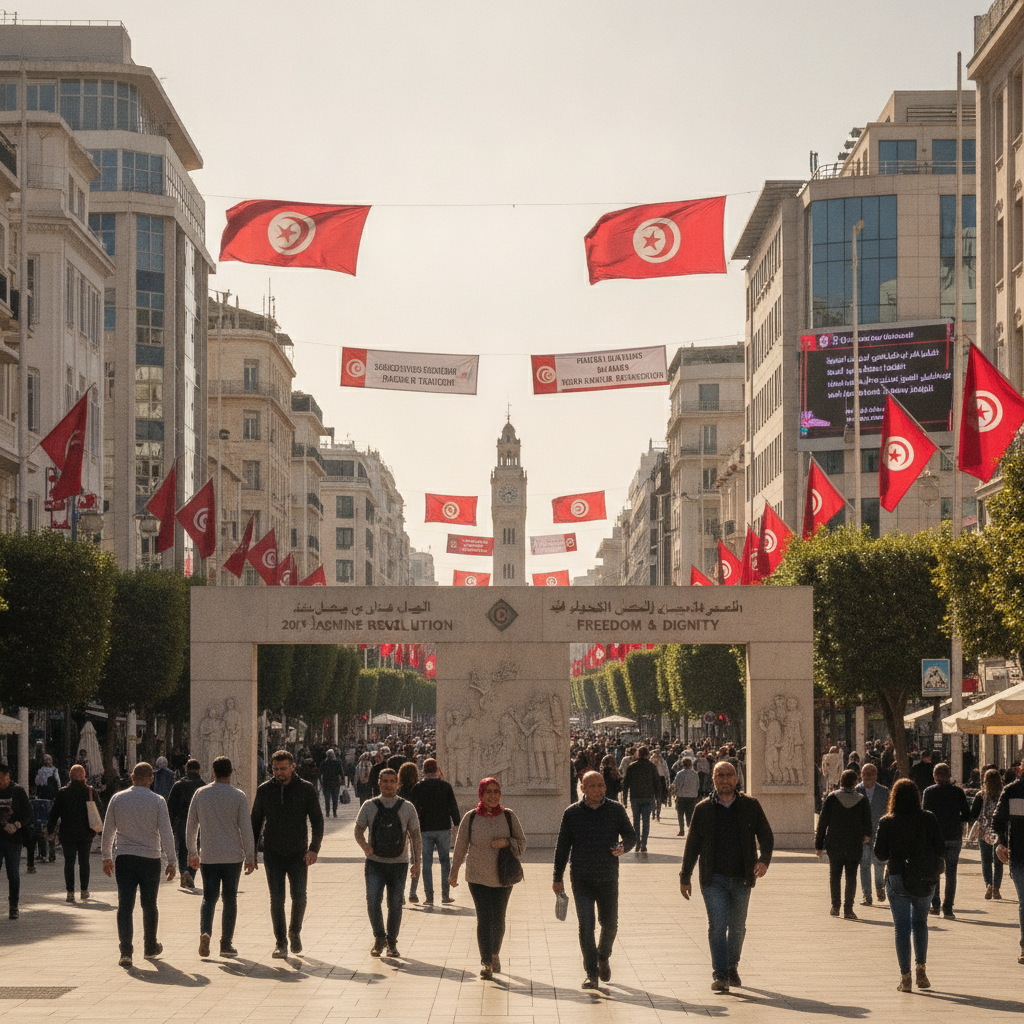
Tunis Modern History: The Arab Spring Jasmine Revolution, the Ben Ali Regime, the Bourguiba Legacy, the Transitional Democracy, and Contemporary Tunisia
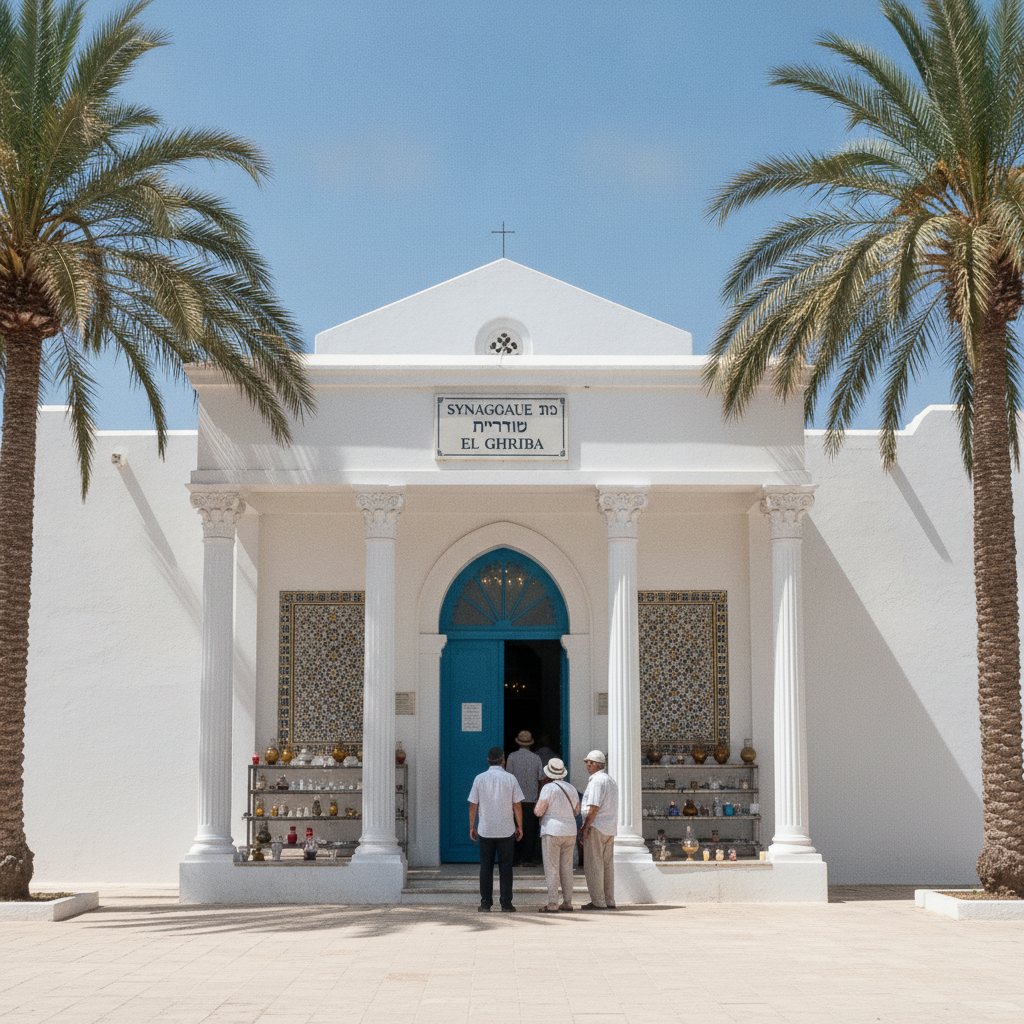
Mohammed Bouazizi Set Himself on Fire on December 17, 2010 and Ben Ali Fled Tunisia 28 Days Later Triggering Arab Spring Revolutions Across 6 Countries; El Ghriba Synagogue on Djerba Has a Legendary Founding Date of 586 BCE Making It the Oldest Synagogue in Africa; the Tunisian Rapper El General's Track Rayes Lebled Criticizing Ben Ali Became the Anthem of the Revolution After Going Viral on Facebook
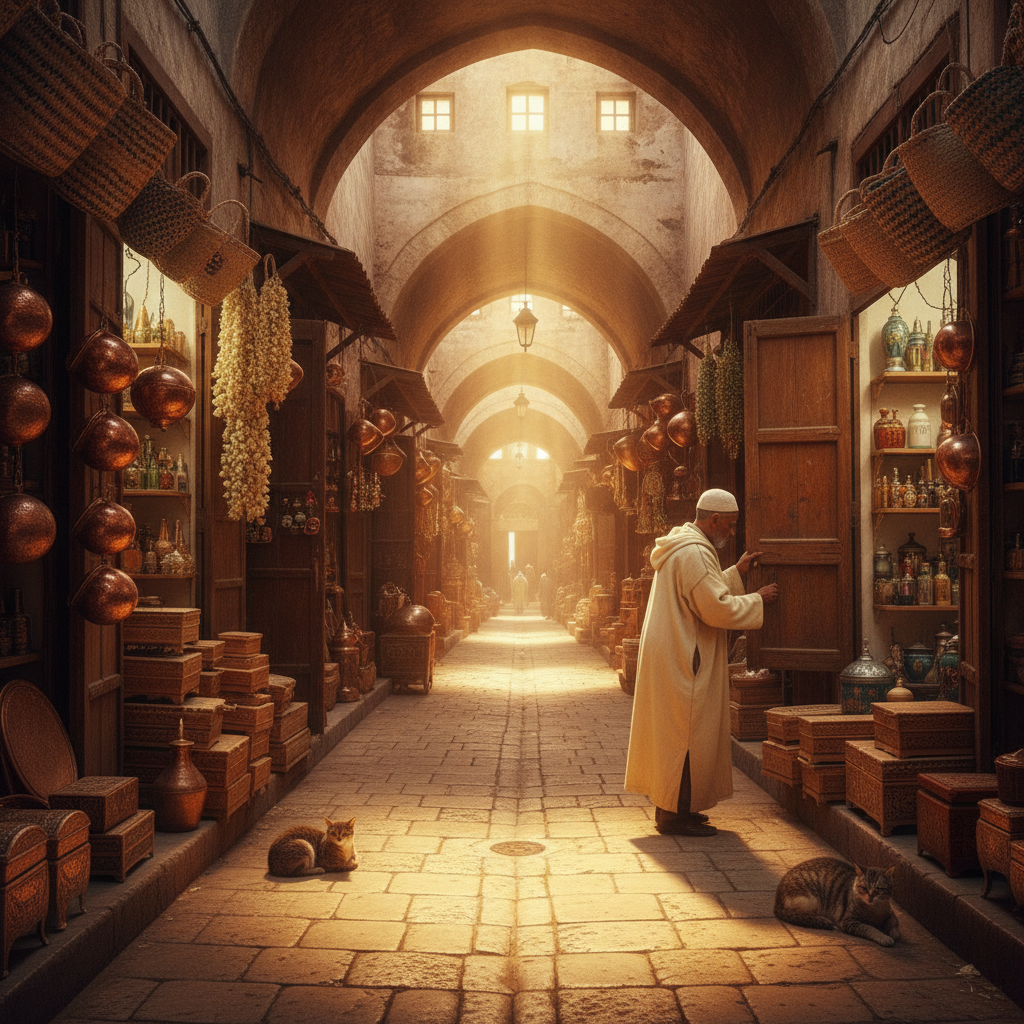
The Punic Language Survived as a Spoken Vernacular in Roman North Africa Until the 5th Century CE When Augustine of Hippo Mentions Punic Speakers in His Parish; The Vandals Sacked Rome in 455 CE from Their Base in Carthage and May Have Taken the Temple Treasures of Jerusalem; the Arab Berber Queen Dihya (Kahina) Defeated an Arab Army and Is Honored Both as a Brave Enemy in Muslim Tradition and as a National Hero in Berber Tradition
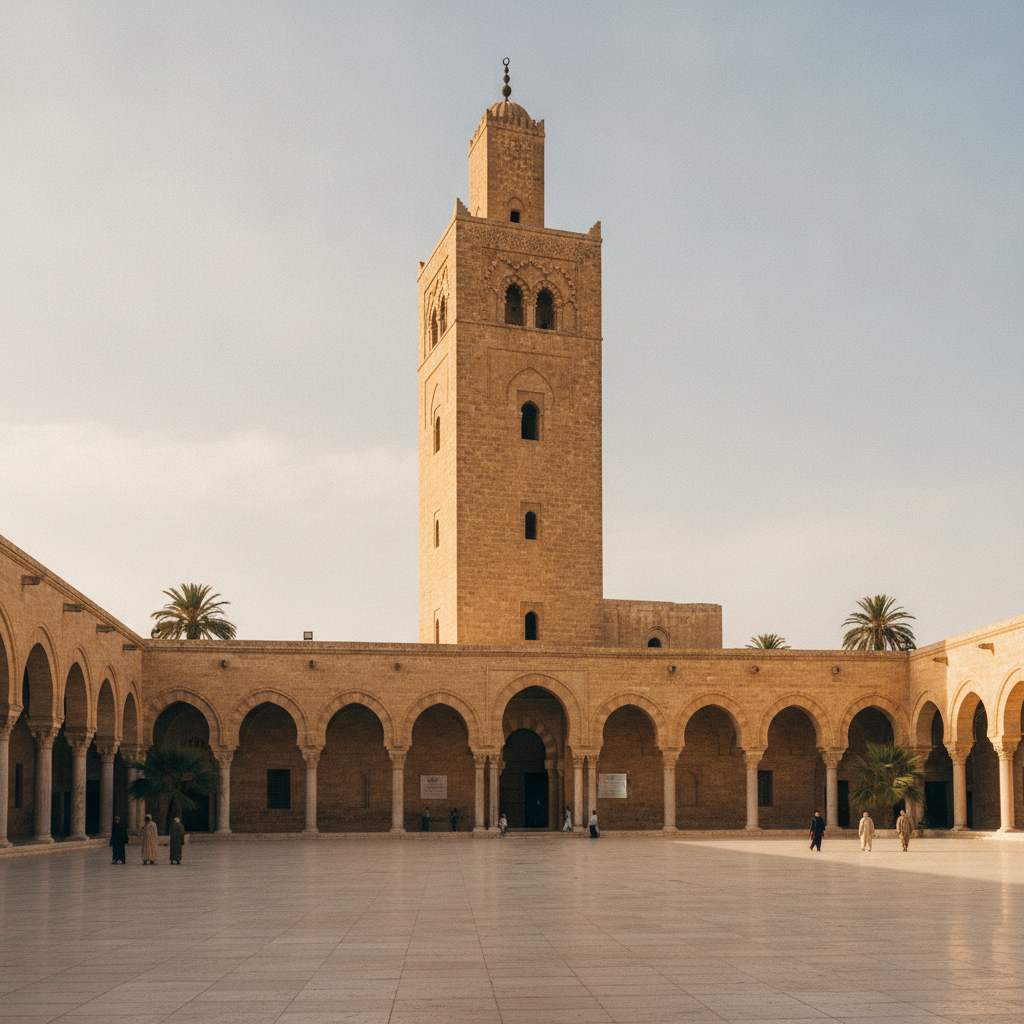
Tunis Day Trips: Kairouan the Holy City, the Great Mosque of Kairouan, the Aghlabid Basins, the Ribat of Monastir, and the Sahel Coast Circuit
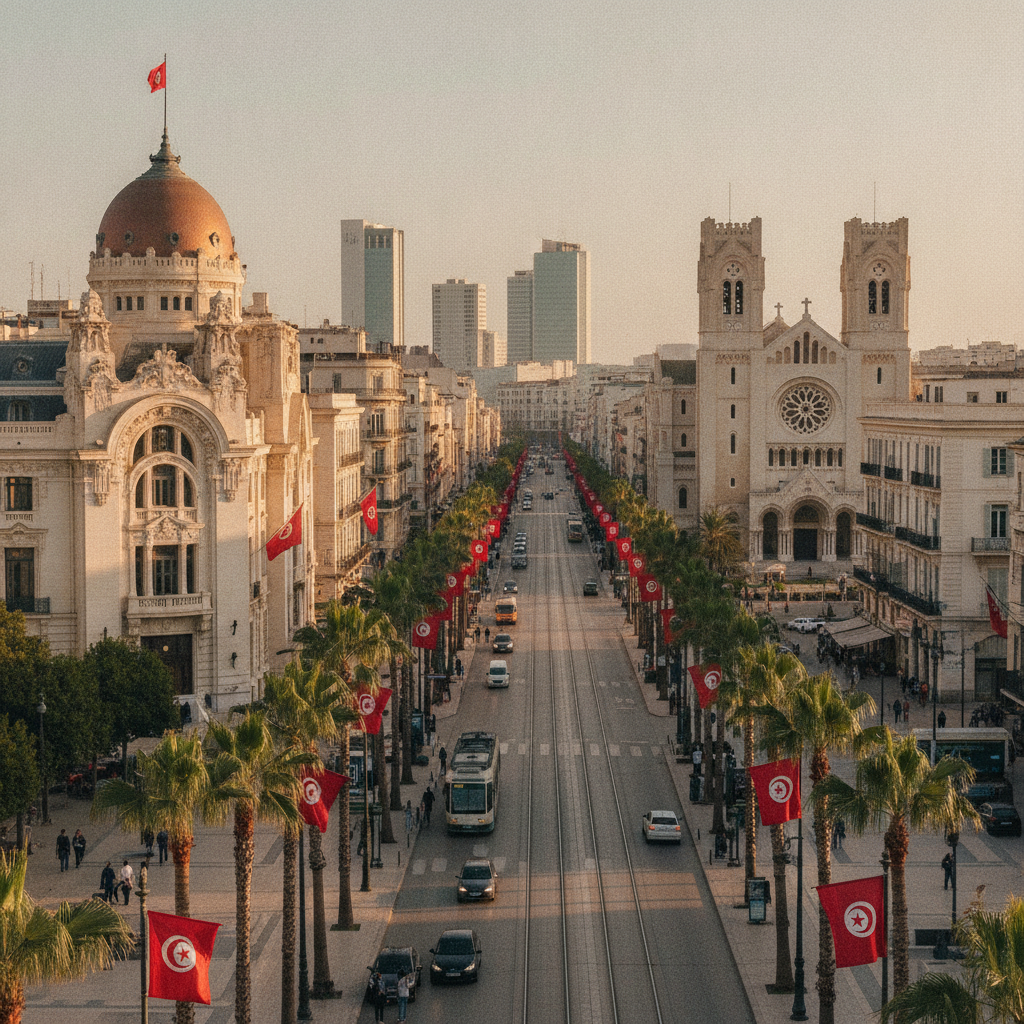
Tunis History: The Aghlabid Founders, the Hafsid Golden Age, the Ottoman Regency, the Husseinid Beys, and the French Protectorate Avenue Habib Bourguiba