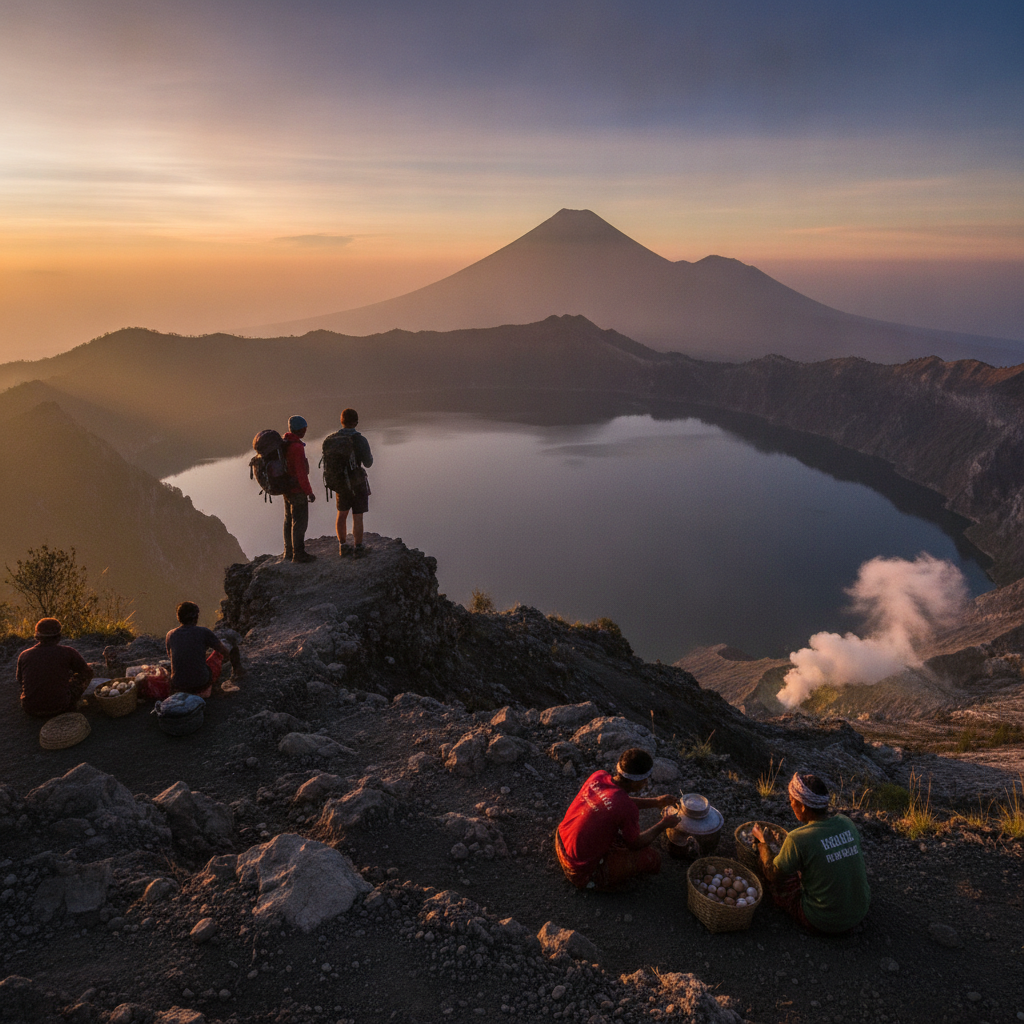
Ubud's Sacred Landscape: 20,000 Balinese Temples, Campuhan Ridge Rice Paddies & Locavore's Farm-to-Table Tasting Menu
The living Bali behind the photos—every Balinese house with a family temple, every rice field with a Dewi Sri shrine, every street corner with a canang sari flower offering placed at dawn (over 20,000 temples on a single island), the villages within walking distance of Ubud where Mas' woodcarvers and Penestanan's 1950s Arie Smit-influenced naïve painters constitute distinct artistic schools, the Campuhan Ridge Walk's two-valley panorama before the tour groups arrive, Locavore's exclusively Indonesian ingredients tasting menu in the Asia's 50 Best list, Tirta Empul's 10th-century holy spring pools where the ethical question of tourists photographing melukat purification rituals has not yet been resolved, and the Ubud Royal Palace's cremation ceremony processions that spin the bade tower at intersections to confuse evil spirits.
- 1
Balinese Hinduism – Pura, Odalan & the Offering Culture
Balinese Hinduism (Agama Hindu Dharma)—the distinct form of Hinduism practised by approximately 90% of Bali's 4.3 million people—is the most defining feature of Balinese cultural life and the source of the visual richness (temple ceremonies, flower offerings, incense, elaborate costume) that makes Bali the most internationally recognised of Indonesia's 17,000 islands. The temple system: every Balinese village has at minimum three temples (Pura Puseh—the village origin temple; Pura Desa—the central village temple; Pura Dalem—the death and cremation temple); every house has a family temple (sanggah); every rice field has a small rice goddess shrine. The total number of temples in Bali exceeds 20,000. The odalan (temple anniversary festival—each temple's founding date in the 210-day Balinese Pawukon calendar, meaning every temple has its festival at least twice per solar year): the most important community events in Balinese life—elaborate preparations (decoration, food offerings, performance of music and dance), full ceremonial dress, and prayers conducted over several days. The daily offering (canang sari): small woven palm-leaf trays containing flower petals, incense, and small food offerings—placed by Balinese women at dawn at house shrines, temple entrances, shop fronts, and significant natural features—the most visible expression of the offering culture that permeates every aspect of Balinese life.
- 2
Ubud's Villages – Mas, Peliatan & Penestanan
The villages surrounding Ubud—within 2–5 km of the central market—each have distinct craft and artistic specialisations that have developed over centuries. Mas (4 km south on the road to Denpasar): the wood-carving village, where highly skilled craftsmen produce the finest carved wooden figures, masks, and furniture in Bali; the Rudana Museum (founded by local businessman Nyoman Rudana, housing Balinese art from the Pita Maha period to the contemporary) is adjacent. Peliatan (1 km east of Ubud centre): the traditional music and dance village, where the ARMA's founding family has deep roots and where the Gunung Sari gamelan ensemble (one of Bali's most celebrated) is based; the Peliatan cremation tower (merupangan)—visible from the main road—is one of the finest examples of the multi-tiered cremation tower construction that Balinese master craftsmen build for high-caste funerals. Penestanan (a steep climb west of Ubud central, now reached by a flight of steps and a footpath through rice paddies): the artistic village where the 'Young Artists' movement emerged in the late 1950s when Dutch artist Arie Smit encouraged village boys to paint in a naïve, brilliantly coloured style quite different from traditional Balinese painting—a distinct and now collectible school.
- 3
The Campuhan Ridge Walk & Ubud's Natural Environment
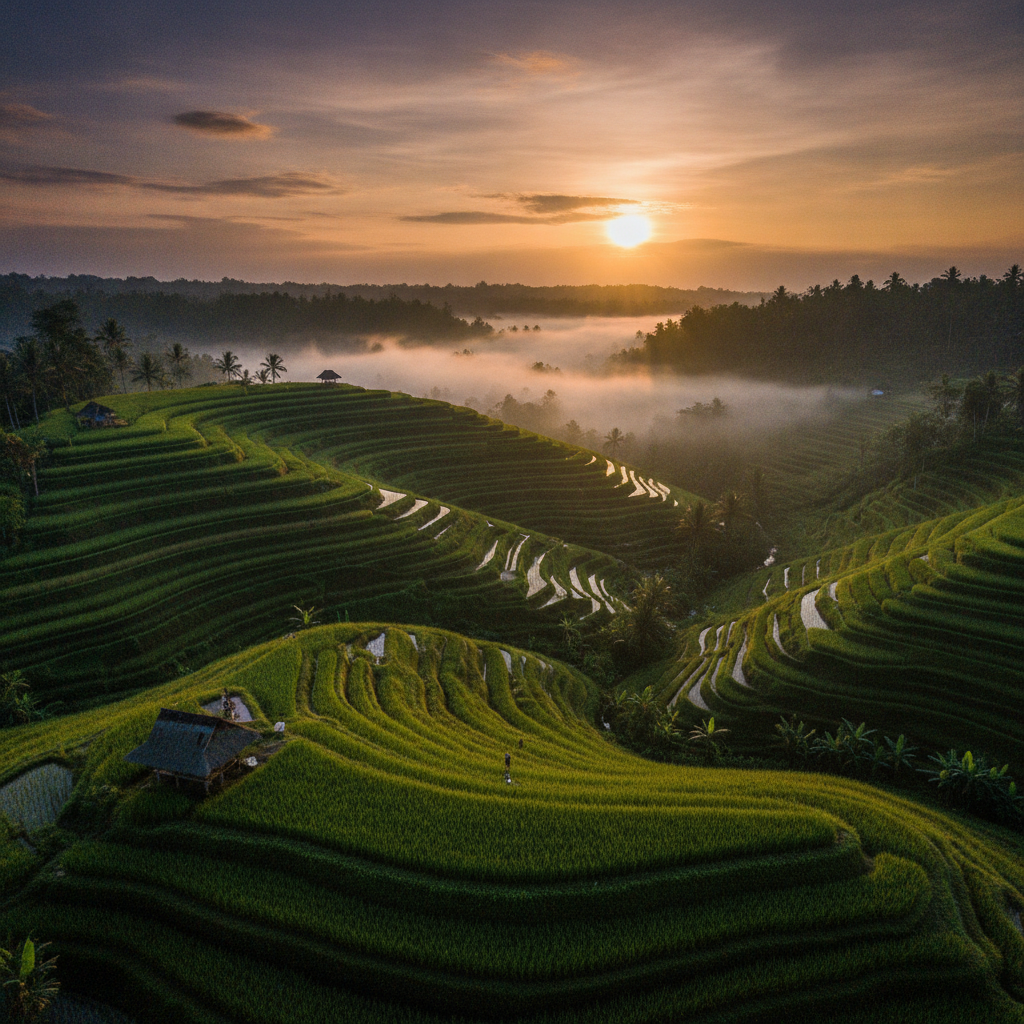
The Campuhan Ridge Walk—a 2-km walking trail beginning at the Pura Gunung Lebah temple in the Campuhan area (10 minutes' walk west from Ubud central market) and following a narrow ridge between two river valleys through rice paddies, jungle, and scattered villages—is Ubud's most popular natural escape and the finest easy walk in the Bali highlands. The trail: from the temple, the path ascends to a ridge with views in both directions (the Campuhan River valley to the south, forested hills to the north); the first 500 metres pass through scrubby grassland popular with photographers for the panoramic rice-paddy views, then through a section of alang-alang (tall grass), and finally into the village of Bangkiang Sidem. The morning is best: before 09:00 the light is soft, the heat manageable, and the trail less crowded with tour groups. The Campuhan River (Wos Barat): the swimming hole below Pura Gunung Lebah (where the two rivers join) is cold, clean, and locally used for bathing. The rice paddy walks (various operators in Ubud offer guided rice paddy walks through the agricultural landscape that remains between the expanding tourism development)—the most tangible connection to the subak agricultural system that theoretically still manages the water of the Ubud highlands.
- 4
Ubud's Restaurants & Farm-to-Table Culture
Ubud's restaurant scene—disproportionately sophisticated for a town of 70,000 (though the tourist and expat population swells this substantially)—is the most concentrated collection of health-conscious, internationally influenced, and farm-to-table dining in Southeast Asia. The driver: the wellness tourism demographic (yoga retreaters, health-conscious travellers, long-term expats) creates demand for high-quality vegetarian and vegan food, organic produce, and the 'clean eating' aesthetic that Ubud has served better than almost any other destination in the region since the early 2010s. The standout operations: Locavore (the most acclaimed restaurant in Indonesia, repeatedly ranked in the Asia's 50 Best Restaurants list—a farm-to-table tasting menu using exclusively Indonesian ingredients, with the team's own foraging, fermenting, and curing programme); Hujan Locale (Indonesian street food elevated to a fine-dining context); Naughty Nuri's (the legendary Ubud ribs institution—grilled pork ribs with secret marinade served in an outdoor setting, the essential non-vegetarian Ubud experience). The health food infrastructure: Cold Press (coconut water and cold-pressed juice bars), Morning Light Espresso (specialty Balinese and Indonesian coffee), and the concentration of raw-food and vegan restaurants on Jl. Dewisita and Jl. Hanoman.
- 5
Pura Tirta Empul – The Sacred Water Temple
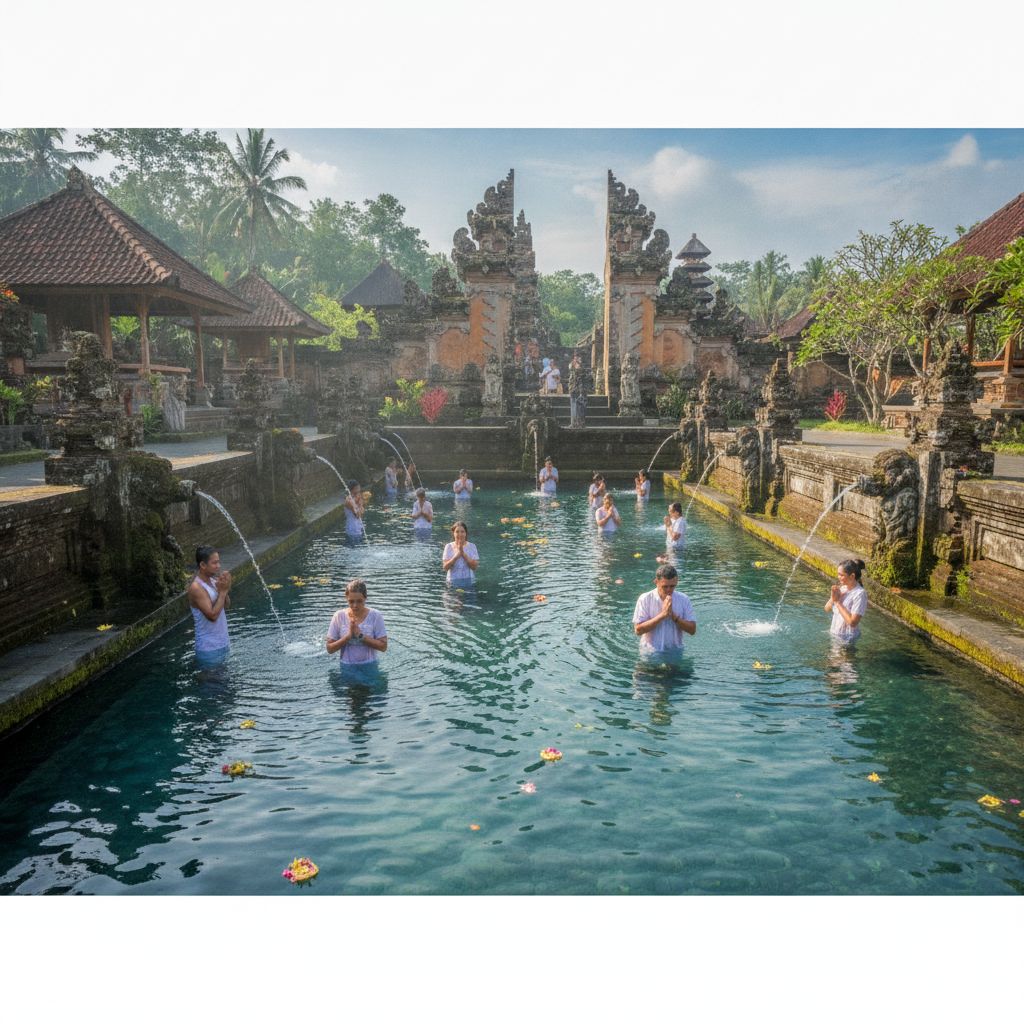
Pura Tirta Empul ('Holy Spring Temple')—25 km north of Ubud in the village of Tampaksiring, built around natural springs whose water has been considered sacred since the 10th century (the springs were believed to have been created by the god Indra to revive his soldiers against the demon Mayadanawa)—is one of the most important Balinese Hindu temples and the most significant water purification site on the island. The springs: the natural source pools within the inner courtyard supply a series of fountains (pamedal—'holy water spouts') in the bathing pools; Balinese Hindus perform melukat (a purification ritual—immersing beneath each spout in sequence while reciting specific prayers) for personal spiritual cleansing, before major ceremonies, or after illness or misfortune. The tourist question: Tirta Empul is simultaneously a functioning religious site and Bali's most-visited day-trip destination from Ubud—the tourist photography of Balinese worshippers performing melukat has created a complex ethical situation (the sight of tourists in rented sarongs photographing intimate ritual immersion of worshippers is widely criticised by Balinese clergy and cultural observers). Sarong and sash required for entry; inner bathing pool closed to non-Hindu visitors during ceremonies.
- 6
The Ubud Palace & Cremation Ceremonies
The Puri Saren Agung (Ubud Royal Palace)—at the intersection of Jl. Raya Ubud and Jl. Suweta, the most central and most visited building in Ubud's old town—has been the seat of the Ubud royal family (the Tjokorda/Cokorda lineage) since the late 18th century, and remains an active residence of the family as well as the primary venue for nightly Balinese dance performances (Legong, Barong, Kecak—rotating nightly at the main performance pavilion). The Puri Saren aesthetic: the carved sandstone gateways (candi bentar—split gates), the pavilions (bale—open teak structures), and the shrine complex within create the most complete Balinese noble architecture accessible to visitors. The cremation ceremonies (Ngaben): the most spectacular public event in Balinese life—when a significant member of the community dies, the cremation ceremony (which may be delayed for months or years while the family accumulates the resources required) involves the construction of a multi-tiered cremation tower (bade) from bamboo and paper, an elaborate procession through the village (the tower must be spun at intersections to confuse evil spirits), and the burning of the tower and the body at the cremation ground. Royal cremations in Ubud (which occur every few years for high-caste members) are the largest public spectacles in Bali, drawing thousands of Balinese and international witnesses.
Walk this route with audio
Stories play automatically as you reach each stop — no tapping needed.
More in Ubud
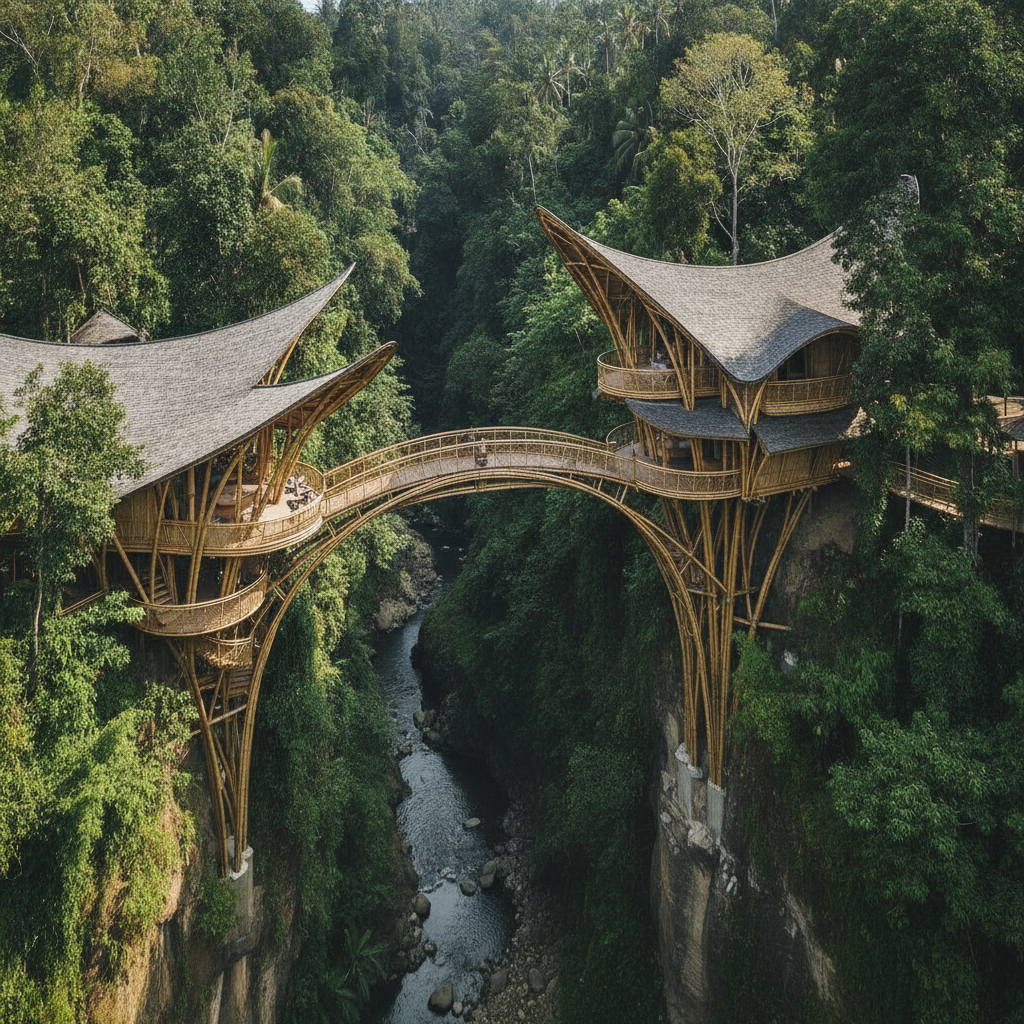
Ubud's Built Future: IBUKU Bamboo Architecture, Ayung Gorge Rafting & the Water Crisis Threatening the Subak System
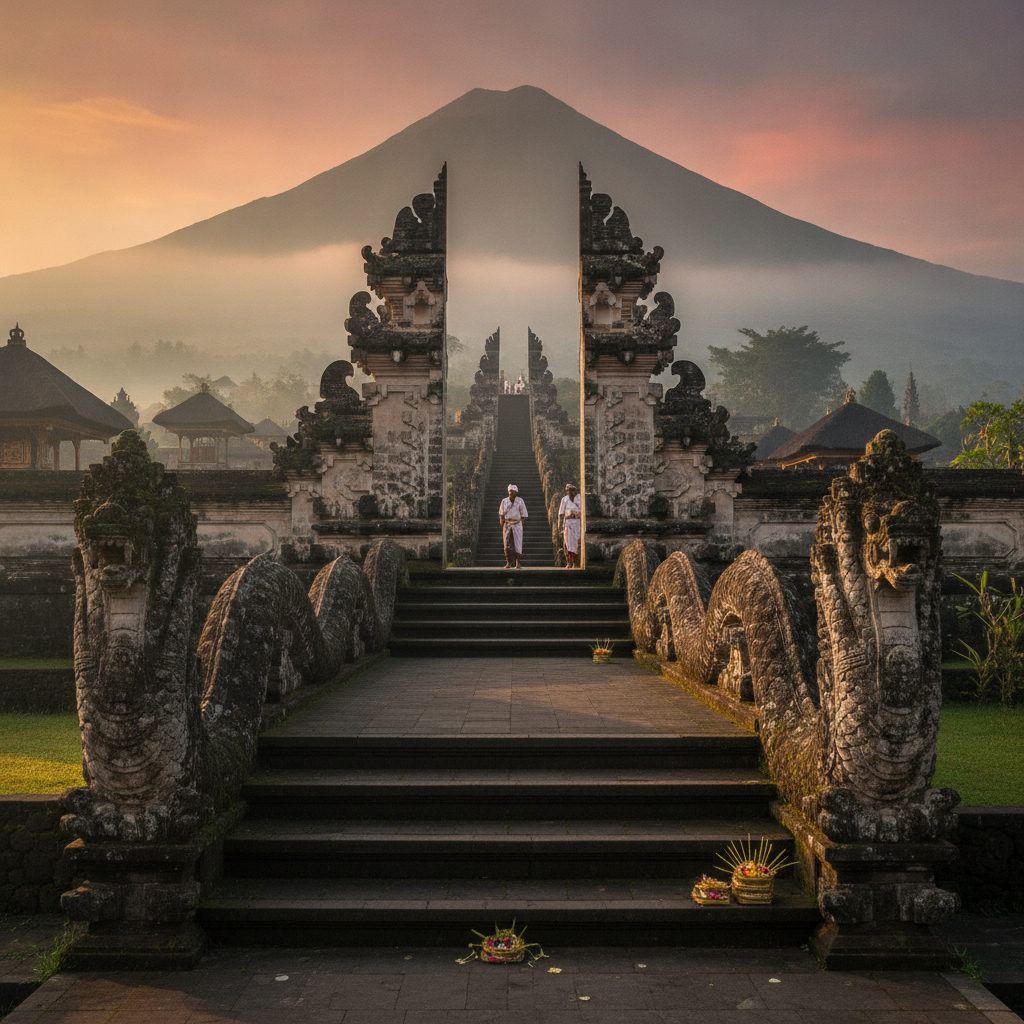
Ubud's Future: Tourism Carrying Capacity, Besakih's Mother Temple & the Eastern Indonesia Archipelago Beyond Bali
Ubud: Sacred Monkey Forest Temples, UNESCO Subak Rice Terraces & Walter Spies' 1930s Art Revolution
Ubud Off the Beaten Track: Tjokorda Dynasty's Art Patronage, Wayang Kulit's UNESCO Puppetry & Tenganan's Double-Ikat Aga Village