Ubud Off the Beaten Track: Tjokorda Dynasty's Art Patronage, Wayang Kulit's UNESCO Puppetry & Tenganan's Double-Ikat Aga Village
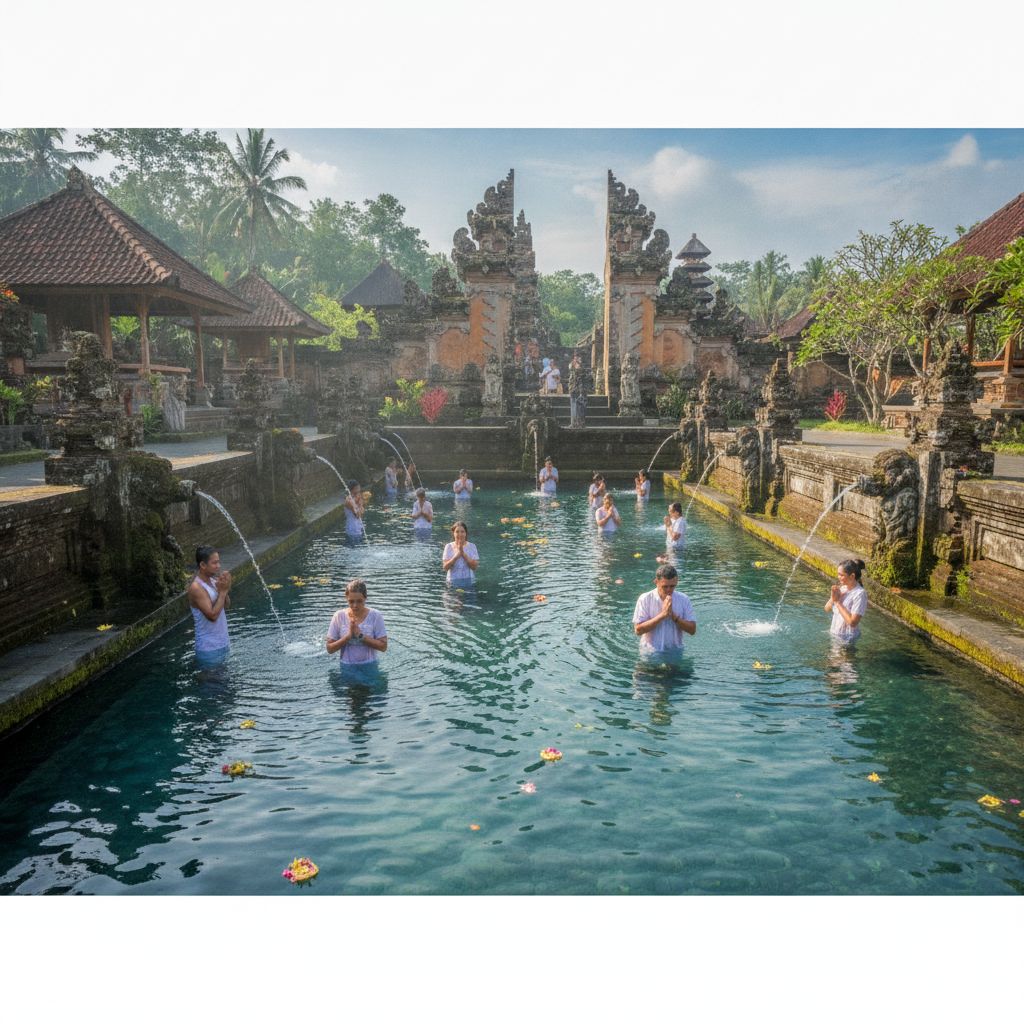
The Tjokorda Sukawati lineage that invited Walter Spies and co-founded the Pita Maha cooperative in 1936 still lives in the Puri Saren palace that also hosts nightly dance performances; Komaneka at Bisma's cliff-edge infinity pool designed by Yoka Sara overlooking the Campuhan gorge; wayang kulit's single dalang simultaneously voicing all characters in Kawi-Balinese-Indonesian improvisation for a gender wayang quartet with no other accompaniment; the Tegallalang swing mirror trick (the Gates of Heaven reflection is a held mirror, not a pool) versus photographing the actual dawn offering culture; Ubud's 07:00 yoga class and 06:00 morning market rhythm that closes the town by 22:00; and Tenganan Pegringsingan's collectively-owned Aga village where the Perang Pandan ritual combat with thorned pandanus leaves is held every June.
- 1
The Ubud Royal Family – The Tjokorda Dynasty & Arts Patronage
The Ubud royal family (the Tjokorda or Cokorda—a Balinese title indicating high-caste Ksatria status, the 'warrior/ruler' caste in the Balinese four-caste varna system)—has been the most significant patron of the arts in Bali since the 18th century, and the most internationally connected of Bali's numerous royal houses. The lineage: the Gianyar regency (of which Ubud was a sub-territory) resisted Dutch colonial rule until 1900, when it signed a treaty with the Dutch that preserved the royal family's status and property; the Tjokorda Gde Agung Sukawati (who ruled Ubud from approximately 1910 to 1978) was the crucial figure—the patron who invited Walter Spies and Rudolph Bonnet to settle in Ubud, co-founded the Pita Maha artists' cooperative (1936), and transformed Ubud's royal compound into the most internationally connected arts community in Southeast Asia. The contemporary royal family: the Sukawati family remains present in Ubud—the Puri Saren Agung (the main palace) is still a family residence as well as a performance venue; family members are involved in cultural preservation, art dealing, and hospitality. The legitimacy of the royal claim: the Indonesian republic abolished the formal political authority of Balinese kingdoms, but retained the ceremonial and social authority—the Balinese people's continued respect for their traditional rulers is visible in the reverence shown at cremation ceremonies and temple festivals.
- 2
Ubud's Boutique Hotel Revolution – Alaya, Komaneka & the Boutique Scene
Ubud's accommodation landscape—the most diverse in Bali for the boutique and design-hotel category—reflects the cultural tourism demographic: travellers who come to Ubud for arts, wellness, and nature expect accommodation that participates in the Balinese aesthetic rather than replicating an international hotel template. The defining property: the Alaya Resort Ubud (Jl. Hanoman—central Ubud location, rice-paddy views, infinity pool, 56 rooms with the contemporary Balinese aesthetic that became the template for the mid-range boutique category): opened 2010, one of the first properties to successfully combine genuine cultural character with international hotel standards at sub-€200 price points. Komaneka at Bisma (Jl. Bisma—the most dramatic setting in Ubud, on a cliff above the Campuhan gorge): the flagship of the Komaneka Collection (5 properties in and around Ubud)—designed by Balinese architect Yoka Sara, all rooms facing the gorge, the pool at the cliff edge, and the contemporary Balinese art collection throughout. The rice-paddy villa category: properties including Alaya Sanggingan, Bisma Eight (glass-floored walkways over rice paddies), and numerous small operators have created a rice-paddy-view accommodation category unique to Ubud—staying in a villa surrounded by active rice cultivation, hearing the irrigation water, and watching the subak water flow while having breakfast is the most complete version of the Ubud experience.
- 3
Balinese Shadow Puppetry – Wayang Kulit in Ubud
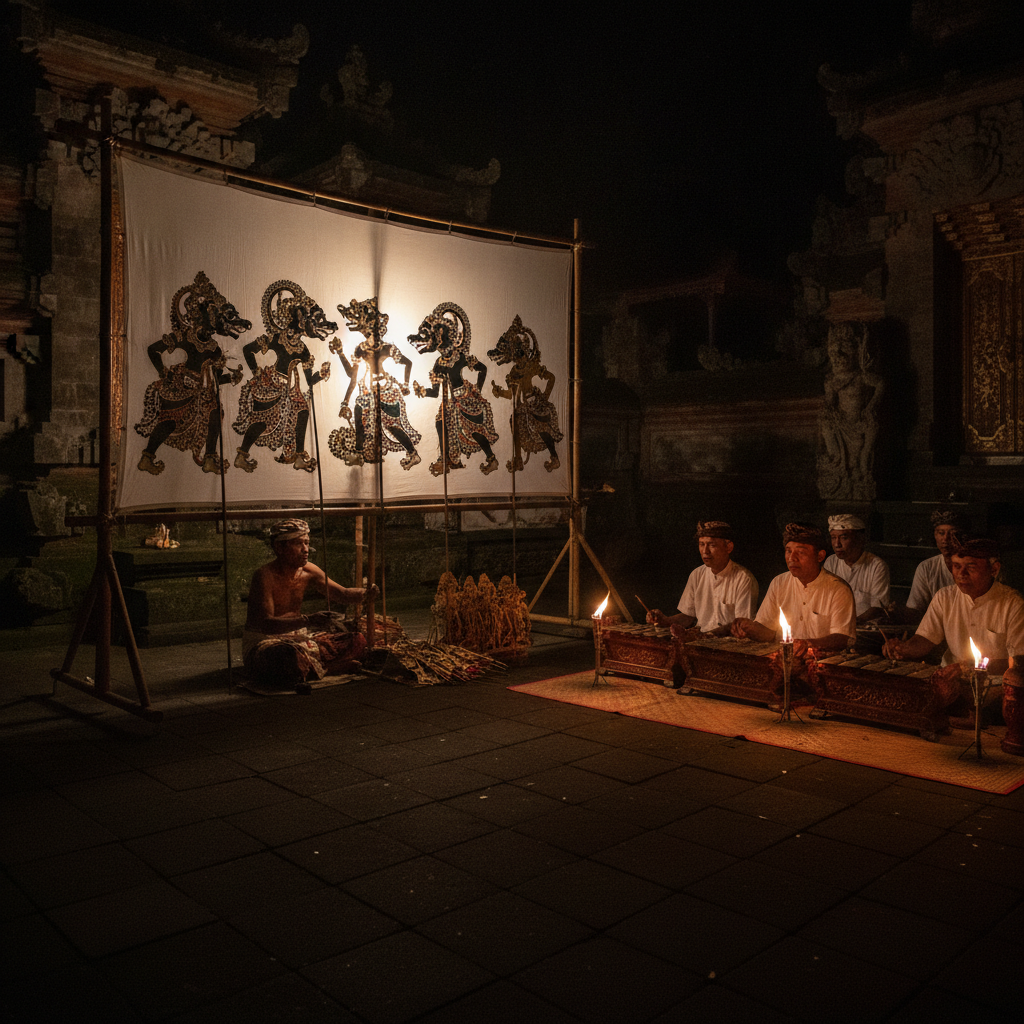
Wayang kulit (shadow puppetry)—one of the oldest performing arts traditions in Java and Bali, using intricately crafted leather puppets (made from buffalo hide, painted and gilded, with moveable arms)—is performed in Ubud with a regularity and accessibility not found elsewhere in Bali. The Balinese wayang: distinct from the Javanese tradition in several ways—faster-paced, with more comic episodes (the punakawan clowns Twalen, Merdah, Delem, and Sangut—the Balinese equivalents of the Javanese panakawan—have a larger role in the Balinese tradition and speak in a mixture of Kawi, Balinese, and Indonesian), and accompanied by a smaller gamelan (a gender wayang quartet rather than a full gamelan orchestra). The dalang (puppeteer): the wayang performance is the creation of a single master artist who simultaneously manipulates the puppets, speaks all characters (in different voices), coordinates the gamelan accompaniment, and improvises commentary on current events—a performance demanding years of training in classical literature (the Ramayana and Mahabharata epics, in their Balinese adaptations), puppetry technique, and performance craft. The UNESCO recognition: wayang kulit was inscribed by UNESCO on the Representative List of the Intangible Cultural Heritage of Humanity in 2008. The Oka Kartini homestead (north of Ubud centre on Jl. Raya Ubud) offers regular wayang performances in a traditional setting.
- 4
Ubud's Photography Scene – The Balinese Visual Landscape
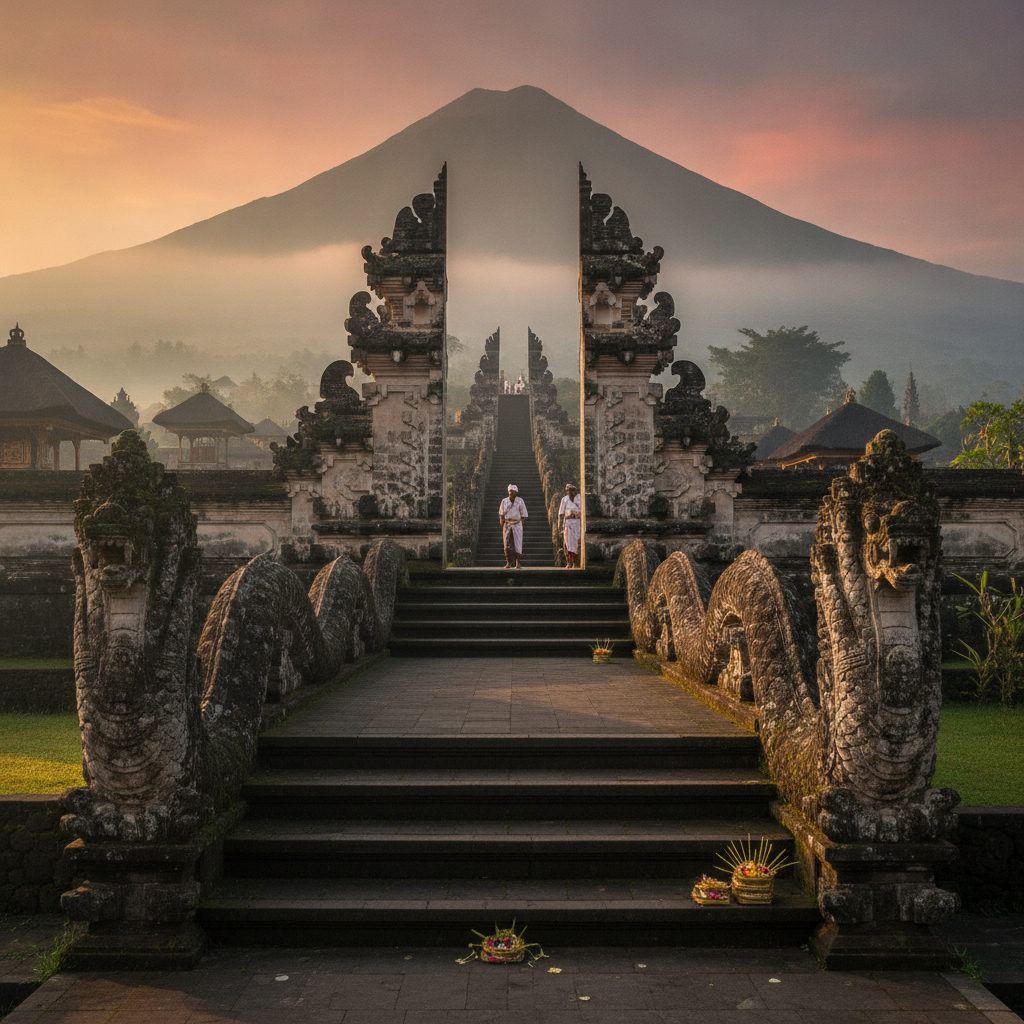
Ubud is the most photographed non-urban destination in Southeast Asia—and the management of photography tourism (the swing platforms at Tegallalang, the sunrise photography at Pura Ulun Danu Beratan, the rice-paddy café terraces) has become one of the most significant economic and aesthetic interventions in the Balinese landscape since the 2010s. The Instagram economy: the Campuhan Ridge Walk, the Tegallalang swing (commercially operated platforms above the terraces, offering 10–15-minute swing experiences for Rp 50,000–150,000 with a rice-paddy backdrop), the Gates of Heaven at Pura Lempuyang (a split gate framing Mount Agung, with the foreground completed by a reflecting pool added specifically for the photography—widely noted to be achieved by holding a mirror to camera to create the reflection that is actually missing from the site), and the Wanagiri Hidden Hills swing above Lake Buyan represent a landscape of purpose-built photography experience. The serious photography: the dawn cremation ceremony preparation, the temple festival colour, and the daily offering culture provide opportunities for photography of genuine living tradition. The ethics: photographing temple ceremonies requires explicit permission and appropriate dress; photographing Balinese people requires sensitivity to context (photographing worshippers in prayer is generally inappropriate; photographing artisans at work is generally welcomed).
- 5
Ubud's Night Scene & the Dawn-to-Dusk Rhythm
Ubud's social rhythm is one of the most distinctive of any tourism destination in Asia: the town closes earlier, rises earlier, and attends fewer bars than almost any comparable destination—a reflection of the Balinese ceremonial calendar (which requires early morning preparations and limits the appropriateness of conspicuous consumption) and the wellness tourism demographic. The morning culture: sunrise yoga at the Yoga Barn (first class 07:00), the Campuhan Ridge Walk (best before 09:00), breakfast at the morning market on Jl. Raya Ubud (where Balinese women sell prepared ceremonial food and fresh vegetables from 06:00 to 09:00—the most important non-tourist food market in Ubud), and the daily canang sari offering placement (dawn, outside every household and business). The evening culture: Balinese dance performances begin at 19:00–19:30 and end by 21:00; the restaurant scene follows with most kitchens closing by 22:00. The exception: a handful of bars (Lebong Bar, Laughing Buddha) maintain later hours for the fraction of Ubud's tourist population who want a nightlife option. The full moon: kecak performances at some venues are scheduled specifically for the full moon—the most atmospheric night for a temple performance, with the full moon rising behind the performance stage. The Ubud night sky: at the northern edge of Ubud town (Campuhan, Sayan, Penestanan), with minimal light pollution from the rice paddy setting, the Milky Way is visible on clear nights—a rare experience for any urban-adjacent location in Southeast Asia.
- 6
Ubud Deep – The Villages Beyond the Tourist Trail
The villages within 5–15 km of Ubud that remain substantially outside the tourist economy—where Balinese daily life, traditional craft production, and agricultural practice continue with minimal adaptation to visitor expectations—represent the most authentic dimension of the Ubud area. Tenganan Pegringsingan (40 km east of Ubud—an hour by car): the most intact traditional Balinese Aga village (the indigenous pre-Hindu Balinese communities predating the Javanese Hindu influx), with a distinctive social organisation (the village is collectively owned, and membership is by birth—outsiders cannot buy property), the geringsing double-ikat textile production, and the Perang Pandan ceremony (a ritual combat using thorned pandanus leaves, held annually in June—the only such ceremony in Bali). Sidemen Valley (30 km east—45 minutes by car): the Ayung River's upper valley with rice terraces and the most dramatic Mount Agung views in Bali, a handful of small guesthouses, and minimal tourist infrastructure—the destination most recommended by long-term Ubud residents who want to share Bali without the development of central Ubud. Penglipuran village (45 km northeast—1 hour): a traditional village preserved in the adat (customary law) form, with a uniform street of bamboo-gated house compounds in traditional style—one of the best-preserved examples of traditional Balinese village architecture. The Balinese saying: 'Don't come to Bali for the beach—that's what the rest of Southeast Asia is for. Come for the village.'
Walk this route with audio
Stories play automatically as you reach each stop — no tapping needed.
More in Ubud
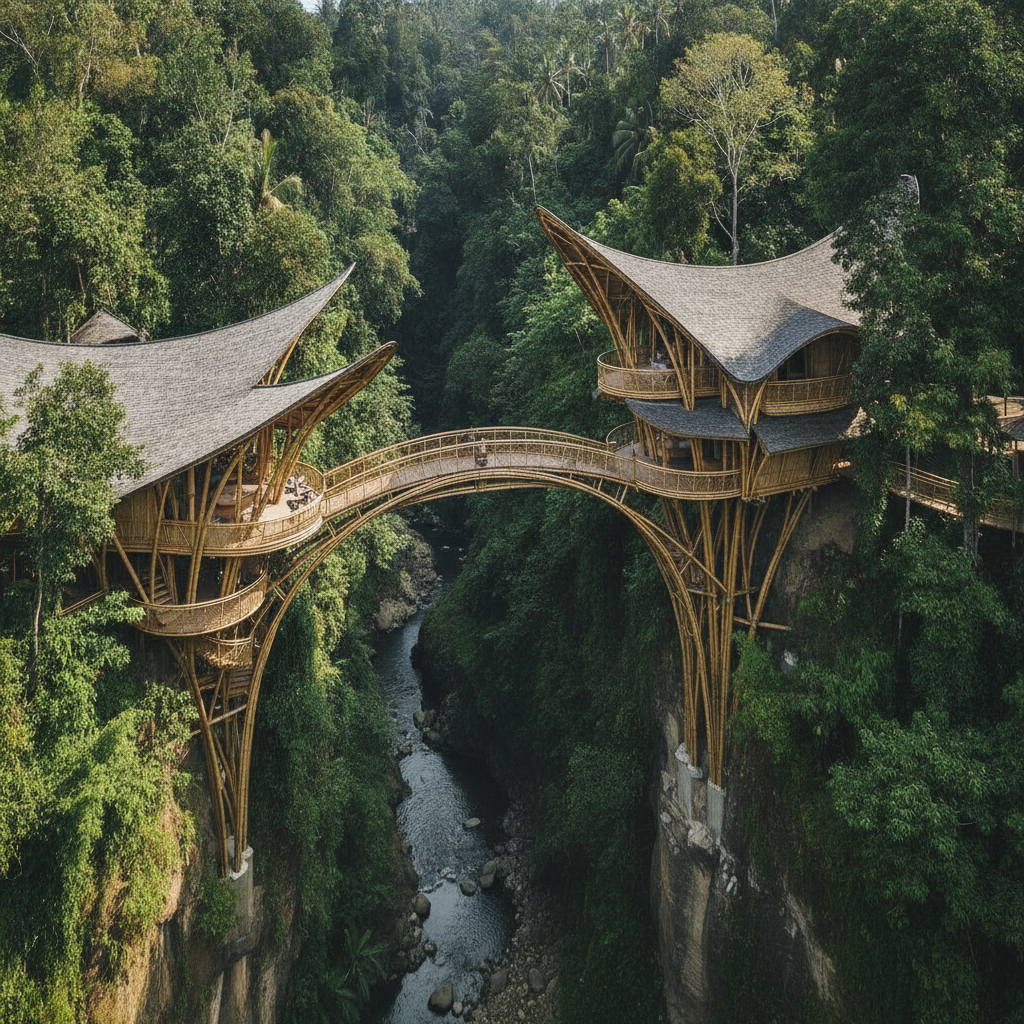
Ubud's Built Future: IBUKU Bamboo Architecture, Ayung Gorge Rafting & the Water Crisis Threatening the Subak System
Ubud's Future: Tourism Carrying Capacity, Besakih's Mother Temple & the Eastern Indonesia Archipelago Beyond Bali
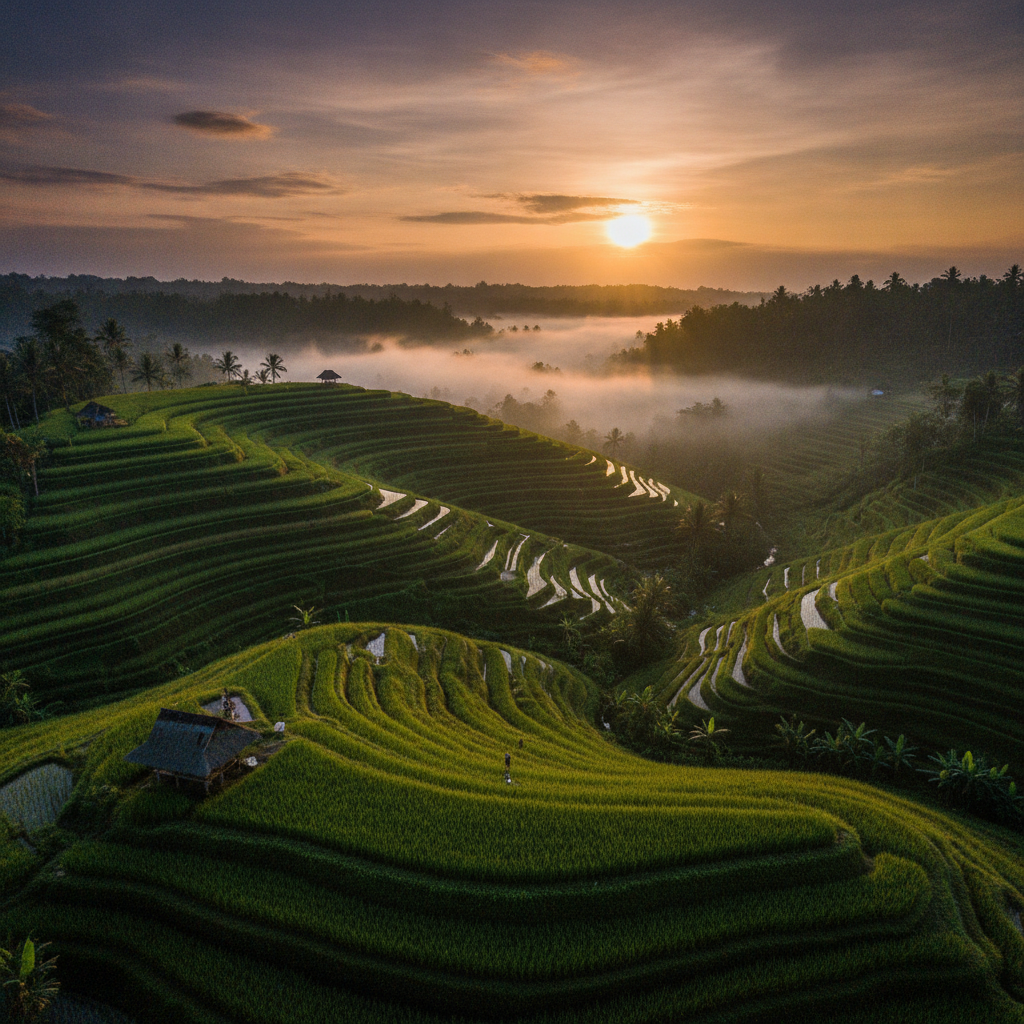
Ubud: Sacred Monkey Forest Temples, UNESCO Subak Rice Terraces & Walter Spies' 1930s Art Revolution
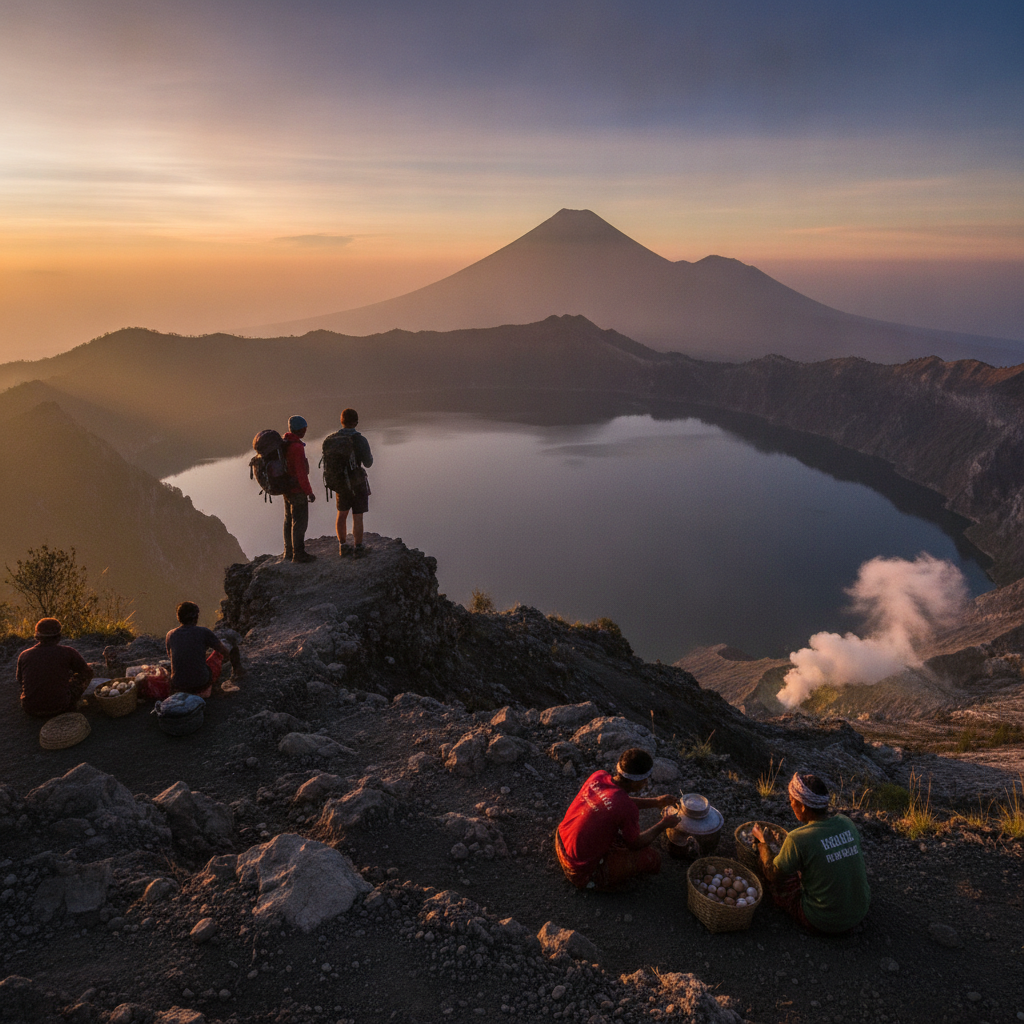
Ubud Beyond the Swing Photos: Batur Crater Sunrise Trek, Geringsing Double-Ikat & Green School's Bamboo Campus