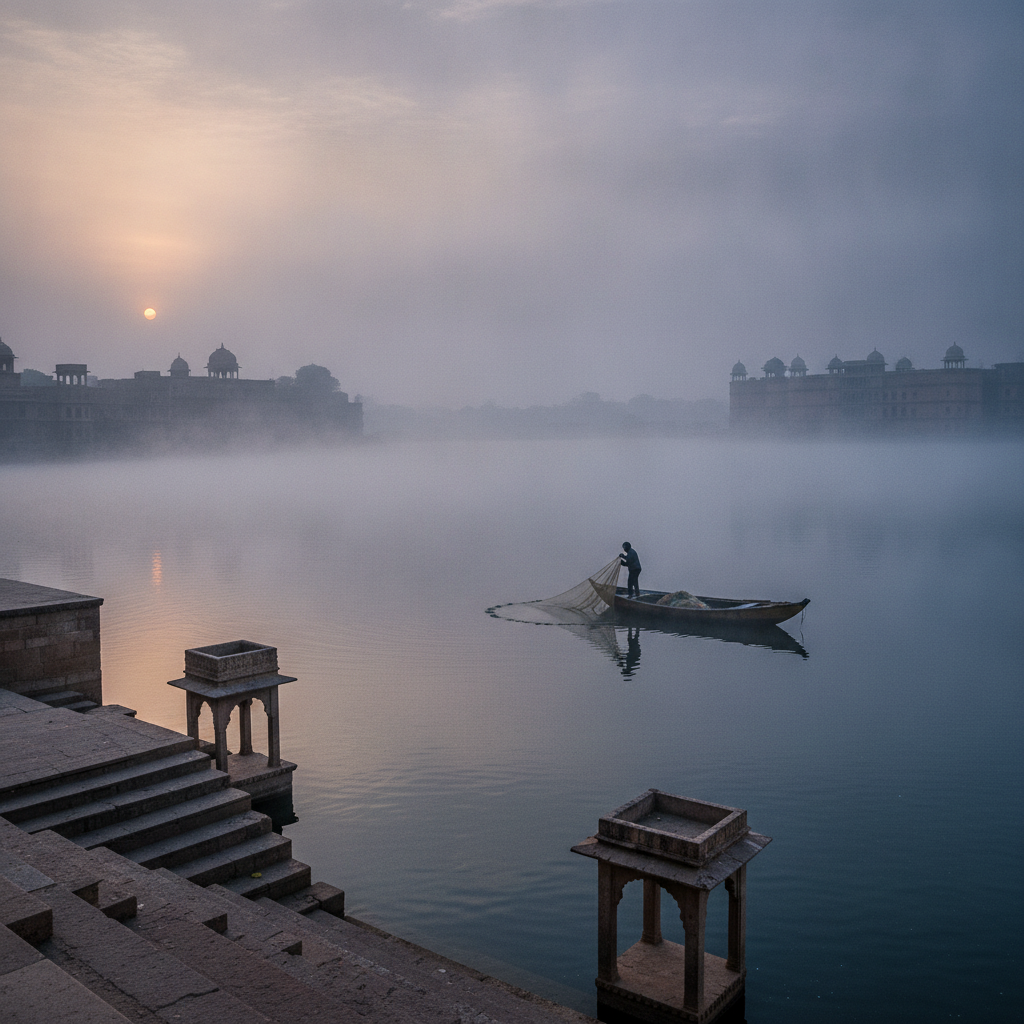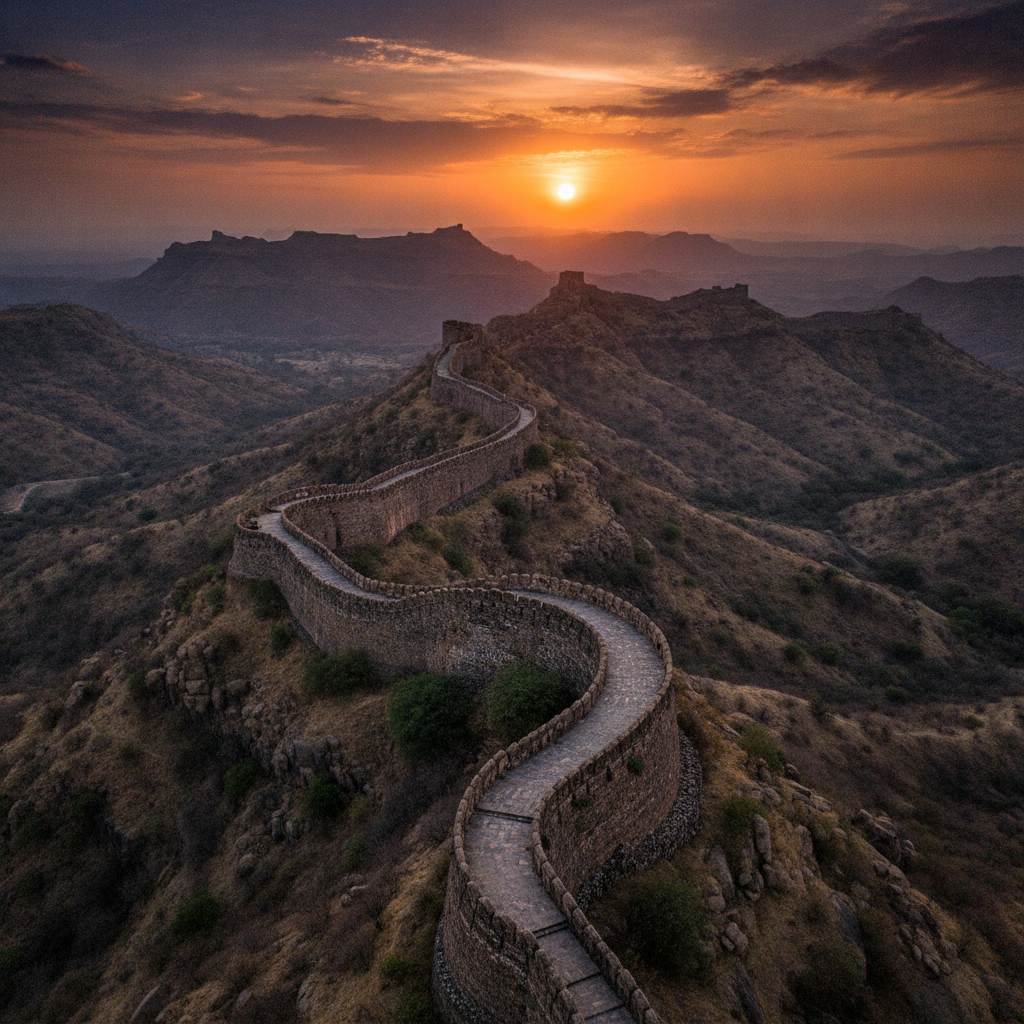
Udaipur's Mewar Legacy: Maharana Pratap's Battle of Haldighati, Ranakpur's 1,444 Pillar Temple & the 36km Fort Wall
Trace the dynasty that never surrendered to the Mughals—Maharana Pratap fighting Battle of Haldighati and living in Aravalli forests for 12 years on grass chapatis rather than submit (his horse Chetak now near-mythological), the Mewar school of miniature painting with its flat red-and-blue scenes of the Ramayana developed under the dynasty's patronage, the Monsoon Palace built to watch clouds approach and never used for the purpose, Ranakpur's 1,444 marble pillars each uniquely carved (the same Makrana marble as the Taj), and Kumbhalgarh's 36-kilometre wall—the second longest in the world, built by the maharana who constructed 32 of Rajasthan's 84 forts.
- 1
The Mewar Dynasty – India's Oldest Ruling House
The Mewar dynasty (officially the Sisodia Rajputs)—rulers of Udaipur and the kingdom of Mewar from the 7th century to Indian independence (1947/1949)—is considered the oldest ruling dynasty in Rajputana and claims an unbroken lineage of 76 rulers from the same family over 1,400 years. Unlike most Rajput clans, the Mewars never fully submitted to Mughal authority: Maharana Pratap Singh I (r. 1572–1597) fought the Battle of Haldighati (1576) against Akbar's army and maintained resistance from forest camps for years rather than accept Mughal suzerainty. The Mewar Royal Family today—headed by Shriji Arvind Singh Mewar (born 1944)—still lives in the City Palace complex and manages the HRH Hotels group (heritage palace hotels throughout Rajasthan).
- 2
Maharana Pratap & the Battle of Haldighati
Maharana Pratap Singh I—the most celebrated ruler of Mewar, whose image appears on every street corner in Udaipur—fought the Battle of Haldighati (June 18, 1576) against the Mughal general Man Singh I (the Kachwaha Rajput who served Akbar). The battle was inconclusive by military standards; both sides claimed victory. Pratap's horse Chetak—a blue roan Marwari stallion who carried a wounded Pratap from the field despite his own fatal wounds—has achieved near-mythological status in Rajasthani folk culture. Pratap spent 12 years as a fugitive in the Aravalli Hills, reportedly surviving on grass-flour chapatis; he eventually recovered much of his territory. His refusal to submit to Mughal authority makes him a symbol of Rajput independence and Hindu pride—a status that has been heavily politicised in contemporary Rajasthan.
- 3
Udaipur's Miniature Painting Tradition – The Mewar School
The Mewar school of miniature painting—one of the major Rajput painting traditions, developed from the 16th century onwards under Mewar royal patronage—is characterised by bold primary colours (red, yellow, blue), flat perspective, and narrative scenes depicting the Ramayana, Mahabharata, and Krishna legends. The Raj Mahal section of the City Palace museum contains the finest collection of Mewar miniatures; private galleries in the old city (particularly on the road to Jagdish Temple) sell both original antique pieces and contemporary works in the Mewar style. The Shilpgram Crafts Village (3 km west of Udaipur, the Mahatma Gandhi Institute for Rural Industrialization) hosts the annual Shilpgram Fair (December, 10 days) with performances and craft demonstrations from tribal communities across Rajasthan.
- 4
Sajjangarh Palace – The Monsoon Palace Above the City
Sajjangarh Palace ('Monsoon Palace')—perched on a hilltop 5 km west of Udaipur at an elevation of 944 metres (providing the highest viewpoint in the city)—was built by Maharana Sajjan Singh in 1884, intended as an astronomical observatory to watch monsoon clouds approach from the horizon. He died before the palace was completed; it was never used as planned. Today the palace provides the finest panoramic view of Udaipur—Lake Pichola, Lake Fateh Sagar, the City Palace, the Aravalli hills, and the spreading modern city visible simultaneously. The palace itself is relatively unimpressive inside (partly government-converted); the view from the ramparts at sunset is the main draw. The road to the palace passes through the Sajjangarh Wildlife Sanctuary (leopard, sloth bear, deer). Entry: ₹90 (€0.99) for Indians, ₹100 for foreigners.
- 5
Ranakpur – The Jain Temple with 1,444 Pillars
Ranakpur—90 km north of Udaipur (2 hours), in a forested valley of the Aravalli Hills—contains the Chaturmukha Dharana Vihara temple (1437–1457), one of the largest and most ornate Jain temples in the world: four-faced (facing all four compass directions), with 1,444 carved marble pillars (no two identical, each covered in intricate figural carving), 29 halls, 80 domes, and 400 subsidiary shrines in a complex covering 4,800 square metres. The marble used is the white Makrana marble from the same quarry as the Taj Mahal. The Ranakpur complex also includes Jain temples dedicated to Surya (the sun god), an unusual Hindu-Jain syncretism. The forest around Ranakpur is a wildlife sanctuary (leopard, wolf, hyena); the drive through the Aravalli foothills is one of the most scenic in Rajasthan.
- 6
Kumbhalgarh Fort – The Great Wall of India
Kumbhalgarh Fort—84 km north of Udaipur, UNESCO World Heritage Site (2013, Hill Forts of Rajasthan)—is the second most important fortress in Mewar after Chittorgarh, built by Maharana Kumbha in the 15th century on a hilltop at 1,100 metres. The fort's perimeter wall extends 36 kilometres—the second longest continuous wall in the world after the Great Wall of China, earning it the informal title 'the Great Wall of India'. The wall is wide enough for eight horses to ride abreast. The fort contains 360 temples (mostly Shiva shrines) and was the birthplace of Maharana Pratap (1540). Maharana Kumbha (r. 1433–1468) is credited with building 32 of Rajasthan's 84 forts; the fort's architecture represents the finest military engineering of the Mewar kingdom.
Walk this route with audio
Stories play automatically as you reach each stop — no tapping needed.
More in Udaipur
Udaipur's Layers: Bhil Tribal Crafts, Haveli Hotels with Lake Views & the Sanskrit Inscription That Covers 25 Ghats
Udaipur Essentials: Lake Pichola at Sunset, James Bond's Floating Palace Hotel & 400 Years of Mewar Architecture
Udaipur Deeper: Chittorgarh's Three Mass Self-Immolations, India's Most Spectacular Destination Wedding City & Kathputli Puppets