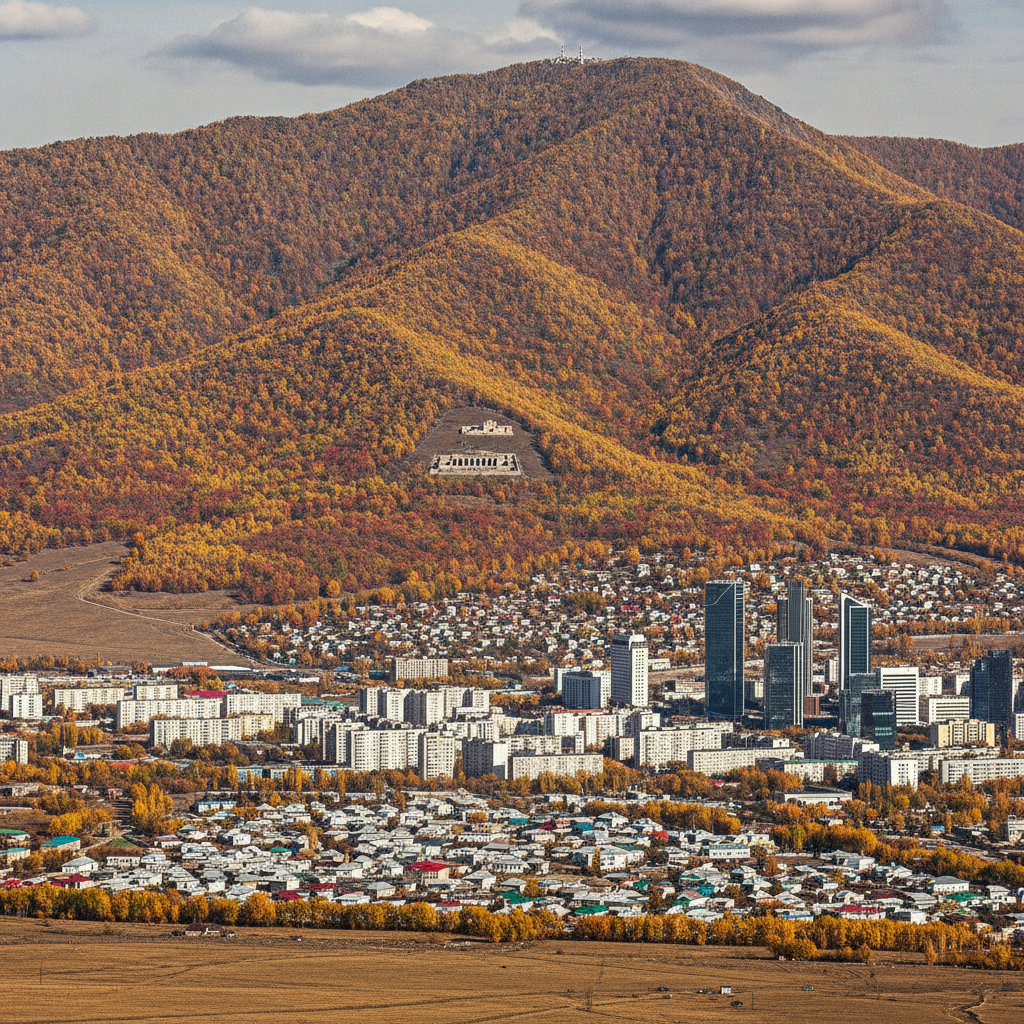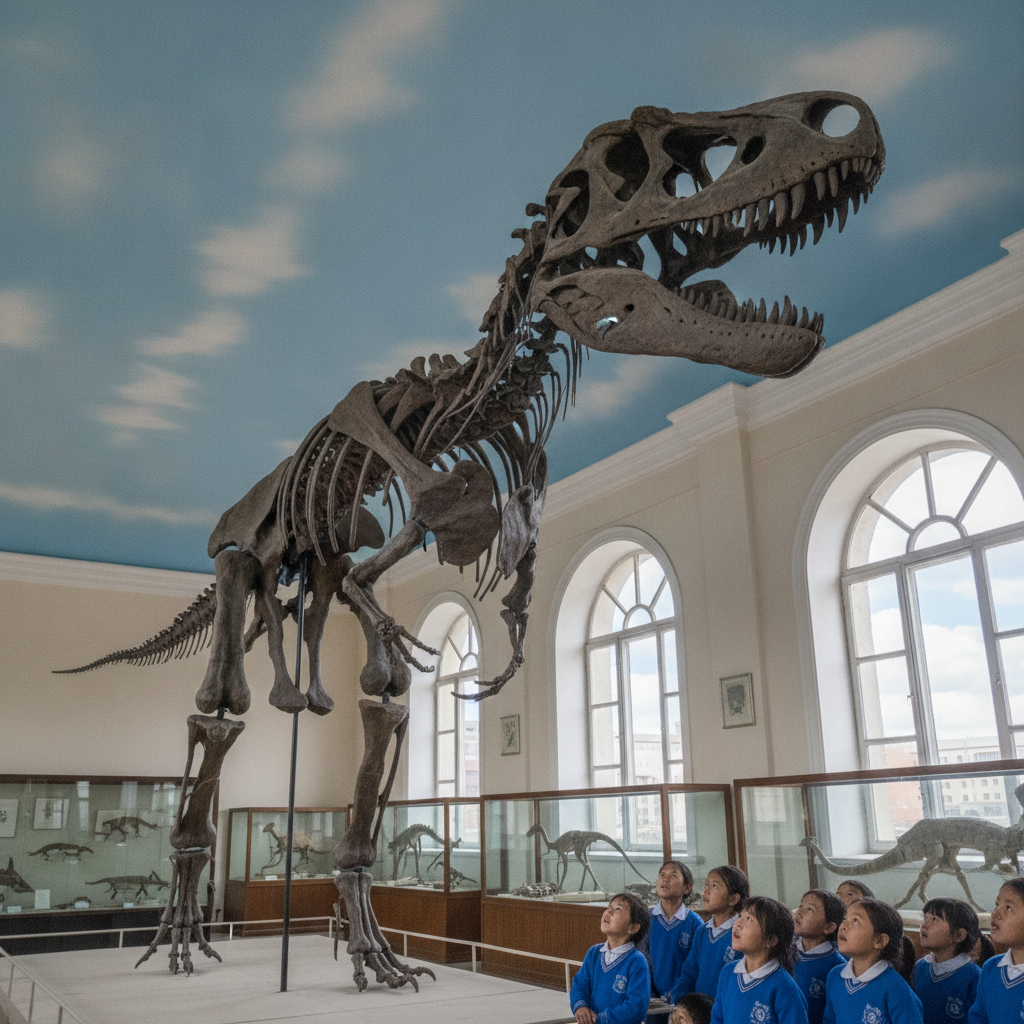
The 1924 Velociraptor 3× Smaller Than Jurassic Park Showed, the 13th-Century Deel Still Worn Daily by 30% of Ulaanbaatarians & the Bortle Class 1 Sky Where the Milky Way Casts Shadows
The actual Velociraptor mongoliensis being 3× smaller than the Jurassic Park version while the film made it globally famous; the deel worn daily by 30% of Ulaanbaatar residents unchanged in silhouette from 13th-century Yuan Dynasty paintings; the Mongolian steppe Bortle Class 1 sky where the Milky Way casts shadows as the largest such sky zone accessible by road in Asia; the 100,000 Buddhist manuscript scrolls burned in the 1937 purge breaking the teacher-student transmission for a generation; the Bogd Khan Palace's 578 taxidermied zoo animals as Mongolia's most eclectic museum interior; and the Naadam July 11-13 timing for the optimal Mongolia circuit.
- 1
Mongolia's Dinosaurs – Paleontology Capital of the World
Mongolia's paleontological heritage (the Gobi Desert of Mongolia is the world's most productive dinosaur fossil site—the country has produced more significant dinosaur discoveries per unit area than any other on earth): the paleontology guide. The history of discovery (Roy Chapman Andrews (1884–1960)—the American Museum of Natural History explorer who led the Central Asiatic Expeditions of 1921–1930 to Mongolia: the discoveries: the first dinosaur eggs (Protoceratops andrewsi eggs at the Flaming Cliffs—the discovery that proved dinosaurs were egg-layers, not live-bearers—the most significant single paleontological discovery of the 20th century up to that date): the Velociraptor (Velociraptor mongoliensis—first described from a Mongolian specimen at the Flaming Cliffs in 1924—the small feathered theropod made globally famous by Jurassic Park (1993), though the film's version was 3× larger than the actual animal): the Fighting Dinosaurs (the 1971 Polish-Mongolian expedition discovery of 2 dinosaurs fossilized in combat—a Velociraptor with its claw embedded in the throat of a Protoceratops—the only fossilized combat between 2 different dinosaur species ever found). The Natural History Museum of Mongolia (Байгалийн Түүхийн Музей—Ulaanbaatar): the most complete Mongolian dinosaur collection accessible to visitors (the museum contains the original specimens of Tarbosaurus bataar (the Asian relative of T. rex), Gallimimus, and Saurolophus angustirostris).
- 2
Mongolian Architecture – Ger, Palace & Modern Blend
The architecture of Ulaanbaatar (the most eclectic urban architectural landscape in Asia—a city where a traditional nomadic dwelling, a Soviet apartment block, a Buddhist monastery, and a glass-curtain-wall skyscraper can occupy the same block): the architectural guide. The Bogd Khan Palace Museum (Богд хааны ордон музей—the winter palace of the 8th Jebtsundamba Khutuktu (the theocratic ruler of Mongolia) built in 1893–1903): the only surviving Mongolian royal palace from the theocratic period—the palace grounds contain 6 individual temples and the Winter Palace (the main residential building with its Mongolian-Chinese-European hybrid furniture and the taxidermied zoo animals that the Bogd Khan collected): the most eclectic museum interior in Mongolia (the Bogd Khan reportedly collected 578 animals for his personal zoo, many of which were later taxidermied and displayed in the palace). The Soviet heritage (the Lenin Club (Ленины клуб—now the Ulaanbaatar Drama Theatre)—the first permanent stone building constructed in Ulaanbaatar (1932) during the Soviet reconstruction): the contemporary architecture (the Blue Sky Tower (2009—the 105m glass skyscraper by the Japanese architect Koh Kitayama)—the most distinctive contemporary building in Mongolia: the tower's double-curved glass facade is the only curved-glass skyscraper facade in Central Asia).
- 3
The Mongolian Deel – Fashion & Nomadic Identity
The Mongolian deel (дээл—the traditional Mongolian full-length coat worn as the everyday garment by the nomadic population): the fashion and cultural identity guide. The deel (the wrapped coat fastened with hooks on the right side—the garment has not changed in basic form since at least the 13th century (the Mongolian warriors depicted on the Yuan Dynasty Chinese paintings wear deels identical in silhouette to those worn by nomads today)): the materials (summer deel: cotton or silk (the festival deel is silk, the everyday deel is cotton); winter deel: lined with sheepskin or quilted cotton batting): the regional variation (the Khalkha Mongol deel (the dominant style in central Mongolia) has a distinctive curved hem and a standing collar—the Buryat Mongol deel (northern Mongolia and Siberia) has a straight hem and flat collar—the Kazakh deel (western Mongolia) has embroidered cuffs and a different fastening pattern): the color system (the colors of the deel carry social information: married women wear more saturated colors; unmarried women wear lighter tones; men traditionally wear darker hues): the deel in contemporary Ulaanbaatar (the deel is worn daily by approximately 30% of Ulaanbaatar residents—the proportion rises to nearly 100% in the ger districts and during the Naadam festival—the most visible indicator of Mongolian national identity in the city streets).
- 4
Mongolia at Night – The Steppe Sky & Urban Life
Mongolia's nighttime experience (the nocturnal dimension of Ulaanbaatar and the steppe that is the least documented aspect of the Mongolian visit): the night guide. The steppe sky (the Mongolian Plateau night sky (the steppe on a moonless night, 100+ km from Ulaanbaatar): the Bortle Class 1 sky (the darkest sky classification—the Milky Way bright enough to cast shadows—a sky condition found in only 1% of inhabited land area on earth—the Mongolian steppe is the largest Class 1 sky zone accessible by road from a major city in Asia): the Terelj dark sky (the Terelj National Park ger camps at 60 km from Ulaanbaatar—the least light-polluted sky within a 1-hour drive of the Mongolian capital—Bortle Class 2–3: the Milky Way clearly visible to the naked eye from the ger camp clearing). The Ulaanbaatar nightlife (the city's bar and club scene has developed rapidly since 2010—the most active nightlife district: the Bayanzurkh District bar street (the Korea Town bar strip on the Peace Avenue east section)—the Korean-Mongolian bar culture mixing soju and airag cocktails): the traditional evening (the nightly performance at the Tumen Ekh National Song and Dance Ensemble—the most authentic and accessible traditional Mongolian performing arts event in the city (18:00, 1.5 hours, tickets USD 15–25)).
- 5
Mongolian Buddhism After the Purge – Healing a Tradition
The recovery of Mongolian Buddhism after the Stalinist purge (the story of how Mongolian Buddhism has rebuilt from near-total destruction to partial restoration in 35 years since 1990): the religious recovery guide. The destruction (the 1937 purge statistics: 700–900 monasteries destroyed; 17,000–20,000 monks executed or sent to Siberian gulags; the written religious texts (the Buddhist canon in Mongolian translation—over 100,000 manuscript scrolls) burned or confiscated): the survival (the Gandantegchinlen Monastery was permitted to function with a reduced community from 1944 as the sole surviving active monastery—the function was more symbolic than spiritual (the communist government used the monastery as evidence of religious freedom for international propaganda purposes)). The post-1990 revival (from 1990, monasteries began reopening across Mongolia—by 2020 there were approximately 200 functioning monasteries with 5,000 monks): the challenges (the post-1990 Buddhist community has struggled with: the loss of the textual tradition (most of the canonical texts were destroyed); the loss of the teacher-student transmission lineage (with most teachers killed in 1937, the unbroken transmission was broken for a generation); the commercialization of the religious heritage (the tourist market for Buddhist objects has created a secondary market for replica thangkas and ritual objects that can be mistaken for authentic heritage items)). The Gandantegchinlen today (the monastery complex houses the most comprehensive collection of surviving pre-purge Mongolian Buddhist objects in Mongolia—the collection includes Zanabazar's surviving workshop tools and the pre-1937 thangka collection rescued from the purge).
- 6
Ulaanbaatar to the Silk Road – The Mongolia Circuit
The Mongolia travel circuit (the extended journey that connects Ulaanbaatar to the broader Silk Road and Central Asian travel landscape): the regional context for planning a Mongolia visit. The Mongolia-China connection (the Trans-Mongolian Railway: Beijing to Ulaanbaatar (30 hours via Zamiin-Uud/Erlian border): the most historically resonant entry to Mongolia for visitors arriving from China): the Mongolia-Russia connection (the Trans-Mongolian Railway: Ulaanbaatar to Irkutsk (24 hours via Ulan-Ude)—the Irkutsk extension provides access to Lake Baikal (the deepest lake in the world, the world's largest freshwater reservoir by volume)—the Baikal-to-Mongolia-to-Beijing circuit (10–14 days) is the most content-dense overland journey in Northeast Asia). The Central Asian extension (Ulaanbaatar to Tashkent (Uzbekistan): by air (4h via connections in Moscow or Beijing): the historical Silk Road circuit (Ulaanbaatar to Xi'an (China) via the Trans-Mongolian Railway connects the Mongol Empire capital to the Tang Dynasty Silk Road capital—the most historically appropriate 2-destination China-Mongolia circuit): the Naadam timing (the visit to Mongolia is most rewarding when timed for the Naadam Festival (July 11–13) as the anchor event—the circuit recommendation: arrive in Ulaanbaatar July 9, attend Naadam July 11–13, Karakorum + Orkhon Valley July 14–15, Gobi Desert July 16–18, depart to Beijing July 19 by Trans-Mongolian Railway).
Walk this route with audio
Stories play automatically as you reach each stop — no tapping needed.
More in Ulaanbaatar
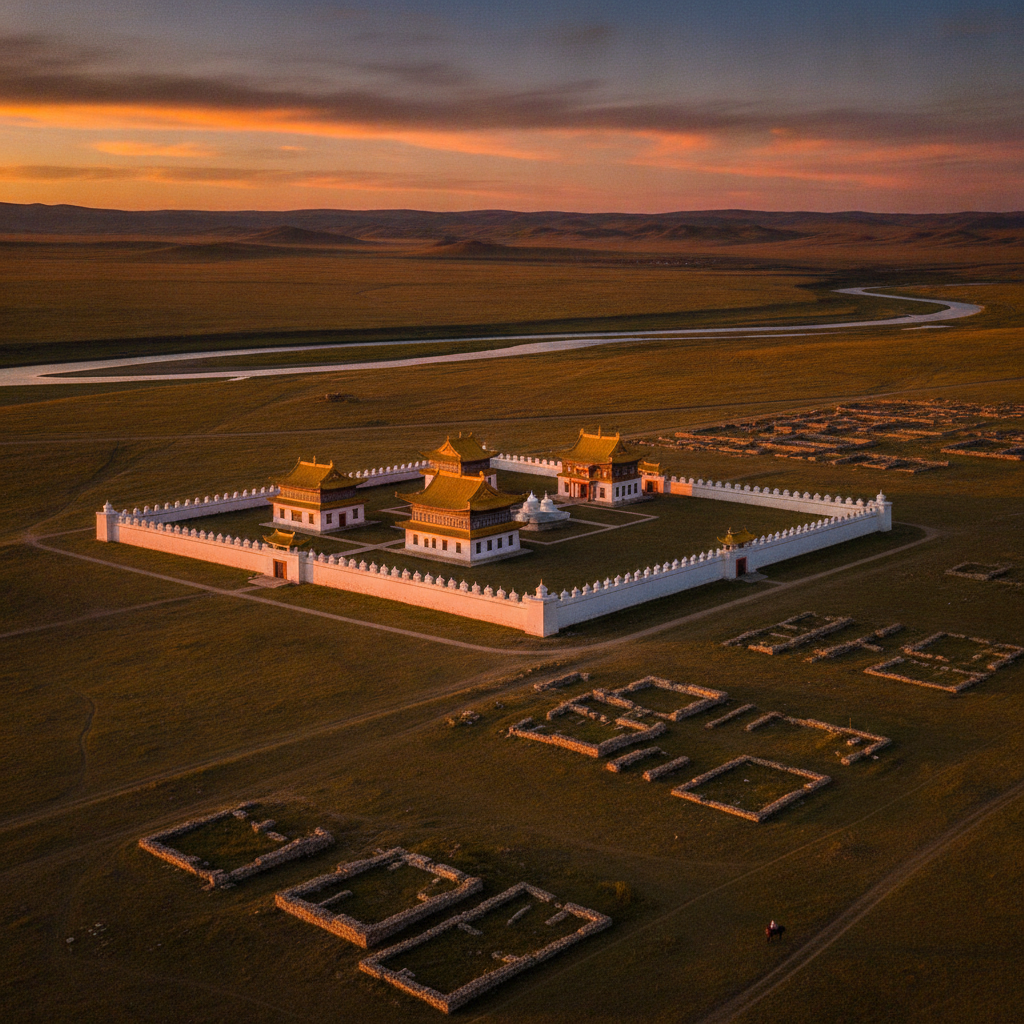
The 13th-Century Capital That Had Buddhist Temples, 2 Mosques, a Nestorian Church & a Taoist Temple, the Last Wild Horse Declared Extinct in 1969 & the Coldest National Capital on Earth
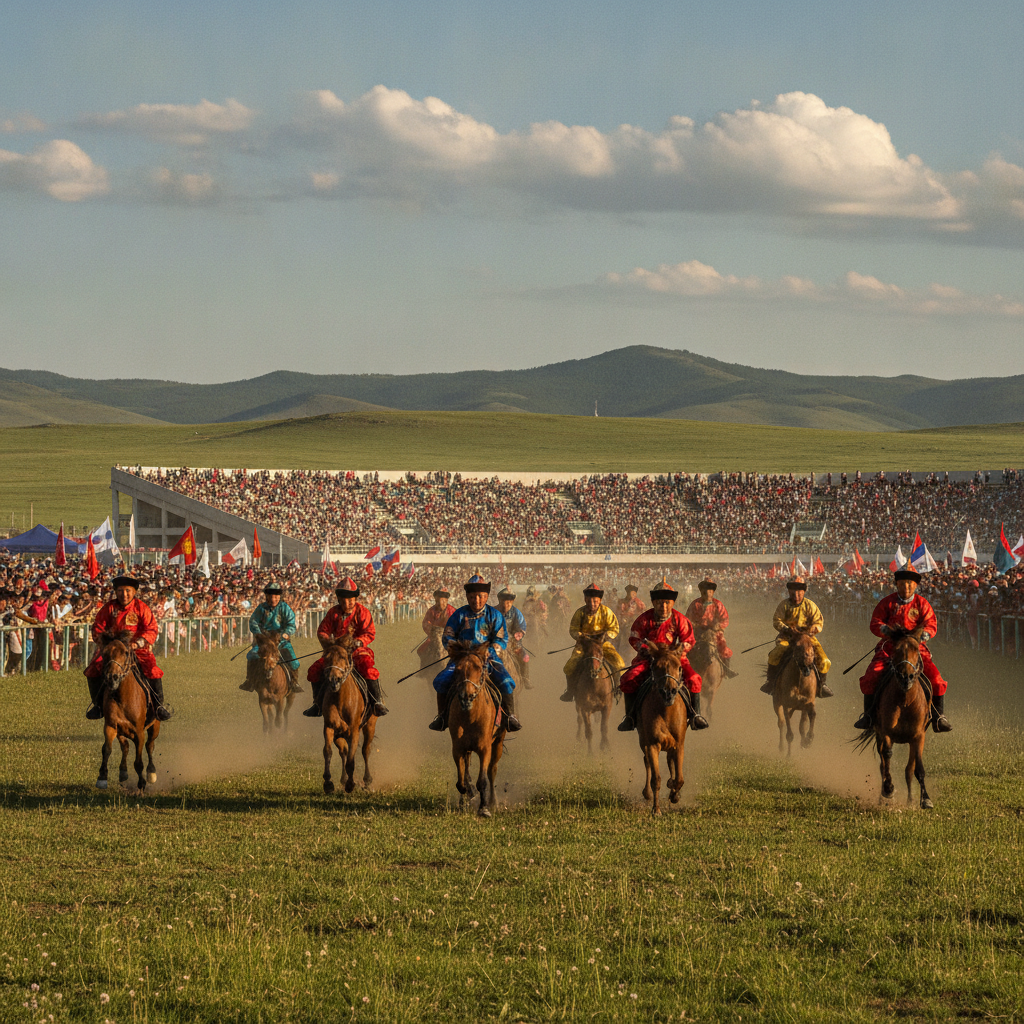
The Child Jockeys Who Race 30 Kilometers, the Dinosaur Eggs Found in 1922 That Proved Dinosaurs Were Not Viviparous & the Bogie-Changing Border Crossing That Takes 4 Hours
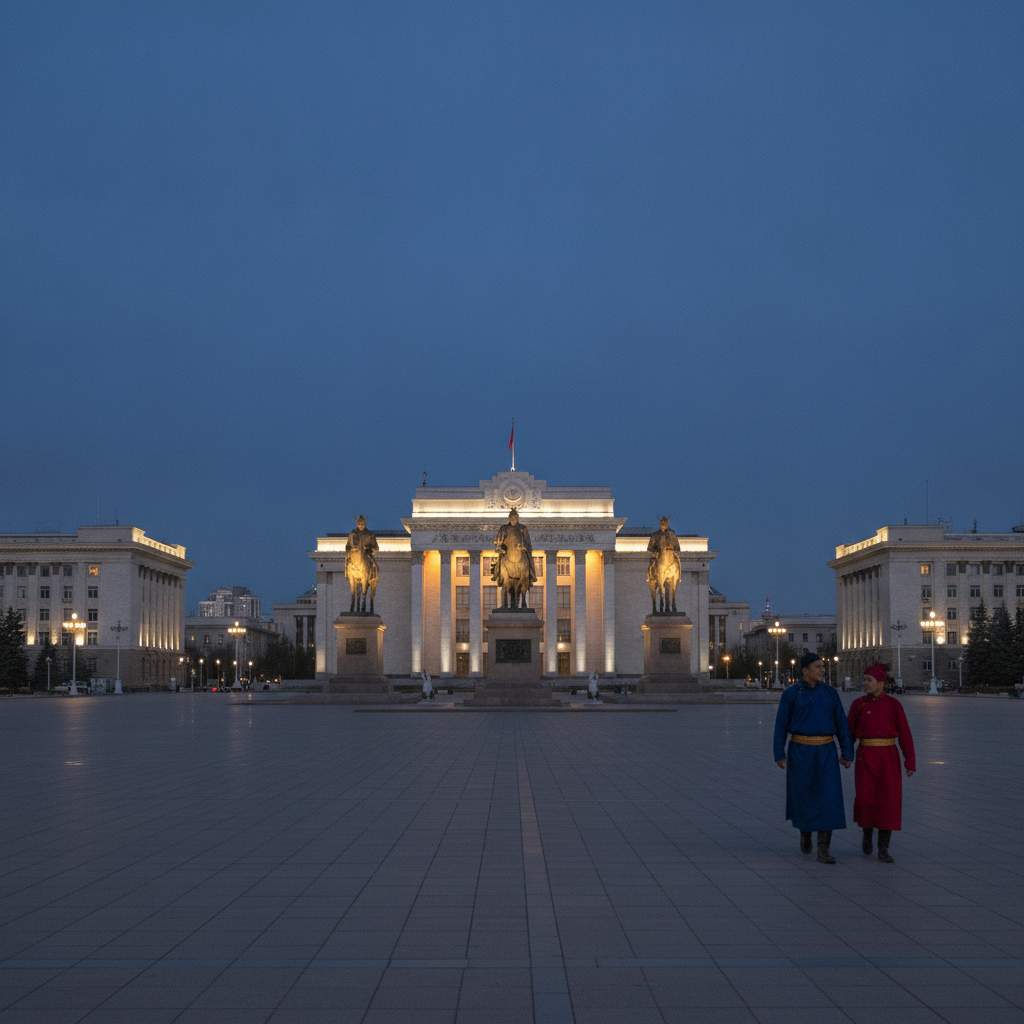
The 6,000-Year-Old Domestication That Made the Mongol Empire Possible, the Open-Chest Wrestling Jacket That Proves the Competitor Is Male & the 1989 Hunger Strike That Ended Communism Without Violence
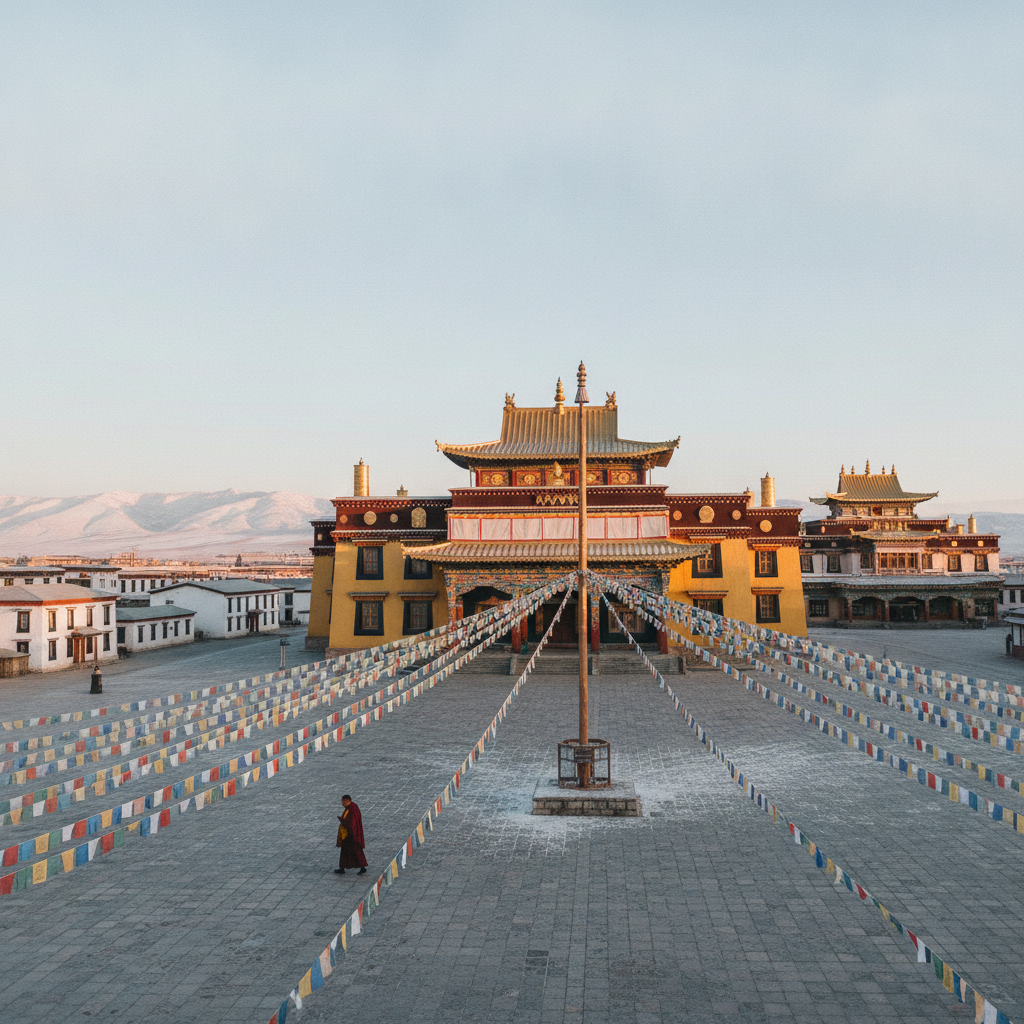
The 17,000 Monks Executed in 1937 and the Single Monastery That Survived, the Secret Burial Site Never Found & the Peaceful Revolution That Made Mongolia the First Democracy in East Asia