The 6,000-Year-Old Domestication That Made the Mongol Empire Possible, the Open-Chest Wrestling Jacket That Proves the Competitor Is Male & the 1989 Hunger Strike That Ended Communism Without Violence
The horse domestication 6,000 years ago as the most consequential single animal domestication in history enabling the Mongol Empire; the bökh open-chest jacket preventing women from competing in disguise per traditional legend; the 1990 hunger strike on January 13 as Mongolia's most visible civil disobedience act; the Classical Mongolian script surviving in both Cyrillic and traditional form on the Sukhbaatar Square monument; the winning Naadam horse honored but the last-place stallion also honored with the Giingo consolation song; and the Tumen Ekh nightly folk performance as the best single cultural show in Ulaanbaatar.
- 1
Mongolia's Mining Boom – Oyu Tolgoi & Resource Economy
The Mongolian mining economy (the resource extraction sector that has driven Mongolia's GDP growth since 2000 and that dominates the political and economic discourse in the country): the economic context for visitors. The resource base (Mongolia has the world's 2nd largest known copper reserves, the 7th largest coal reserves, and significant gold, uranium, and rare earth mineral deposits—the total estimated mineral wealth is USD 1–3 trillion depending on commodity prices—the richest undeveloped mineral endowment per capita of any country): Oyu Tolgoi (Оюу толгой—'Turquoise Hill'): the copper and gold deposit in the South Gobi that is the world's 3rd largest known copper-gold deposit—operated as a joint venture between the Government of Mongolia (34%) and Rio Tinto/Turquoise Hill Resources (66%)—the underground expansion (Phase 2 of the Oyu Tolgoi underground mine began production in 2023, expected to produce 500,000 tonnes of copper per year at peak (the largest copper mine in Asia)). The resource curse debate (the Dutch Disease risk: the rapid expansion of the mining sector (from 10% of GDP in 2000 to 34% in 2023) has caused the currency (Tugrik) to appreciate against the currencies of Mongolia's trading partners, making non-mining exports (cashmere, meat) less competitive—the pattern of resource-dependent economic volatility is the primary economic policy debate in Mongolia): the visitor economy (Mongolia's tourism sector employs approximately 160,000 people (8% of the workforce) and contributes 4% of GDP—far smaller than the 34% of mining but growing at 15% per year since 2015).
- 2
The Mongolian Language & Script Heritage
The Mongolian language (Монгол хэл—the Mongolic language spoken by approximately 5–7 million people in Mongolia and Inner Mongolia (China)): the linguistic and script heritage guide. The Mongolian script (the Classical Mongolian script (Монгол бичиг—the traditional vertical script written from top to bottom and left to right): the script was developed in the 13th century from the Uyghur alphabet for recording the Mongol language during the Chinggis Khaan unification period): the current use (the Classical Mongolian script (also called 'Traditional Script') was replaced by the Cyrillic alphabet in Mongolia in 1941 under Soviet influence—Cyrillic Mongolian is the current official writing system in the Mongolian state): the script revival (since the democratic transition of 1990, the classical Mongolian script has been reintroduced in school curricula—all official signs in Ulaanbaatar now use both Cyrillic and Classical Mongolian: the most visible manifestation of the script policy is the Sukhbaatar Square monument plinth, where both scripts appear side by side). The Secret History of the Mongols (Монголын нууц товчоо—the anonymous chronicle of the rise of Chinggis Khaan, written in the 13th century (1227 CE or shortly after)—the oldest surviving Mongolian literary text and the primary source for the biography of Chinggis Khaan—the text was written in the Classical Mongolian script and has been translated into 38 languages): the Mongolian language learning for visitors (the most useful Mongolian phrases: Sain baina uu (Сайн байна уу—hello); Bayarlalaa (Баярлалаа—thank you); Khed ve? (Хэд вэ?—how much?)).
- 3
Ulaanbaatar Photography – The Nomadic Aesthetic
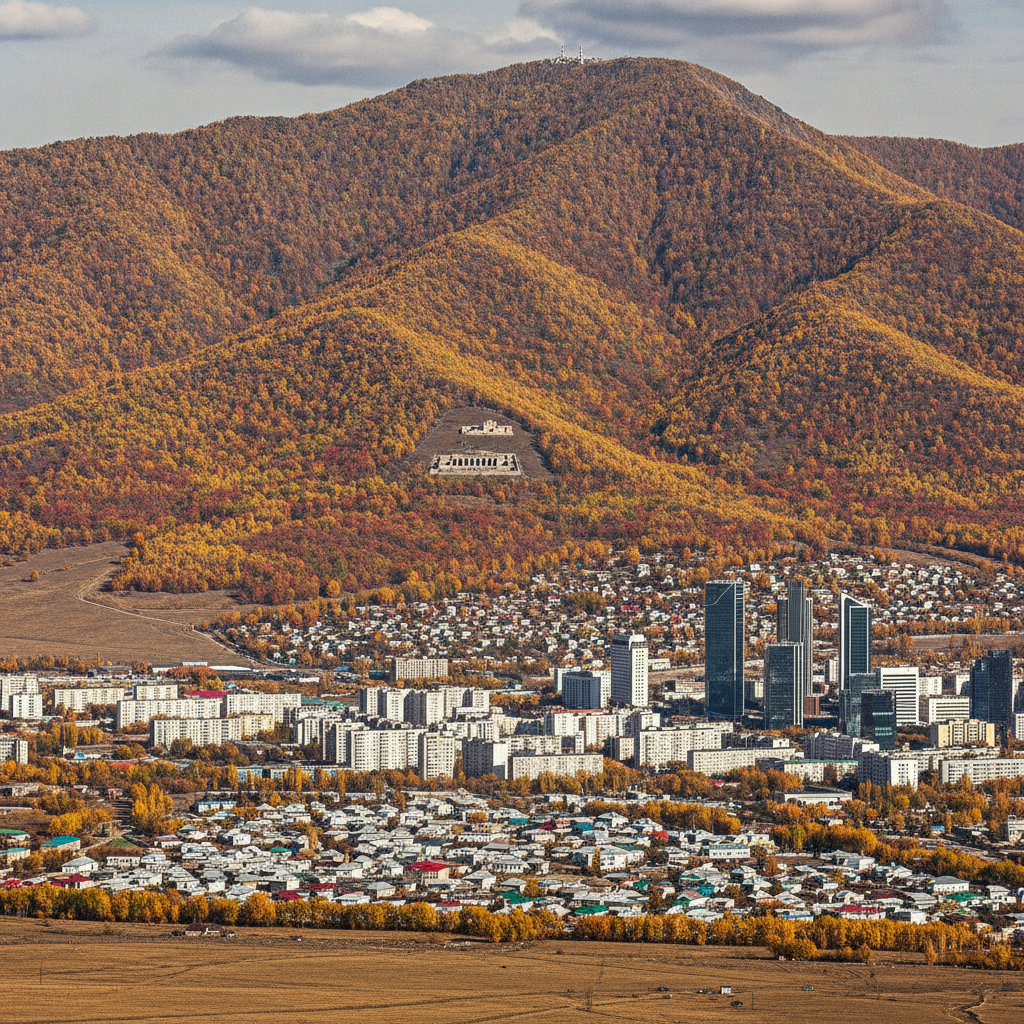
The Ulaanbaatar photography guide (the guide to the most photogenic locations and subjects in the Mongolian capital and its immediate surroundings): the visual guide. The ger district sunrise (the Zaisan Hill (Зайсан толгой—the memorial hill on the southern edge of Ulaanbaatar): the circular Soviet-era WWII memorial at the top of the Zaisan hill, with the panoramic view of the entire Ulaanbaatar basin from the memorial platform—the dawn view (05:30–06:30 in July) with the city in the flat-lit early morning and the Bogd Khan Mountain rising above the southern skyline is the most complete cityscape photograph in Ulaanbaatar): the Gandantegchinlen morning (the interior of the main assembly hall at the morning puja (08:30–10:00): monks in maroon robes chanting in rows facing the central altar, the low morning light entering from the east window creating shafts of light through the incense smoke—the most atmospheric Buddhist photography accessible to visitors in Ulaanbaatar). The Naadam wrestling photography (the Naadam Festival wrestling on July 11–13 at the National Stadium: the bökh wrestlers in their traditional costume (зодог—the open-chest jacket that leaves the torso exposed to prevent females from competing disguised as men, according to the traditional legend of origin) at the moment of the decisive throw—the most kinetically compelling sports photograph in Mongolia).
- 4
The Mongolian Horse Culture – From Steppe to Stadium
The Mongolian horse culture (the cultural and practical centrality of the horse to Mongolian civilization from the Bronze Age to the present): the complete guide. The domestication (the horse was domesticated on the Eurasian steppe approximately 6,000 years ago—the most consequential single animal domestication in human history, enabling the nomadic lifestyle, warfare on horseback, and the long-distance communication that made the Mongol Empire possible): the Mongolian breed (the Mongol horse (Монгол морь) is the closest living relative of the original domesticated horse—the breed has not been significantly altered by selective breeding since the Bronze Age—the Mongol horse can gallop 30–40 km before tiring, survive on minimal food and water, and navigate across snow in winter): the Naadam race (the Naadam horse race children jockeys ride without saddles, using only a thin blanket and bareback technique—the race distances range from 15 km (2-year-old horses) to 30 km (5-year-old horses)—the winning horse's rider, trainer, and horse owner all receive prizes but the horse itself is the primary honored entity: the horse that finishes last in the adult stallion race is also honored with a consolation song ('Giingo'—a traditional Mongolian song sung to the last-place finisher expressing compassion for the horse's effort)). The morin khuur (the horse-head fiddle—the legendary origin: a young man's horse died; he fashioned a fiddle from the horse's bones, hide, and hair—the instrument that encodes the grief of a nomad losing his horse into a musical form).
- 5
The 1990 Democratic Revolution – Mongolia's Peaceful Transition
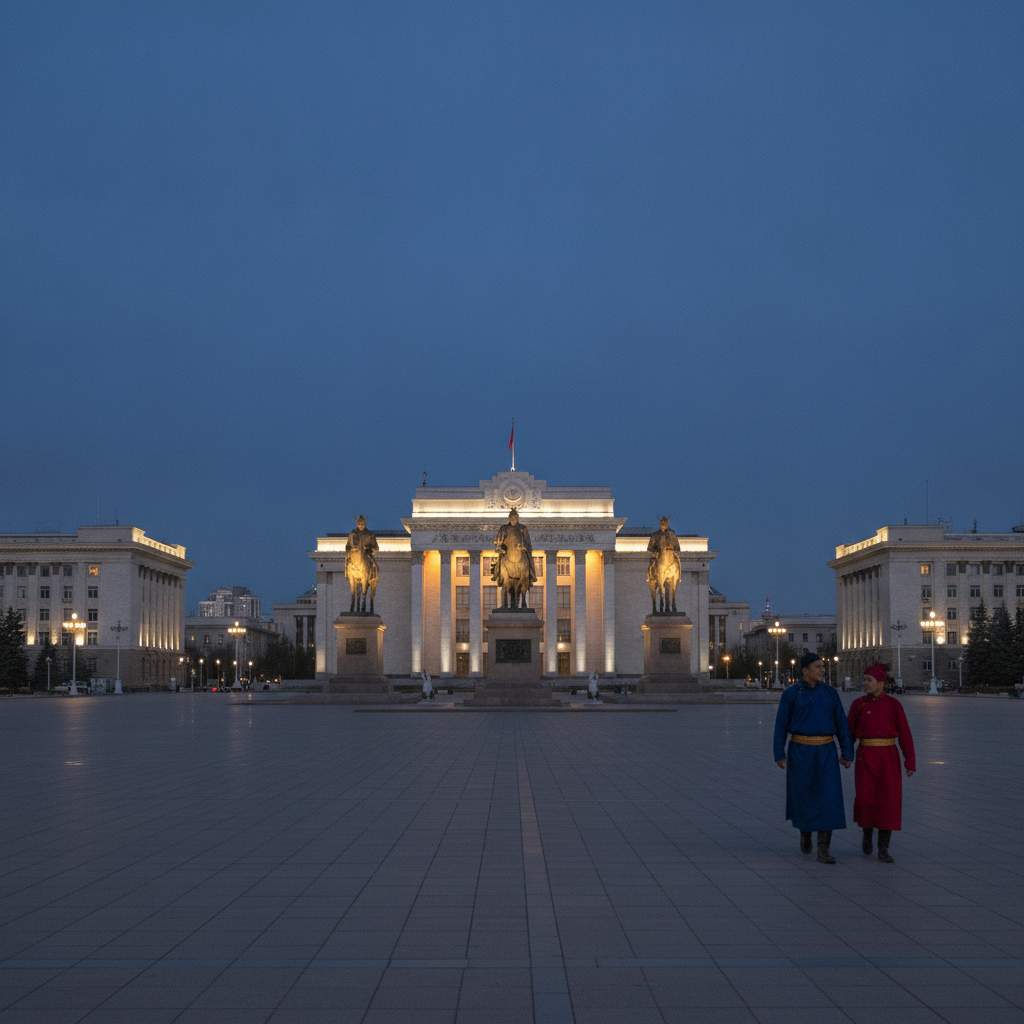
The Mongolian Democratic Revolution of 1990 (the series of public demonstrations and hunger strikes that ended the Mongolian communist regime and established the multi-party democracy without violence): the political history guide. The context (the Mongolian People's Republic (Монгол Ард Улс—1924–1992) was the world's second communist state after Soviet Russia—a Soviet satellite state for 66 years, during which: the Stalinist purge of 1937–1940 (the 17,000 Buddhist monks executed and the 700 monasteries destroyed); the forced collectivization of nomadic herders (1959–1961); the 1964 Mongolian alphabet reform (the switch to Cyrillic)). The 1990 revolution (the Mongolian Democratic Union (Монголын Ардчилсан Холбоо) was founded by a group of young intellectuals and students in December 1989, inspired by the Tiananmen Square protests in China and the Velvet Revolution in Czechoslovakia): the hunger strike (on January 13, 1990, the Democratic Union began a hunger strike in Sukhbaatar Square—the most visible act of civil disobedience in Mongolian history): the transition (the communist government agreed to amend the constitution on March 9, 1990, allowing multi-party elections—the elections of July 1990 resulted in the MPRP (communist party) winning the majority with 85% but the opposition parties gained parliamentary representation for the first time): the full democratic constitution (the Mongolian constitution of 1992 established the full parliamentary democracy that continues today—the most complete democratic transition in the former Soviet bloc outside Europe).
- 6
Ulaanbaatar Itinerary – 3 Days & Beyond
The Ulaanbaatar itinerary guide (the optimal route through the Mongolian capital and its immediate surroundings for visits of different durations): 3-Day Ulaanbaatar Itinerary: Day 1 (City Center): morning Gandantegchinlen Monastery (08:30 morning puja)—Sukhbaatar Square and the Parliament Complex—National Museum of Mongolia (until 13:00)—State Department Store cashmere shopping (4th floor)—Zanabazar Museum of Fine Arts (afternoon). Day 2 (Terelj National Park): full-day excursion (60 km from Ulaanbaatar)—Turtle Rock—Aryabal Temple hike—horse riding at a ger camp—lunch at the ger camp (buuz and airag)—return to Ulaanbaatar in the evening. Day 3 (Zaisan + Cultural): morning Zaisan Hill panoramic view (best before 09:00 for the light)—Mongolian National Museum of History—afternoon: Naadam Stadium (if July 11–13) or the National Sports Palace bökh demonstration—evening: Mongolian cultural show at the Tumen Ekh Ensemble Theater (Тумэн Эх хамтлаг—the nightly folk music and dance performance at 18:00, the best single cultural performance in Ulaanbaatar). Beyond 3 days: Day 4–5: Karakorum + Orkhon Valley (overnight): Day 6–7: Gobi Desert (domestic flight to Dalanzadgad + Flaming Cliffs + Khongoryn Els).
Walk this route with audio
Stories play automatically as you reach each stop — no tapping needed.
More in Ulaanbaatar
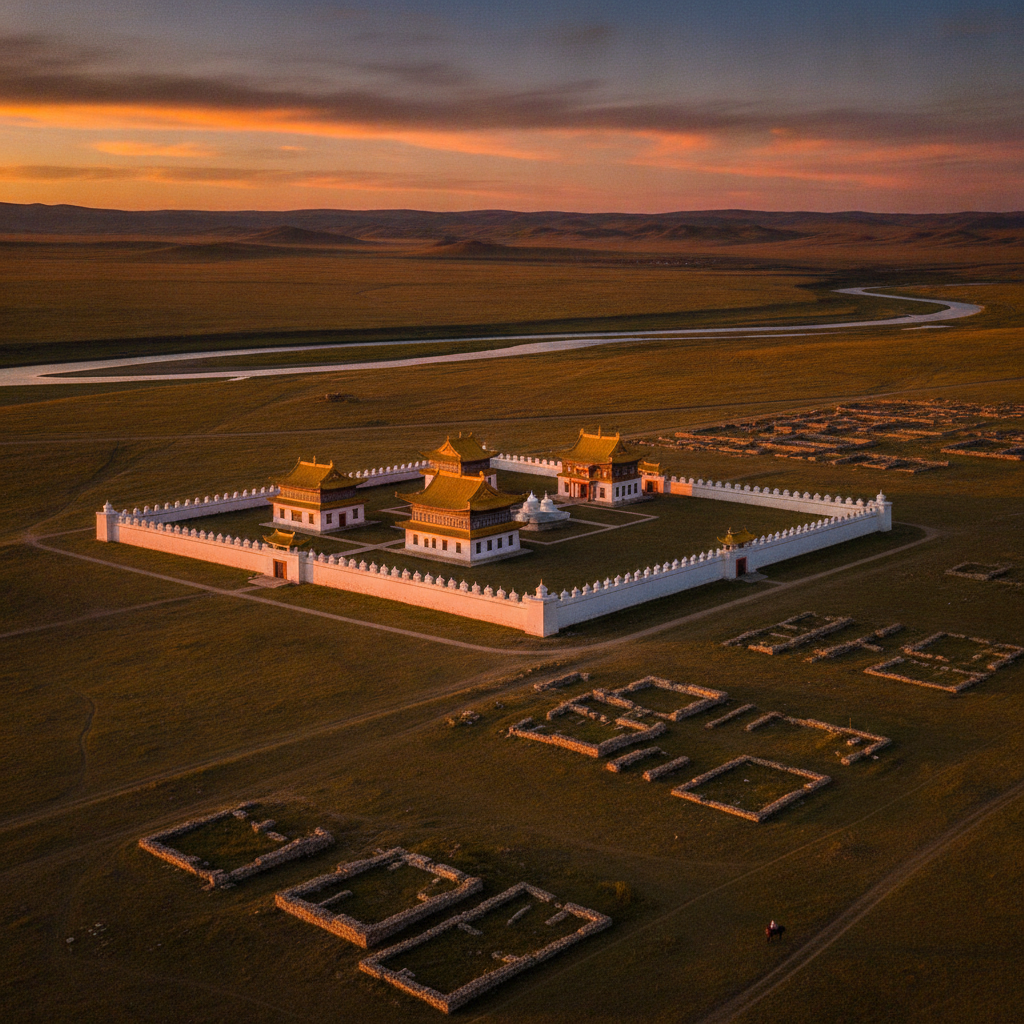
The 13th-Century Capital That Had Buddhist Temples, 2 Mosques, a Nestorian Church & a Taoist Temple, the Last Wild Horse Declared Extinct in 1969 & the Coldest National Capital on Earth
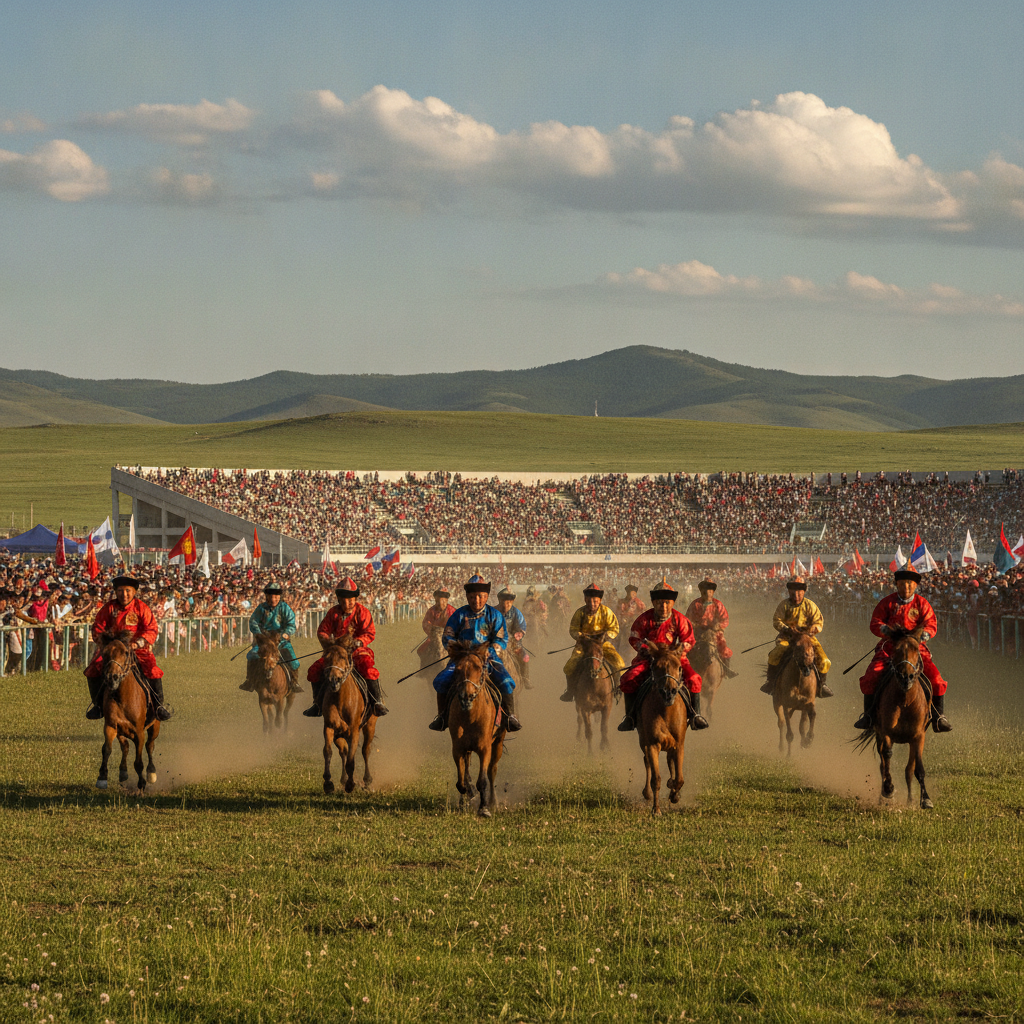
The Child Jockeys Who Race 30 Kilometers, the Dinosaur Eggs Found in 1922 That Proved Dinosaurs Were Not Viviparous & the Bogie-Changing Border Crossing That Takes 4 Hours
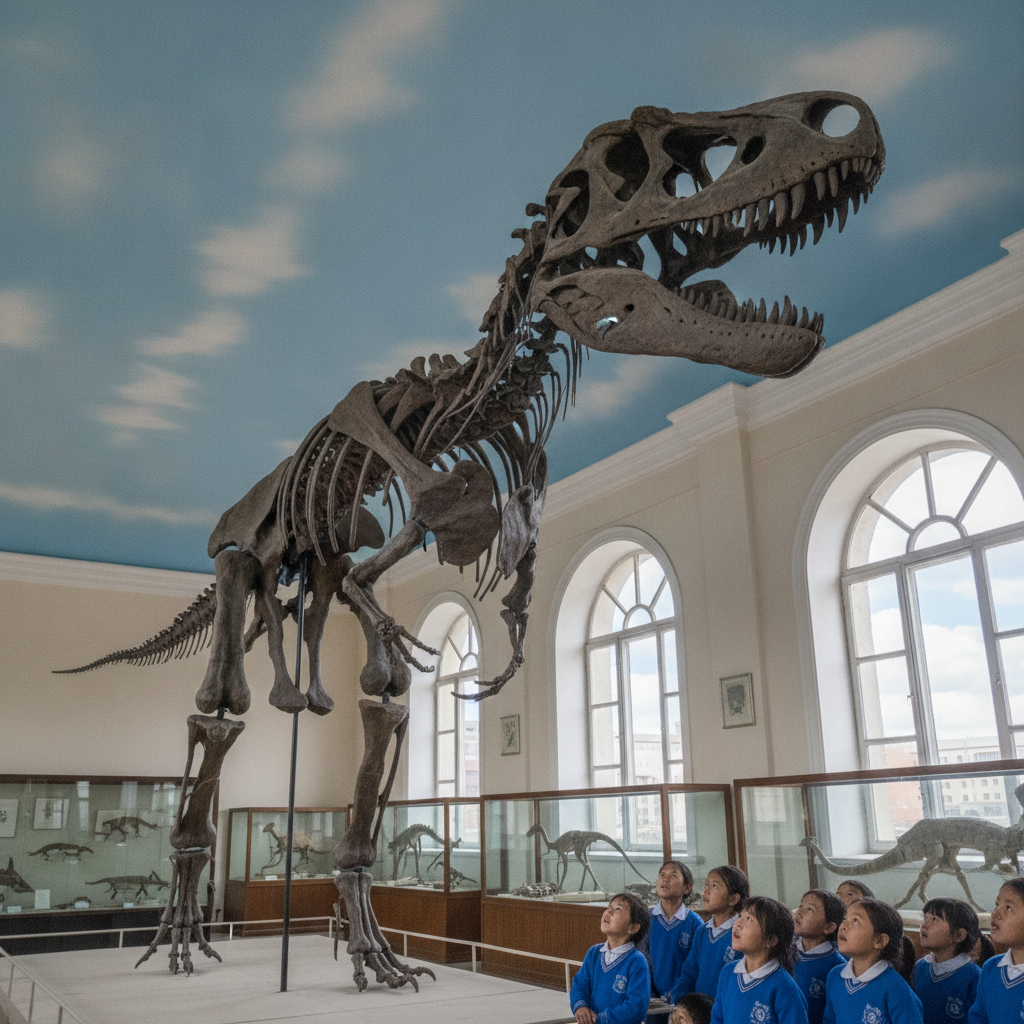
The 1924 Velociraptor 3× Smaller Than Jurassic Park Showed, the 13th-Century Deel Still Worn Daily by 30% of Ulaanbaatarians & the Bortle Class 1 Sky Where the Milky Way Casts Shadows
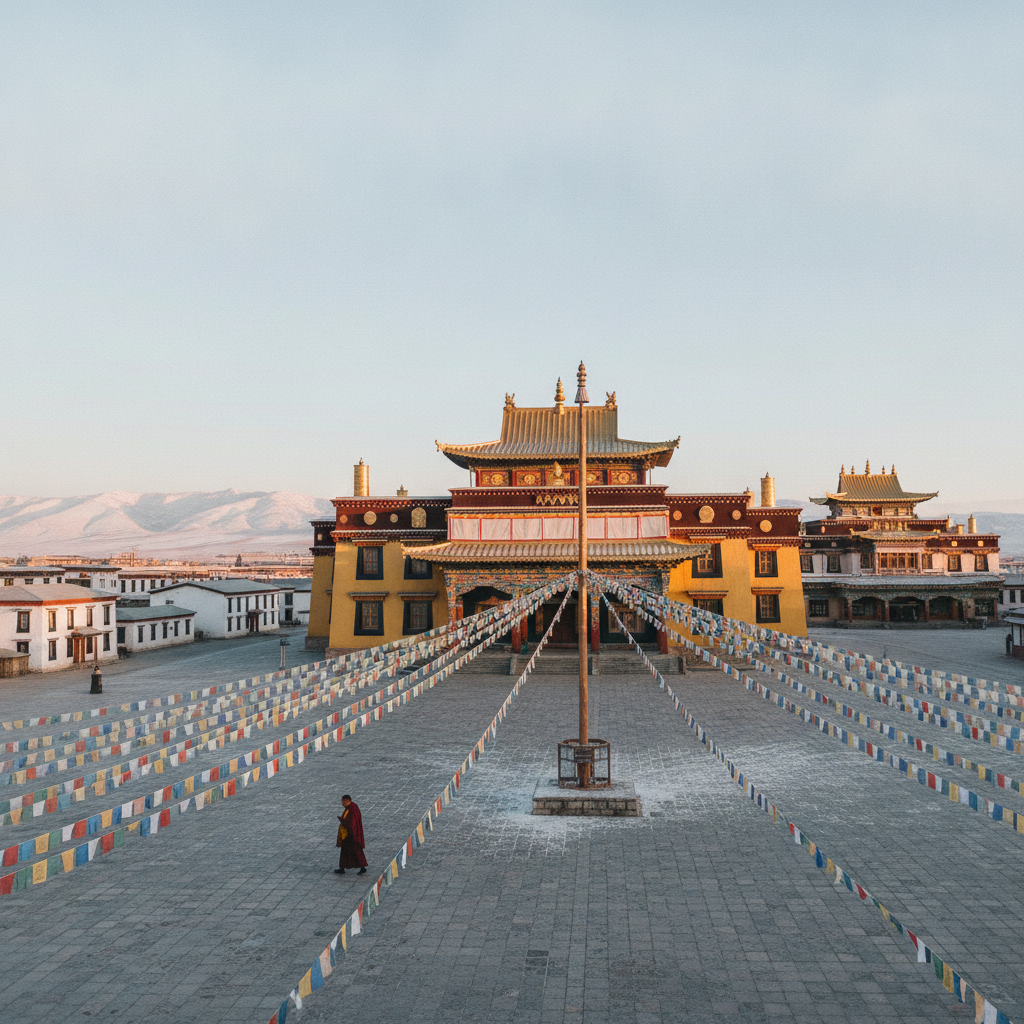
The 17,000 Monks Executed in 1937 and the Single Monastery That Survived, the Secret Burial Site Never Found & the Peaceful Revolution That Made Mongolia the First Democracy in East Asia