The Child Jockeys Who Race 30 Kilometers, the Dinosaur Eggs Found in 1922 That Proved Dinosaurs Were Not Viviparous & the Bogie-Changing Border Crossing That Takes 4 Hours
The Naadam horse race's child jockeys aged 5-13 as the most internationally contested aspect of Mongolia's national festival; Roy Chapman Andrews' 1922 Flaming Cliffs discovery of the first dinosaur eggs proving egg-laying; the Trans-Mongolian Railway's 4-hour bogie-changing at the Mongolian-Chinese border for gauge conversion; the Mongolian horse surviving -40°C winters unchanged since the Bronze Age; the ger's felt insulation maintaining 20°C interior at -30°C exterior; and airag fermented mare's milk at 1-3% alcohol churned by thousands of strokes in a leather bag.
- 1
The Mongolian Steppe – A Nomadic Landscape
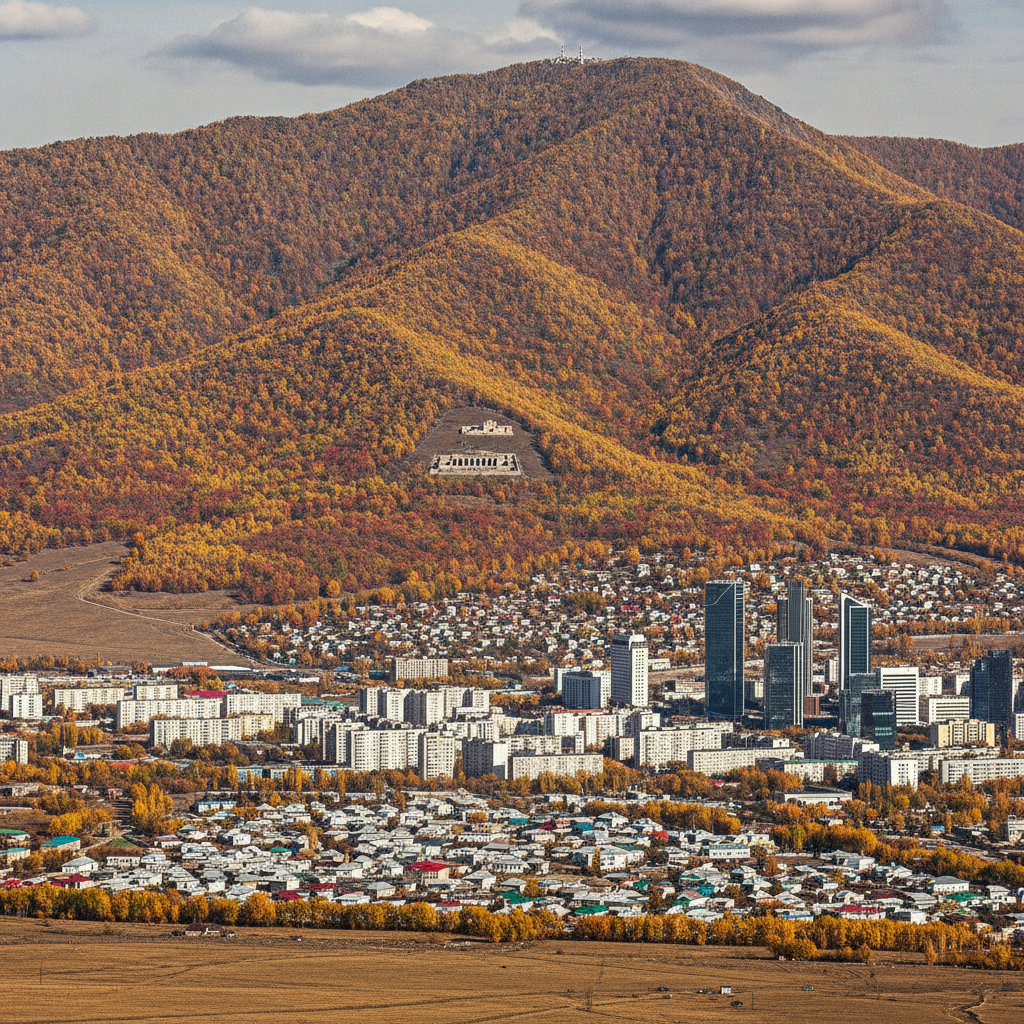
The Mongolian steppe (тал нутаг—the grassland ecosystem of the Mongolian Plateau): the landscape that has shaped Mongolian culture, history, and identity for 3,000 years. The steppe geography (Mongolia is a landlocked country of 1,564,116 km² (the 18th largest country in the world)—the terrain composition: 80% steppe and semi-desert, 10% forest (taiga in the north), 10% Gobi Desert (in the south)—the most sparsely populated country on earth by territory (3.3 million people in 1,564,116 km²—2.1 persons per km²)). The steppe from Ulaanbaatar (the steppe begins immediately at the city limits of Ulaanbaatar—the road south (the road to the airport) passes through steppe terrain within 5 km of the Sukhbaatar Square): the Terelj National Park (Горхи-Тэрэлж Улсын Цэцэрлэгт хүрээлэн—60 km northeast of Ulaanbaatar): the most visited natural area from Ulaanbaatar, with the distinctive steppe + granite outcrop landscape (the Turtle Rock (Мэлхий Чулуу) and the Ariyabal Meditation Temple (Ариабал сүм—the hilltop temple above the Terelj valley)). The sky (the Mongolian sky is the dominant visual feature of the landscape—the completely flat-to-rolling steppe horizon allows the full 360° sky hemisphere to be visible from any point: the Mongolian concept of 'eternal blue sky' (Мөнх Хөх Тэнгэр—'the eternal blue sky') is the central concept of Mongolian folk religion (Tengrism)).
- 2
Naadam Festival – Mongolia's National Celebration
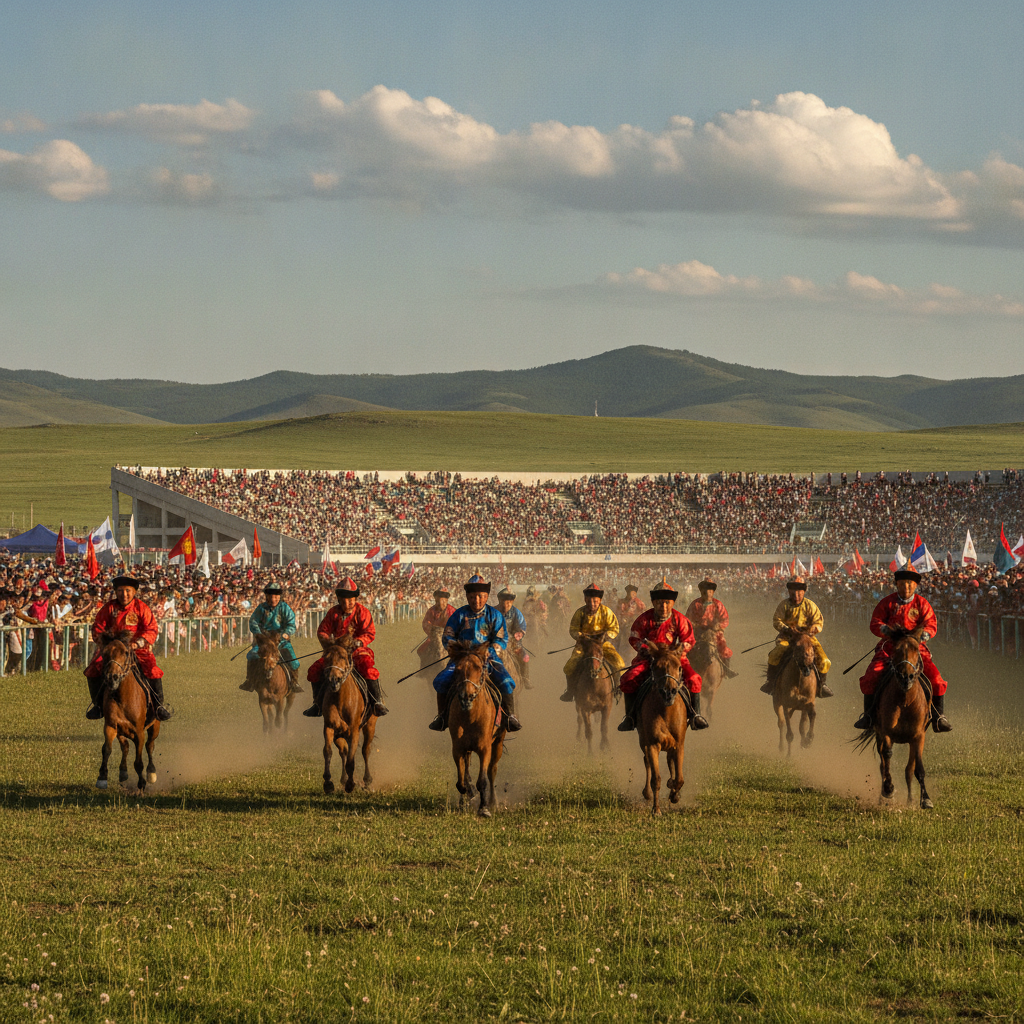
The Naadam Festival (Наадам—'the three games of men'): the annual national festival of Mongolia held in Ulaanbaatar on July 11–13 to commemorate the Mongolian Revolution of 1921 and the traditional nomadic sporting competitions: the most important cultural event in Mongolia. The three sports (the Mongolian national festival is organized around 3 traditional nomadic sports: Mongolian wrestling (бөх—bökh): the most popular sport in Mongolia, with no weight categories, no time limits, and the goal of causing any body part except the feet to touch the ground—the Naadam wrestling tournament involves 512 wrestlers (the traditional power of 2 format) and takes 2 days to complete; archery (харваа): traditional Mongolian recurve bow archery at 75m (men) and 60m (women) using compressed leather targets (сур—the woven leather ring target that produces a distinctive whistle when struck); horse racing (морин уралдаан): cross-country horse racing over 15–30 km with child jockeys aged 5–13 years (the use of child jockeys is the most controversial aspect of the Naadam from an international perspective)). The opening ceremony (the opening ceremony at the National Stadium on July 11: the procession of the 9 white horse-tail standards of Chinggis Khaan (the Mongolian imperial standard), the State Honorable Elders, and the athletes—the most visually impressive pageant in Central Asian public life). The festival economy (the Naadam festival brings approximately 300,000 visitors to Ulaanbaatar over the 3 days—the highest visitor volume of any event in Mongolia).
- 3
The Gobi Desert – Day Trips from Ulaanbaatar
The Gobi Desert (Говийн цөл—the semi-arid desert region of southern Mongolia and northern China): the most internationally recognized natural landscape of Mongolia—the destination for the dedicated Mongolian traveler. The Gobi from Ulaanbaatar (the Gobi Desert begins approximately 500 km south of Ulaanbaatar—accessible by: the 2-hour domestic flight to Dalanzadgad (Даланзадгад) (the capital of the South Gobi Province): the overnight train from Ulaanbaatar (21 hours to Choir then road transport): the road (the 550 km drive on the main southern highway takes 6–8 hours in dry conditions). The Gobi attractions: the Flaming Cliffs (Баянзаг—'rich in saxaul'—the red sandstone formations where the first dinosaur eggs were discovered in 1922 by Roy Chapman Andrews (the American Museum of Natural History paleontologist)—the discovery that proved dinosaurs laid eggs): the Khongoryn Els (Хонгорын элс—the singing sand dunes—the largest sand dunes in Mongolia, 20 km long, 300m tall, producing a low rumbling sound in wind): the Yolyn Am (Ёлын ам—'Lammergeier Gorge'—the deep canyon in the Gurvan Saikhan Mountains where ice persists until July even in the extreme Gobi heat—the most unexpected single natural feature in Mongolia). The Gobi 2-day circuit from Ulaanbaatar (fly Ulaanbaatar to Dalanzadgad + jeep to Khongoryn Els + Yolyn Am: the most content-per-day of any Mongolia adventure circuit).
- 4
Mongolian Food & Drinking Culture
The Mongolian food culture (the cuisine of the steppe nomad—the most meat-and-dairy dominated food tradition in the world): the Ulaanbaatar food guide. The staple foods: khorkhog (хорхог—the traditional Mongolian BBQ: whole sheep (or goat) cooked with hot stones inserted into the carcass, sealed and cooked by the internal heat transfer from the stones—the most dramatic cooking technique in Mongolian cuisine): buuz (бууз—the Mongolian steamed dumpling filled with seasoned mutton—the primary street food of Ulaanbaatar, sold at buuz shops (буузны газар) from 07:00): tsuivan (цуйван—the fried noodle dish with mutton and vegetables—the most widely ordered weekday lunch in Ulaanbaatar restaurants): airag (айраг—the fermented mare's milk (koumiss)—the most culturally significant Mongolian beverage, consumed at all nomadic celebrations, with an alcohol content of 1–3%—the production (the airag is made by churning fresh mare's milk in a large leather bag (хөхүүр) thousands of times until the milk sugars ferment—the churning is traditionally done by the passing visitor who gives the bag a ceremonial stir upon entering a ger)). Where to eat (the Modern Nomads Restaurant (Орчин Үеийн Нүүдэлчин) near the State Department Store—the most recommended contemporary Mongolian cuisine restaurant in Ulaanbaatar for traditional dishes with modern presentation).
- 5
The Trans-Mongolian Railway – Moscow to Beijing
The Trans-Mongolian Railway (Транс-Монголын Төмөр Зам—the Mongolian section of the most legendary railway journey in the world): the complete guide to the Moscow–Ulaanbaatar–Beijing train. The route (the Trans-Mongolian branch of the Trans-Siberian Railway: Moscow–Ulaanbaatar–Beijing: 7,622 km total distance, approximately 6 days and 4 hours from Moscow to Beijing via Ulaanbaatar): the Mongolian section (Ulaanbaatar to Beijing (K23/K24 express): approximately 30 hours, border crossing at Zamiin-Uud (Замын-Үүд)/Erlian (二连浩特)—the train undergoes a 4-hour bogie-changing procedure at the border because the Mongolian/Russian rail gauge (1,520mm) is wider than the Chinese gauge (1,435mm)—the bogie-changing (each carriage is lifted by hydraulic jacks, the bogies (wheels and axles) are removed and replaced with the correct gauge bogies, and the carriage lowered): the most technically unusual railway border crossing in the world, visible to passengers in the carriages during the operation). The 3 classes (1st (2-berth compartment—the most private), 2nd (4-berth compartment—the most sociable), and 3rd (platzkart—open carriage with 54 berths)): the practical booking (the Trans-Mongolian Railway tickets must be booked through an accredited travel agent for the Mongolian segment—the most efficient booking platform (2024) is the Monkey Shrine agency in Ulaanbaatar).
- 6
Mongolian Nomadic Life – Ger Stays & Horseback
The nomadic experience (the most popular activity for international visitors to Mongolia—staying with a nomadic family in a ger and participating in the daily tasks of the pastoral lifestyle): the guide to doing it well. The ger (the traditional Mongolian felt dwelling—the most thermally efficient portable structure ever devised by humans): the construction (a standard ger can be assembled by 2–3 people in 30–45 minutes—the structure: a circular lattice wall (хана) of collapsible willow rods supporting roof poles (uni) radiating from the central roof ring (toono) covered with layers of felt (эсгий) and canvas—the thermal efficiency (the felt insulation maintains interior temperature at 20°C when exterior temperature is -30°C with a single central stove)). The ger etiquette (the 14 rules of ger etiquette most important for visitors: enter with the left foot first; walk clockwise; do not touch the central post (bagana); do not whistle inside; do not lean against the wall supports; accept all offered food and drink with both hands; give the airag bag a stir when entering)). The horse (the Mongolian horse (Монгол морь—the primitive horse breed used unchanged since the Bronze Age—the Mongolian horse is smaller than a European horse (137–145cm at the shoulder), incredibly hardy (surviving -40°C winters on the steppe), and responsive to experienced riders)): the horseback circuit from Ulaanbaatar (the Terelj National Park 3-day horseback circuit—the most accessible overnight horse trekking from Ulaanbaatar—the standard agency circuit: Terelj valley ride, river crossing, overnight ger camp, steppe summit ride).
Walk this route with audio
Stories play automatically as you reach each stop — no tapping needed.
More in Ulaanbaatar
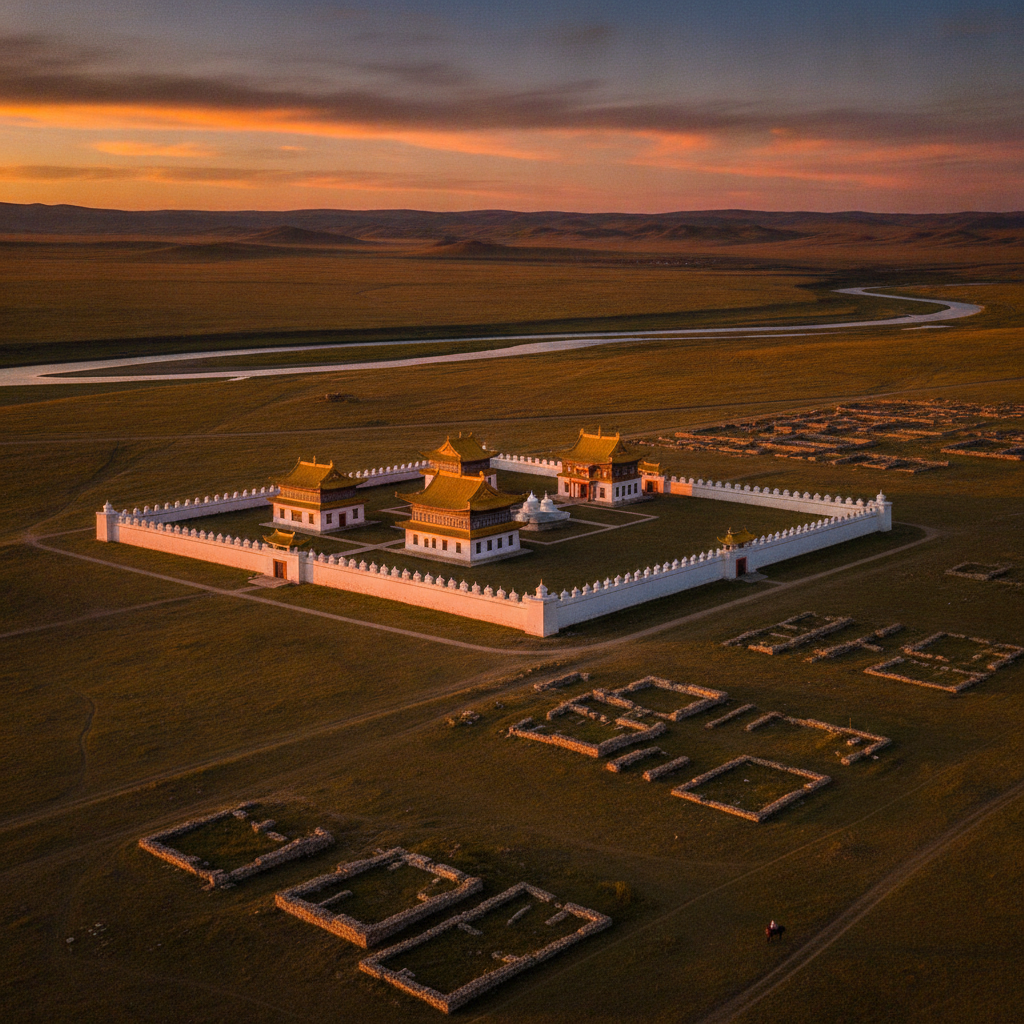
The 13th-Century Capital That Had Buddhist Temples, 2 Mosques, a Nestorian Church & a Taoist Temple, the Last Wild Horse Declared Extinct in 1969 & the Coldest National Capital on Earth
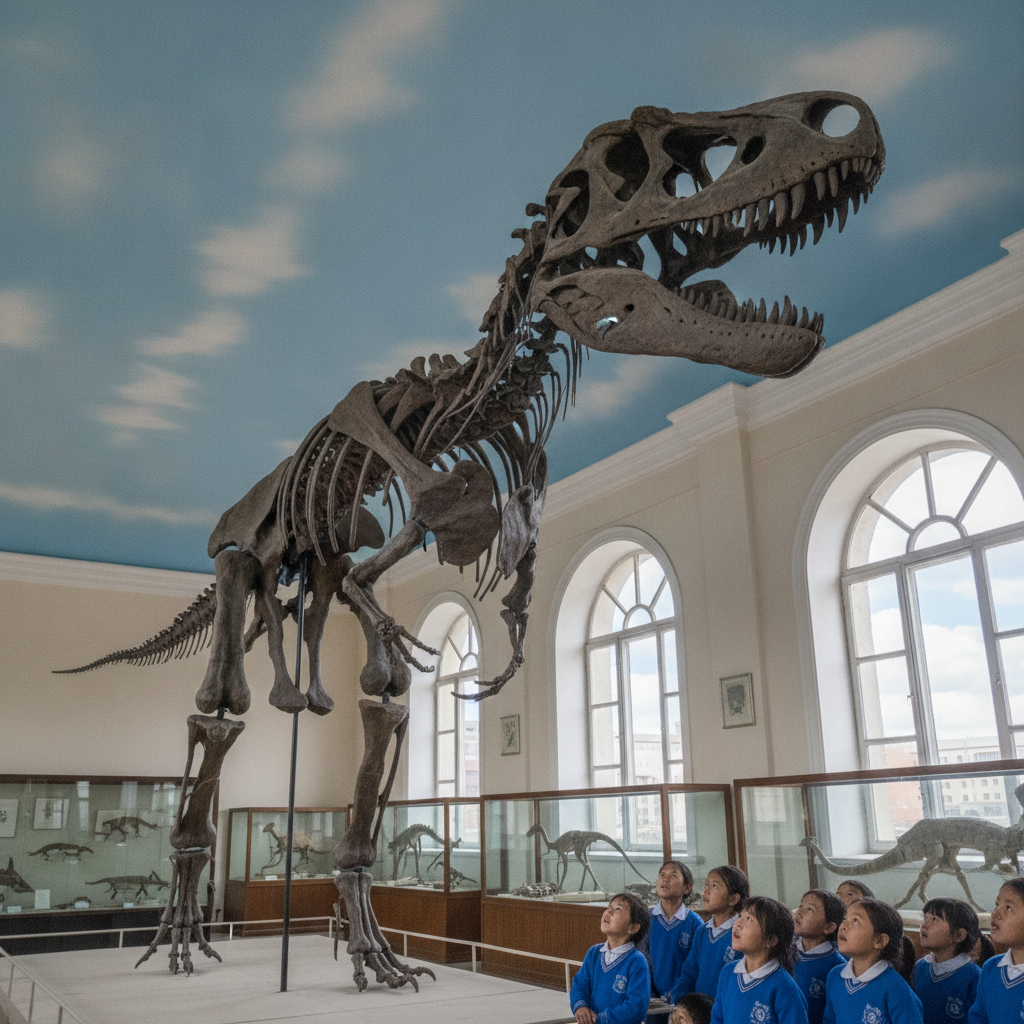
The 1924 Velociraptor 3× Smaller Than Jurassic Park Showed, the 13th-Century Deel Still Worn Daily by 30% of Ulaanbaatarians & the Bortle Class 1 Sky Where the Milky Way Casts Shadows
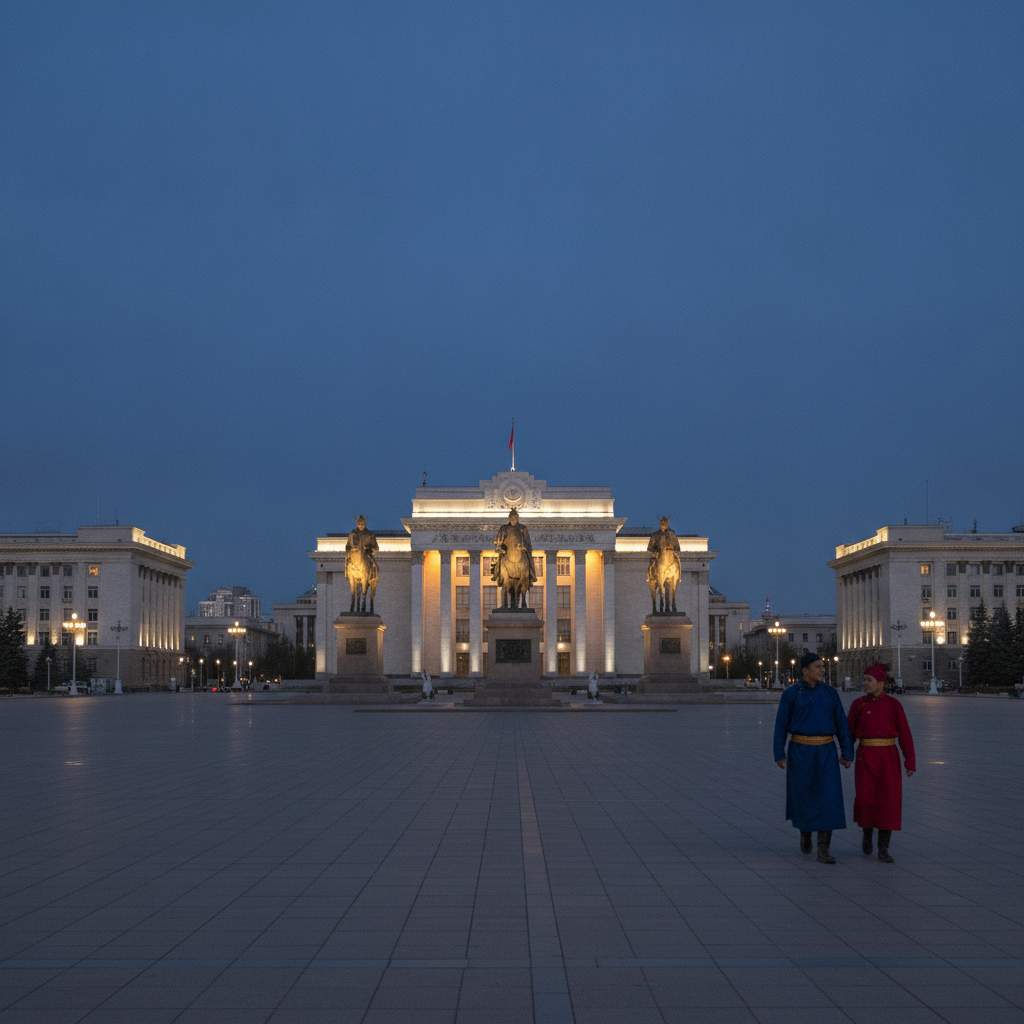
The 6,000-Year-Old Domestication That Made the Mongol Empire Possible, the Open-Chest Wrestling Jacket That Proves the Competitor Is Male & the 1989 Hunger Strike That Ended Communism Without Violence
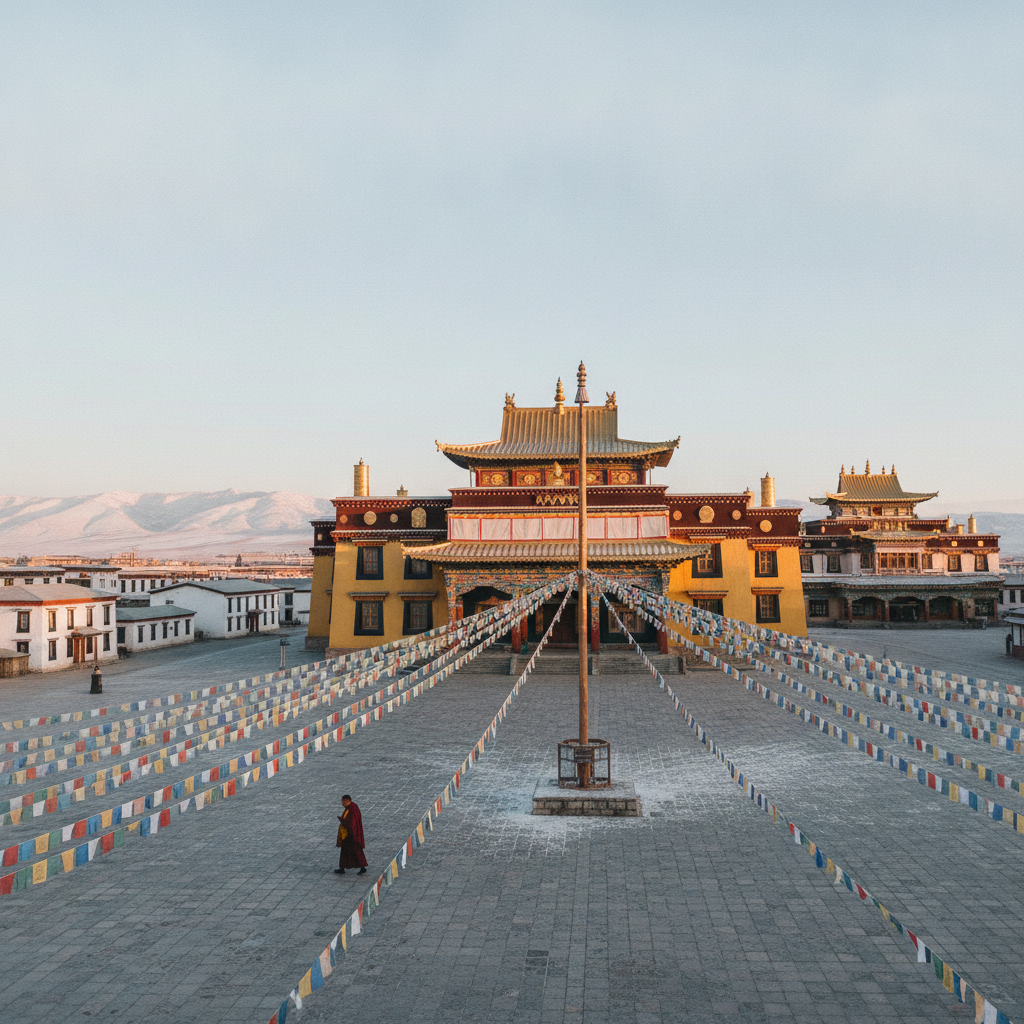
The 17,000 Monks Executed in 1937 and the Single Monastery That Survived, the Secret Burial Site Never Found & the Peaceful Revolution That Made Mongolia the First Democracy in East Asia