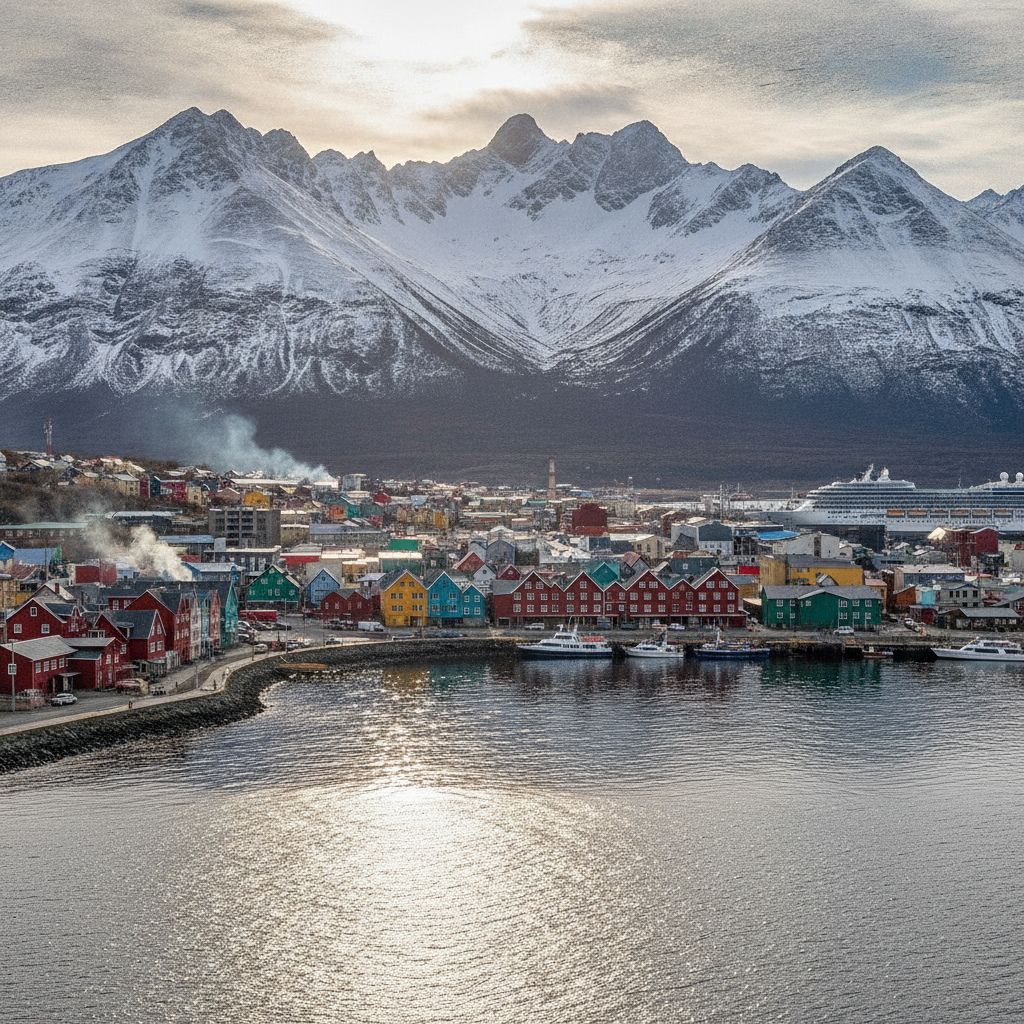
Ushuaia History: Penal Colony, Missionaries, Darwin, and Argentine Sovereignty
The history of Ushuaia moves from the millennia of Yamana habitation through the traumatic encounter with European missionaries in the 19th century, the establishment of the Argentine penal colony that built the modern city, the wartime Antarctic and sub-Antarctic strategic significance of the location, and the contemporary assertion of Argentine sovereignty over the Malvinas Islands and the Antarctic territory that gives the southernmost city its geopolitical importance.
- 1
Darwin and the Beagle: The Scientific Encounter with Tierra del Fuego
Charles Darwin's visit to the Beagle Channel in 1833 aboard HMS Beagle, during the second voyage of the ship under Commander Robert FitzRoy, was one of the most significant scientific observations of Darwin's career and provided material that influenced his thinking about human variation, adaptation, and the nature of civilization. FitzRoy had brought four Yamana individuals to England on the first Beagle voyage in 1830, where they were dressed, educated, and presented to King William IV; the 1833 voyage returned them to their homeland with the missionary James Matthews, who attempted to establish a mission at the site that would later become Ushuaia. The encounter Darwin witnessed between the Europeanized Yamana and their original community, in which the returned individuals rapidly reverted to Yamana customs and the mission was abandoned within months, profoundly challenged Darwin's assumptions about the universal applicability of European civilization and contributed to his developing thinking about the diversity of human societies. Darwin's descriptions of the Yamana in the Voyage of the Beagle, which expressed revulsion at their living conditions while simultaneously acknowledging their extraordinary adaptation to the environment, reflect the contradictions of Victorian scientific racism that Darwin would later partially transcend in his mature works. The Beagle Channel, named by FitzRoy after his ship, preserves the primary physical reminder of the voyage in the Tierra del Fuego region alongside the secondary monuments and interpretive panels in the Ushuaia museums.
- 2
Thomas Bridges and the Ushuaia Mission: Civilizing the End of the World
Thomas Bridges, a missionary of the South American Missionary Society who established the Ushuaia mission in 1871, was the most significant figure in the transformation of the Yamana encounter with European civilization from violent dispossession to the more paternalistic but ultimately also devastating relationship of the mission system. Bridges learned the Yamana language to a degree of fluency that produced the monumental Yamana-English Dictionary, the most complete documentation of the Yamana language ever created, and the dictionary is now considered one of the most important linguistic documents in the history of South American indigenous languages. The mission at Ushuaia, the first permanent European settlement in the area and the predecessor of the current city, gathered Yamana from the surrounding channels under a program of religious conversion, agricultural instruction, and European dress and housing that effectively destroyed the mobile maritime lifestyle that had sustained the Yamana for millennia. Bridges eventually resigned from the missionary society and established the Estancia Harberton east of Ushuaia in 1886, the first private estancia in Tierra del Fuego and now a heritage property open to visitors that preserves the original missionary buildings and the natural history collections of the Bridges family. The relationship between the well-intentioned missionary program and the catastrophic demographic collapse of the Yamana, whose population fell from several thousand to fewer than 100 within half a century of intensive contact, is the central ethical question of the Ushuaia settlement history.
- 3
The Penal Colony: Building a City with Convict Labor
The Argentine government established the penal colony at Ushuaia in 1896 on the grounds that the extreme remoteness of the location made escape impossible and that the labor of the convicts could be used to develop infrastructure in a strategically important but economically marginal territory. The Presidio de Ushuaia, the main prison building completed in 1920 with capacity for approximately 600 prisoners, was the most elaborate institutional building ever constructed in Tierra del Fuego and remains the dominant architectural monument of the city. The convict labor built the city infrastructure of Ushuaia including the roads, the port facilities, and the narrow-gauge railway to the national park that later became the tourist End of the World Train; the use of convict labor for territorial infrastructure development was a common practice in remote Argentine territories during this period and reflects the dual function of the penal system as both punishment and colonization instrument. Notable prisoners of the Ushuaia penal colony included the anarchist Simon Radowitzky, who assassinated the Buenos Aires chief of police in 1909 and spent 21 years in the Ushuaia prison, and several other political prisoners whose experiences were documented in memoirs that provide the primary literary record of life in the southernmost prison. The prison was closed in 1947 under President Juan Peron, who transformed the criminal justice system and ended the practice of long-distance prison exile; the Presidio building became a naval station and is now a museum that preserves the cell blocks, the railway, and the institutional memory of the penal colony period.
- 4
The Malvinas Question: Ushuaia and Argentine Sovereignty
The Argentine claim to sovereignty over the Islas Malvinas, known as the Falkland Islands in Britain, is expressed throughout Ushuaia in murals, placards, street names, and official signage that assert Argentine sovereignty over the archipelago 500 kilometers to the east and over the surrounding South Atlantic sea territory. The 1982 Argentine military occupation of the Malvinas and the subsequent British military reconquest in the Falklands War is remembered in Ushuaia through a memorial to the Argentine soldiers who died in the conflict, situated prominently in the city center, and through the continued presence of Argentine veterans in the community. The strategic importance of Ushuaia in the context of the Malvinas dispute reflects the city's position as the southernmost Argentine port and the closest Argentine territory to the disputed islands; the naval base and coast guard facilities at Ushuaia serve both civilian and military maritime functions that include surveillance of the South Atlantic approaches. Argentine school curriculum teaches the Malvinas as occupied Argentine territory and the obligation to recover sovereignty peacefully; this is a matter of national consensus across Argentine political parties and is reflected in the intensity of the Malvinas references visible throughout Ushuaia. The diplomatic relationship between Argentina and the United Kingdom remains complicated by the sovereignty dispute despite otherwise normal bilateral relations; British visitors to Ushuaia encounter the Malvinas claims as part of the ambient political culture of the city without, in practice, any personal difficulty in visiting as tourists.
- 5
Estancia Harberton: The Oldest Farm and the Penguin Sanctuary
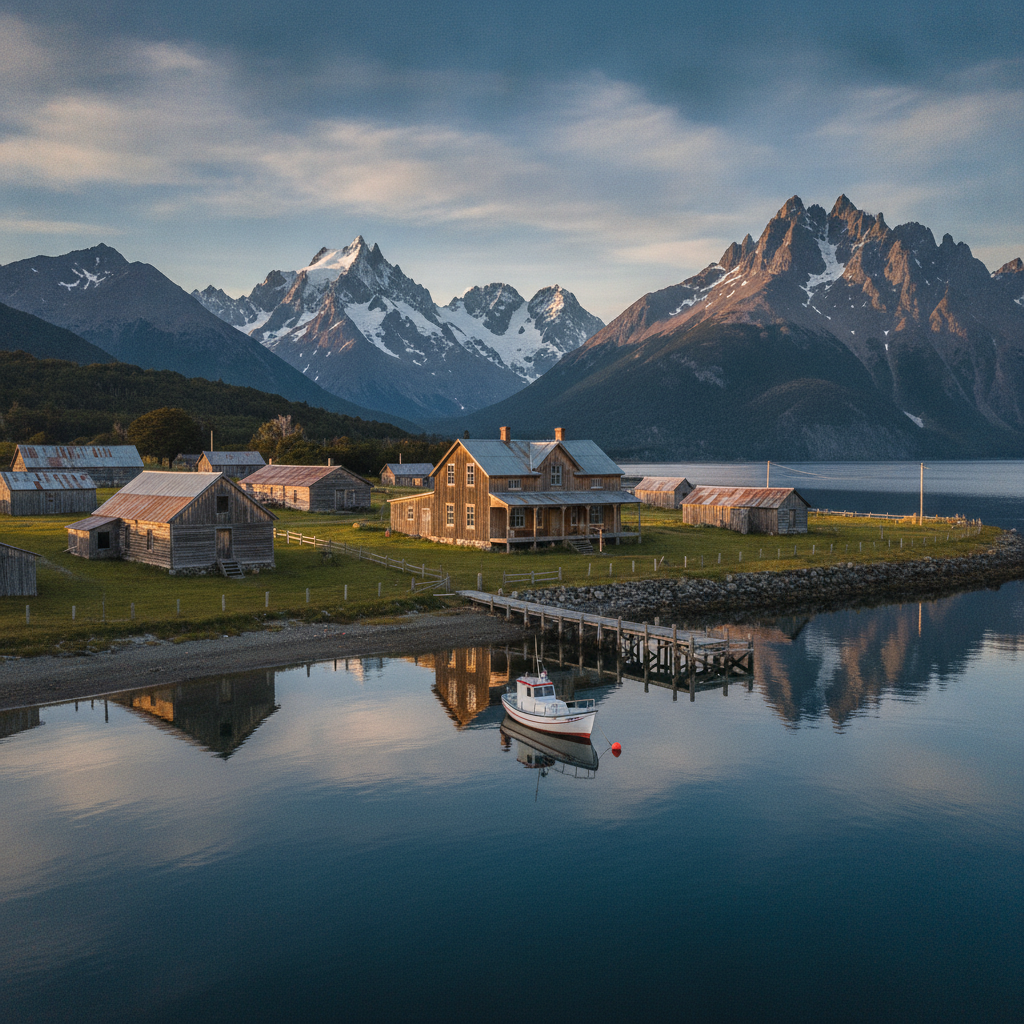
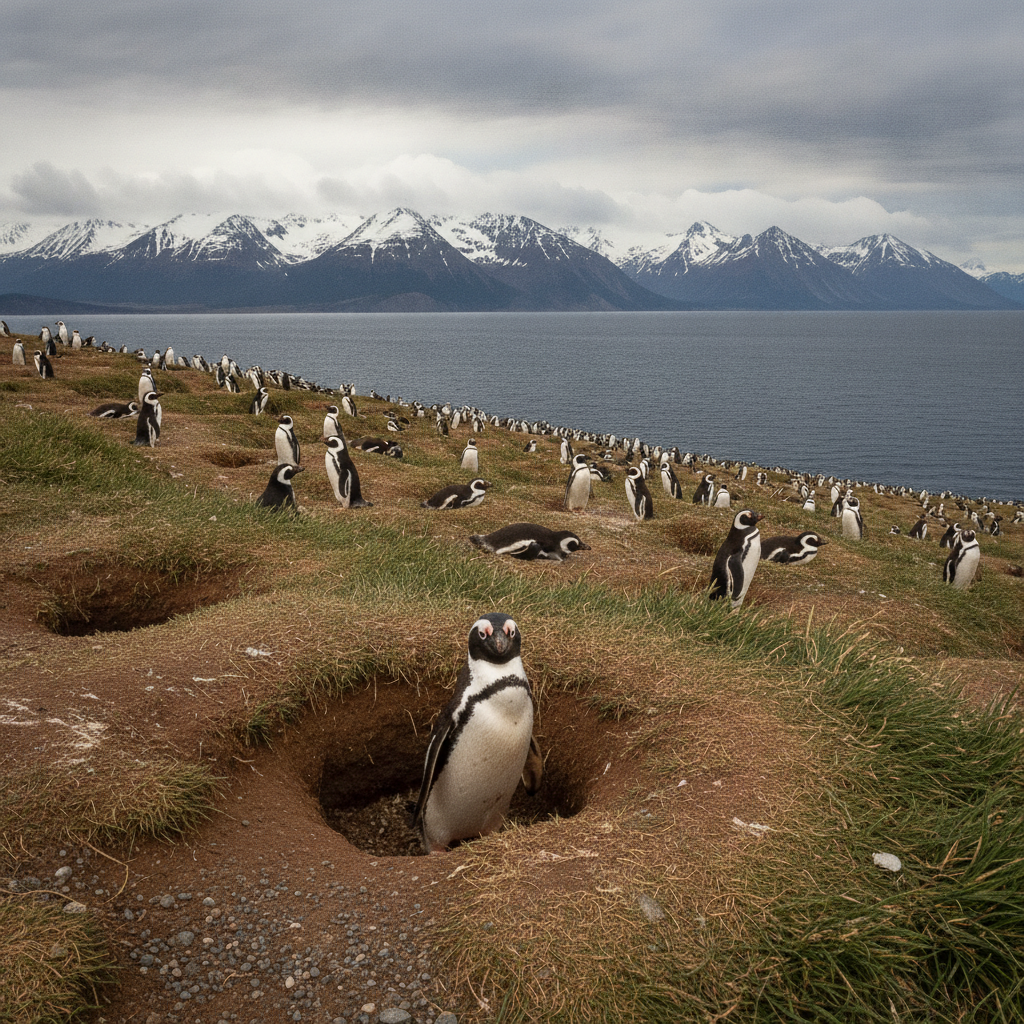
The Estancia Harberton, established in 1886 by Thomas Bridges on a grant of land east of Ushuaia along the Beagle Channel, is the oldest continuously operating estancia in Tierra del Fuego and a heritage property that preserves the original wooden buildings of the missionary period alongside the natural history museum and the penguin research program of the Bridges family descendants. The estancia is reached by a combination of the national route 3 east from Ushuaia and a dirt track to the channel shore; the journey through the open moorland and woodland of the eastern Isla Grande provides a different landscape experience from the mountains visible from the city. The Museo Acatushun on the estancia property, established by the marine mammal researcher Natalie Goodall, contains the most complete collection of Fuegian marine mammal skeletons in the world, including specimens of several cetacean species rarely encountered alive and documented through the specimens of animals stranded on the Tierra del Fuego shores. The Isla Martillo penguin sanctuary adjacent to Harberton is operated in partnership with the estancia and is the primary location for the guided walking tours among the breeding Magellanic and gentoo penguin colonies accessible from Ushuaia. The combination of the estancia buildings, the natural history museum, the channel-shore landscape, and the penguin colony makes Harberton the most historically and ecologically rich single destination accessible from Ushuaia and a full-day excursion that provides context absent from the city-based tourist experience.
- 6
Ushuaia Practical Guide: Getting There, Costs, and the End-of-World Experience
Ushuaia is served by Malvinas Argentinas International Airport with multiple daily flights from Buenos Aires Aeroparque that take approximately three hours and thirty minutes; the direct flight is the only practical transport option for most international visitors as the overland journey from Buenos Aires requires several days including the Patagonian route through Rio Gallegos or the ferry crossing from Punta Arenas in Chile. Accommodation in Ushuaia ranges from budget hostels and basic B and B establishments to comfortable mid-range hotels in the city center and a small number of upscale properties with channel views; the price level is high by Argentine provincial standards due to the remoteness and the strong tourist demand during the December to March peak season. The Antarctic expedition season from November to March is the busiest period, with the city at capacity and accommodation and restaurant prices at their highest; the shoulder season of October and April offers lower prices and manageable crowds while still providing access to the penguin colonies and the main wildlife experiences. Winter from June to August is dominated by the skiing season and offers a completely different experience from the summer tourism, with prices lower and the focus shifting from Antarctic expeditions to the Cerro Castor ski resort. The practical logistics of Ushuaia center on the Avenida San Martin commercial strip for restaurants, gear shops, and tour booking; virtually all the excursion operators, boat companies, and guiding services are based on or near this street and advance booking through the storefronts or online is advisable for the most popular activities during peak season.
Walk this route with audio
Stories play automatically as you reach each stop — no tapping needed.
More in Ushuaia
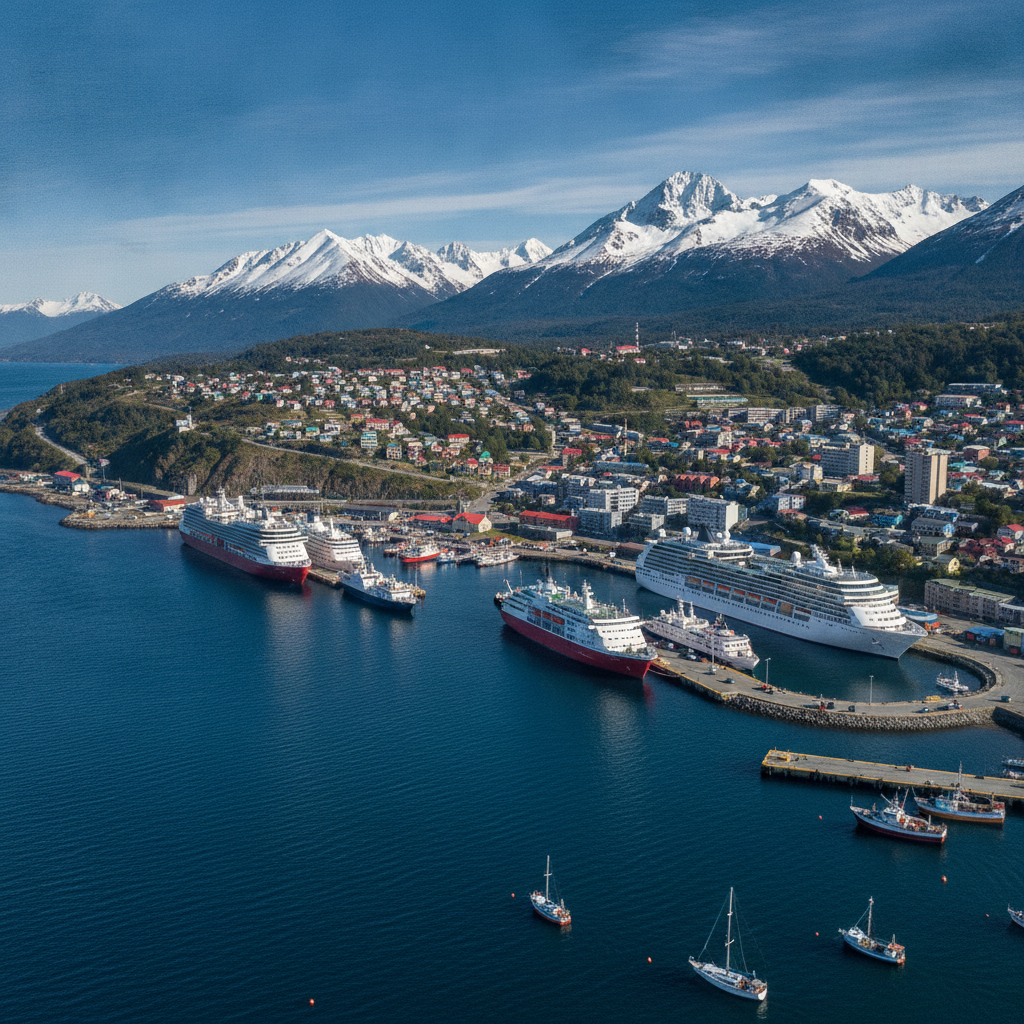
Ushuaia Practical Guide: Getting There, Costs, Booking Antarctica, and Circuit Planning
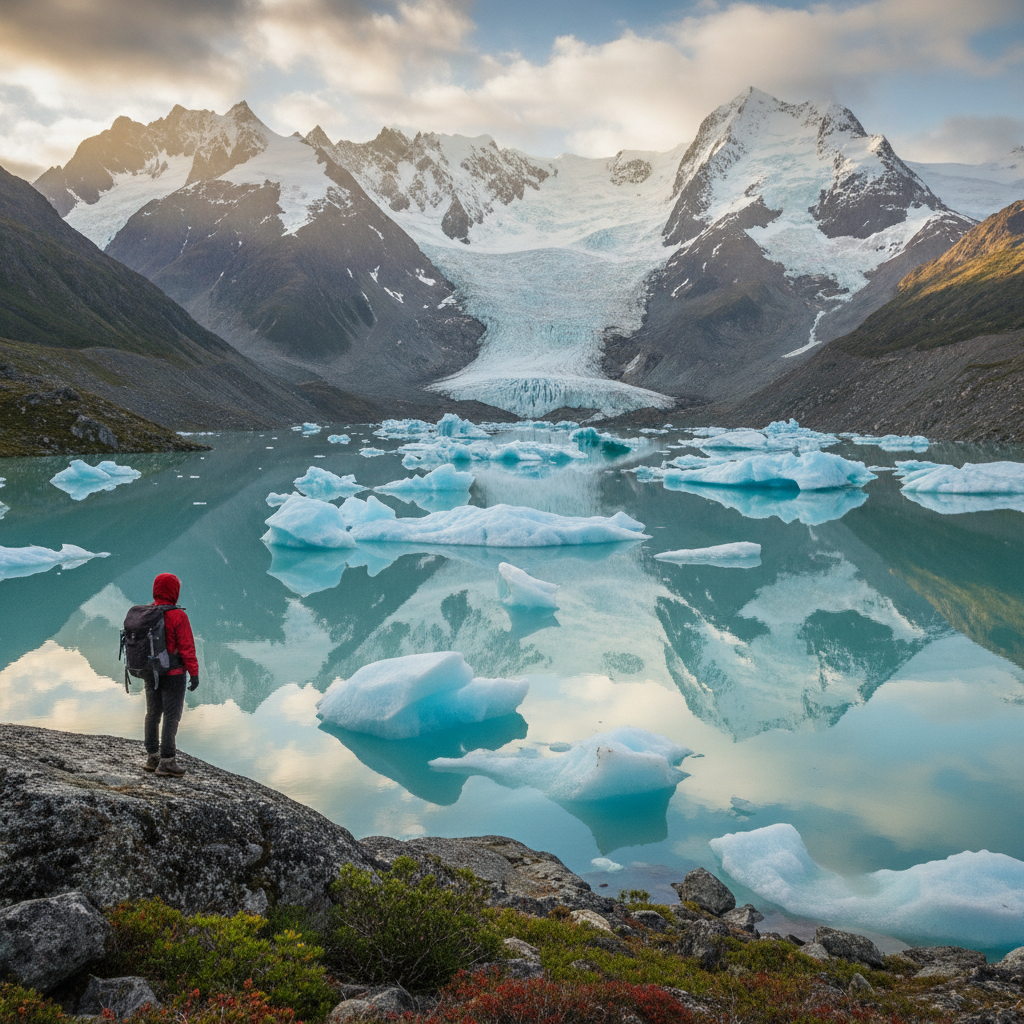
Ushuaia Hiking: Glaciers, Peaks, and Multi-Day Treks in the Fuegian Andes
Cape Horn and the Drake Passage: The Bottom of the World
Ushuaia Food, Culture, and the Frontier City Social Life
Ushuaia Wildlife: King Crabs, Penguins, Sea Lions, and the Sub-Antarctic Ecosystem