Pablo Neruda and the Literary Heritage of Valparaiso
Pablo Neruda, Chile's Nobel Prize-winning poet and one of the most celebrated literary figures of the 20th century, maintained a house in Valparaiso called La Sebastiana that expressed his deep connection to the Pacific port city. Neruda's poetry about the sea, the Chilean people, and the landscapes of his country is inseparable from the Valparaiso experience.
- 1
La Sebastiana: The House as a Work of Art
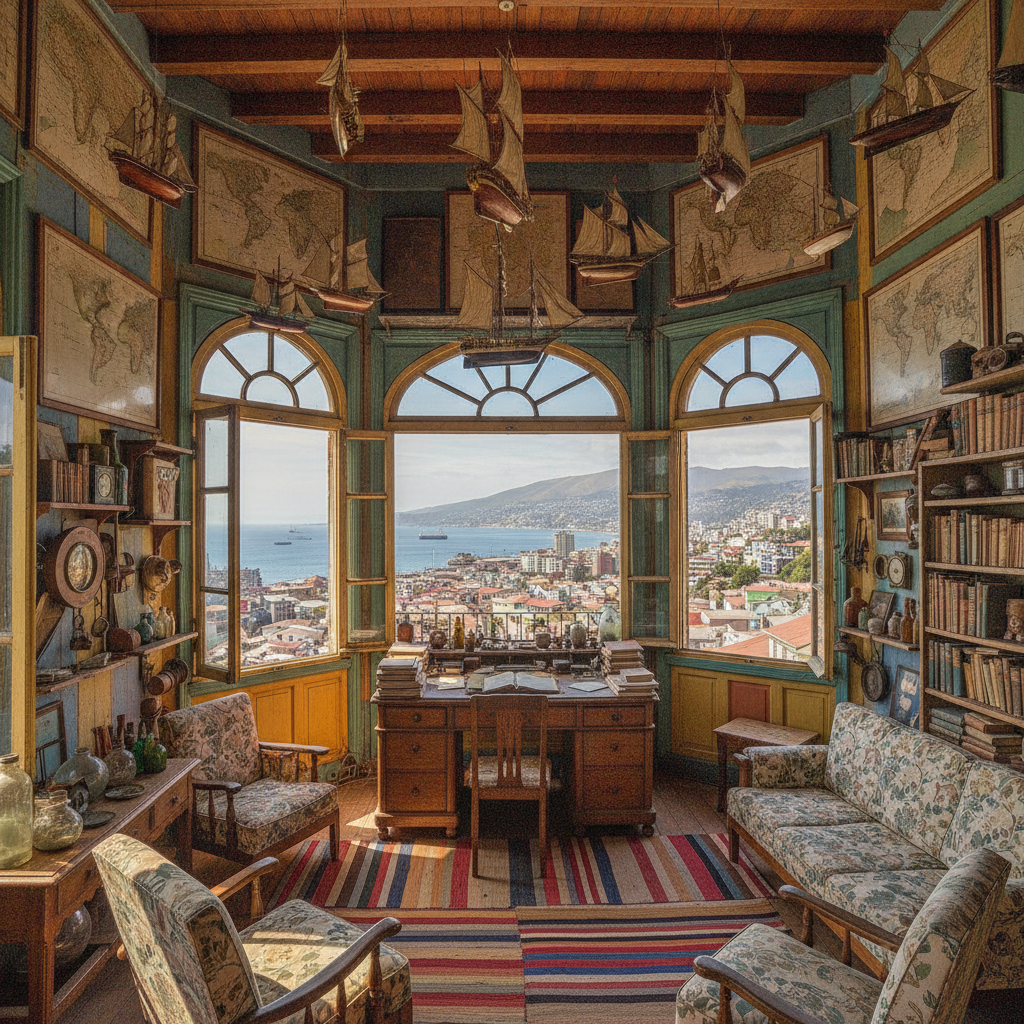
Neruda was a passionate and idiosyncratic collector of objects connected to the sea, travel, and folk culture, and La Sebastiana reflects this collecting impulse in every room: ship figureheads, maps, globes, carousel horses, telescopes, and glass floats from fishing nets are combined with furniture designed by Neruda himself and the bar area where the poet mixed drinks for guests. The house is a three-dimensional poem about the sea.
- 2
Neruda's Poetry and the Ocean
The sea pervades Neruda's poetry from his earliest works through the late odes, and the Pacific visible from La Sebastiana was the specific sea that inspired many of his most celebrated images. The Odes Elementales, which celebrate everyday objects including wine, onions, and the sea, reflect the same accumulative aesthetic that fills the rooms of La Sebastiana with found objects elevated by attention.
- 3
Neruda's Other Houses: Isla Negra and La Chascona
Neruda maintained three houses in Chile: La Chascona in Santiago, La Sebastiana in Valparaiso, and the principal house at Isla Negra on the coast south of Valparaiso where he is buried alongside his wife Matilde Urrutia. The Isla Negra house, embedded in the dunes above the Pacific and containing Neruda's most extensive collections, is the most personal and the destination most associated with the poet's memory.
- 4
The 1973 Coup and the Destruction of Neruda's Legacy
The coup of September 11, 1973 that overthrew Salvador Allende occurred twelve days before Neruda died of prostate cancer; the military forces ransacked La Sebastiana and La Chascona in the immediate aftermath of the coup, destroying books, manuscripts, and the collections. The recovery and restoration of the houses by the Neruda Foundation after the return to democracy created the museums that now allow visitors to experience the poet's world.
- 5
Vicente Huidobro and Chilean Avant-Garde Poetry
Vicente Huidobro, the Chilean poet who founded the creacionismo movement in Paris in the 1910s and was Neruda's contemporary and rival, was born in Santiago but associated with the Chilean literary tradition that found its most complete expression in the cultural environment of Valparaiso and the Pacific coast. The contrast between Huidobro's European avant-garde formalism and Neruda's South American political engagement represents the two poles of 20th century Chilean poetry.
- 6
Literary Walks: Cerro Alegre and the Writers Quarter
The bookshops, literary cafes, and small publishing houses concentrated in the Cerro Alegre and Cerro Concepcion area of Valparaiso represent the continuation of the literary culture that made the city a center of Chilean intellectual life from the 19th century onward. Walking the cerros with attention to the plaques, bookshops, and cultural centers that mark the literary history of the neighborhood provides a different kind of engagement with the city than the street art tours and funicular rides that dominate the standard visitor experience.
Walk this route with audio
Stories play automatically as you reach each stop — no tapping needed.
More in Valparaiso
Valparaiso Practical Guide: Getting There, Navigation, and the Santiago Day Trip Option
Valparaiso Architecture: Victorian Mansions, Tin-Clad Houses, and the UNESCO Heritage Zone
Valparaiso History: Independence, the Nitrate Boom, and the Panama Canal Decline
Valparaiso Food: Seafood, Chorrillana, and the Casablanca Wine Valley
Valparaiso Nightlife, Music, and the Creative Arts Scene