Vancouver's Food Scene — Sushi, Dim Sum, Chinatown & Pacific Seafood
Vancouver's food culture (the culinary scene of a city that is simultaneously Canada's gateway to Asia (with the largest Asian-Canadian population of any Canadian city — approximately 47% of Vancouver's population identifies as Asian-Canadian) and the richest seafood region in North America (the Pacific halibut, the Dungeness crab, the wild Pacific salmon, and the BC spot prawn)): Vancouver is the finest city in Canada for sushi, dim sum, and Asian cuisine of all kinds, and one of the finest cities in the world for Pacific seafood.
- 1
Sushi in Vancouver — The Finest Outside Japan
Vancouver's sushi culture (the sushi culture of a city that has more sushi restaurants per capita than any city outside Japan, driven by the large Japanese-Canadian population (the Powell Street neighbourhood — the 'Japantown' of Vancouver, the historic Japanese-Canadian neighbourhood in the Strathcona neighbourhood established in the 1880s, the neighbourhood that was largely destroyed when Japanese-Canadians were forcibly relocated to internment camps during World War II (1942-1949)), the more recent immigration from Japan and the broader Asian-Canadian community): the sushi traditions (the two sushi traditions in Vancouver — the authentic Japanese sushi (the hand-pressed nigiri and the hand-rolled maki in the traditional Japanese izakaya style, served at restaurants like Miku (200 Granville Street — the flagship of the Miku restaurant group, the pioneer of 'aburi' (flame-seared) sushi in North America, the technique of lightly searing the fish with a torch before serving, the technique that was developed in Japan and brought to Vancouver by the Miku group)), the 'Vancouver roll' (the all-salmon roll covered in thinly sliced avocado that was invented in Vancouver in the 1970s), and the broader 'West Coast Japanese' cuisine (the fusion of Japanese sushi technique with Pacific Northwest ingredients (the wild Pacific salmon (the Pacific salmon (Oncorhynchus species) — the 5 species of Pacific salmon (chinook/king, coho/silver, sockeye, pink/humpy, and chum/dog) that spawn in the rivers of British Columbia and are the most important fish species in the cultural, ecological, and culinary history of the Pacific Northwest))).
- 2
Chinatown & Vancouver's Chinese-Canadian Heritage
Vancouver's Chinatown (the historic Chinese-Canadian neighbourhood in the Downtown Eastside, bounded roughly by Gore Avenue, Hastings Street, Taylor Street, and Keefer Street — the third-largest Chinatown in North America (after San Francisco and New York) and the most historically significant Chinese neighbourhood in Canada): the history of Vancouver's Chinatown (the neighbourhood established in the 1880s by Chinese immigrants who came to British Columbia as labourers on the Canadian Pacific Railway (the approximately 17,000 Chinese workers who built the most difficult section of the CPR (the section through the Fraser Canyon and the Rocky Mountains from 1880 to 1885) under extremely dangerous conditions (the Chinese workers were paid $1.00 per day compared to $1.50-$2.50 for white workers, and were given the most dangerous tasks (hand-drilling the rock faces for blasting, loading and setting the explosives)) — the workers of whom approximately 600 died in the construction of the CPR): the Chinatown architecture (the Dominion Building (207 W Hastings Street — the 1910 Edwardian building that was the tallest building in the British Empire when it was built, on the northern edge of Chinatown), the Chinese Benevolent Association building (108 E Pender Street), and the Dr. Sun Yat-Sen Classical Chinese Garden (578 Carrall Street — the authentic classical Ming Dynasty-style Chinese garden opened 1986 as a gift from the People's Republic of China, the first authentic full-scale classical Chinese garden built outside China)).
- 3
Richmond — Vancouver's Asian Food Capital
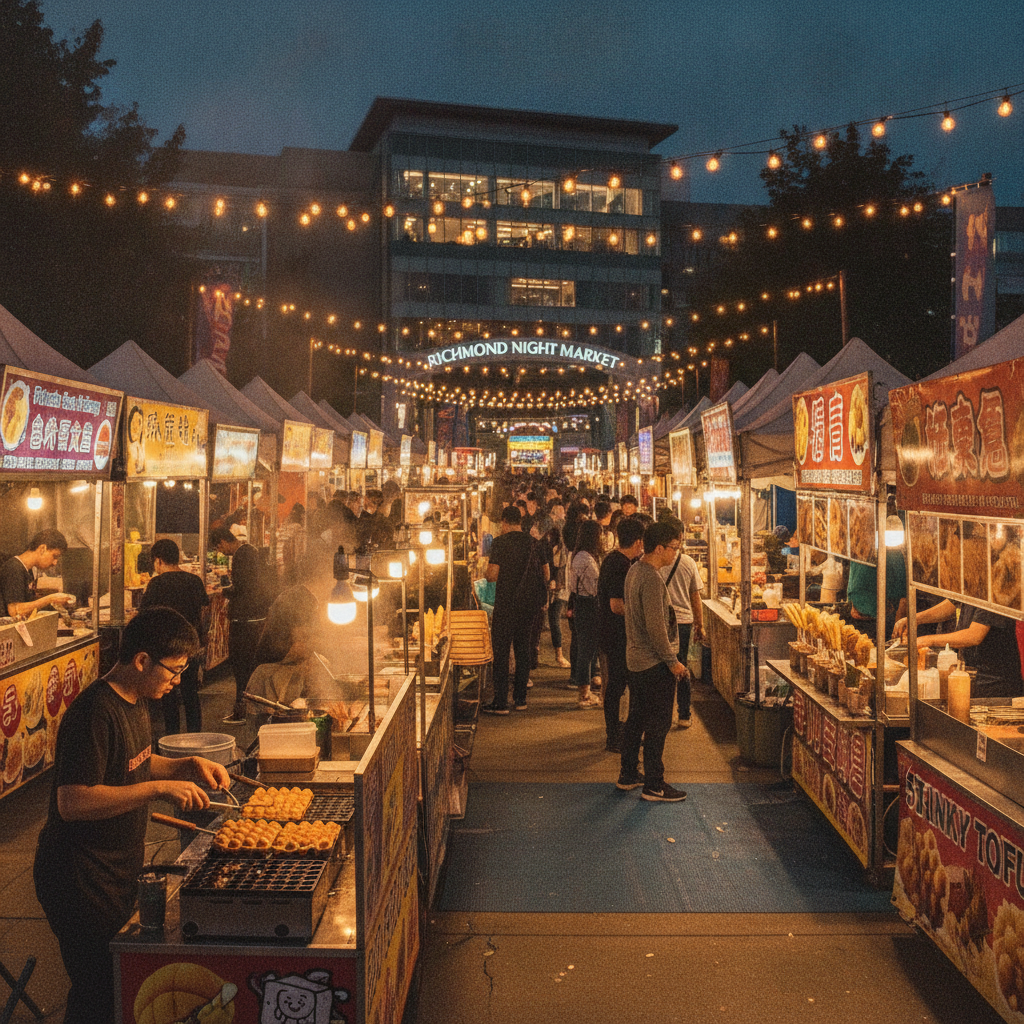
Richmond (the city immediately south of Vancouver on Lulu Island in the Fraser River delta — the city where approximately 60% of the population identifies as ethnic Chinese, the most Chinese-populated city (by proportion) in North America): the Richmond food scene (the concentration of the finest Hong Kong, Cantonese, Shanghainese, Taiwanese, and other Chinese regional cuisines available outside of China, the finest dim sum in Canada (the Richmond dim sum restaurants (Parker Place Food Court (4380 No. 3 Road — the underground food court in the Parker Place mall, the single best food court in Canada, with stalls serving handmade rice rolls (cheung fun), egg tarts, turnip cakes (lo bak go), and other dim sum items at restaurant quality), the Kirin Seafood Restaurant (7900 Westminster Highway — the flagship of the Kirin restaurant group, consistently rated among the finest Cantonese seafood restaurants in North America)), the hotpot restaurants, the bubble tea cafés (the bubble tea culture of Richmond — the city that has the highest concentration of bubble tea shops per capita in North America), and the night market (the Richmond Night Market (12631 Vulcan Way — the outdoor Asian night market open May through October, the largest Asian night market in North America)): the No. 3 Road restaurant strip (the stretch of No. 3 Road between Cambie Road and Westminster Highway that is the most concentrated Asian restaurant district in Canada).
- 4
Granville Island Public Market & Pacific Seafood
The Pacific seafood of British Columbia (the wild seafood of the Pacific Northwest — the fishery that is the richest and most diverse in North America): the wild Pacific salmon (the 5 species of Pacific salmon (Oncorhynchus species) that spawn in the rivers and streams of British Columbia — the chinook (king) salmon (Oncorhynchus tshawytscha — the largest Pacific salmon species, reaching up to 1.5 metres (5 feet) in length and 57 kg (125 lb) in weight, the species prized for its rich, high-fat flesh, the salmon most prized by Pacific Northwest Indigenous peoples and by chefs), the sockeye (Oncorhynchus nerka — the most commercially important Pacific salmon species, the species with the deepest red flesh (the deepest red of all salmon species, the result of the sockeye's diet of krill and other crustaceans in the open ocean), the salmon most commonly canned and exported worldwide), and the coho (Oncorhynchus kisutch — the silver salmon, the species most commonly caught by sport fishers in tidal waters)): the Dungeness crab (Metacarcinus magister — the primary crab species of the Pacific Coast, named for Dungeness, Washington, the species whose sweet white flesh in the carapace and legs is the most prized crustacean in the Pacific Northwest): the BC spot prawn season (the May-June season for the BC spot prawn (Pandalus platyceros — the largest shrimp species on the Pacific Coast, reaching up to 23 cm (9 inches) in length), the most anticipated seafood event in Vancouver (the BC Spot Prawn Festival held annually at Granville Island in May, the event at which the fishermen bring the first catch of spot prawns directly to the public market)).
- 5
Commercial Drive — Vancouver's Italian & World Food Culture
Commercial Drive (the 'Drive' — the 2-kilometre commercial strip running along Commercial Drive between Broadway Avenue and Venables Street in the East Vancouver neighbourhood of Grandview-Woodland — the neighbourhood that is the most culturally diverse and most cosmopolitan neighbourhood in Vancouver): the history of Commercial Drive (the street that has been the centre of successive waves of immigrant communities in Vancouver: the Italian community (the Italian immigrants who established their community on Commercial Drive from the 1930s through the 1970s, who established the Italian espresso cafés, delicatessens, and restaurants that gave Commercial Drive its initial identity as Vancouver's Italian neighbourhood (the Café Calabria (1745 Commercial Drive — the Italian espresso bar famous for the ornate baroque-styled interior and the owners' famous wax figures of Italian celebrities), the Fratelli Bakery (1795 Commercial Drive — the Italian bakery in continuous operation since 1968)), the Latin American community (the El Salvadoran, Colombian, and other Latin American immigrants who arrived from the 1970s through the 1990s and established the pupuserías, arepas restaurants, and Latin American grocery stores that now line the Drive alongside the Italian establishments), and the more recent East and Southeast Asian communities): the current Drive (the most ethnically diverse restaurant strip in Vancouver — the Italian cafés, the Ethiopian restaurants, the Brazilian juice bars, the Vietnamese bánh mì shops, the Lebanese shawarma stands, and the Belgian waffle shop existing side-by-side on the same block).
- 6
Davie Street & the West End Dining Scene
The West End neighbourhood (the densely populated residential neighbourhood between Stanley Park and downtown Vancouver — the neighbourhood with the highest density of restaurants per square kilometre of any neighbourhood in Vancouver): the Denman Street restaurant strip (the 5-block stretch of Denman Street between Robson Street and Davie Street — the neighbourhood restaurant street with the finest concentration of Japanese, Korean, Vietnamese, and Thai restaurants in the West End): the Davie Village dining scene (the stretch of Davie Street between Burrard Street and Jervis Street — the Gay Village, the centre of the LGBTQ+ community in Vancouver, lined with the restaurants, cafés, and bars that serve the West End's LGBTQ+ community and the broader neighbourhood): the Joe Forte's (777 Thurlow Street — the Vancouver seafood restaurant that has been the benchmark for Pacific seafood dining in Vancouver since 1985, known for the West Coast oysters (the Pacific oyster (Magallana gigas) — the Japanese oyster introduced to BC aquaculture in the 1950s and now the primary oyster species farmed in the tidal estuaries of BC and Washington State), the BC Dungeness crab, and the halibut and chips): the Robson Street shopping and dining (the 6-block stretch of Robson Street between Burrard and Jervis Streets — the primary shopping and dining street of downtown Vancouver, lined with international fashion brands, Japanese and Korean restaurants, bubble tea shops, and the chain restaurants and cafés that serve the tourist population of the downtown hotels).
Walk this route with audio
Stories play automatically as you reach each stop — no tapping needed.
More in vancouver
Olympic Village, East Van Arts & Mount Pleasant Creative District
Whistler, Mountain Skiing & Vancouver's Outdoor Adventure Culture
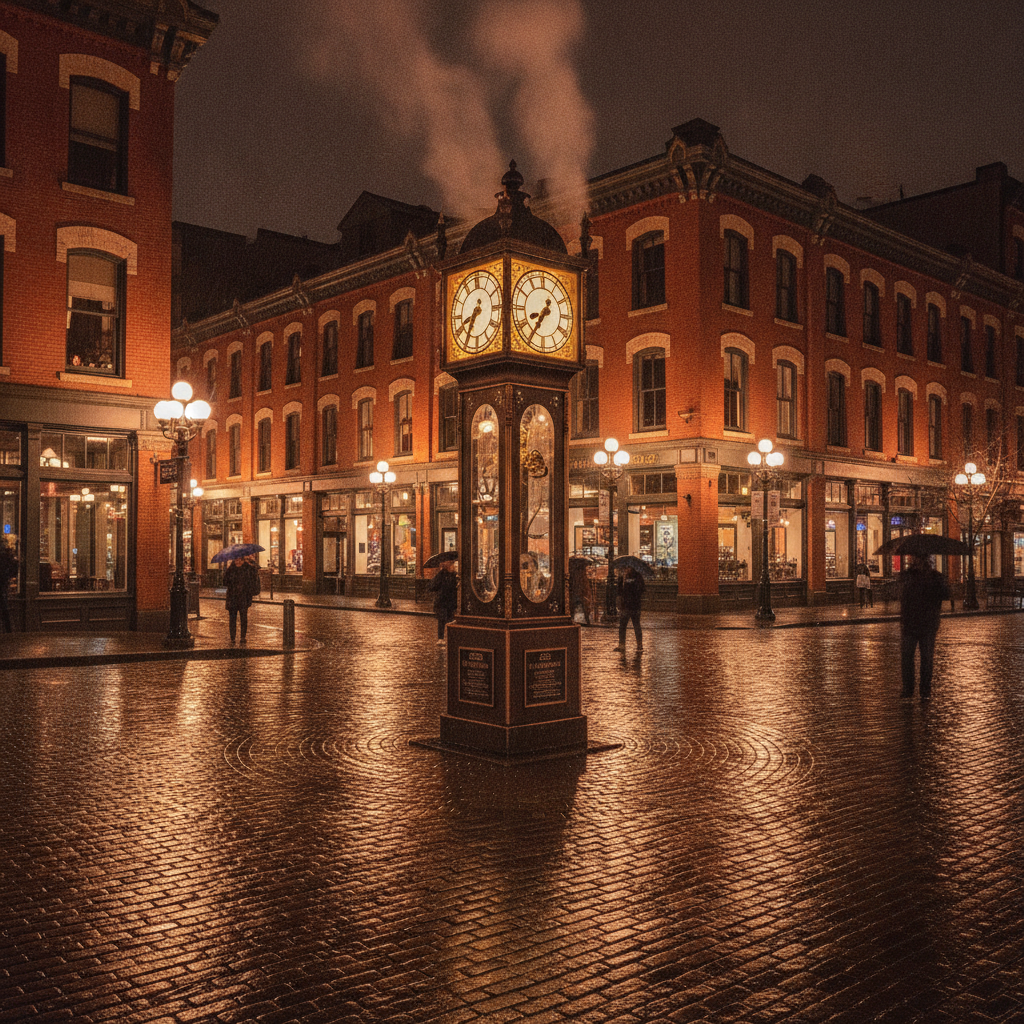
Gastown, the Steam Clock & Vancouver's Historic Neighbourhood
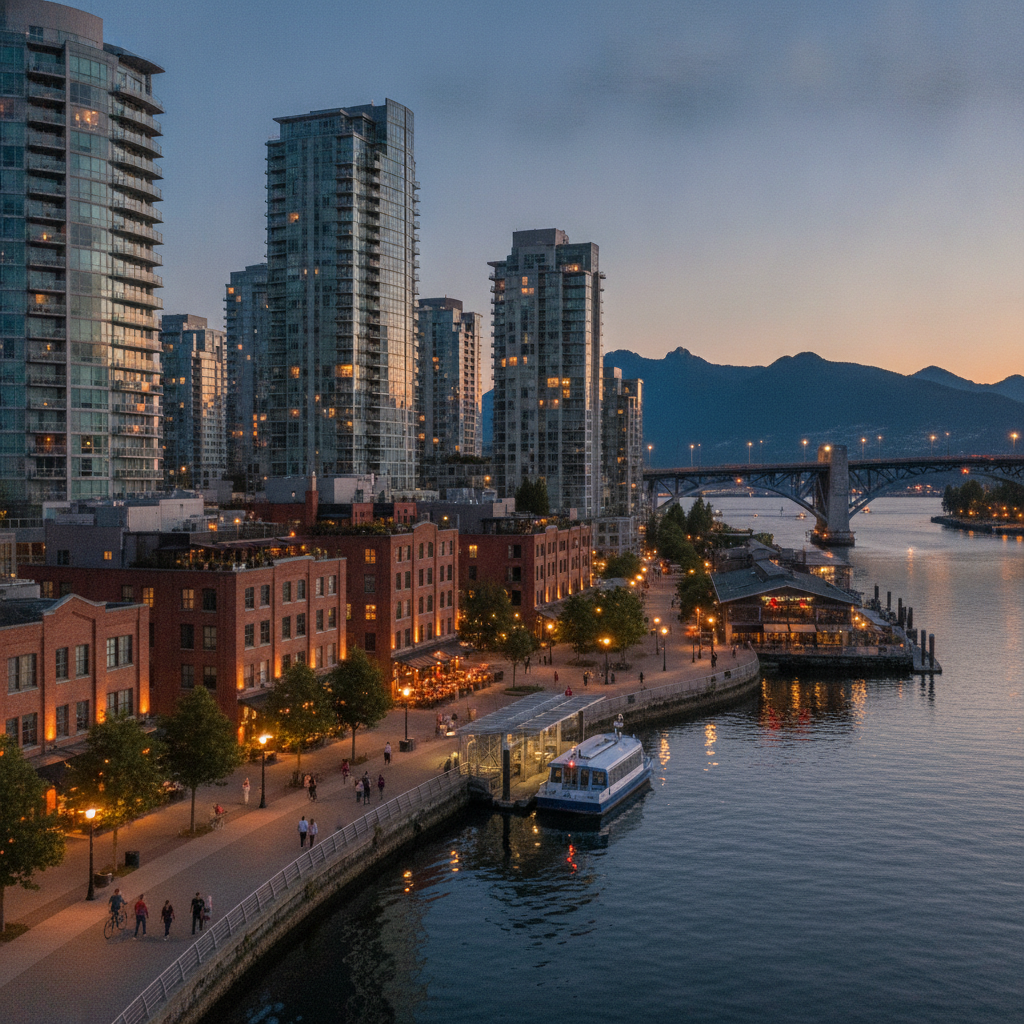
Yaletown, False Creek & Vancouver's Urban Design Success
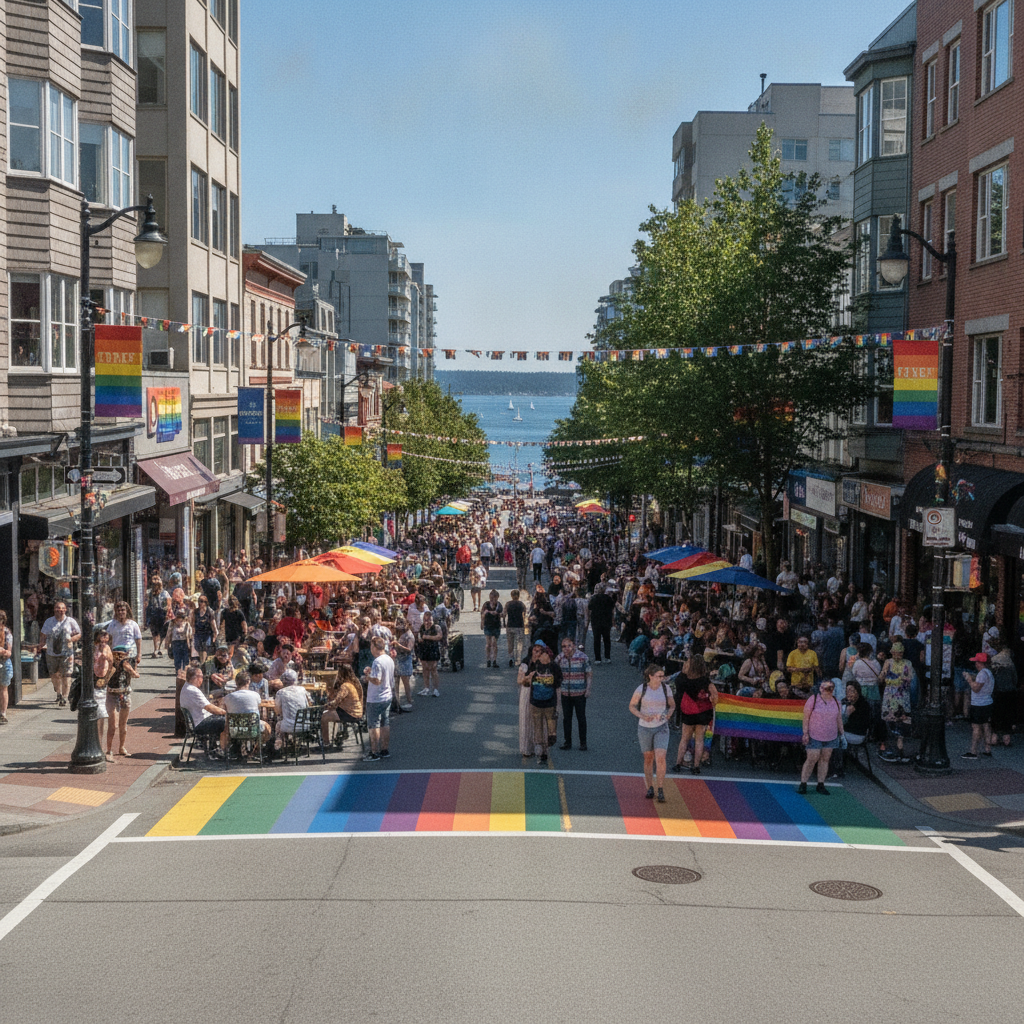
Davie Village, LGBTQ+ Culture & Vancouver Pride