Davie Village, LGBTQ+ Culture & Vancouver Pride
Vancouver's Davie Village (the stretch of Davie Street between Burrard Street and Jervis Street in the West End neighbourhood — the primary LGBTQ+ neighbourhood in Vancouver and one of the most vibrant gay villages in North America) and the Vancouver Pride Parade (the largest annual Pride parade in western Canada, held on the first Sunday of August each year along Robson Street and Denman Street to the English Bay waterfront) are the centre of one of the most inclusive LGBTQ+ communities in the world.
- 1
Davie Village — Vancouver's Gay Village
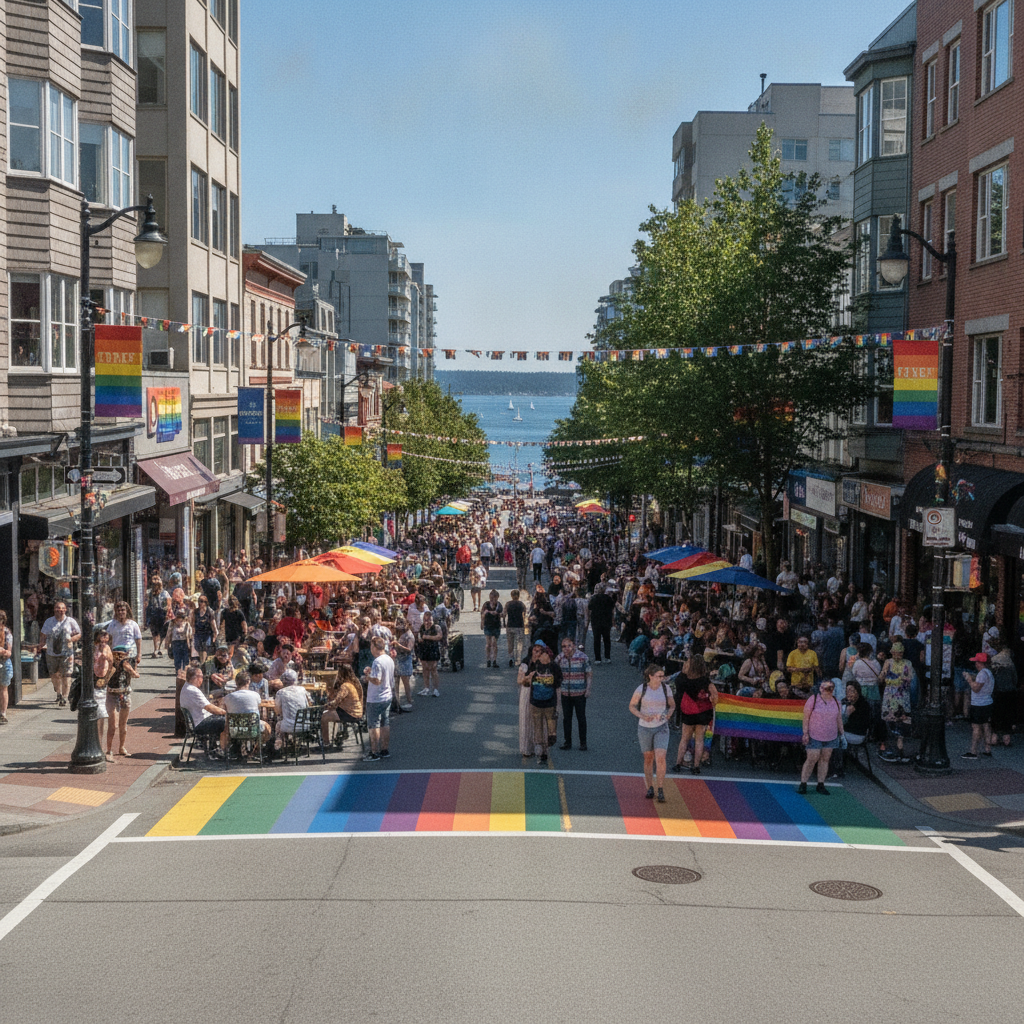
The Davie Village (the stretch of Davie Street between Burrard Street and Jervis Street in the West End neighbourhood of Vancouver — the primary LGBTQ+ neighbourhood in Vancouver since the 1970s, when the neighbourhood became the centre of the gay and lesbian community in the city): the Davie Village identity (the rainbow crosswalks at every intersection of Davie Street within the Village, the lamp posts decorated with Pride rainbow flags year-round (not just during Pride week — the rainbow flag decoration is permanent on the Davie Street lamp posts, making the Village the most visibly LGBTQ+-identified neighbourhood in Canada), the 'rainbow benches' (the park benches painted in the colours of the Pride rainbow flag along the street): the Davie Village businesses (the bars, clubs, restaurants, and shops that have served the LGBTQ+ community of Vancouver for decades — the Fountainhead Pub (1025 Davie Street — the most beloved gay pub in Vancouver, the pub famous for the sidewalk patio that opens in summer), the Little Sister's Book & Art Emporium (1238 Davie Street — the LGBTQ+ bookstore and art gallery that has been the cultural heart of the Davie Village since 1983)).
- 2
Vancouver Pride Parade & Celebration of Light
Vancouver Pride (the Pride Week that runs from late July through the first Sunday of August each year — the most attended Pride Week in western Canada, drawing approximately 600,000 participants and spectators over the course of the week): the Vancouver Pride Parade (the parade on the first Sunday of August, running from Robson Street west along Robson to Denman Street and south along Denman to the English Bay Beach — the parade that is the largest annual LGBTQ+ Pride parade in western Canada, with approximately 50,000 participants in the parade and over 650,000 spectators along the route): the Sunset Beach Festival (the post-parade festival at Sunset Beach Park (the park on the English Bay waterfront at the foot of Bute Street) — the outdoor festival with live musical performances, food vendors, and community programming that attracts over 100,000 people on the afternoon of the Pride Parade Sunday): the Celebration of Light (the fireworks competition held over English Bay in late July-early August, which overlaps with Pride Week and draws the largest Pride Week crowds to the English Bay waterfront).
- 3
West End Neighbourhood & Urban Density Done Right
The West End (the densely populated residential neighbourhood between Stanley Park and downtown Vancouver — the neighbourhood with approximately 45,000 residents in 1.3 km² (0.5 sq miles), one of the most densely populated urban neighbourhoods in Canada): the West End history (the neighbourhood that was developed as the most fashionable residential district in early Vancouver (the 1890s-1910s, when the streets of the West End were lined with the grand Victorian mansions of Vancouver's most affluent residents), declined after World War II as the mansions were demolished for apartment buildings (the apartment boom of the 1950s-1970s that replaced the Victorian mansions with the mid-rise concrete apartment towers that now dominate the West End streetscape), and revived as a diverse residential neighbourhood with a strong LGBTQ+ community and significant Japanese-Canadian population from the 1970s onward): the Barclay Heritage Square (the block of 9 Victorian houses on Barclay Street preserved as a heritage district — the last surviving intact block of original Victorian houses in the West End, the houses built between 1890 and 1908, now managed by the City of Vancouver as a heritage property): the West End walkability (the West End is consistently ranked among the most walkable urban neighbourhoods in Canada, with a Walk Score of 98/100 — the neighbourhood where virtually every daily need (groceries, restaurants, coffee, pharmacy, park, beach) is within a 5-minute walk of any address).
- 4
English Bay & Sunset Beach in Summer
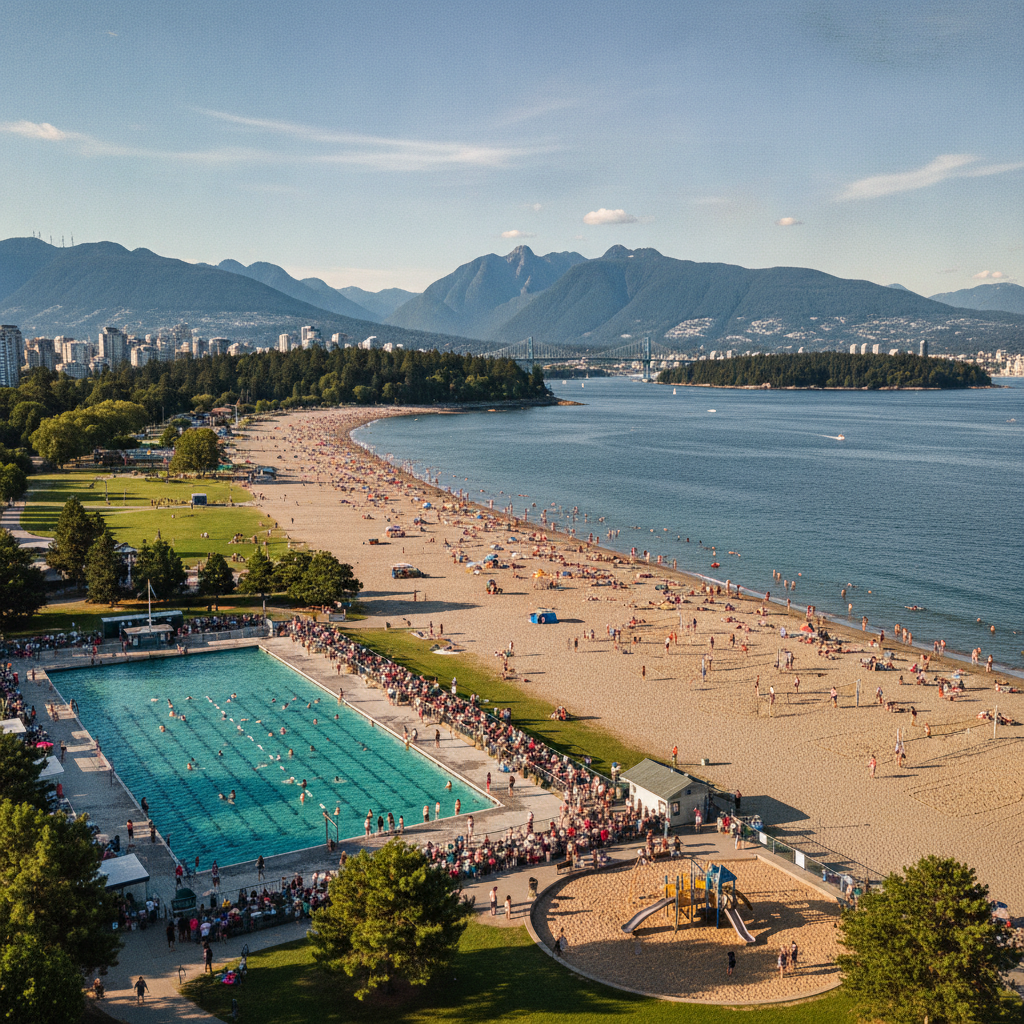
English Bay (the bay at the western end of the Burrard Inlet system, facing southwest toward the Olympic Mountains of Washington State): the English Bay Beach (the main public beach at the foot of Denman Street in the West End — the beach that is the primary social gathering space of the West End, with the highest concentration of beachgoers of any beach in Vancouver on sunny summer days): the English Bay beach culture (the volleyball courts, the concession stands, the kayak and paddleboard rentals, and the 'Inukshuk' (the granite Inuit stone figure at the west end of English Bay Beach — the most photographed sculpture in Vancouver, the sculpture that was the symbol of the 2010 Winter Olympics and was installed at English Bay Beach as the permanent legacy of the Olympics)): the Sunset Beach Park (the waterfront park immediately east of the English Bay Beach, between Bute Street and Jervis Street along the False Creek/English Bay waterfront — the park that serves as the outdoor concert venue and festival grounds for the Vancouver Celebration of Light fireworks competition and the Vancouver Pride Sunset Beach Festival): the English Bay summer sunset (the summer sunset over English Bay — the sun setting over the mountains of Vancouver Island visible to the west, the sky turning orange and pink as the sun drops behind the mountains at approximately 9:15 PM in late June (the latest sunset of the year at Vancouver's latitude of 49°N), the English Bay Beach filled with people watching the sunset from the beach and from the seawall — the most cherished summer evening experience in Vancouver).
- 5
Vancouver's Multiculturalism & Immigration History
Vancouver's multicultural character (the city that is the most ethnically diverse city in Canada and one of the most diverse cities in the world — the city where approximately 52% of the population speaks a language other than English at home, and where 'visible minorities' (the Canadian census term for people of non-European ancestry) constitute the majority of the population for the first time in the history of a Canadian city (the 2016 census was the first census in which visible minorities constituted the majority of the population of Metro Vancouver)): the history of immigration to Vancouver (the successive waves of immigration that have shaped the city: the Chinese immigration (the 1880s CPR workers and the 1880s-1900s Chinatown community), the Japanese immigration (the Japantown/Powell Street community established in the 1880s-1900s, forcibly relocated to internment camps in 1942), the South Asian (Punjabi) immigration (the community established in the early 1900s, concentrated in the South Vancouver and Surrey neighbourhoods, the community that is the largest South Asian diaspora community in Canada), the Hong Kong Chinese immigration (the wave of immigration from Hong Kong in the 1980s and 1990s (the immigration driven by anxiety about the 1997 handover of Hong Kong to the People's Republic of China), the wave that transformed the Vancouver real estate market and established the Richmond and West Vancouver Chinese-Canadian communities), and the post-1997 Mainland Chinese and Taiwanese immigration): the immigrant communities today (the Indian (Punjabi) community of Surrey and South Vancouver (the Punjabi Market on Main Street between 48th and 51st Avenues — the most concentrated South Asian commercial district in Canada), the Korean community of Koreatown (Robson Street, 'Korea Way'), the Filipino community of East Vancouver, and the Vietnamese community of East Van and Richmond).
- 6
Vancouver's Arts Scene — VAG, Bard on the Beach & Live Music
Vancouver's arts scene (the cultural institutions and events of a city that punches significantly above its weight in the arts for a city of its size): the Vancouver Art Gallery (VAG — 750 Hornby Street, at the corner of Hornby and Robson Streets in the heart of downtown Vancouver — the art museum housed since 1983 in the former Vancouver Law Courts building (the 1906 Neoclassical building designed by Francis Rattenbury (1867-1935), the architect who designed the BC Parliament Buildings in Victoria), the museum that holds the most comprehensive collection of the work of Emily Carr (1871-1945) — the Victoria-born painter who is the most celebrated visual artist in the history of British Columbia, and one of the most celebrated Canadian painters of the 20th century (the painter of the totem poles, the old-growth forests, and the Pacific Northwest Indigenous cultural landscapes in her characteristic bold expressionist style, a style influenced by the Fauvist and Post-Impressionist movements she encountered in Paris in 1910-1911)): the Bard on the Beach Shakespeare Festival (the outdoor Shakespeare festival performed in the large and small tents at Vanier Park (the waterfront park on the south shore of English Bay, between the Burrard Bridge and the Kitsilano Point) from June through September each year — the most popular outdoor theatre festival in western Canada): the Vancouver music scene (the city that has produced some of the most important acts in the history of alternative music (DOA (the punk band formed in 1976 — one of the founding bands of the hardcore punk genre), the Pointed Sticks, 54-40, Skinny Puppy, Sarah McLachlan, Bryan Adams, Nelly Furtado, and the New Pornographers)).
Walk this route with audio
Stories play automatically as you reach each stop — no tapping needed.
More in vancouver
Olympic Village, East Van Arts & Mount Pleasant Creative District
Whistler, Mountain Skiing & Vancouver's Outdoor Adventure Culture
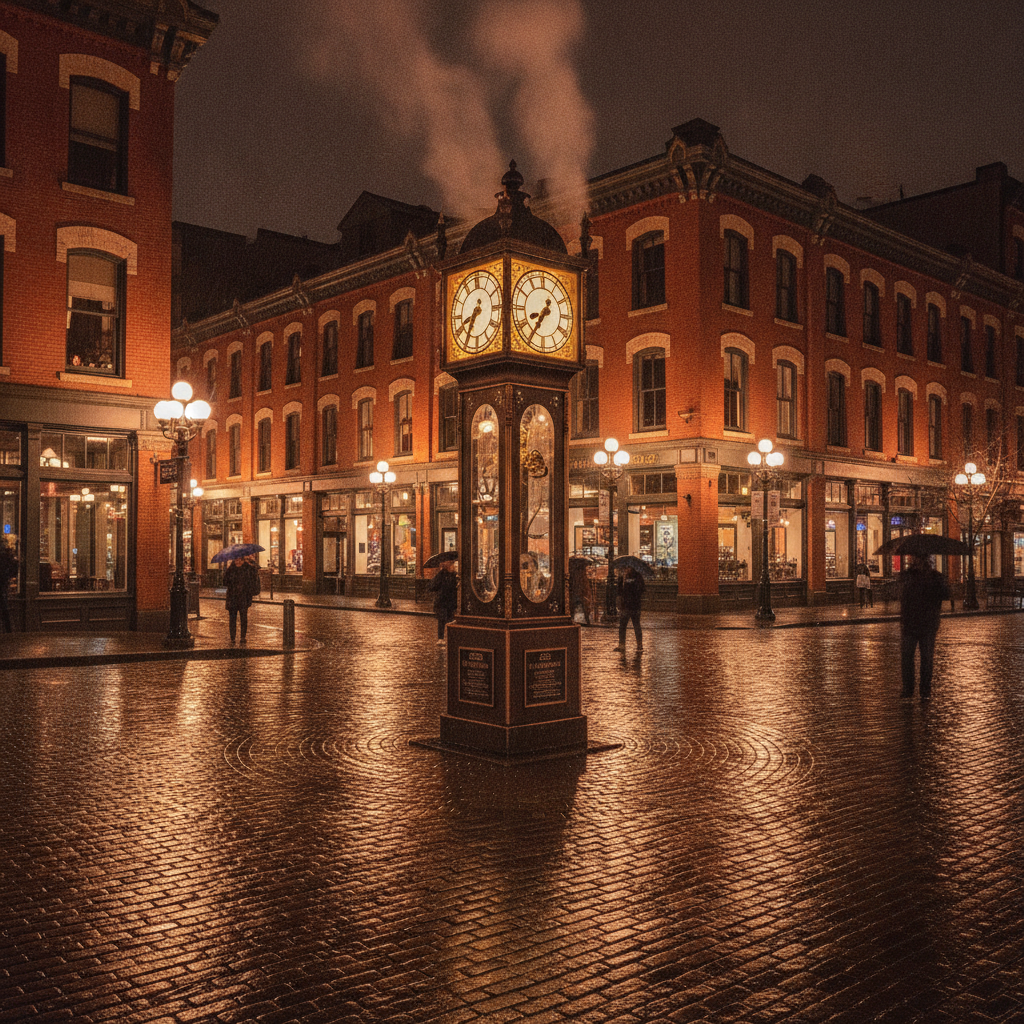
Gastown, the Steam Clock & Vancouver's Historic Neighbourhood
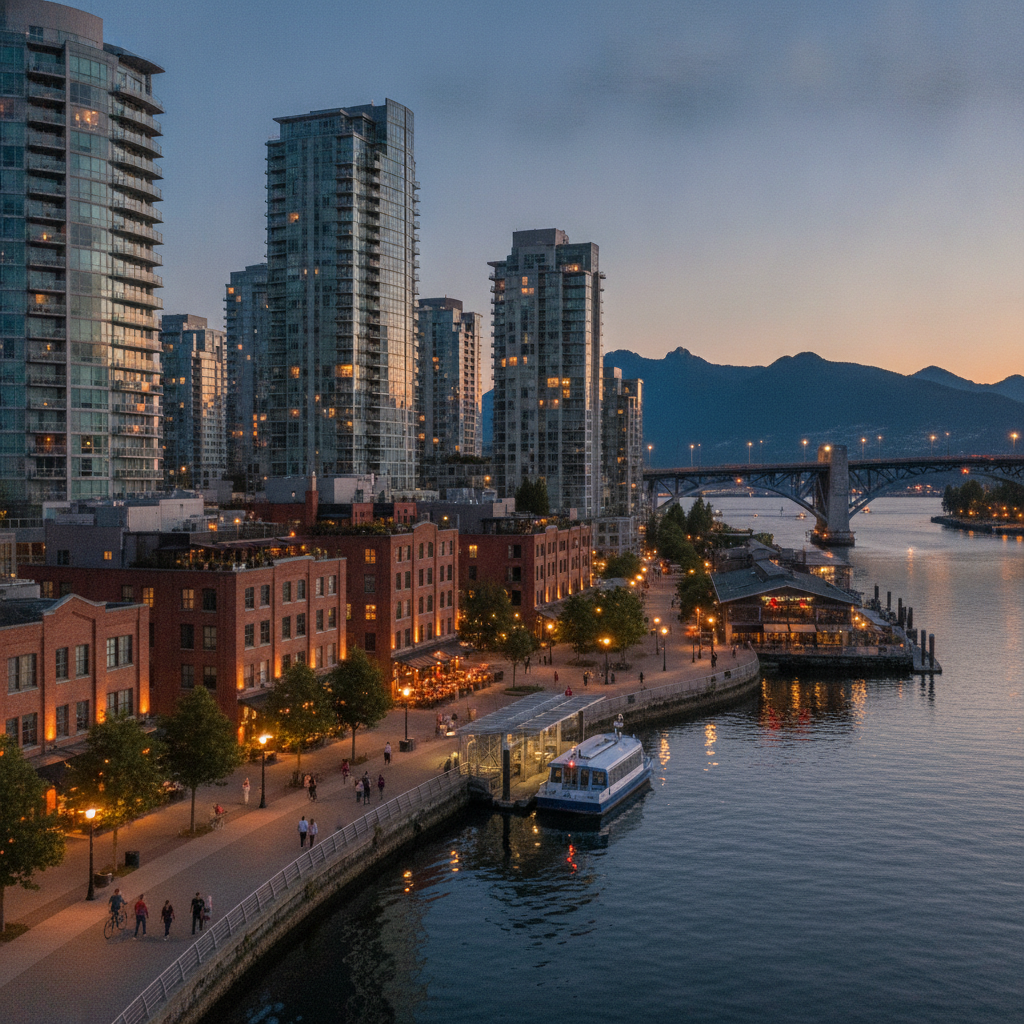
Yaletown, False Creek & Vancouver's Urban Design Success
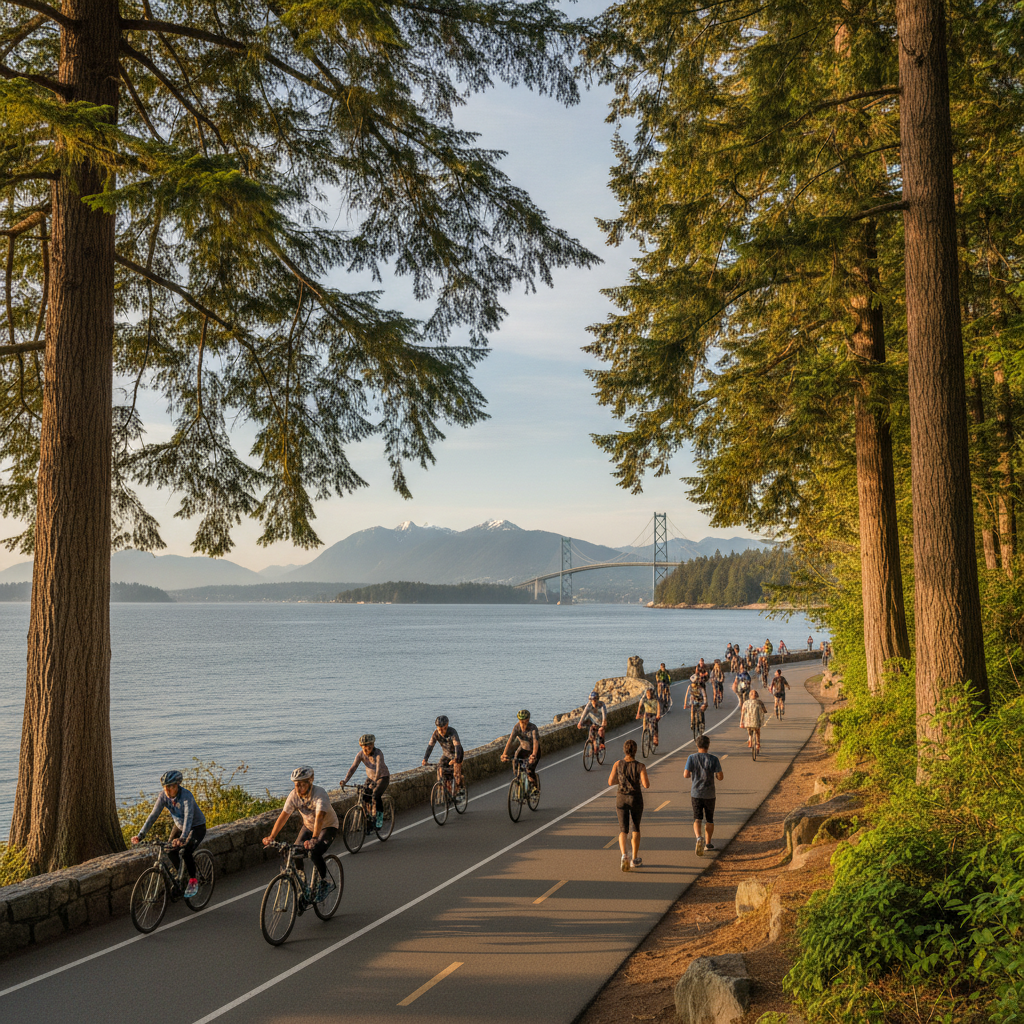
Stanley Park, the Seawall & Vancouver's Urban Wilderness