Varanasi's Contradictions: Deepa Mehta's Banned Film, Modi's Constituency & the Productive Vertigo the City Produces
Reckon with Varanasi's unresolvable tensions—the widows of Bengal sent to die in poverty at the ghats, Deepa Mehta's film about them that provoked violent protests before it could be shot, Modi's 63%-majority constituency that brought the Kashi Vishwanath Corridor and the Gyanvapi Mosque legal battle, the Ganga that is simultaneously sewage and sacred (the pilgrims drink both), the monsoon that swallows the lower ghats for three months under 15 metres of brown water, kulhad chai at 5am on a ghat corner, and why writers from Mark Twain to Pankaj Mishra report Varanasi produces not wonder but vertigo—the sense of encountering something about human life that other cities hide.
- 1
Varanasi in Literature & Film – The City as Character
Varanasi has attracted writers and filmmakers who find in it an irresistible subject: a city that exists at the intersection of death and life, ancient and contemporary, spiritual and commercial. Mark Twain (1896), Rudyard Kipling, Hermann Hesse (Siddhartha, 1922—not set in Varanasi but inspired by the pilgrimage city), and Pankaj Mishra (The Romantics, 1999) all grappled with the city. Vikram Seth's A Suitable Boy (1993) has extended Varanasi sequences. In film, Deepa Mehta's Water (2005)—depicting the lives of Hindu widows forced to live in Varanasi—was banned and then permitted after protests; Sanjay Leela Bhansali's Devdas (2002) uses the Varanasi ghats extensively. The photographer Raghu Rai's Varanasi documentation is among the most significant photographic bodies of work about any Indian city.
- 2
The Widows of Varanasi – An Evolving Social Reality
Hindu tradition once dictated that widows who could not perform (or chose not to perform) sati (widow immolation on the husband's funeral pyre—banned by the British in 1829) should live in renunciation in a sacred city. Varanasi became a refuge for widows, particularly from Bengal, who were sent or came voluntarily to end their days in the holy city. Thousands of elderly widows—many abandoned by families—have historically lived in extreme poverty in Varanasi's dharamshalas (pilgrim rest houses). The Deepa Mehta film Water (2005) depicted this community and was violently protested. The Maitri Foundation and other NGOs now support Varanasi's widow community; the Sulabh International human rights organisation has worked to rehabilitate widows and challenge the social norms that produce their marginalisation. The situation has improved since the early 2000s but significant poverty persists.
- 3
Varanasi & Narendra Modi – The PM's Constituency
Varanasi is the parliamentary constituency of Prime Minister Narendra Modi, who has held the seat since 2014 (winning with 56% and 63% in 2014 and 2019 respectively; returned in 2024). The constituency relationship has brought significant infrastructure investment: the Kashi Vishwanath Corridor (2021), improved ghats, new road infrastructure, and elevated promotion of Varanasi as a cultural tourism destination. It has also intensified the Hindu nationalist political dimension of the city—the Gyanvapi Mosque controversy (adjacent to the Kashi Vishwanath Temple, where an ASI survey found a 'Shivling' structure in 2023) has become one of India's most contentious Hindu–Muslim heritage disputes. Varanasi's Muslim community (approximately 30% of the population, concentrated in the weaving neighbourhoods) has experienced growing political marginalisation.
- 4
Varanasi's Ghats Through the Seasons
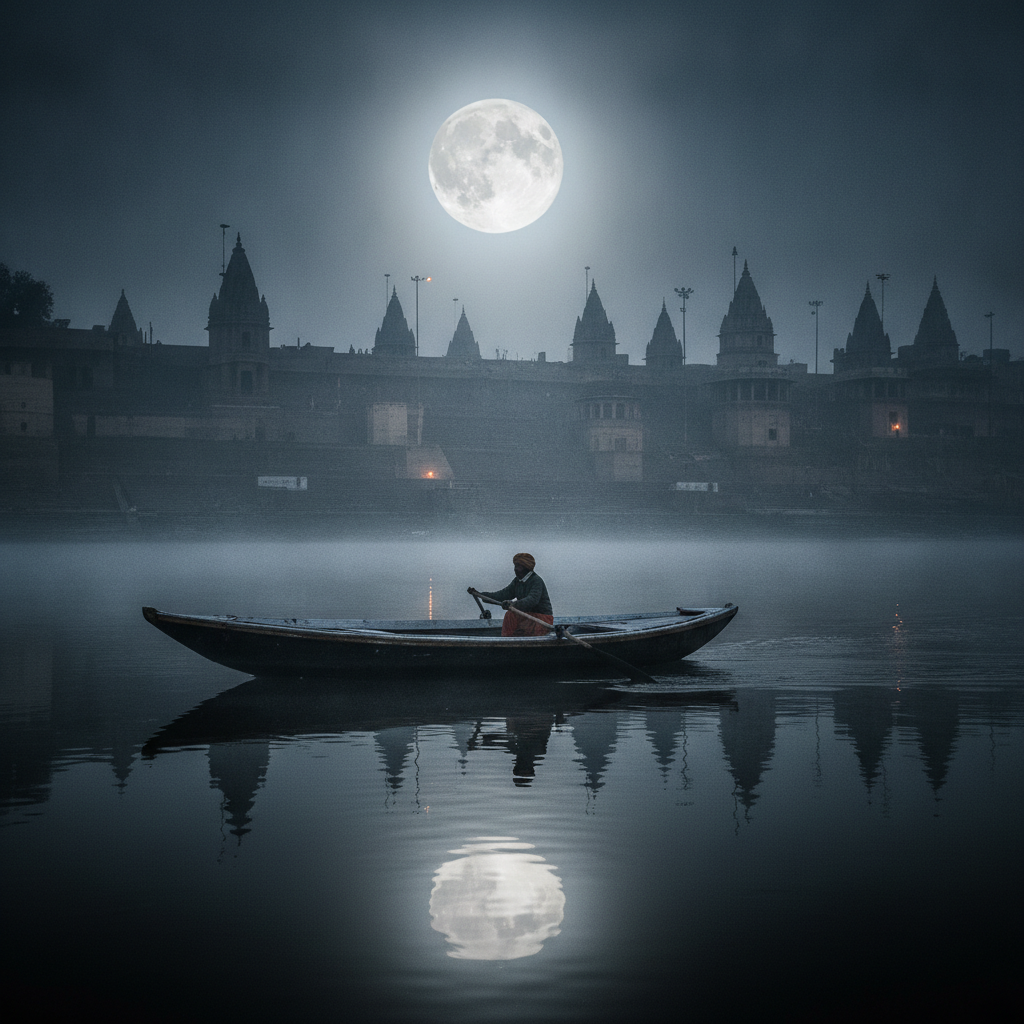
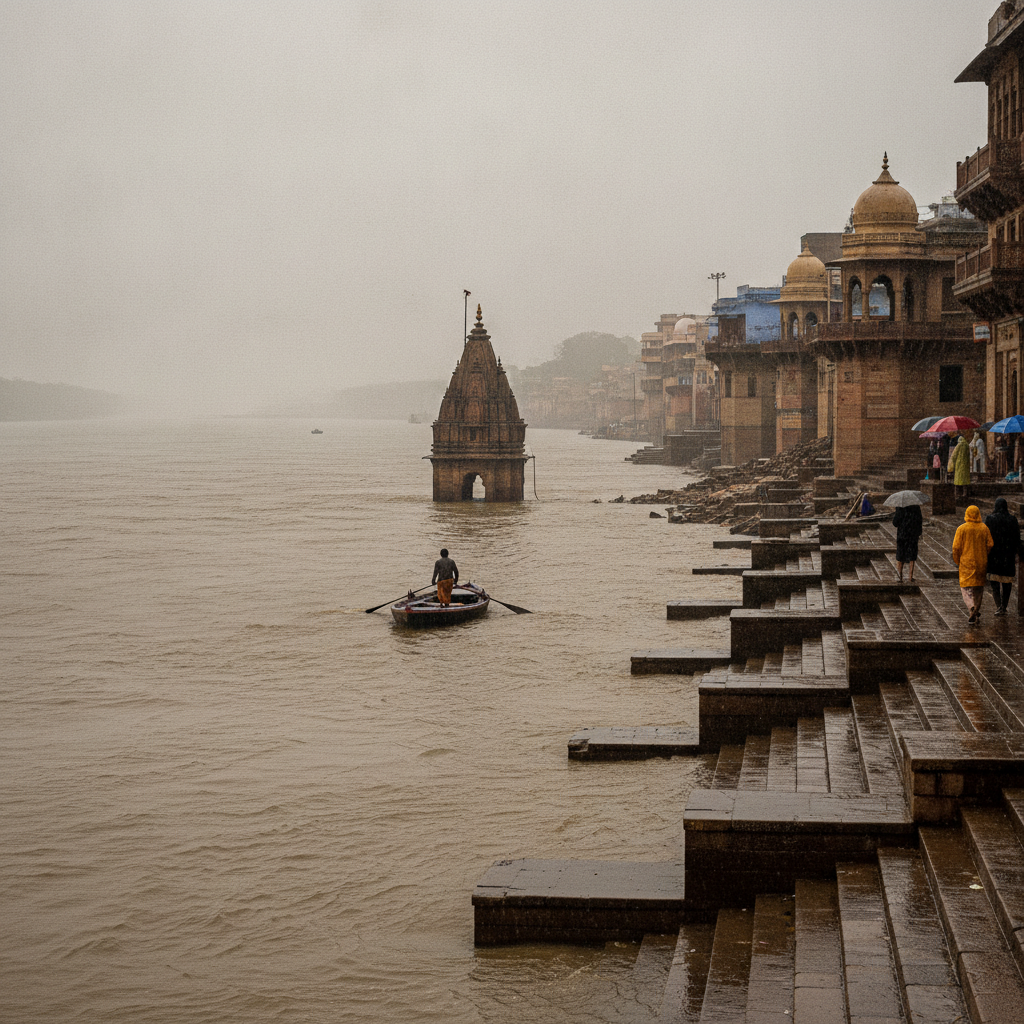
The Ganga's seasonal variation transforms the ghats dramatically. In monsoon (July–September), the river rises 15–20 metres above its dry-season level: the lower ghats are entirely submerged, temples that normally stand on the riverbank are surrounded by water, and the broad sandy banks (used for cricket, yoga, and market stalls in winter) disappear. The 2013 floods submerged the ghats to a record level. In winter (December–February), morning mist over the river creates an otherworldly atmosphere at dawn—the temple towers barely visible through haze, the water still, the colours muted. The pre-monsoon heat (May–June) empties the tourist ghats but the religious activity continues; the Gangadashara festival (June) celebrates the Ganga's mythical descent from heaven.
- 5
Varanasi's Chai Culture – The City's Kulhad Economy
Chai (spiced milk tea) served in kulhads—small disposable terracotta cups thrown on a wheel by the Kumhar (potter) caste—is one of Varanasi's defining sensory experiences and a significant cottage industry. The kulhad chai tradition has recently been mandated by Indian Railways for certain routes (replacing plastic cups), generating renewed interest in the kulhad economy. In Varanasi, the chai stalls clustered at every ghat corner serve chai in both kulhads and glass; the chai is typically made with significant quantities of ginger (adrak) and is sweeter than Delhi-style chai. The Blue Lassi Shop (established 1925, near Manikarnika Ghat)—making fresh lassi in clay cups with seasonal fruit—has achieved global travel guidebook fame. Varanasi's breakfast economy (chai, kachori, jalebi, bread pakora from 5am onwards) is organised around early-morning pilgrimage schedules.
- 6
Leaving Varanasi – What the City Stays With You
Varanasi is reported by many travellers as the most intense destination they have ever visited—and also, frequently, the one they feel most ambivalent about. The city refuses to be aestheticised cleanly: the transcendent and the squalid coexist without resolution. The pilgrim who bathes in water that is also sewage and also sacred; the Dom caste worker who earns ₹500 per cremation serving the god Shiva in a hereditary role that has also trapped his family in the lowest social position for a thousand years; the silk weaver earning ₹700/day on a ₹100,000 saree—these contradictions do not resolve, and Varanasi does not ask them to. Writers from Mark Twain to Pankaj Mishra have noted that the city produces in visitors not simple wonder but a kind of productive vertigo: the sense that one is encountering something real about human life that most cities have successfully hidden.
Walk this route with audio
Stories play automatically as you reach each stop — no tapping needed.
More in Varanasi
Varanasi Complete: Cremation-Ash Holi, the House Where People Go to Die & the Ashoka Lion Capital at Sarnath
Varanasi's Seasons: The Month-Long Street Ramayana, Bismillah Khan's Shehnai & the Buddhist Circuit to Bodh Gaya
Varanasi Deeper: Classical Music at Shiva's Court, the Ganga's Lethal Pollution & the Poet Who Rejected Both Hinduism and Islam
Varanasi Essentials: 88 Ghats, the Burning Ghat That Never Stops & the Buddha's First Sermon at Sarnath