Varanasi Deeper: Classical Music at Shiva's Court, the Ganga's Lethal Pollution & the Poet Who Rejected Both Hinduism and Islam
Explore the city beneath the pilgrimage city—the lanes so narrow that two people cannot pass, the Maharaja watching the month-long Ramlila from his elephant at Ramnagar Fort, the Banaras tabla style that Bismillah Khan and Ravi Shankar emerged from, ashrams where distinguishing genuine sadhus from tourist performers is impossible (a Varanasi teaching in itself), the Namami Gange programme that spent ₹20,000 crore and barely moved the coliform count, and the weaver-poet Kabir whose verses rejecting both Hindu idols and Islamic orthodoxy are sung by Hindus and Muslims alike 500 years after his death.
- 1
Varanasi's Old City – The Labyrinthine Lanes
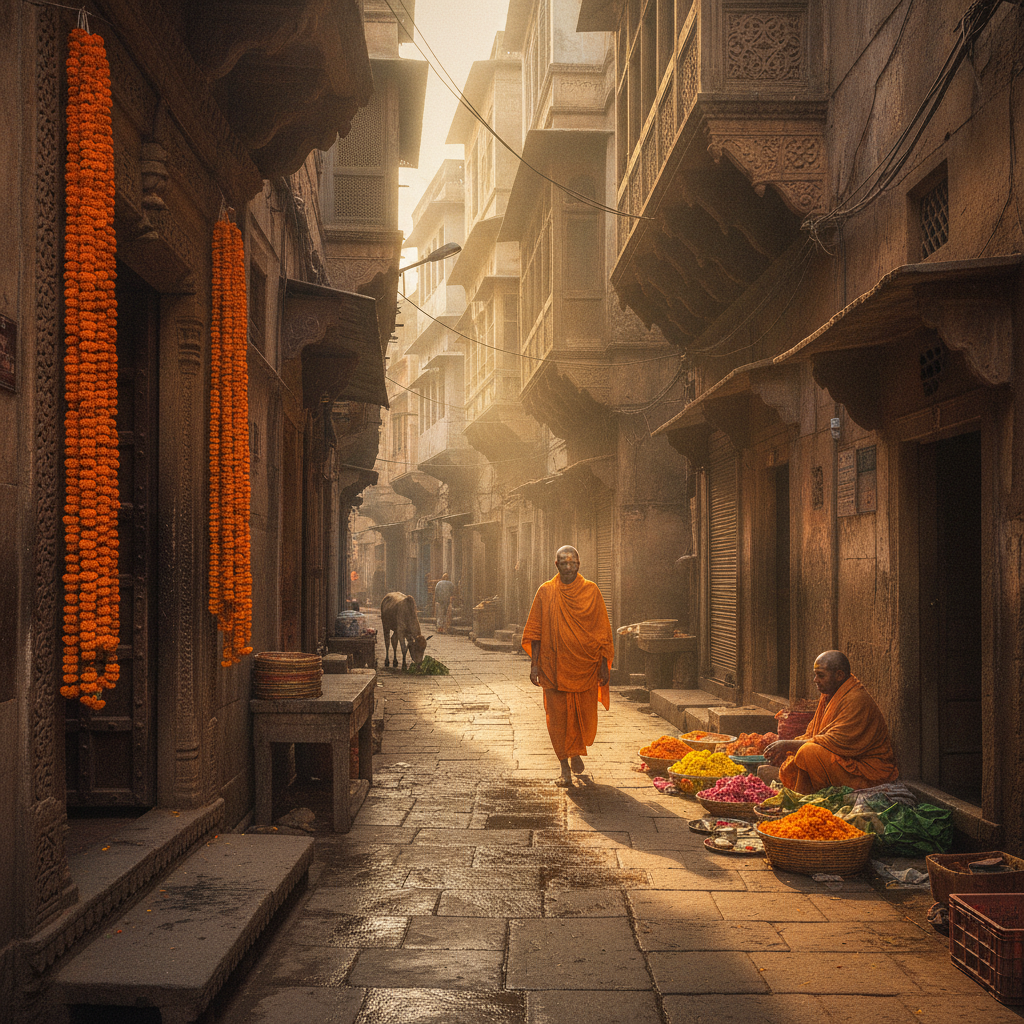
Varanasi's old city (the area between the ghats and Godaulia crossing) is one of the densest and most disorienting urban environments in Asia: a network of galis (lanes) so narrow that two people cannot walk side by side in places, lined with tea stalls, temples, flower sellers, saree shops, and lassi vendors. Many of the lanes are too narrow for any motorised vehicle; the old city is navigated entirely on foot. It is easy to get deliberately lost—the lanes offer different sensory experiences at every turning. A guide (₹500–1,000/€5.50–11 for 2–3 hours) is invaluable for the first visit; the Banaras Hindu University student community offers informal guiding. The Blue Lassi shop (near Manikarnika Ghat)—making fruit lassi in clay cups since 1925—is the most famous street food destination.
- 2
Ramnagar Fort & the Maharaja of Varanasi
Ramnagar Fort—on the east bank of the Ganges, accessible by boat or the road bridge 3 km south—is the residence of the Maharaja of Varanasi (the Kashi Naresh), whose family has been the ceremonial head of Varanasi's religious and social life for centuries. The fort (17th century, extended in the 18th century) contains a museum of vintage cars, palanquins, ivory works, and royal weaponry open to visitors. The Maharaja of Varanasi is not a political figure (the princely states were abolished in 1947) but retains enormous ceremonial significance: the Ramlila of Ramnagar—a month-long theatrical performance of the Ramayana staged across the entire city, with the Maharaja watching from his elephant, is considered the most authentic Ramlila performance in India.
- 3
Banaras Gharana – Classical Music in the City of Shiva
Varanasi is one of India's most important centres of classical music: the Banaras gharana (school of music) is one of the oldest and most respected in Hindustani classical music. The tabla (a pair of small drums—the right-hand drum called dayan, the left called bayan) was developed in its current form partly by Banaras musicians; the Banaras style of tabla playing (more open-handed, slightly earthier and more meditative than the Delhi or Lucknow styles) is a distinct tradition. Ravi Shankar (sitar), Bismillah Khan (shehnai, the reed instrument associated with Varanasi), and Girija Devi (thumri vocal) are among the 20th century masters from the Banaras tradition. Live classical music performances are given at the International Music Centre Ashram and several ghats.
- 4
Varanasi's Ashrams & Meditation Retreats
Varanasi attracts long-term spiritual seekers alongside pilgrims and tourists; the city has a complex ecosystem of ashrams, sadhus (wandering ascetics), pandits (Brahmin priests), and yoga teachers. The Parmarth Niketan Ashram (on the ghats) and the International Meditation Centre offer structured programmes; Ramakrishna Mission maintains a large centre. The sadhus who line the ghats—covered in ash (vibhuti), wearing marigold garlands, often smoking chillum (clay pipe with cannabis)—belong to various Hindu monastic orders (Shaivite, Vaishnavite, Nath tradition). Some are genuine renunciants; others are 'tourist sadhus' who charge for photographs. The distinction between authentic and performative spirituality is impossible for visitors to determine—which is itself a Varanasi teaching.
- 5
Varanasi & the Ganga Pollution Crisis
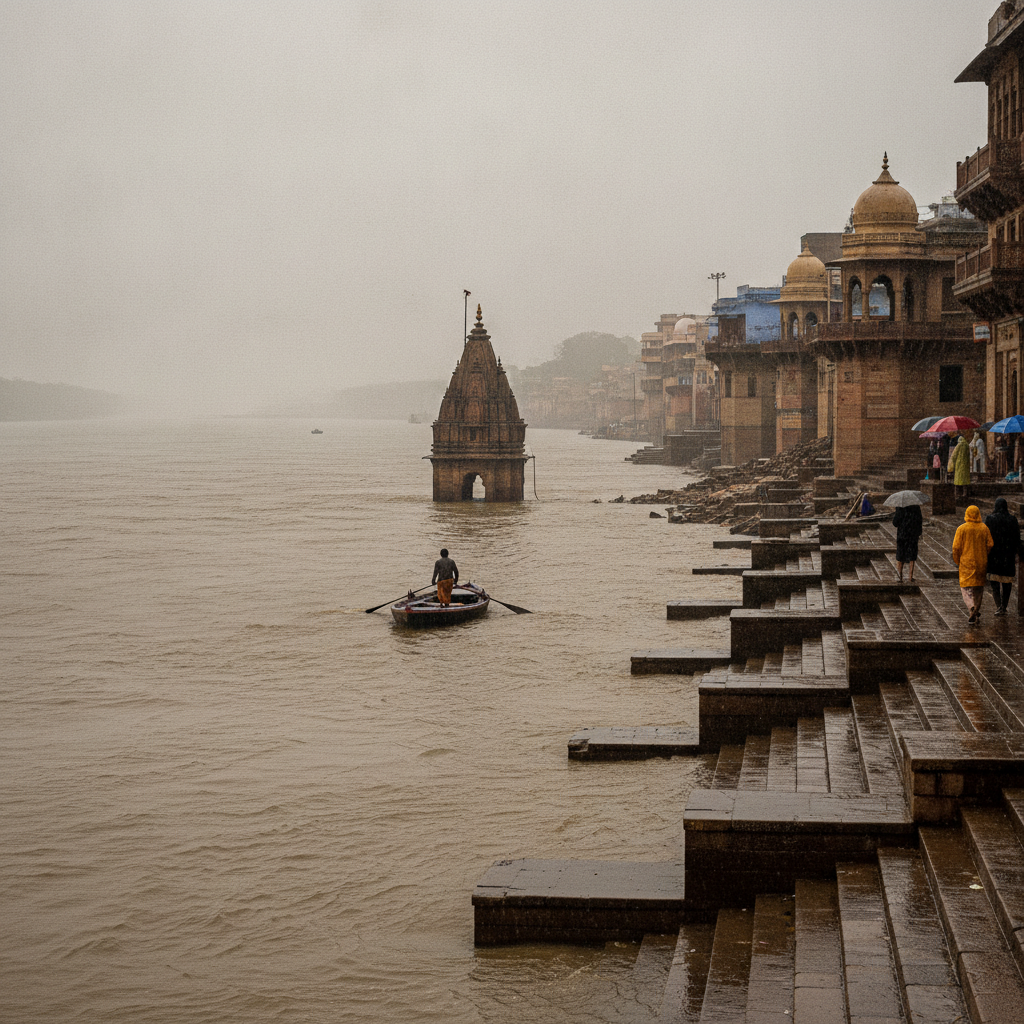
The Ganges at Varanasi carries one of the world's highest bacterial loads: coliform counts 150 times the safe bathing limit, industrial effluents from tanneries and factories upstream, untreated sewage from 30 million people in the Ganga basin, and the ashes and partially burned human remains from the cremation ghats. The Namami Gange programme (launched 2014 by PM Modi, budget ₹20,000 crore/€2.2 billion) aimed to clean the Ganga by 2020; results have been modest. Dissolved oxygen levels near Varanasi remain critically low. Yet millions of Hindus believe that Ganga water (Gangajal) is inherently self-purifying—attributed to bacteriophages (viruses that attack bacteria) present in the water, which genuinely do exist but cannot counteract the scale of contamination. Many pilgrims drink the water directly.
- 6
Kabir, Tulsidas & Varanasi's Literary Heritage
Varanasi has been a centre of Sanskrit learning and literary production for at least 2,500 years; it remains one of India's foremost Sanskrit scholarship cities, with Banaras Hindu University (founded 1916 by Pandit Madan Mohan Malaviya, one of India's largest residential universities) maintaining Sanskrit departments of international standing. The poet-saints Kabir (c. 1440–1518)—a weaver by caste who wrote in vernacular Hindi, rejecting both Hindu idol worship and Islamic orthodoxy, whose verses are sung by both Hindus and Muslims—and Tulsidas (c. 1532–1623)—who wrote the Ramcharitmanas, the Hindi-language retelling of the Ramayana that became the most widely read text in the Hindi belt—lived and died in Varanasi. Kabir's tomb is in Maghar (not Varanasi); the Kabir Chaura Math in Varanasi marks his birth and early life.
Walk this route with audio
Stories play automatically as you reach each stop — no tapping needed.
More in Varanasi
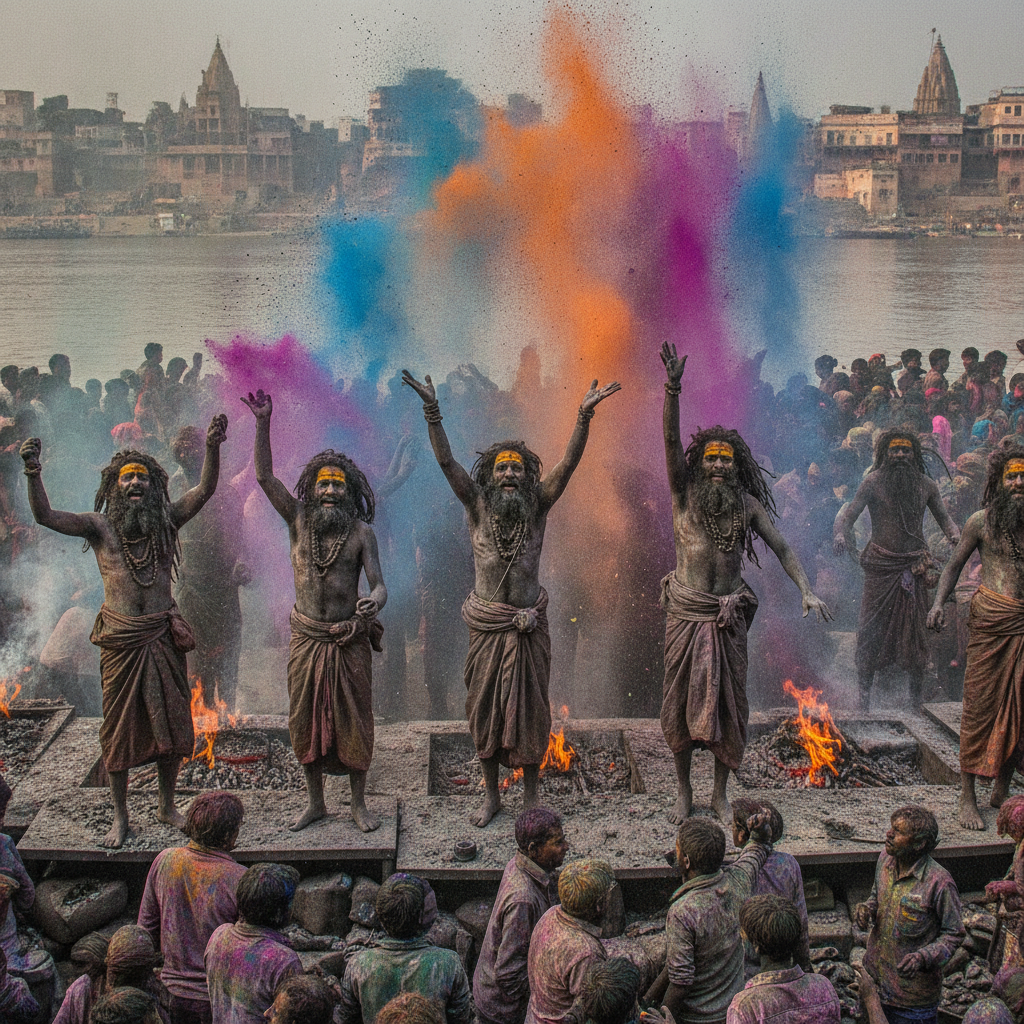
Varanasi Complete: Cremation-Ash Holi, the House Where People Go to Die & the Ashoka Lion Capital at Sarnath
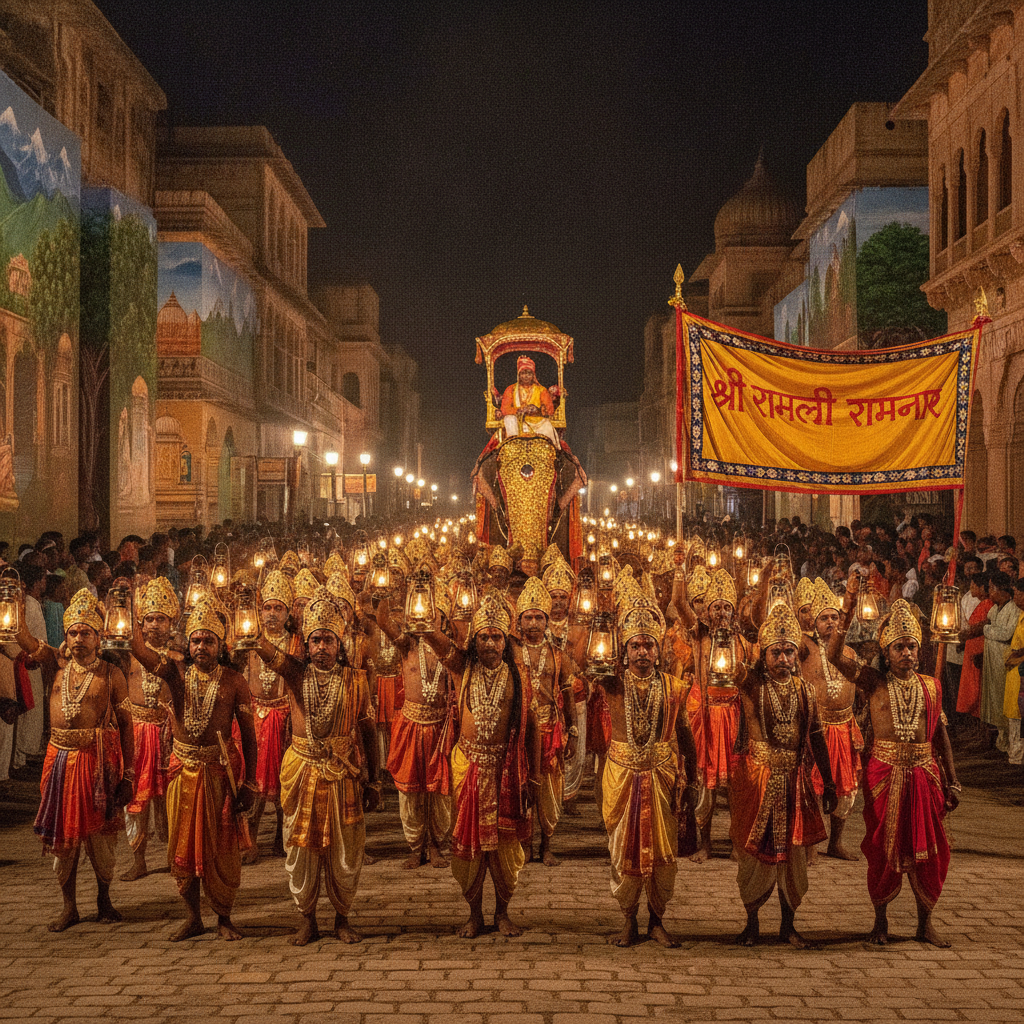
Varanasi's Seasons: The Month-Long Street Ramayana, Bismillah Khan's Shehnai & the Buddhist Circuit to Bodh Gaya
Varanasi Essentials: 88 Ghats, the Burning Ghat That Never Stops & the Buddha's First Sermon at Sarnath
Varanasi's Depths: 3,000 Years of Continuous Life, the Aghori Who Meditate in Cremation Grounds & the Ethics of Watching Death