Murano, Burano & Torcello — The Venetian Lagoon Island Circuit
The Venetian Lagoon — the 550-square-kilometre shallow tidal lagoon that separates Venice from the Adriatic Sea and that has been the defining geographical and economic context of Venetian civilization for over 1,500 years — contains over 100 islands, of which three (Murano, Burano, and Torcello) have been continuously inhabited since antiquity and retain the most distinctive identities of any of the lagoon's island communities.
- 1
Murano — The Island of Glass
Murano (Sestiere Murano, Venetian Lagoon — the cluster of seven small islands approximately 1.5 kilometres north of Venice connected by bridges, reached by vaporetto from Fondamente Nove (approximately 10 minutes, Line 4.1 or 4.2) or from the Ferrovia (approximately 40 minutes, Line 3): Murano has been the centre of Venetian glass production since 1291, when the Great Council of Venice ordered all glassmakers operating in the city to relocate to Murano — ostensibly to reduce the fire risk from the glass furnaces in the densely built wooden city, but also to concentrate the glassmakers in a location where they could be more easily supervised and prevented from sharing their trade secrets with foreign powers; the Muranese glassmakers were consequently given extraordinary privileges — they could marry into Venetian noble families, they could carry a sword, and their daughters could marry Venetian noblemen — but were forbidden under penalty of death to leave Venice or share their techniques with foreign powers; the glass techniques developed in Murano over the 14th and 15th centuries — smalto (opaque coloured glass), filigrana (glass threads in white or coloured glass creating complex internal patterns), cristallo (the first clear, colourless glass in the world), calcedonio (glass imitating semi-precious stones) — were revolutionary in the history of decorative arts and established Venice's dominance of European glass production for over three centuries; the Museo del Vetro di Murano (Glass Museum) at the Palazzo Giustinian presents a comprehensive history of Murano glass from the Roman period to the present.
- 2
Burano — The Island of Colours & Lace
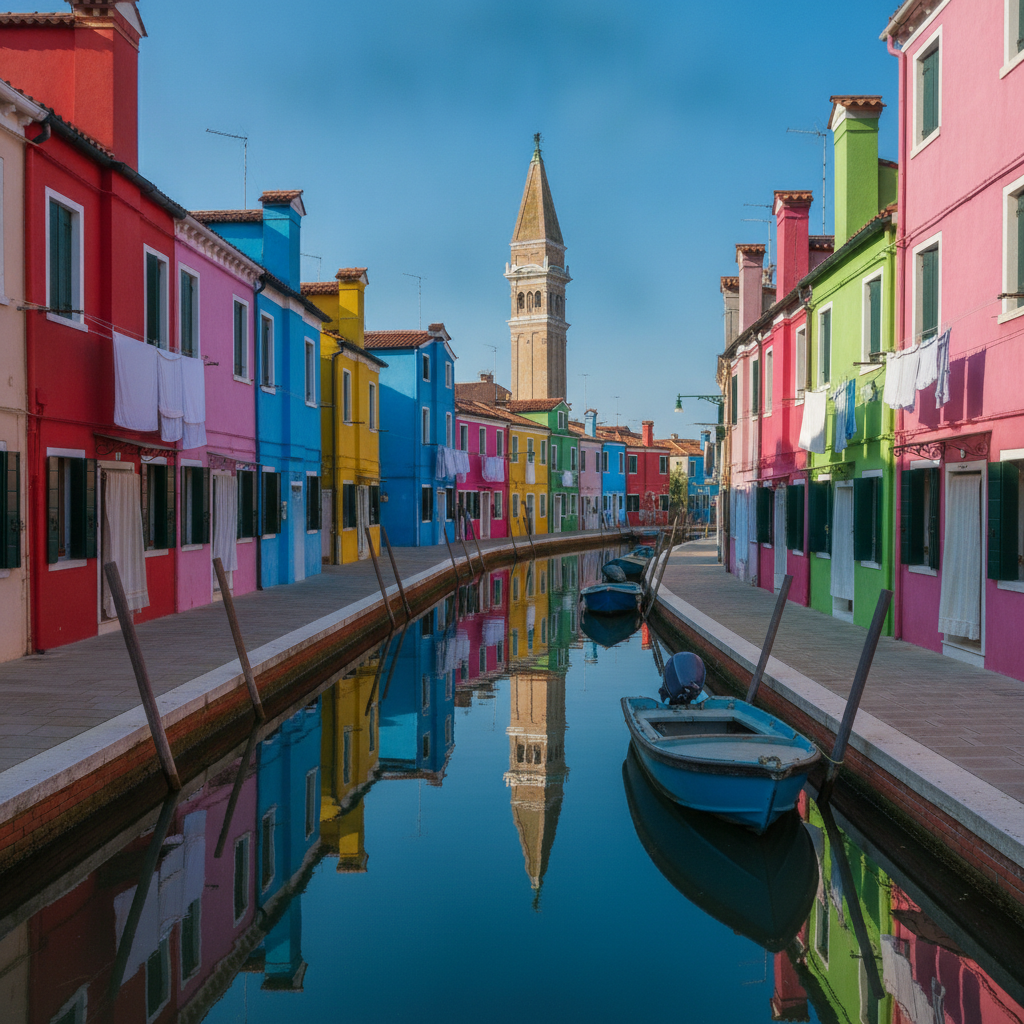
Burano (approximately 9 kilometres north of Venice, reached by vaporetto from Fondamente Nove via Murano — approximately 40-45 minutes total journey — or directly from the Piazzale Roma via the Laguna Nord line): Burano is the most visually distinctive island in the Venetian Lagoon and one of the most photographed villages in Italy — the island's fame derives from the tradition of painting the exterior walls of the fishermen's houses in vivid, highly saturated colours (each house painted in a single colour, with combinations of adjacent colours regulated by tradition and by the municipal authority) that makes the island appear, from the water, like a mosaic of colours reflected in the canals; the colour-coding tradition is generally attributed to the practical need for returning fishermen to identify their homes through the fog of the lagoon, though this explanation is somewhat romanticized; Burano is also famous for its lace-making tradition (merletto di Burano or tombolo — the needle-lace produced by the women of the island using a technique developed in the 16th century and recognized as UNESCO Intangible Cultural Heritage in 2019): the Museo del Merletto (Lace Museum) in Piazza Baldassare Galuppi presents the history of Burano lace-making and displays examples of historic pieces.
- 3
Torcello — The First Venice & the Byzantine Mother Church
Torcello (approximately 12 kilometres north of Venice, reached by vaporetto from Burano — approximately 5 minutes journey): Torcello is arguably the most historically significant and emotionally resonant of the lagoon islands — it was the first major settlement in the Venetian Lagoon, established by refugees from the mainland Roman city of Altinum (present-day Altino) who fled into the lagoon to escape the Lombard invasions in the 7th century; at its peak in the 10th and 11th centuries, Torcello was the largest settlement in the lagoon with a population estimated at 10,000-20,000 inhabitants, and was more important than the island settlement at Rialto that would eventually become Venice; the island declined precipitously in the 12th and 13th centuries due to the silting of its canals, the draining of the surrounding lagoon waters into salt flats, and the concentration of political and commercial power on the Rialto island; today Torcello has fewer than 15 permanent residents and the only significant buildings remaining are the Cathedral of Santa Maria Assunta (founded in 639 AD, rebuilt in its current form between 864 and 1008 AD, and containing the most important Byzantine mosaics in the lagoon — the enormous 'Last Judgment' mosaic on the west wall, dating from the 11th-12th centuries, and the gold-ground 'Teotoca' (Enthroned Madonna and Child) mosaic in the apse, dating from the 12th century); and the adjacent Church of Santa Fosca (11th-12th century), a rare surviving example of early Romanesque church architecture in the lagoon.
- 4
Sant'Erasmo & the Vegetable Garden Island
Sant'Erasmo (the largest island in the Venetian Lagoon by surface area, approximately 6 kilometres northeast of Venice, reached by vaporetto Line 13 from Fondamente Nove — approximately 35-40 minutes): Sant'Erasmo is the market garden of Venice — the island's flat, clay-rich agricultural land has been cultivated since at least the medieval period to supply fresh vegetables to the markets of Venice (the Rialto Market and the various neighbourhood markets of the city); the island's most famous produce is the carciofo violetto di Sant'Erasmo (the small purple artichoke of Sant'Erasmo, which is smaller, more tender, and more intensely flavoured than the larger green artichokes of the Italian mainland and is available only in spring — April and May — for a brief season that Venetians treat as a culinary event of the first importance); the island also produces a range of other vegetables including asparagus, courgettes, tomatoes, and the Venetian favourite pevarino (a small elongated pepper); the island is almost entirely free of tourists and provides an experience of lagoon life and agriculture that is the antithesis of the tourist experience of central Venice.
- 5
Vaporetto Lagoon Circuit — Reading the Lagoon from the Water
Vaporetto Lagoon Circuit (the sequence of ACTV vaporetto lines that connect Venice with the northern lagoon islands — the recommended circuit is: Fondamente Nove (Line 4.1 or 4.2) → Murano Colonna → Murano (explore, 1-2 hours) → Mazzorbo (Line 12) → Burano (explore, 1-2 hours) → Torcello (Line T) → Torcello (explore, 1-2 hours) → return Burano → Fondamente Nove (Line 12) → Venice): the vaporetto journey across the northern lagoon provides one of the most extraordinary landscape experiences in Italy — the lagoon north of Venice is a shallow tidal wetland (maximum depth approximately 1-1.5 metres in the channels, with large areas of barely-covered mud flats exposed at low tide) characterised by the complex hydrological infrastructure of the lagoon management system: the briccole (groups of three wooden piles linked by a single crossbar, painted alternately in black and white to mark the navigable channels through the shallow lagoon), the fishing nets suspended on tall poles (cogoli and bilancioni), the valli da pesca (private enclosed lagoon fisheries surrounded by low earthen embankments), the salt flats and reed beds of the nature reserves, and the distant profiles of the Alps visible on clear days above the flat lagoon horizon.
- 6
Lagoon Sunset & Return to Venice by Water
The Return from the Northern Lagoon at Sunset (the vaporetto journey from Burano or Murano to Venice as the sun sets over the lagoon — typically the westward return journey on the Line 12 or Line 4.2 vaporetto, during which the sun sets directly ahead as the boat heads toward Venice, silhouetting the Campanile di San Marco and the domes of the Basilica against the orange and purple sky): the light conditions in the Venetian Lagoon during the hour before and after sunset (the 'golden hour' of photography) are among the most extraordinary of any urban landscape in the world — the low, flat horizon of the lagoon means that the setting sun's light is filtered through an extraordinary thickness of atmosphere, producing the warm orange and pink light that has made Venice the subject of more sunset paintings and photographs than possibly any other location on earth; the quality of this light — which Turner described as 'unlike any other light in the world, the light of Venice' and spent three successive visits to Venice in 1819, 1833, and 1840 attempting to capture — results from the combination of the lagoon's reflective water surface, the sea salt particles in the coastal atmosphere that scatter shorter wavelengths of light, and the extremely low angle of the sun relative to the flat lagoon horizon in the late afternoon and evening.
Walk this route with audio
Stories play automatically as you reach each stop — no tapping needed.
More in venice
Cannaregio Sestiere, the Jewish Ghetto & Fondamente Nove Waterfront
Piazza San Marco, Basilica di San Marco, Palazzo Ducale & the Campanile
The Gondola: Squero di San Trovaso, the Traghetti & Venice's Working Watercraft
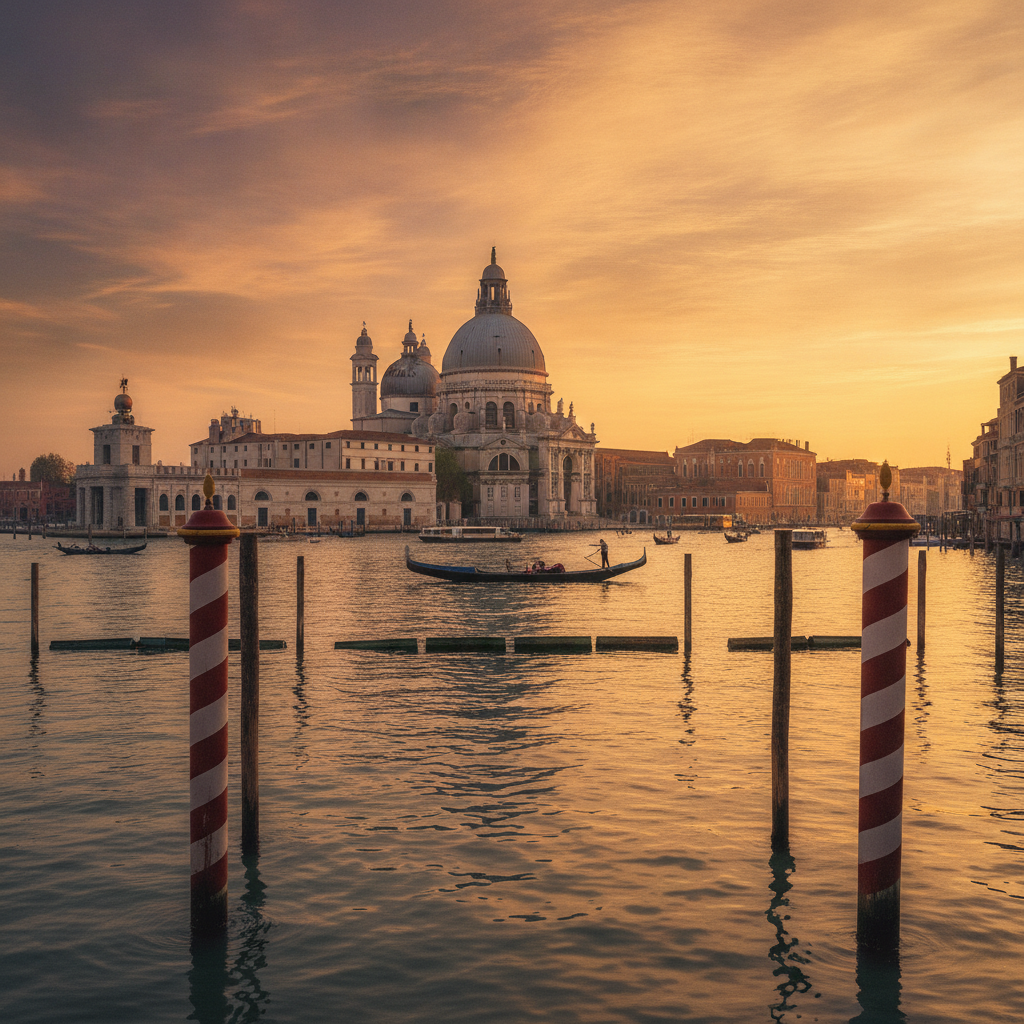
Dorsoduro: Gallerie dell'Accademia, Peggy Guggenheim Collection & Santa Maria della Salute
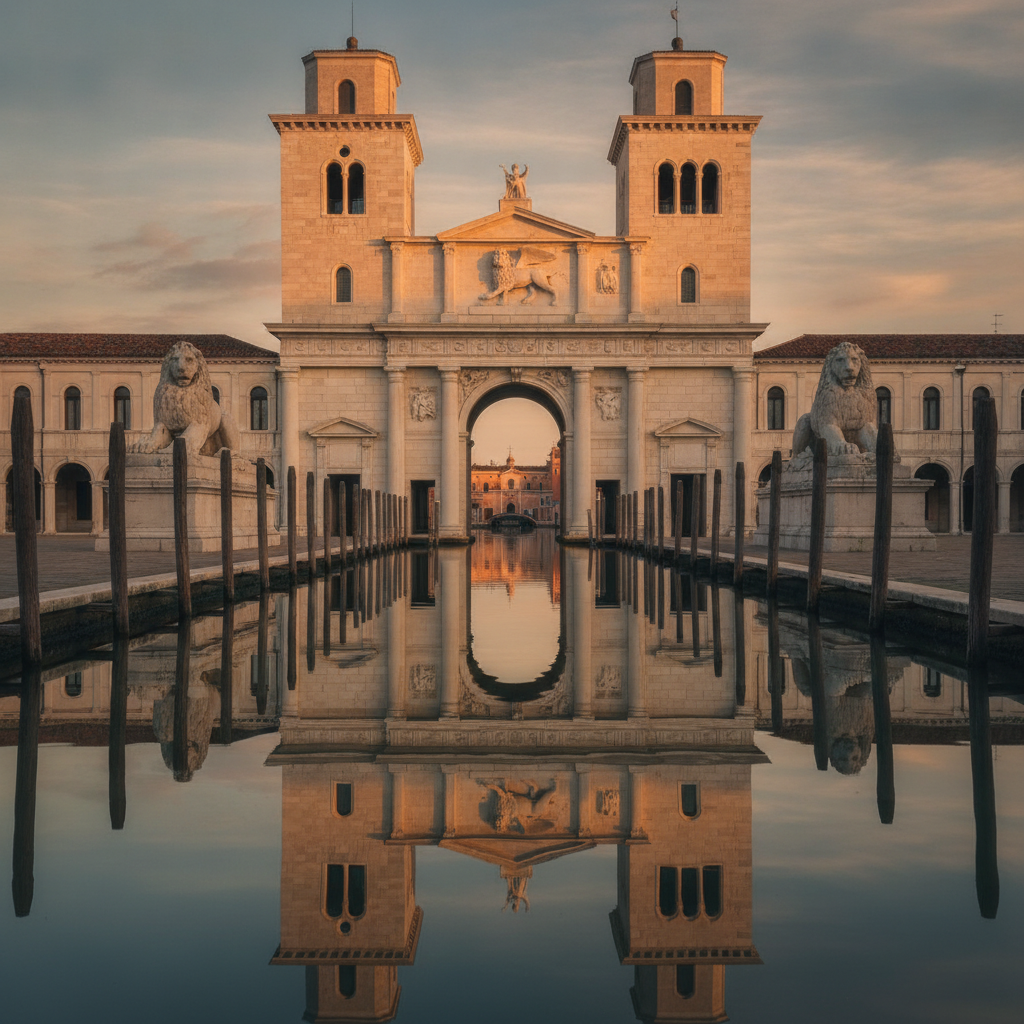
Castello Sestiere: the Arsenale, Venice Biennale Gardens & San Giovanni e Paolo