Victoria BC: The Only Bookshop Opened by an Alice Munro Ex-Husband, 20000 Black Brant Geese Stopping Over for a Month and a Province Where 95 Percent of the Land Was Never Legally Acquired From Its Indigenous Owners
Browse Munro Books on Government Street in the former bank building that Jim Munro opened in 1963 before his more famous ex-wife won the Nobel Prize and find that it remains the finest independent bookshop in western Canada, read the Douglas Treaties that are the only historical treaties in British Columbia covering tiny areas around three colonial settlements meaning that 95 percent of the province territory has never been legally transferred from its Indigenous owners in any formal process, walk Fernwood neighborhood to find the Belfry Theatre and cooperative businesses and a community diversity the rest of Victoria does not offer, stand at Clover Point seawatch location in November when Pacific loons and scoters and alcids move south in numbers only a person with binoculars and patience will see, watch 20,000 Black Brant geese rest in Shoal Harbour north of Victoria in April on their way from Mexico to Alaska because the eelgrass beds of the bay are the one reliable stopover on the entire Pacific Flyway, and understand that the Songhees Nation building commercial developments on the Inner Harbour western shore is asserting economic presence in a capital city built on their land without any treaty ever being signed.
- 1
Victoria Douglas Street and Government Street
Government Street, the primary north-south commercial spine of downtown Victoria running from the Inner Harbour north through the shopping district and into the uptown commercial area, contains the densest concentration of tourist-oriented retail in the city with multiple Cowichan sweater shops, British import stores, wool craft shops, and the British Candy Shoppe alongside cafes, restaurants, and chain retailers occupying heritage commercial buildings from the 1880s through the 1920s. The Cowichan sweater, knitted by Cowichan women of the Cowichan Nation on Vancouver Island in a distinctive heavy-gauge style using undyed wool that contains natural lanolin making the sweater water-resistant, became internationally famous after wearing by Queen Elizabeth II in a 1951 photograph and is among the most recognized Indigenous craft products in Canada. The Munro-books bookshop on Government Street, established by Jim Munro former husband of Nobel Prize winner Alice Munro in 1963 and now operated in a former Bank of Commerce building, is considered the finest independent bookshop in western Canada. The Market Square complex on Johnson Street, a restored heritage courtyard shopping center in the former warehouses of the Lower Town, presents independent retailers and restaurants in an attractive courtyard setting. The Victoria Bug Zoo on Courtney Street houses the largest collection of tropical insects on public display in Canada.
- 2
Victoria Douglas Treaties and Land Claims
James Douglas, the Chief Factor of the Hudson Bay Company who founded Fort Victoria in 1843 and became the first governor of the Colony of British Columbia in 1858, negotiated a series of 14 treaties with Indigenous peoples of southern Vancouver Island from 1850 to 1854 that are the only historical treaties in British Columbia, with all other Indigenous land in the province taken without treaty. The Douglas Treaties, covering small areas around Fort Victoria, Nanaimo, and Fort Rupert on northern Vancouver Island, have been contentious since their signing because the oral understanding of the First Nations who signed was that they retained the right to hunt and fish throughout the ceded territory, while the written text recorded a transfer of land ownership. The treaties are significant beyond their small geographic scope because they are the only legal land transactions in the province, meaning that over 95 percent of British Columbia territory was never legally acquired from its Indigenous owners. The landmark Calder case of 1973, in which the Supreme Court of Canada ruled that the Nisga Nation had an arguable claim to Aboriginal title in their territory in northwestern BC, established the legal basis for Aboriginal title in Canadian law and triggered the modern treaty negotiation process in BC that has produced approximately 40 negotiated treaties since 1993, covering perhaps 3 percent of the province.
- 3
Victoria Johnson Street and Fernwood
Johnson Street, running east from the Inner Harbour through the Lower Town and across the Johnson Street Bridge to Vic West, has evolved from a commercial warehouse district in the early 20th century through a period of decline to the current mixed restaurant, bar, and creative business strip that serves as the main artery of the younger resident culture of downtown Victoria. The Johnson Street Bridge, the current 2018 bascule bridge replacing a 1924 bridge that was itself a landmark, provides the primary crossing to the Vic West neighborhood on the western shore of the Inner Harbour. Fernwood, the neighborhood east of downtown Victoria along Quadra Street and Fort Street, is the most artist-dense and progressive neighborhood in the metropolitan area, with a village square at Fernwood and Gladstone, independent coffee shops, the Belfry Theatre, and a concentration of social enterprises, cooperative businesses, and community organizations. The Fort Street antique row, a two-kilometre stretch of Fort Street east from downtown, has the highest concentration of antique dealers, vintage shops, and collectible dealers in western Canada, attracting buyers from across the Pacific Northwest. The neighbourhood character of Fernwood, with its mixture of working families, artists, recent immigrants, and long-term residents in pre-war housing, represents the most authentically diverse community in a metropolitan area that is otherwise quite homogeneous.
- 4
Victoria Birdwatching and Wildlife
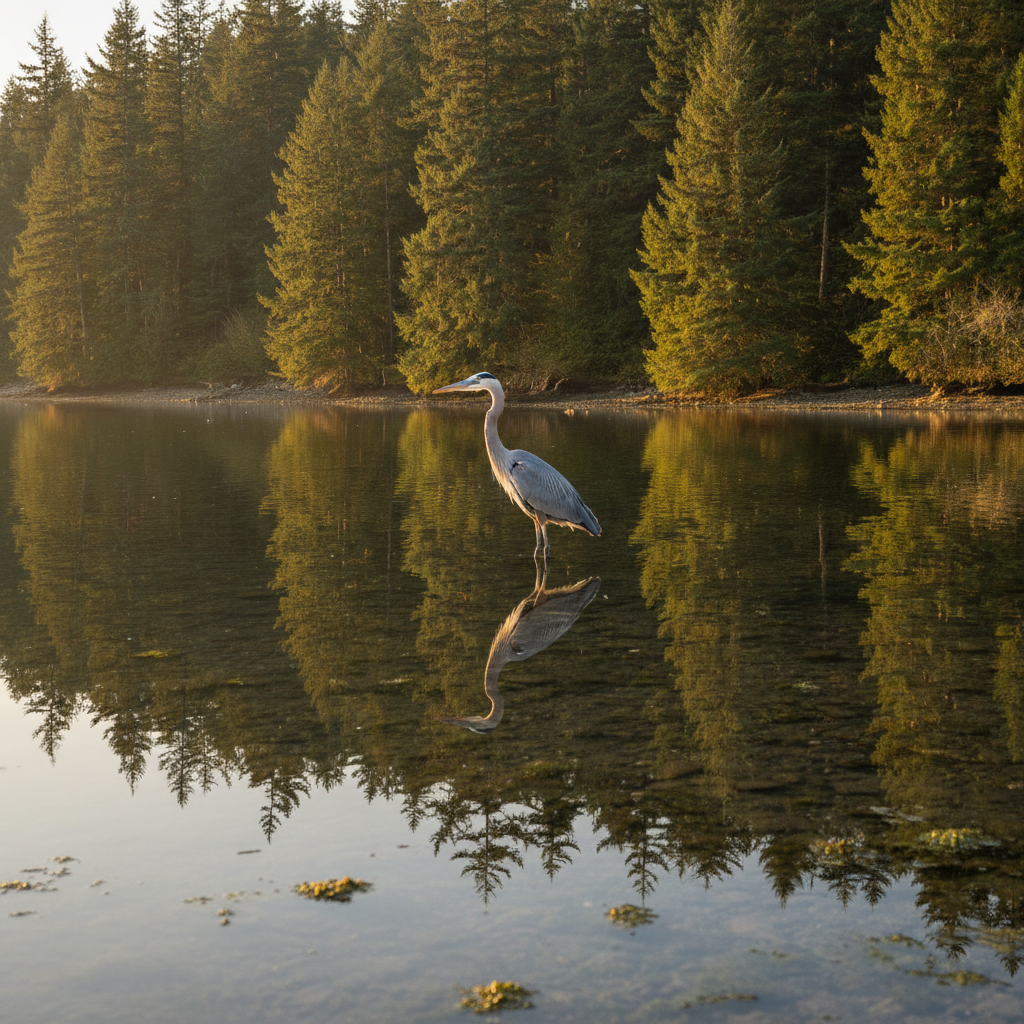
Victoria and the surrounding Capital Regional District provide some of the finest birdwatching in Canada, driven by the combination of the mild winter that retains year-round resident species and attracts wintering shorebirds and waterfowl from northern breeding grounds, the diverse habitats including coastal intertidal zones, Garry oak meadows, Douglas fir forests, and wetland complexes, and the position on the Pacific Flyway migration route. The Clover Point parking area on the Dallas Road waterfront is famous among birders as a seawatch location where Pacific loons, grebes, scoters, and alcids can be seen in large numbers during fall migration. The Christmas Bird Count conducted annually in Victoria since 1900 has the longest continuous record and among the highest species totals of any count in Canada. The Shoal Harbour Migratory Bird Sanctuary near Sidney, 30 kilometres north of Victoria, provides estuarine habitat for the largest concentration of Black Brant geese in the world during their spring migration stopover in April, when approximately 20,000 birds rest in the bay. The Great Blue Heron Nature Reserve in Saanich, a former golf course converted to heron nesting habitat, protects the largest urban Great Blue Heron rookery in Canada with over 150 active nests visible from observation platforms.
- 5
Victoria Technology and Innovation Sector
Victoria has developed a significant technology sector despite its geographic isolation and retirement demographic, driven by the University of Victoria research programs, the presence of federal government agencies including the Department of National Defence research establishment at the Victoria-area DRDC, and the quality-of-life attraction that draws technical workers from larger and more expensive cities. The DFO Pacific Biological Station at Nanaimo and the Institute of Ocean Sciences in North Saanich conduct major federal ocean research programs that feed scientific talent into the Victoria technology community. The Digital Media Zone and various technology accelerators have supported software startups, many oriented toward ocean technology, geospatial systems, and health informatics. Microtel, Recon Instruments before its acquisition by POC Sports, and numerous smaller companies have grown from Victoria university research. The provincial government technology procurement based in Victoria provides a stable customer base for technology services companies. The Victoria technology sector is known for work-life balance culture that attracts talent from Vancouver and Toronto who accept lower salaries for the Victoria quality of life. The cybersecurity and defense technology community around the DND establishments is a significant employer. The shift to remote work since 2020 has allowed more technology workers to base themselves in Victoria while working for mainland employers.
- 6
Victoria Reconciliation and First Nations Art
Victoria is the capital of a province with the most complex and contested Indigenous land rights situation in Canada, where no treaty covers the vast majority of the land and where the legal doctrine of Aboriginal title, established through British Columbia court cases, creates ongoing legal and political uncertainty about resource development and land use. The Royal BC Museum holds the most significant collection of Northwest Coast Indigenous art in the world outside the National Museum of Canada and several major American museums, with monumental poles, ceremonial objects, and documentary collections representing the Haida, Tsimshian, Tlingit, Kwakwakawakw, Nuu-chah-nulth, and Coast Salish peoples. The Mungo Martin House, a Kwakwakawakw big house built in Thunderbird Park beside the Royal BC Museum in 1953 by Kwakwakawakw master carver Mungo Martin, is the most significant piece of monumental Indigenous architecture in Victoria and is used for ceremonial events by the Kwakwakawakw community. The First Peoples Gallery renovation at the Royal BC Museum is part of a broader effort to present Indigenous culture with Indigenous curatorial authority. The Songhees Nation on the western Inner Harbour shore has developed commercial real estate including the Westshore commercial development and the Songhees Walkway along the waterfront, asserting an economic presence in the city built on their ancestral territory without a treaty.
Walk this route with audio
Stories play automatically as you reach each stop — no tapping needed.
More in Victoria
Victoria BC: The Six-Gill Sharks in the Anoxic Fjord Nobody Talks About, the Language With Fewer Than 20 Fluent Speakers That Is Now Being Taught in Schools and the Blue Flower Fields That Fed a People for Thousands of Years
Praslin Island: Vallée de Mai UNESCO Forest & Anse Lazio
Victoria BC: The Most English City in Canada Where 85 Percent of Residents Were Born in Canada, the Afternoon Tea Capital of North America and the Capital of a Province 14 Times the Size of Switzerland
Victoria BC: The First Brew Pub in Canada That Has Been Serving Pints Since 1984, the Oldest Building in Western Canada Outside Quebec and the Intertidal Zone That Has No Equal in British Columbia
Victoria BC: The Architect Who Designed Both the Legislature and the Empress Hotel Was Murdered by His Young Wife Lover in England, Craigdarroch Castle Built by a Coal Baron Who Died Before Moving In and Canada Coldest Water Surfers