Victoria BC: The Most English City in Canada Where 85 Percent of Residents Were Born in Canada, the Afternoon Tea Capital of North America and the Capital of a Province 14 Times the Size of Switzerland
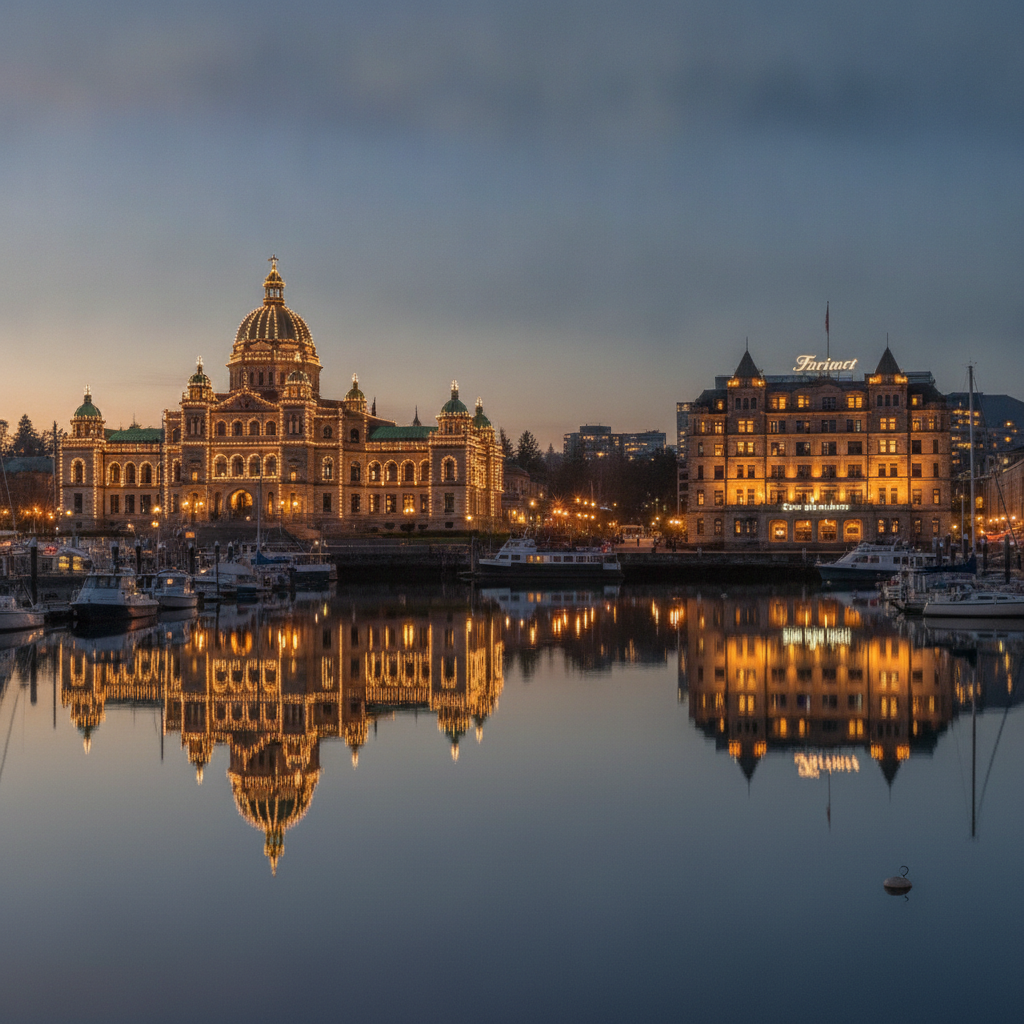
Walk the Inner Harbour where the BC Legislature and the Empress Hotel have faced each other across the same water since 1908 in the most photographed waterfront in Canada after Niagara Falls, learn that Victoria claims to have more flowers per capita than any other city in the world and backs this claim by planting baskets on every lamppost from April through October, understand that British Columbia is a province of 1 million square kilometres that runs from the 49th parallel to Alaska with Victoria sitting on its southwestern tip accessible only by ferry or seaplane from the mainland, eat afternoon tea at the Empress Hotel where the tradition has been maintained since 1908 and is now the most popular single hospitality experience in the city, walk through North America oldest Chinatown on Fisgard Street where the Fan Tan Alley is the narrowest commercial street in Canada, and recognize that the city with the mildest climate in Canada where daffodils bloom in February has become the retirement destination for Canadians from every colder province.
- 1
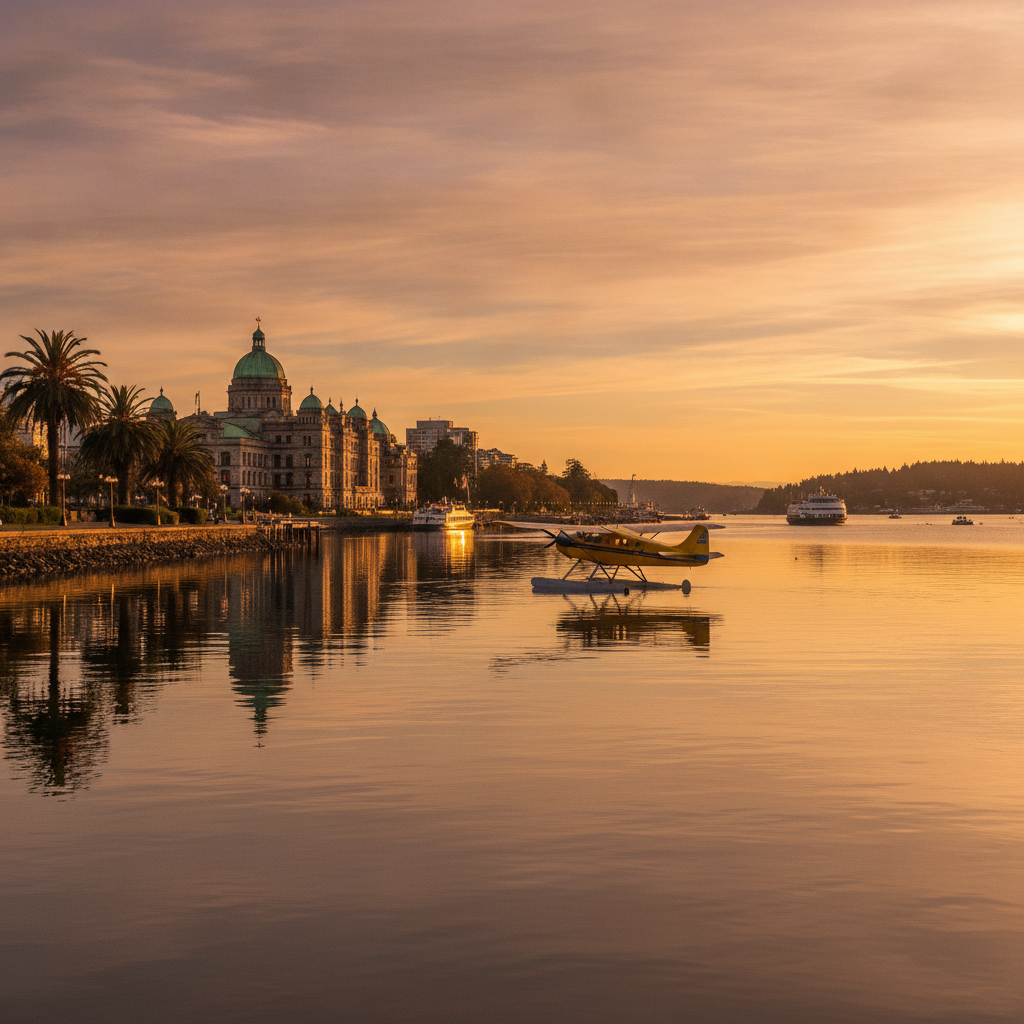
Victoria Inner Harbour and BC Legislature
Victoria Inner Harbour, where the British Columbia Legislature building, the Empress Hotel, the Royal BC Museum, and the waterfront walkway face each other across a small tidal inlet in the heart of the city, is one of the most photographed waterfronts in Canada, presenting a Victorian-era institutional landscape that has changed less since 1908 than almost any comparable urban waterfront in North America. The BC Legislature, completed in 1897 in a Romanesque Revival style designed by Francis Rattenbury, who also designed the Empress Hotel, is surrounded by illuminated by 3,000 lights on its roofline, towers, and dome on nights when parliament is in session, a tradition begun in 1897 and maintained continuously. The statue of Queen Victoria on the Legislature grounds faces the harbour. The Robert Dunsmuir statue, representing the coal baron who financed much of early Victoria infrastructure, stands on the Legislature grounds beside representations of politicians he owned through political donation. The BC Legislature has been the site of dramatic political moments including the 2017 confidence vote that ended the 16-year BC Liberal government when the NDP and Green Party formed a confidence and supply agreement. The Inner Harbour is serviced by water taxis, float planes connecting to Vancouver, whale watching vessels departing for the Strait of Juan de Fuca, and the Victoria Harbour Ferry connecting waterfront destinations.
- 2
Butchart Gardens
The Butchart Gardens, a 22-hectare garden created in a former limestone quarry by Jennie Butchart beginning in 1904, when her husband Robert Pim Butchart had exhausted the limestone deposits in the Tod Inlet quarry used for his Portland Cement factory, is the most visited private garden in North America with approximately 1 million visitors annually, and is designated a National Historic Site of Canada. Jennie Butchart began filling the quarry with topsoil from surrounding farmland in 1904, hauling it in wheelbarrows and hanging from ropes to plant ivy on the quarry walls, creating the Sunken Garden that remains the centerpiece of the gardens 120 years later. The gardens now include the Italian Garden, Japanese Garden, Rose Garden, and Mediterranean Garden, with the Sunken Garden 15 metres below grade in the original quarry. In summer, the gardens are illuminated on Saturday evenings with a fireworks display. The Butchart Gardens employs over 50 gardeners and plants over 900 varieties of bedding plants annually, replacing the entire planting twice per season. The Tod Inlet, adjacent to the gardens, is a marine protected area with orca, seals, and harbour porpoise visible from the shoreline. The gardens are 21 kilometres north of Victoria and accessible by public transit, tour bus, or bicycle on the Lochside Regional Trail.
- 3
Victoria Chinatown and Fisgard Street
Victoria Chinatown, established in the 1860s by Chinese workers who came to British Columbia during the gold rush and the construction of the Canadian Pacific Railway, is the oldest Chinatown in Canada and the second oldest in North America after San Francisco, occupying a two-block area on Fisgard Street north of the inner harbour. Fan Tan Alley, a narrow passage between two buildings in Chinatown measuring 1.2 metres at its narrowest point, is the narrowest commercial street in Canada and was historically a center of gambling dens, opium dens, and retail shops serving the Chinese community before becoming a curio-shopping destination. The Gate of Harmonious Interest at the Fisgard Street entrance, erected in 1981 with funding from the City of Victoria and the Chinatown Consolidated Benevolent Association, marks the formal entrance to the district. The Chinese community of early Victoria faced extraordinary legal discrimination including the Chinese head tax of 50 dollars imposed in 1885, increased to 100 dollars in 1900 and 500 dollars in 1903, designed to deter Chinese immigration, and the Chinese Exclusion Act of 1923 that halted Chinese immigration entirely until 1947. The Chinese Consolidated Benevolent Association, founded in 1884, served as the de facto government of the Chinese community in its dealings with the Canadian authorities for decades. The Chinatown National Historic Site interpretation covers this discrimination history alongside the physical heritage of the district.
- 4
Beacon Hill Park and Victoria Waterfront
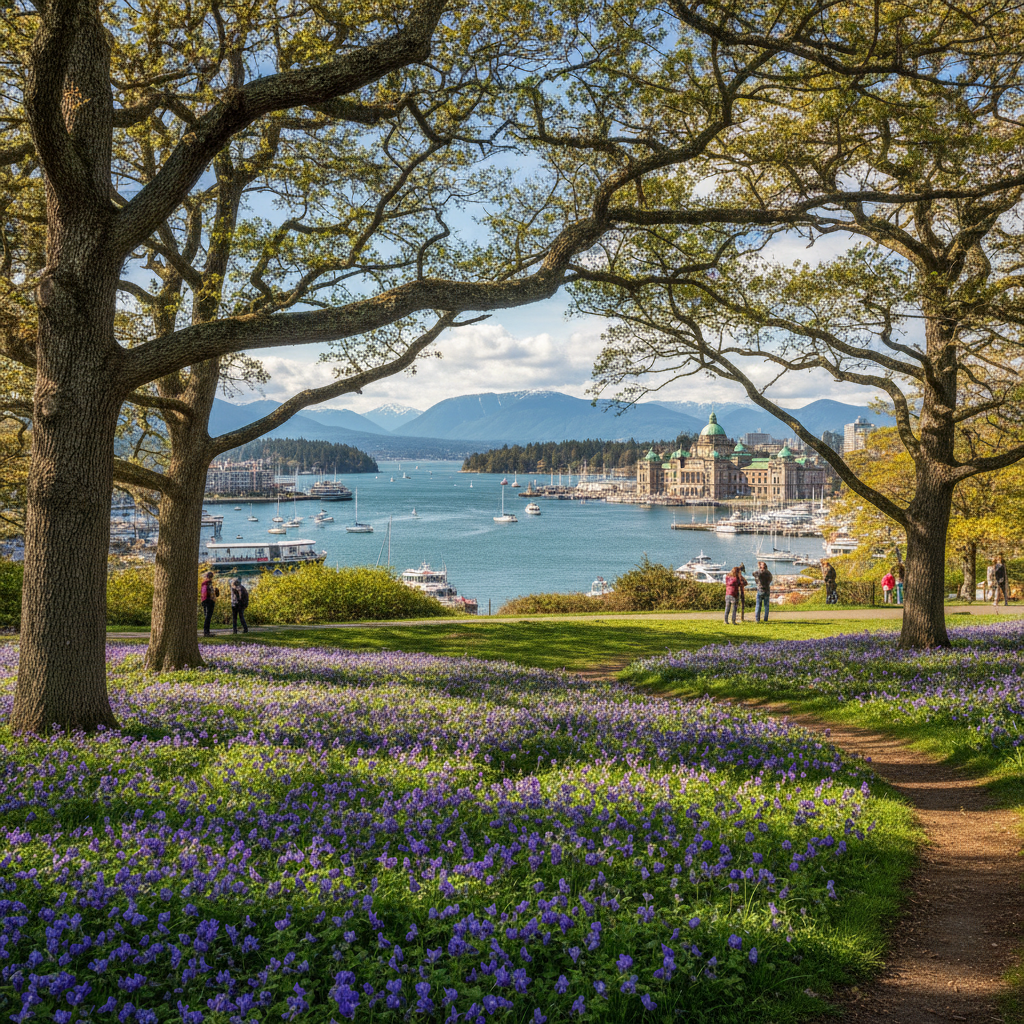
Beacon Hill Park, a 74-hectare natural park on the southern tip of Victoria adjacent to the waterfront Dallas Road walkway, preserves a remnant of the Garry oak meadow ecosystem that is among the most endangered ecosystems in Canada, with less than 5 percent of the original Garry oak savanna that covered southeastern Vancouver Island before European settlement remaining in any form, and much of what survives is in Beacon Hill. The Garry oak, a gnarled deciduous oak native only to the Pacific Northwest from southern British Columbia to California, is the only native oak in Canada and the Garry oak meadow ecosystem, characterized by camas bulbs, sea blush, fawn lilies, and death camas in a grassland-woodland mosaic, supports over 100 rare plant and animal species. Beacon Hill Park contains the world tallest totem pole, carved in 1956 by Mungo Martin of the Kwakwakawakw Nation, standing 38.9 metres. The Dallas Road waterfront, a pedestrian and cycling path along the southern shore of Victoria from Ogden Point breakwater to Clover Point, provides views across the Strait of Juan de Fuca to the Olympic Mountains of Washington State on clear days. The Mile Zero monument of the Trans-Canada Highway stands at the western end of Dallas Road, marking the Pacific terminus of the highway that runs 7,821 kilometres to St. Johns, Newfoundland.
- 5
Royal BC Museum
The Royal BC Museum on the Inner Harbour adjacent to the Legislature, one of the finest provincial museums in Canada, presents the natural and human history of British Columbia through dioramas, interactive displays, and major collections of First Nations art, natural history specimens, and documentary history accumulated since the museum founding in 1886. The First Peoples Gallery on the third floor, presenting the Indigenous cultures of British Columbia from the Haida of the Queen Charlotte Islands to the Interior Salish peoples of the Interior plateau, is considered one of the finest exhibitions of Northwest Coast Indigenous art and culture in the world, with monumental carved cedar poles, bentwood boxes, button blankets, and ceremonial objects presented in their cultural context. The Natural History Gallery on the second floor includes life-size recreations of Ice Age megafauna, coastal rainforest, and grassland environments. The IMAX Theatre at the museum presents large-format films on British Columbia natural history. The museum holds the complete totem pole collection from the Haida village sites of Skidegate and Masset, removed in the early 20th century and now a contested heritage object between the museum and the Haida Nation. The museum is currently undergoing a major 800-million-dollar redevelopment following a controversial cancellation of the original 789-million-dollar replacement plan.
- 6
Victoria Afternoon Tea and English Heritage
The afternoon tea service at the Fairmont Empress Hotel, in continuous operation since the hotel opened in 1908 under the management of the Canadian Pacific Railway, is the most famous single hospitality ritual in Victoria and the most widely replicated tourist experience on Vancouver Island, with over 500 teas served daily in the Tea Lobby and adjacent rooms at a price ranging from 75 to 110 Canadian dollars per person. The Empress tea service uses the proprietary Empress blend tea developed specifically for the hotel and has maintained the essential ritual of finger sandwiches, scones with Devonshire cream and jam, and pastries on tiered stands with loose-leaf tea service in silver teapots since the Edwardian era. Victoria overall identity as the most English city in Canada is a product of the deliberate early settlement policy of the Hudson Bay Company and later of the provincial government, which recruited British settlers to offset the influence of American settlers arriving from California during the gold rush, and of the retirement migration of British military officers and civil servants seeking a temperate climate within the British Empire. The reality of Victoria British identity is complex: the 2021 census found that 85 percent of residents were born in Canada, most of them in British Columbia, but the architectural, horticultural, and service culture of the city reflects sustained colonial identification with British traditions that persists as civic aesthetic more than demographic reality.
Walk this route with audio
Stories play automatically as you reach each stop — no tapping needed.
More in Victoria
Victoria BC: The Six-Gill Sharks in the Anoxic Fjord Nobody Talks About, the Language With Fewer Than 20 Fluent Speakers That Is Now Being Taught in Schools and the Blue Flower Fields That Fed a People for Thousands of Years
Praslin Island: Vallée de Mai UNESCO Forest & Anse Lazio
Victoria BC: The First Brew Pub in Canada That Has Been Serving Pints Since 1984, the Oldest Building in Western Canada Outside Quebec and the Intertidal Zone That Has No Equal in British Columbia
Victoria BC: The Architect Who Designed Both the Legislature and the Empress Hotel Was Murdered by His Young Wife Lover in England, Craigdarroch Castle Built by a Coal Baron Who Died Before Moving In and Canada Coldest Water Surfers
Aldabra Atoll: World's Largest Giant Tortoise Colony