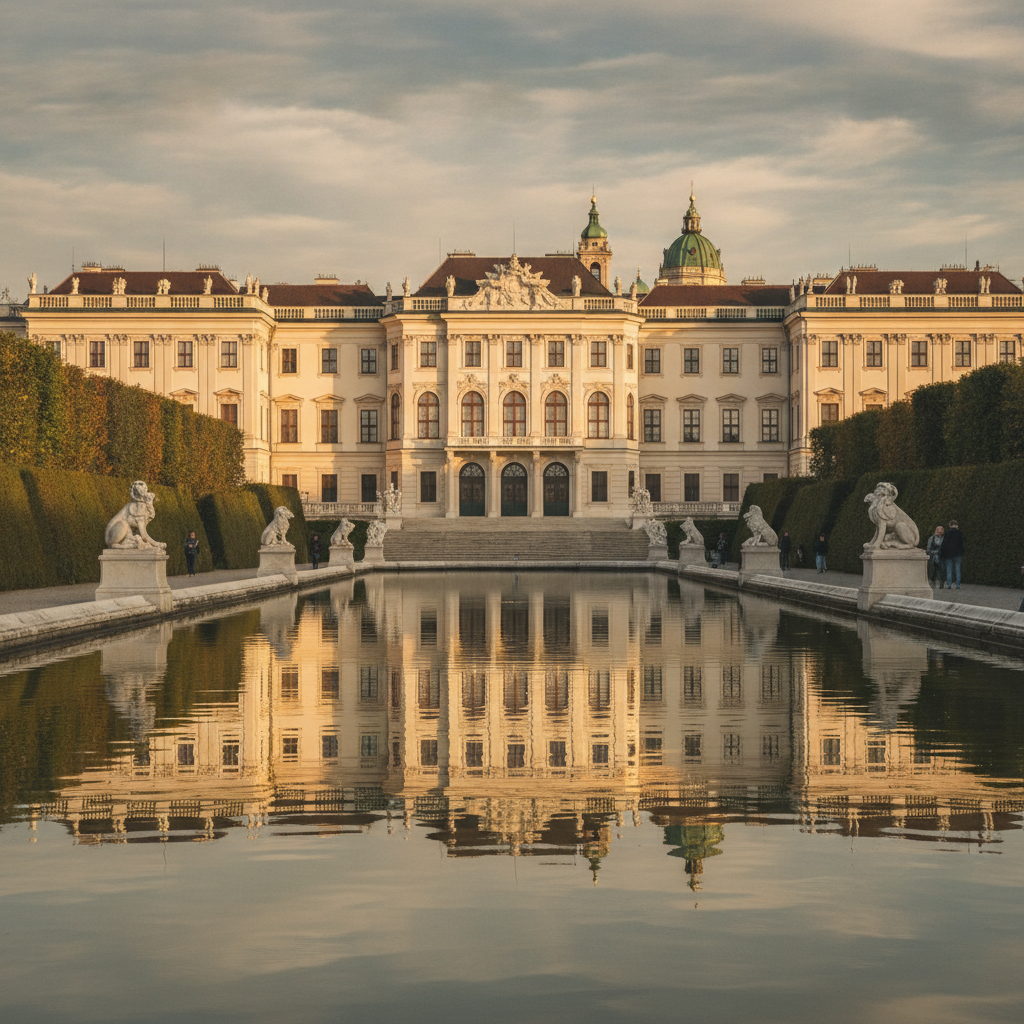
The Boulevard of Empires: Vienna's Ringstrasse & Great Museums
In 1857, Emperor Franz Joseph ordered the demolition of Vienna's medieval fortifications and the construction of a grand circular boulevard lined with the cultural and governmental institutions of a modern imperial capital. The resulting Ringstrasse is the most complete example of 19th-century urban planning in the world — a two-kilometer procession of Neo-Gothic, Neo-Renaissance, Neo-Baroque, and Historicist public buildings that recast Vienna as the equal of Paris and Berlin. This walk explores its grandest institutions.
- 1
Kunsthistorisches Museum (Museum of Art History)
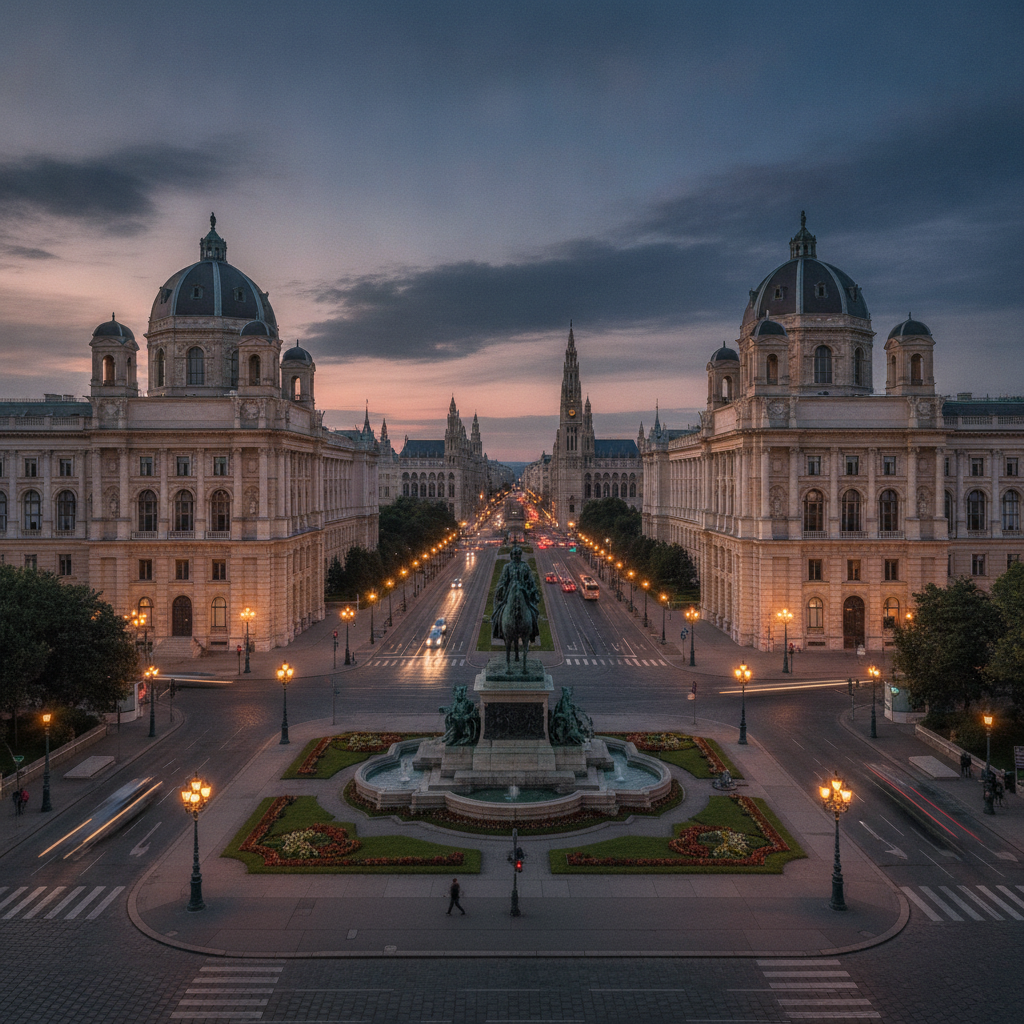
The Kunsthistorisches Museum — the KHM — is one of the greatest art museums in the world, housing the collected treasures of the Habsburg dynasty: Bruegel the Elder's six surviving works (the largest collection anywhere), Vermeer's Art of Painting, Velázquez's portraits of the Spanish Infanta, Cellini's Saliera salt cellar (the most expensive Renaissance object ever), and an Egyptian and Near Eastern department of extraordinary depth. The building itself, designed by Gottfried Semper and Karl von Hasenauer and opened in 1891, is a work of art: every cornice, column, staircase, and ceiling painting was designed as part of a unified artistic program. The main staircase, lined with lunette paintings by Gustav Klimt, is alone worth the entrance fee.
- 2
Naturhistorisches Museum (Natural History Museum)
The mirror image of the KHM across Maria-Theresien-Platz, the Natural History Museum occupies an identical building and has a collection to match: the Venus of Willendorf — a 30,000-year-old limestone fertility figurine, just 11 centimeters tall, that is the most famous prehistoric artwork in the world — is displayed in a small case on the ground floor alongside other Paleolithic figurines. The museum's meteorite collection is among the largest in the world; its dinosaur hall and zoological galleries are outstanding. The building's central dome, decorated with a ceiling fresco of the cosmos, is one of the finest Neo-Renaissance interiors in Vienna.
- 3
Maria-Theresien-Platz
The rectangular plaza between the two museums is anchored by a massive monument to Empress Maria Theresa (1717–1780), the only woman to rule the Habsburg domains in her own right. The 1888 monument, designed by Kaspar Zumbusch, shows the empress seated on her throne, surrounded by standing figures of her advisors, generals, and composers — Mozart, Haydn, and Gluck are among them. The plaza's symmetry, framed by the identical museum facades, is one of the most perfect formal urban spaces in Europe. It is also the starting point for the horse-drawn fiaker carriages that have transported visitors around the Ringstrasse since the 19th century.
- 4
Austrian Parliament
The Hellenistic Revival parliament building (1883), designed by the Danish architect Theophil Hansen, makes an unusual claim: it is built in ancient Greek style because Hansen believed that democracy was a Greek invention and that the seat of democratic government should therefore look Greek. The Athena Fountain in front — the goddess of wisdom presiding over a pool of river gods — reinforces the message. The building's interior, with its columned halls and coffered ceilings, is one of the most remarkable 19th-century public interiors in Austria. After a major renovation completed in 2022, the parliament offers guided tours of its ceremonial spaces.
- 5
Vienna City Hall (Rathaus)
The Neo-Gothic Rathaus (1883), designed by Friedrich von Schmidt in deliberate emulation of Flemish Gothic town halls, is the seat of the Vienna city government and one of the Ringstrasse's most extravagant buildings. Its 98-meter central tower is topped by the Rathausmann — an iron knight in full armor — which has become one of the city's emblems. The Rathausplatz in front is the setting for Vienna's most famous public events: the summer Film Festival, which projects opera and concert films on a giant outdoor screen; the Christmas market, which transforms the plaza into a Biedermeier wonderland; and the New Year's Eve celebrations. The Rathauspark alongside, with its statues of Viennese cultural figures, is one of the pleasantest gardens in the city center.
- 6
Burgtheater (Imperial Court Theatre)
The Burgtheater — the Austrian National Theatre — is the second oldest theatre in the German-speaking world, founded in 1741 by Empress Maria Theresa. The current building on the Ringstrasse, opened in 1888, was designed by Gottfried Semper and Karl von Hasenauer, the same architects as the KHM, and is considered the most important German-language theatre in the world — the standard-setter for classical production values against which all others are measured. The ceiling paintings in the two curved staircases, depicting the history of theatre from antiquity to the present, were painted by a young Gustav Klimt in 1886 — some of the earliest surviving work by the future master of Viennese Symbolism.
Walk this route with audio
Stories play automatically as you reach each stop — no tapping needed.
More in vienna
Old Vienna: Prater, Riesenrad & Leopoldstadt
Color & Harmony: Hundertwasser, Stadtpark & the Danube Canal
Imperial Summer: Schönbrunn Palace & Gardens
Empire's Heart: Stephansdom & the Innere Stadt
Markets & Modernism: Naschmarkt to MuseumsQuartier