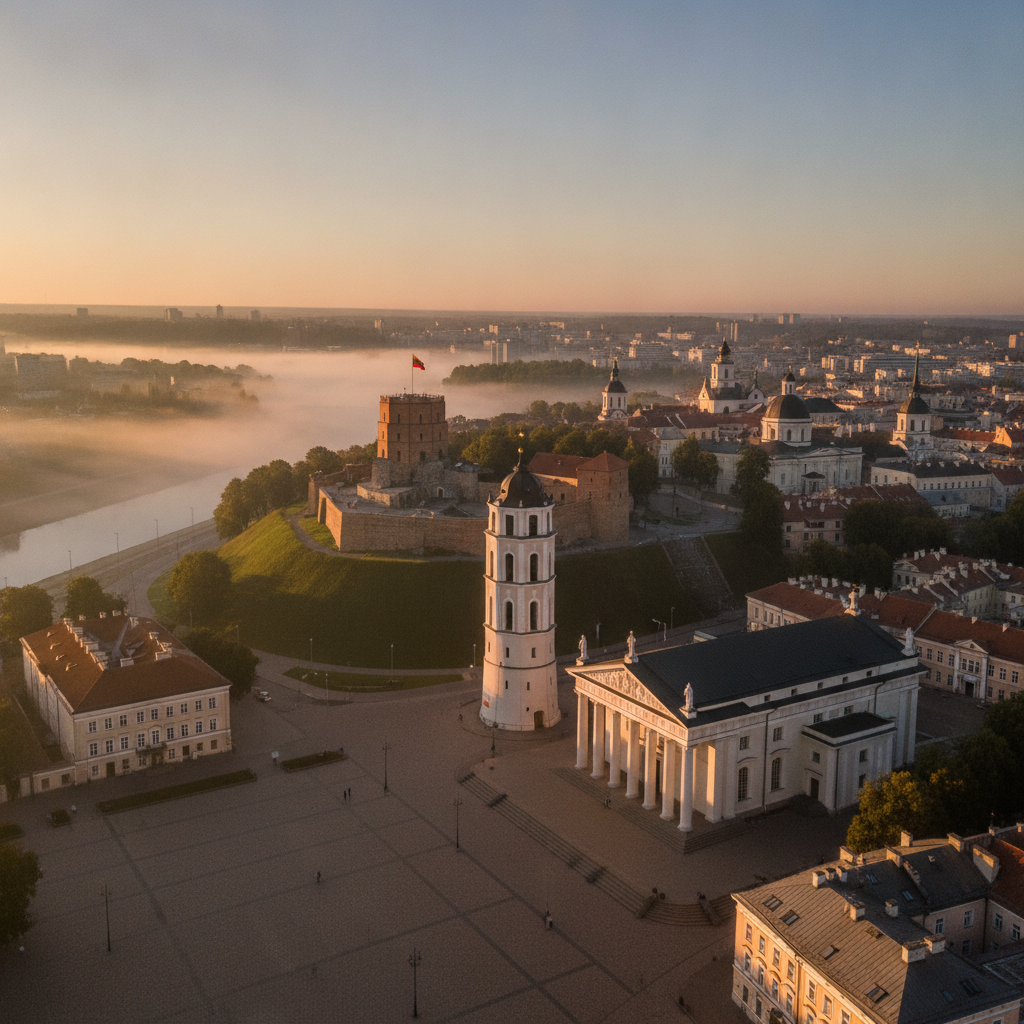
Vilnius — the KGB Museum, Gedimino Prospektas & the Soviet History of Lithuanian Independence
The Museum of Genocide Victims in the former KGB headquarters in Vilnius is the most viscerally immediate documentation of Soviet political repression in the Baltic states — the preserved cells, the execution room, and the isolation chambers the physical evidence of the system that ruled Lithuania for 47 years.
- 1
The KGB Museum — the Museum of Genocide Victims
The Museum of Genocide Victims (Genocido aukų muziejus, Aukų gatvė 2A, the former KGB headquarters and internal prison at the corner of Gedimino prospektas in central Vilnius, the building the most important place of memory for the Soviet occupation in Lithuania, €8 adults, Tuesday-Sunday 10am-6pm, the only museum in the world where the visitor can walk through the fully preserved cells and execution facilities of a functional KGB detention and execution centre): the building history (the 1900 Russian Imperial administrative building, occupied by the Soviet NKVD/MGB/KGB 1940-41 and 1944-1991, the Nazis using it as a Gestapo facility 1941-1944, the Soviets returning and extending the prison with new cells in 1944-1945, the building the centre of the Soviet security apparatus in Lithuania for 47 years — the interrogation of every Lithuanian resistance figure, the holding of prisoners before their deportation to Siberia, and the execution of death-sentence prisoners all conducted in the basement level of this building), the essential spaces (the Execution Room — the preserved original execution chamber with the drainage channel and the bullet holes, the room where 767 named individuals were shot, the names listed on the wall panels — the Isolation Cells — the basement punishment cells of 1.2m × 1.5m where prisoners were held in complete darkness and cold — the Water Cell — the cell with the sloped floor and the drain where prisoners were kept standing in cold water — and the General Prison Wing — the row of standard cells with the original iron doors and the spyholes, the prisoner graffiti on the walls).
- 2
Gedimino Prospektas — the Main Boulevard
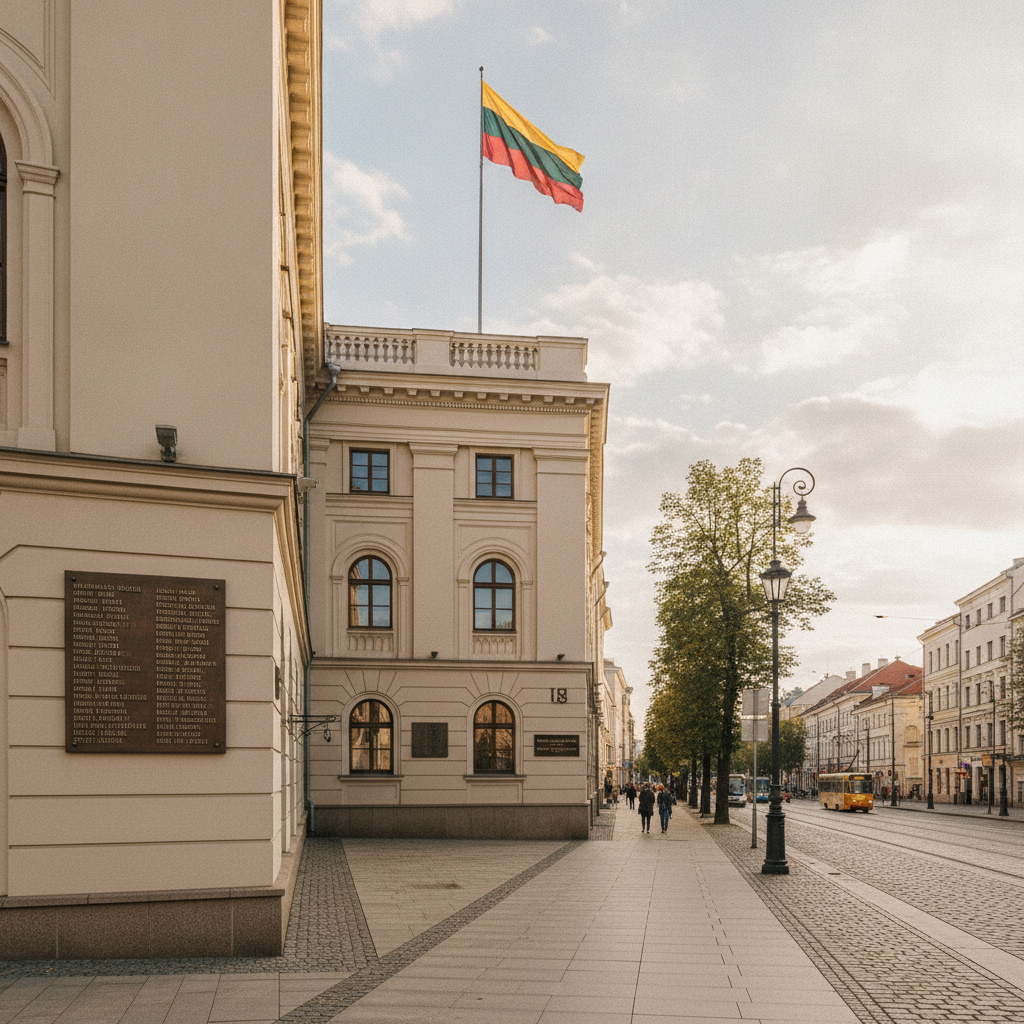
Gedimino prospektas (the main boulevard of Vilnius, the 2km avenue from Cathedral Square west to the Neris River, the boulevard named after Grand Duke Gediminas, the founder of Vilnius, the avenue the site of the Lithuanian Parliament building, the Supreme Court, the National Library, and the National Drama Theatre — the architectural sequence of the 19th and 20th centuries defining the civic identity of modern Vilnius): the boulevard walk (the 2km from Cathedral Square to the Green Bridge over the Neris River, the boulevard lined with the neoclassical and Soviet-era buildings — the Soviet period Soviet Modernist facades alternating with the 19th-century Russian Imperial commercial buildings — the boulevard the de facto central civic axis of the city, the outdoor café terraces of the café and the restaurant ground floors in summer, the most social public space in Vilnius), the Seimas (the Lithuanian Parliament, Gedimino prospektas 53, the parliament building of the restored Republic, the building where the January 1991 events occurred — the Soviet military units surrounding the Parliament building January 11-21 1991 attempting to force the resignation of the Lithuanian government, the civilian barricades around the Parliament manned by unarmed Lithuanian volunteers, the Soviet retreat after the international condemnation following the January 13 Television Tower killings — the Parliament building now open for guided tours by advance booking at lrs.lt) and the Green Bridge (the 1952 Soviet-era bridge with the Social Realist sculptures of the Soviet worker, the soldier, the scholar, and the student — the four statue groups the last intact Soviet public sculpture ensemble in Vilnius, the bridges the most discussed post-Soviet monument in Lithuania, the debate on whether to remove or preserve the Soviet figures ongoing since 1991).
- 3
The January 13, 1991 Massacre — the Television Tower
The Vilnius Television Tower massacre (January 13 1991, the defining event of the Lithuanian independence restoration: the Soviet Interior Ministry troops and paratroopers moved to seize the Vilnius Television Tower — the transmission facility for all Lithuanian broadcasting — at 1:30am on January 13, the unarmed Lithuanian civilians who had gathered to defend the tower in the previous days forming a human barrier at the base, the Soviet troops opening fire and crushing some defenders with the armored vehicles, 14 Lithuanians killed and 700 injured, the Lithuanian television broadcast cut at 2:02am, the television team switching to a backup transmitter and continuing the broadcast with the words 'the Soviet army is attacking, people are dying here' — the international news coverage of the killings the decisive moment in the international recognition of the Lithuanian independence movement): the Television Tower memorial (Laisvės prospektas 60, 4km west of the Old Town by trolleybus 16, the 326m concrete tower the tallest structure in Lithuania, the memorial garden at the base with the 14 crosses for the killed civilians, the photographs and the inscriptions at each cross, the Museum of January 13 inside the tower base — the documentation of the January 13 events, €5 adults, daily 10am-8pm, the viewing platform at 165m the best panoramic view over the Vilnius cityscape, separate entry €8), and the human chain of August 1989 (the Baltic Way — the 675km human chain from Vilnius to Riga to Tallinn on 23 August 1989, the 50th anniversary of the Molotov-Ribbentrop Pact, the chain formed by 2 million people — the most decisive single demonstration of Baltic solidarity, the Vilnius terminus at the Cathedral Square, the documentary archive in the Museum of January 13).
- 4
The Lithuanian Countryside — Hill of Crosses and Kernavė
Two essential Lithuanian day trips from Vilnius: the Hill of Crosses (Kryžių kalnas, 200km north of Vilnius near Šiauliai, accessible by train from Vilnius to Šiauliai in 2.5 hours and then bus or taxi 12km, the most important national symbol of Lithuanian Catholic identity — the small hill covered with 200,000+ wooden crosses, the crosses of all sizes from the 5cm keychain cross to the 6m carved oak post, the tradition of placing a cross on the hill beginning in the 19th century as a form of non-violent resistance to Russian Imperial rule, the Soviet bulldozers removing the crosses three times between 1961 and 1975 and the Lithuanians replacing them within days, the crosses continuing to be added after independence at the rate of 10,000+ per year, the hill the most visited single site in Lithuania outside Vilnius, the Pope John Paul II visiting in 1993 the moment that confirmed the international significance of the site) and Kernavė (the prehistoric and medieval capital of Lithuania, 35km northwest of Vilnius, accessible by bus from the Vilnius Žirmūnai bus stop in 1 hour, the UNESCO World Heritage Site since 2004 — the system of 5 hillfort mounds on the Neris River bank, the site inhabited continuously since the Mesolithic period 10,000 BCE, the most significant prehistoric site in Lithuania, the open-air museum €4 adults, the Annual Medieval Festival on the third weekend of July the most attended historical event in Lithuania at 20,000+ visitors).
- 5
Kaunas — Lithuania's Second City and the Interwar Capital
Kaunas (Lithuania's second city, population 290,000, 100km west of Vilnius, the train from Vilnius in 1 hour 20 minutes at €7 or the bus in 1.5 hours at €5, the provisional capital of Lithuania 1920-1940 when Vilnius was under Polish occupation — the city developing the most complete interwar modernist architecture in the Baltic states during this period): the Old Town (the medieval square and the Vytautas the Great Church — the most complete Gothic church interior in Lithuania, the church built by Vytautas the Great in 1404 — the confluence of the Neris and Nemunas rivers, the Kaunas Castle of 1362 the oldest surviving fortification in Lithuania, €3 adults), the interwar modernism (the Laisvės alėja — Freedom Avenue — the 1.7km pedestrian boulevard of the interwar Kaunas with the 1920s-1930s national-modernist facades, the best surviving streetscape of interwar Lithuanian architecture, the Mykolas Žilinskas Art Gallery at Nepriklausomybės aikštė 12 the primary art collection of the interwar period) and the Ninth Fort Holocaust Memorial (the Tsarist-era fort 7km north of Kaunas, the site where 50,000 Jews from Kaunas and 5,000 Jews deported from Western Europe were murdered 1941-1944, the most important Holocaust site in the Kaunas area, €5 adults, the documentation the complement to the Paneriai Memorial near Vilnius).
- 6
Vilnius Food and Drink — from Cepelinai to Contemporary Cuisine
Vilnius food culture (the Lithuanian cuisine building on the farmland tradition — the potato, the rye, the dairy, the smoked meats — with a growing contemporary restaurant scene that has positioned Vilnius alongside Tallinn and Warsaw as one of the most interesting food cities in Eastern Europe): the Halės Market (Pylimo gatvė 58, the 1906 covered market with the best selection of Lithuanian artisan food — the farmer cheeses, the homemade black bread, the smoked sausages, the pickled vegetables and the forest mushrooms, the honey from the Lithuanian apiaries — open Tuesday-Sunday 7am-3pm, the Sunday morning the most atmospheric time), cepelinai and traditional Lithuanian food (the Etno Dvaras restaurant on Pilies Street the most tourist-appropriate and reliable traditional restaurant, the cepelinai at €8-12 the standard order, the dark rye bread with the homemade butter and the Lithuanian herring available as a starter at €4-6), contemporary Vilnius restaurants (the Džiaugsmas at Dysnos gatvė 7 the most internationally recognized Lithuanian fine dining — the tasting menu of Lithuanian seasonal ingredients at €55-75 per person — the Sweet Root at Užupio gatvė 22 in the Užupis neighbourhood the most creative mid-range option — the Ertlio Namas at Šv. Jono gatvė 7 inside the Old Town the correct tasting menu for the visitor wanting the elevated Lithuanian kitchen at €60-80) and the Lithuanian drinks (the Starka rye whisky — the Lithuanian spirit aged in oak barrels, the Rūtos-brand flavoured vodkas, and the Švyturys and Utenos beer brands — the Vladas Kančiauskas craft beer bar at Žirmūnų gatvė 68 the best craft beer selection in Vilnius outside the Old Town).
Walk this route with audio
Stories play automatically as you reach each stop — no tapping needed.
More in vilnius
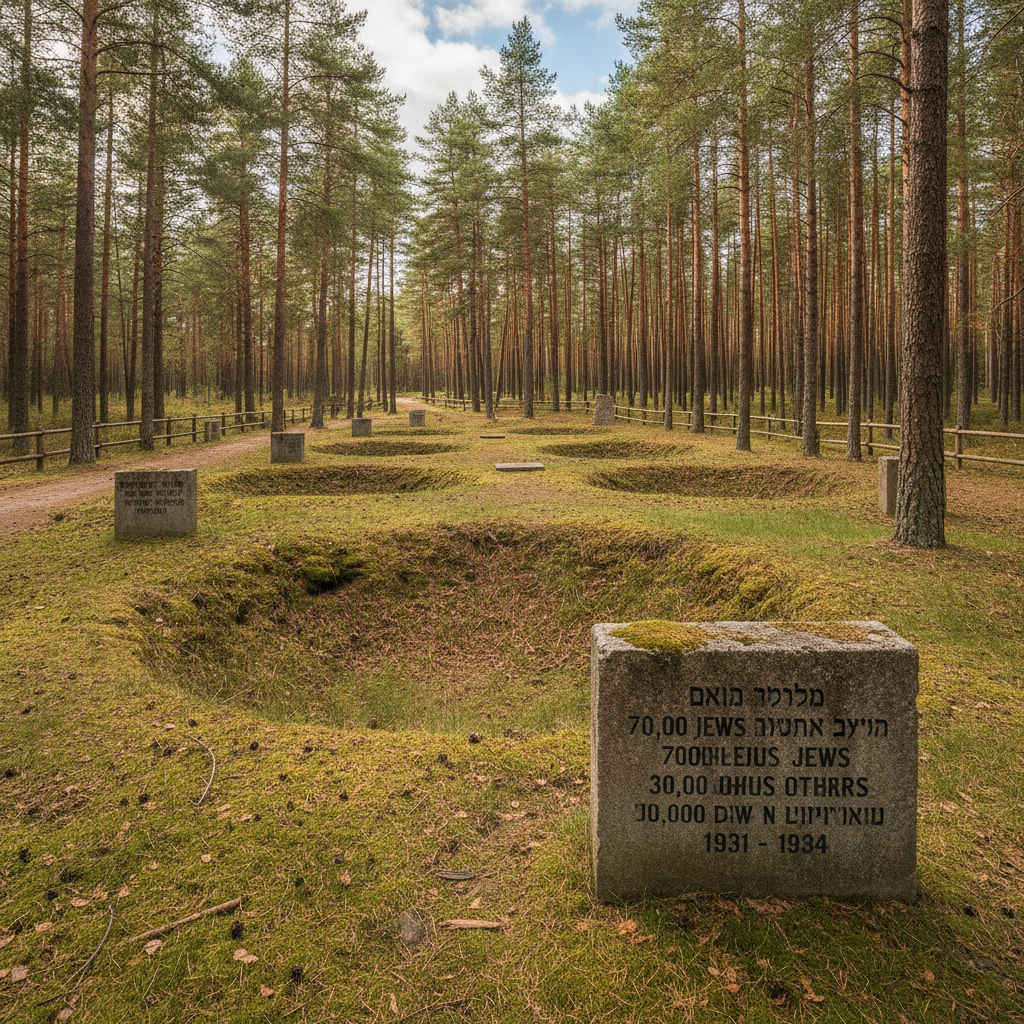
Vilnius — Jerusalem of Lithuania: the Jewish Heritage, the Vilna Gaon & the Paneriai Holocaust Memorial
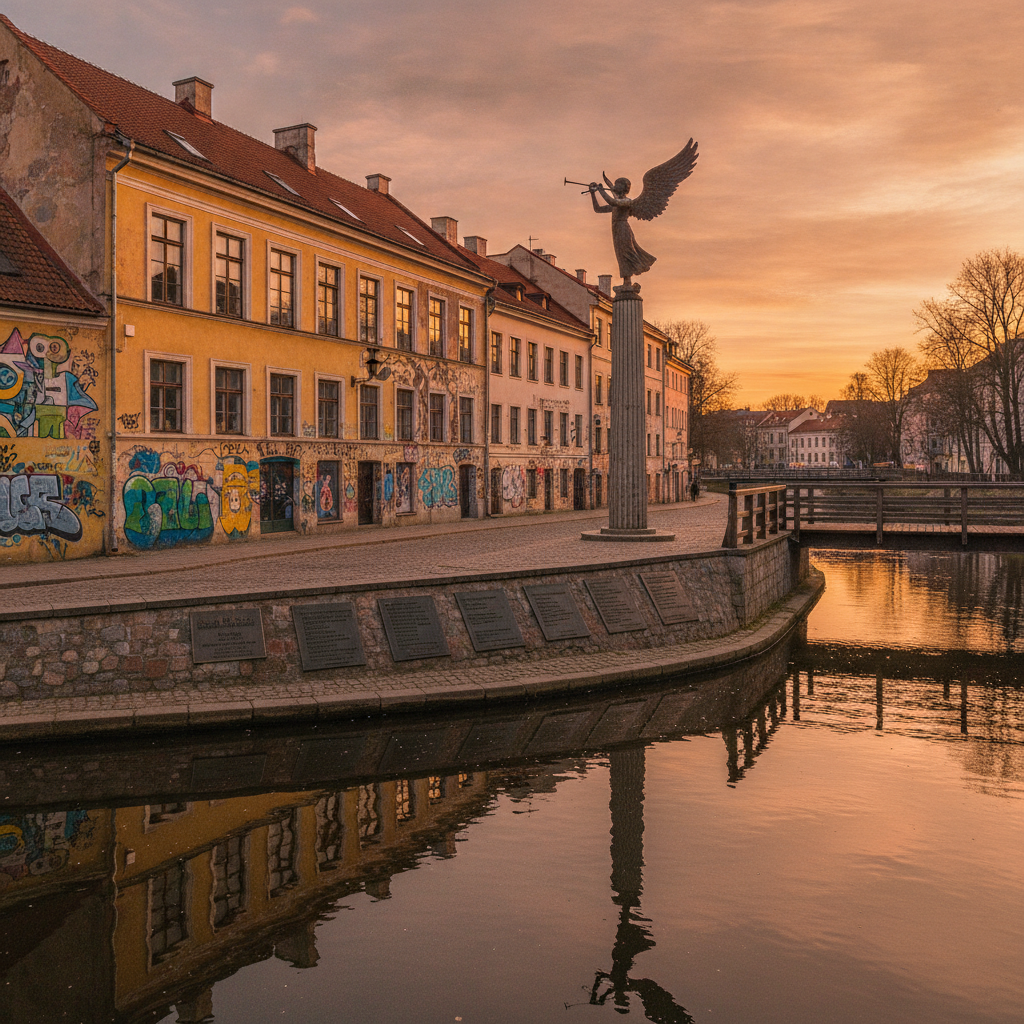
Vilnius Užupis & the Contemporary Art Scene — the Bohemian Republic, Galleries & Creative Vilnius
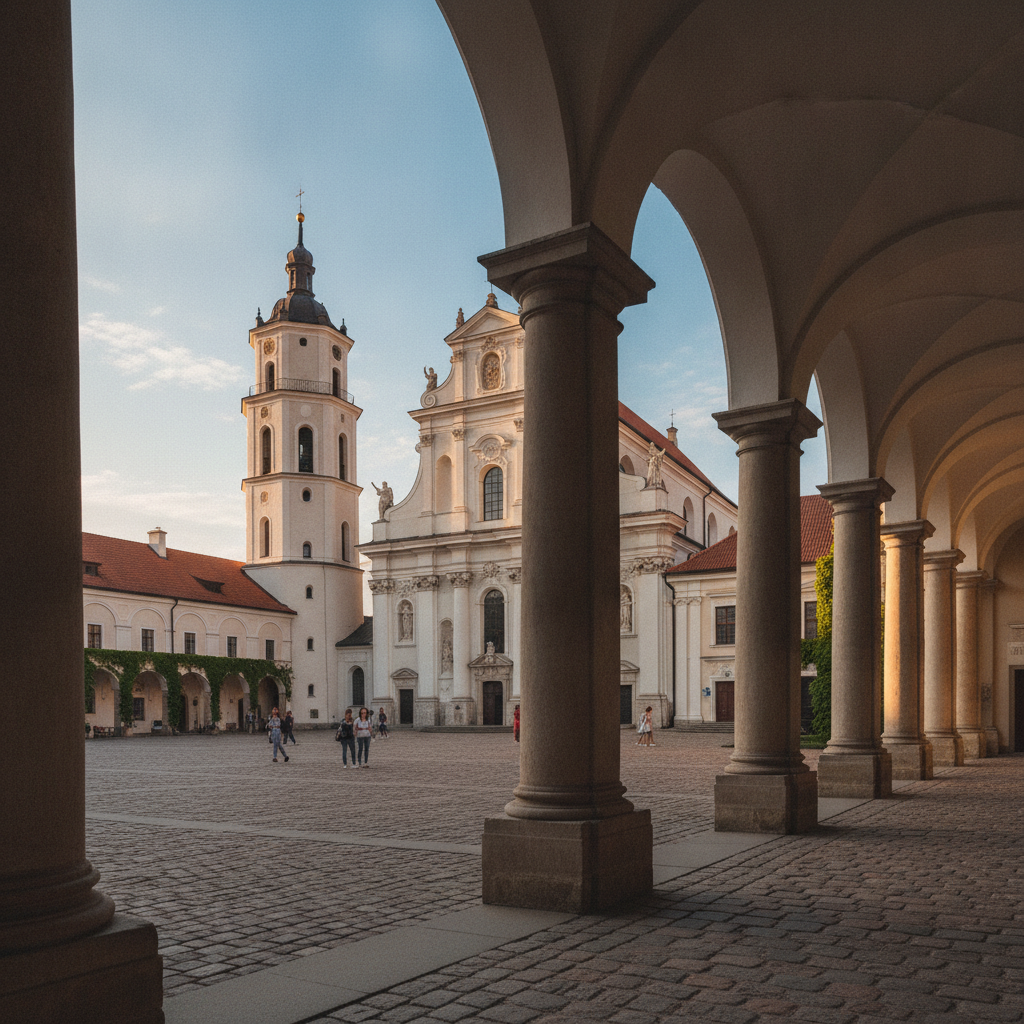
Vilnius Baroque — the University Courtyards, Jesuit Churches & the Most Dense Baroque Heritage in Northern Europe
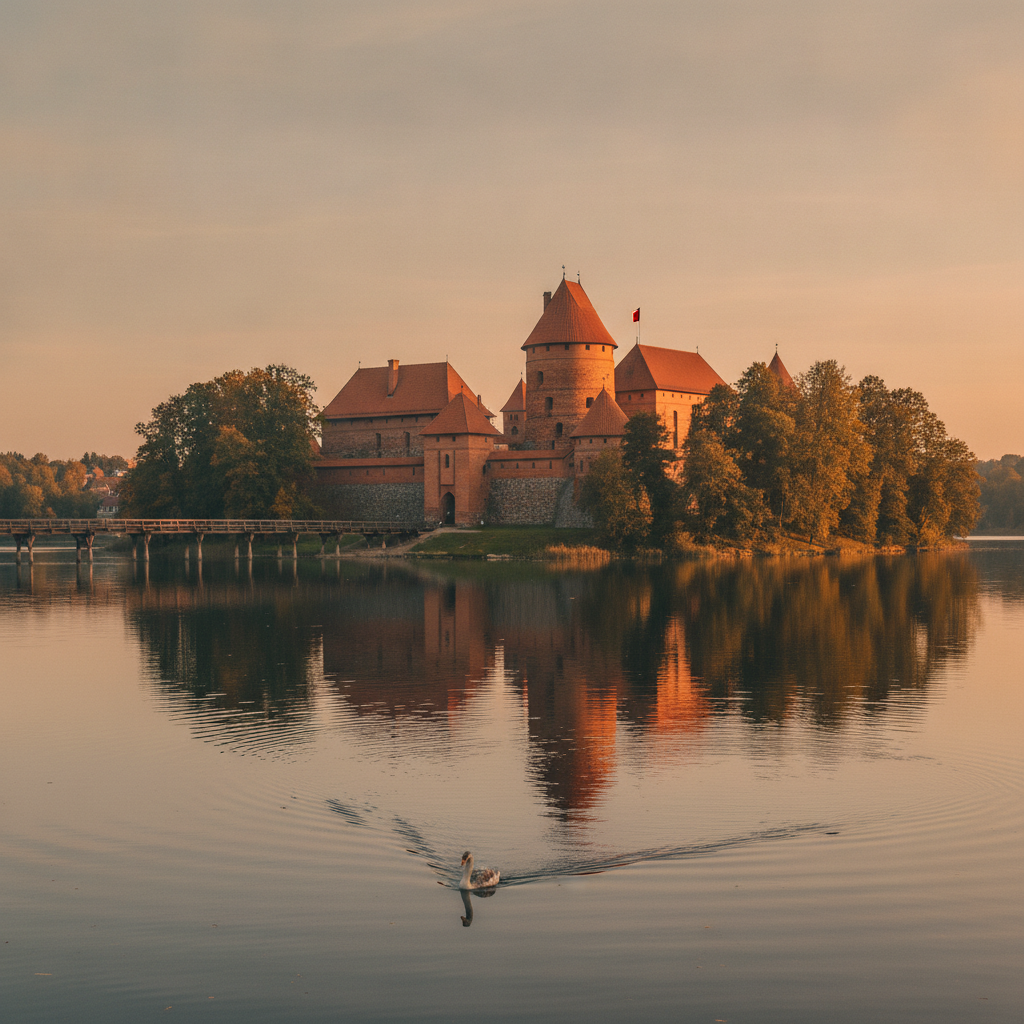
Vilnius Practical Guide — Access, Seasons, Trakai Island Castle & Day Trips