Vilnius Old Town — Cathedral Square, Gediminas Castle & the Largest Baroque City in Northern Europe
Vilnius (the capital of Lithuania, population 580,000, the largest city in the Baltic states and one of the best-preserved Baroque cities in Europe — the Old Town inscribed on the UNESCO World Heritage List in 1994, the city founded as the capital of the Grand Duchy of Lithuania by Grand Duke Gediminas in 1323, the Grand Duchy extending from the Baltic Sea to the Black Sea at its 15th-century maximum — the largest state in medieval Europe — the city subsequently under Polish-Lithuanian Commonwealth rule, Russian Imperial governance, and Soviet occupation before the restoration of independence in 1990, the first Soviet republic to declare independence) is the southernmost and most dramatically Baroque of the three Baltic capitals.
- 1
Cathedral Square — the Heart of the Lithuanian State
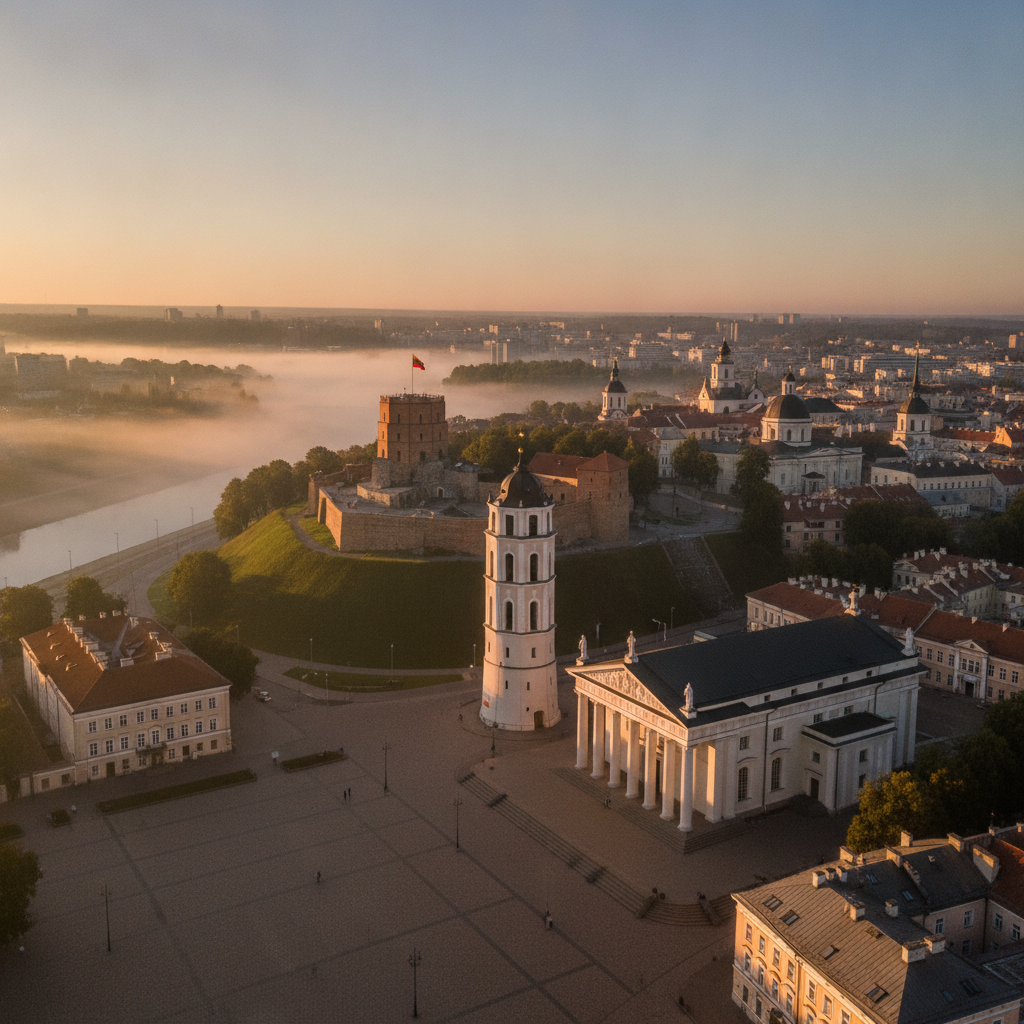
Katedros aikštė (Cathedral Square, the civic centre of Vilnius and the symbolic heart of the Lithuanian state — the square where the Baltic Way human chain began on 23 August 1989 and where the major national celebrations are held): the Cathedral of St. Stanislaus and St. Ladislaus (the neoclassical white cathedral designed by Laurynas Stuoka-Gucevičius and rebuilt 1783-1801 replacing the successive Baroque cathedrals on the site, the interior the most historically layered sacred space in Lithuania — the Royal Chapel of St. Casimir of 1636 the most ornate Baroque chapel in Lithuania, the saint's silver and gold reliquary the most valuable object in the Lithuanian state collections, the crypt with the remains of Grand Dukes of Lithuania and Lithuanian kings of Poland — Casimir IV Jagiellon and Alexander Jagiellon buried here — free, open daily 7am-7pm, the crypt tour at €3 adults), the Bell Tower (the freestanding campanile of 1522 — the oldest structure on the square, built on the foundations of a medieval defensive tower, now 57m tall after the 18th-century upper storey addition, the tower housing the Lithuanian record of 11 bells, €4 adults for the tower climb, the view of the square and the Gediminas Hill) and the Stebuklas (Miracle) tile (the single paving stone marked with a miracle symbol embedded in the Cathedral Square cobblestones — the tile the southern terminus of the Baltic Way, the tradition of standing on the tile and making a wish).
- 2
Gediminas Castle and the Hill Above Vilnius
Gediminas Tower (Gedimino pilis, atop Gediminas Hill, accessible by funicular railway from the Hill base at Arsenalo iela in 2 minutes at €2 return or on foot via the path in 20 minutes, the tower the most visited attraction in Lithuania): the tower (the 3-storey Gothic castle keep built 1409 in the reign of Grand Duke Vytautas the Great, the last surviving element of the Upper Castle that once covered the hilltop, the walls 2m thick in the red brick and the rubble limestone construction typical of the early Lithuanian Gothic, the Lithuanian flag — the yellow-green-red tricolor — raised on the tower every morning since the restoration of independence, the tower housing the small Museum of the Castle with the medieval artefacts from the excavations — the 14th-15th century weaponry, pottery, and personal objects, €5 adults, daily 10am-9pm in summer), the panoramic view (the 360-degree view from the tower battlements: the full Old Town to the south, the Cathedral Square directly below, the Neris River curving to the north and west, the new city and the contemporary Vilnius skyline to the northwest, the Soviet residential blocks of the Žirmūnai district visible across the river — the complete Vilnius cityscape accessible from a single position), and the Lower Castle courtyard (the courtyard at the base of the hill, the archaeological museum in the former Royal Palace — the reconstructed 15th-century palace of the Grand Dukes of Lithuania, open Tuesday-Sunday 11am-6pm at €6 adults, the reconstruction both the most ambitious and the most controversial cultural project in post-independence Lithuania).
- 3
The Old Town — Europe's Largest Baroque Ensemble
Vilnius Old Town (the largest medieval and Baroque old town in Northern Europe — 3.6 square km, 70+ churches, 1,487 historic buildings, the UNESCO inscription 1994 for the 'remarkable complex of Gothic, Renaissance, Baroque and Classical buildings' — the Baroque the dominant style, the result of the city's position as the capital of the Catholic Counter-Reformation in northeastern Europe, the Jesuit order establishing the Vilnius University in 1579 and commissioning the Baroque churches and colleges that defined the city's architecture): the three essential Baroque churches (the Church of St. Anne — the Gothic brick church of 1495-1500 — the most exquisite Gothic brick church in the Baltic region, Napoleon reputedly said he wanted to carry it back to Paris on his palm, the elaborate flame Gothic facade the most photographed church exterior in Lithuania, free — alongside the Bernardine Church attached to its north, the double church complex the most visited single heritage site in Vilnius; the Church of St. Casimir — the first Baroque church in Lithuania, 1604-1618, the distinctive crown dome the landmark of the lower Old Town, the church the canonical reference point for Lithuanian Baroque) and the Pilies Street (the main pedestrian street of the Old Town connecting Cathedral Square to the Gates of Dawn, the 800m route the entire length of the Old Town, the amber, linen, and artisan shops at the ground floor of the 17th-century merchant houses, the most concentrated tourist retail in Lithuania).
- 4
The Gates of Dawn and the Pilies Street Route
Aušros Vartai (the Gates of Dawn, the only surviving city gate of the 16th-century Vilnius city wall, at the southern end of the Old Town at Aušros Vartų gatvė 12, the gate the most important Catholic pilgrimage site in Lithuania — the Chapel of the Miraculous Image of Our Lady of the Gates of Dawn above the gate, the Madonna image a 16th-century painting on oak panel covered in silver and gold repoussé frames, the miraculous properties attributed to the image drawing Catholic pilgrims from Lithuania, Poland, and Belarus, the gate always open, the chapel open 6am-7pm daily, free): the Pilies Street pedestrian route from Cathedral Square to the Gates of Dawn (the 800m south from the Cathedral along Pilies iela and Didžioji iela and Aušros Vartų gatvė, passing in sequence: the Vilnius University courtyards accessible on Universiteto iela 3 at €3 adults, Monday-Saturday 9am-6pm — the courtyard complex the most beautiful academic ensemble in the Baltic states, the Baroque St. Johns' Church inside the university accessible from the courtyard — the Vilnius Town Hall square at Didžioji iela 31 — the neoclassical town hall the venue for the major exhibitions, free exterior — and the Church of St. Casimir at Didžioji iela 34 — the 1604 crown-domed Baroque church, free, open daily 9am-7pm). The amber shops (the most concentrated amber retail in Lithuania on Pilies Street, the prices comparable to Riga and Tallinn, the quality variable — the Amber Gallery Museum at Sv. Mikalojaus gatvė 8 off Pilies the most reliable quality source at a slight premium).
- 5
Užupis — the Bohemian Republic within Vilnius
Užupis (the neighbourhood across the Vilnelė River from the Old Town, the bohemian district of Vilnius famous for declaring itself an independent republic on April 1, 1997 — the April Fool's Day Republic of Užupis, the declaration signed by the neighbourhood artists and intellectuals who occupied the then-derelict riverside neighbourhood after independence, the Republic with its own constitution, its own flag, its own president — the sculptor Romas Lileikis — its own army of 11 soldiers, and its own currency the Užupis, the constitution posted in 23 languages on the wall at the Paupio and Užupio iela corner, the most internationally famous piece of Lithuanian civic performance art): the Užupis constitution (the 41 articles include: 'Everyone has the right to be happy', 'A dog has the right to be a dog', 'Everyone has the right to be idle', 'Everyone has the right to love', 'Do not defeat', 'Do not fight back', 'Do not surrender' — the constitution the most quoted document in Lithuanian civic culture outside the actual constitution), the neighbourhood (the cobblestoned streets and the riverside of the Vilnelė, the galleries and the studios of the Vilnius art world concentrated in the converted 19th-century apartment buildings, the Cafe de Paris and the Café Briusly the social centres of the Vilnius creative class, the Sunday market on the riverside the most relaxed morning activity in Vilnius, the Mermaid of Užupis bronze statue in the river — the neighbourhood mascot, free to visit, the district accessible by the footbridges from the Old Town at any hour).
- 6
Vilnius Food — Cepelinai, Dark Bread and the Restaurant Scene
Lithuanian cuisine (the food tradition shaped by the farming landscape of the Lithuanian interior — the potato the central ingredient since the 18th-century introduction, the dark rye bread, the dairy, the smoked meats and fish of the rural tradition): cepelinai (the Lithuanian national dish — the large potato dumplings stuffed with minced meat and served with sour cream and bacon bits, the name 'zeppelins' from the elongated shape resembling the German airship, the dumplings the size of a man's fist, the preparation requiring 1 hour, the dish eaten for Sunday lunch in the Lithuanian home, the best restaurant version at the Etno Dvaras on Pilies Street at €8-12 per portion — the most traditional Lithuanian restaurant in the Old Town) and the Vilnius restaurant scene (the most rapidly developing in the Baltic states since 2010, the combination of the Lithuanian farm-to-table tradition and the international influences creating a distinctive contemporary Lithuanian kitchen — the restaurant Džiaugsmas on Dysnos gatvė the most internationally recognized, the Ertlio Namas on Šv. Jono gatvė the best tasting menu at €60-80, the Skonis ir Kvapas at Trakų gatvė 8 the correct Lithuanian market-cuisine restaurant at mid-range prices €15-25). The Halės Market (Pylimo gatvė 58, the 1906 covered market with the Lithuanian artisan food produce — the farmer cheeses, the pickled mushrooms and berries, the smoked sausages, the dark rye bread — open Tuesday-Sunday 7am-3pm, the best single food market in Lithuania).
Walk this route with audio
Stories play automatically as you reach each stop — no tapping needed.
More in vilnius
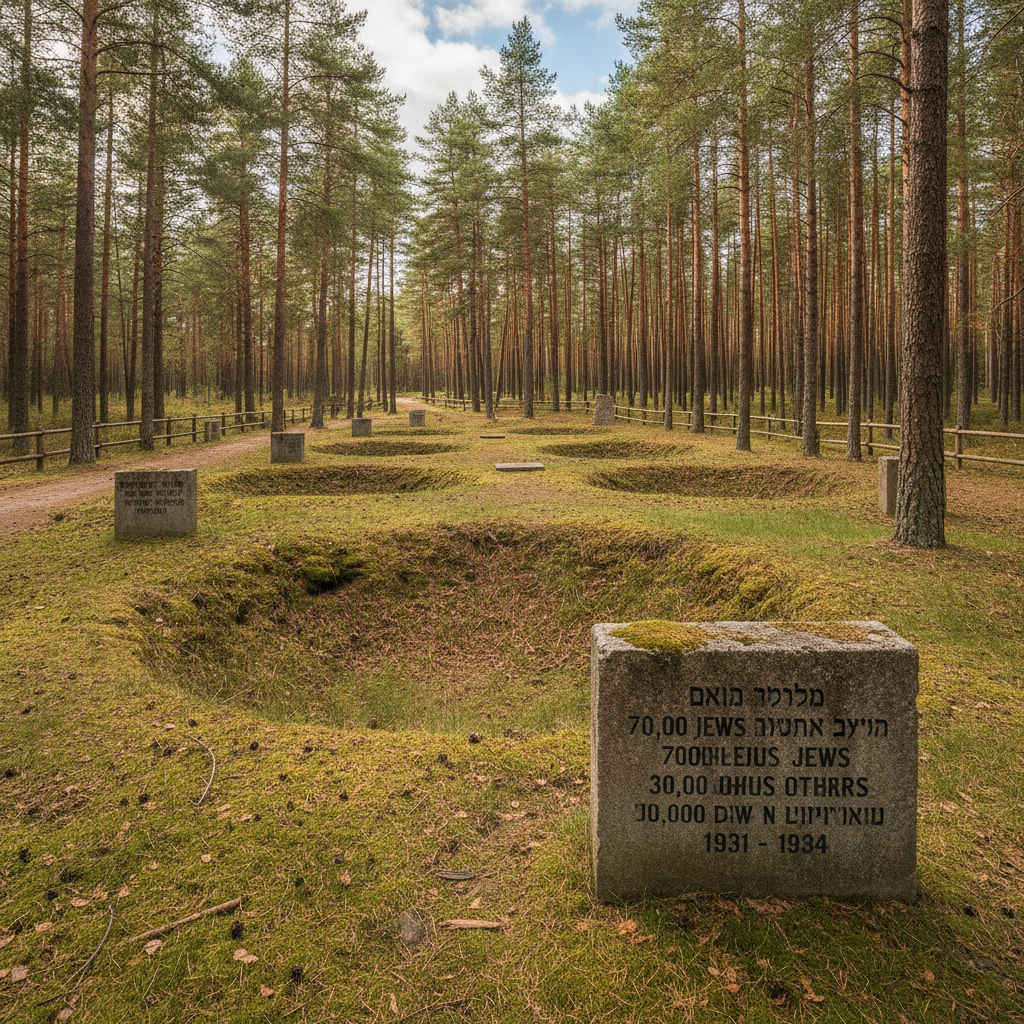
Vilnius — Jerusalem of Lithuania: the Jewish Heritage, the Vilna Gaon & the Paneriai Holocaust Memorial
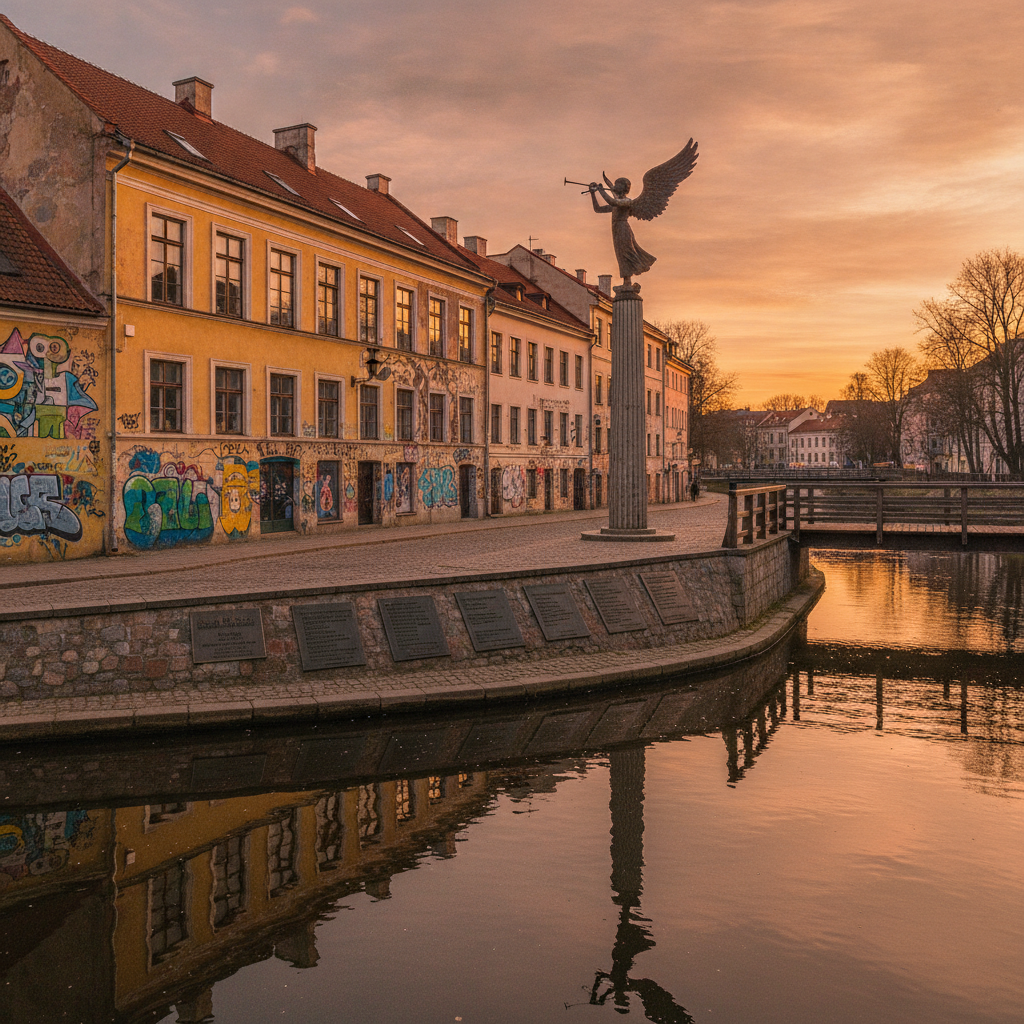
Vilnius Užupis & the Contemporary Art Scene — the Bohemian Republic, Galleries & Creative Vilnius
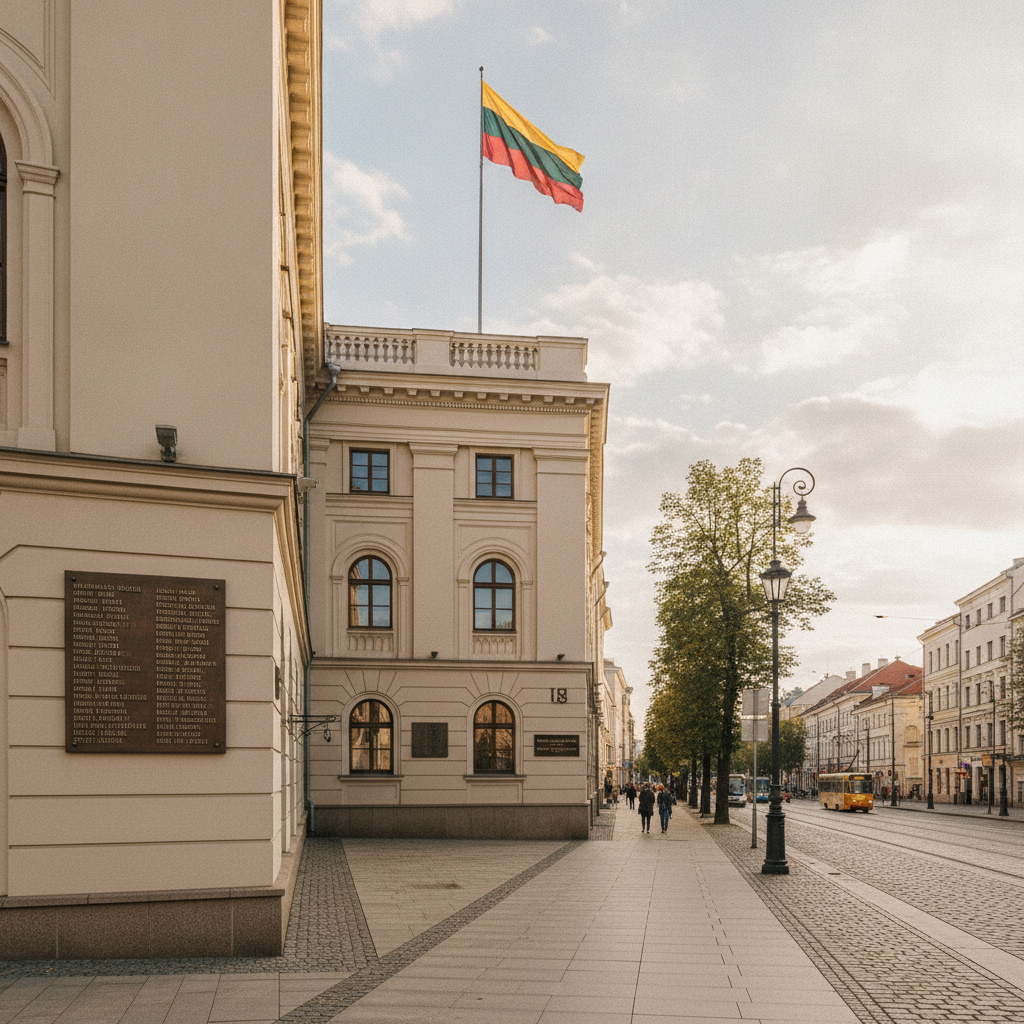
Vilnius — the KGB Museum, Gedimino Prospektas & the Soviet History of Lithuanian Independence
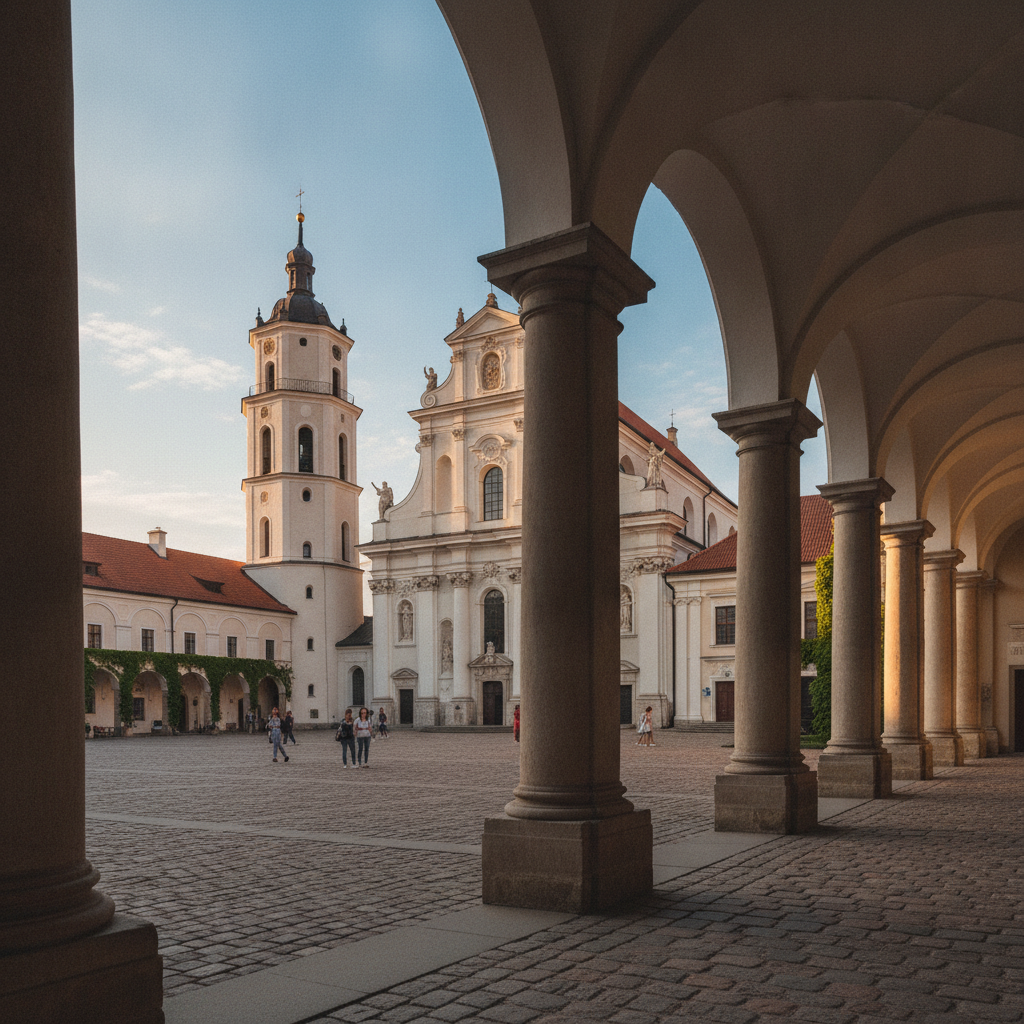
Vilnius Baroque — the University Courtyards, Jesuit Churches & the Most Dense Baroque Heritage in Northern Europe