Vilnius Užupis & the Contemporary Art Scene — the Bohemian Republic, Galleries & Creative Vilnius
Užupis (the neighbourhood across the Vilnelė River from the Old Town, declared an independent republic on April 1, 1997) is the most internationally famous expression of Vilnius's vibrant creative culture — a city that has developed one of the most interesting independent art and design scenes in the post-Soviet space.
- 1
The Republic of Užupis — Constitution and Community
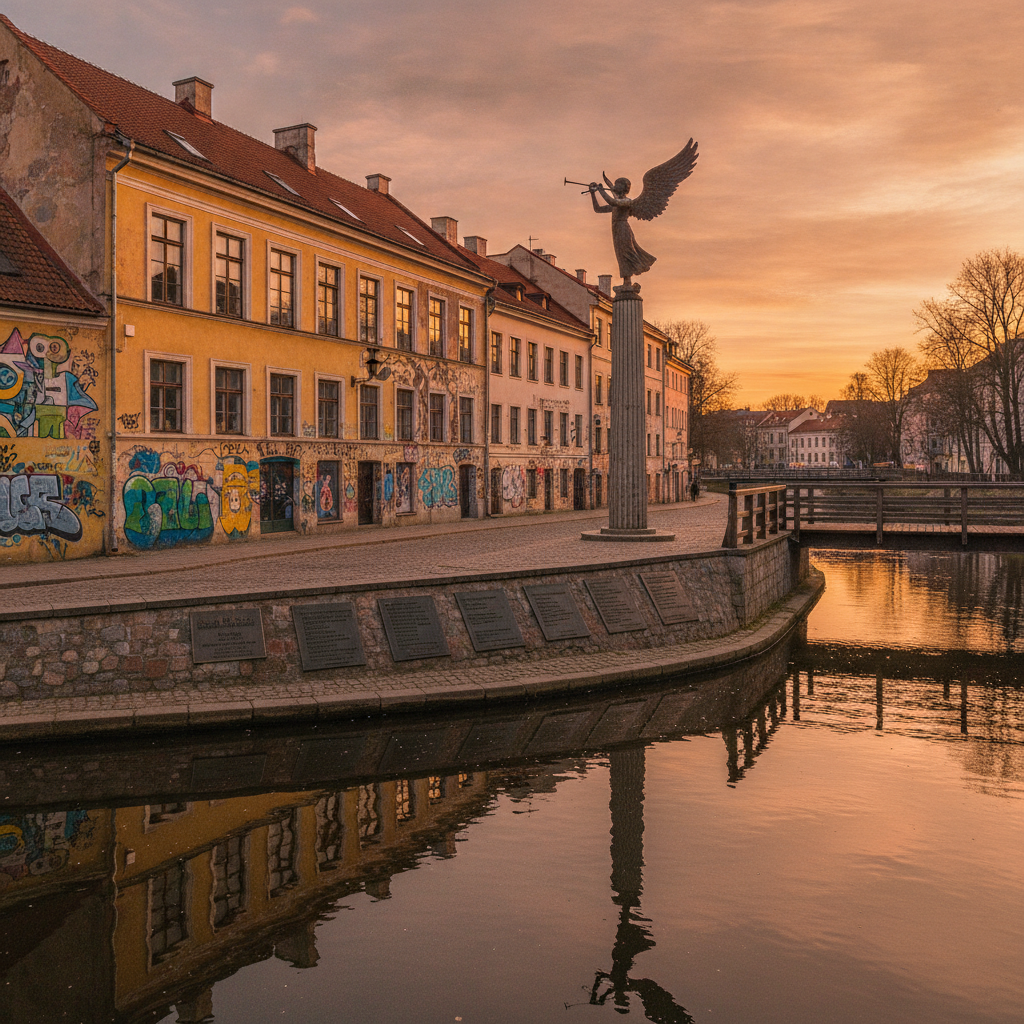
Užupis (meaning 'Beyond the River' in Lithuanian, the neighbourhood on the east bank of the Vilnelė River separated from the Old Town by the footbridges at Užupio gatvė and Malūnų gatvė, the neighbourhood declared an independent republic by the community of artists and bohemians who occupied the derelict post-Soviet buildings after 1991, the Republic established April 1, 1997 — April Fool's Day — with the election of a President, the writing of a Constitution, and the symbolic issue of passports and currency, the joke with serious content about community, freedom, and self-determination): the constitution wall (the 41-article Užupis Constitution posted on a long polished metal plaque at the corner of Paupio gatvė and Užupio gatvė, the text in 23 languages including Lithuanian, English, French, German, Japanese, and Arabic, the articles including: 'Everyone has the right to be happy', 'Everyone has the right to be unhappy', 'A dog has the right to be a dog', 'Do not defeat', 'Do not fight back', 'Do not surrender' — the constitution read as both genuine philosophy and wry performance, the most discussed piece of civic text in Lithuania after the actual constitution), the Angel of Užupis (the bronze sculpture of a trumpet-playing angel on a 4m column at the main Užupis junction, the angel the patron figure of the republic, installed 2002, the sculpture by Romas Vilčiauskas, the column the meeting point of the Užupis community on April 1 each year when the republic celebrates its independence day with performances, the angel the most photographed sculpture in Vilnius).
- 2
Užupis Galleries and Art Studios
The Užupis art scene (the neighbourhood the primary concentration of visual art studios and galleries in Vilnius, the low rents of the 1990s and 2000s attracting the core of the Lithuanian art world to the Vilnelė riverside, the resulting community now the established Vilnius art world occupying the renovated but still relatively affordable buildings of the neighbourhood): the Uzupis Art Incubator (Užupio gatvė 2, the former Soviet factory building converted to art studios on 4 floors, the 30+ studios of the Vilnius-based painters, sculptors, printmakers, and textile artists, open studios on the first Sunday of the month and during the annual Užupis Art Week in April, the most concentrated single art production space in Lithuania, free to visit on open days), the Malūnų iela galleries (the gallery street along the north side of the Vilnelė — the Vartai gallery at Vilniaus gatvė 39 the most commercially established contemporary art gallery in Vilnius, representing the major Lithuanian artists internationally — and the smaller project spaces in the Malūnų iela apartment basements, the gallery walk from the bridge to the far end of the neighbourhood 20 minutes) and the international artists in Užupis (the neighbourhood hosting the European Capital of Culture 2009 programme events when Vilnius held the title, the resulting international art residencies bringing 200+ artists from across Europe, the works commissioned during the 2009 year still visible as the permanent murals on the neighbourhood walls — the most interesting outdoor art collection in Lithuania).
- 3
The Vilnius Street Art and Murals
Vilnius street art (the city developing one of the most significant public art programmes in the Baltic states since 2013, the murals concentrated in the Užupis neighbourhood, the Naujininkai district, and the Paupys redevelopment between Užupis and the Old Town): the Paupys murals (the redeveloped riverside quarter between Užupis and the Old Town, the 2019-2021 residential and retail development commissioning large-scale murals from Lithuanian and international artists — the 15-storey building at Paupys gatvė 7 with the 40m tall mural by the Lithuanian artist Žilvinas Landzbergas the most visible public art work in Vilnius, the mural depicting the Lithuanian folk figure of the tree of life against the blue sky), the Naujininkai district (the formerly derelict Soviet-era district 2km south of the Old Town, the neighbourhood the site of the annual Vilnius Street Art Festival since 2013, the festival bringing 15-20 international and Lithuanian street artists to create new works each September, the accumulated works over 10+ years creating the most concentrated outdoor gallery in Lithuania, the district accessible by bus 34 from the Old Town in 20 minutes, the self-guided mural walk map available at the Vilnius tourist office) and the Lithuanian figurative tradition (the Lithuanian painters' approach to the large-scale mural — the influence of the Lithuanian folk art with its mythological figures and the solar symbols visible in the Vilnius murals from the Saulė — sun — motifs to the Laima — goddess of fate — figures in the works of the Lithuanian muralists Mindaugas Bonanu and Eglė Ridikaitė, the most distinctive Baltic approach to the urban art form).
- 4
Vilnius Contemporary Culture — Music, Theatre and Cinema
Vilnius's contemporary cultural scene (the most rapidly developing in the Baltic states, the city having hosted the European Capital of Culture 2009, the investment from that year still visible in the cultural infrastructure): the Vilnius music scene (the National Philharmonic Hall at Aušros Vartų gatvė 5 the classical music venue — the Lithuanian Philharmonic Orchestra performing September-May, tickets €8-30 at filharmonija.lt — the Compensa Concert Hall at J. Jasinskio gatvė 1A the major rock and pop venue, capacity 3,500 — and the Vilnius jazz festival in October, the oldest jazz festival in the post-Soviet space, annually bringing the leading European jazz musicians to the Lithuanian capital, tickets at vilniusjazz.lt at €15-40 per evening), the theatre scene (the Lithuanian National Drama Theatre at Gedimino prospektas 4 — the main repertory theatre, performing in Lithuanian with English subtitles available for selected performances, the Lithuanian contemporary drama the most internationally recognized in the Baltic states after the collapse of the Soviet period — and the Oskaras Koršunovas Theatre at Jono Basanavičiaus gatvė 13, the OKT the most internationally touring Lithuanian theatre company, the director Koršunovas the most recognized Lithuanian theatre artist internationally), and the Lithuanian cinema (the Skalvija cinema at A. Goštauto gatvė 2, the principal arthouse cinema in Lithuania, the programme of international and Lithuanian films, the venue for the annual Vilnius International Film Festival 'Kino Pavasaris' in March, the largest film festival in the Baltic states).
- 5
The Bernardine Garden and the Vilnelė River Walk
The Bernardine Garden (Bernardinų sodas, the formal public garden on the south slope of Gediminas Hill between the Hill and the Vilnelė River, the garden restored 2012 to the 19th-century layout with the fountain, the flowerbeds in the traditional geometric pattern, the outdoor chess tables in summer, and the playground and the café terrace, the most used public garden in the Vilnius Old Town area, free, open daily): the garden in context (the garden bounded on the north by the Gediminas Hill funicular, on the east by the Bernardine Church and Monastery — the 15th-century Gothic complex attached to the Church of St. Anne, the monastery cloister open on guided tours — and on the south by the footbridge to Užupis, the garden the transition point between the Old Town monument circuit and the Užupis bohemian neighbourhood, the most natural break point in the Pilies Street to Užupis walking route), and the Vilnelė River walk (the path along the north bank of the Vilnelė from the Bernardine Garden east through Užupis to the Belmontas valley — the 3km riverside walk through the Vilnelė green corridor, the path leaving the city behind within 500m of the Užupis bridge, the river valley narrowing between the forested hills, the Belmontas restaurant in the valley at the end of the walk — the outdoor terrace on the river the most atmospheric dining venue in the Vilnius surroundings, the walk taking 1 hour at leisure, the most relaxing afternoon route in Vilnius).
- 6
Trakai — the Island Castle Day Trip
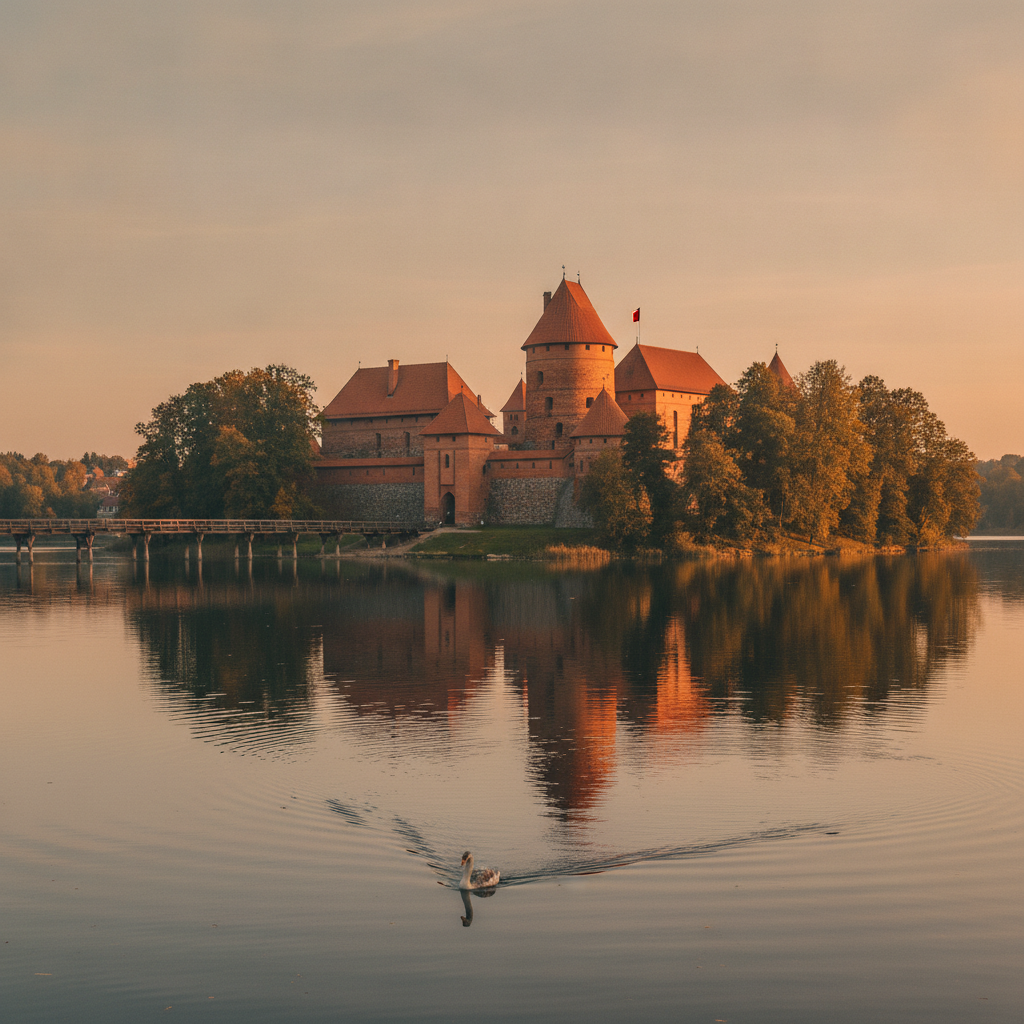
Trakai (the small town 28km west of Vilnius, the train from Vilnius station in 35 minutes at €2 return or the bus in 40 minutes at €2.50, the most popular day trip from Vilnius and one of the most photographed sites in Lithuania): the Island Castle (Trakų salos pilis, the red brick Gothic castle built on an island in Lake Galvė in the 14th century by Grand Duke Kęstutis and completed by his son Vytautas the Great, the most complete medieval island castle in Eastern Europe — the castle completely restored 1956-1962 using the original brick and the original construction techniques, the restoration occasionally criticized as too complete but the resulting structure the most cinematically impressive medieval building in the Baltic states, €10 adults, May-September daily 10am-8pm, October-April Tuesday-Sunday 10am-5pm, accessible from the lakeshore by the wooden footbridge), the lake landscape (the town of Trakai set on a peninsula between 22 lakes, the landscape of the Lithuanian lake district — the most lake-rich area in the country — the kayak and paddleboat rental on Lake Galvė, the summer swimming, the restaurants on the lakeshore serving kibinai — the Karaite pastries stuffed with lamb, the local specialty of the Karaite Jewish community that settled in Trakai in the 14th century at the invitation of Vytautas the Great, the Karaite community of 250 still the only Karaite community in Europe outside the Crimea) and the Karaite Heritage Museum (Karaimų gatvė 22, the small museum of the Karaite religious and material culture, €3 adults, the kibinai purchased at the Kibinine restaurant at Karaimų gatvė 65).
Walk this route with audio
Stories play automatically as you reach each stop — no tapping needed.
More in vilnius
Vilnius — Jerusalem of Lithuania: the Jewish Heritage, the Vilna Gaon & the Paneriai Holocaust Memorial
Vilnius — the KGB Museum, Gedimino Prospektas & the Soviet History of Lithuanian Independence
Vilnius Baroque — the University Courtyards, Jesuit Churches & the Most Dense Baroque Heritage in Northern Europe
Vilnius Practical Guide — Access, Seasons, Trakai Island Castle & Day Trips