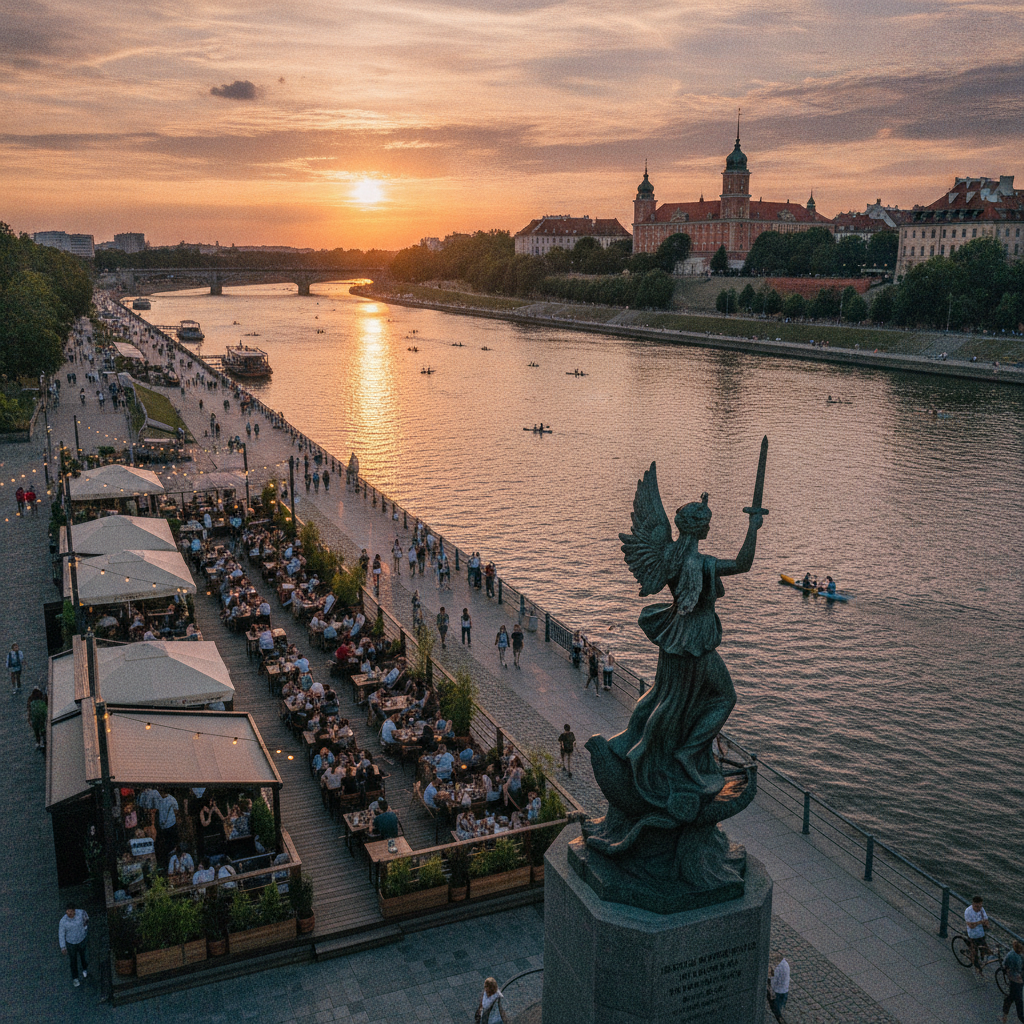
Warsaw Food & Drink — Vodka Culture, Milk Bars, Modern Polish Restaurants & Markets
Warsaw's food scene (the most diverse and rapidly evolving in Poland, the city's restaurant count increasing from 4,000 in 2010 to over 12,000 in 2024, the combination of the large professional class, the international business community, and the tourist economy driving both the traditional Polish and the international restaurant development) offers the full range from the communist-era milk bar to the Michelin-starred modern Polish kitchen.
- 1
Polish Vodka — the National Spirit
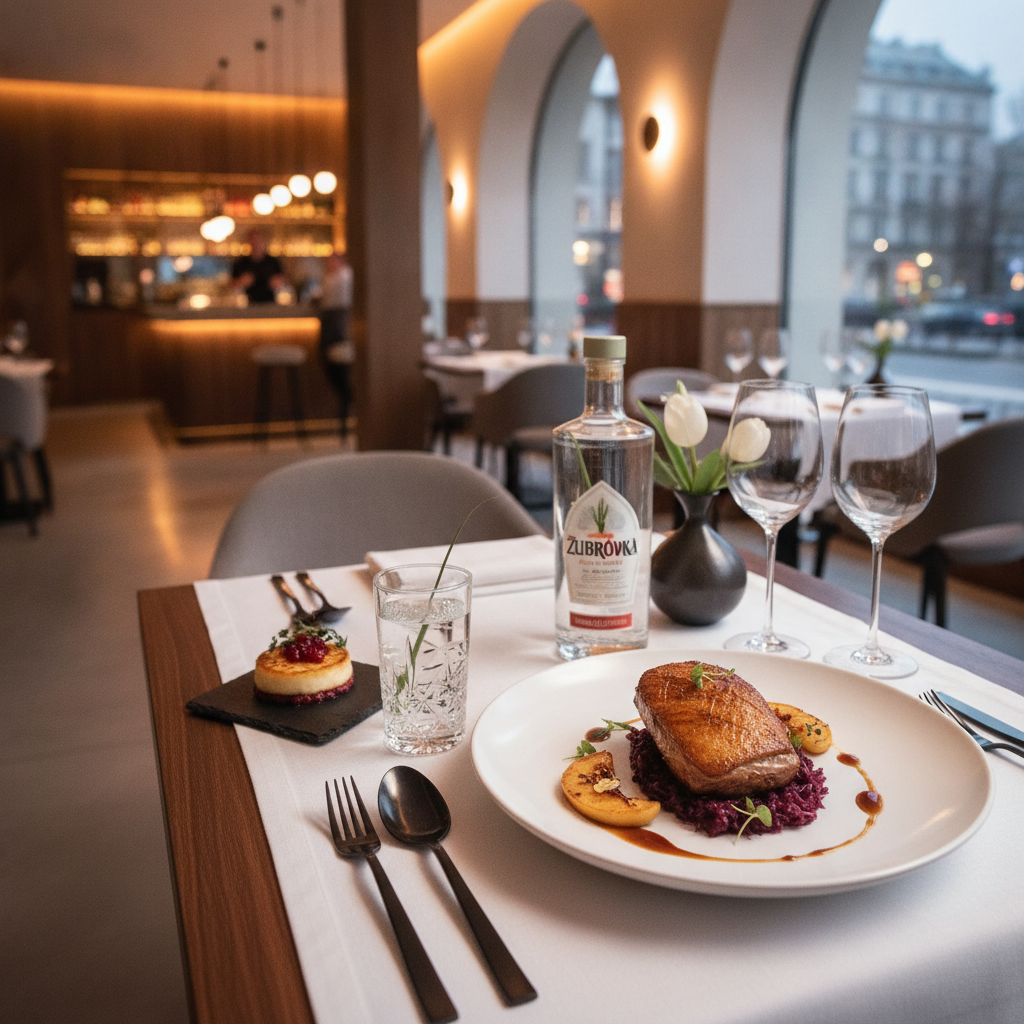
Polish vodka (the national spirit of Poland, produced since the 8th century — the word 'vodka' appearing in Polish historical records from 1405, the Polish and Russian dispute over the origin of vodka's name the most contested etymology in the spirit world — the Polish production centred on two regional styles: the grain vodkas of the Mazovian plain and the potato vodkas of eastern Poland): the brands available for vodka tourism in Warsaw: Żubrówka Bison Grass (the most internationally distinctive Polish vodka, the blade of bison grass in the bottle, the grass from the Białowieża Forest, the vodka with the faint vanilla-coconut note from the coumarin in the grass, the traditional Tatanka cocktail: Żubrówka and cold apple juice in 1:2 ratio, €8-12 at Warsaw bars), Chopin Potato (the single-ingredient potato vodka from the Krzesk distillery, the most internationally acclaimed Polish premium vodka, the flavour full and creamy compared to grain vodkas), Starka (the aged Polish rye vodka, rested in apple wood or oak barrels for 10-50 years, the colour pale gold, the flavour the closest thing in vodka to a whisky, the traditional product of the Podlaskie region). The Dom Wódki (House of Vodka, Wierzbowa 9/11, the vodka bar with the largest selection of Polish vodka in Warsaw, tastings organized by region and grain type, open daily 4pm-midnight).
- 2
Milk Bars — the Communist Cafeterias
Bar Mleczny (the milk bar, the subsidized communist-era cafeteria, the institutions surviving in Warsaw as the cheapest full-meal option in the city — a complete meal of soup, main course, and dessert at €4-7 — and as a social institution for the retired and the budget-conscious student): Bar Mleczny Przy Hali Mirowskiej (the milk bar adjacent to the Hala Mirowska market hall on Plac Mirowski, the pre-war market hall now used for regular trading, the milk bar with the longest operating queue in Warsaw at noon Monday-Friday, the żurek soup with egg and kielbasa at €2.50, the kotlet schabowy breaded pork cutlet with potato and sauerkraut at €4, open Monday-Friday 8am-5pm, Saturday 8am-3pm) and the Bar Bambino (Krucza 21, the milk bar in the former communist-era workers' district south of the city centre, the interior with the communist-era menu board and the formica tables, the complete three-course meal at €6, the preferred lunch of the government ministry workers from the neighbouring office buildings, open Monday-Friday 8am-5pm). The milk bar experience requires queuing at the counter (the self-service format, the trays collected from the counter, the table selection after payment), no menu in English (pointing at the display cases is the universal solution), and cash in small denominations.
- 3
Modern Polish Restaurant — the Post-1989 Revival
The modern Polish restaurant scene (the revival of Polish culinary traditions using contemporary European cooking techniques, the movement beginning approximately 2010 and rapidly developing into the most dynamic restaurant sector in Central Europe): Atelier Amaro (Agrykola 1, the first Polish restaurant to receive a Michelin star, 2013, the tasting menu at €120-150 per person organized around the seasonal foraged and farmed ingredients of the Polish landscape — the fermented rye bread with cultured butter, the smoked eel with cucumber and dill, the venison with black garlic and birch reduction — the reservation required 4-6 weeks in advance), Rozbrat 20 (Rozbrat 20, the restaurant of chef Marcin Przybysz, the most accessible of the fine-dining Polish restaurants at €40-60 for three courses, the duck confit with sauerkraut and the pike perch with dill oil and potato foam the benchmark dishes of the Warsaw modern Polish category) and the Hala Koszyki (Koszykowa 63, the restored 1909 market hall converted to a food hall, the 20 food stalls and restaurants in the Art Nouveau iron-and-glass market building, the craft beer bar, the sushi counter, the Georgian khinkali stall, and the traditional Polish zapiekanka stand coexisting in the most architecturally distinguished food hall in Poland, open daily 8am-midnight).
- 4
Hala Mirowska and the Warsaw Markets
Hala Mirowska (the iron-and-glass market hall built 1901 on Plac Mirowski in the former Jewish district adjacent to the Ghetto, the market hall operating continuously since 1901 through the German occupation, the communist period, and the post-1989 market transition, the vegetable, fruit, and dairy vendors occupying the interior stalls from 6am Monday-Saturday, the market the most authentic food shopping experience in central Warsaw, the street food vendors at the entrance — the obwarzanek, the ring-shaped bread similar to a bagel, the traditional Warsaw street bread sold by the vendors at the market entrances for €0.50-1 each) is the practical market alternative to the tourist-oriented Old Town stalls. The Bazar na Kole (the flea market on the northwestern outskirts of Warsaw, Obozowa 99, accessible by tram from the city centre in 25 minutes, operating Saturday-Sunday 6am-2pm, the largest flea market in Warsaw, the mix of genuine antiques — the interwar Polish furniture, the communist-era collectibles, the pre-war Jewish silver and books — and junk, the most socially interesting morning activity in Warsaw on a weekend for visitors who enjoy flea market archaeology).
- 5
The Praga Restaurant Scene
The Praga restaurant scene (the right-bank Warsaw district, the only part of the city with the pre-war urban fabric intact, the working-class neighbourhood gentrifying since 2010 with the arrival of art galleries, restaurants, and creative businesses in the former factory buildings): Soho Factory (Mińska 25, the former cable factory complex on the Praga right bank, the 120,000 sqm complex now housing the Neon Museum, fashion showrooms, design studios, the weekend market, and several restaurants — the Stara Praga restaurant in the brick-vaulted factory building for traditional Polish cooking, the Drukarnia bar in the former printing works for craft beer), and the street-level restaurant district on Brzeska Street (the gentrified Praga street with the highest concentration of bars and restaurants on the right bank, the PiwPaw craft beer bar with 90 Polish craft beers on tap, the Przekąski Zakąski — 'Snacks and Starters' — the bar serving only Polish cold snacks: the herring, the pickle, the rye bread, the vodka — the most purist expression of the Polish drinking food tradition, open daily noon-midnight). The transit by tram from the Old Town to Praga (Line 26 from the Ratusz Arsenal stop, 15 minutes to the Wileński station, the tram crossing the Vistula over the Śląsko-Dąbrowski Bridge, the view of the Old Town on the escarpment visible from the bridge) is itself a notable Warsaw urban experience.
- 6
Warsaw Coffee and the Third Wave Cafes
Warsaw's third-wave coffee scene (the specialty coffee movement that arrived in Warsaw approximately 2010 and has since grown to over 100 independent specialty coffee shops in the city, the most developed specialty coffee scene in Central Europe after Vienna): the Kawiarnia Kafka (Oboźna 3, the most atmospheric of the Warsaw literary cafes, the shelves of second-hand books, the coffee served with a small glass of water and a piece of dark chocolate, the clientele divided between students from the adjacent university and the literary quarter's working writers, open daily 9am-10pm), Filtry Kawowe (Piękna 28/34, the specialty coffee roastery and cafe in the Filtry water treatment complex, the 19th-century red-brick water purification building converted to a coffee destination, the house roasts available as espresso or filter, the courtyard garden open in summer, the Sunday morning brunch market on the site), and the W.Kruk coffee bar at the National Museum (the cafe within the National Museum building, the direct access to the museum galleries and the correct stopping point in the middle of the 3-4 hour museum visit, the coffee of the museum cafe demonstrating that Poland's specialty coffee movement has reached every sector of the cultural establishment). The Warsaw coffee circuit (the Śródmieście district cafes walkable in a single morning) is the correct immersion into post-communist Polish urban professional culture.
Walk this route with audio
Stories play automatically as you reach each stop — no tapping needed.
More in warsaw
Warsaw Jewish Heritage — POLIN Museum, the Ghetto & the Uprising of 1943
Warsaw Music & Culture — Chopin, Łazienki Park, the Palace of Culture & the Museum Circuit
Warsaw Old Town — the Royal Castle, Sigismund Column & the Rebuilt Medieval City
Warsaw Under Communism — the Palace of Culture, Solidarity & the Cold War City