Winnipeg: The Largest Grain Market in the World That Closed When Trading Went Electronic, the Building Stone With 450-Million-Year-Old Fossils in Every Wall and Portage and Main as the Windiest Corner in Canada
Walk through the Grain Exchange Building where the trading floor that executed millions of bushels of prairie wheat daily fell silent when electronic trading made the room redundant, run your hand along the wall of the Legislative Building and count the fossils of Ordovician marine creatures embedded in every square metre of the limestone that was cut from a quarry 40 kilometres away where a tropical sea sat 450 million years ago, stand at Portage and Main in January wind and understand why the city closed pedestrian crossings there in 1979 and why the debate about reopening them continues, find the Hudson Bay Company Archives at the Archives of Manitoba where 350 years of fur trade documentation records European-Indigenous commercial interaction from 1670 to the collapse of the physical retail store on this same Portage Avenue in 2020, come in February for Festival du Voyageur in Saint Boniface and in July for the Folk Festival camping at Birds Hill Park, and cross the pedestrian bridge to Saint Boniface for the most important single visit you can make in Winnipeg to understand what the city actually is.
- 1
Winnipeg Grain Exchange and Agricultural Heritage
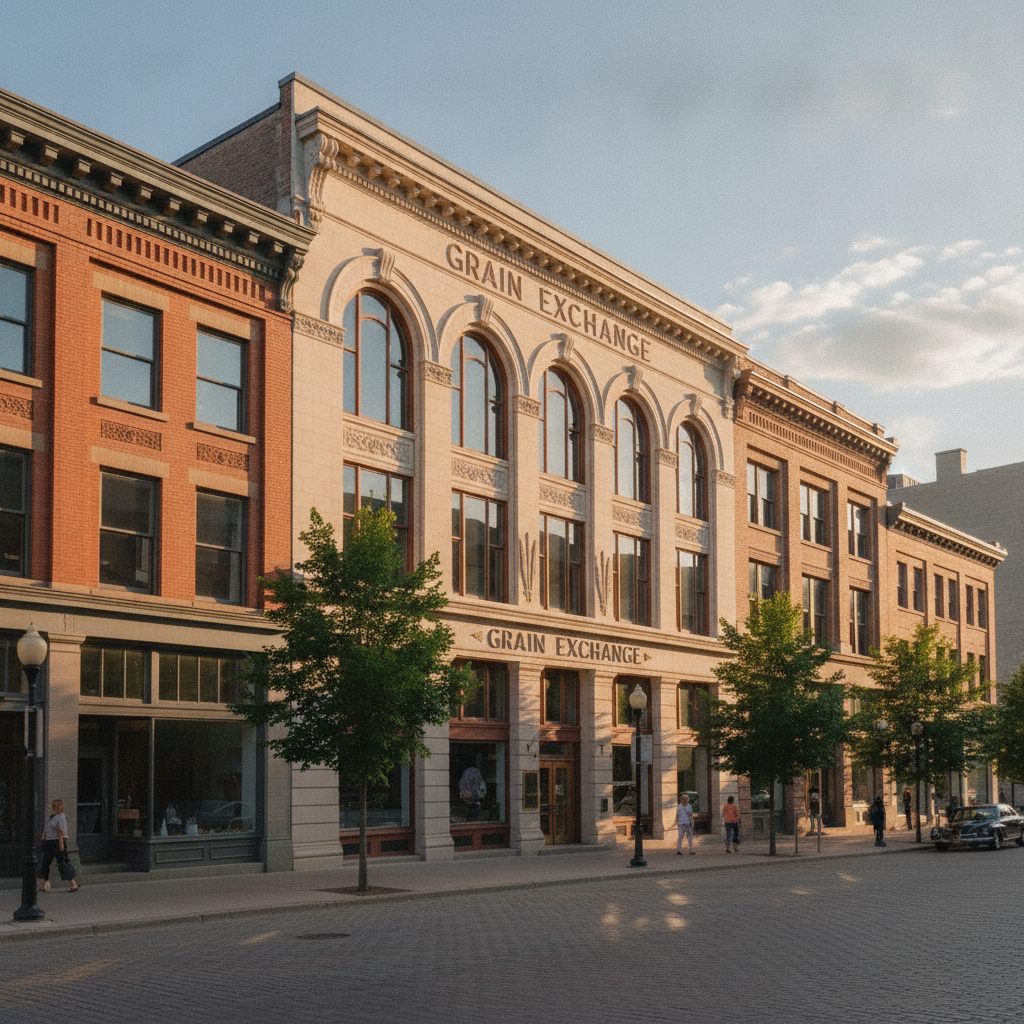
The Winnipeg Grain Exchange, established in 1887 on Lombard Avenue in the Exchange District and operating as a commodities market until 2017 when electronic trading eliminated the physical trading floor, was for decades the largest grain market in the world, trading the wheat, oats, barley, and flax of the prairie farmland that made Winnipeg the commercial capital of western Canada in the early 20th century. The trading floor of the Grain Exchange, with its circular pit where traders in hand signals executed transactions for millions of bushels of prairie grain daily, was a thundering spectacle of pre-electronic capitalism visited by school children, dignitaries, and journalists for over a century. The Grain Exchange Building on Lombard Avenue, completed in 1909 and expanded in 1913, is a terra cotta and brick masterpiece of commercial architecture now converted to office and restaurant use. The agricultural heritage of the prairie provinces flows through Winnipeg in the form of the Canadian Grain Commission, which regulates grain quality standards, and the numerous agricultural financial services including the Farm Credit Corporation. The Manitoba Agricultural Museum in Austin, Manitoba, 175 kilometres west of Winnipeg, preserves the largest collection of agricultural equipment in Canada, with steam threshing machines, horse-drawn equipment, and early gas tractors demonstrating the mechanization of prairie agriculture.
- 2
Winnipeg HBC History and Fur Trade Heritage
The Hudson Bay Company, chartered by Charles II in 1670 with the grant of Rupert's Land, a territory of 3.9 million square kilometres including the entire drainage basin of Hudson Bay, controlled the interior of North America from its posts on Hudson Bay for nearly 200 years before Confederation, with Fort Garry at the site of present-day Winnipeg serving as the most significant interior post from the early 19th century. The HBC headquarters moved from London to Winnipeg in 1930, reflecting the shift in the company focus from fur trade to retail, and the original seven-storey HBC department store on Portage Avenue opened in 1926 became the most significant retail establishment in western Canada for decades. The HBC flagship store on Portage Avenue closed in 2020 following the company financial difficulties, ending a 90-year presence on the most prominent commercial corner in Winnipeg. The Hudson Bay Company archives, held at the Archives of Manitoba in Winnipeg, constitute the most significant collection of colonial and commercial documentation in Canadian history, with trading post journals, correspondence, and accounts recording European-Indigenous commercial interaction from 1670 onward. The archives have been central to Indigenous land claims research and to the historical scholarship of fur trade Canada.
- 3
Winnipeg Portage Avenue and Downtown
Portage Avenue, the primary commercial artery of Winnipeg running west from the downtown core through the suburbs to Portage la Prairie 85 kilometres west, is one of the longest straight streets in North America, extending for hundreds of kilometres as a grid road through the flat prairie when its extension as the Trans-Canada Highway is included. The intersection of Portage and Main, the central business intersection of Winnipeg, has a claim as the windiest intersection in Canada due to the funneling of prairie winds between the downtown towers and was closed to pedestrian crossings at grade in 1979 when underground crossings were built. The pedway system connecting the downtown buildings through enclosed walkways extends from the intersection north and south, allowing winter movement between shopping centers, hotels, and office buildings without outdoor exposure. The former T. Eaton Company department store at 320 Portage Avenue, a 1905 building that was the retail anchor of downtown Winnipeg for decades, closed its retail function in 1999 and was converted to condominiums and restaurants. The Portage Place shopping mall, a 1987 enclosed mall on Portage Avenue in the downtown core that was a failed attempt to revitalize the downtown retail market, has been redeveloped as a health and social services hub after failing to maintain retail tenancy. The downtown Winnipeg retail environment reflects the decades-long challenge of keeping commercial activity in the urban core against suburban mall competition.
- 4
Winnipeg Extreme Weather and Prairie Storms
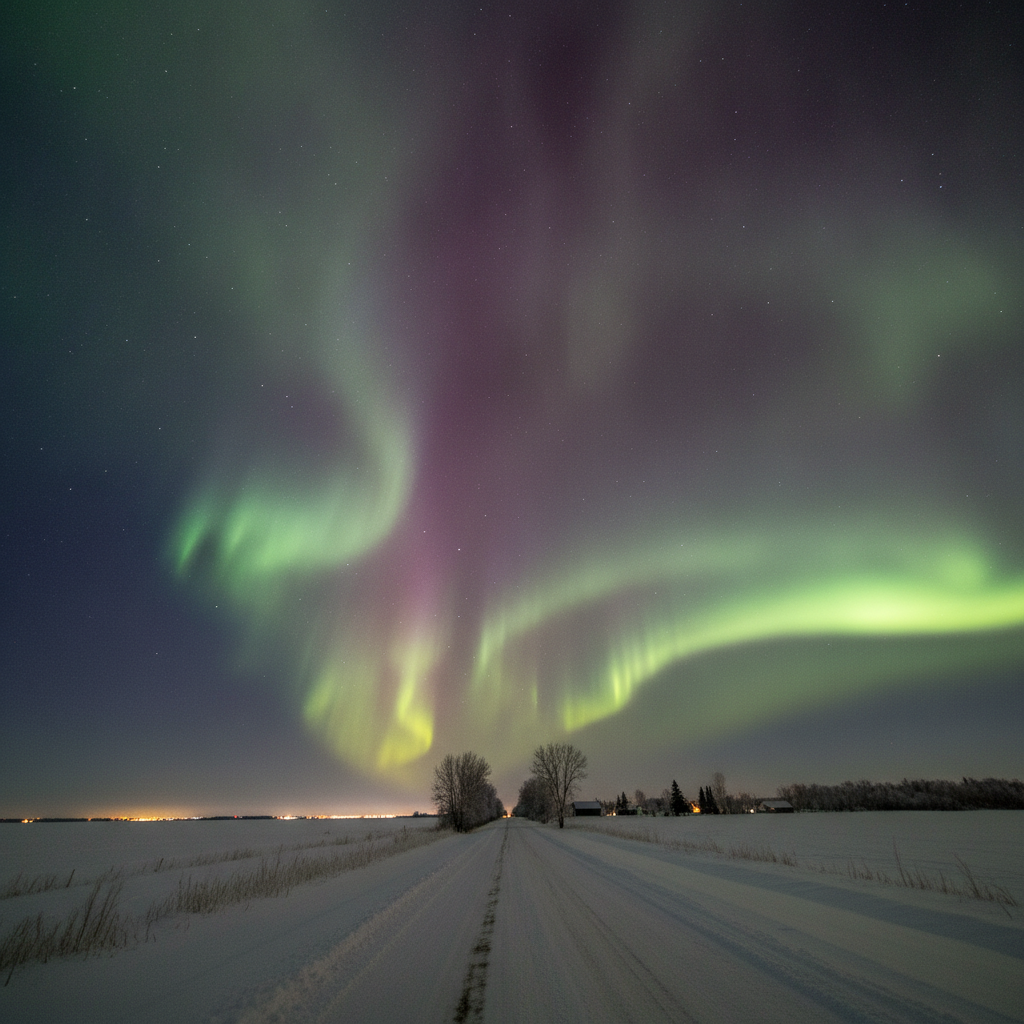
Winnipeg experiences the full extremes of continental prairie climate, including summer thunderstorms of exceptional severity, tornadoes on the prairies surrounding the city, blizzards that can deposit 50 centimetres of snow in 24 hours, and drought cycles driven by the same continental air mass patterns that alternately bring Arctic cold and tropical moisture. The 1919 flood, the 1950 flood, the 1997 Red River flood, and recurring spring flooding of the Red River demonstrate that the flat Red River Valley topography creates recurring flood risk that infrastructure alone cannot eliminate. The Winnipeg tornado of June 22, 2007, which touched down in the Birds Hill area northeast of the city and caused significant damage, was part of the severe weather pattern that makes the southern Manitoba prairies one of the more tornado-prone areas in Canada. The prairie thunderstorm environment of Manitoba, with storms developing on the flat horizon visible from 100 kilometres, is among the most dramatic natural weather phenomena in Canada, producing lightning displays visible across the entire dome of the sky and hail events capable of destroying crops across entire county-scale areas in a single afternoon. The Manitoba Environment office has operated one of the longest continuous weather records in Canada, with Winnipeg temperature data dating to 1872 providing over 150 years of climate record.
- 5
Winnipeg Tyndall Stone and Local Materials
Tyndall limestone, quarried from the Garson quarry near Tyndall, Manitoba, 40 kilometres northeast of Winnipeg, is the distinctive pale grey limestone with brown fossil mottling used in the construction of the Manitoba Legislative Building, the Winnipeg art gallery, dozens of Exchange District commercial buildings, and numerous other public and commercial structures that give Winnipeg its characteristic building stone appearance. The fossils visible in Tyndall stone, including corals, crinoids, brachiopods, and other Ordovician marine organisms from the shallow tropical sea that covered Manitoba 450 million years ago, are visible in the walls and floors of every building that uses the material, making Tyndall stone the most fossil-dense building material in common use anywhere in the world. The quarry at Garson has been in operation since the 1890s and has supplied building stone to projects across Canada and internationally. The Winnipeg skyline is distinctive partly because the combination of Tyndall limestone heritage buildings with the red brick of the Exchange District and the glass towers of the 1970s and 1980s oil boom creates a layered chronology of materials visible in the downtown streetscape. The Manitoba Museum geology gallery presents the Tyndall stone formation and its fossils in the context of Manitoba deep geological history.
- 6
Winnipeg Practical Visit Guide
Winnipeg James Armstrong Richardson International Airport, 8 kilometres west of downtown, connects to major Canadian cities and several US destinations with taxi and transit connections. The inner city is walkable in summer and navigable by transit in winter, with Winnipeg Transit buses providing reasonable coverage of the central areas. Renting a car is advisable for visiting Heritage Park, the Museum at Steinbach, the French village of Saint-Norbert, and the provincial parks north and south of the city. The best travel times are June through August for festivals and outdoor activities, February for the Festival du Voyageur and winter culture events, and October through November if polar bear watching at Churchill is the primary goal. The Folk Festival camping experience at Birds Hill Park in July is the most distinctive accommodation option in the Winnipeg region. Hotel accommodation is moderately priced, with the Exchange District boutique hotels offering the most atmospheric and architecturally interesting options. The Forks is the best orientation point for first-time visitors, with the Canadian Museum for Human Rights, the market hall, the river pathway, and the historic railway buildings all within walking distance. Saint Boniface is a ten-minute walk across the pedestrian bridge and should not be missed. The North End requires a car or long bus ride but repays the visit with the most authentic multi-ethnic commercial environment in the city.
Walk this route with audio
Stories play automatically as you reach each stop — no tapping needed.
More in Winnipeg
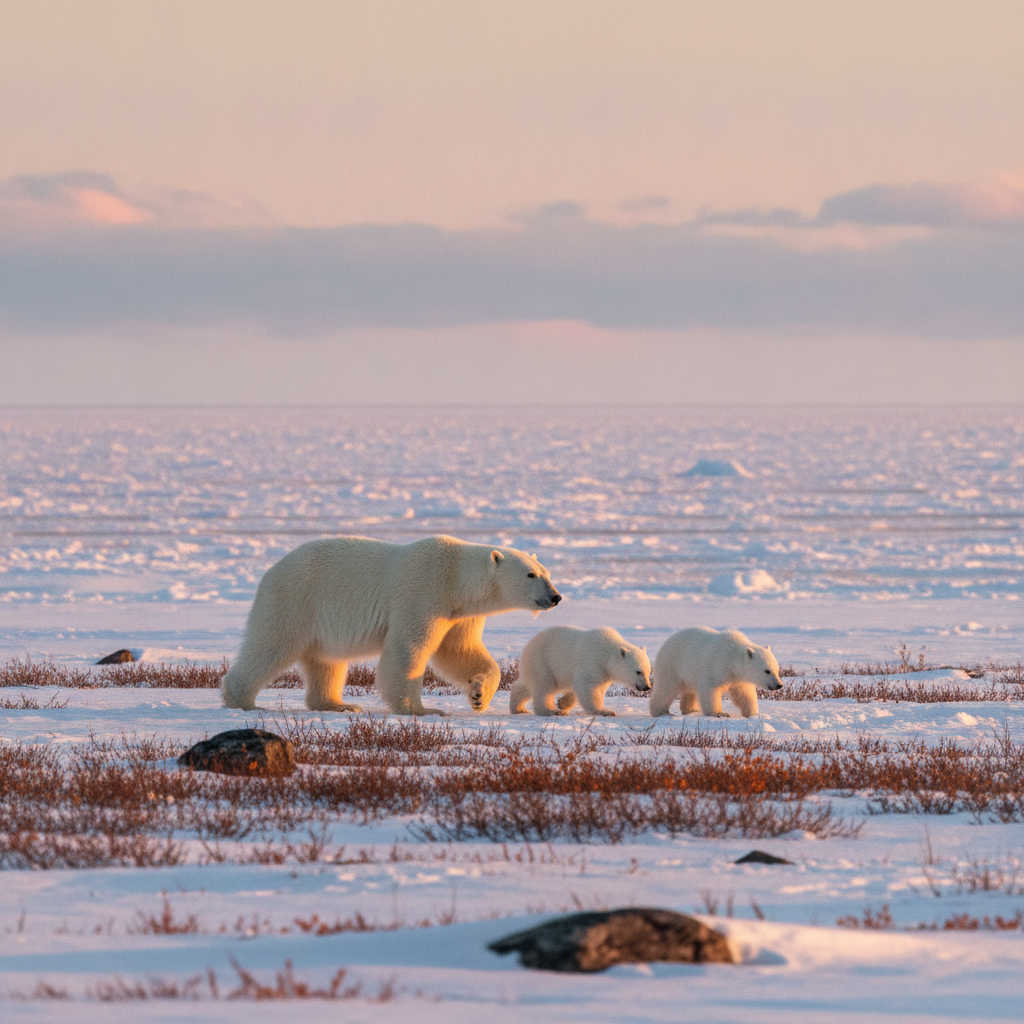
Winnipeg: The Masonic Temple Hiding in the Legislature Dome, 900 Polar Bears Waiting for a Bay That Is Freezing Later Every Year and the City Where Neil Young Learned to Play Guitar
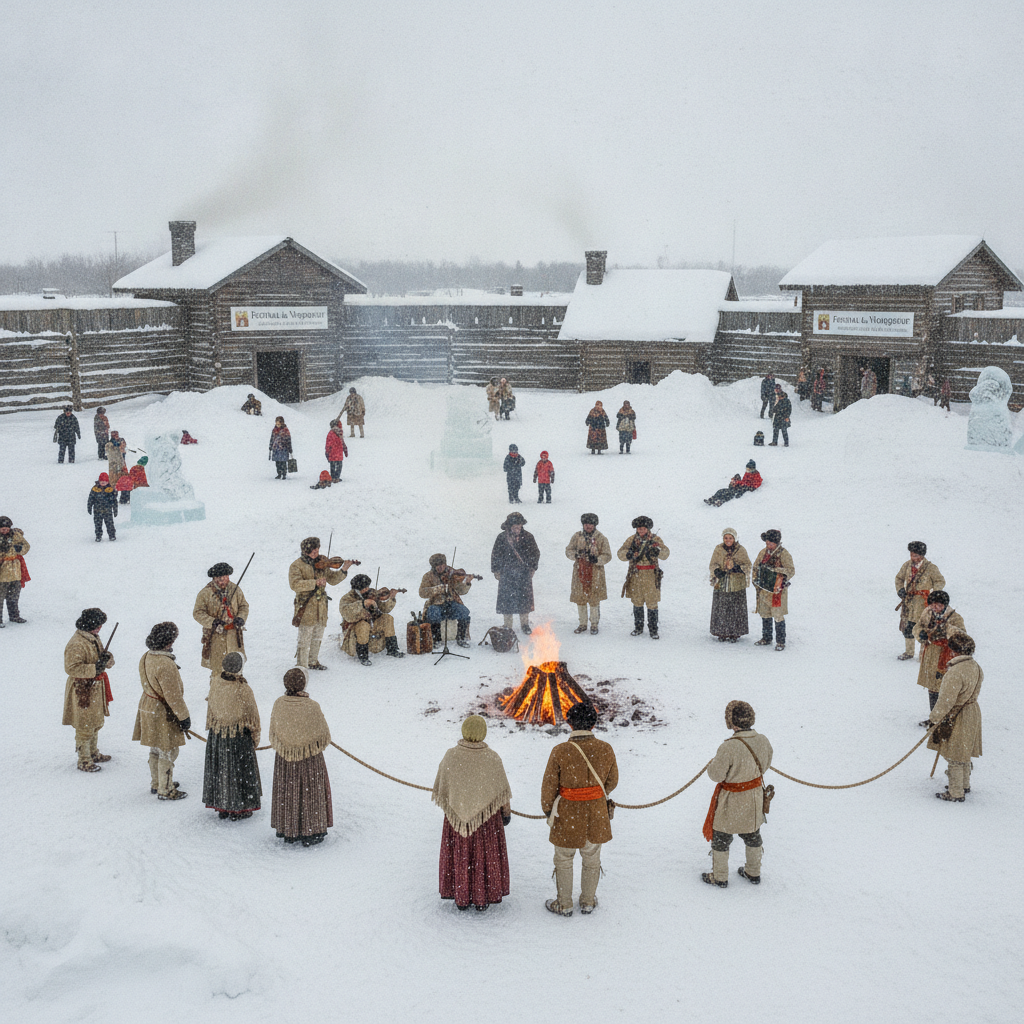
Winnipeg: The Second Largest Bus Manufacturer in North America Building Electric Buses, the World Oldest Multicultural Festival With 40 Pavilions and the Finest Freshwater Beach in Canada 90 Minutes Away
Winnipeg: The Strike That Was Called a Bolshevist Revolution and Created the NDP, the Ballet Company That Is Older Than Many Canadian Provinces and the Hockey Team That Left and Came Back
Winnipeg: The Geographic Centre of North America, the Museum Built on the Site Where Two Rivers Have Met Humans for 6000 Years and the City That Is Colder Than Moscow in January
Winnipeg: The Ship That Founded the Hudson Bay Company in a Museum, the 1870 Land Grants That Were Stolen by Speculators and the Prairie Sky That Displays Lightning Like a Natural Theatre