The 108 Tang Court Dumplings Including One Stuffed With Camel Fat, the World's 4th Largest Student City & How to Cycle Through 3 Ancient Empires on a Flat Agricultural Plain
The 108-course Xi'an dumpling banquet's 'camel hump' dumpling with actual camel fat filling; the 60,000-strong Hui Muslim community's 06:00 morning lamb market as the most authentic Xi'an local experience; the Xingjiao Temple Pagoda as Xuanzang's personal mausoleum 30km south of Xi'an; the Xi'an Aircraft Industry manufacturing China's H-6 bomber and Y-20 fuselage components; the Wei River plain cycling route past 3 Qin and Han mausoleums; and Xi'an's 1.2 million university students as the 4th largest student city in China.
- 1
Xi'an for Families – Interactive History
Xi'an family travel guide (the city with more interactive historical experiences for children than any other Chinese destination): the guide for traveling with kids aged 6–16. The Terracotta Army for children: the entry-level explanation (the concept of an emperor ordering 8,000 custom clay soldiers to guard his tomb underground for 2,200 years): the most important child-engagement strategy (the warrior face detail—each of the excavated warriors has a unique facial expression and hairstyle—asking children to find 2 identical faces in the pit, which they cannot). The Tang Dynasty costume rental (the costume shops along the pedestrian street south of the Big Wild Goose Pagoda—the full Tang court dress rental at ¥80–120 per person for 2 hours): the most popular family activity in Xi'an. The paper-cutting (剪纸—the traditional Shaanxi folk art of cutting intricate patterns from red paper—workshops available in the Muslim Quarter at ¥40–60 per person for a 45-minute session). The mooncake baking (the Xi'an mooncake (水晶饼—'crystal cake', the traditional Xi'an mooncake with a transparent lard pastry filling with rose petal jam): mooncake-making classes are available at the Defachang restaurant chain (德发长—the most historic dumpling restaurant in Xi'an, established 1936) for ¥120–150 per person including 6 dumplings and 2 mooncakes.
- 2
Dumplings – Xi'an's 108-Dumpling Feast
The Xi'an dumpling banquet (西安饺子宴—the 108-course dumpling feast offered at the Defachang Restaurant (德发长) and the Tang Dynasty Restaurant (唐宫饺子宴)): the most theatrical dining experience in Xi'an and the most historically grounded special-occasion meal in the city. The dumpling history (the Chinese dumpling (饺子—jiǎo zi) appears in written records from the Tang Dynasty, when they were called 'crescent moon cakes' (偃月形馄饨) and were served at the Tang court in Chang'an): the 108-course banquet format (the banquet presents 108 different dumpling varieties—each shaped and filled differently, representing a different Tang court ceremonial dish—served in groups of 6–8 per course over approximately 2 hours). The specific dumplings: the 'camel hump' (骆驼峰饺—the camel-shaped dumpling with camel-fat filling—the rarest and most expensive dumpling in the banquet, representing the Tang court's use of camel meat from the Silk Road trade caravans); the 'sancai' tri-color dumpling (唐三彩饺—the dumpling shaped and colored to resemble the Tang tri-color pottery using natural vegetable dyes). The regular dumpling eating (the Xi'an Muslim Quarter's lamb-filled dumplings (清真饺子) at the streetside stalls: the most affordable dumpling eating in Xi'an at ¥1–2 per piece).
- 3
Xi'an's Living History – Locals & Community
The living history of Xi'an: the communities and daily life that carry the city's historical identity forward into the present. The Hui Muslim community (the 60,000 Hui residents of the Muslim Quarter): the daily life (the morning market (早市) in the Xiaopiyuan Street (小皮院街) off the Muslim Quarter—the most authentic local market in Xi'an, where the Hui vendors sell fresh lamb, flatbread, and spices from 06:00): the Great Mosque's Friday noon prayer (the most direct encounter with the continuity of Islamic community life in Xi'an, accessible to respectful non-Muslim visitors in the mosque courtyard). The Qin Opera (秦腔—Qín Qiāng—the oldest living operatic tradition in China, originating in the Wei River valley of Shaanxi Province—the distinctive high-pitched wailing vocal style described as 'the sound of ancient battle cries'): the Yisu Qin Opera House (易俗社—the Xi'an Qin Opera theater founded in 1912, staging performances at the Yisu Theater (易俗大剧院, 60 Xixin Street)—tickets ¥80–150). The Xi'an drum music (the Drum Tower drum performance (鼓楼表演)—the daily 30-minute performance of traditional Tang court drum music inside the Drum Tower using reproductions of Tang court drums).
- 4
Xi'an Architecture – Ancient Meets Contemporary
Xi'an's architectural spectrum (the city where Tang Dynasty wood structures and Song Dynasty city walls meet ambitious contemporary architecture): the architectural guide. The historical core (the 4 surviving Tang Dynasty structures: the Big Wild Goose Pagoda (652 CE), the Small Wild Goose Pagoda (707 CE), the Great Mosque (742 CE foundations), and the Xingjiao Temple Pagoda (兴教寺塔, 669 CE—the mausoleum pagoda of Xuanzang—30 km south of Xi'an)). The Ming city walls (the 1370–1378 CE circuit—the best-preserved example of Ming Dynasty military engineering in China). The contemporary: the Qujiang New District (曲江新区—the cultural district south of the Big Wild Goose Pagoda developed 2003–2015): the Tang Paradise park, the Xi'an International Convention Center, and the most ambitious new public space in Xi'an. The Xi'an Silk Road International Conference Center (丝路国际会展中心): the 2019-built convention complex in the Jinghe New City (泾河新城) 50 km north of Xi'an city—the largest convention center in Shaanxi Province: the architectural integration of Silk Road motifs (the flying apsara relief panels on the exterior) with a functional conference venue.
- 5
Xi'an Contemporary – Tech Hub & University City
The contemporary Xi'an (the industrial and technological city behind the tourism surface): the 21st-century dimensions of the ancient capital. The aerospace industry (Xi'an is China's primary aerospace manufacturing hub—the Xi'an Aircraft Industry (XAC, 西安飞机工业集团) manufactures the H-6 bomber (the PLAAF's primary strategic bomber), the Y-20 heavy transport aircraft, and the C919 passenger jet fuselage components): the military connection (the Xi'an Satellite Control Center (西安卫星测控中心—XSCC) operates from the Xi'an area and controls approximately 60% of China's satellites and space missions, including the Tiangong Space Station (天宫) and the Chang'e lunar program). The universities (Xi'an Jiaotong University (西安交通大学—XJTU)—the 'Xi'an of the 9 Leagues'—one of China's top 10 research universities; Xi'an University of Architecture and Technology; Northwestern Polytechnical University (西北工业大学—one of the primary Chinese aerospace engineering institutions)): the student population (Xi'an has 110 universities and approximately 1.2 million university students—the 4th largest student population of any city in China). The high-speed rail hub (Xi'an North Station—the junction of 4 HSR lines in the national HSR network).
- 6
Cycling the Wei River Plain – Qin Dynasty Heartland
The Wei River Plain cycling route (the 渭河平原—the Wei River valley agricultural plain north of Xi'an city—the heartland of the Qin and Han Empires): the most historically saturated cycling terrain in China. The route (the flat cycling route from Xi'an North Station northwest along the Wei River basin, passing through the site of the Han Chang'an city walls (汉长安城遗址) at 10 km, the Xianyang Museum (咸阳博物馆—the Qin Dynasty capital museum) at 25 km, and the Mao Mausoleum (茂陵—the Han Emperor Wu's mausoleum, the largest single imperial burial mound in China at 46.5m height) at 55 km from Xi'an): the cycling logistics (the rental e-bikes available from the dockless bike-share systems (Meituan Bike—美团单车) in Xi'an city: the ¥1.50/30min rate covers the flat Wei River plain terrain; the train return from Xianyang Station cuts the return journey to 25 minutes on the city metro line). The landscape (the Wei River plain is entirely flat—the agricultural fields extend to the horizon on all sides, interrupted only by the burial mounds of the Qin and Han emperors: the most disorientating agricultural landscape in China for visitors unused to the scale of the loess plains).
Walk this route with audio
Stories play automatically as you reach each stop — no tapping needed.
More in Xi'an
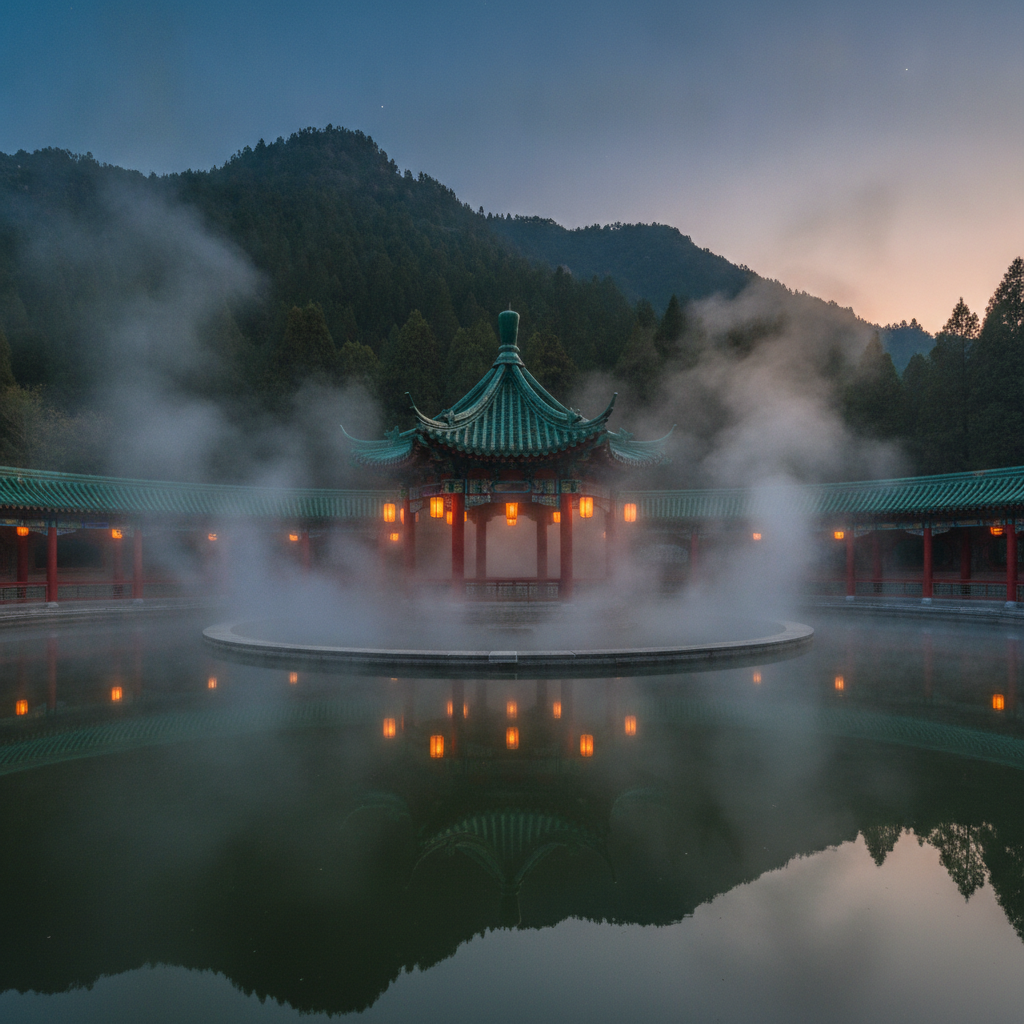
The An Lushan Rebellion That Killed 36 Million and Started in a Hot Spring Palace, the Xianyang Miniature Han Army Nobody Visits & Every European Book Before 1100 Written on Sheepskin Because of One Battle Near Xi'an
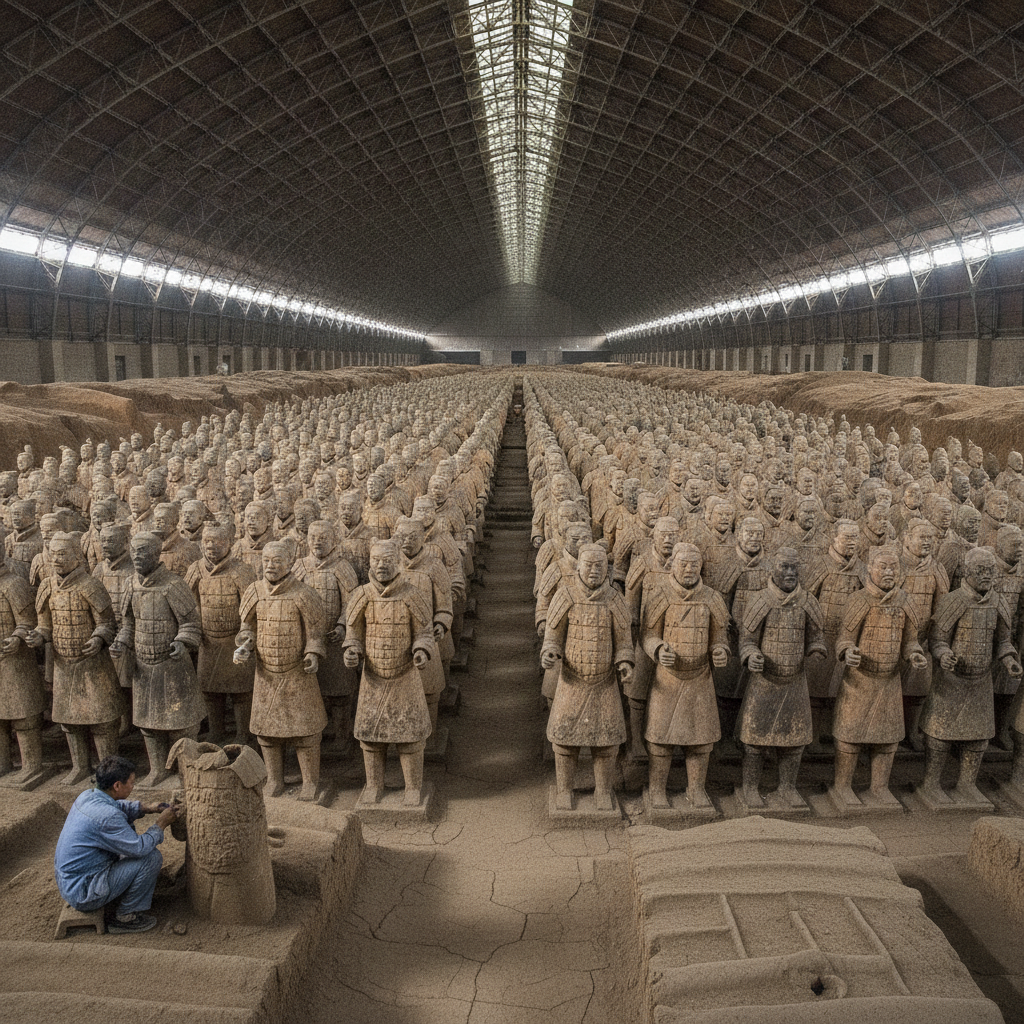
The 8,000-Warrior Clay Army That Was Gray When Buried (It Wasn't), the World's First Zoning System & the Arabic Traders Who Became Xi'an's Muslim Quarter
The Monk Who Left Without Permission, Walked 25,000 km & Inspired the Monkey King; the Brown Pandas of the Qinling Range; and the Wordless Stele That Was Left Blank On Purpose
The Mercury Rivers in the Unexcavated Tomb, the Hijacked Minaret That Looks Like a Pagoda & the Silk Road Merchant Who Was Captured for 10 Years and Opened Trade with Rome Anyway