The 8,000-Warrior Clay Army That Was Gray When Buried (It Wasn't), the World's First Zoning System & the Arabic Traders Who Became Xi'an's Muslim Quarter
The Terracotta Army's original painted surfaces that fade within minutes of air exposure; the Ming Dynasty city walls as the largest intact fortification in China; biangbiang noodles and the 58-stroke Chinese character used to write 'biang'; Tang Chang'an as the world's largest city at 1–2 million residents with Zoroastrian, Nestorian, and Manichaean temples; the Famen Temple's 4 Buddha finger bones as the most sacred Buddhist relics in East Asia; and the HSR connection from Xi'an North to Beijing in 4h30m.
- 1
The Terracotta Army – Scale, Discovery & Science
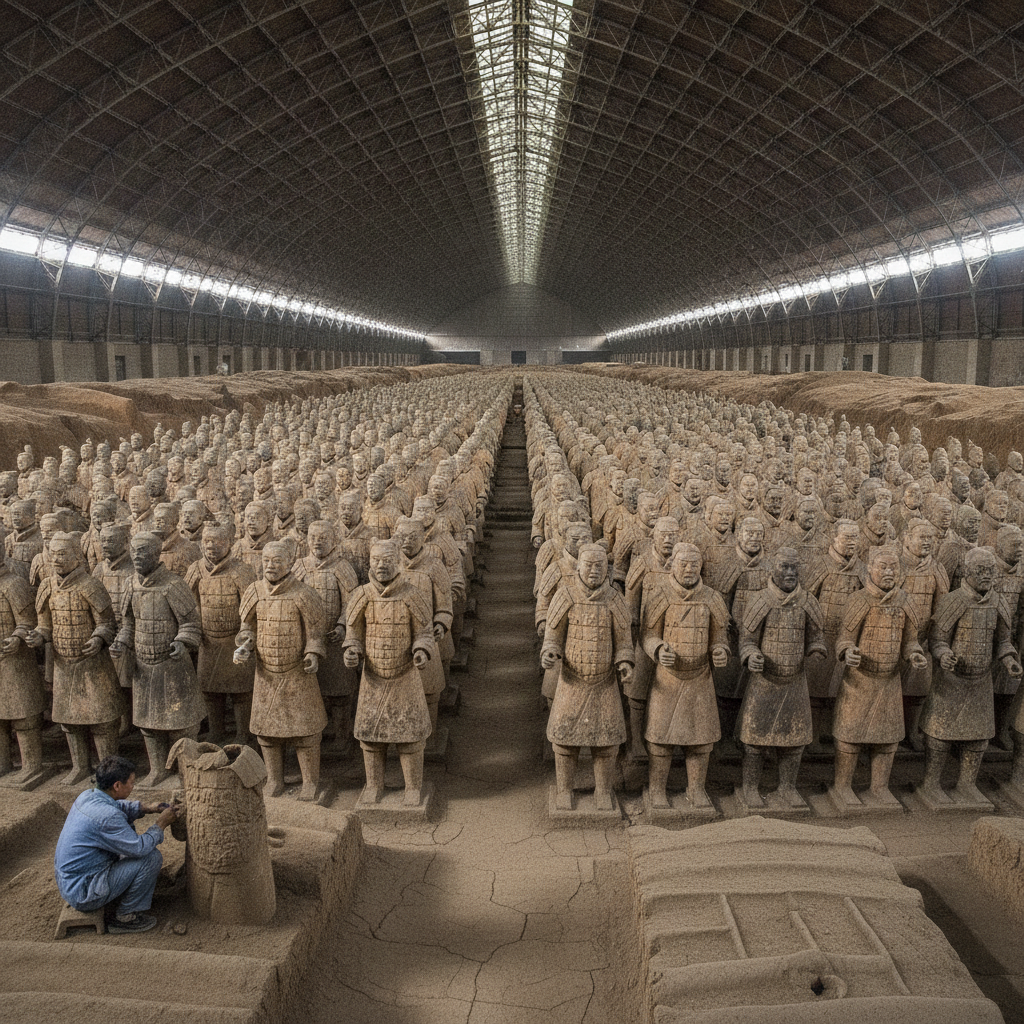
The Terracotta Army (秦始皇兵马俑—the buried clay army of the First Qin Emperor, Qin Shi Huang): the largest funerary monument in world history, containing an estimated 8,000 ceramic warriors, 130 chariots, 520 horses, and 150 cavalry horses—the full count still unexcavated after 50 years of work. The discovery (the army was uncovered in March 1974 by farmers digging a water well 35 km east of Xi'an—the farmers, Yang Zhifa and five brothers, hit ceramic fragments at 3 meters depth; the provincial archaeological team was dispatched and the find was reported to Beijing within weeks): the site within Qin Shi Huang's mausoleum complex (Mount Li—骊山—the 87 m burial mound that has never been excavated): the 3 pits (Pit 1: the main army formation—230m × 62m—the largest single excavated gallery; Pit 2: cavalry and mixed units; Pit 3: the command headquarters). The original color (each warrior was painted in vivid mineral pigments before burial—the color fades within minutes of air exposure; the terracotta figures were not gray when buried): the pigment preservation research (the Max Planck Institute/UCL collaboration with the Shaanxi Museum using polyethylene glycol (PEG) consolidation to stabilize the colors during excavation—the ongoing research that has not yet achieved a viable solution at scale).
- 2
Xi'an City Walls – The Most Intact Ming Dynasty Fortification
The Xi'an City Walls (西安城墙—the complete Ming Dynasty wall circuit enclosing the 14 km² historic city center): the most complete surviving city wall from China's imperial period. The construction (built 1370–1378 CE under the Ming Hongwu Emperor (朱元璋) on the foundations of the Tang Dynasty imperial palace walls—the Forbidden City's walls in Beijing were modeled on the Xi'an walls): the wall dimensions (13.74 km total circuit; 12m high; 12–14m wide at the top; with 98 watchtowers, 4 gate towers, and a 20m-wide moat): the wall tour (the bicycle rental at the South Gate (南门—Yongning Gate, the most ornate of the 4 main gates) for the 13.74 km circuit ride—approximately 1.5 hours at a leisurely pace—the highest-elevation 360° view of the Tang-Ming urban grid below and the surrounding plains toward Mount Hua). The night walk (the wall is illuminated after sunset—the most atmospheric time for the East Gate (东门—Changle Gate) section where the Tang-era tower is reflected in the moat below).
- 3
The Muslim Quarter & Tang Dynasty Food Culture
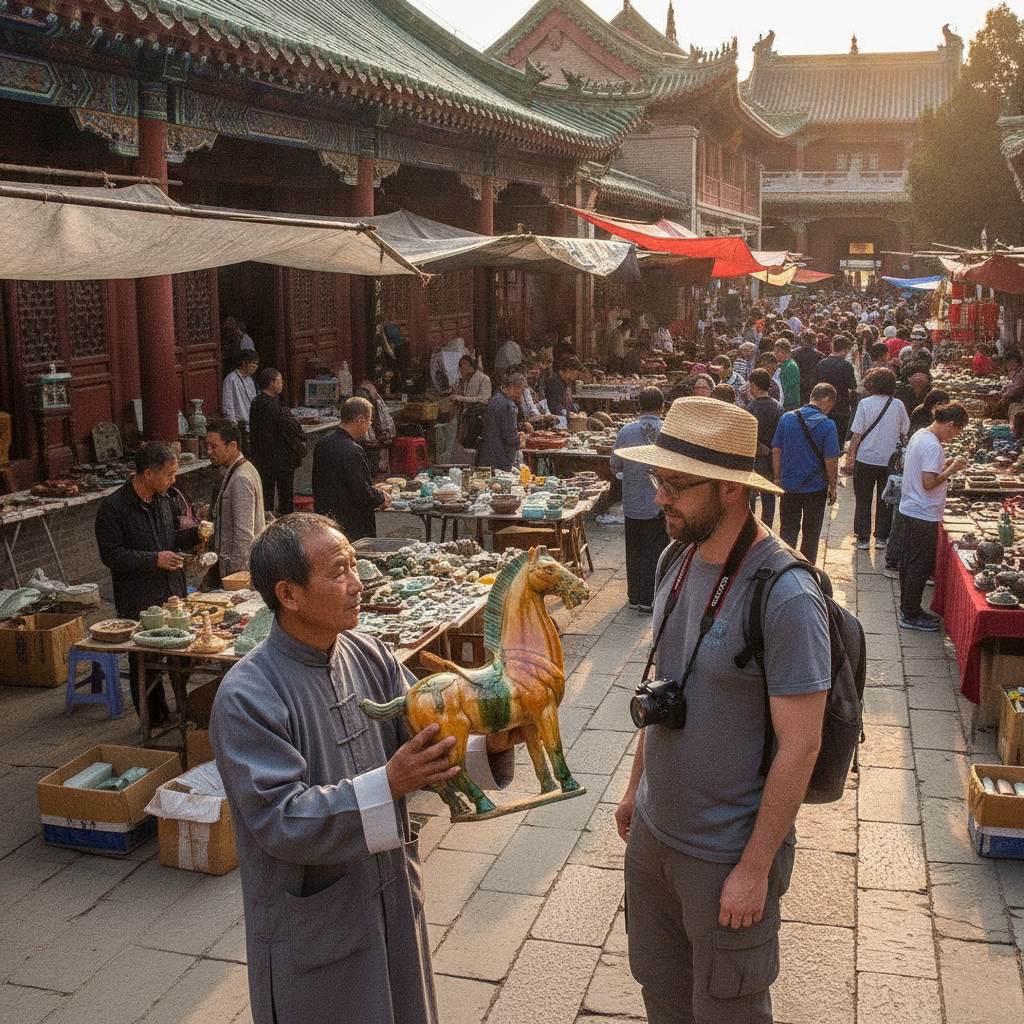
The Xi'an Muslim Quarter (回民街—the historic district of the Hui Muslim community, descendants of Tang Dynasty Silk Road traders): the most distinctive culinary neighborhood in mainland China. The Hui Muslim history in Xi'an (the Hui (回族) community of Xi'an—estimated at 60,000 residents in the Muslim Quarter area—are the descendants of Arab, Persian, and Central Asian traders who settled in Chang'an (the Tang capital) via the Silk Road from the 7th century CE): the neighborhood (the grid of streets between the Drum Tower (鼓楼) and the Great Mosque, centered on Beiyuanmen Street (北院门—'North Courtyard Gate Street')—the primary food street): The specific dishes (biangbiang noodles (油泼扯面)—the ultra-wide hand-pulled noodles with hot oil, chili, and vinegar (the most famous Xi'an dish, with the most complex Chinese character—58 strokes—used for 'biang'); roujiamo (肉夹馍—the Chinese 'hamburger': a crispy flatbread filled with braised pork or lamb, described by every food writer as the world's first hamburger prototype—the flatbread dates to the Qin Dynasty); yangrou pao mo (羊肉泡馍—the lamb soup with hand-crumbled flatbread)).
- 4
The Tang Dynasty – Chang'an as the World's Greatest City
Tang Dynasty Chang'an (618–907 CE): the Tang capital of Xi'an (known as Chang'an—'Eternal Peace') was the world's largest and most cosmopolitan city for over 200 years, with a peak population estimated at 1 million–2 million residents (the largest urban population on earth in the 7th–8th centuries CE). The grid plan (the Tang city was designed as a strict grid of 108 residential and commercial wards (坊—fāng), each enclosed by walls—the world's first planned zoning system at urban scale): only 2 original Tang structures survive above ground in Xi'an (the Big Wild Goose Pagoda (大雁塔, 652 CE) and the Small Wild Goose Pagoda (小雁塔, 707 CE)—both Buddhist pilgrimage towers built to house the Sanskrit sutras brought from India by the monk Xuanzang). The Tang cosmopolitanism (the Tang capital hosted communities of Zoroastrian, Nestorian Christian, Jewish, and Manichaean merchants in dedicated temples; the tomb murals from Tang tombs near Xi'an (visible at the Shaanxi History Museum) depict Central Asian polo players, Sogdian musicians, and camel caravans—the most complete documentary record of the Silk Road cosmopolitan culture).
- 5
Shaanxi History Museum & Xi'an Underground
The Shaanxi History Museum (陕西历史博物馆): the most important provincial history museum in China, housing the most comprehensive collection of objects from the Zhou, Qin, Han, and Tang Dynasties. The frescoes (the Tang tomb murals—the 18 Tang imperial tombs in the plains northwest of Xi'an, each containing elaborate painted murals depicting court life, hunting scenes, and international visitors—the most vivid documentary record of Tang Dynasty daily life): the Famen Temple crypt (法门寺—60 km west of Xi'an): the Tang Dynasty underground crypt reopened in 1987, containing the four finger bones of the Buddha (the most sacred Buddhist relics in East Asia, gifted by the Tang emperors to the temple) and 2,499 Tang imperial gold and silver ritual objects—the largest Tang Dynasty treasure hoard ever excavated. The Banpo Neolithic Village (半坡遗址—the excavated Yangshao Culture Neolithic village (5,000–3,000 BCE) preserved beneath a protective dome on the eastern edge of Xi'an): the earliest evidence of written symbolic marks found in China (the pottery marks at Banpo, interpreted by some scholars as proto-writing).
- 6
Xi'an Practical Guide – Access, Districts & Timing
The Xi'an practical guide. Getting there: Xi'an Xianyang International Airport (XIY—the hub with direct international flights: Tokyo 4h, Seoul 3h, Bangkok 3h30m, Kuala Lumpur 5h; domestic: Beijing 2h, Shanghai 2h30m, Chengdu 1h30m). High-speed rail: Xi'an North Station (HSR—the hub on the Zhengzhou–Xi'an, Xi'an–Chengdu, and Xi'an–Lanzhou HSR lines): Beijing West to Xi'an North: 4h30m by high-speed; Chengdu East to Xi'an North: 3h30m. City districts: the Historic Center (within the Ming walls—the walled city: Muslim Quarter, Drum Tower, Bell Tower, South Gate): the most atmospheric area for accommodation. The Gaoxin District (the modern tech and business center south of the walls): the Qujiang Cultural District (the Tang Dynasty garden reconstruction area south of the Big Wild Goose Pagoda—the most pleasant modern development in Xi'an). Timing: spring (April–May) and autumn (September–October) are the clearest-weather periods; summer (June–August) is hot (38°C+) and the Terracotta Army site becomes very crowded; the Terracotta Army requires a half-day minimum: book the English-speaking licensed guide through the official site booking system (the licensed guides are stationed at the entrance—the first stop before entering the pits—and explain the archaeological science of the excavation in the most detail).
Walk this route with audio
Stories play automatically as you reach each stop — no tapping needed.
More in Xi'an
The 108 Tang Court Dumplings Including One Stuffed With Camel Fat, the World's 4th Largest Student City & How to Cycle Through 3 Ancient Empires on a Flat Agricultural Plain
The An Lushan Rebellion That Killed 36 Million and Started in a Hot Spring Palace, the Xianyang Miniature Han Army Nobody Visits & Every European Book Before 1100 Written on Sheepskin Because of One Battle Near Xi'an
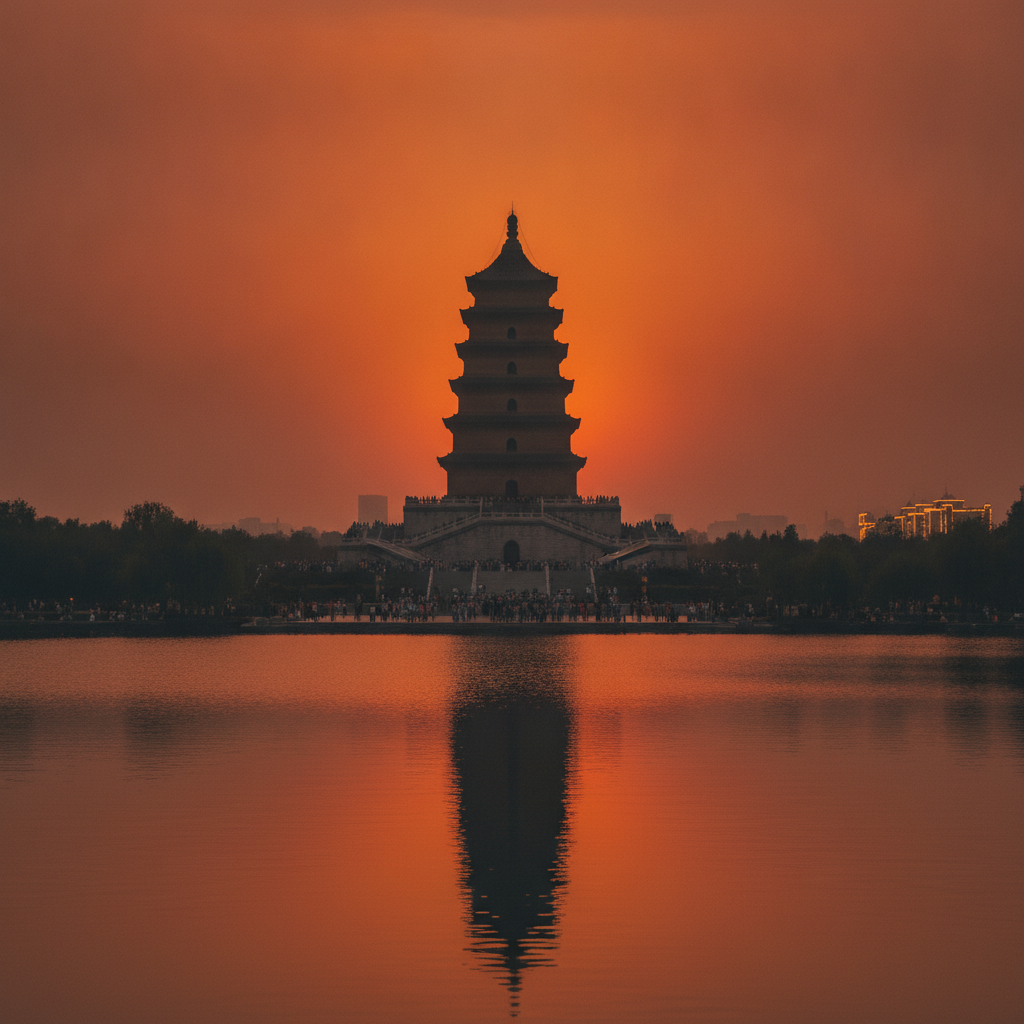
The Monk Who Left Without Permission, Walked 25,000 km & Inspired the Monkey King; the Brown Pandas of the Qinling Range; and the Wordless Stele That Was Left Blank On Purpose
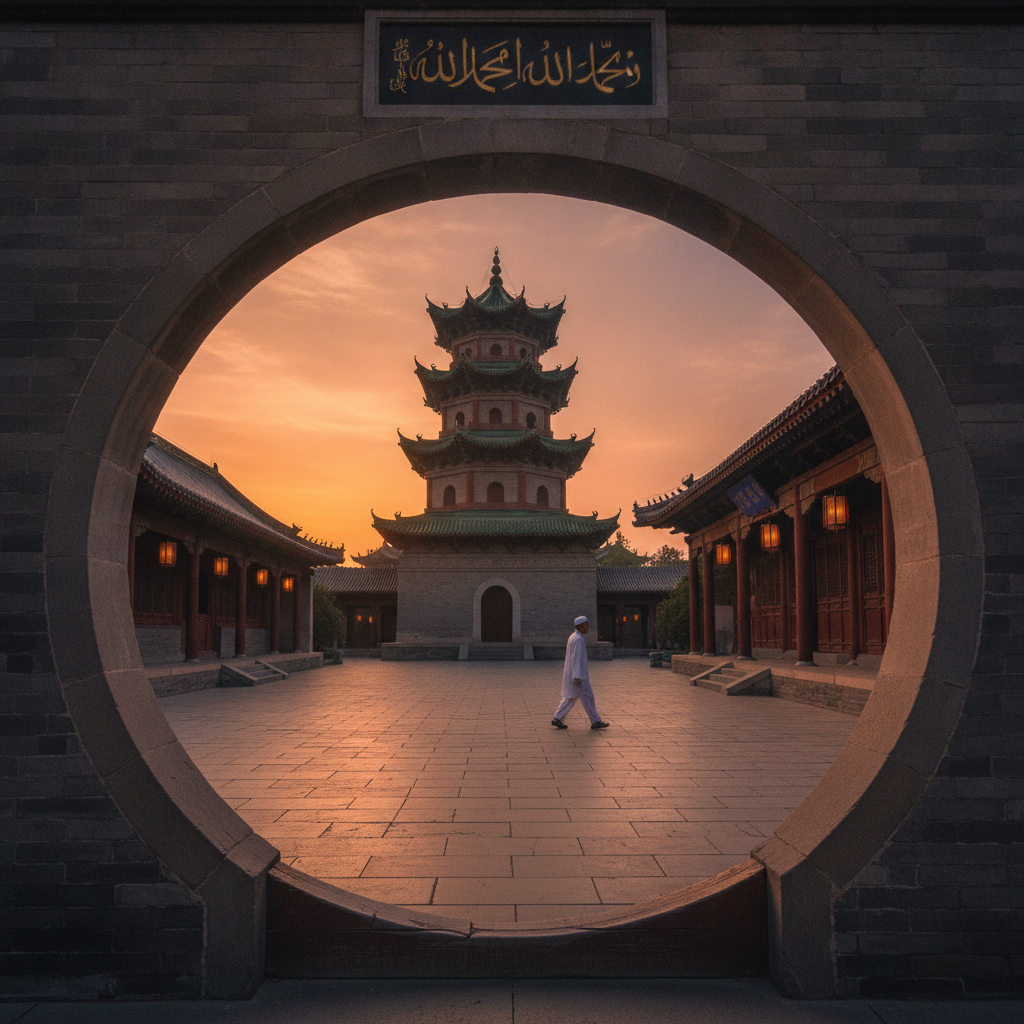
The Mercury Rivers in the Unexcavated Tomb, the Hijacked Minaret That Looks Like a Pagoda & the Silk Road Merchant Who Was Captured for 10 Years and Opened Trade with Rome Anyway