The Monk Who Left Without Permission, Walked 25,000 km & Inspired the Monkey King; the Brown Pandas of the Qinling Range; and the Wordless Stele That Was Left Blank On Purpose
Xuanzang's unauthorized 17-year journey to India and return with 657 Sanskrit texts; Wu Zetian's Wordless Stele left blank as a deliberate statement of unmeasurable achievement; the Qinling giant panda subspecies' brown-and-white coloration as the only panda subspecies distinguishable by color; the yangrou pao mo etiquette where finely-torn bread signals patience and respect; the 61 headless foreign ambassador statues at Qianling; and the Mogao Caves' 492 cave temples as the world's largest Buddhist cave art collection.
- 1
Big Wild Goose Pagoda & The Monk Xuanzang
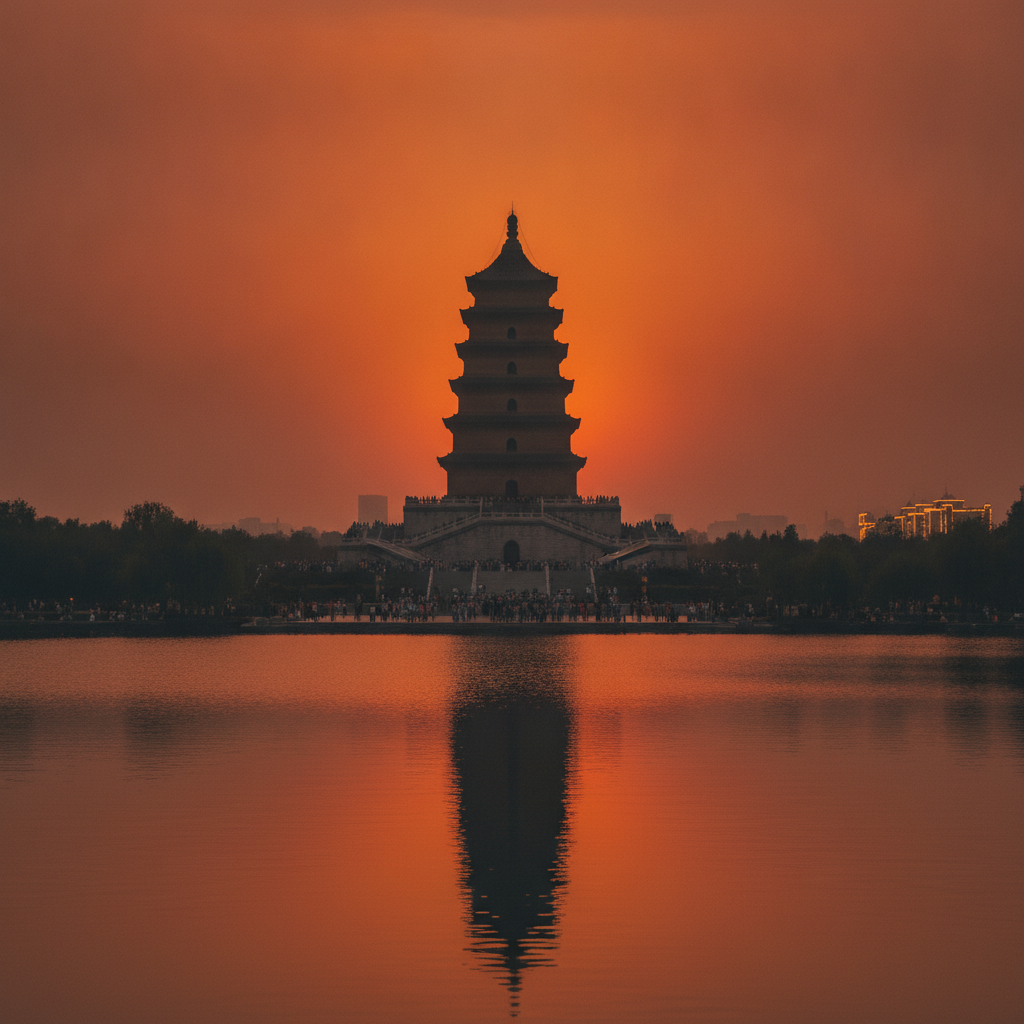
The Big Wild Goose Pagoda (大雁塔—Dà Yàn Tǎ—652 CE): the Tang Dynasty Buddhist pagoda built to house the Sanskrit sutras and Buddhist relics brought from India by the monk Xuanzang (玄奘—Xuánzàng, 602–664 CE) after his 17-year journey to India. Xuanzang's journey (629–645 CE): the unauthorized solo journey from Tang China to India (the Tang Emperor Taizong had refused Xuanzang permission to travel—he left secretly and crossed the Taklamakan Desert and the Pamir Mountains without imperial support): the journey covered approximately 25,000 km on foot and by horse; Xuanzang studied at the Nalanda Monastery (the world's first university) for 5 years in Bihar, India; he returned with 657 Sanskrit Buddhist texts, 150 relics, and 75 objects. The pagoda (the original 5-story pagoda was built in 652 CE; rebuilt to 7 stories in 701–704 CE by Empress Wu Zetian (武则天—the only woman to rule China as Empress Regnant): the pagoda stands 64.5m high and has been the most visited Buddhist structure in northern China for 1,370 years. The novel (the Journey to the West (西游记—Xī Yóu Jì, 1592 CE) by Wu Cheng'en (吴承恩) is a fictionalized account of Xuanzang's journey, featuring the Monkey King (孙悟空—Sūn Wùkōng) as Xuanzang's magic companion—the most read novel in Chinese history).
- 2
Xi'an's Tang-Era Art – Tomb Murals & Silk Paintings
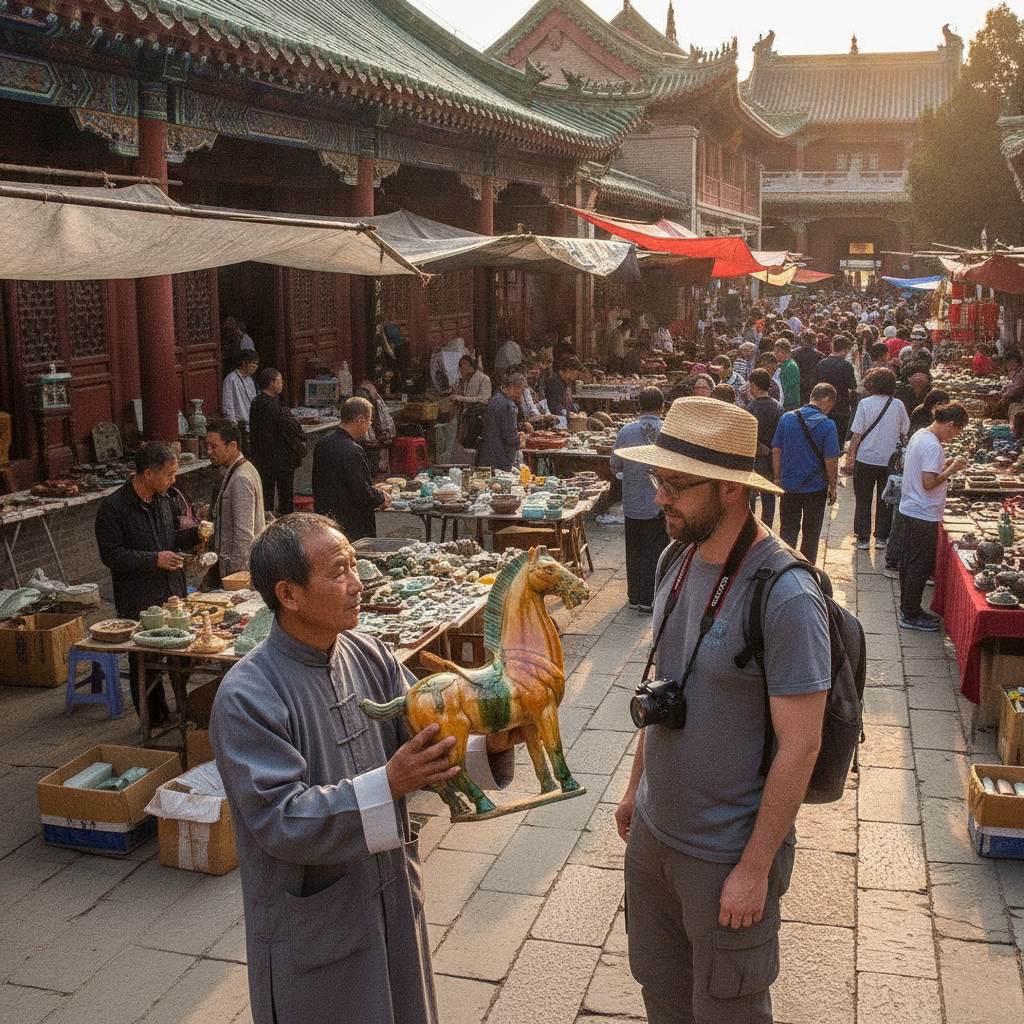
Tang Dynasty visual art accessible in Xi'an: the most vivid pictorial record of the most cosmopolitan period of Chinese history. The Shaanxi History Museum Tang collection (the Tang gallery contains the original tomb murals removed from the Tang imperial tombs west of Xi'an for conservation—the murals from the Qianling Mausoleum satellite tombs (乾陵陪葬墓), including the tomb of Prince Yide (懿德太子墓, 706 CE) and the tomb of Princess Yongtai (永泰公主墓, 706 CE)): the tomb murals (the painted scenes from the Tang court—polo players, female entertainers, palace guards—are the most important single collection of Tang-era representational painting in existence). The silk paintings: the Tang Dynasty silk painting technique (the Chinese silk weaving of the Tang period produced the most technically complex woven textile in the pre-industrial world—the lampas weave silk found in the Famen Temple crypt, with pattern repeats requiring 10,000+ warp threads, was the model for European medieval silk weaving when it reached the Islamic world via the Silk Road). The Tang pottery: the tri-color Tang pottery (唐三彩—táng sāncǎi—the lead-glazed earthenware in amber, green, and ivory, used for Tang tomb furnishings): the most collected Chinese ceramic in international auction houses.
- 3
The Qinling Mountains – Xi'an's Wild Backyard
The Qinling Mountains (秦岭—Qín Lǐng—the mountain range 30–80 km south of Xi'an): the most ecologically significant mountain range in China (the Qinling range runs east–west and forms the biological and climatic divide between northern and southern China—the line north of which rice cannot be grown, north of which the panda habitat ends, and north of which the Yangtze River watershed ends). The Qinling Giant Panda (the Qinling subspecies of the giant panda (Ailuropoda melanoleuca qinlingensis): distinguishable from the Sichuan panda by its smaller skull, larger molars, and—most visibly—its brown-and-white coloration instead of the black-and-white: the only brown panda subspecies): the Foping National Nature Reserve (佛坪国家级自然保护区—110 km south of Xi'an by road): the highest wild giant panda density of any protected area in the Qinling range. The Qinling hiking (the Cuihua Mountain (翠华山—the Qinling volcanic crater lake park 25 km south of Xi'an city): the most accessible Qinling day hike from the city (2h round trip from the Xi'an South bus terminal, ¥ 25 entrance): the volcanic landslide lake (the Tang Dynasty landslide created a debris dam lake visible from the Qinling ridge above—the most dramatic geological feature in the Qinling foothills accessible from Xi'an in a half-day).
- 4
Xi'an Street Food – The Complete Guide
The Xi'an street food guide (the most distinctive regional street food culture in northern China): beyond the biangbiang noodles. The morning: Hu La Tang (糊辣汤—the spiced wheat-starch and mutton soup eaten as breakfast from roadside stalls across the Muslim Quarter—the most warming breakfast dish in Xi'an in winter); the zhi ma shao bing (芝麻烧饼—the sesame flatbread baked in a clay oven, the vehicle for the most authentic roujiamo (肉夹馍): the specific combination to order: the 腊汁肉夹馍 (là zhī ròu jiā mó—the slow-braised pork belly (腊汁肉) version with the braise sauce pressed into the bread). The lunch: the cold noodles (凉皮—liáng pí—the Xi'an cold wheat or rice noodle dressed with chili oil, black vinegar, cucumber, bean sprouts, and gluten slices—the most ordered dish in Xi'an in summer at approximately 60 million servings per summer month city-wide). The evening: the yangrou pao mo (羊肉泡馍) ritual (the dish is served as a bowl of broth with a plate of 2 flatbreads—the diner tears the bread into pieces the size of soybeans and adds them to the broth): the etiquette rule (the finer the bread is torn, the better the cook can assess the diner's patience—a bowl with coarsely torn bread is considered an insult to the restaurant).
- 5
The Qianling Mausoleum – Emperor Gaozong & Empress Wu
The Qianling Mausoleum (乾陵—Qián Líng—the joint burial site of the Tang Emperor Gaozong (唐高宗, r. 649–683 CE) and the Empress Wu Zetian (武则天, r. 690–705 CE)—80 km west of Xi'an): the most important imperial tomb in the Xi'an region after the Terracotta Army and the only Tang imperial tomb that has never been excavated. Empress Wu (Wu Zetian: the only woman in Chinese history to rule as emperor in her own name—she governed the Tang Empire for 46 years, first as regent and then as emperor of her own 'Zhou Dynasty' (690–705 CE)—her reign produced the largest expansion of the Tang examination system (科举), the most important pathway to government office in Chinese history). The Wuze Stele (无字碑—the 'Wordless Stele': the 6.3m tall stone stele Wu Zetian erected for herself—left blank (no inscriptions) in a deliberate statement that her achievements were too great for words or in a sign of political pragmatism allowing future rulers to write her legacy as they wished—the debate is unresolved). The 61 headless foreign ambassador statues (the stone statues of foreign dignitaries attending Gaozong's funeral—the Tang court included representatives from 61 kingdoms—the statues' heads were removed by vandals in the Ming Dynasty: the Tang's global reach in a damaged monument).
- 6
Xi'an – Day Trips & Multi-Day Extensions
The Xi'an day trip circuit (the sites accessible by day trip from Xi'an with the most significant historical content): The Terracotta Army + Huaqing Palace (华清宫—the imperial hot spring resort 30 km east of Xi'an, where Emperor Xuanzong and the concubine Yang Guifei (杨贵妃—the most celebrated beauty in Chinese history) held court until the An Lushan Rebellion of 755 CE forced their flight from Chang'an—the setting of the poem 'Song of Everlasting Regret' (长恨歌) by Bai Juyi). The Famen Temple (法门寺—60 km west of Xi'an—half-day): the Tang Dynasty relic crypt and the adjacent 2009-built 'Famen Temple Cultural Landscape' (the 148m tall 'Heroic Path' monument designed by Andrew Berman). Multi-day extension 1: The Silk Road cities of Gansu Province (Dunhuang—the Mogao Caves (莫高窟—492 numbered cave temples, the largest collection of Buddhist cave art in the world): Xi'an to Dunhuang: 10h by high-speed rail + train via Lanzhou. Multi-day extension 2: Zhangjiajie (Xi'an to Zhangjiajie: 4h by high-speed rail via Changsha): the combination of the Xi'an Silk Road history and the Zhangjiajie karst-pillar landscape as the most architecturally and naturally contrasting 2-destination combination in inland China.
Walk this route with audio
Stories play automatically as you reach each stop — no tapping needed.
More in Xi'an
The 108 Tang Court Dumplings Including One Stuffed With Camel Fat, the World's 4th Largest Student City & How to Cycle Through 3 Ancient Empires on a Flat Agricultural Plain
The An Lushan Rebellion That Killed 36 Million and Started in a Hot Spring Palace, the Xianyang Miniature Han Army Nobody Visits & Every European Book Before 1100 Written on Sheepskin Because of One Battle Near Xi'an
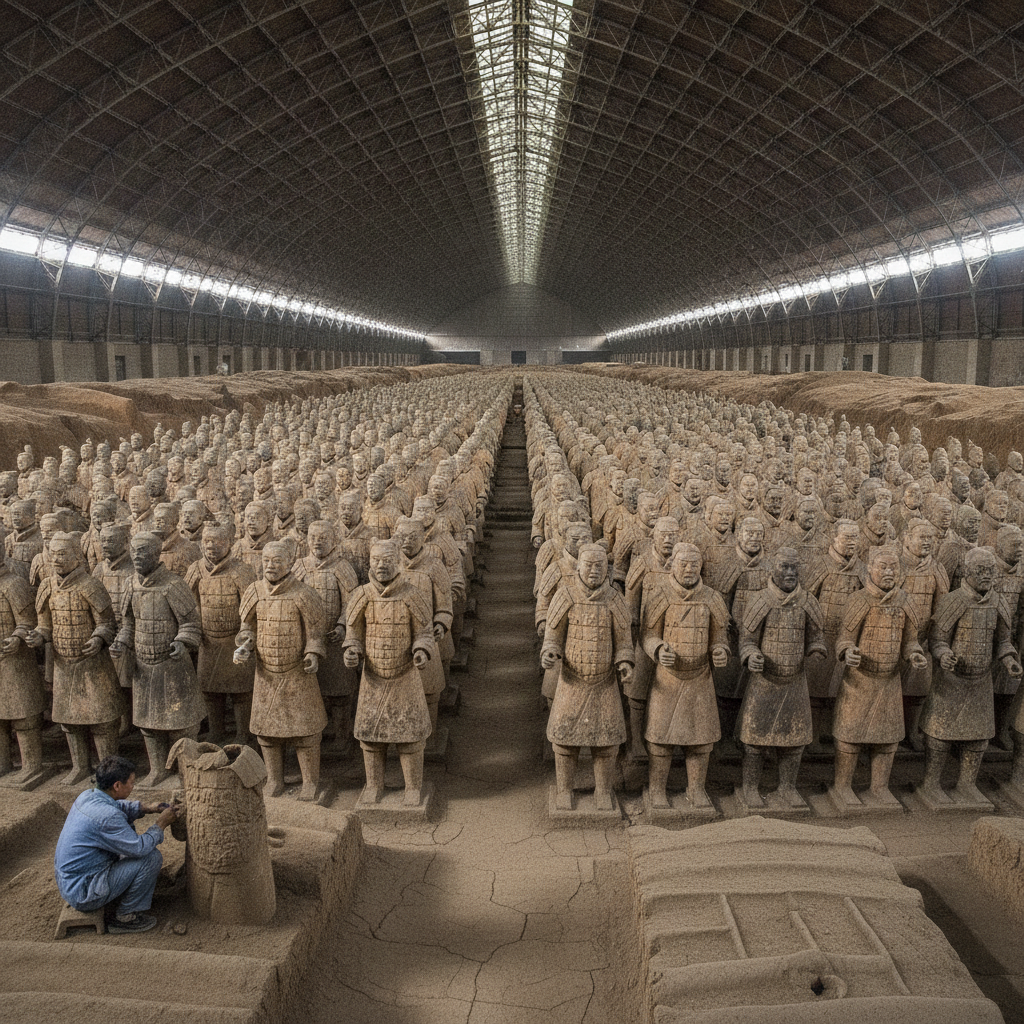
The 8,000-Warrior Clay Army That Was Gray When Buried (It Wasn't), the World's First Zoning System & the Arabic Traders Who Became Xi'an's Muslim Quarter
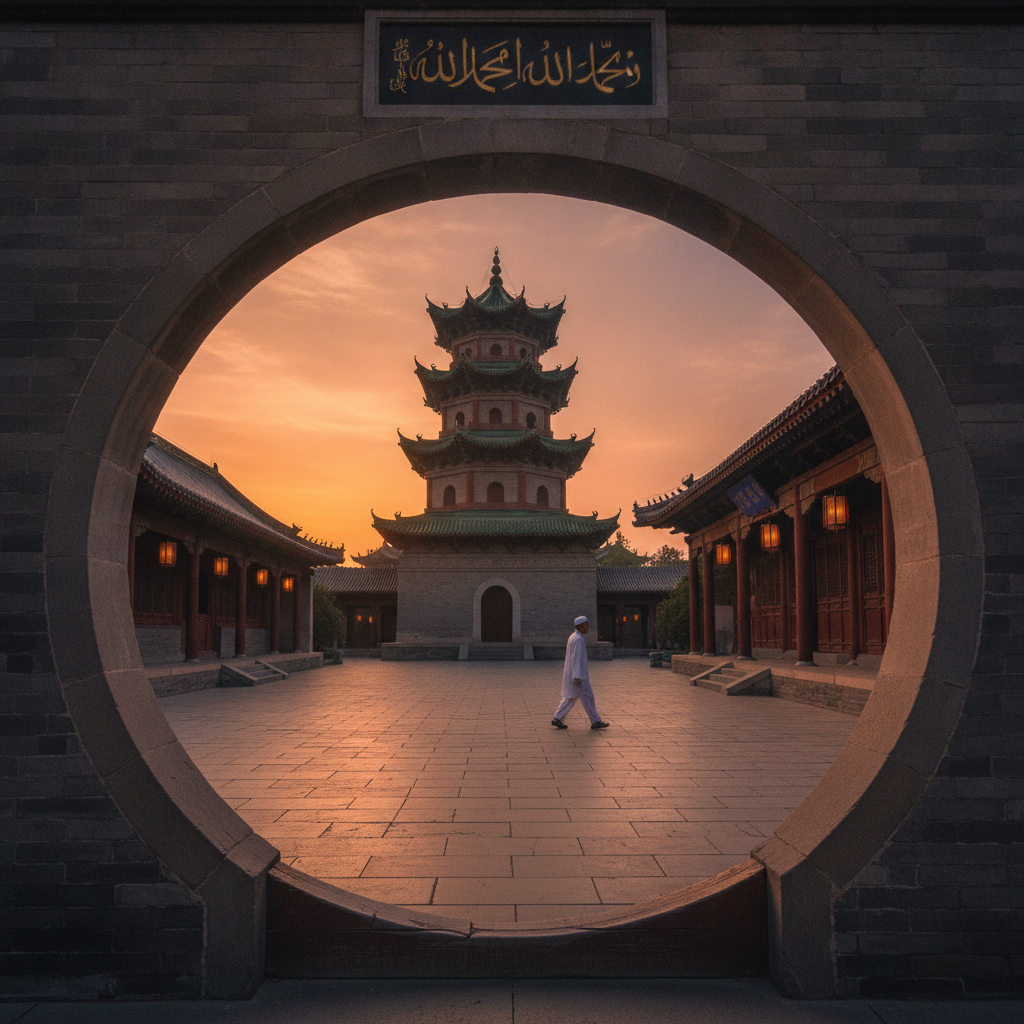
The Mercury Rivers in the Unexcavated Tomb, the Hijacked Minaret That Looks Like a Pagoda & the Silk Road Merchant Who Was Captured for 10 Years and Opened Trade with Rome Anyway