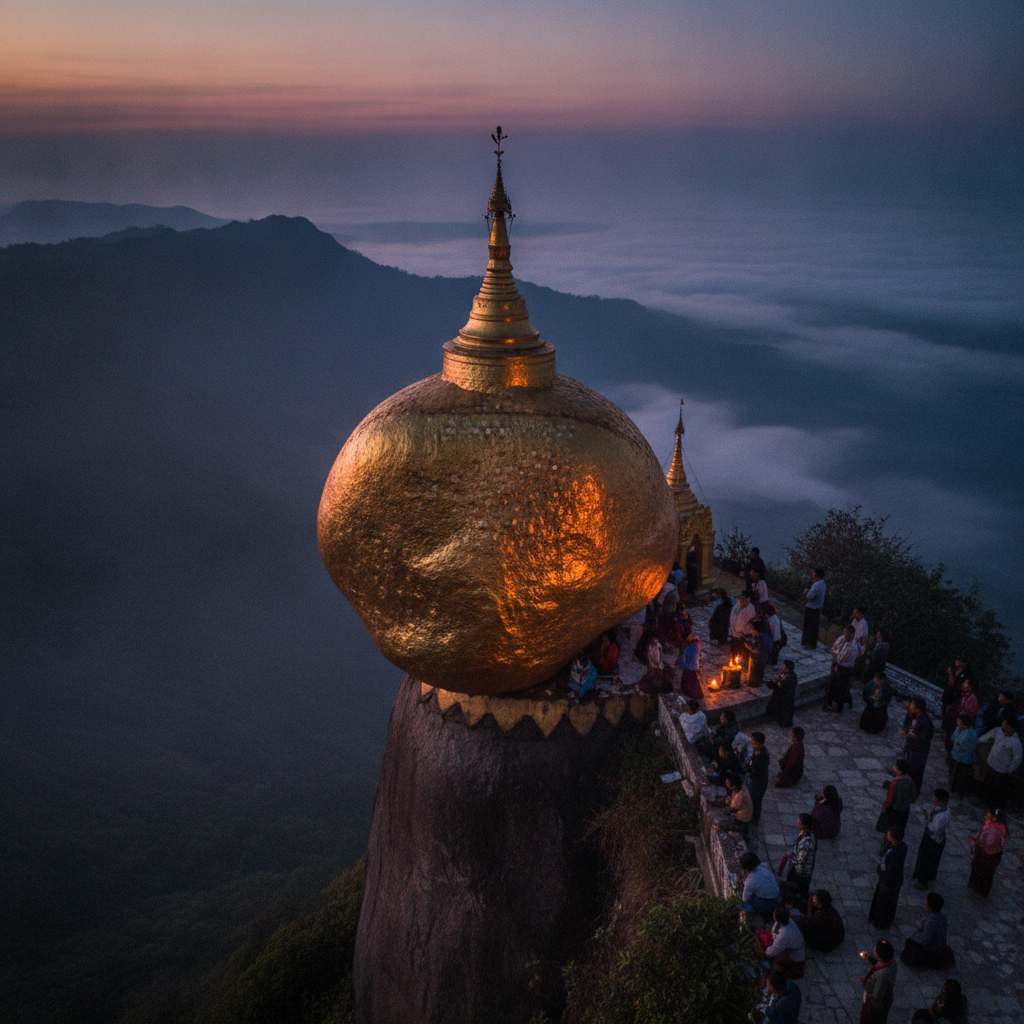
Yangon's Weight: Bago's 55-Metre Reclining Buddha, the 1962 Military Coup's Roots & a City of Resilient Dignity
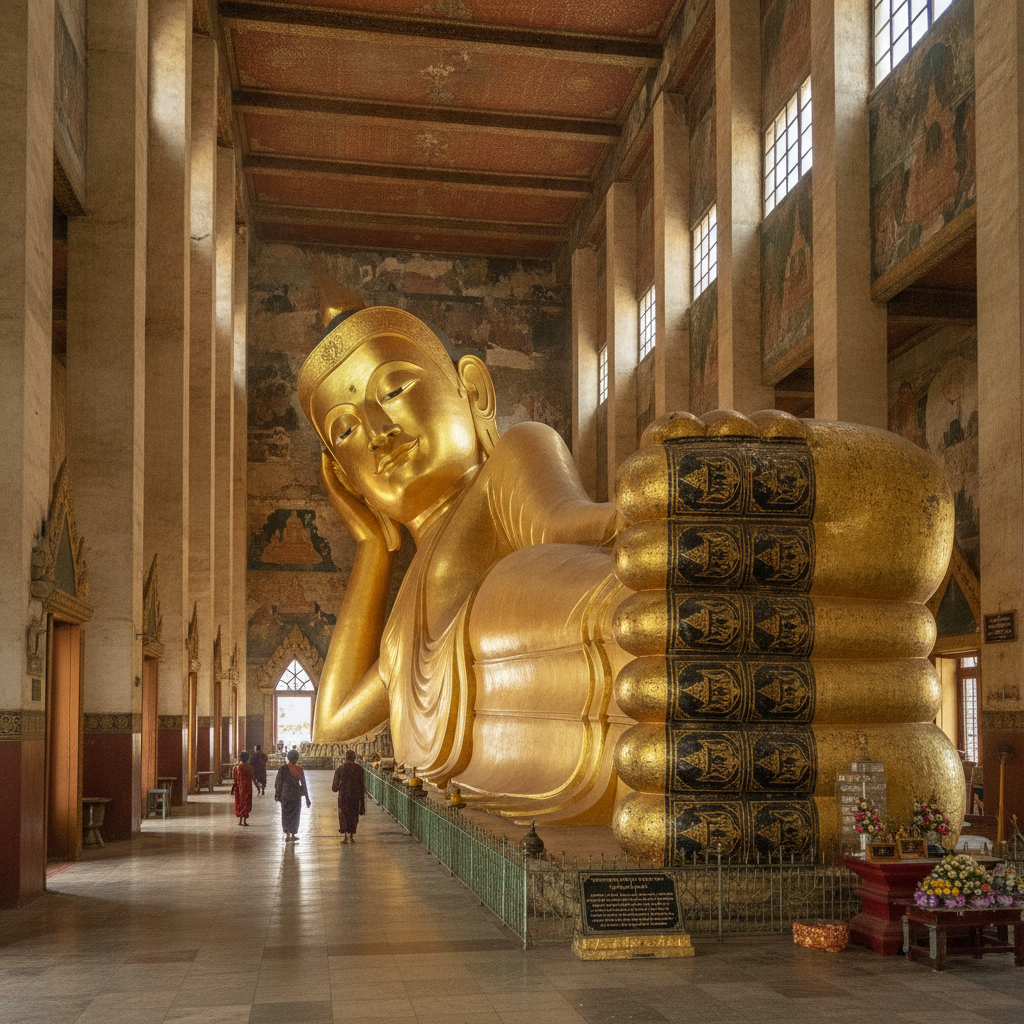
The deeper Yangon—Bago's Shwethalyaung reclining Buddha (55 metres, built 994 CE, 'lost' for 400 years until British railway builders found it in 1880) and Shwemawdaw at 114 metres taller than Shwedagon, the Golden Valley diplomatic quarter where UN agencies coordinate Myanmar's humanitarian crisis from colonial bungalows, pagoda festivals where anyein variety theatre and hsain waing drum circles continue through every political era, the straight line from Ne Win's 1962 coup through the 8888 Uprising and Saffron Revolution to February 2021's coup and the ongoing civil war, the mohinga cart at 05:00 and the tea house conversation that exist independently of tourists and governments, and what the city leaves you with when you go.
- 1
Bago – Yangon's Day-Trip Temple City
Bago (Pegu)—80 km northeast of Yangon, 1.5 hours by bus or car—is the most visited day-trip destination from Yangon: an ancient Mon capital (founded 573 CE according to Mon chronicles) containing several of Myanmar's finest religious monuments outside Bagan. The highlights: Shwemawdaw Pagoda (114 metres—taller than Shwedagon; the most sacred Buddhist stupa in Mon tradition, repeatedly rebuilt after earthquake damage—the 1917 and 1930 earthquakes each partially destroyed it); the Shwethalyaung reclining Buddha (55 metres long, 16 metres high—one of the largest reclining Buddha images in the world, built in 994 CE, 'lost' and hidden by jungle for 400 years before rediscovery during British railway construction in 1880); the Kyaikpun Pagoda (four seated Buddha images 30 metres high, placed back-to-back in the four cardinal directions); and the Hanthawaddy Palace ruins (the palace of King Bayinnaung, who briefly unified Myanmar under the Toungoo dynasty in the 16th century). Bago's Mon cultural significance: the Mon are the oldest historically documented ethnic group in Myanmar, and their Buddhist traditions predate the Bamar majority's arrival by several centuries.
- 2
Yangon's Diplomatic Quarter & Embassies
Yangon's diplomatic quarter (Golden Valley—the leafy northern residential district where colonial-era mansions house foreign embassies, international organisations, and the residences of the diplomatic community) represents a distinct urban layer: the city of international relations, sanctions negotiations, and humanitarian aid coordination that operates in parallel with the ordinary city. The British Embassy (the largest foreign mission), the US Embassy (operating under the 'Do Not Travel' advisory it issues to its own citizens for Myanmar), and the ICRC (International Committee of the Red Cross), UN agencies (UNHCR, UNICEF, WFP)—all maintain substantial Yangon presences despite the political situation, because Myanmar's humanitarian crises require international operational infrastructure. The Golden Valley's tree-lined streets and colonial-era bungalows are among Yangon's finest physical spaces—the neighbourhood that best preserves the residential architecture of the British colonial period that the downtown commercial buildings have less of.
- 3
Yangon's Pagoda Festivals – The Pyathada Circuit
Buddhist pagoda festivals (paya pwe)—held throughout the year at Yangon's major religious sites on the anniversary of the pagoda's founding or a significant Buddhist date—are the most complete expression of Myanmar's public religious and social life. The festivals: daytime religious activities (offerings, prayers, circumambulation), evening anyein performances (variety theatre), hsain waing musical ensembles, food stalls (the full range of Burmese street food concentrated in one space), and the informal social gathering of communities that may not otherwise meet. The Shwedagon Pagoda Festival (held in the Burmese month of Tabaung—February–March): the largest festival in Yangon, drawing hundreds of thousands of worshippers and occupying the entire Shwedagon hill complex; the water festival at the base of the hill involves ceremonial water pouring over specific Buddha images. The Sule Pagoda's regular festivals (monthly full moon days—the most important being Thadingyut, the Festival of Lights in October): the pagoda complex fills with candles and oil lamps as part of the ceremony marking the end of Buddhist Lent (Vassa).
- 4
Myanmar's Military History – From Independence to the Coup
Myanmar's post-independence political history is dominated by the military institution (Tatmadaw) in a way that has no close parallel in Southeast Asia. The 1948 independence from Britain: inherited a parliamentary democracy but also inherited an ongoing civil war (Karen, Karenni, and Communist insurgencies began almost immediately). The 1962 coup (General Ne Win): abolished parliamentary democracy and established a single-party socialist state ('the Burmese Way to Socialism'), nationalising foreign businesses (including the Indian community's enterprises), isolating Myanmar from international trade, and beginning the 62-year military domination of the state that continues. The 1988 uprising (the 8888 Uprising—August 8, 1988): a nationwide pro-democracy protest movement suppressed with approximately 3,000 deaths, producing the founding of Aung San Suu Kyi's NLD. The 2007 Saffron Revolution (monks leading pro-democracy protests—suppressed with international attention but relatively fewer deaths). The managed transition of 2010–2021: a period of apparent liberalisation that ended definitively with the February 2021 coup. The 2021–present civil war: a nationwide conflict between the Tatmadaw and People's Defence Forces that has produced the worst humanitarian crisis in Myanmar since independence.
- 5
Yangon's Yangon – The City Before the Tourists
There is a Yangon that exists before and alongside the tourist circuit—the city of the morning commute, the afternoon tea house, the evening temple visit. The pre-dawn: the wholesale Theingyi Zei market where produce traders arrive at 03:00; the mohinga carts that set up on street corners by 05:00; the monks collecting alms before sunrise. The morning: the Circular Railway filling with commuters; the schoolchildren in white-and-green uniforms on the bus; the tea house conversations over sweet milk tea that have continued every morning through every political era. The afternoon: the downtown workers at the city hall compound eating lunch from tiffin carriers; the Strand Hotel's empty colonial verandah; the Shwedagon's mid-afternoon quiet when the tour groups have left and the regulars come for private prayer. The evening: the pagoda platform at dusk when the gold catches the light; the night market in Latha; the families at Kandawgyi lake feeding the catfish. This city—the one that exists independently of the visitor's gaze—is more interesting, more resilient, and more continuous than any political era superimposed on it.
- 6
Leaving Yangon – The City That Stays With You
Yangon is one of a small number of cities in the world that changes its visitors' relationship to their own assumptions. The gold of Shwedagon at 05:30, when the dome catches the first light and the monks begin their circumambulation; the $0.10 train ride where the city's working life passes through the window; the tea house where a stranger invites you to share his table and asks what you know about Myanmar—and then tells you something different. The visitor who arrives expecting poverty and leaves having encountered something more complex: a city of 7 million people with a sophisticated culture, a traumatic recent history, an extraordinary religious tradition, and a capacity for dignity under conditions that would be expected to preclude it. The political situation (which is real, serious, and ongoing) does not cancel the city—it adds a moral dimension to every transaction and observation. Leaving Yangon means carrying both the gold dome and the knowledge of what the gold dome's political context is: the military that guards the pagoda is the same military that shot civilians in the streets of this city in 2021. The Shwedagon remains beautiful regardless. This is what Yangon leaves you with.
Walk this route with audio
Stories play automatically as you reach each stop — no tapping needed.
More in Yangon
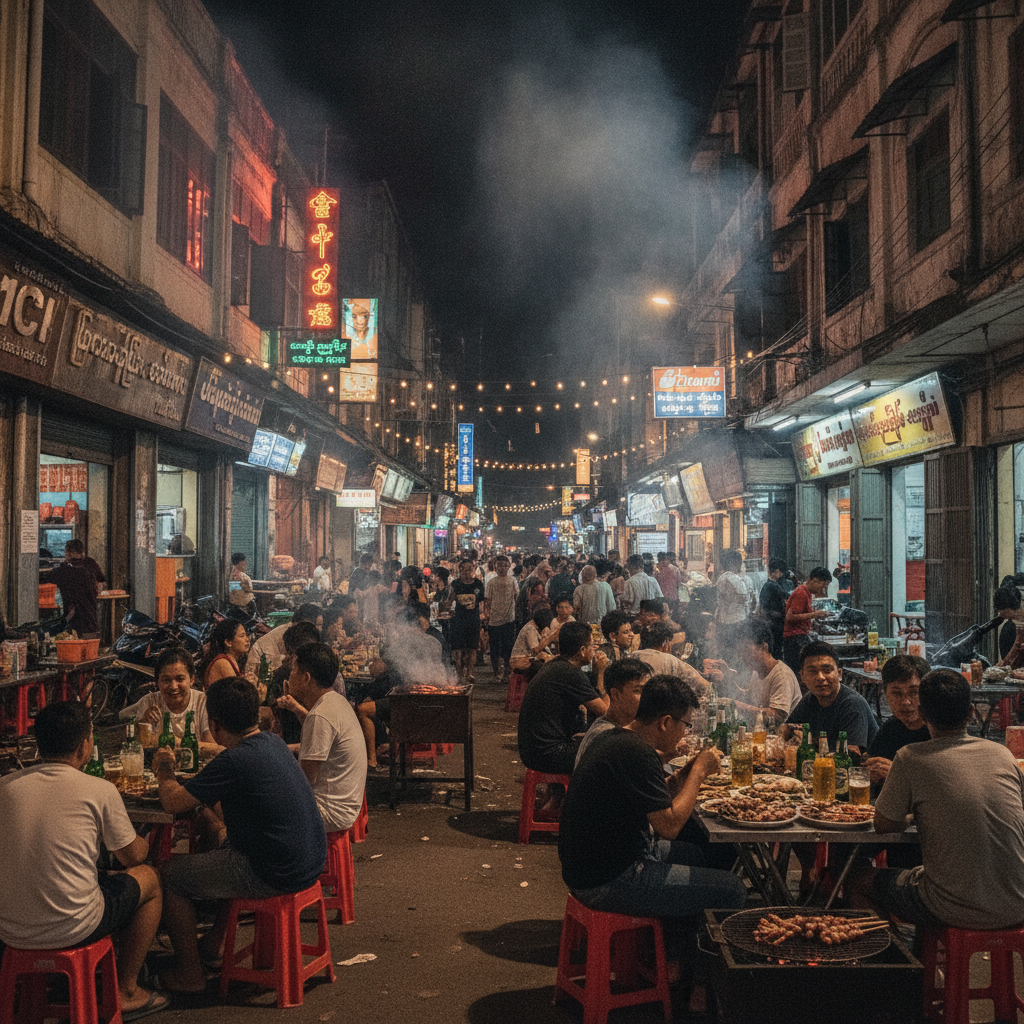
Yangon Deeper: The $0.10 Circular Train Loop, 19th Street Chinatown Barbecue & Aung San Suu Kyi's Lake House
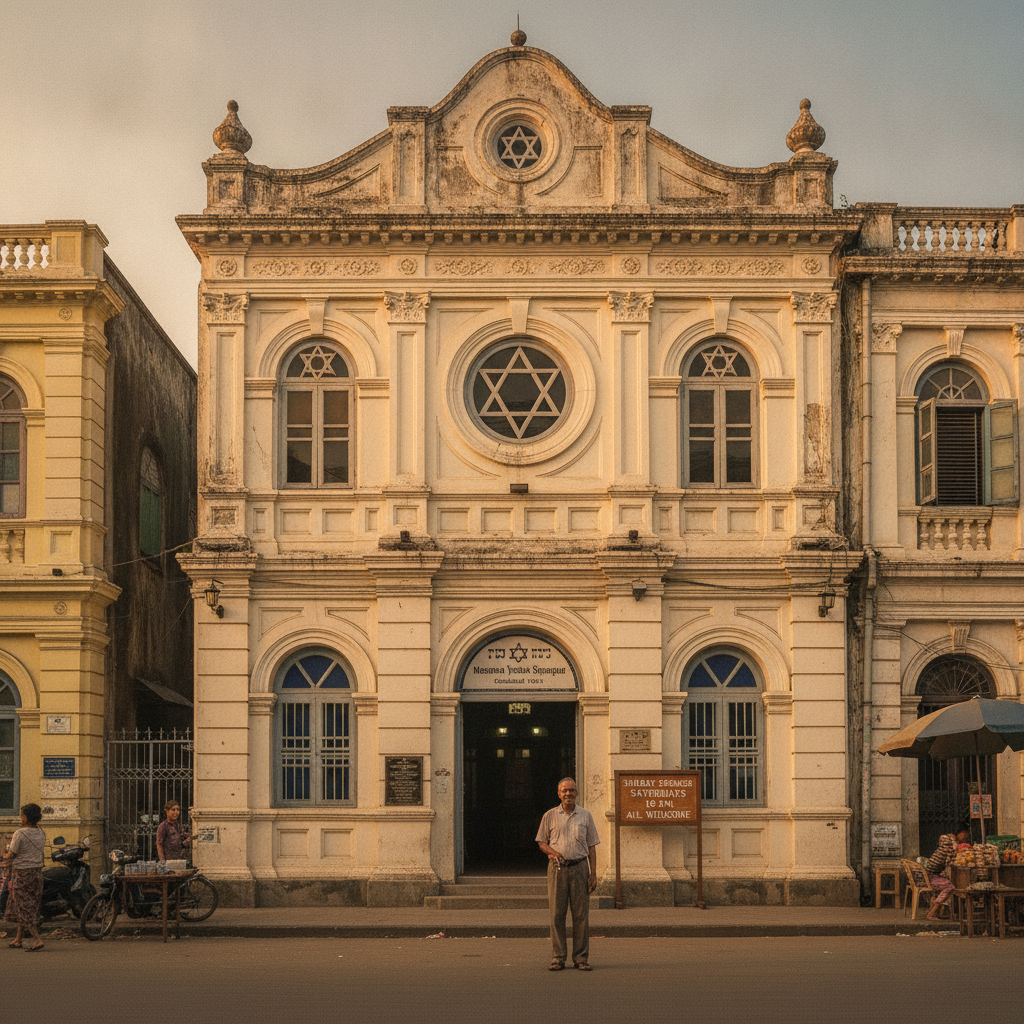
Yangon 2026: The Last Synagogue With 20 Jews, World's Largest Opium Producer & a City of 7 Million Persisting
Yangon: 60 Tonnes of Gold on Shwedagon Pagoda, Victorian Rangoon's Last Streets & the Tea House Where Myanmar Talks
Yangon's Hard Questions: Rohingya Genocide Context, the Ethics of Visiting & Shan Noodles in the Tea House