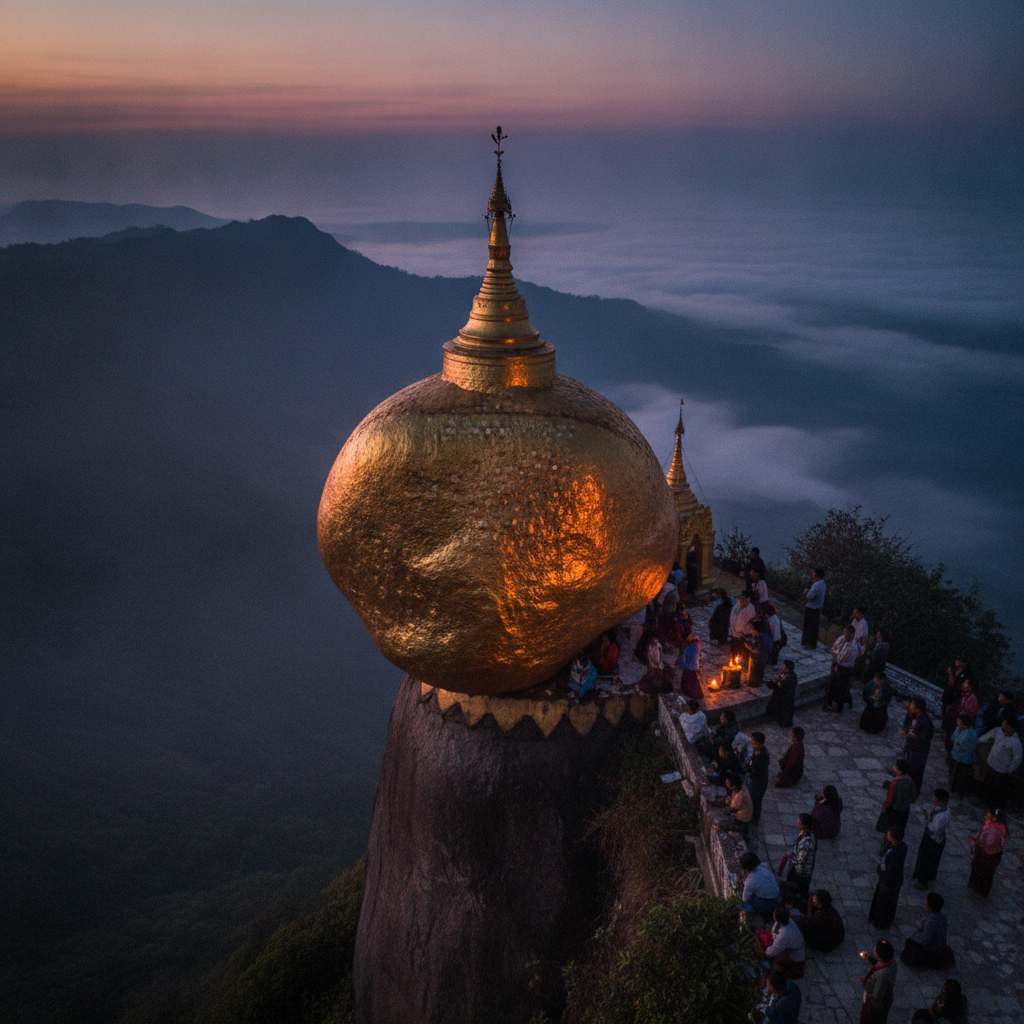
Yangon Deeper: The $0.10 Circular Train Loop, 19th Street Chinatown Barbecue & Aung San Suu Kyi's Lake House
The human Yangon—the 45.9 km circular railway loop for 200 kyat where market women board with fish-paste baskets and vendors sell grilled corn through the open windows of 1950s carriages, the Indian quarter's 1871 Shri Kali Temple and Surti Mosque from communities that were 50% of the British-era population before 1962 nationalisation expelled them, 19th Street's charcoal grills and $1 beer tables in the street where Cantonese clan associations still maintain 19th-century buildings, Aung San Suu Kyi's Inya Road house where thousands gathered at the balcony gate during her 15 years of house arrest (she remains imprisoned in 2026 on fabricated charges), the 9-storey seated Buddha at Koe Htat Gyi before dawn, and the overnight train to Bagan's 2,200 temple plain.
- 1
The Circular Train – Yangon's 3-Hour Loop
The Yangon Circular Railway—a 45.9 km loop of narrow-gauge track encircling Yangon's inner suburbs, operating since 1954, making 39 stops in a 3-hour circuit—is the world's most anthropologically rich $0.30 train ride. The trains: ancient, rickety, wood-panelled carriages running on a schedule only loosely respected, carrying the full demographic range of Yangon's working-class population (market women with enormous baskets of produce, construction workers, school students, monks). The experience: for the price of 200 Myanmar kyat (approximately $0.10), visitors can ride the full circuit—exiting and entering at stations to explore the adjacent markets—watching the city's informal economy pass through the open windows: vendors board and exit at each stop selling fruit, snacks, grilled corn, fish paste, and cold drinks. The railway's slow speed and frequent stops make it the most complete experience of Yangon's neighbourhoods available from a single vehicle; the carriages become mobile markets at the suburban stops. The future of the circular railway is uncertain: the military government has proposed privatisation of Myanmar's railways and the Chinese company (Myanmar-China joint venture) operating the Yangon-Mandalay line has different priorities from the local commuter service.
- 2
Yangon's Indian Heritage – Little India & the Surti Mosque
Yangon's Indian population—which peaked at over 400,000 during British rule (when Indians constituted approximately 50% of Rangoon's population, the highest proportion of any city in British Asia outside India)—declined sharply after 1962 when General Ne Win's socialist government nationalised businesses and forced Indian business owners and professionals to leave or accept nationalisation. The remaining Indian-Myanmar community (now estimated at 100,000–200,000 in Yangon) is concentrated in the Pabedan township (the 'Indian Quarter')—a neighbourhood of South Asian textile merchants, gold shops, and restaurants centred on Anawrahta Road and 26th Street. The Surti Mosque (the largest mosque in Yangon, built 1854)—an imposing white-painted structure in the heart of the Indian quarter—serves the Muslim Indian (predominantly Gujarati and Tamil Muslim) community that predates the British colonial period. The Hindu Shri Kali Temple on Anawrahta Road (built 1871)—a functioning South Indian-style temple in the centre of a Burmese Buddhist city—is one of Southeast Asia's most unexpected religious landmarks.
- 3
Yangon's Chinatown – Latha Township's Night Scene
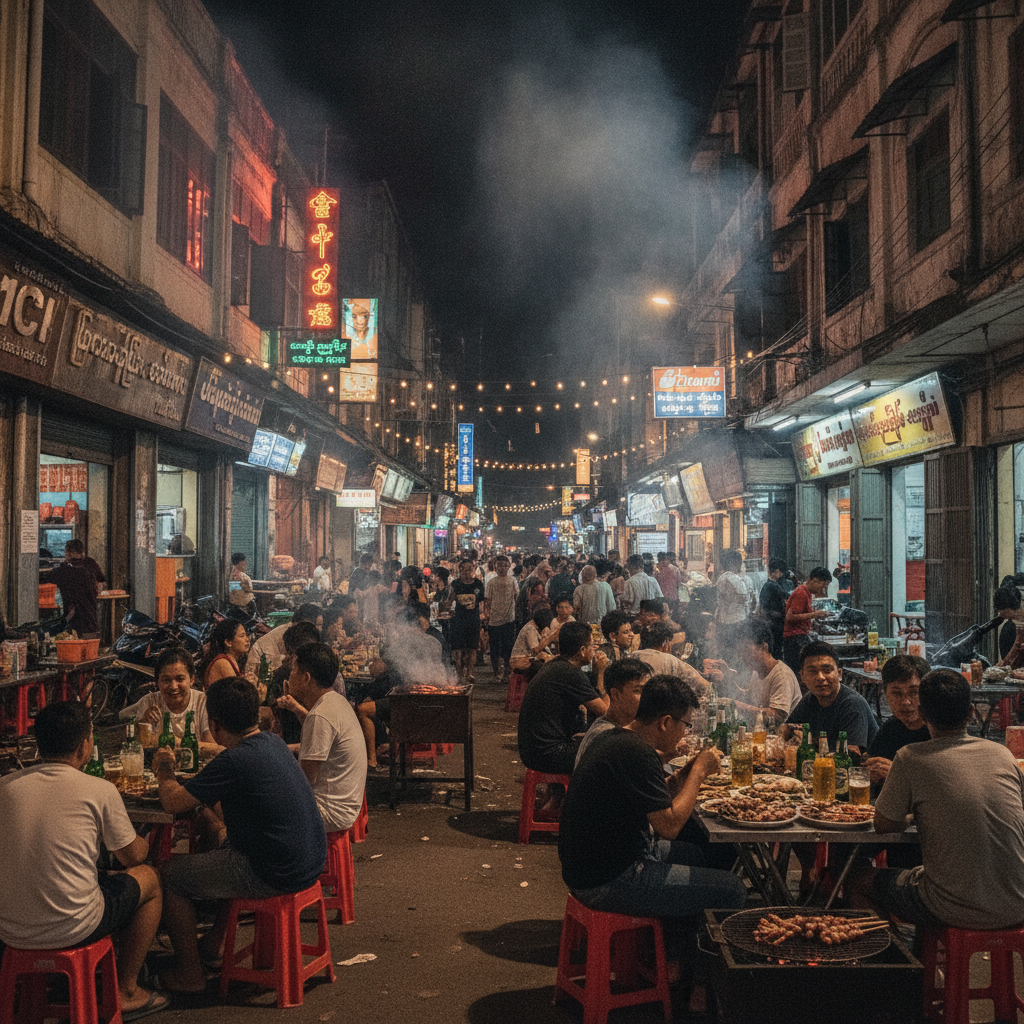
Yangon's Chinatown (Latha township—centred on Mahabandoola Road and the streets radiating from it)—established by Cantonese, Hokkien, and Yunnanese migrants from the 19th century—is a denser, less curated, and more authentically working Chinese-diaspora neighbourhood than the Chinatowns of Bangkok or Singapore. The 19th Street Bar Street (a narrow lane of charcoal-grilled seafood restaurants, beer stalls, and outdoor tables)—operating from late afternoon to midnight—is Yangon's most social public eating space: a collective street barbecue where the tables are set in the street itself, beer is $1–2/can, and grilled skewers of pork intestine, liver, oyster, and vegetables are brought from the adjacent grill stations. The Cantonese community infrastructure: traditional Chinese clan associations (the Cantonese Association, the Hokkien Association) maintain their 19th-century buildings in Latha township, providing a social support network for members that survived the Ne Win nationalisation era relatively intact because the clan structures were non-commercial. The Goddess of Mercy Temple (Guanyin—the most visited Chinese temple in Yangon).
- 4
Aung San Suu Kyi & Myanmar's Democracy Struggle
Aung San Suu Kyi—daughter of General Aung San (Myanmar's independence hero, assassinated 1947), winner of the 1991 Nobel Peace Prize, and the dominant figure in Myanmar's democracy movement for four decades—is the person whose story most Yangon visitors seek to understand. Her house arrest (54 Inya Road, on the northern bank of Inya Lake—the house is not publicly accessible): she was under house arrest for 15 of the 21 years between 1989 and 2010, with thousands gathering outside the gate when she made rare public statements from the balcony. The NLD victory of 1990 (a landslide election result that the military ignored), the 2010 release, the 2015 election (a democratic landslide), the 2021 coup that arrested her again: the arc of her political career mirrors the arc of Myanmar's democracy struggle. As of 2026, Aung San Suu Kyi remains imprisoned by the military government, convicted of fabricated charges (corruption, sedition) and sentenced to 27 years. Visiting the Aung San Suu Kyi Museum (opened 2020, at the Bogyoke Aung San Museum—her father's house)—which provides context for both figures—is one of the most politically charged museum visits in Southeast Asia.
- 5
Yangon's Monasteries – Buddhist Education & Shan Quarter
Yangon's dozens of Buddhist monasteries (kyaung)—ranging from the large, institutional complexes that function as educational establishments for the national sangha (monastic community) to the small neighbourhood kyaungs that serve the local community's religious needs—are the most accessible window into the daily practice of Burmese Buddhism for the visitor prepared to arrive early. The Koe Htat Gyi Pagoda (in Bahan township): a large sitting Buddha image (9 storeys high, the 'Five-storey Buddha'—actually 9 storeys due to the seated position) within an enclosed pagoda building, surrounded by an intensely active monastery complex where morning alms rounds begin at 05:00. The Ngahtatgyi Pagoda (next to Chaukhtatgyi): another seated Buddha of extraordinary scale and craftsmanship, the face's gilded expression considered the finest in Yangon. The Shan cultural quarter: Shan State migrants in Yangon concentrate around certain monasteries that maintain the Shan liturgical tradition distinct from Burman (Bamar) Theravada; the Shan community in Yangon is one of Myanmar's most significant internal migrant communities.
- 6
Yangon to Bagan – Myanmar's Internal Journey
The journey from Yangon to Bagan—the ancient temple plain of 2,000+ pagodas in the dry zone of central Myanmar—is the classic Myanmar overland route and the one most visitors take first. Options: overnight train (14–17 hours on the Yangon-Mandalay line, disembarking at Bagan/Nyaung U—air-conditioned upper class berths are bookable and relatively comfortable; the journey is the experience as much as the destination), overnight bus (10–12 hours, similar price to train, slightly faster), or domestic flight (1 hour, Air KBZ or Myanmar National Airlines—significantly more expensive, necessary for time-constrained visitors). The Bagan plain: approximately 2,200 surviving temples and pagodas across a 40 km² area of the Ayeyarwady River bend (from a peak of 10,000+ structures built between the 9th and 13th centuries); the sunrise view from a temple terrace over the mist-covered plain—hot-air balloons rising, the Shwesandaw Pagoda's white silhouette in the foreground—is one of Asia's most extraordinary landscapes.
Walk this route with audio
Stories play automatically as you reach each stop — no tapping needed.
More in Yangon
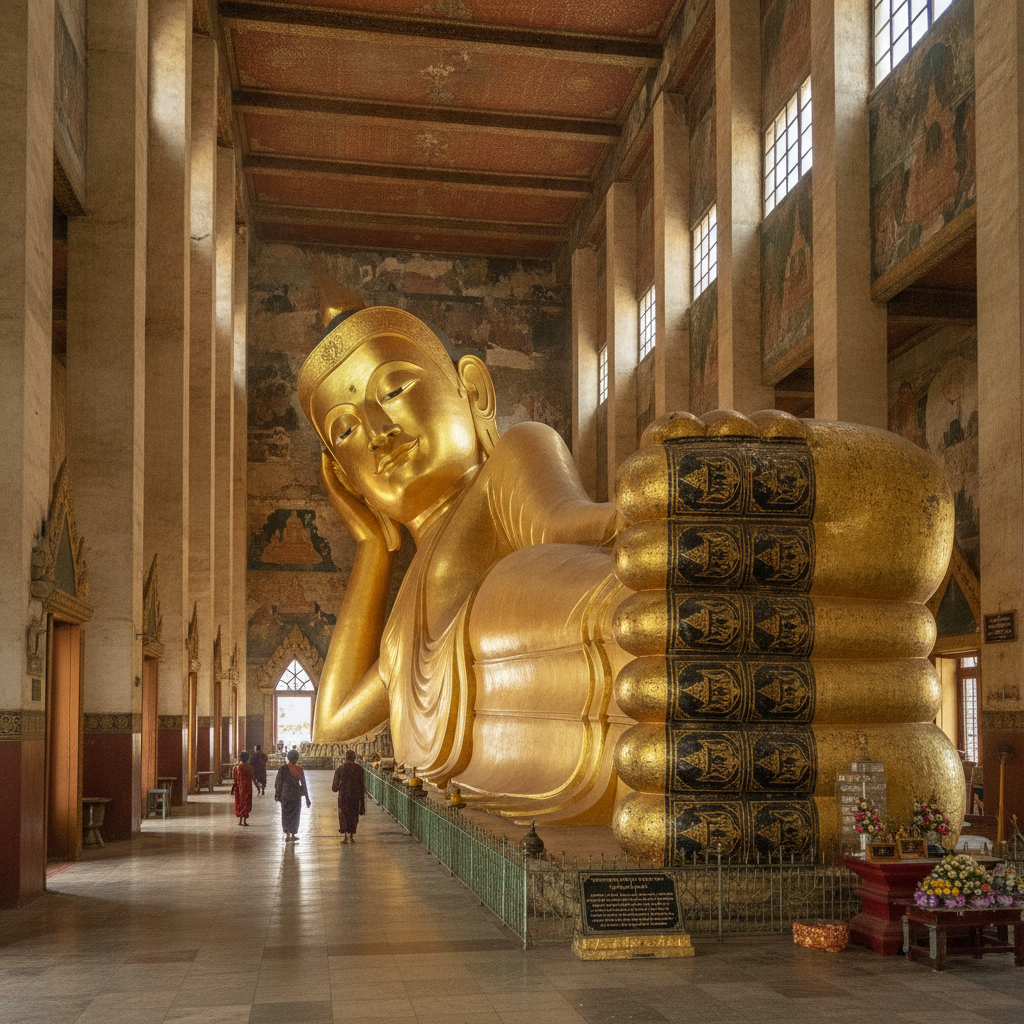
Yangon's Weight: Bago's 55-Metre Reclining Buddha, the 1962 Military Coup's Roots & a City of Resilient Dignity
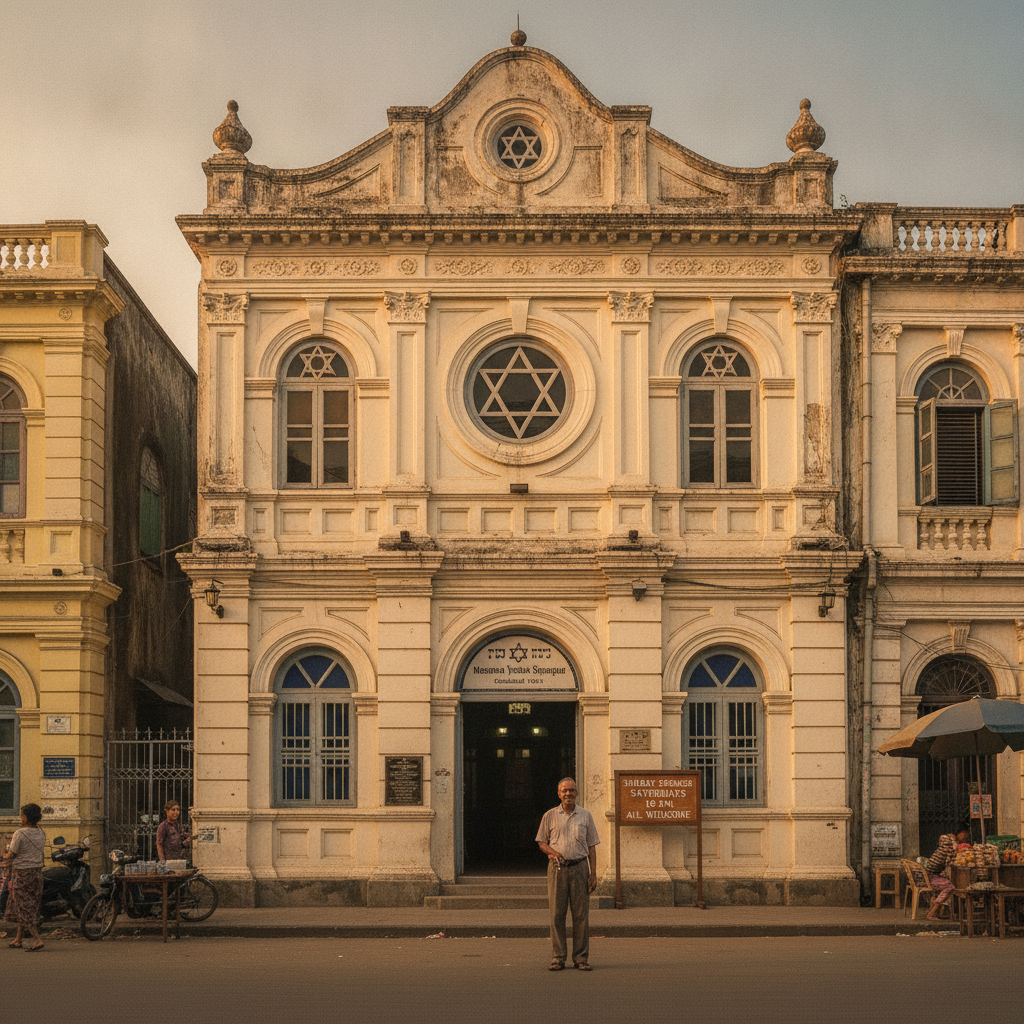
Yangon 2026: The Last Synagogue With 20 Jews, World's Largest Opium Producer & a City of 7 Million Persisting
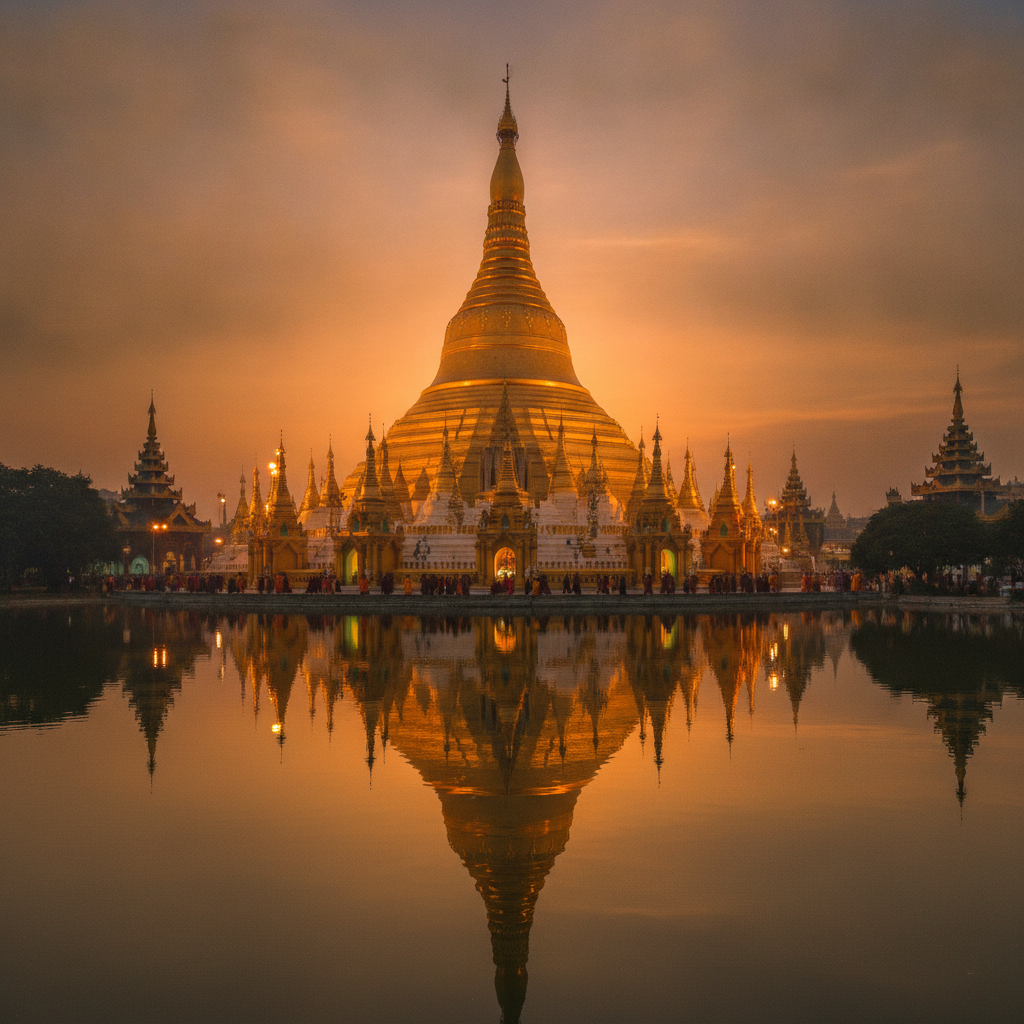
Yangon: 60 Tonnes of Gold on Shwedagon Pagoda, Victorian Rangoon's Last Streets & the Tea House Where Myanmar Talks
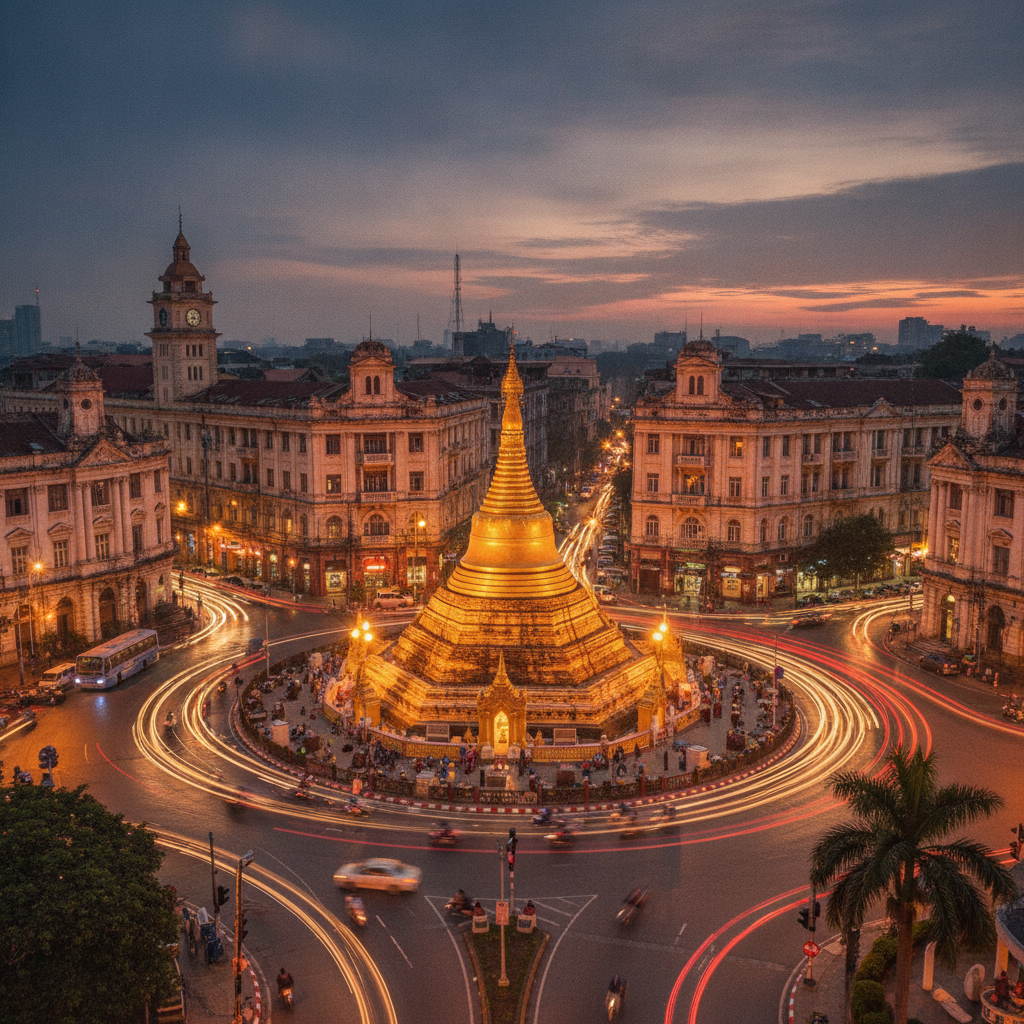
Yangon's Hard Questions: Rohingya Genocide Context, the Ethics of Visiting & Shan Noodles in the Tea House