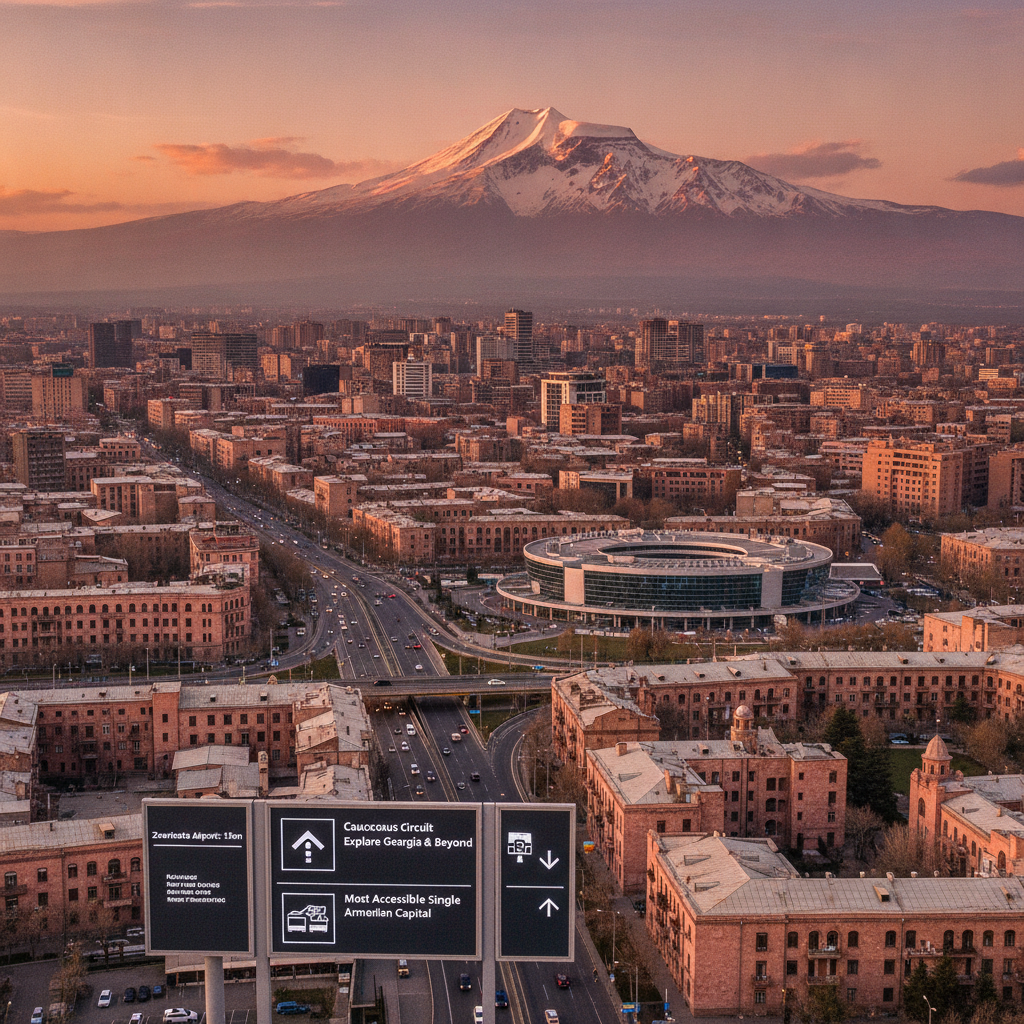
The First Sentence Written in Armenian Being the Book of Proverbs Verse 1:2, the Armenian Cognac Winning the 1900 Paris Exhibition Gold Medal Before the Judges Realized It Was Not French & the 2,000 Khachkars Destroyed in Azerbaijan in 2005 Documented by Satellite Imagery
The first Armenian sentence written in the 405 CE invented alphabet being the Book of Proverbs 1:2 — to know wisdom and instruction; the Ararat cognac winning the 1900 Paris gold medal under a false French label before the deception was discovered — the French then granting ongoing cognac designation; 2,000 khachkars destroyed at Julfa/Agulis cemetery in Nakhchivan in 2005 documented by satellite imagery; Gregory the Illuminator imprisoned in a 6m pit for 13 years at Khor Virap before converting the Armenian king; the 1291 Goshavank khachkar carved with 40,000+ individual interlace elements with no beginning and no end; and Armenian lavash the first Armenian food inscribed on UNESCO ICH in 2014.
- 1
The Armenian Alphabet – Mesrop Mashtots' Invention
The Armenian alphabet (the writing system invented by Mesrop Mashtots in 405 CE—one of the most precisely dated and historically documented alphabet inventions in human history): the alphabet heritage guide. Mesrop Mashtots (Մեսրոպ Մաշտոց—380–440 CE—the Armenian monk and linguist who created the Armenian alphabet on commission from the Catholicos Sahak Partev and the Armenian king Vramshapuh): the invention (the Armenian alphabet was created specifically to enable the translation of the Bible into Armenian—the motivation was to resist the cultural assimilation of Armenians into either the Persian (Zoroastrian) or Greek (Byzantine) cultural spheres by establishing a distinctly Armenian written language: the first sentence written in Armenian was the verse from the Book of Proverbs: 'To know wisdom and instruction; to perceive the words of understanding' (Proverbs 1:2)): the alphabet characteristics (the Armenian alphabet: 38 letters in the classical form (36 original + 2 added in the 12th century)—each letter represents a unique sound; the letters run left to right: the script is unique and cannot be derived from Greek, Aramaic, or any other script—Mashtots created entirely new letter forms): the oldest Armenian text (the Lazaran Gospel (5th century)—the oldest surviving Armenian manuscript): the UNESCO status (the Armenian alphabet was inscribed on the UNESCO Memory of the World Register in 2005; the Armenian letter art (the illuminated manuscript tradition using the alphabet) is a primary Armenian cultural heritage): the Mashtots mausoleum (the tomb of Mesrop Mashtots in the village of Oshakan 20 km north of Yerevan—a pilgrimage site visited by Armenians from the diaspora).
- 2
The Armenian Genocide – Tsitsernakaberd Memorial
The Armenian Genocide and the Tsitsernakaberd Memorial (the most emotionally significant site in Armenia—the hilltop memorial that commemorates the first genocide of the 20th century): the memorial guide. The genocide (the Armenian Genocide (1915–1923): the systematic extermination and deportation of the Armenian population of the Ottoman Empire by the Ottoman government under the Committee of Union and Progress (the Young Turks)—the estimated number killed: 1.0–1.5 million Armenians out of a pre-war population of approximately 2.0 million in the Ottoman territories): the mechanism (the primary mechanism of the genocide: the April 24, 1915 arrests of 235–270 Armenian community leaders and intellectuals in Constantinople (Istanbul)—the event commemorated as the beginning of the genocide; the subsequent deportation orders of May 1915 sending the entire Armenian population of Anatolia into the Syrian desert; the mass killings en route, the death camps at Deir ez-Zor): the international recognition (the Armenian Genocide is recognized by 34 countries (as of 2024), including France, Germany, the USA (recognized by President Biden on April 24, 2021), Canada, and Australia—Turkey denies that the events constitute genocide): the Tsitsernakaberd Memorial (the memorial complex on the Tsitsernakaberd Hill above Yerevan, completed 1967: the 44m stele (the symbol of the split Armenian homeland—the stele is split vertically, symbolizing the division of the Armenian homeland between Soviet Armenia and the Armenian territories under Turkey); the eternal flame in the central sunken circle (the remembrance flame burns continuously): the Armenian Genocide Museum adjacent to the memorial (the primary historical documentation of the genocide).
- 3
Armenian Cognac – The Ararat Brandy Tradition
The Armenian cognac (brandy) tradition (the Ararat cognac of Armenia—the spirit that was served at the Yalta Conference in 1945 and that Churchill reportedly preferred over French cognac): the spirits heritage guide. The history (Armenian brandy production began in 1887 when the merchant Nerses Tairyan established the first commercial Armenian brandy distillery at Yerevan: the distillery was purchased by the Russian merchant Nikolai Shustov in 1899, who obtained the right (from the Bureau of Appellation Controllee in Cognac, France) to label Armenian brandy as cognac (a right granted to the Armenian producer because Shustov entered his brandy in the 1900 Paris exhibition under a false French label and won the gold medal before the deception was discovered—the French cognac authorities granted the ongoing cognac designation rather than face the scandal): the Ararat brand (the Yerevan Brandy Company (YBC)—the current producer of Ararat cognac (founded 1877, nationalized as the Ararat Brandy Factory 1920, privatized to the Pernod Ricard group in 1998): the primary expressions (Ararat 3 stars (3-year aged, 40% ABV—the everyday Armenian brandy); Ararat 5 stars (5-year aged); Ararat Akhtamar (10-year aged—the export product): the Churchill connection (the story that Winston Churchill consumed a bottle of Armenian cognac daily during the war and that Stalin provided him with supplies—the story is unverified but widely cited in Armenian brandy marketing): the YBC museum and distillery tour (the Yerevan Brandy Factory on Admiral Isakov Avenue—the primary visitor experience for the Armenian cognac tradition; tour + tasting USD 15–25).
- 4
The Khachkar – Armenia's Cross-Stone Tradition
The khachkar (the Armenian cross-stone—the most recognizable symbol of Armenian Christian art and the primary vehicle for Armenian carving tradition for 1,200 years): the art heritage guide. The definition (the khachkar (Armenian: խաչքար—xach 'cross' + kar 'stone'): a vertically oriented stone stele carved with a central cross and surrounding decorative patterns—the combination of Christian symbolism and the pre-Christian Armenian sun-wheel and tree-of-life motifs): the history (the earliest khachkars date to the 9th century CE; the tradition reached its highest development in the 12th–13th century under the Zakarian dynasty; the 15th–17th century produced the most elaborate khachkars (the lace-stone khachkars with infinite-interlace carving patterns): the most famous khachkar (the Amulets Cross-Stone of Goshavank Monastery (1291 CE)—the most technically complex khachkar in existence: the carving consists of an infinite interlace pattern of 40,000+ individual carved elements in a design that has no beginning and no end): the UNESCO status (the art of the Armenian khachkar was inscribed on the UNESCO Representative List of Intangible Cultural Heritage in 2010): the genocide connection (the 1915 destruction of the Armenian cemetery of Julfa (Agulis) in the Nakhchivan Autonomous Republic of Azerbaijan in 2005—approximately 2,000 khachkars were destroyed by Azerbaijani forces—the destruction is documented in satellite imagery and human rights reports and is condemned by UNESCO): the purchase guide (the best khachkars for purchase in Yerevan: the Vernissage Market stone carvers (USD 20–200 depending on size and intricacy); the workshops in the Marash district).
- 5
Armenian Cuisine – Dolma, Lavash & the Tonir
The Armenian food guide (the cuisine of one of the oldest continuous food cultures in the world—the Armenian table that has been prepared in the Ararat valley for 3,000+ years): the food heritage guide. The lavash (the Armenian flatbread (lavash—Armenian: լավաշ): the thin, slightly leavened flatbread baked in the tonir (the underground clay oven—comparable to the Central Asian tandoor and the Azerbaijani tandir): the lavash is baked by pressing raw dough against the interior wall of the 350°C tonir clay walls—the bread cooks in 30–60 seconds and falls from the wall when done: the dried lavash can be stored for 6 months and rehydrated by sprinkling with water): the UNESCO status (Armenian lavash and its culture of preparation and sharing was inscribed on the UNESCO Representative List of Intangible Cultural Heritage in 2014—the first Armenian food element inscribed): the dolma (the Armenian dolma (Armenian: տոլմա)—stuffed grape leaves or stuffed vegetables: the Armenian dolma tradition is considered by some food historians to be the origin of the entire dolma family of dishes across the Middle East and the Balkans: the Armenian dolma uses ground lamb mixed with rice, onion, dill, and sometimes dried apricot for the sweet-savory combination): the khorovats (the Armenian barbecue—the khorovats (Armenian: խորոված)—the most social Armenian food event: the communal grilling of pork and lamb on outdoor skewers over wood coals at family gatherings, weddings, and every social occasion that involves meat): the cognac pairing (the combination of Armenian dolma and Ararat 5-star cognac is the most characteristic Armenian hospitality sequence).
- 6
Day Trips from Yerevan – Garni, Geghard & Khor Virap
The Yerevan day trip guide (the three most spectacular heritage sites accessible within 1–2 hours of Yerevan—each representing a different dimension of Armenian civilization): the day trip guide. Garni Temple (the Hellenistic temple (1st century CE) in the Garni gorge 30 km east of Yerevan—the only surviving pre-Christian building in Armenia: the temple was built by King Tiridates I (r. 54–88 CE) as a solar temple or a mausoleum; it was destroyed in the 1679 earthquake and reconstructed 1966–1975 from original stone fragments (the rebuilding is the most successful archaeological reconstruction in the former Soviet Union, with 70% of original stones recovered)): Geghard Monastery (the monastery carved into the cliff face 15 km beyond Garni (40 km from Yerevan)—the UNESCO World Heritage Site monastery (4th century founding, 12th–13th century main complex): the name (Geghard—Armenian for 'spear'—refers to the spear that allegedly wounded Jesus at the Crucifixion, brought to Armenia by the apostle Jude (Thaddeus) and housed in the monastery): the cave churches (the most remarkable element: the churches carved directly into the cliff face—the Avazan church (1215 CE) and the Papak-Ruzukan gavit (1283 CE) are entirely underground cave chambers with carved stalactite vaulting): Khor Virap (the monastery on the Ararat plain 40 km south of Yerevan—the site where Gregory the Illuminator was imprisoned in a pit by King Tiridates III for 13 years before the king's conversion to Christianity in 301 CE; the pit (khor virap—Armenian: 'deep pit') is accessible through a narrow opening and descends 6m underground; the monastery provides the most celebrated Ararat view in Armenia).
Walk this route with audio
Stories play automatically as you reach each stop — no tapping needed.
More in Yerevan
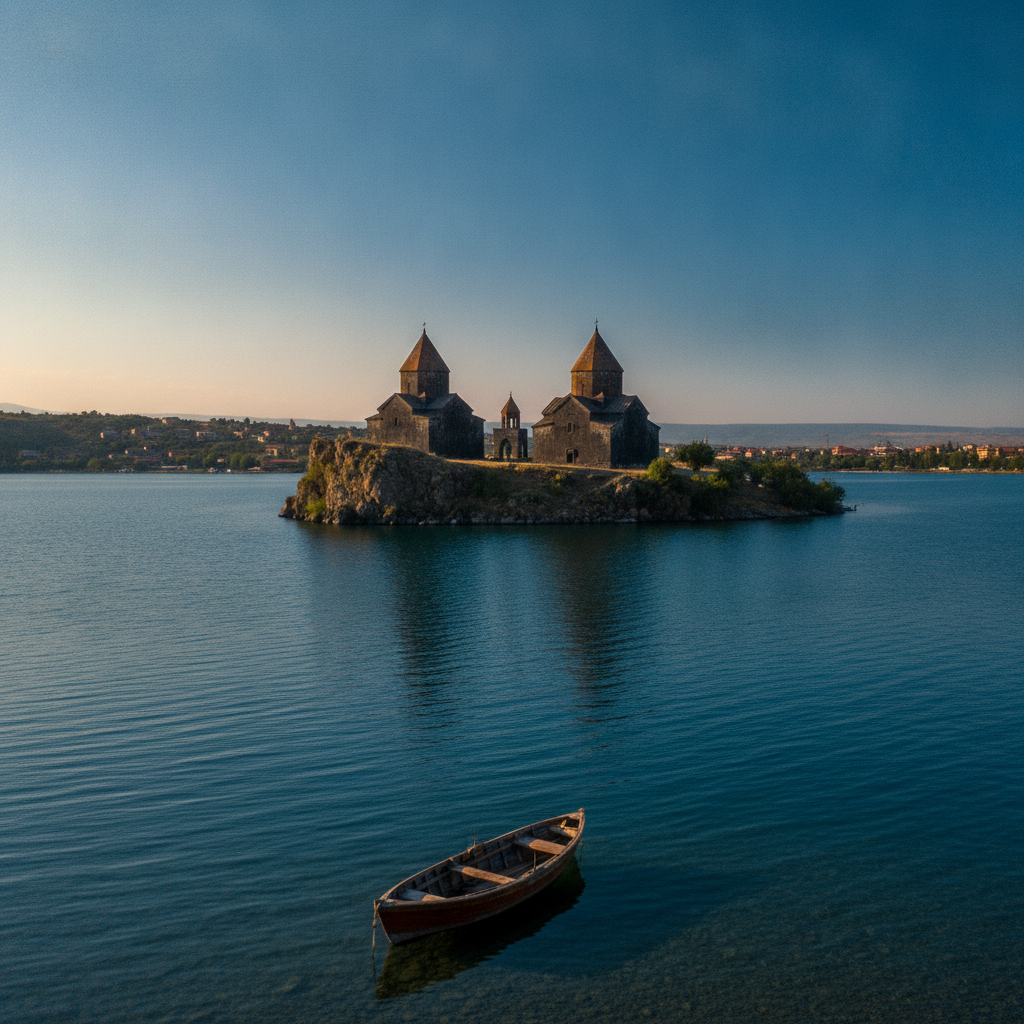
The Areni-1 Cave 6,000 BCE Wine Press Predating Even the Georgian Gadachrili Find by 200 Years Making Armenia the Oldest Winemaking Site, Lake Sevan Lowered 19m by Soviet Hydroelectric Projects & 10 Days in Three Caucasus Capitals for USD 400-600 Total

Armenian Heritage: Garni Temple, Geghard Monastery, the Genocide History, the Ancient Christian Church, and the Most Historically Layered Single Armenian Day Trip
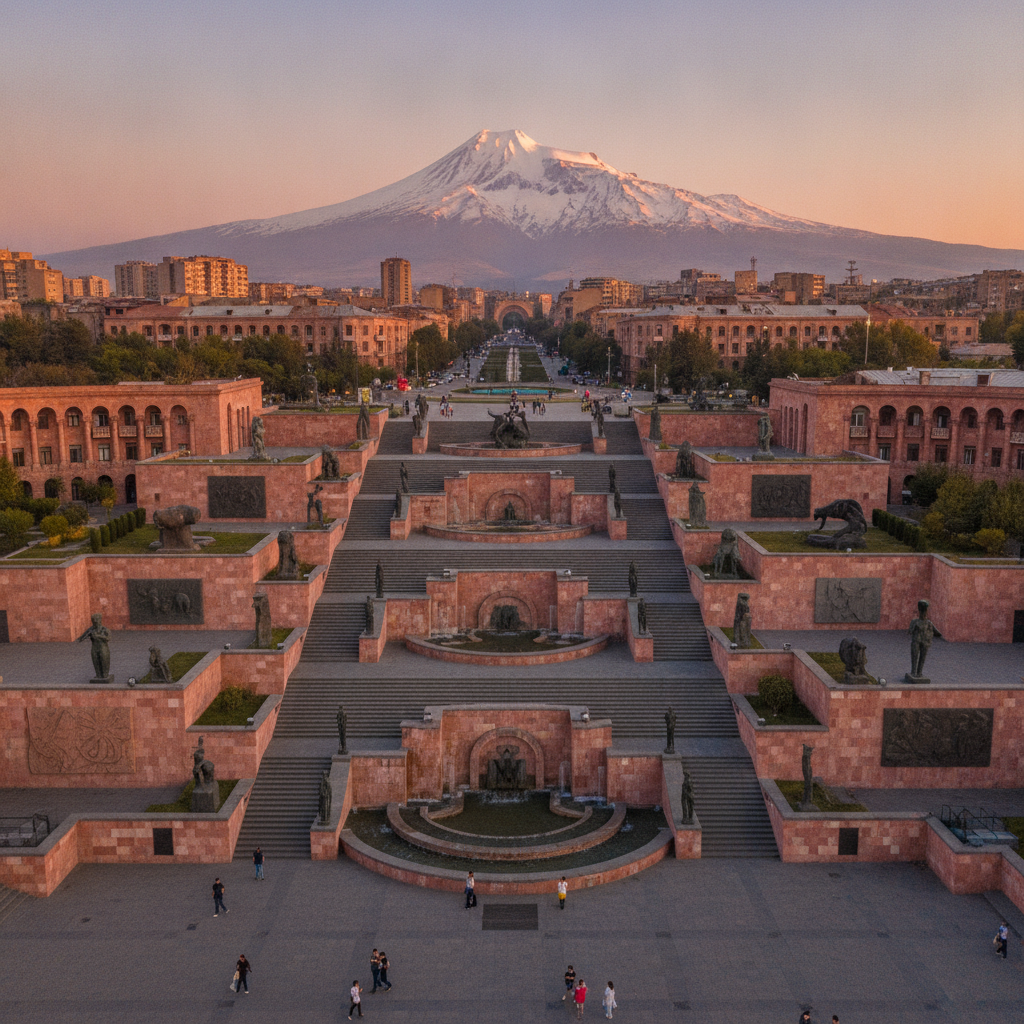
Yerevan Essential: The Cascade, Republic Square, Mount Ararat, the Genocide Memorial, the Vernissage, and the Most Emotionally Resonant Single Caucasus Capital
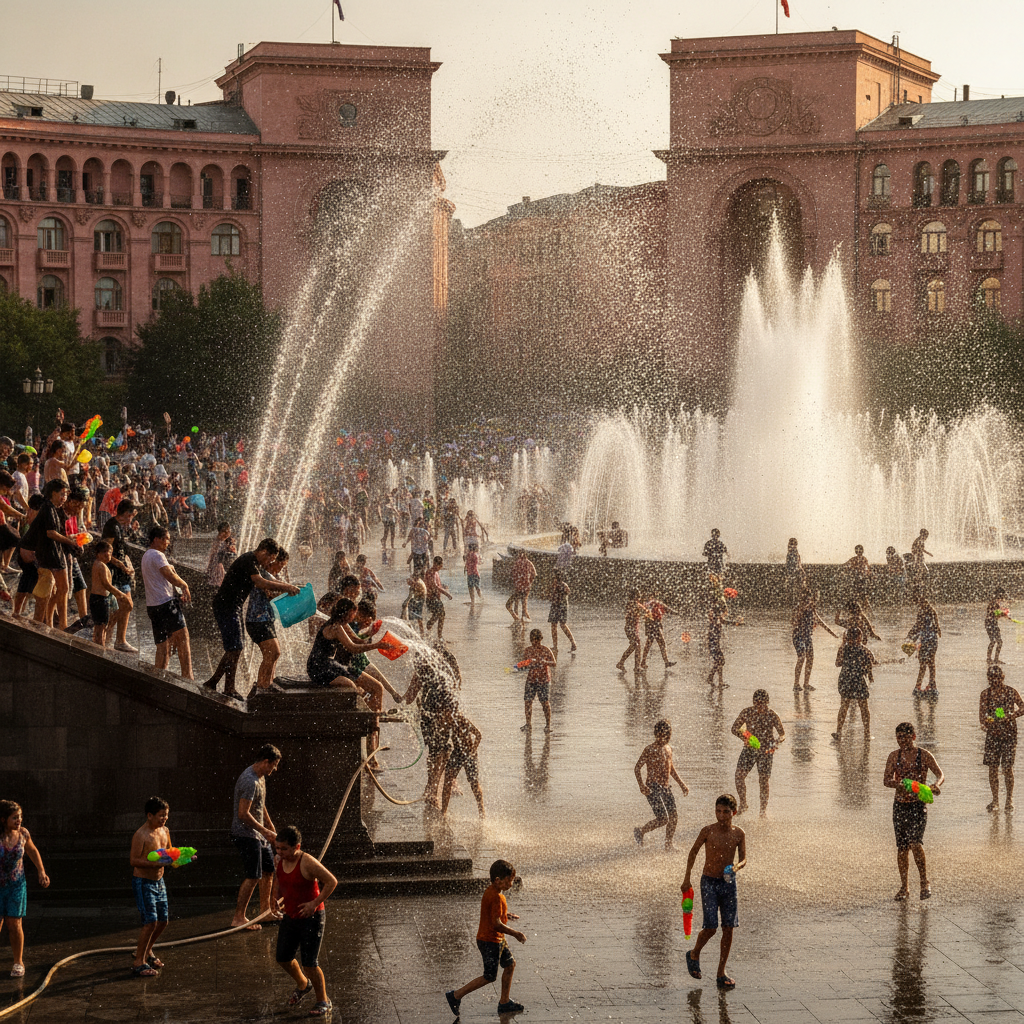
Prunus Armeniaca the Latin Name Embedding Armenia Into the Scientific Name of the Apricot Since Pliny the Elder's 1st Century CE Natural History, Picsart the First Armenian Tech Unicorn With 150 Million Monthly Users & 120,000 Karabakh Armenians Fleeing to Armenia in Days After September 2023
Stalin's Reply That Turkey's Crescent Moon Coat of Arms Does Not Mean Turkey Owns the Moon, the 1971 Cascade Still Not Fully Complete After 50 Years & the 23,000 Manuscripts Including the 862 CE Oldest Dated Armenian Manuscript